Josiah Talbot House // 1835

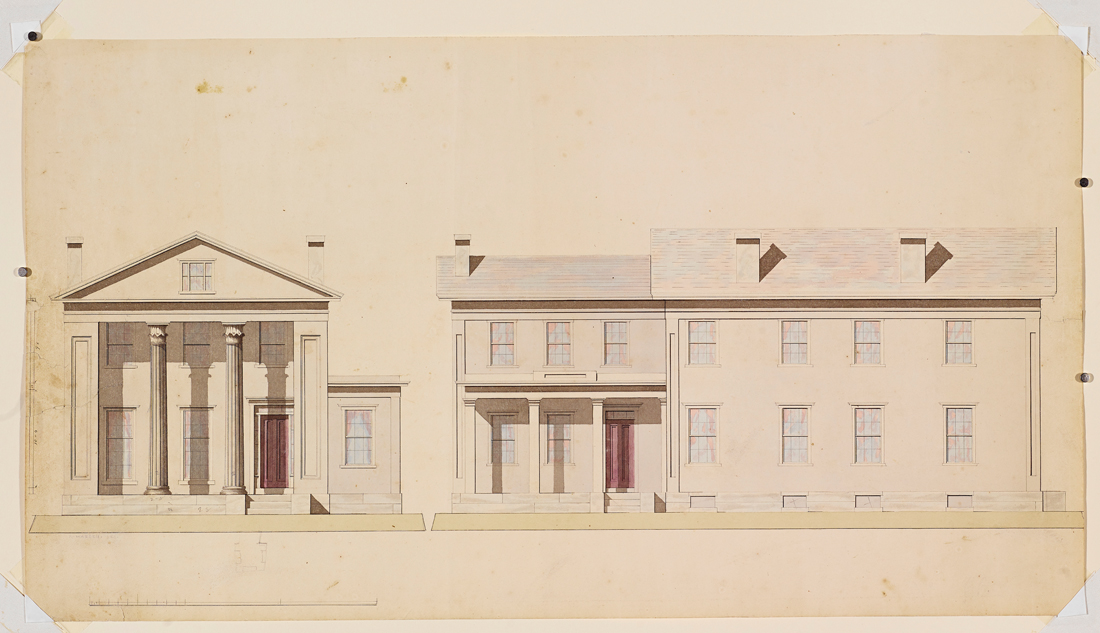
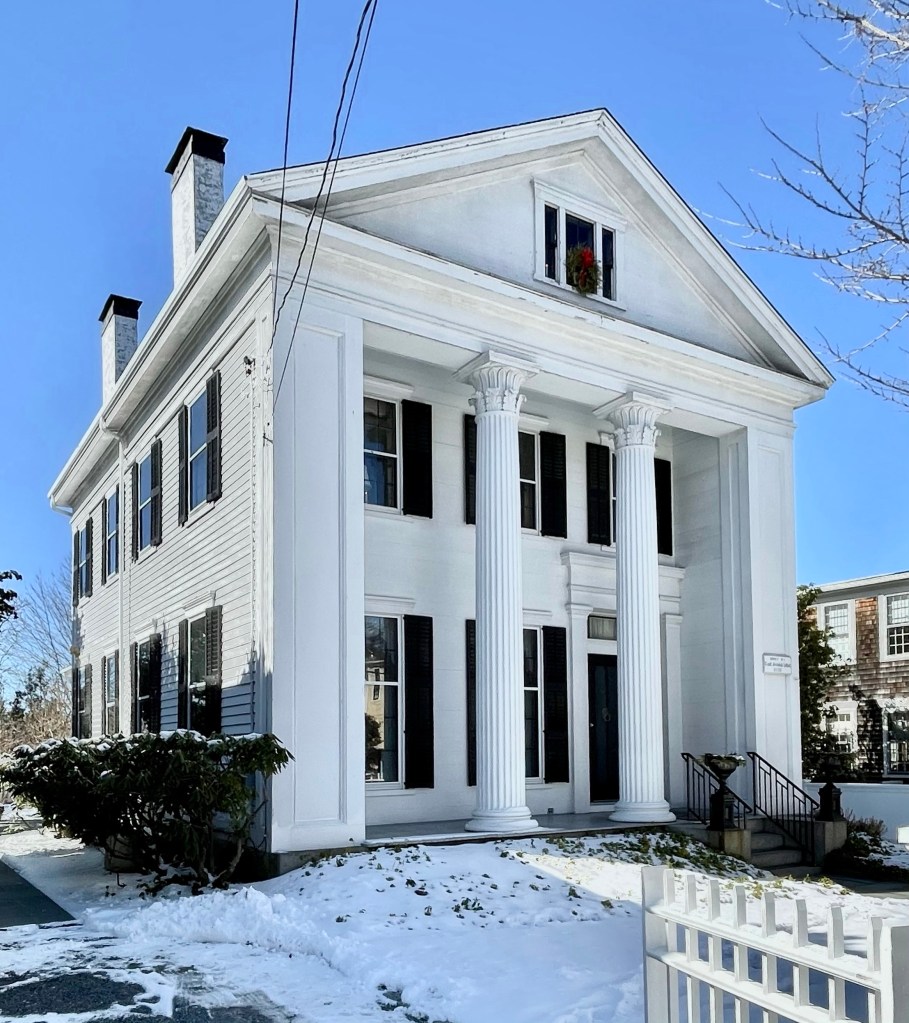
Anyone that has followed this account for a while knows at least one thing, I LOVE Greek temple-front homes. Designed by famed architect, and Bristol-native, Russell Warren, this 2-story, 3-bay, gable-roof Greek Revival house is one of the finest in the state. Its facade has a pair of fluted Corinthian columns, set in antis (where the side walls extend to the front of the porch). A simple side-hall entrance is framed by heavy Doric pilasters, supporting a broad, plain entablature, making this such a head-turning Greek Revival home. The walls are sheathed with horizontal flush boarding at the facade to give a smoother look and clapboards on the side and rear. The home was built for Josiah Talbot, a sea captain. The house is excellently preserved to this day, almost 200 years later.
“Longfield” // 1848

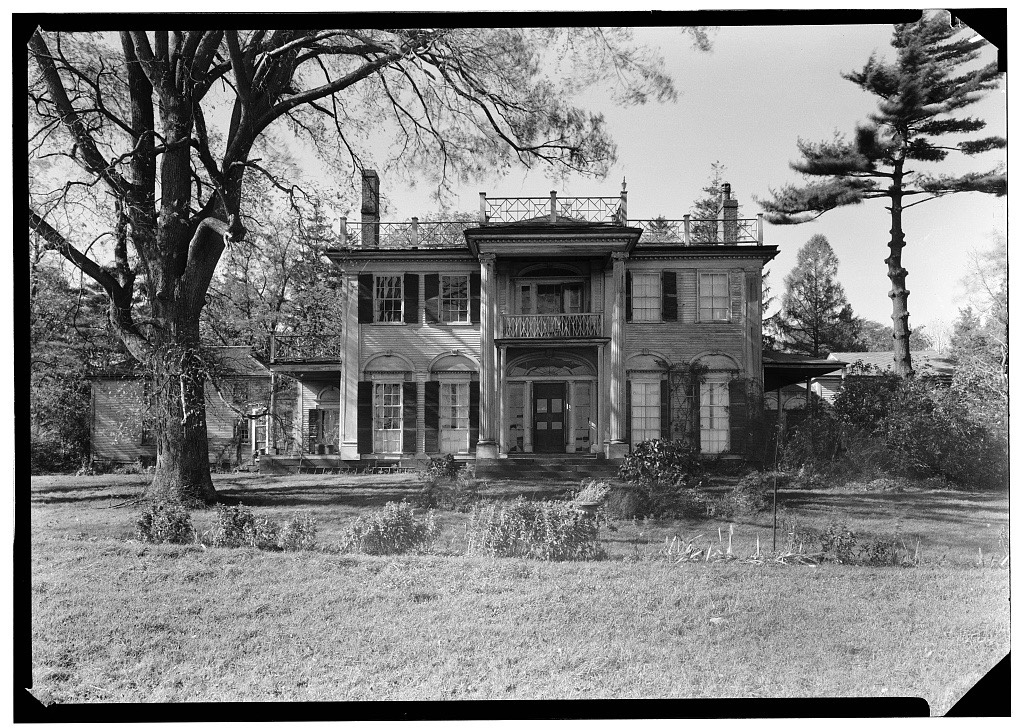
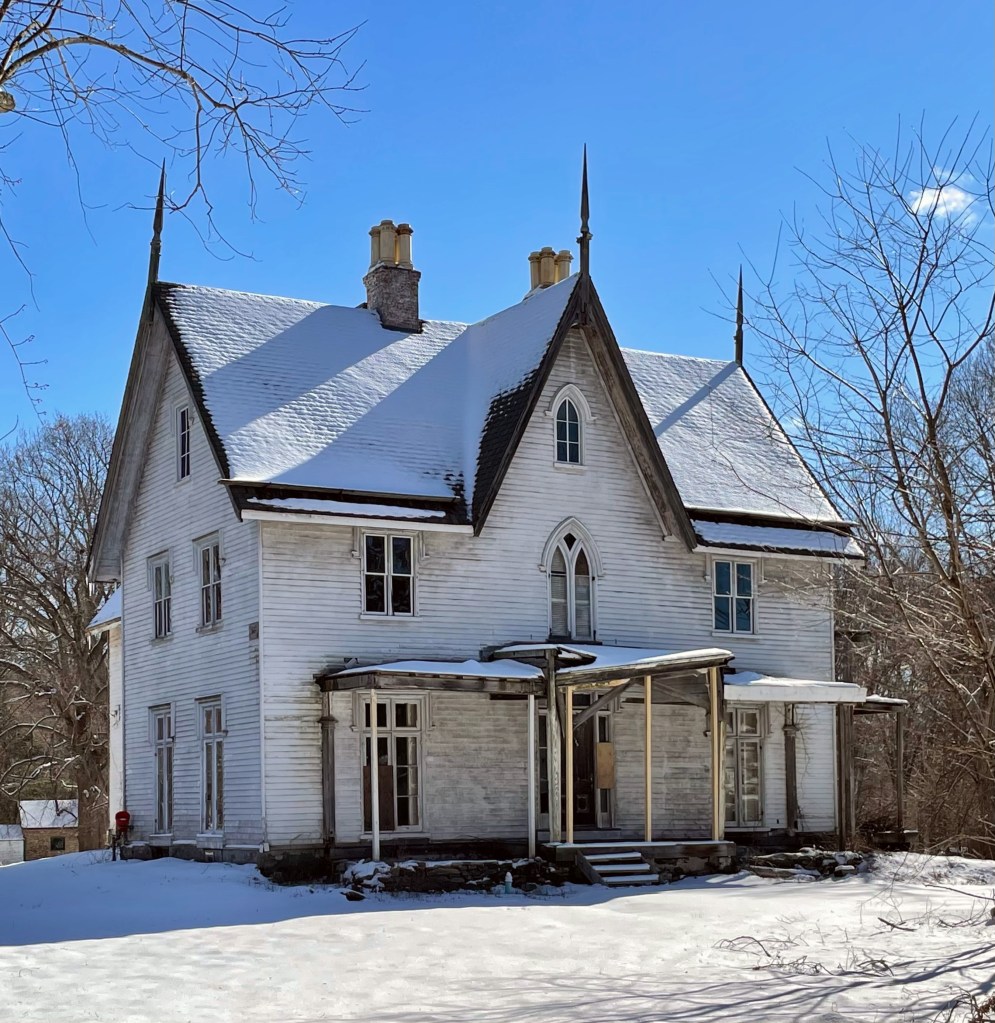
“Longfield”, aka the Abby DeWolf House was built in 1848 and is one of the finest homes in Bristol, Rhode Island. The home was completed from designs by Providence architect Russell Warren, who also designed other mansions in town (I’ll post those later on in this series), the Westminster Arcade in Providence, and “Hey Bonnie Hall” a since demolished Federal style home I featured a couple days ago. Longfield’s name derives from the 60-acre meadow, part of the 300-acre Henry DeWolf farm, given to Abby DeWolf when she married Charles Dana Gibson at just 21 years of age. The DeWolf Family paid for the home as a gift to Abby. The DeWolf Family is infamous for being highly active in the slave trade, and was believed to have transported over 11,000 enslaved people from Africa to the Americas before congress abolished the African Slave Trade in 1808, which “prohibited the importation of slaves into any port or place within the jurisdiction of the United States…from any foreign kingdom, place, or country.” This policy did little as many owners of slaves just kept children born into slavery and also opened plantations in the Caribbean and South America. After Abby died in 1901, the home went to her granddaughter who maintained the home. By the 1970s, the home was sold out of the family and began a period of decades of deterioration to its current state. The interior is effectively gutted, but some original woodwork and fireplaces remain. Recent calls for a townhouse development with ample parking was proposed and approved by the town a couple years ago, but would greatly diminish its siting and architectural integrity. Nothing has happened on the site, but here’s to an appropriate restoration!

Throope Place // 1760

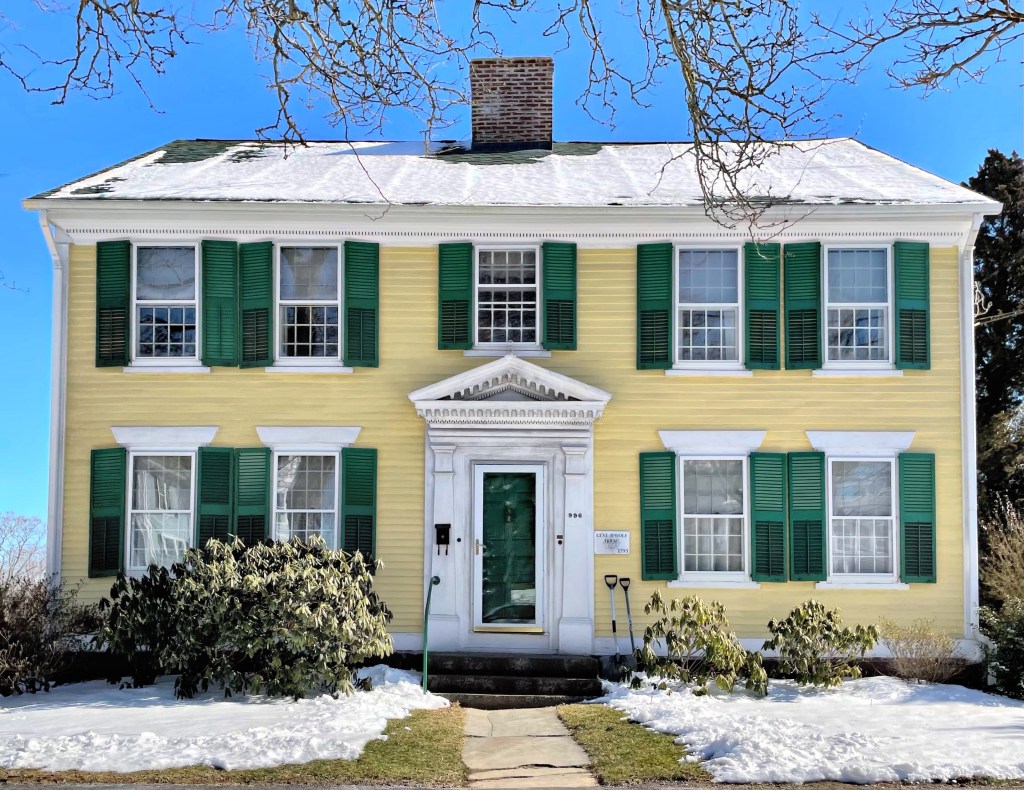
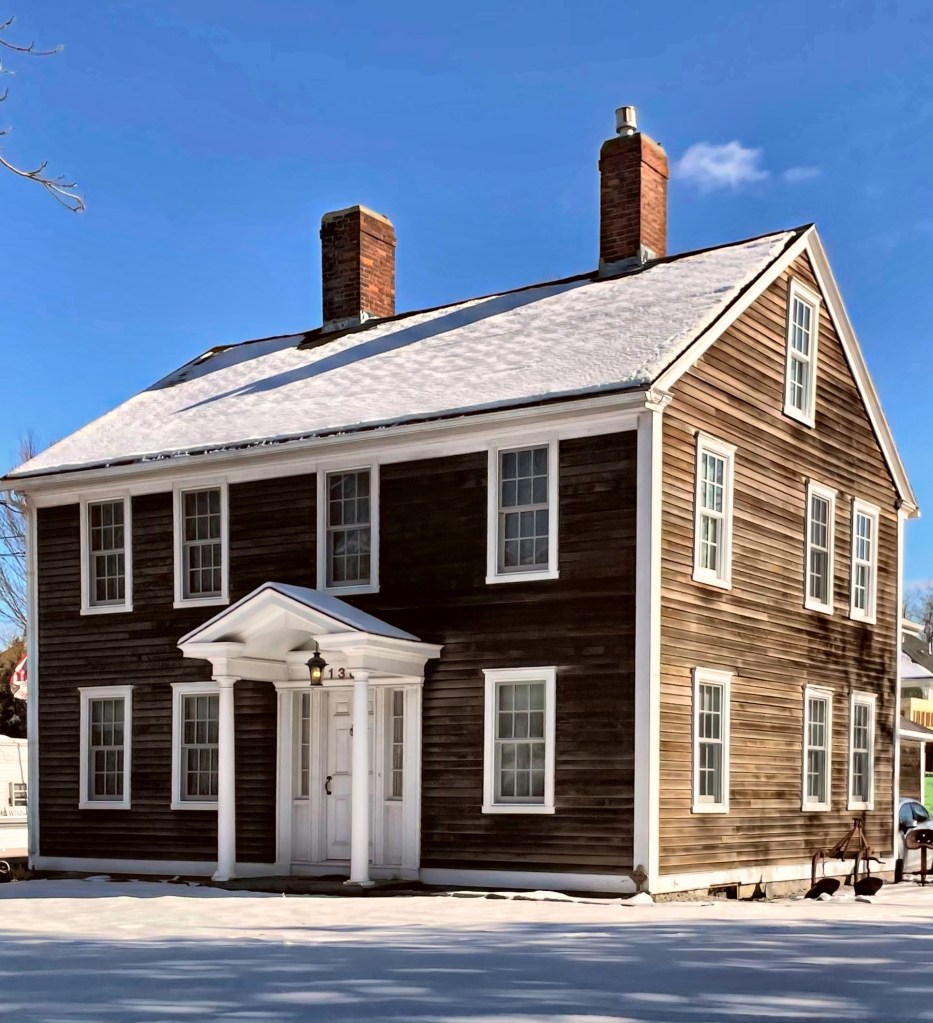
In 1687, William Throope 1637-1704, who migrated to Bristol from Barnstable, Massachusetts by way of England, purchased land in Bristol, Rhode Island. On it, he constructed a small, one-room deep, two-story house. Throope’s grandson, Thomas, Jr. (1710-1771), enlarged the house about 1760, when he constructed this four-bay Georgian home, adding the old 1687 Throope house to the rear. Interestingly, house moves were very common in America to the early 20th century, as materials such as glass, nails, and brick were more expensive while labor was much cheaper, making the reuse of original structures and materials common. The farm eventually passed to Isaiah Drown Simmons (1810-1882), a dairy farmer, in 1830, and remained in the Simmons family until 1922. Records show that the original 1687 house that was moved to the rear of the 1760 house was replaced in the 1830s by Simmons. The home remained in the Simmons Family until after the death of their only daughter Elizabeth, who died in 1914. It appears that the existing front portico was added after that time, which appears more Colonial Revival.

Reynolds-DeWolf House // c.1760

New England is lucky to have so many examples of pre-Revolution Georgian homes to gawk at, and this home in Bristol is one of them. The home was likely constructed by Benjamin Reynolds, a cobbler (shoemaker) for his family. The home was purchased by Benjamin and Abigail Bosworth sometime before the Revolutionary War, and Benjamin served with the Continental Army, at the rank of Major. In 1786, Mark Antony DeWolf the patriarch of the infamous DeWolf Family (who made their fortunes on the backs of the enslaved) returned to Bristol after it was burned by the British, and purchased this home where he lived until his death in 1793. At that time, one of Mark Antony DeWolf’s many children, Levi, moved into the home. Levi DeWolf (1766-1848) was a Quaker, who was an avid reader. While his involvement in the slave trade was a shadow of that of his siblings, he was complicit and travelled to Africa at least three times on behalf of his brother James. After the trips, James offered to outfit a vessel for him to continue the trade, but Levi’s conscience likely caused him to decline. In the late 1790s, Levi had the home updated, with a new, elaborate pedimented entrance with a modillion and dentil cornice.

“Hey Bonnie Hall” // 1808-1944

Formerly located on the Poppasquash Peninsula in Bristol, Rhode Island, the William DeWolfe House, also known as Hey Bonnie Hall, was constructed in 1808 for William DeWolf (1762-1829) and his wife Charlotte Finney (1764-1829). William DeWolf was a member of the infamous DeWolf Family of Rhode Island, which is believed to have transported tens of thousands of enslaved people to the United States and Caribbean before the African slave trade was banned in Rhode Island. The Ocean State played a leading role in the transatlantic slave trade. Not only did Rhode Islanders have slaves—they had more per capita than any other New England state. The beauty of Hey Bonnie Hall, and its melodic name hid the dirty money with which it was built. With his extreme wealth, William hired Providence architect Russell Warren to construct the home in a high form of the Federal style. Eventually, the home was willed to Anna DeWolf, who married Nathaniel Russell Middleton, from a slave-owning family in Charleston, South Carolina (birds of a feather…). It was Anna Middleton who gave the house its curious name of “Hey Bonnie Hall”. When she was younger, she used to sing an old Scottish song called “Hey The Bonny Breast Knots” over and over again to delight her grandfather, William, the first owner of this home. After Anna’s death, the home was willed to her two unmarried daughters. The Great Atlantic Hurricane of 1944 proved fatal for the grand estate, when the front portico was ripped off the home and flew away. The damage was deemed too expensive to repair and the home was demolished that year.

Colt Dairy Barn // 1917

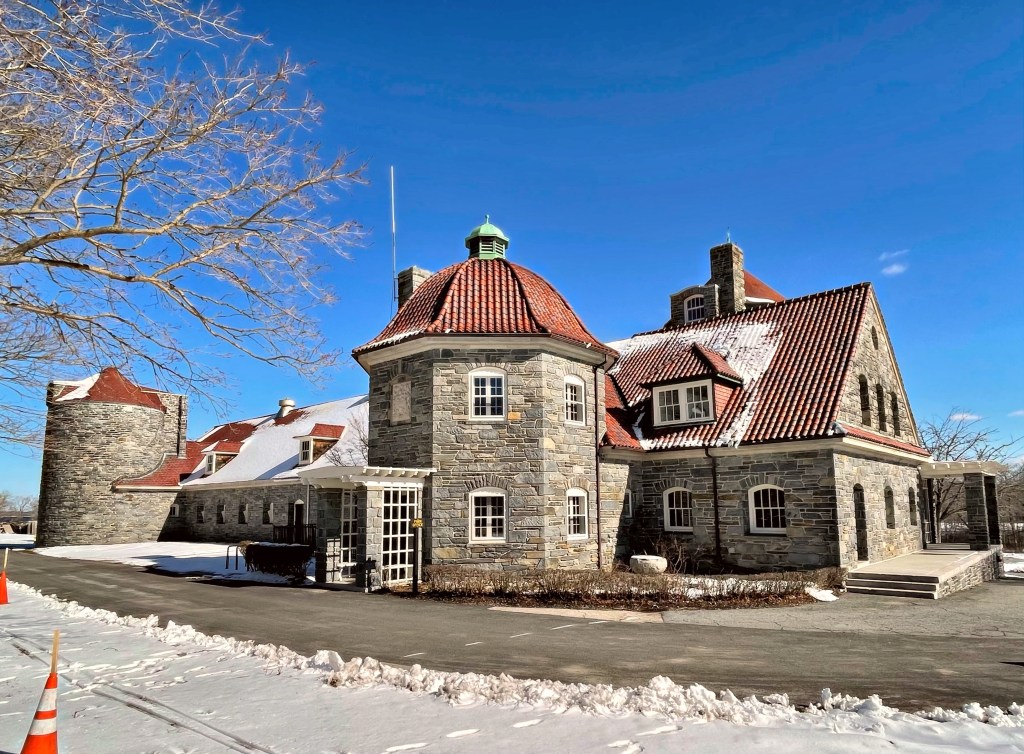
Samuel Pomeroy Colt (1855-1921), a Bristol industrialist, purchased three farms on Poppasquash Neck, in Bristol, Rhode Island in 1905. One of the farms he aquired, Coggeshall Farm, was featured in my last post. On the newly consolidated farmland, just outside the hustle-and-bustle of Bristol’s downtown core, Colt built a large summer dwelling called ‘The Casino’. He lived at his family estate in town a majority of the year, but used ‘The Casino’ as a gentleman’s farm and a space to raise his prize-winning Jersey cattle and Berkshire sows. Colt wished that the citizens of town share his enjoyment of the property and had an open invitation carved onto the marble piers at the estate entrance which reads, “Private Property, Public Welcome”; access was freely allowed at the farm and shoreline. The two marble piers at the entrance to the estate are topped with massive bronze bulls modeled after two of Colt’s bulls, and were cast in Paris by Val d’Onse Company. Colt died in 1921. His will specified that Colt Farm not be sold and that it remain accessible to the public. Though he left a sum to operate the farm, it ran a deficit. The Casino was demolished in the 1960s as it was consistently destroyed by vandals, and became a public safety concern. The lasting cow barn was built in 1917, from designs by architect Wallis E. Howe. The barn utilized field stone from existing stone walls on the property and is capped with a red tile roof. The barn is unlike anything I have ever seen, and now is park offices. In 1965, after approval by Bristol voters, the State of Rhode Island purchased 466 acres of the Colt estate and created the largest public park in the Bristol County, known as Colt State Park.

C. A. Brown Cottage // 1886

Located just south of Portland Head Light, on the rocky ocean shore of Cape Elizabeth, is the settlement called Delano Park, a group of summer cottages, many of which were designed by iconic Maine architect John Calvin Stevens. Arguably the most significant and interesting is this Shingle style cottage, completed in 1886 for Charles A. Brown of Portland as a summer home. The cottage, sits atop a fieldstone foundation that are the very color of the ledges out of which the building grows. The walls above the are of shingle, “untouched by paint, but toned a silvery gray by the weather” as Stevens noted in his writings. Stevens was a master in siting his designs perfectly into the existing landscaping, and by covering all of the home with shingles, Stevens created an unembellished, uniform surface, which celebrates the honesty of its form. The home originally had a wood shingle roof, finished with a green stain. The home remains extremely well preserved by the owners and showcases the Shingle style of architecture brilliantly.

Sprague Hall // 1889

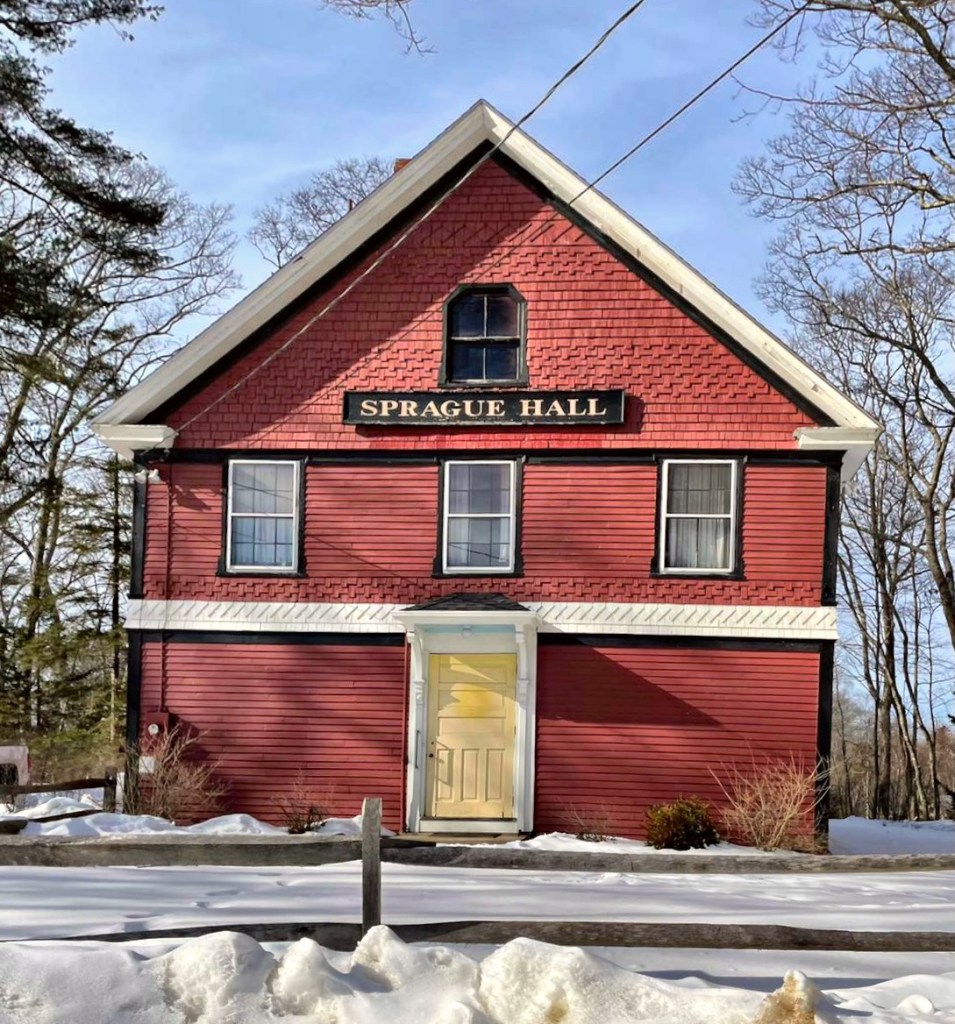
Built in 1889, this interesting structure is located away from the rocky coastline of Cape Elizabeth, a lasting remnant of the agricultural history of the town. The building was constructed as the Cape Elizabeth Grange Hall. The National Grange of the Order of Patrons of Husbandry, is a social organization in the United States that encourages families to band together to promote the economic and political well-being of the community and agriculture. The Grange organization, as it is often known as, had grange halls all over the country, where farming community members would gather to discuss issues and challenges that needed addressing. The building echos late 19th century architectural styles, blending multiple to create an elegant composition, wrapped in wood clapboard and shingle siding. In 1916, the hall was purchased by P. W. Sprague from the Cape Elizabeth Grangers to insure its use and upkeep – and it is still the home of the Patrons of Husbandry, Cape Elizabeth Grange #242.

Cape Cottage Casino and Theater // 1899

The Cape Cottage Casino and Theater was one of several amusement parks developed in the late 1890s by Portland’s electric railways in order to increase business on their trolley lines. Residents of Portland would be able to take a surface trolley to the outskirts of the city in record time, and soak up the sun at luxurious summer communities. The Cape Cottage Casino and Theater was designed by iconic Maine architect John Calvin Stevens, completed in 1899. The casino represents the best in Neo-Classical design, with a full-height, projecting classical pediment supported by bold ionic columns. A wide entablature is accentuated with dentils and modillions; and at the entry, the main front door has a fanlight and is flanked by two small windows, creating a Palladian motif. In 1922, due to the demise in the trolley ridership, partly caused by the rise in personal automobile, the casino was sold off and the Cape Cottage Park Company then hired E.C. Jordan & Company, civil engineers, to subdivide the land and retained John Calvin Stevens and his son as consulting architects. Roughly 50 house lots were platted, resulted that were arranged around the former casino, which was extensively downsized and remodeled as a private residence. While the side wings were removed, the building does retain much of its architectural integrity, while its sheer size has been severely diminished.

Beckett’s Castle // 1874

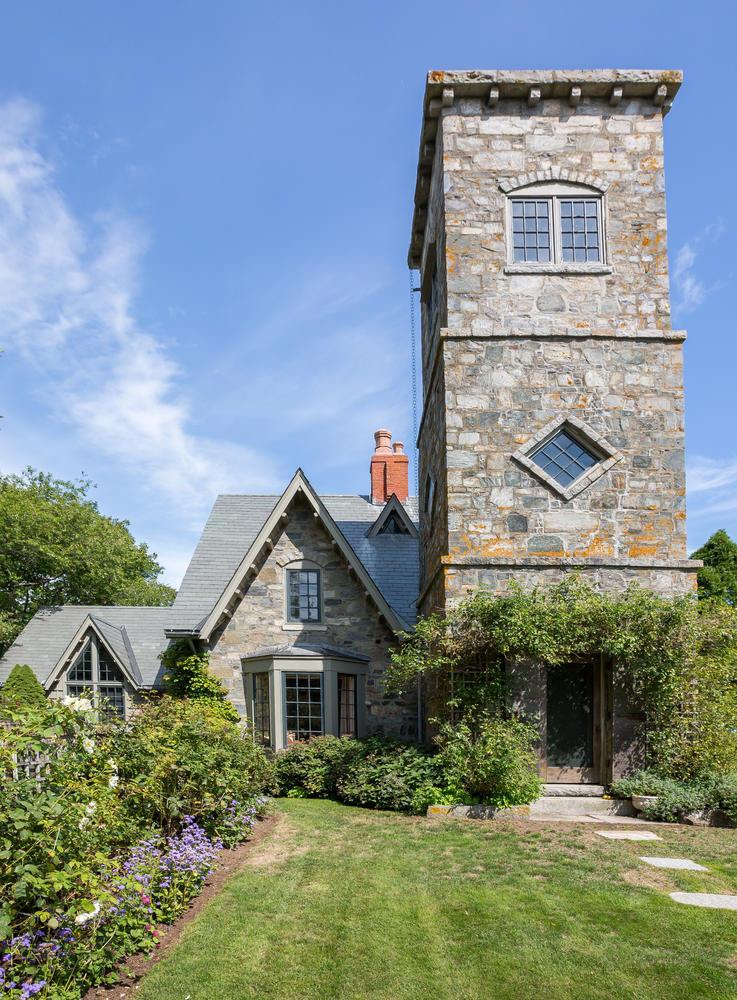
On a rise above the Cape Elizabeth’s rocky shore stands Beckett’s Castle, a picturesque Gothic cottage of a century ago. Designed and built by the Portland literary figure Sylvester Beckett for his summer residence, the Castle was begun in 1871 and finished in 1874. It is said that Beckett constructed the cottage from local gray fieldstone largely with his own hands, though he must have had help, or fabricated this fiction as he would have in his own books. The home was patterned after a typical English castle, but on a much smaller scale, and is tucked away from the street. Sylvester Blackmore Beckett was born in Portland, Maine in 1812, as the son of English parents. Although never attending college, he acquired a modest education and became a prominent journalist and articulate writer. He was admitted to the bar in 1859 and spent much of his time administering and settling estates becoming well-connected in town. Beckett held massive parties in the home, and invitations to the social gatherings held there were highly prized; guests were served expansive dinners cooked in primitive fashion in a large fireplace. Sylvester Beckett died in 1882, and went to his only child, Lizzie. The home fell into disrepair in the 1970s, but was restored by the most recent owner. It was sold in 2018, and the listing photos show some great interior spaces.