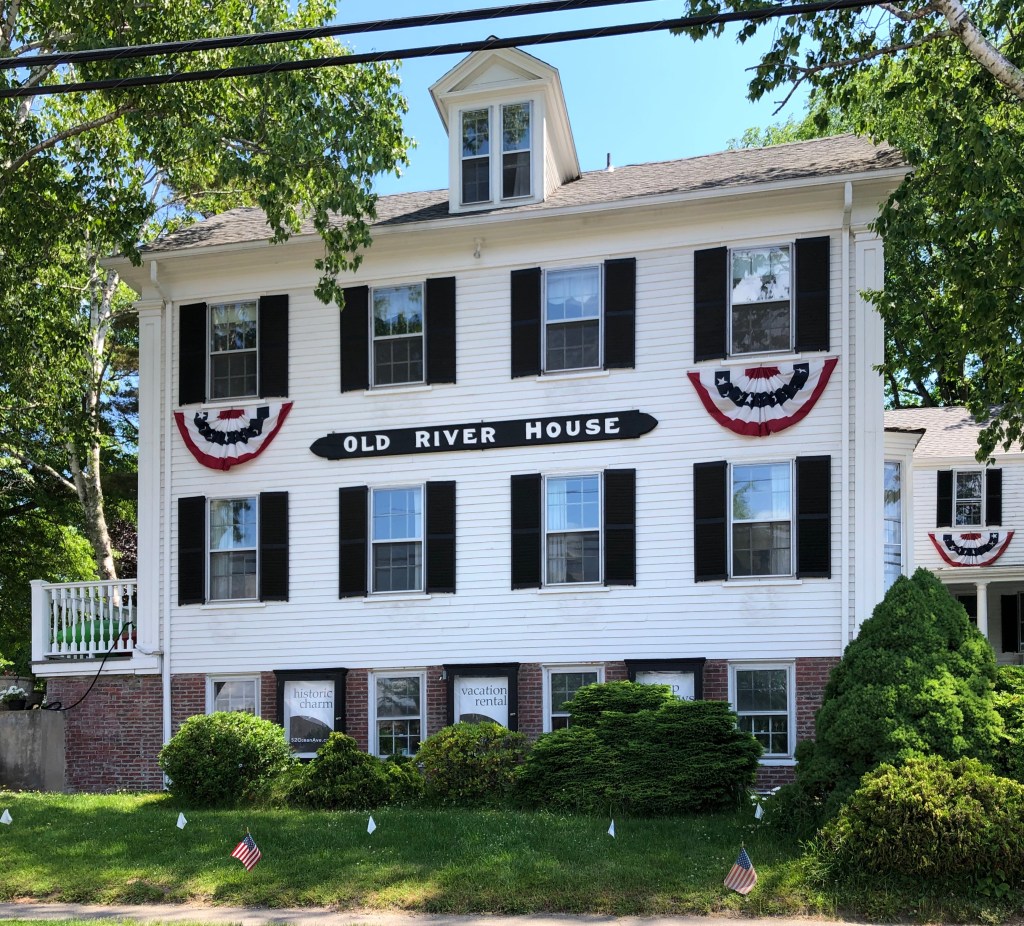
This Greek Revival home was built around 1848 for Thomas Maling, a rigger (person who installs the system of ropes and chains for a ships mast and sails). The home is built upon a raised brick foundation, likely to elevate it from the rising and receding nature of the Kennebunk River just across the street. By the 1890s, the home was converted to an inn, known as the Maling’s Inn, after the original owner. Today, the inn is known as the Old River House. On the lot, the old rigging loft remains and has been converted on the inside as additional rooms.
If you stroll down Maine Street in Kennebunkport, you cant help but notice the most charming saltbox house. Constructed in 1805 by Samuel Davis, a master builder in Kennebunkport, the Federal home likely had a saltbox roof originally which would have housed the kitchen. After the Civil War, the home was owned by Silas Perkins, who then sold the home to his daughter, Felicia (Perkins) Cleaves and her husband, Albert, a teacher. By the 1870s, Felicia had the Colonial home completely renovated, turning into a Gothic Revival showpiece. Mrs. Cleaves added a new wing to the right of the original house, for she desired the high ceilings that were common during the Victorian era. The building became known in town as “Aunt Felicia’s Folly” and alternately, “the Witch House.” In 1966, owners restored the home back to what it likely looked like before the 1870s renovation, adding a saltbox roof.
Undated image showing “Aunt Felicia’s Folly” with Gothic alterations.
Captain George W. Nowell and his wife, Frances, the daughter of the wealthy Capt. William Jefferds, built this elegant Italianate style home in 1854 that stands on Temple Street, next door to the Kennebunkport Post Office. George was a sea captain, following in his father’s footsteps and also invested in several of the ships he sailed, but had the fiscal foresight to insure his interests against loss. His prized ship was named “Tropic” and she was launched in 1855, less than a year after his house was built. On a cold December day in 1862, Nowell, captaining The Tropic left Philadelphia with a cargo of coal for the Pacific Mail Steamship Company in San Francisco. She and her crew of 20 were never heard from again. George was not yet 40 when he perished. His youngest son, Frank, never met his father and was only 8 years-old when his mother passed in 1872. Shipbuilder David Clark bought their Temple Street home and George’s brother took his children to live in Bangor.
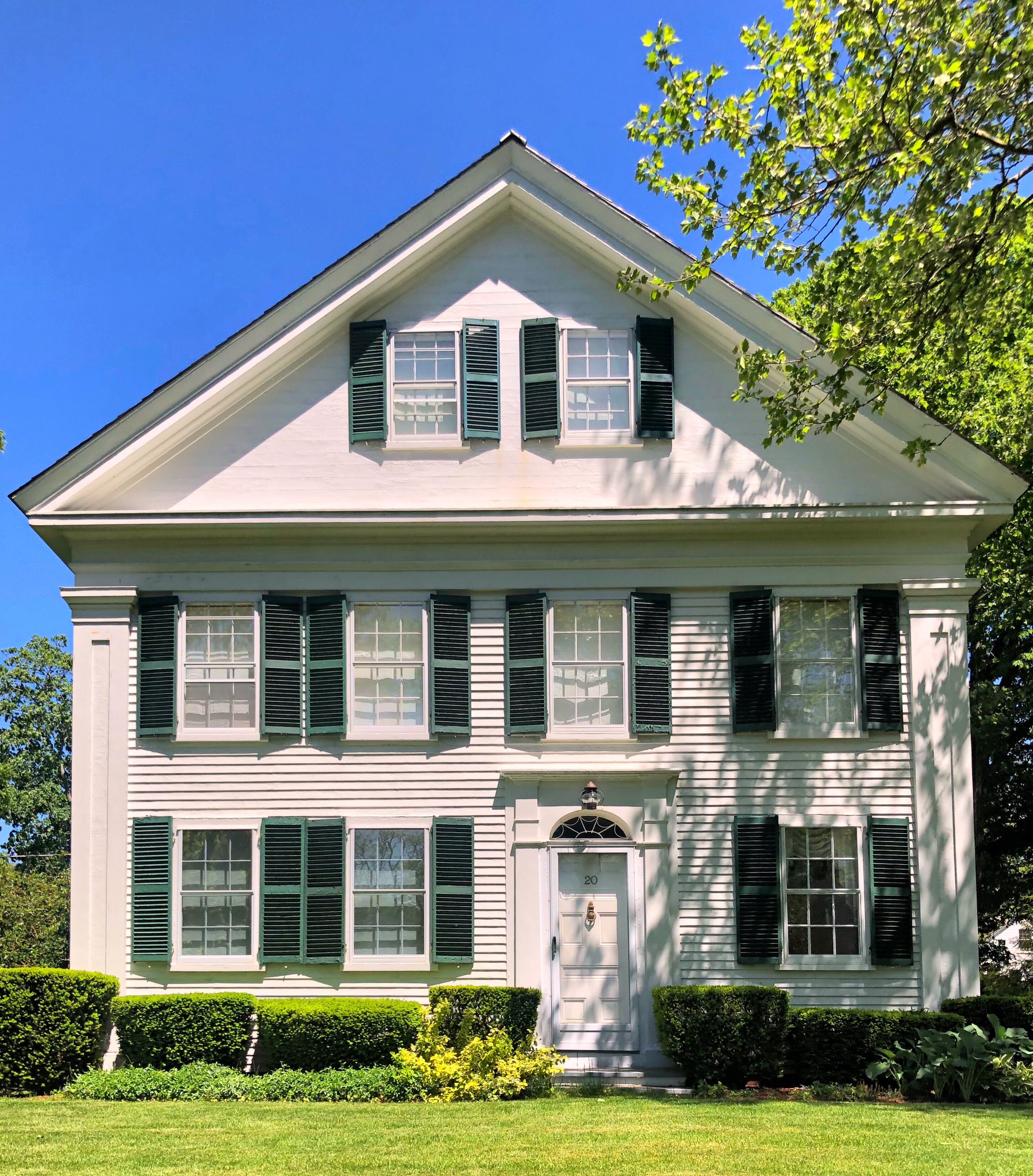
The gorgeous Reuben Nickerson House on Bridge Road in Eastham is an excellent example of a transitional Greek Revival home with hold-over features of the Federal style. Reuben Nickerson was born in 1814 on Cape Cod and worked as a farmer and saltmaker, he later served as a senator, school committee member, and representative. He was married twice; first to Elizabeth Doane who died in 1849, and he remarried Elizabeth’s sister Sarah Doane just a year later. By the 20th century, the home was operated by descendants of Reuben as a funeral home and residence. After WWII, the home was a bed and breakfast and has since been reverted to a single family home. Detail on the home includes: wide, paneled pilasters, boxed, molded cornice, a pedimented gable, a 2-part wide frieze, and a fanlight at the entrance.
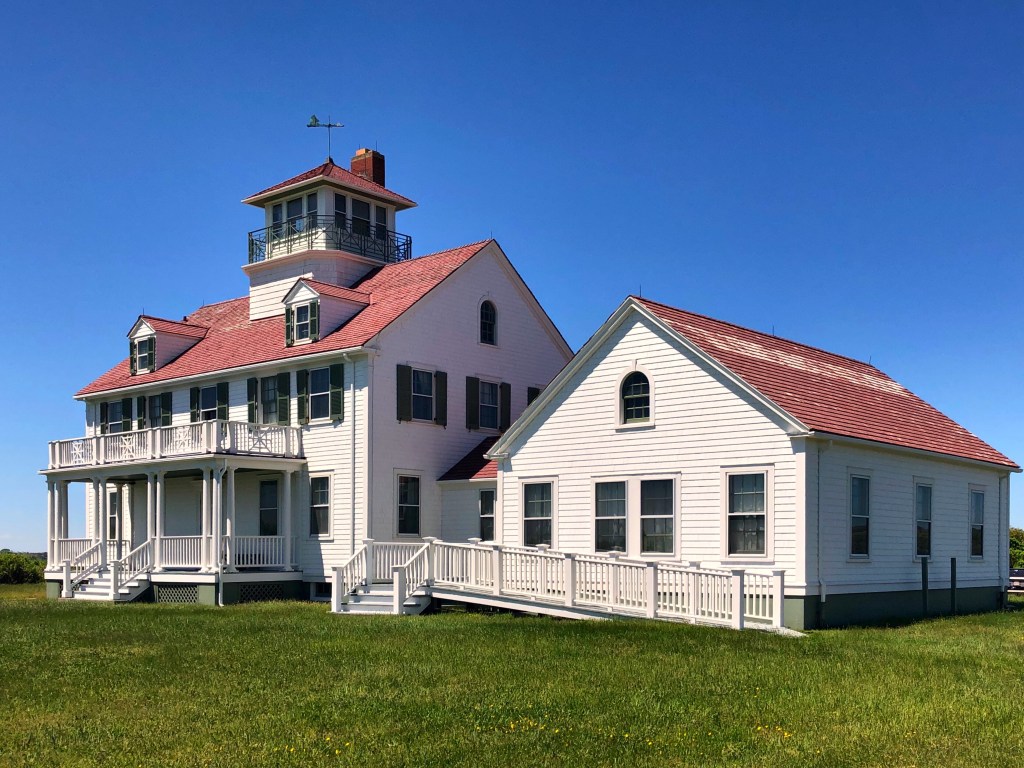
Located at one of my favorite beaches in New England, the aptly named Coast Guard Beach, the Nauset Coast Guard Station is an imposing Colonial Revival structure perched upon the bluffs providing sweeping views of the shoreline. The Nauset Coast Guard Station was built in 1936 to replace a late nineteenth century Coast Guard Station which had stood further eastward and north, on land which has been eroded away by the ocean. The present structure was reportedly commissioned after Secretary of the Treasury Henry Morganthau Jr. and his fellow picnickers were driven in 1935 by a summer thunderstorm to seek shelter in the old and antiquated Coast Guard Station, built after the Civil War. Construction of the new station was authorized several weeks after this incident as Morganthau, who spent summers on Cape Cod, took a personal interest in the building’s construction, visiting the site during the summer of 1936.
This area of beaches has had a tradition of assistance to shipwrecked sailors. In 1802, the country’s first all volunteer life saving organization, the Massachusetts Humane Society, erected a hut on this beach. It was replaced by a larger one in 1855 and by the Nauset Life Saving Station in 1872. The building was added on to and moved twice before it was replaced by the present structure in 1936. The building was occupied by the Coast Guard as a station until 1958. It now is home to an education center as part of the Cape Cod National Seashore.
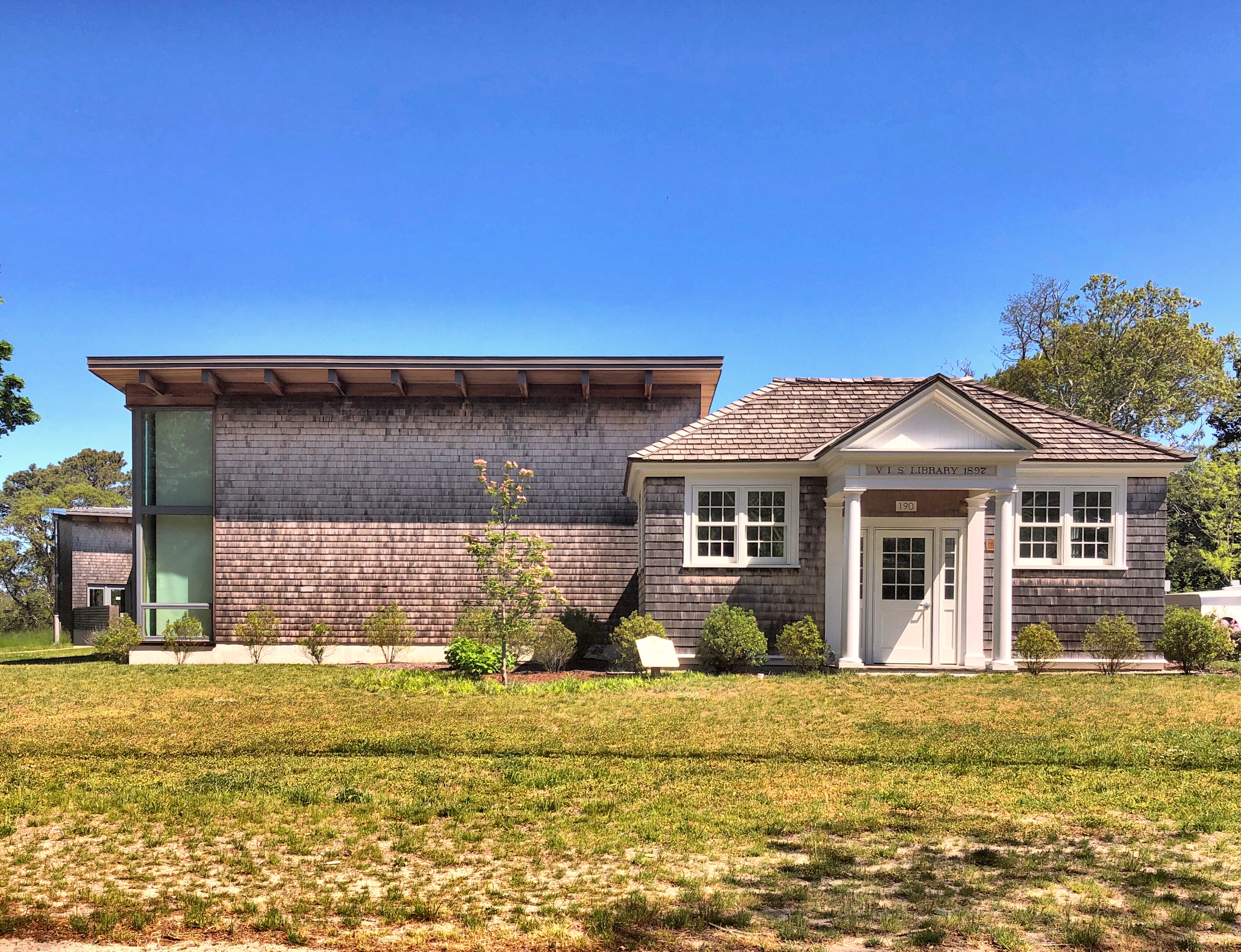
Built in 1897, the ever-charming Eastham Public Library has served the town for over 100 years, constantly adapting and growing to meet the needs of the community. Originally constructed as a one-room hipped-roof shingled library building, the tiny space was appropriate for the town of just 500 people in 1900. By the 1960s, the rear ell was replaced with a large addition, effectively quadrupling the square footage of the library, but keeping the original structure intact. The 1960s addition was eventually deemed insufficient and was replaced in 2016 with the gorgeous modern addition by Oudens-Ello Architecture of Boston. The addition compliments the quaint one-room original structure with the use of materials, yet clearly distinguishes itself as 21st century design.
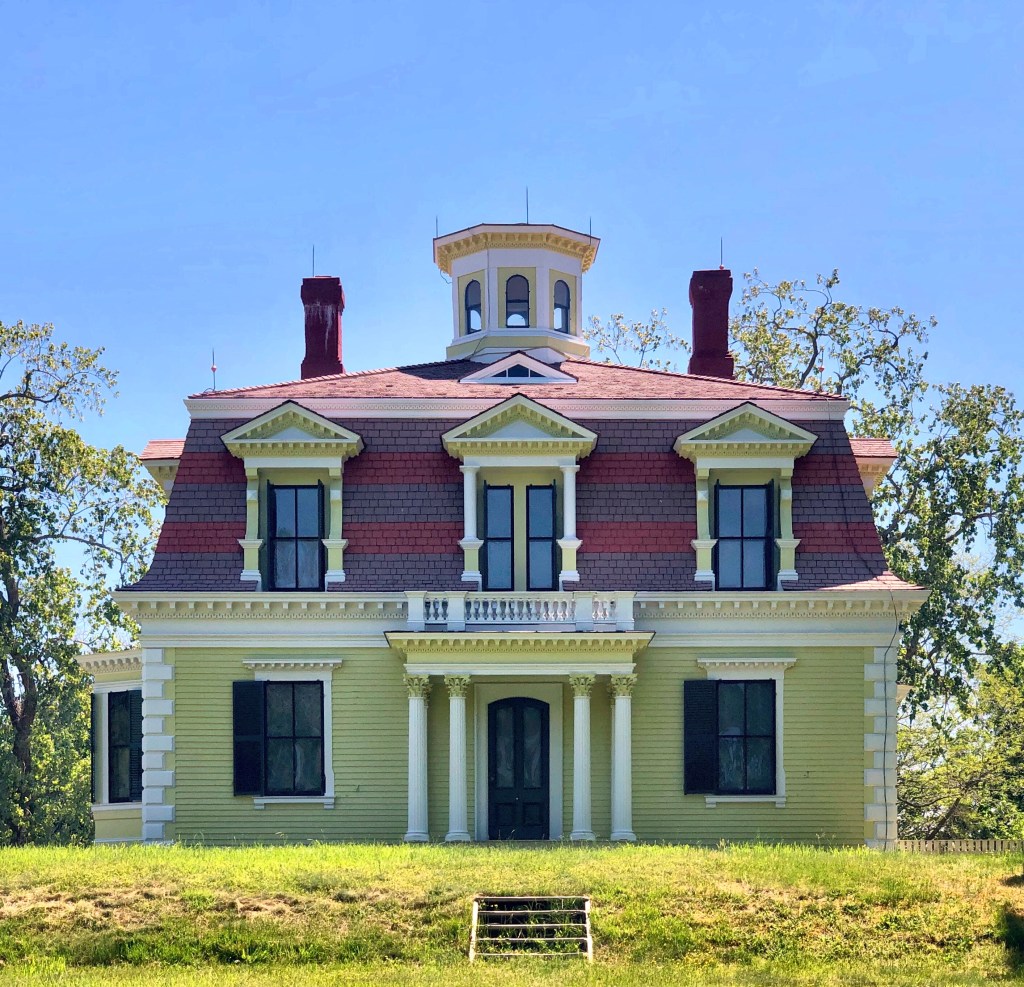
The Edward Penniman House is the finest example of Second Empire style in Eastham, and is one of the finest examples of this architectural style on Cape Cod. The grand home was designed and occupied in 1868 for Edward Penniman (1831-1913), one of the most successful whaling captains in New England.
Born in 1831 in Eastham, Edward Penniman set sail for the first time at age 11. The voyage was to the dangerous and unpredictable waters of the Grand Banks, a rich fishing ground off the coast of Canada’s Newfoundland. Nantucket had a flourishing whaling industry as early as the late 1600s, but it was New Bedford with its deep water harbor and railway system that would become New England’s whaling capital. In 1852 at the age of 21, Penniman would journey to New Bedford and sign on to his first whaling expedition. Later when Penniman became a captain he would select New Bedford as his home port setting sail seven times to hunt whales.
With whale over-harvested in the Atlantic along the shores of New England, whalers were forced to go further and further from home to hunt. Whaling expeditions often spanned three or four years, and it was not uncommon for wives and families of ship captains to go along on the trip. Penniman’s wife, Betsy Augusta Penniman, called “Gustie” by her husband, went on three such voyages often assisting with navigation and other shipboard matters. In addition, each of the three Penniman children accompanied their parents on various journeys with eldest son Eugene eventually becoming a whaling captain himself.
After the Captain’s death in 1913, Mrs. Penniman and their daughter, Betsey, continued to live in the home. Mrs. Penniman’s died in 1921. Betsey Penniman, who never married, stayed around and raised her niece, Irma. Upon Betsey’s death in 1957, the home was left to Irma Penniman Broun. Irma and her husband sold the house with twelve acres to the National Park Service in 1963 when the Cape Cod National Seashore was formed.
The Chapel in the Pines church had its origins in the growing desire by many late-19th century New Englanders to move away from the strictures of fundamentalist religion. A Universalist Society was formed in Eastham on the Cape for the erection of a new place of worship. Local families and esteemed citizens pooled resources and constructed the building themselves over five months, under the direction of an Elkany Hopkins (though sources state he died in 1885). The Victorian Gothic church has a certain flair with the turned posts at the entry, bell tower, and roof cresting. After serving various congregations and uses (including as the First Encounter Coffeehouse a renowned venue for folk and acoustic music since 1974), the building was purchased by the Nauset Fellowship. In 2017 and 2018, the Chapel underwent a renovation with money raised from the community along with two grants from the Town of Eastham’s Community Preservation Act funds.
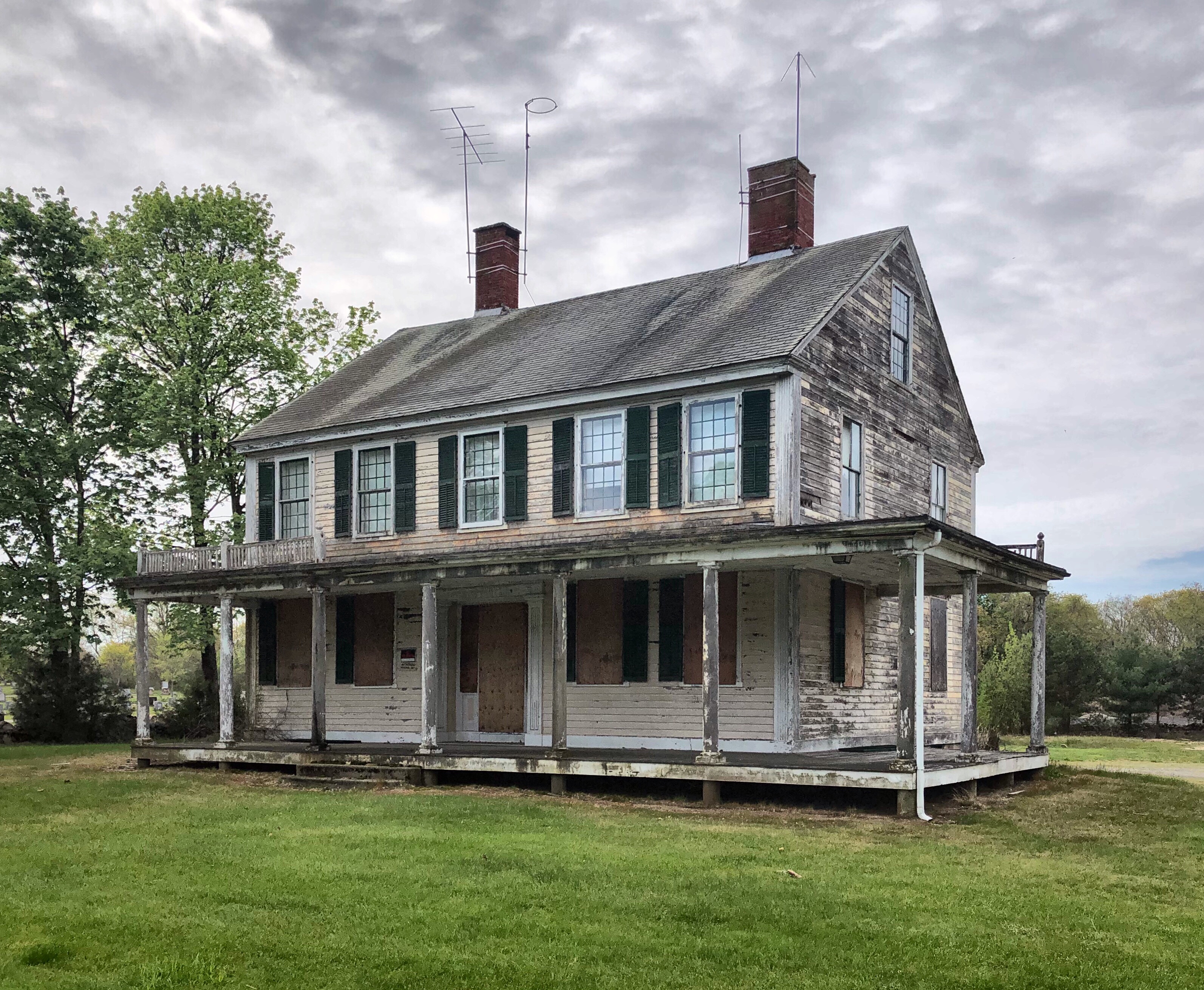
This old farmhouse in Swansea, MA, was built by 1820 for Preserved Gardner (1795-1873), one of five sons of Peleg Gardner, who owned much of Gardners Point. Preserved lived in the home until his death in 1873, and the home and acres of farmland were willed to his only son to live past childhood, Ira Gardner (1836-1901). Ira donated a large tract of land adjacent to the farmhouse to the town in 1882 for a cemetery, in which his father was buried. Later, the farm was purchased by Thomas D. Covel a bank president of Fall River who operated it as a gentleman’s farm and made the house his summer home. A ‘gentleman farmer‘ utilized their farms for pleasure rather than for sustenance or profit. After WWII, the land was purchased by the town to be used as a park and the property is still owned by the town. The Federal home with its veranda that wraps around the side has been neglected by the town for decades while the parks adjacent are maintained adequately.
The town has weighed various options for the home ranging from demolishing it, to preserving the front facade and converting it to a garage and storage shed (with a small museum on the second floor). I hate that idea personally. This seems like an ideal candidate for the town to allow a private individual or developer to move the home and restore it back to its original grandeur. Thoughts?
The Hotel Touraine at the corner of Boylston and Tremont Streets in Boston was built in 1897 as one of the most luxurious hotels in the city. Designed by the local firm of Winslow and Wetherell, the Jacobean Revival style building commands the well-trafficked corner opposite the Boston Common. Early articles described the hotel as “a large and sumptuously equipped house, with internal decorations in the style of the Chateau de Blois (a French chateau). Winslow and Wetherell appeared to have been inspired by the Louis XII wing of the Chateau, as many design elements of the hotel closely resemble it. The hotel was advertised as having 350 rooms valued at $2 a night up to $3 a night for a room with a private bath. Separate men and women’s parlors, a library, and elevator service made the hotel desirable for the upper-class Bostonians and visitors to the bustling Downtown area. The hotel’s rich clientele eventually began frequenting the larger hotels near Copley Square and the stature of the Touraine slipped with a changing Downtown character. By the 1960s, the hotel closed and was converted to apartments.




 Buildings of New England