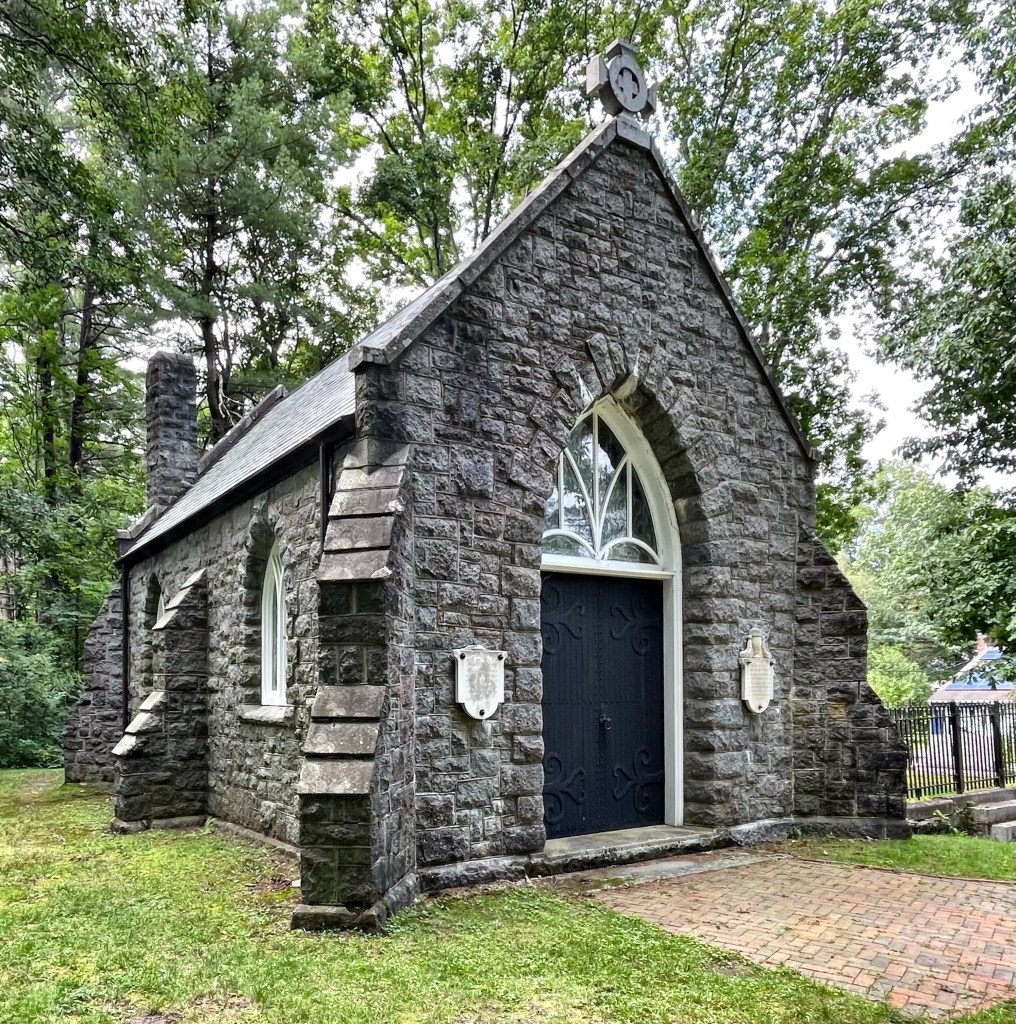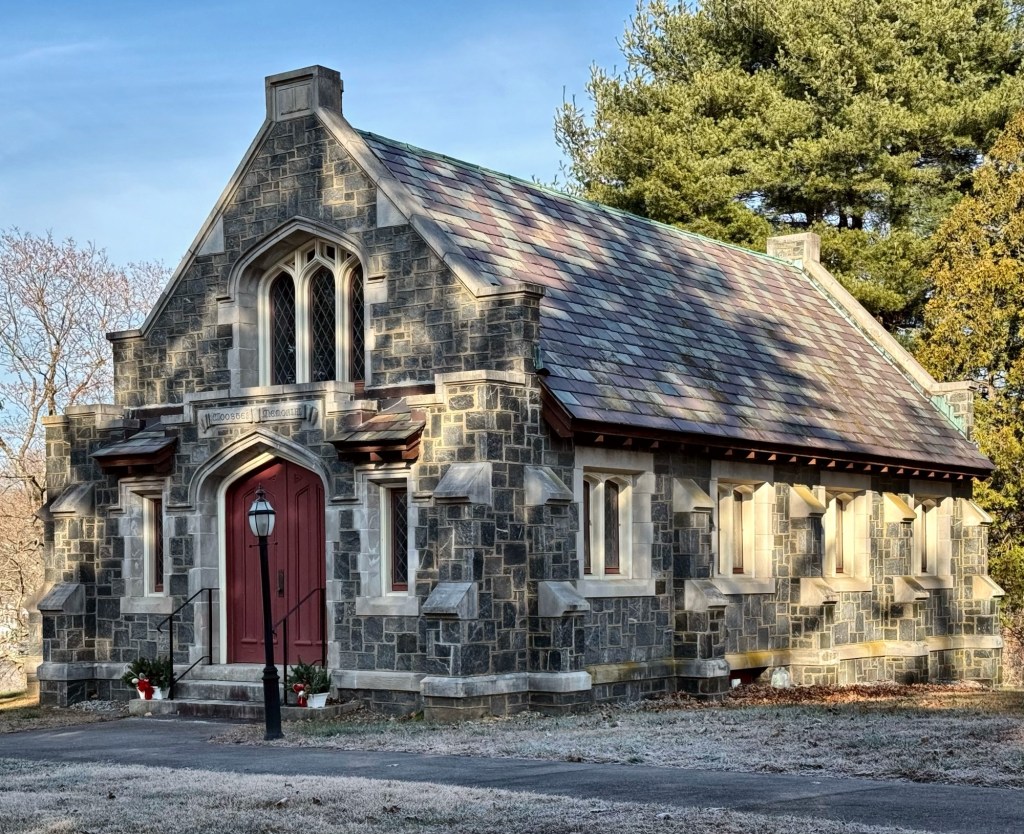
Wooster Memorial Chapel, Fountain Hill Cemetery // 1915

Located in Fountain Hill Cemetery, which has become a sort of Rural Cemetery in the small town of Deep River, Connecticut, this handsome gothic chapel graces the entrance and has provided a place of solemn memorials and celebrations of life for over 100 years. The Fountain Hill Cemetery was originally established in 1851, but after a half-century of use, Miss Mary McCellan Wooster (1839-1911), sought a non-denominational chapel for the grounds to not only beautify the local cemetery, but provide a place to honor the dead. In her will, Miss Wooster left $10,000 for a new chapel. The cemetery board of directors hired architect, Isaac Allen, Jr. of Hartford, Connecticut, to design the structure. The Neo-Gothic chapel was built of local stone and opened to the public in April 1915.

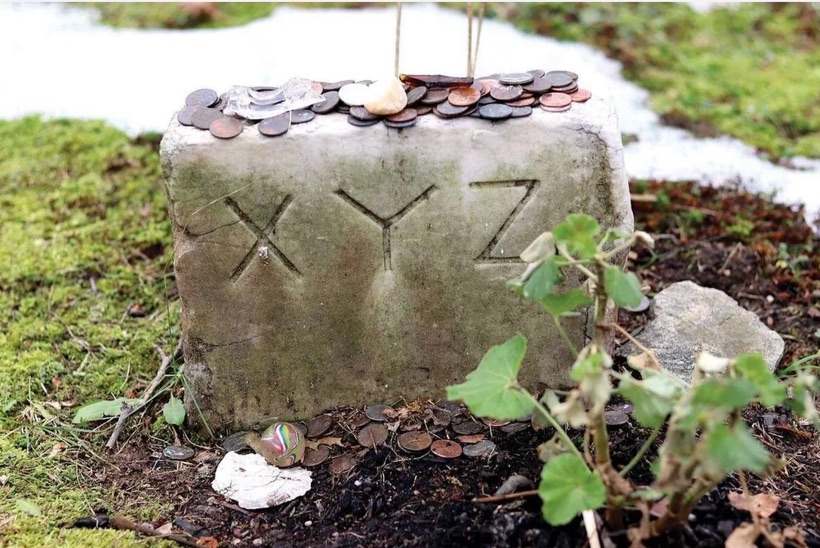
Another interesting story in the cemetery is the mysterious ‘XYZ’ gravestone. Legend says that in the evening of December 13, 1899, an unnamed man arrived in Deep River, Connecticut (along with three other male accomplices), to rob the local bank. This unnamed individual was confronted by the night security guard with a sawed-off shotgun, firing at the robber, blowing away part of his face. The other three robbers fled, leaving their accomplice in Deep River. In the hope that someone could identify him, his body was laid out for viewing at the local funeral parlor. During this time, an anonymous letter arrived, requesting that the man be buried with the headstone only marked as XYZ. The odd request was accorded, but was never fully explained. To this day, many locals leave stones and coins at the marker in Fountain Hill Cemetery.
Wadleigh – Friend House // 1893

One of the most beloved houses in Somerville, Massachusetts is this beauty on Highland Avenue, known best for the unique assemblage of colorful found objects in the front yard, as a living museum. The residence was built in 1893 for William Y. Wadleigh, a wholesale grocer who operated markets all over the region. The house is an eclectic blending of Queen Anne and Colonial Revival styles with an asymmetrical plan and rounded corner tower taken from Victorian styles, along with a classical porch and swan’s neck pedimented dormers at the roof, clearly Colonial Revival in style. Today, the Wadleigh House is best-known for its owner, artist Martha Friend, who has preserved the house, and created an enchanting, ever-evolving installation outside and inside the residence. Sapphire City, an installation in the front yard, draws passersby in to see the assemblage of blue bottles and Dance Party, an assortment of animals at the porch roof, make the house a favorite in the neighborhood. It is houses and owners like this that make Somerville such a vibrant and great place to live and explore.

Smith Memorial Chapel // 1900

The Smith Memorial Chapel, located in Durham, NH, was built for and named after Hamilton Smith by his wife, Alice Congreve, in 1900. From their marriage in 1886, Hamilton and Alice Smith lived in England for ten years, where Hamilton worked and lived in mining operations in South Africa. He had a home in New York and by the end of 1895, Hamilton acquired property in Durham to create a country estate (next post). On the Fourth of July in 1900, Hamilton and a family friend went boating downriver on the Oyster River, in Durham along with his two dogs Hana and Joy. While attempting to free the boat after it ran aground, he suffered a fatal heart attack at just 59 years old. Almost immediately, his widow Alice funded a memorial chapel to her late husband on the family cemetery. The Gothic Revival chapel features amazing lancet stained glass windows and stone buttresses resembling old English chapels. Also on the grounds of the cemetery are the burials of Mr. and Mrs. Smith and their beloved dogs, marked by small gravestones. The property, including the small cemetery in which both family members and pets are interred, remained in the family until 1979, when it was donated to the town.

Hoosac Tunnel // 1877

It is impossible to overstate the significance of the railroad in the 19th century to the industrial growth and economy of New England and American cities. In order to connect Boston and its ports to the Hudson Valley in New York, a western rail line was constructed in the southern part of Massachusetts but was not an ideal route. In response, businessmen and politicians began to envision a more direct rail line across Massachusetts, but with one problem: trains hate climbing mountains! Instead of going around Hoosac Mountain, a massive detour, engineers thought they could tunnel through it, and that’s what they did, creating the Hoosac Tunnel. The tunnel through Hoosac Mountain is just under 5 miles long. Its active construction period consumed roughly a quarter-century and cost at least $17 million in 1870s dollars – an enormous sum. The cost was paid in dollars and the lives of nearly 200 miners (many of whom suffered terrible deaths as you can imagine). The first train passed through the tunnel in 1875, with the eastern portal wall constructed in 1877 (seen here). By 1895, roughly 60% of Boston’s exports traveled through the tunnel. Since then, some small collapses and deferred maintenance have left their mark on the tunnel, though it is still in operation today!