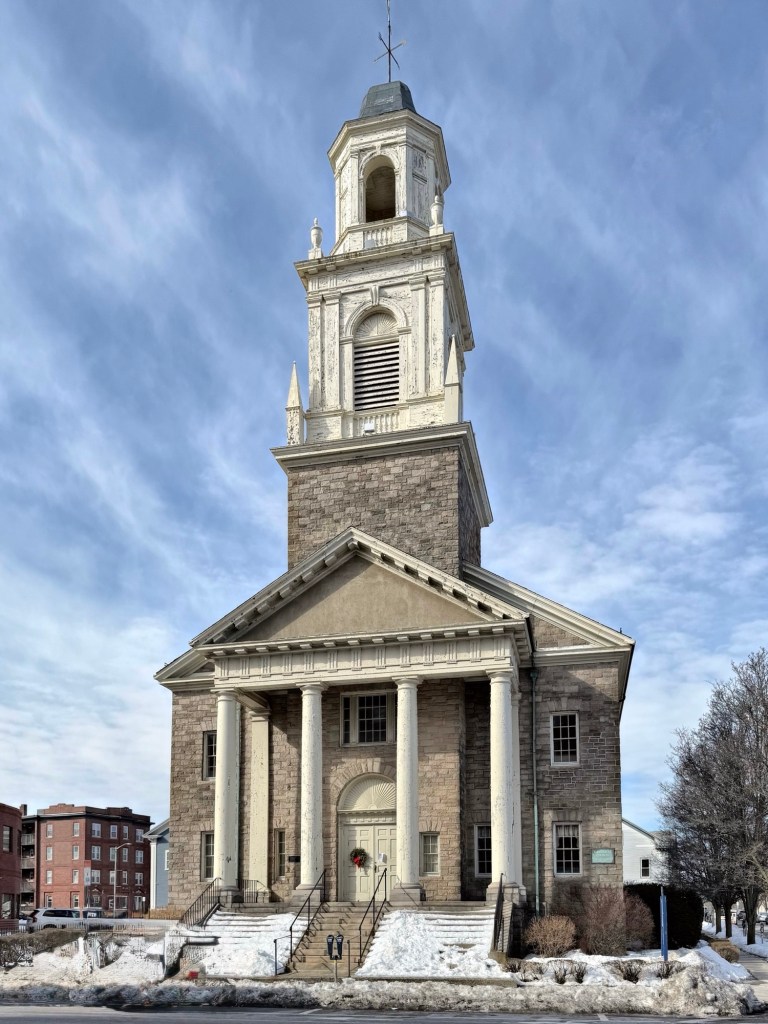
Tabernacle Congregational Church of Salem // 1923

The Tabernacle Congregational Church at Washington and Federal streets in Salem, Massachusetts, was built in 1923 for one of the oldest congregations in the Commonwealth. The Tabernacle Church’s congregation traces its origins to the founding of the First Church of Salem in 1629. The church was originally located a few blocks away until a fire destroyed the wooden building in 1774. The congregation built a new wooden church on this site by 1777, and have remained on the site ever since the United States was established. The present, stone church building, was constructed from designs by the Boston firm of Philip Horton Smith and Edgar Walker in 1922. This dignified and graceful Colonial Revival church building (with attached parish house) is the third ecclesiastical structure to stand on this site. It replaced a large wooden Italianate church which the parish occupied from 1854 until it was torn down in 1922. Its predecessor, which stood from 1776 to 1854, possessed an elegant three-stage tower which Samuel McIntire added in 1805. The Tabernacle Church is a stone-veneered masonry building with a prominent engaged tower which contains a large arched entry, and a giant order porch consisting of four Tuscan columns and associated pilasters of the same type, which supports a pedimented roof that shelters the entrance. The tower is surmounted by a square, wood-frame belltower with pilastered corners above which is an open octagonal cupola with bell-cast roof. What a great Colonial Revival style church!

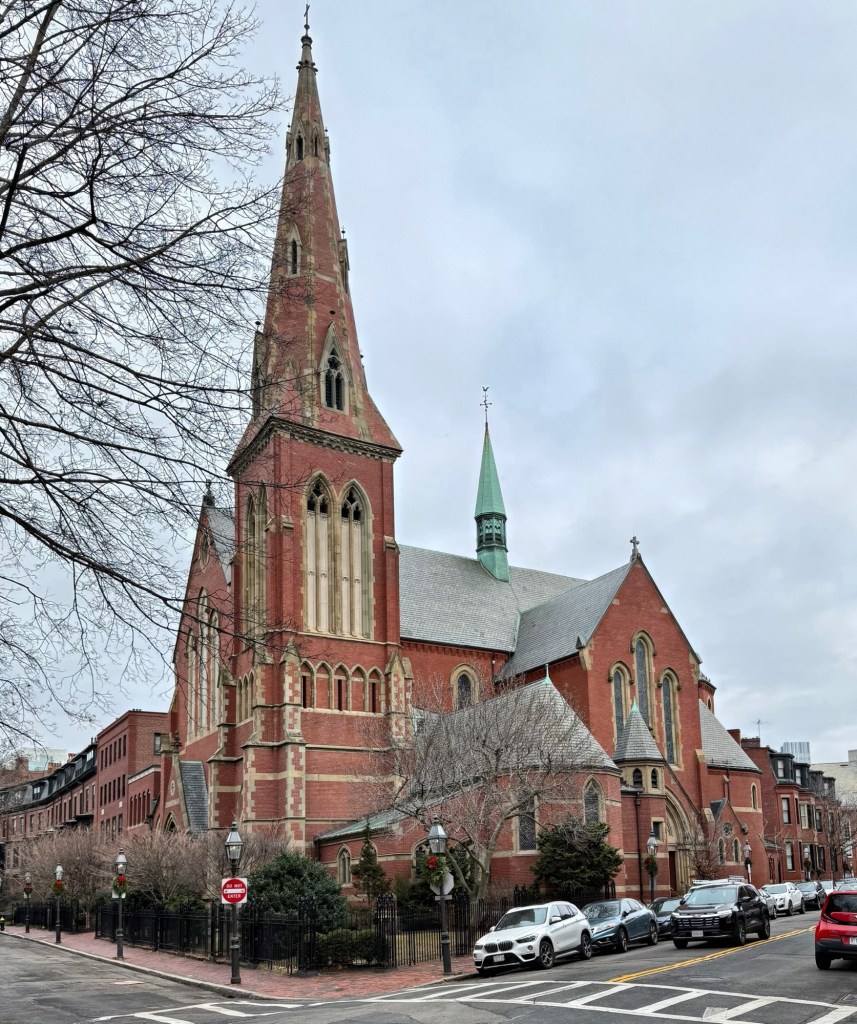
United Church of Norwood // 1886

Located across from the church-like Norwood Town Hall, the United Church of Norwood is a landmark example of the Victorian Gothic architecture style and an important historical landmark for the town. The cornerstone of this present church was laid in 1885 and was completed and consecrated by December of 1886. Boston architect J. Williams Beal, got his start at the firm of McKim, Mead & White, designed the church here for the local Universalists, who lost their previous church to fire in 1884. In 1934, the town’s Universalist and Methodist congregations merged and they joined together in this, as a Union Church. Built of Milford granite and pressed brick, the United Church of Norwood features a side chapel and clock in its steeple which are unique and add charm to the historic church.

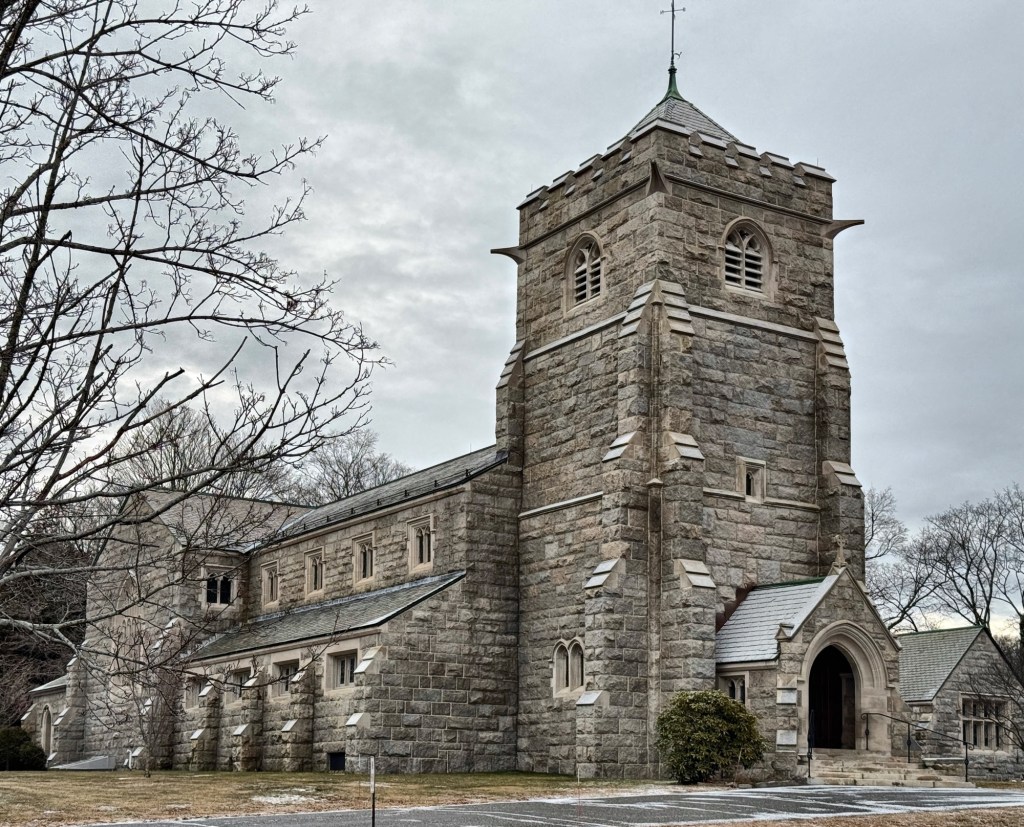
Mansfield Orthodox Congregational Church // 1839

Welcome to Mansfield, Massachusetts! Located in the southeastern part of the state, this very suburban town is often overlooked in terms of architecture, but there are definitely some great buildings to discover. This is the Orthodox Congregational Church of Mansfield, an 1839 edifice at the town’s South Common. The congregation was established in the 1730s and followed strict Congregationalist beliefs, which were at odds with the growing tide of Unitarianism which was becoming a dominant belief in the Commonwealth by the early 1800s. The differences came to a head when the Anti-Slavery Riot of 1836 occured. Factions of local pro- and anti-slavery residents fought when Charles C. Burleigh, Secretary of the American Anti-Slavery Society, was invited, with the consent of the parish committee, to lecture in the meeting-house. This difference of theological taste as well as a difference of opinion on the idea of slavery led, in 1838, to the forming of a new society, the Orthodox Congregational Society, who built this church soon-after. While the split-off congregationalists were “behind the times”, among the separatists were Hermon Hall and Deacon Otis Allen, secretary and president of the Mansfield Anti-Slavery Society. This church was completed in 1839, and was altered and enlarged in the 1850s and 1870s.

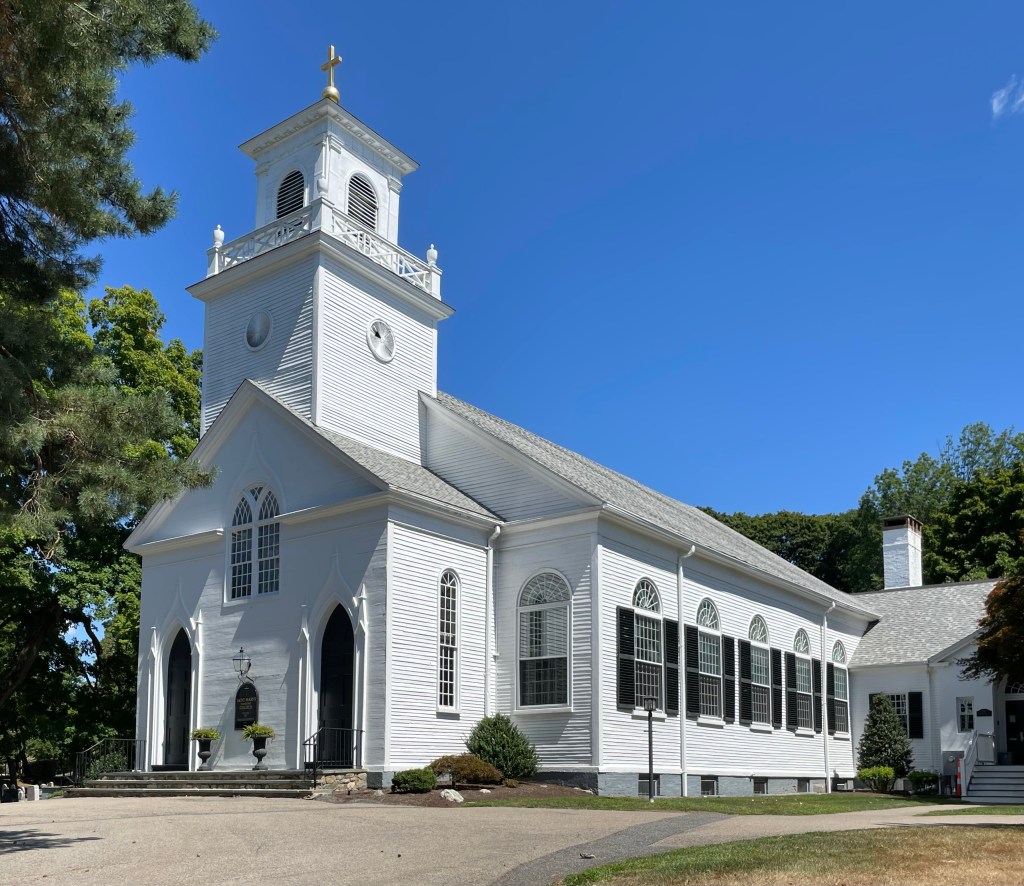
St. Mary’s Episcopal Church // 1813

Lower Falls Village in Newton, Massachusetts was first settled in the early 18th century by colonists due to the area’s natural waterfalls and rapids which was perfect for early industry. By the early 19th century, up to four paper mills lined the Charles River here at a dam which provided power and steady water supply for their facilities. The village saw a large population increase from that point until the end of the 19th century when larger mills in the state were built. One of the major community spaces for the growing village was it’s main church, St. Mary’s Episcopal Church, which is the oldest extant church in Newton and the first Episcopal church built immediately west of Boston. The cornerstone for the building was laid in September 1813 containing a package of coins and a silver plate. Previously services had been held in the Lower Falls schoolhouse, with the first Episcopal service held in 1811. The land for the church was donated by Samuel Brown a wealthy Boston merchant who invested in the paper mills in Lower Falls. Many of the founding members and parishioners were in the paper making business in Lower Falls and buried in the adjacent cemetery. The Federal style church was altered in 1838 and given Gothic detailing, including lancet windows and finials at the steeple. In 1954, the bell tower was altered with the gothic finials replaced with the current urns on the balustrade, the gothic arched openings were changed to the current arched shape, and entablature, pilasters, and a cross were added.