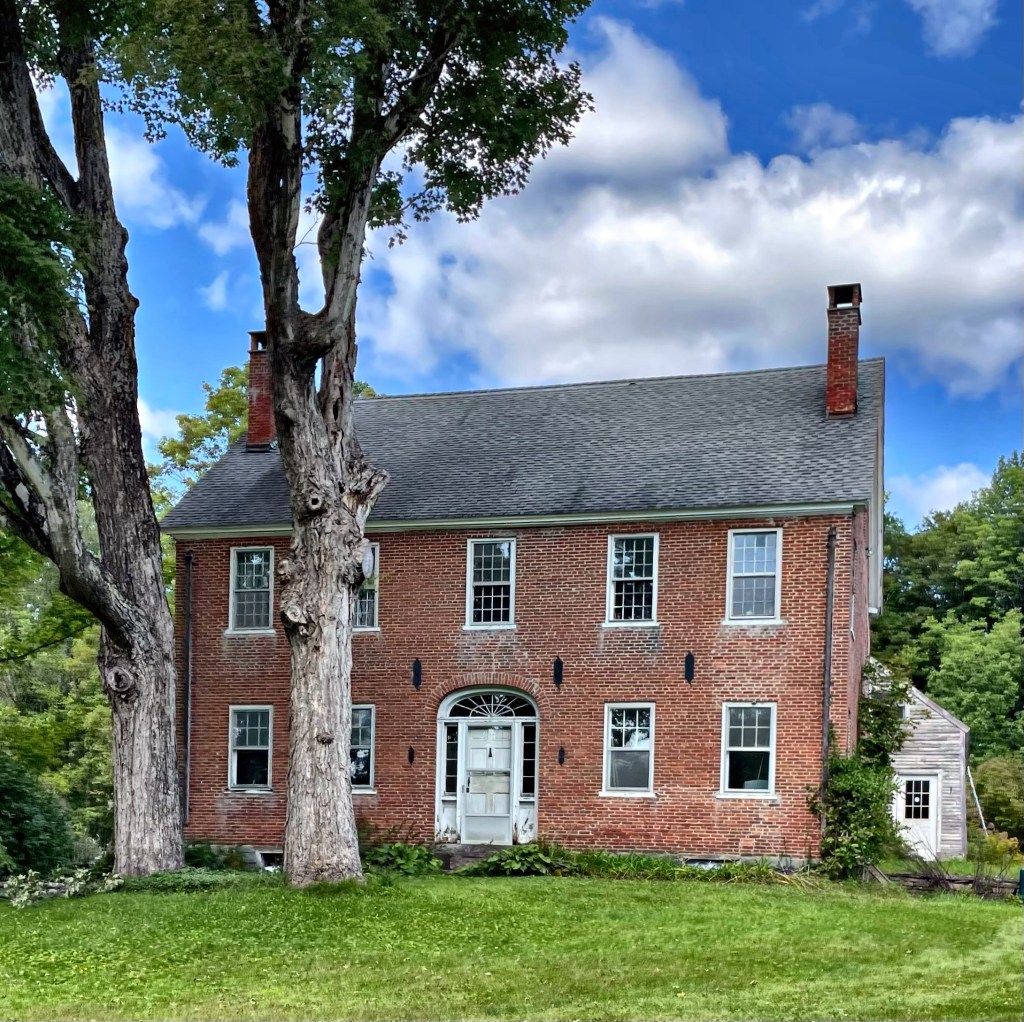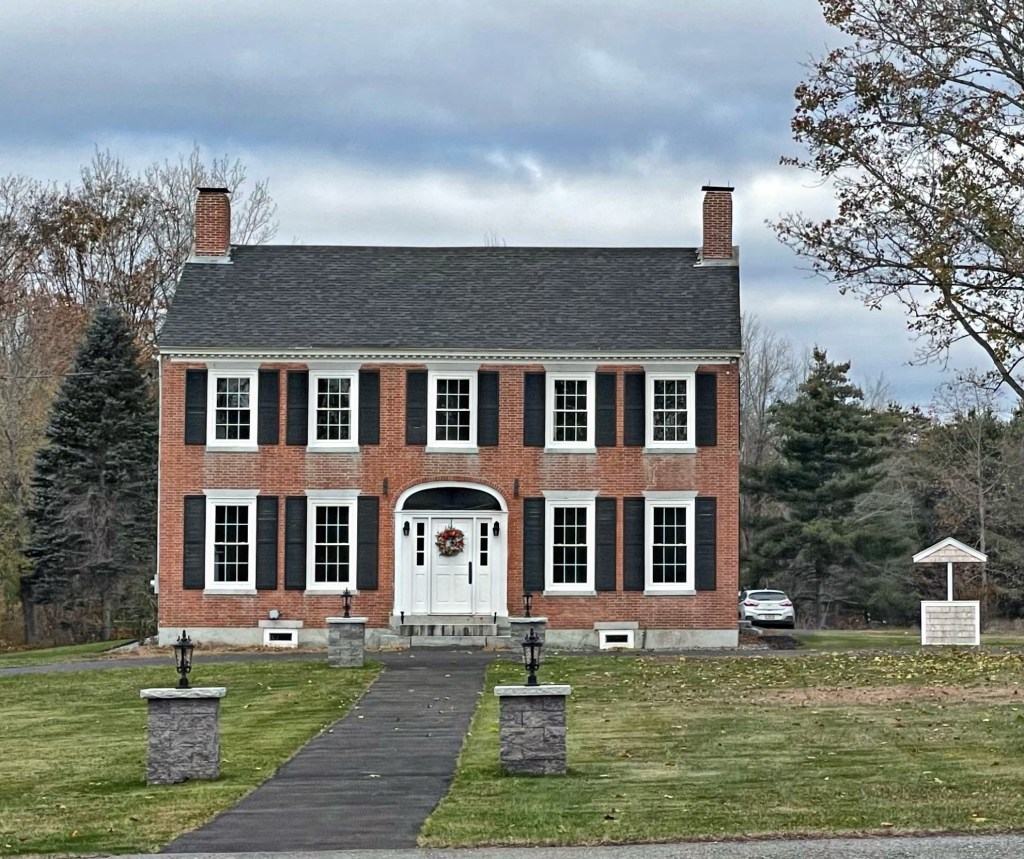
Hezekiah Chase House // c.1820

In 1782, Stephen Chase (1740-1821) settled in present-day Unity, Maine, and built the first frame house there to establish a community. After Stephen’s death, his son, Hezekiah Chase (1774-1848) built this brick, Federal period home for his family, moving his father’s wood-frame house and adding it onto the rear, which remains there to this day. Hezekiah was a judge and was involved in town affairs ever since it was established. The bricks were made locally and were of fine quality. Hezekiah’s son George C. Chase (1844-1919) was raised here. He attended Bates College in its second class, and eventually became a professor of English there. In 1894 he became the second president of Bates College and oversaw a period of significant growth at the college. Chase became known as “The Great Builder” at the college. The old Chase House was listed on the National Register of Historic Places both for its architectural merit and its history and significance to the town and region.
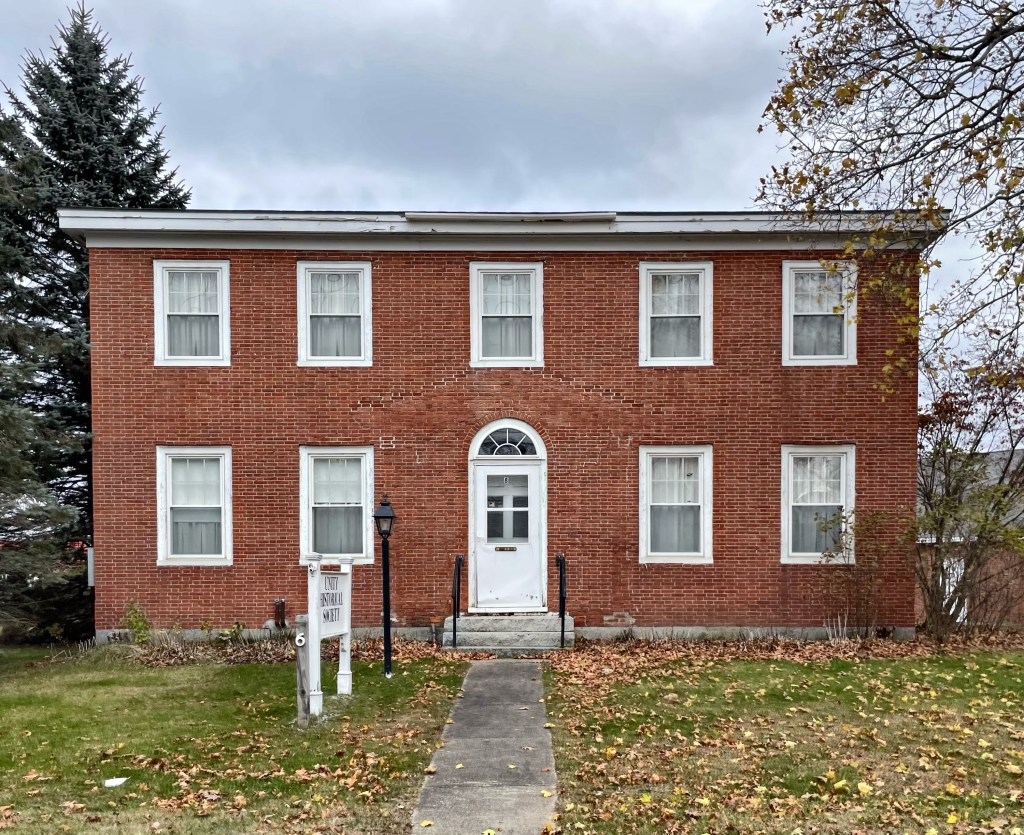
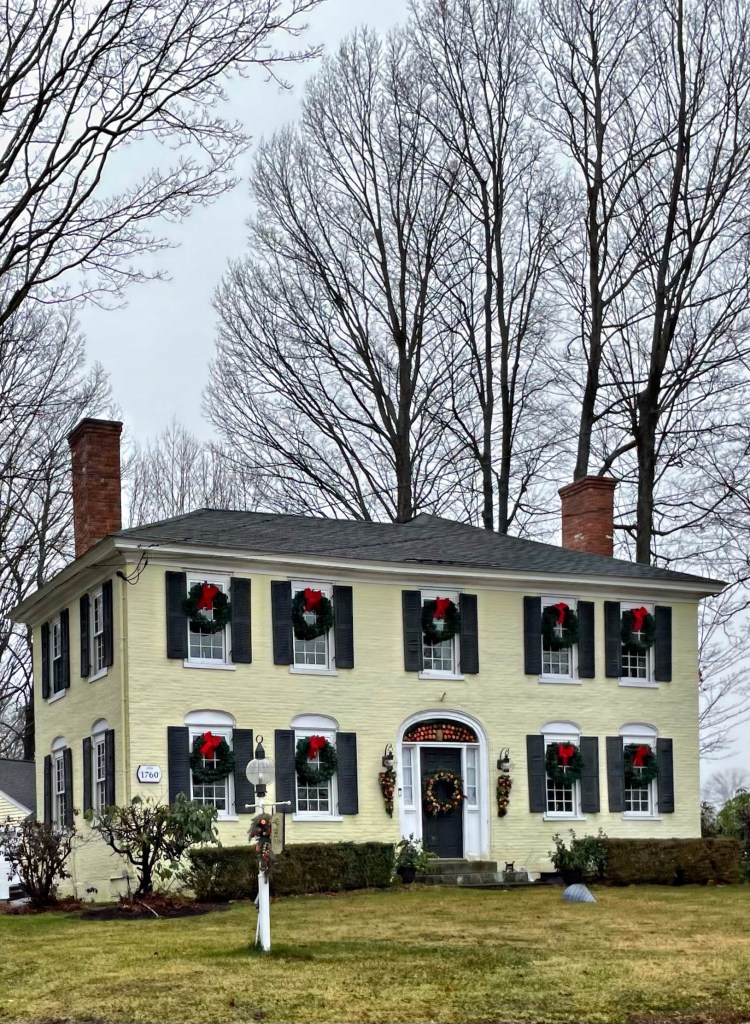
Lemuel Bartlett House // c.1813

When originally settled by Quakers, the town of Unity, Maine, was known as “Twenty-Five Mile Pond Plantation”. The name came from its being located on a pond, twenty-five miles from Fort Halifax in Winslow (creative, right?) The name was changed to Unity upon incorporation as a town in 1804. The town grew steadily through the first few decades of the 19th century and some wealthier residents began building homes. Lemuel Bartlett (1762-1834) built this house around 1813, which is a great, vernacular example of a Federal style residence in rural, central Maine. Lemuel was born in Plymouth, Massachusetts and fought against the British during the Revolution. After the war, he settled in present-day Unity around 1780 and became one of the original proprietors and land-owners here. He worked as a mason and farmer, and likely built this house himself. The property is now occupied by the Unity Historical Society.

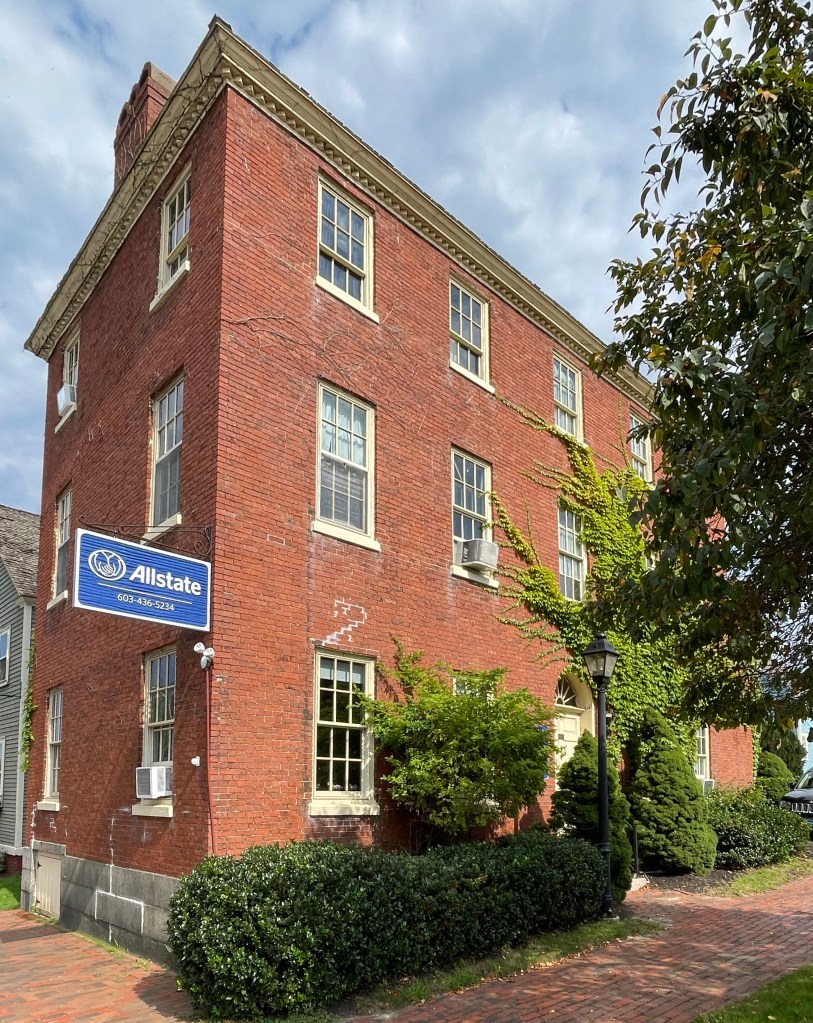
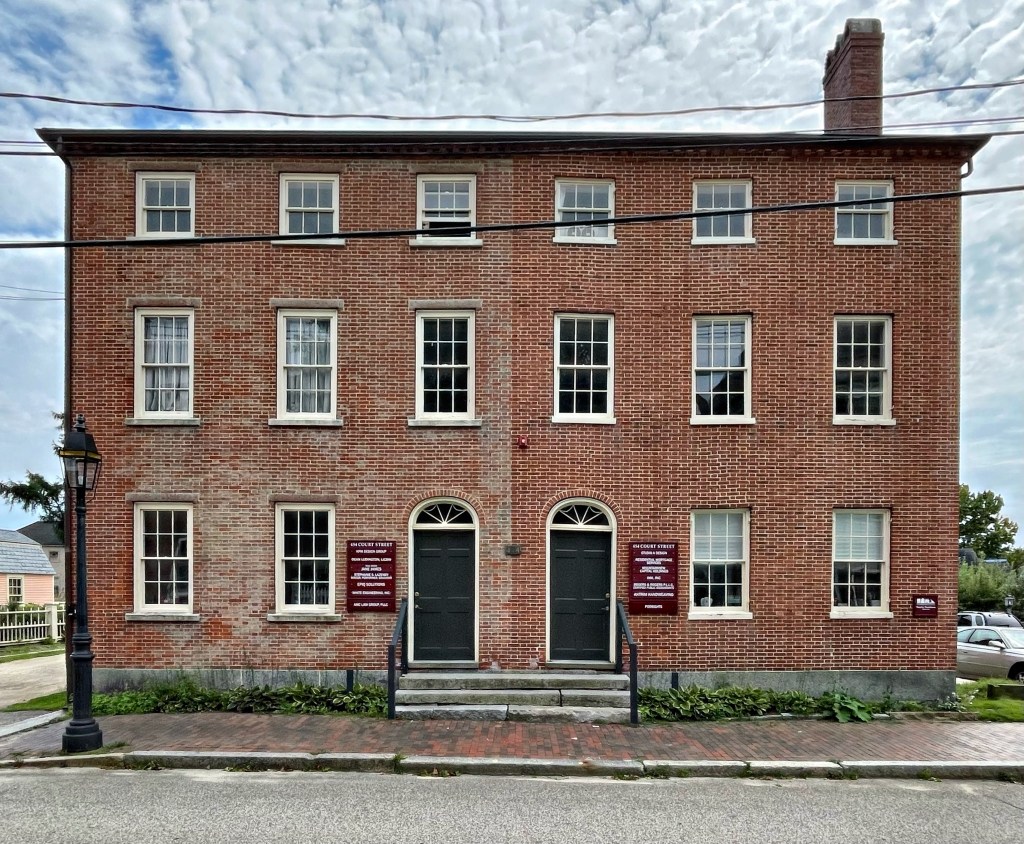
Shapley Townhouses // 1815

The Shapley Townhouses in Portsmouth, New Hampshire sit on Court Street and were built around 1814-15, after the Great Portsmouth Fire of 1813 had destroyed the center of town. It was constructed to conform with the new Brick Law that required all new buildings in downtown Portsmouth to be built of “fireproof” brick. The paired townhouses are unusual in the city as a particularly well-preserved example of a Federal period double-house. The house was built by Captain Reuben Shapley, a ship’s captain and merchant. In about 1973, this building was remodeled into a temporary home and counseling center for troubled youth. Suffering from deferred maintenance and the direct proximity to the Strawberry Banke Museum, the Strawberry Banke Foundation purchased the double-house who rent out spaces inside to offices, providing a revenue stream to maintain and further showcase the history of the port town.

Nathan Parker House // 1815

Many may not know this fact about Portsmouth, which shaped the city’s development for some of the formative years of the coastal town. The 1814 Brick Act was passed by the New Hampshire legislature after three devastating fires wiped out hundreds of closely-packed wooden buildings in the heart of the state’s only seaport. The act prohibited the erection of wooden buildings of more than twelve feet high in the downtown area which was the densest, it was effectively an early building code. The regulation helped change the look of the city, creating the red brick image Downtown that many identify today as Portsmouth. As a result, nearly all homes and buildings in the downtown area of Portsmouth were constructed of brick, largely in the Federal style, popular at the time. This home was constructed around 1815 as a wedding present for the South Parish’s minister, Reverend Doctor Nathan Parker, upon his marriage to Susan Pickering, the daughter of New Hampshire Chief Justice John Pickering and a descendant of the original John Pickering.

Mitchell-Beinecke House // c.1821

At the peak of Nantucket’s whaling industry wealth, the island began to see new brick buildings and whaling mansions that symbolized the stability and success of the town. In 1821, Frederick W. Mitchell (1784-1867), acquired this property on Main Street, demolishing the previous wood-frame house on the site, in preparation for his own mansion. Frederick Mitchell was a successful whaling merchant and one-time president of the Pacific National Bank. Mitchell was married twice but left no children from either marriage. The house remained in the Mitchell family until 1889 when it sold it to Caroline Louisa Williams French (1833-1914) of Boston, who summered on Nantucket until her death in 1914. A devout Episcopalian, French gifted this house to St. Paul’s Church in Nantucket for use as a Parish House. The church deaccessioned the house, and it eventually sold in 1962 to Walter Beinecke (1918-2004) acquired the house for his home. A central figure in the preservation and revival of Nantucket in the second half of the 20th century, Beinecke sought to preserve the island and reduce the damage done by tourism by creating a higher-priced resort that would reduce the number of day tourist and aim at increasing the number of wealthy tourists who would come as summer residents or for extended visits. Working towards this goal, Beinecke acquired large numbers of buildings (more than 150) in the commercial core of the town as personal investments through his private company Sherburne Associates, restoring many. The house is one of the finest examples of late-Federal residential architecture on the island with its recessed entry and fanlight transom, symmetrical five bay facade, decorative parapet and belvedere at the roof.

Oliver Tarbell House // c.1830

Oliver Tarbell and his wife Sandy erected this stunning brick Federal farmhouse in Cavendish around 1830 for their ever-growing family. The couple had thirteen children who survived infancy, so even this large home was likely stuffed to the gills and hectic! Oliver appears to have built the home, incorporating his ancestral home onto the rear of this brick house, as a rear ell. The house recently sold in 2022, so of course I had to gawk at the amazing interior photos

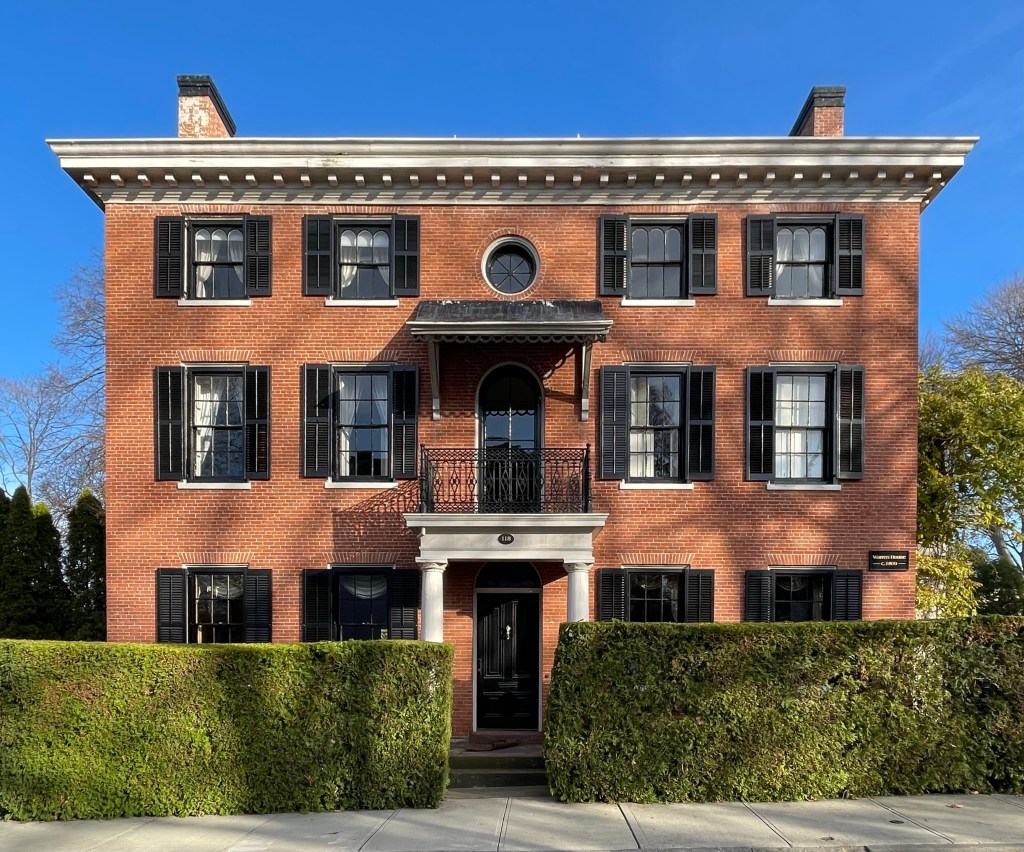
James Neal House // 1831

Continuing with my mini-series on The Hill, a neighborhood of 18th and 19th century houses and buildings saved from Urban Renewal in Portsmouth’s North End neighborhood, I present the James Neal House. Built in 1831 and taxed a year later, the house stands out as a late Federal style property, a style that was well on its way out in popularity. Additionally, the home is the only extant brick house in this area of town from the period. James Neal was listed in directories as a merchant, possibly being involved in the shipping of goods from plantations in the Caribbean, which were farmed by enslaved Africans. James died just a few years after his home was built. The brick house is three-stories with a hipped roof. The entry is surmounted by a semi-circular fanlight set within a recessed opening, a modest take on the Federal style.

Samuel Eddy House // 1797

Located next door to the William Holroyd House (last post) in Providence’s College Hill neighborhood, this Federal style home appears to have been constructed by the same builder just a year apart, but in brick! This house was constructed in 1797 for Samuel Eddy, an attorney, congressman, and later served as Chief Justice of the Rhode Island State Supreme Court. Similar to the Holroyd House, the property was later acquired by a member of the Brown Family, and has since become part of the Brown-RISD Hillel.

Hall-Balcom House // 1810

This historic house in West Millbury, Massachusetts, began in the end of the 18th century as a one-and-a-half-story wood-frame farmhouse. By 1810, the home was rotated 90 degrees and a more substantial, two-story brick house was constructed facing the street. The Federal style home was owned by Thaddeus Hall (1779-1855), and after his death, it was owned by his son, Orson Eddy Hall, who possibly rented the property for income while he resided in New Orleans and ran the iconic St. Charles Hotel there. The property was later acquired by Willard Balcom and remained in the family. Oh what I wouldn’t do to see the paint come off this old brick house!!

Lawton-Warren House // 1809

The Lawton-Warren House is one of the few large, brick Federal mansions in Newport, and is located a short walk from the Tillinghast House (last post) and the mysterious Newport Tower in Touro Park. The collapse of maritime trade in Newport following the British occupation was so complete that this house style, prevalent in Providence, is virtually nonexistent here. Robert Lawton was a sea captain and merchant who died at sea in 1818 off the coast of Africa and left the house to his wife, Penelope. After Penelope’s death in 1855, the traditional Federal style home was given Italianate detailing at the second floor. The home was likely painted around this time, which thankfully has been removed. The home was purchased in 1932 by George Henry Warren and his wife Mrs. Katherine Urquhart Warren. Katherine was a preservationist and art collector interested in preserving the Colonial town of Newport. To assist with this endeavor, she convinced the Countess Szycheni, a descendant of the Vanderbilt family and owner of The Breakers, to open The Breakers mansion to the public for tours. It was the start of the Preservation Society of Newport County. She would later be appointed by First Lady, Jacqueline Kennedy, to the committee to restore the White House in 1961. Katherine died in 1976, she willed the home here to the Preservation Society, and it held offices there until 1994. The home was sold to a private owner who restored the home to near original conditions, keeping the Italianate detailing.