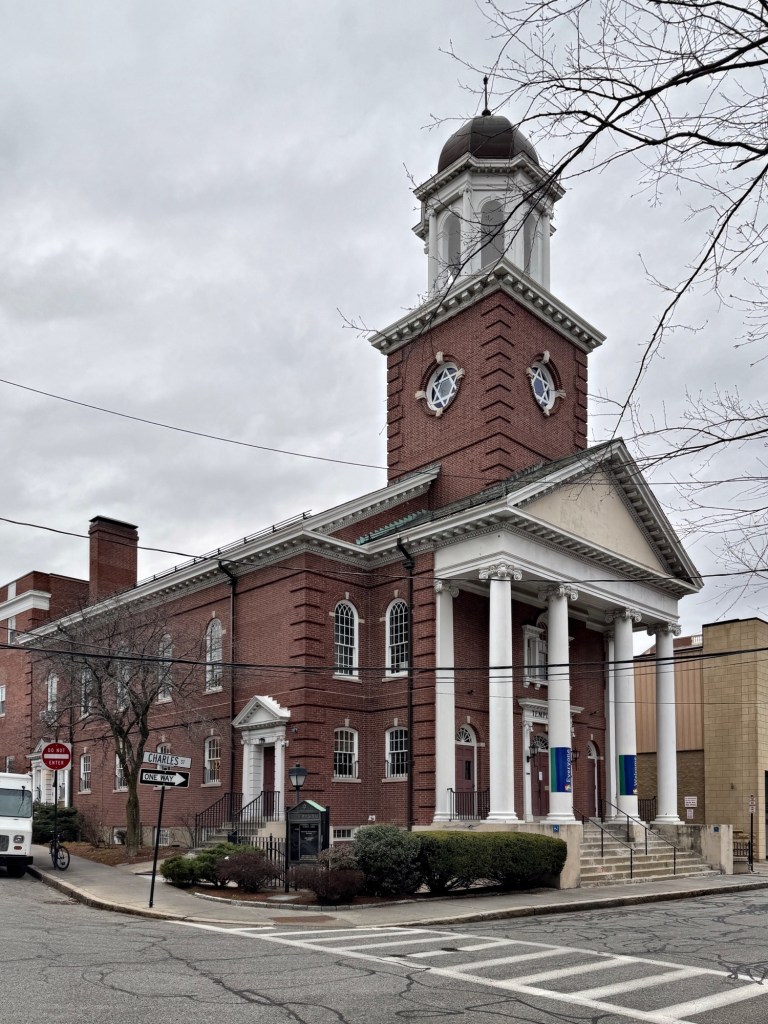
Second Unitarian Church of Brookline – Temple Sinai // 1916

An excellent example of an early 20th century church designed in the Colonial Revival style, the former Second Unitarian Church of Brookline (now Temple Sinai), was built when much of the surrounding neighborhood was developed and as a result, is tucked away off main streets, creating a unique viewshed for passersby. Brookline’s second Unitarian Church was formed in 1896, with the congregation holding its first meetings at Sears Chapel in the Longwood neighborhood nearby. Decades later, the Second Unitarian Society was urged to find another place for its congregation as the Longwood church wanted full access of their building. The Unitarians purchased a lot of land adjacent to their Parish House in Coolidge Corner (no longer standing) and gathered funds to hire architect, Edwin J. Lewis Jr., who is said to have designed the new edifice as a contemporary take on Christ Church in Alexandria, Virginia. The church features a monumental portico supported by four Ionic columns, round arched windows, and a center tower that (at the time) was surmounted by a golden dome, visible for miles. Since 1944, the former church has been home to Temple Sinai, a reform synagogue that was established in 1939. The Jewish congregation here has maintained the building making slight changes to meet its needs. 
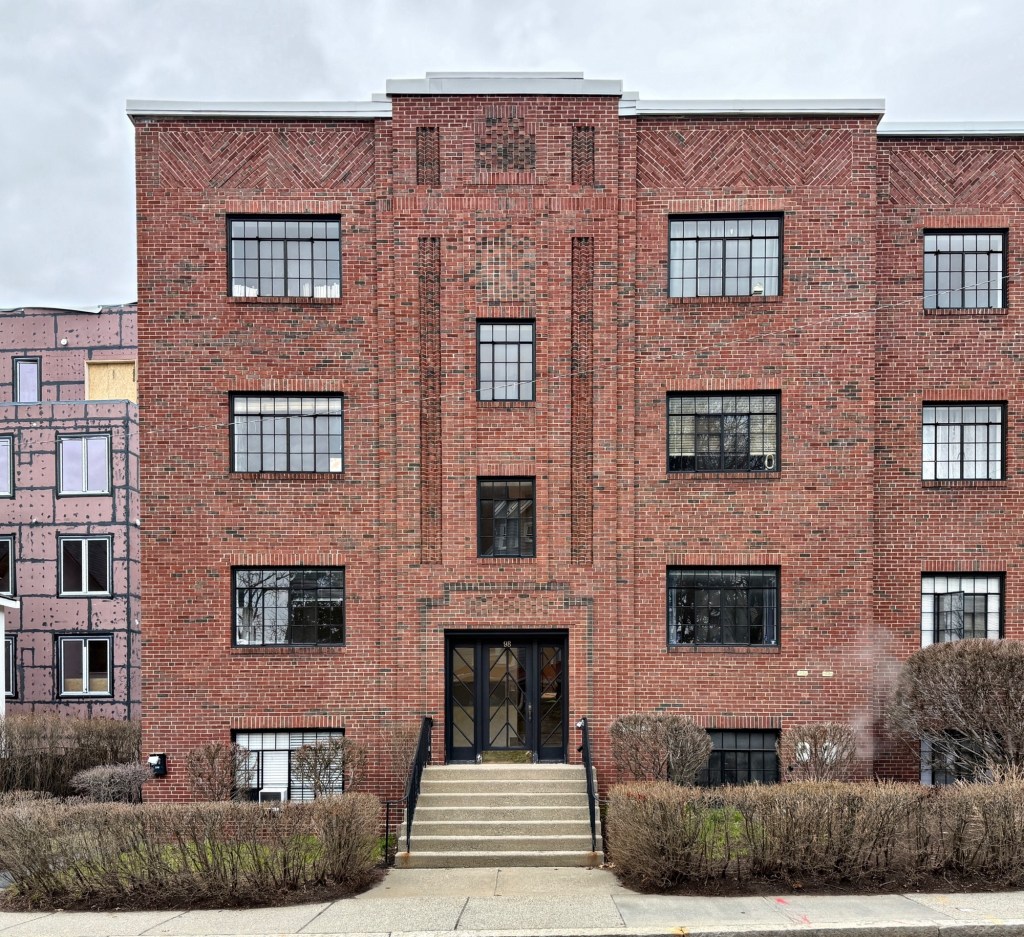
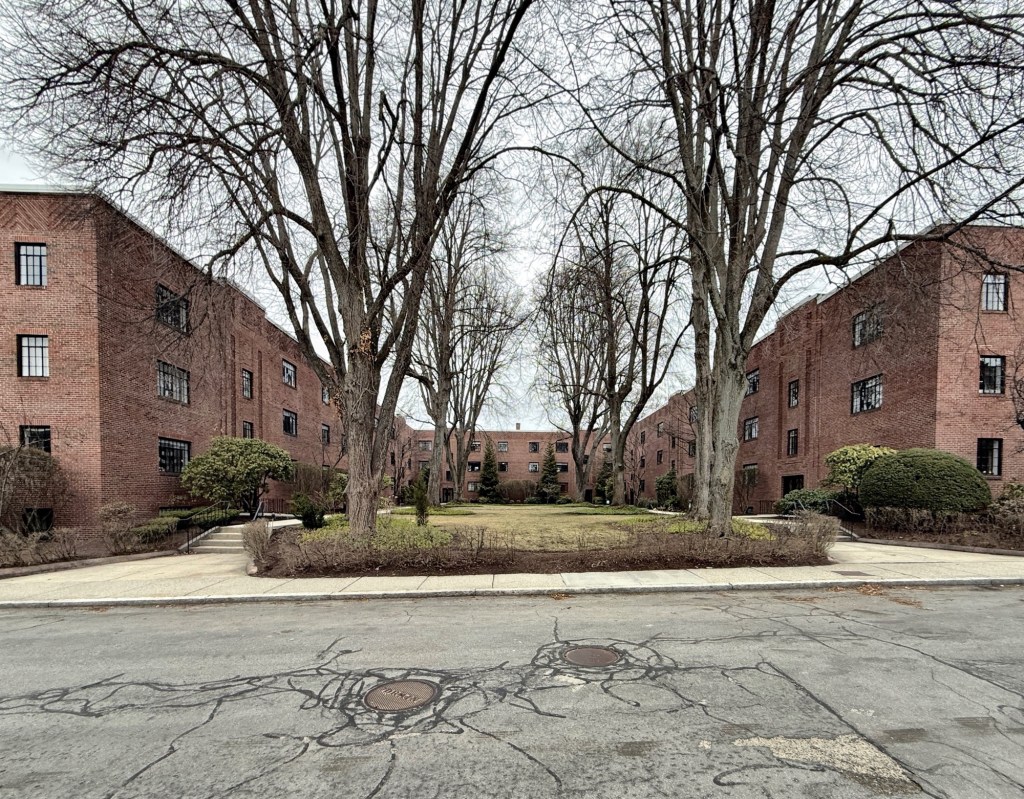
Sewall Apartments // 1938

This garden apartment complex at 98-116 Sewall Avenue in Brookline is an excellent example of the Art Deco style which reached its height in popularity in the midst of the Great Depression, so fewer examples of the style are typically found. Here in Brookline, the city was seeing rapid development in the early decades of the 20th century, where large estates were subdivided and commercial areas expanded into once residential neighborhoods. U-shaped in plan and standing three-stories, this complex replaced a large property owned by the Stearns Family, a prominent local family with many properties around present-day Coolidge Corner. The apartments were developed by the G & S Investment Company, a real estate development firm, who hired architect, Saul Moffie, to design the building. Completed in 1938, the complex has richly articulated facades with a variety of geometric brick patterns, including chevrons, diapering, header courses and soldier courses with each entryway identified by a projecting pavilion with a stepped stone parapet above. The doors and sidelights are wood with glass panels in a chevron motif similar to the brickwork and all residential units have steel multi-pane windows. What a gem!

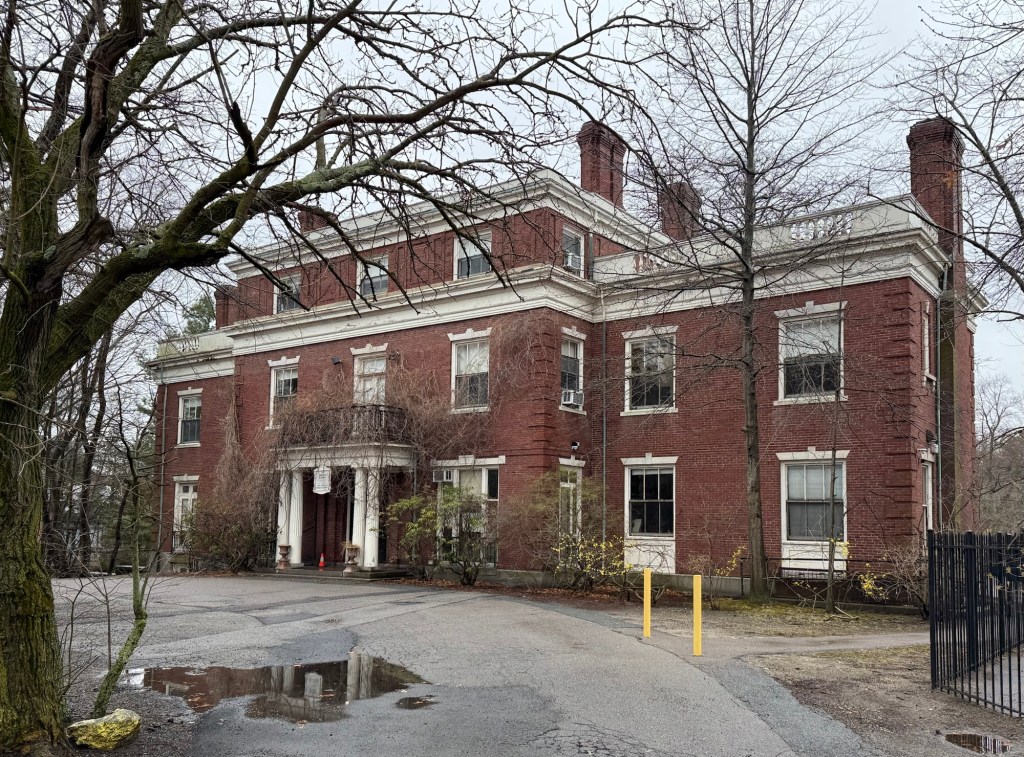
Frederick P. Fish Mansion – New England Hebrew Academy // 1902

One of the finest estates in Brookline can be found here in the Cottage Farm neighborhood, just steps from Boston and the Charles River. This brick mansion was built in 1902 for Frederick Perry Fish (1855-1930), a prominent lawyer who also served as president of American Telephone & Telegraph Corporation from 1901 to 1907. One of the leading patent attorneys of his age, representing such clients as Alexander Graham BellThomas Edison, and The Wright Brothers, by the time of his death he was believed to have appeared in more patent cases at the Supreme Court than any other lawyer. For his Brookline residence, Fish purchased an 1867 brick mansard-roofed home on the lot and hired the architectural firm of Winslow & Bigelow to ether modify the earlier home or demolish it and build entirely new. The result is this stately, three-story Neo-Classical mansion. Fish would die at his home in 1930, and the property would eventually be owned by the New England Hebrew Academy as a Jewish day school. While it is an institutional use, the facade is covered with climbing vines that are bad for the masonry and an asphalt paved front yard which detracts from the beauty of this estate. It appears to be near-original though, which is great to see!

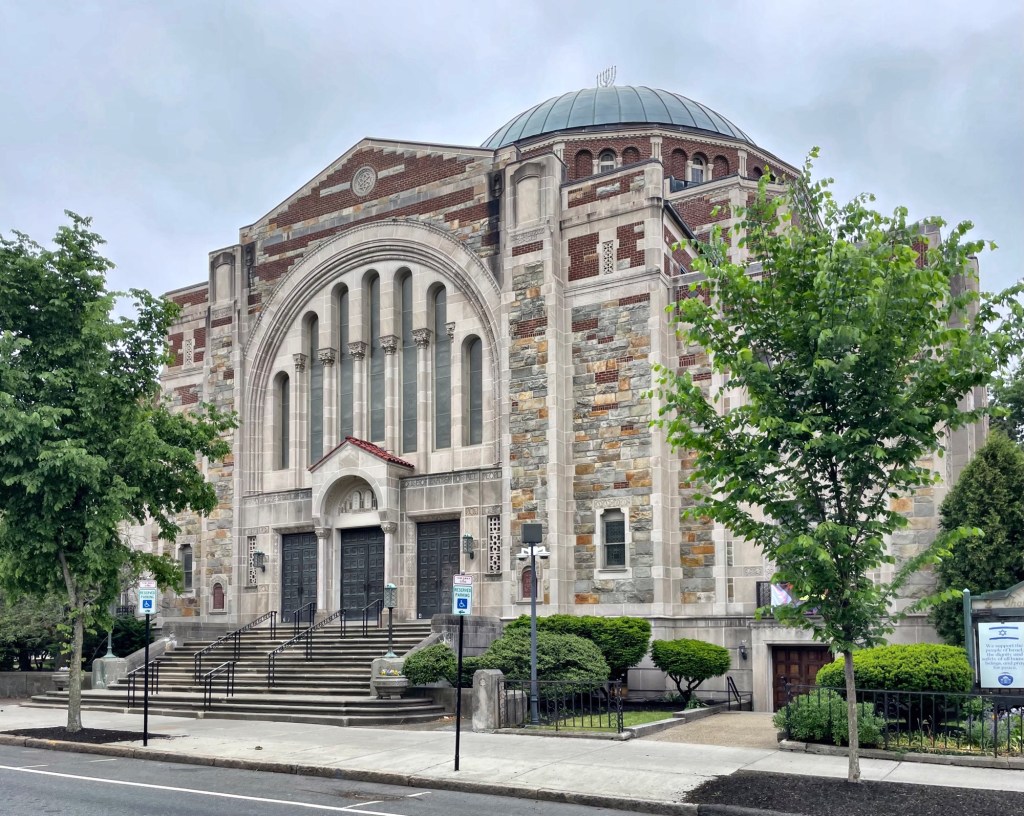
Temple Ohabei Shalom // 1927

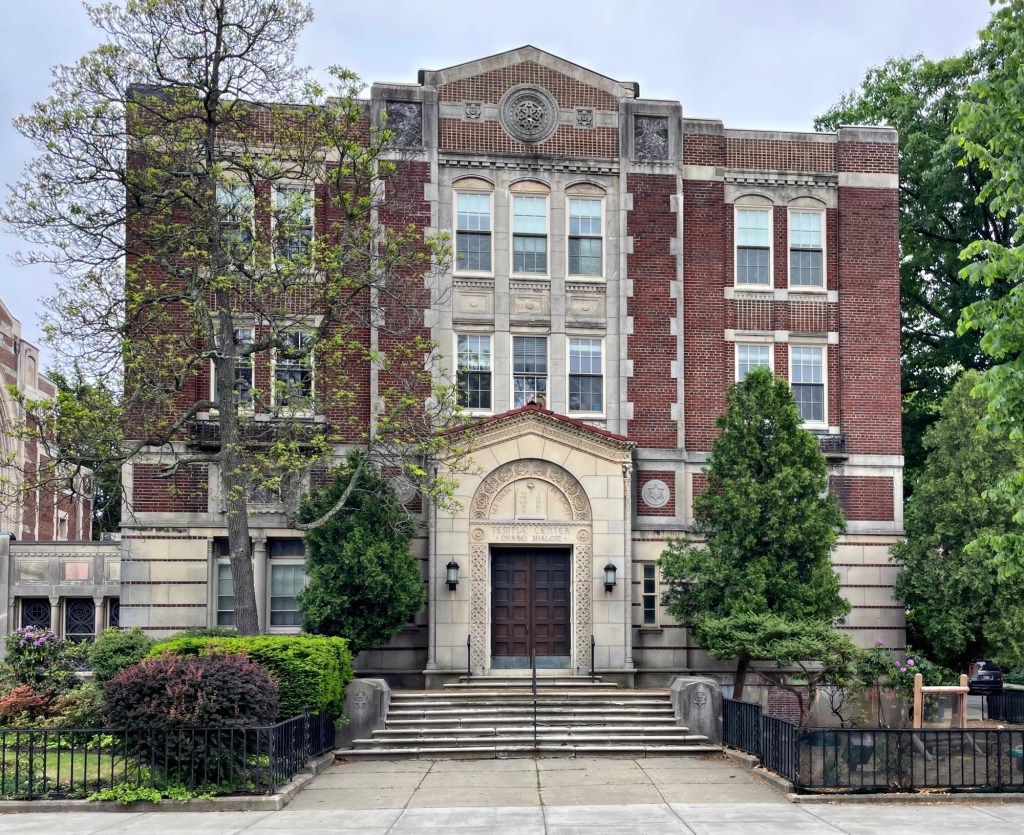
The congregation of Ohabei Shalom is the oldest jewish congregation in the greater Boston area and the second oldest in New England. It was formed in 1843 and was the first formal congregation in Boston. After a smaller space, they purchased the former South Congregational Unitarian Church on Union Park Street in the South End of Boston. The congregation split over ideological differences and the decision was made for one half of the congregation to build a new temple in Brookline, where many of the members began to move to. Land on Beacon Street, just west of the Longwood section of Brookline was purchased in 1921, and it would be four years until a temple center (now the hebrew school) was built in 1925. The larger temple was built just after on the corner of Beacon and Kent streets in Brookline from plans by Clarence Blackall, a noted architect in the area. With its lively use of polychromatic masonry and Byzantine ornament, all surmounted by a great copper dome, the congregation boasts the most architecturally outstanding synagogue in the Boston region and it has been maintained well for the almost 100 years since it was built.

School Building