Hidden Valley Castle // 1921

Photo from listing.

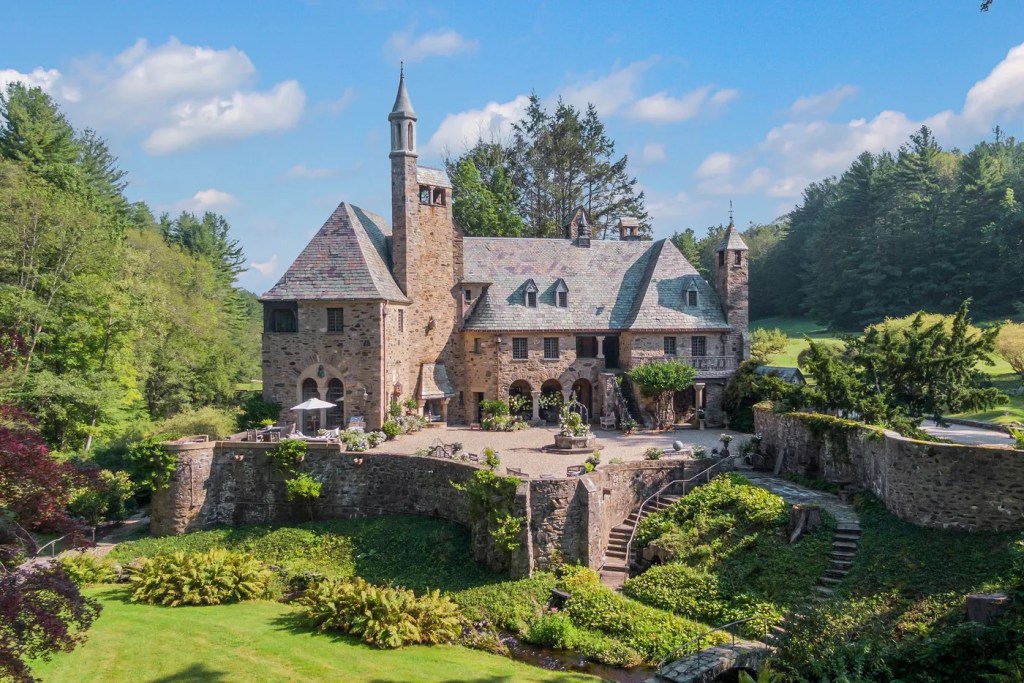
A castle can be found in the small town of Cornwall, Connecticut! Set amongst 275 acres of woodland and streams, with several outbuildings on the property, this whimsical castle looks like it was dropped here from Cornwall, England, but it actually dates to the 1920s. Hidden Valley Castle, had its beginnings when socialite Charlotte Bronson Hunnewell Martin envisioned building a unique country retreat for herself and her husband, Dr. Walton Martin, in the Litchfield Hills of Connecticut as a summer retreat. Just before this, Charlotte had bought a group of 20 brownstones in Manhattan on 48th and 49th Streets, between Second and Third Avenues, and converted them into charming townhouses around a central Italian-inspired garden. Called Turtle Bay Gardens, the houses were highly acclaimed and almost immediately attracted prominent and celebrated residents. The Cornwall Castle was designed by architect, Edward Clarence Dean, who also redesigned the Turtle Bay Gardens for the couple. Dr. Martin imported many of the materials as well as the 100 workmen required to build the castle, a project that lasted five years. Charlotte would also have a cottage built on the estate and hired young Italian artist, Vincenzo Rondinone, to be her resident artist on the estate to create unique vases, bowls, and pots to be used at the house and to be given as gifts to visitors and friends. The property was restored in recent years and put up for sale, with the cottage sold as a separate dwelling.
“Breakwater” – Charles W. Lippitt Mansion // 1899-1924

Photo courtesy of Providence Public Library

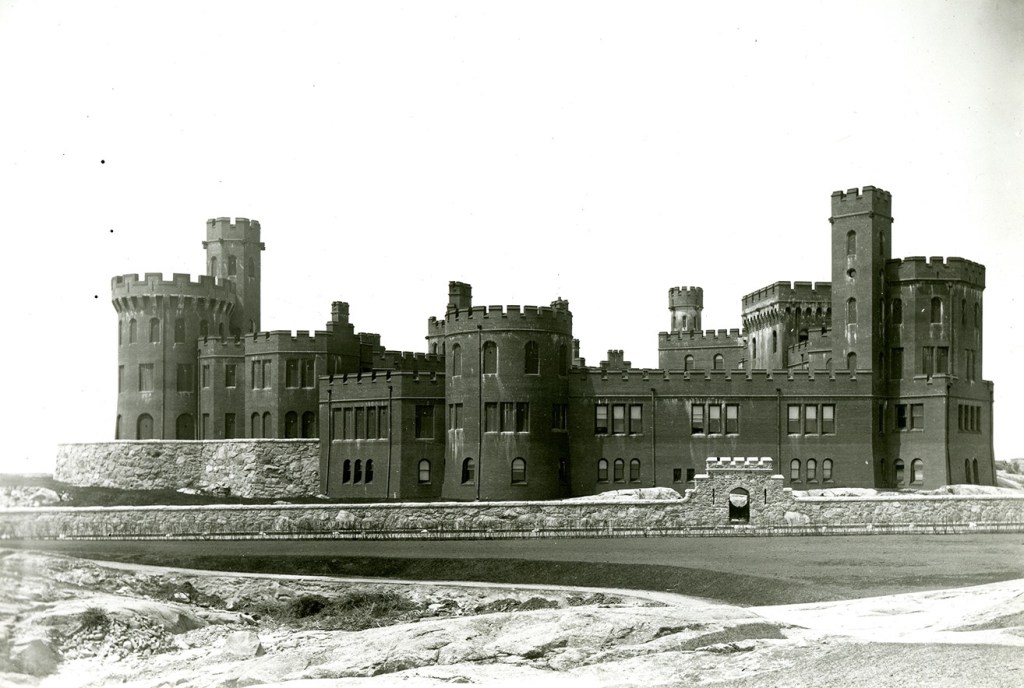
Rhode Island is home to some amazing old homes, but “Breakwater”, the Charles W. Lippitt Mansion was NOT one of them! Former Governor, Charles Warren Lippitt (1846-1924), the son of Governor Henry Lippitt, wanted to be a member of Gilded Age society in Newport, after spending his time in Providence all year, so he had this absolute fortress built. Poor taste did not run in the family, as his father’s Providence mansion was very tasteful (featured on here previously). Breakwater was built on the southern tip of Newport, ironically across the street from Edith Wharton’s tastefully designed cottage, Land’s End (also featured on here recently). Wharton used the term “White Elephants” to describe the influx of massive, masonry mansions that replaced the traditional wooden cottages, similar to what she observed with the Vanderbilt estate, The Breakers. It is understood now why Edith Wharton abruptly moved when this monster of a house was built right next door! Architect Robert H. Robinson designed the fortress – erh I mean house…- and it remained on the site only until Lippitts death in 1924, when the castle was demolished by his son to make the property more marketable for sale. The property was purchased in 1926 by John Russell Pope, an architect, designed his own Tudor style home, “The Waves” (featured on here previously) atop the ruins of the previous estate. MUCH better!

Governor Waller Castle // c.1905

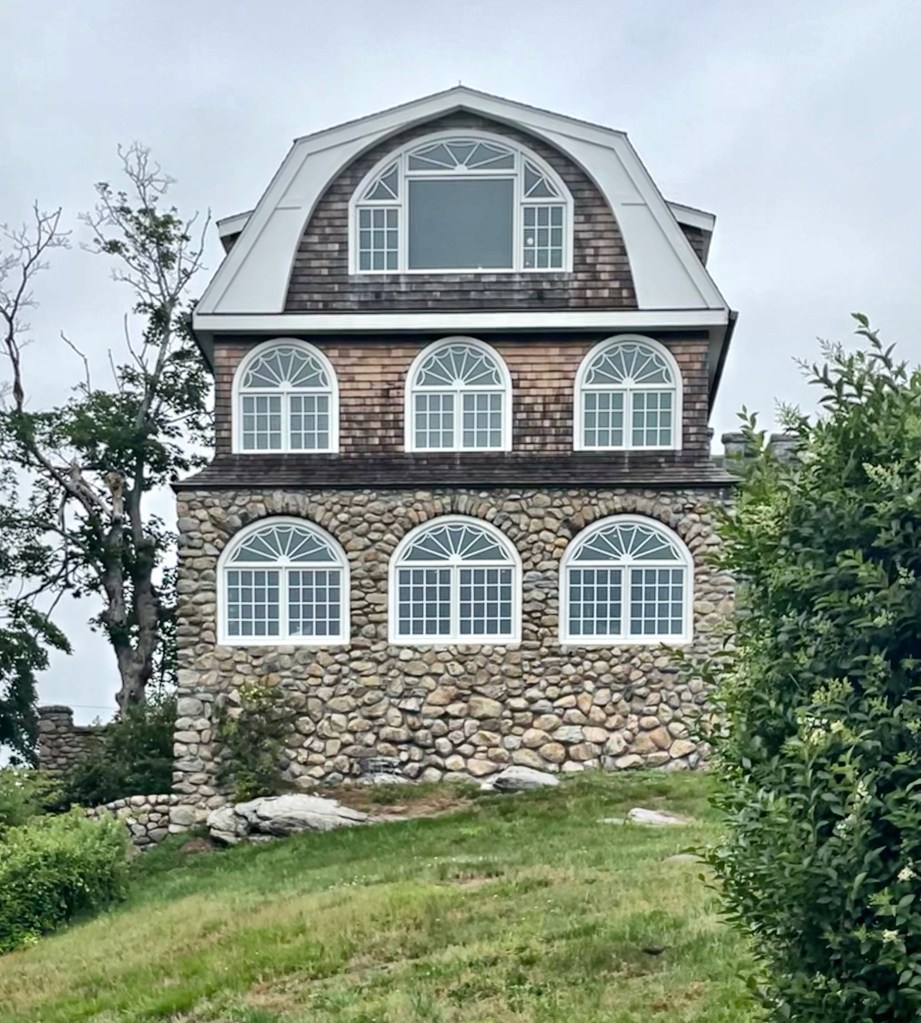
Who doesn’t love a good castle?! This stunning stone house atop a hill in Neptune Park, a neighborhood of summer cottages at the southern tip of New London, CT, was built around 1905 for Thomas M. Waller (1839-1924), an attorney and 51st Governor of Connecticut. Some estimate that the “castle” is much older (1850s), and was built by Samuel Mackenzie Elliott, a prominent NY doctor and abolitionist, but I could not prove that, though the street name “Elliott Ave” is a good starting point. The home was occupied by former Governor Thomas Waller as a summer retreat while he ran his legal office in downtown New London. The home suffered neglect (and possibly a fire) and was partly rebuilt with a new rear wing fronting the ocean proving amazing views of the Long Island Sound.

Beckett’s Castle // 1874

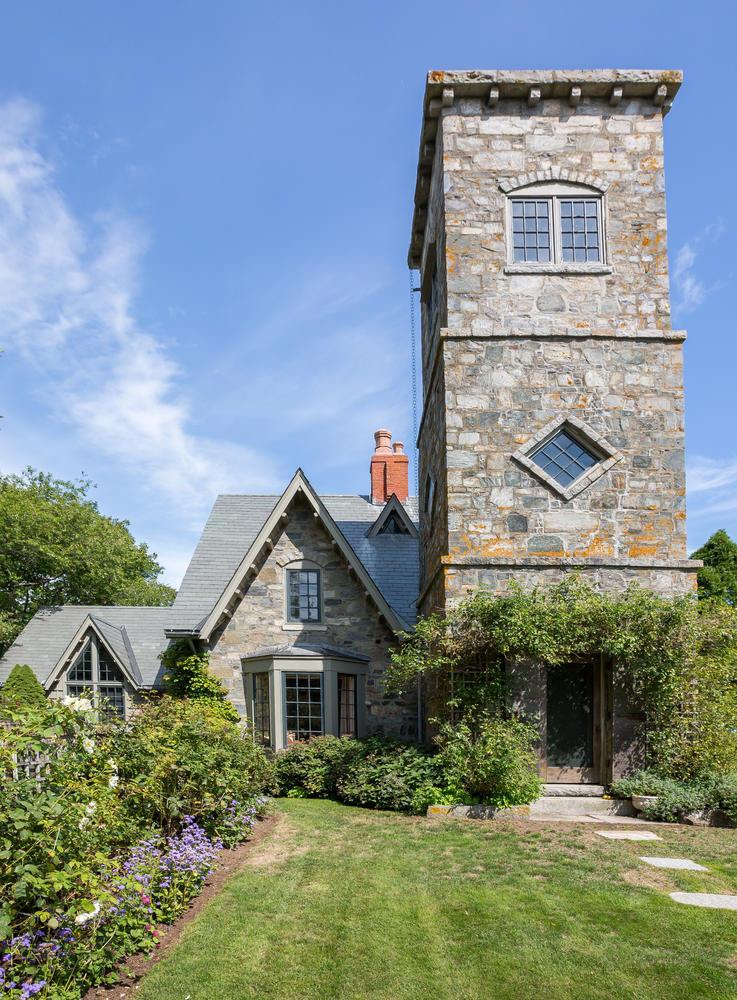
On a rise above the Cape Elizabeth’s rocky shore stands Beckett’s Castle, a picturesque Gothic cottage of a century ago. Designed and built by the Portland literary figure Sylvester Beckett for his summer residence, the Castle was begun in 1871 and finished in 1874. It is said that Beckett constructed the cottage from local gray fieldstone largely with his own hands, though he must have had help, or fabricated this fiction as he would have in his own books. The home was patterned after a typical English castle, but on a much smaller scale, and is tucked away from the street. Sylvester Blackmore Beckett was born in Portland, Maine in 1812, as the son of English parents. Although never attending college, he acquired a modest education and became a prominent journalist and articulate writer. He was admitted to the bar in 1859 and spent much of his time administering and settling estates becoming well-connected in town. Beckett held massive parties in the home, and invitations to the social gatherings held there were highly prized; guests were served expansive dinners cooked in primitive fashion in a large fireplace. Sylvester Beckett died in 1882, and went to his only child, Lizzie. The home fell into disrepair in the 1970s, but was restored by the most recent owner. It was sold in 2018, and the listing photos show some great interior spaces.