The First Church Congregational in Fairfield, Connecticut is the sixth church to occupy this site! The first structure was built in 1640, and the current building was constructed in 1892. The third version of the church was burned by the British in 1779, while the fourth “meeting house” took nearly 42 years to finish and was partially funded by the sales of properties which formerly belonged to Tory sympathizers. The Romanesque Revival church was designed by architect J. Cleaveland Cady, who is best known for his design of the south entrance of the American Museum of Natural History on the Upper West Side of Manhattan.
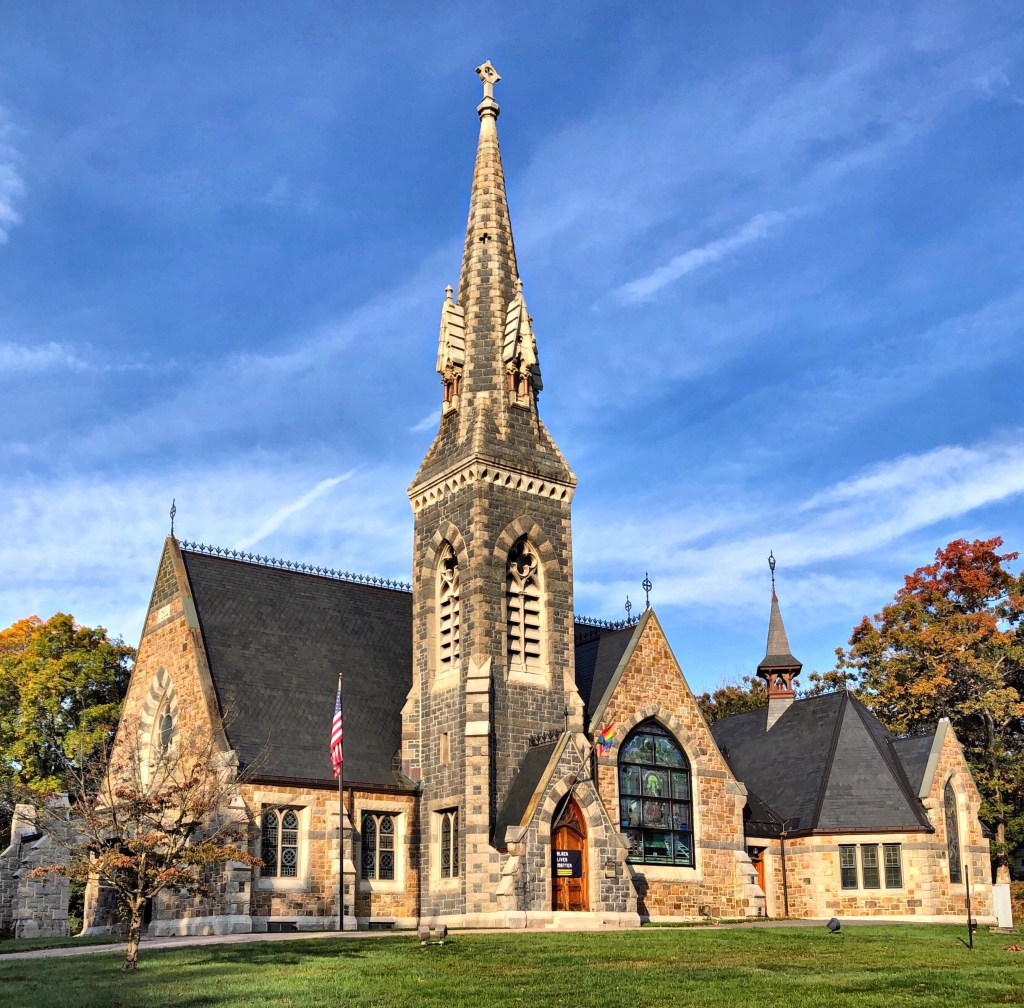
The Unity Church of North Easton, Massachusetts looks like it could stand toe-to-toe architecturally with the large churches in major American cities. The church was a gift to the Unitarian Society in town, by Oliver Ames II, who hired renowned Gothic architect Henry Vaughan to design a chapel, worthy of the town’s wealth. The church contains various tablets and memorials to the Ames Family, with stunning stained glass windows by John LaFarge, recently restored by the church! Behind the grounds is the cemetery where many of the Ames family members are buried.
Located in the Enfield Shaker Village in Enfield, New Hampshire, this stunning chapel building clearly depicts the significance of religion and faith in the Shaker Community. The church structure however, was built after the Shakers sold the property! In 1923, after 130 years of farming, manufacturing, and productive existence, declining membership forced the Shakers to close their community and put it up for sale. In 1927, the Shakers sold the site to the Missionaries of Our Lady of La Salette, an order of Catholic priests, ensuring the continued tradition of spiritual, communal life on the site. The La Salettes also continued the very active agricultural use of the site as well as establishing a seminary and high school here.
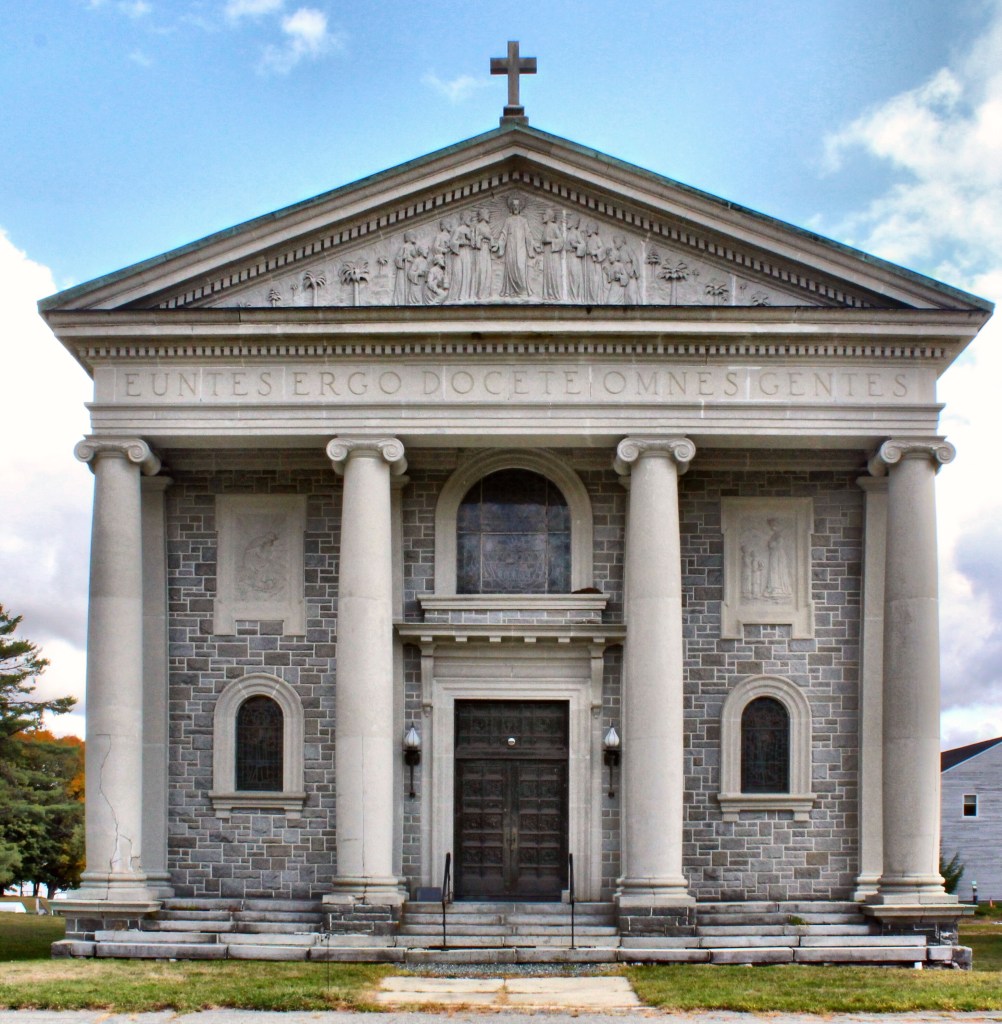
The Mary Keane Chapel dates from the post-Shaker era at the Church Family site. Designed by Donat R. Baribault of Springfield, Massachusetts, the chapel was built for the Brothers of the La Salette Order with funds donated by their benefactress, Mary Keane. Ms. Keane, who had inherited a fortune from her uncle, pledged that fortune to assist the La Salette’s in the establishment of a French language seminary in Enfield. Her wealth helped purchase the former Shaker community, renovate the building for La Salette’s use, and build the Mary Keane Chapel.
The property was purchased again in 1985 and has operated as the Enfield Shaker Museum starting in 1986. The museum offers educational exhibits and programs designed to invite active participation in learning about the extraordinary people who once lived and worked here.
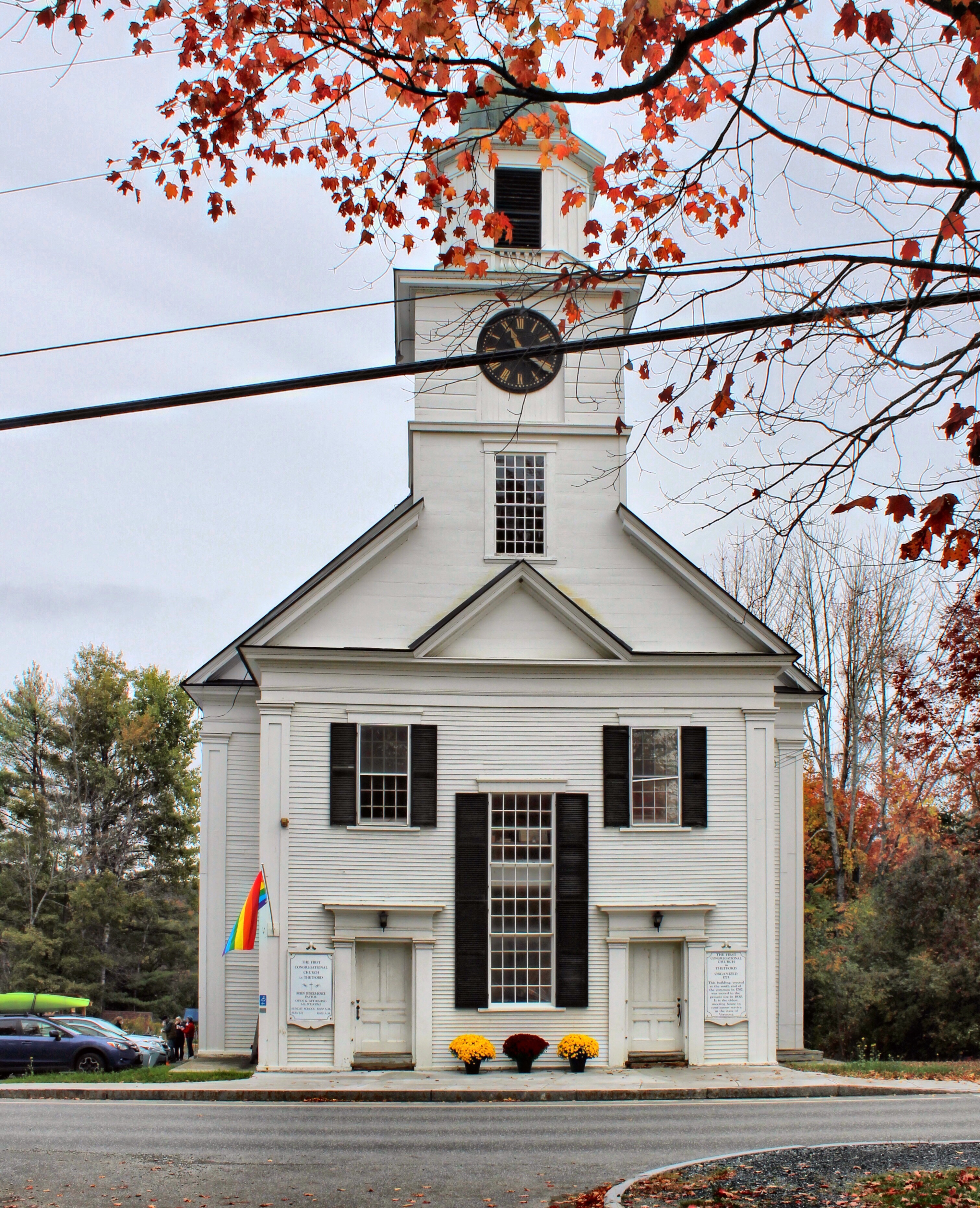
Attempts were made to organize the Congregational Church in Thetford, Vermont as early as 1771, making this congregation among the five earliest in the state. As was typical of the day, the meetinghouse was intended to serve both public and religious functions, before the separation of church and state. Following the customary dispute over the location of the meetinghouse in town, the structure was erected on the Town Common, marking the beginning of the village of Thetford Hill. Construction began on the meetinghouse in 1785, being completed within a couple years. Sometime between 1807 and 1812, the Congregational Church ceased to be supported by taxes as the separation of church and state resulted in the sale of the meetinghouse and its subsequent move in 1830, from the town-owned common to its present site just north of it. In 1830, the pavilion, tower, and pilasters were added to give the church a Greek Revival flair. The church is reportedly the oldest meetinghouse in the state still in continuous service.
For the small population living in the farming village of Waban in Newton, MA, every Sunday, they had to take a horse and carriage or walk to church in a nearby village. The Waban Christian Union was the first religious organization to be established in Waban, 1894-1895 after seeing a suburbanization of the village. The church was to be for services of the Protestant Episcopal Faith, though the group claimed no allegiance to the Diocese, nor was it organized according to the laws of the church. It was independently owned by a corporation that felt the need for a religious association in the community. This church structure was constructed in the summer of 1896 at a cost of $5000 with William F. Goodwin, a charter member of the group (and resident nearby), donating his services as the architect. The organization leased the space to a pastor for $200 a year, later selling it to the congregation, known now as the Church of the Good Shepherd.
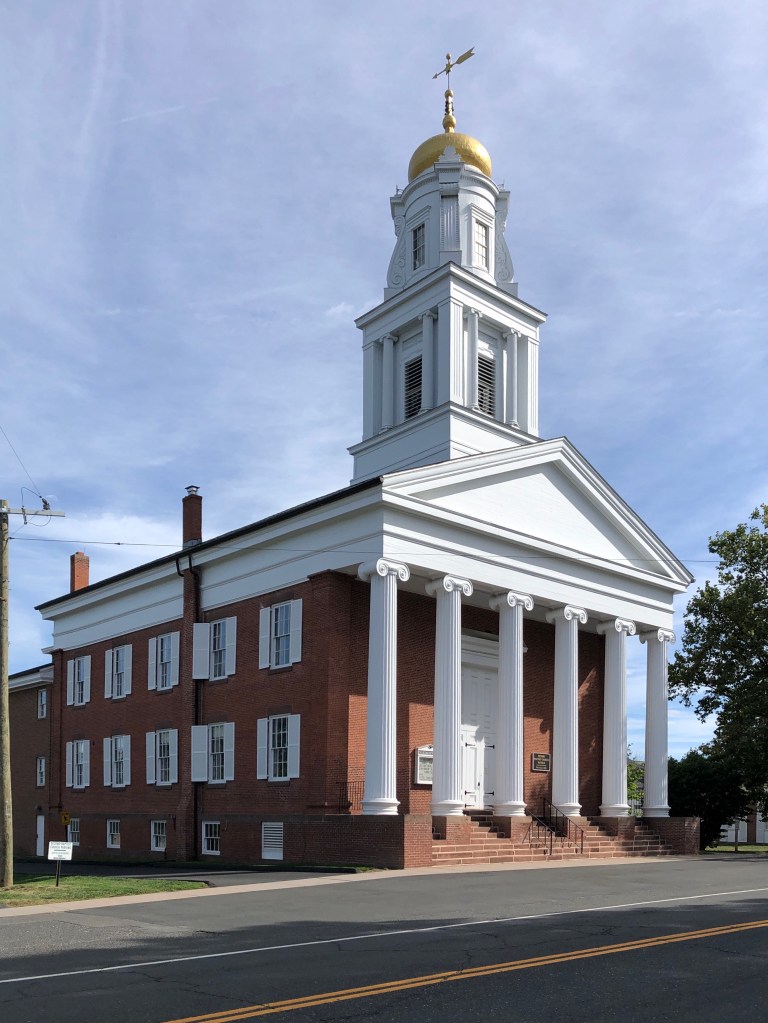
In early New England, the Congregational Church had a near monopoly on churches. Congregational churches had lost much of its hold on its members and on government by 1725. Eventually, some of its ministers decided a religious revival was needed, creating the emergence of new Baptist and Methodist churches all over the region. Baptists erected a church in West Suffield, far from the town center, which began to rapidly develop in the early 19th century. In 1805, they petitioned to create a second Baptist church, and succeeded. By 1840, the members collected funds to erect this stunning Greek Revival church on Main Street. The congregation hired architect Henry Sykes, who had trained under Chauncey Shepherd of Springfield, Mass and Ithiel Town of New Haven, clearly learning a lot on church design.
Located adjacent to the Town Common, the First Church of Christ in Suffield showcases the grandiose architecture seen in many churches after the Civil War in New England. This brick edifice is the fifth in the history of the church which dates back to around 1680. The church was designed by local architect John C. Mead, who designed many churches in the region. The church is a blending of Italianate and Romanesque Revival styles and originally featured a tall spire and secondary tower. In 1938, the New England Hurricane destroyed the tall spire (a similar event occurred to many New England Churches, including Old North in Boston). Even without the steeple, the church remains as a great architectural treasure in town.
This church in Agawam was built in 1927, replacing the first Catholic church in town, which was established in 1873. The earlier church was destroyed by a fire in 1925, causing the congregation and Archdiocese to fund construction of a new, fireproof church building. The Neo-Gothic Revival building features lancet windows, buttresses, and a central steeple. The building is now occupied as the Moldovian Baptist Church.
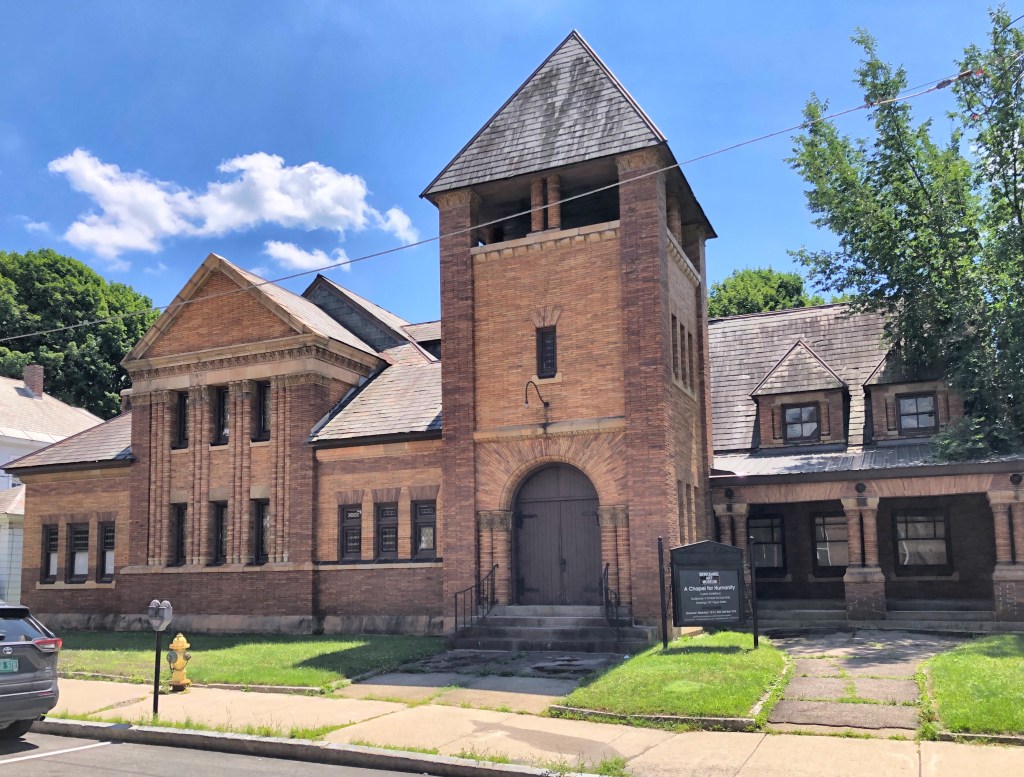
Tucked away off Main Street in North Adams you’ll find this charming little church. The Universalists were organized in North Adams in 1842, restoring an existing church near the Hoosic River. The congregation chose a site for a new church in 1852, and erected a white wooden chapel. It is unclear if the church was outgrown or a fire destroyed it, but the Unitarian society voted to build this church for a cost of approximately $25,000 in 1892. Architect Henry Neill Wilson of Pittsfield drew the plans, and the firm of Porter and Harnam of North Adams constructed the church. Due to the declining population in town in the mid-20th century, the church struggled and was sold to a private owner. The building began to decay by the 1970s and was later sold in 1996 to Barbara and Eric Rudd to house artist Eric Rudd’s installation entitled “A Chapel for Humanity”. The building is currently used as the Berkshire Art Museum Annex.
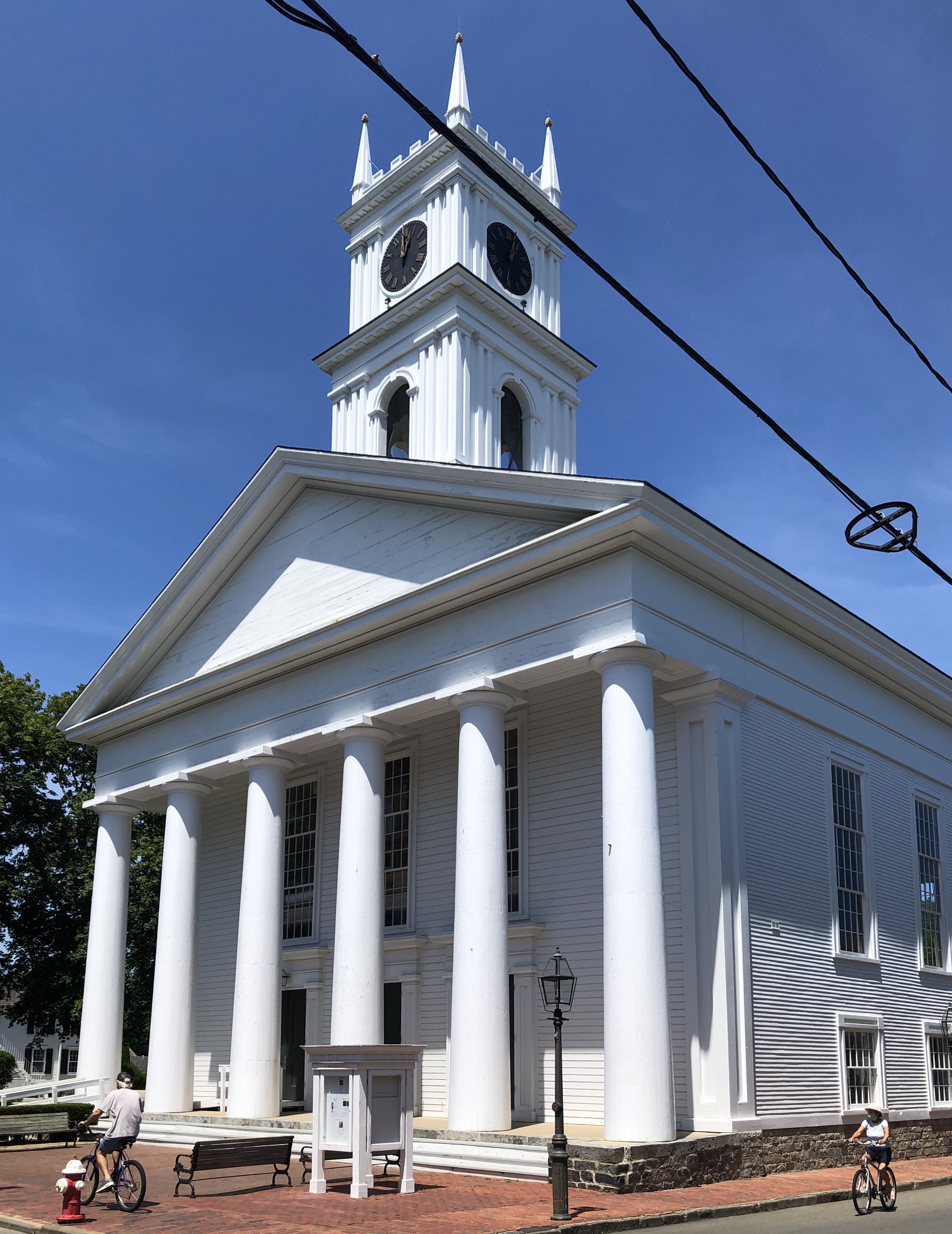
Methodists on Martha’s Vineyard arguably left the largest lasting mark between religious groups on the island between Wesleyan Grove in Oak Bluffs and this stunning church in Edgartown. The Methodists in Edgartown grew with the success of the whaling industry there and their former church was outgrown, requiring a larger and more prominent worshipping space in town. Designed by Frederick Baylies, Jr., the Old Whaling Church was built by skilled shipwrights for Edgartown’s Methodist whaling captains and is regarded as one of the finest examples of Greek Revival architecture in New England. The Old Whaling Church was not only funded by mariners and those dedicated to seafaring trades, it was quite literally built by them, too. Baylies hired a crew of local carpenters who were equally as skilled in building churches as they were in constructing ships. The church is topped by a Gothic Revival clock tower which has crenellations, rounded arches, engaged pilasters, dentil cornice moldings and four spires capped with gilded acanthus leaf finials. The church was acquired by the Vineyard Trust in 1980, and they converted the old sanctuary into a performing arts space. The congregation meets in the former sanctuary in the summer months and in the vestry in the winter with its smaller numbers.




 Buildings of New England