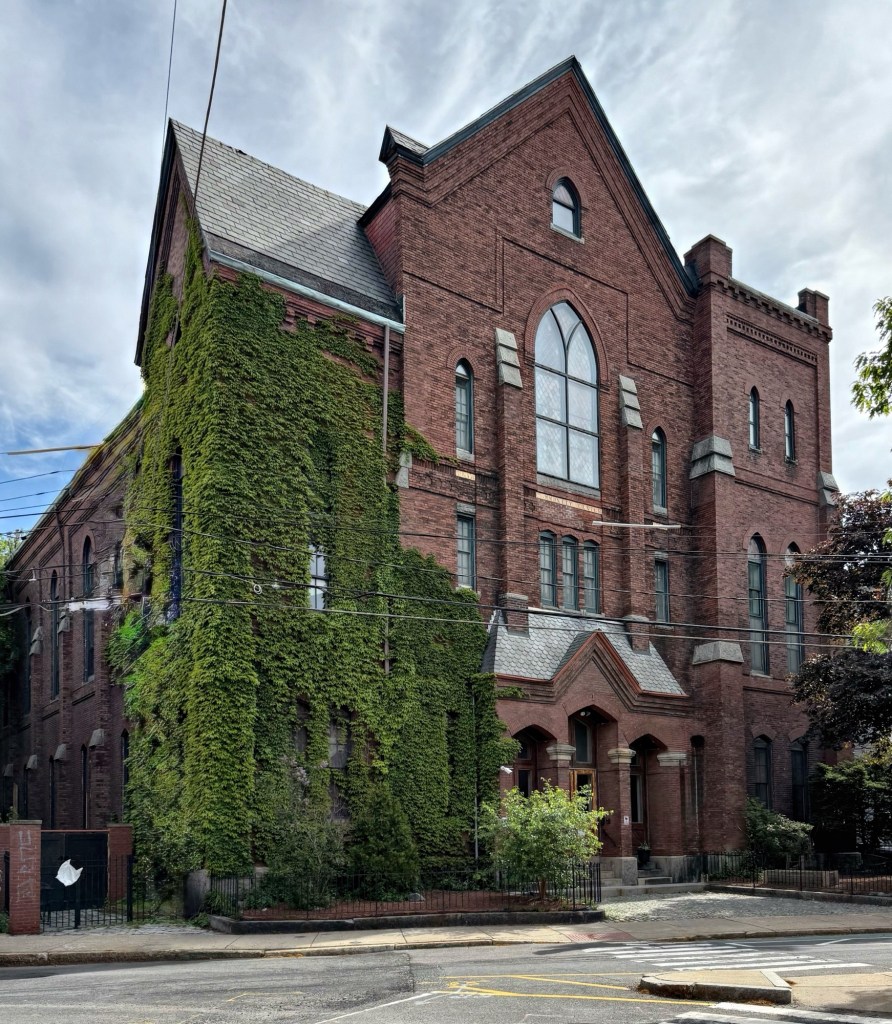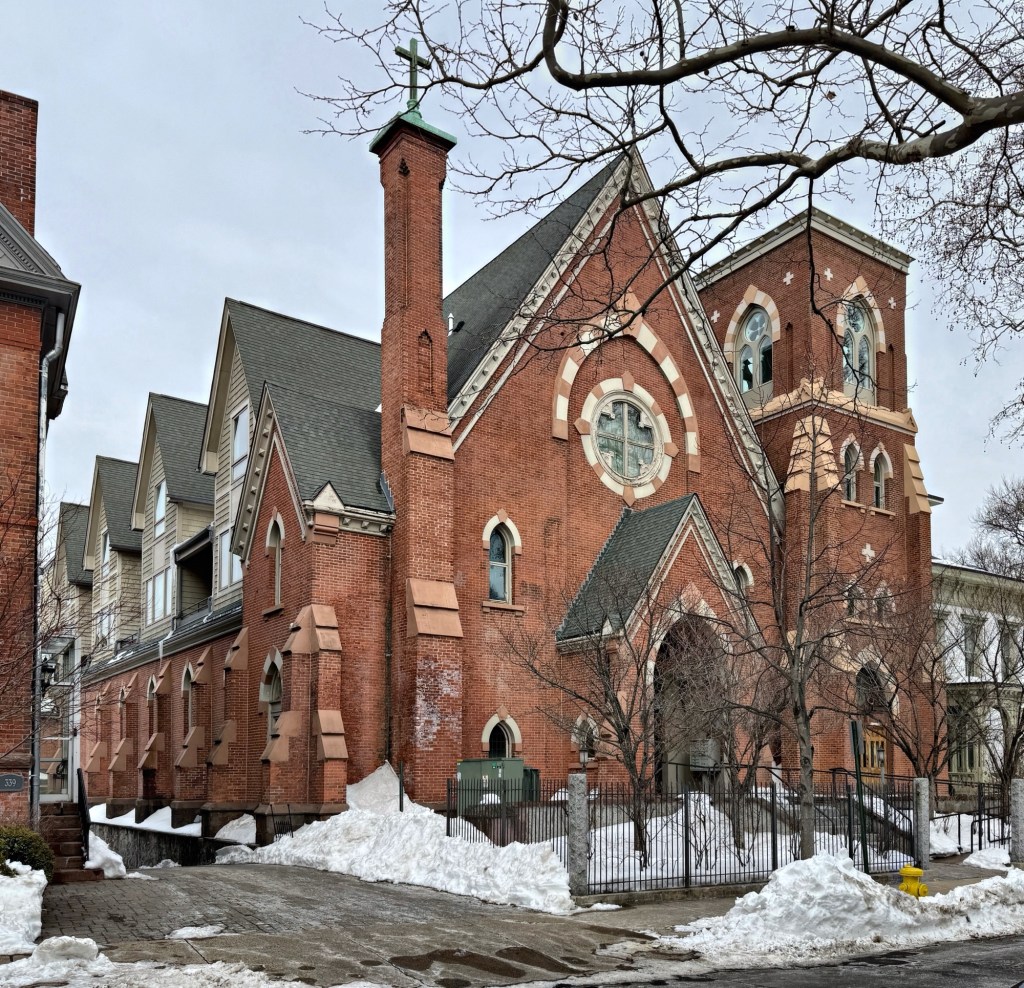
This handsome Victorian Gothic church sits on Summer Street in Somerville, defining the northern edge of the Union Square area. The church was built for the local Methodist congregation, which was established in 1855. The group would meet in local meeting halls and houses until this building was completed in 1874. The towering brick church was once even taller, but its steeple came down following the Great New England Hurricane of 1938. The church closed in the second half of the 20th century and the building was used by the Somerville Community News for years until it was purchased by a developer and converted to condominiums.
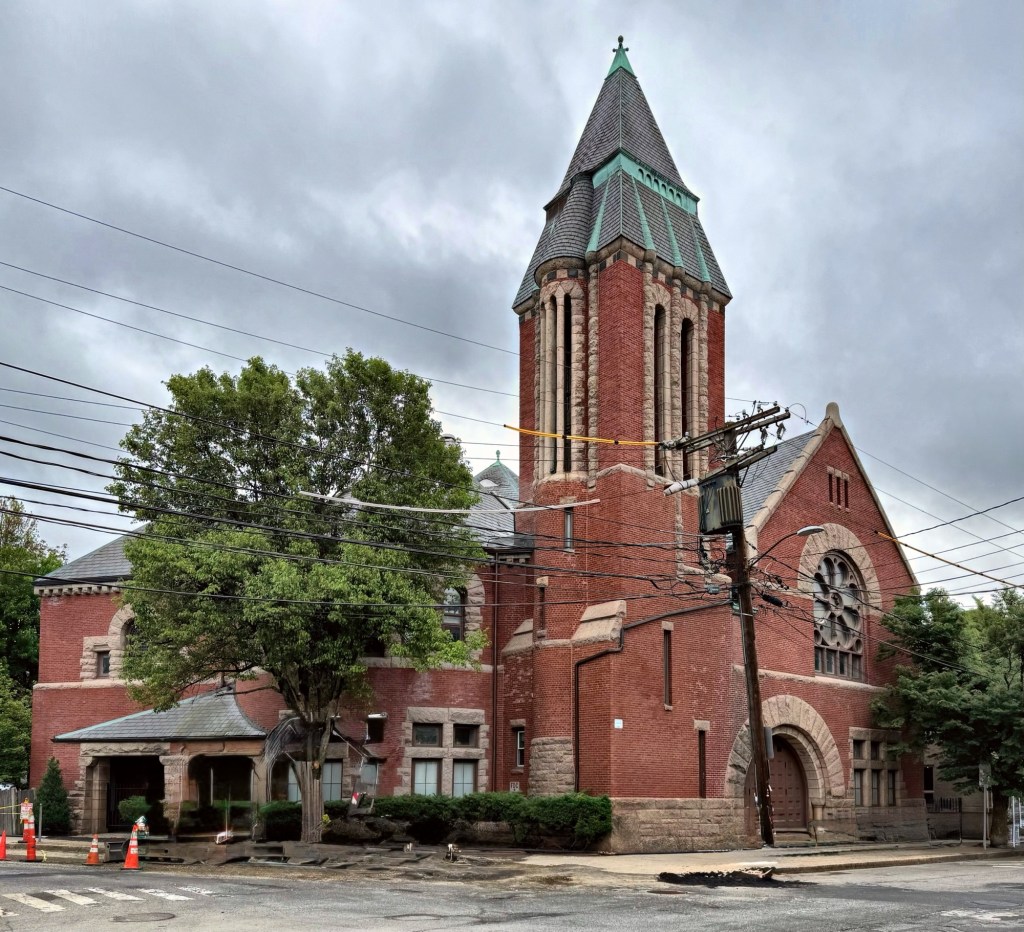
Located at the corner of Bow and Walnut streets in Somerville’s Union Square commercial center, the former Prospect Hill Congregational Church is one of the finest examples of the Richardsonian Romanesque style in the city. The congregation here was established in 1874 and originally met in private residences before erecting its first building on Warren Street in 1876. After two decades, the membership and prosperity of the congregation grew, allowing it to purchase a more prominent lot nearby and the ability to hire an architect for a new, substantial building. Architect Henry Squarebridge McKay furnished plans for the masonry building in 1887, clearly taking inspiration from the late Henry Hobson Richardson, who died the year prior. The church is constructed of brick with stone trimmings, features irregular massing with tall belfry tower, and a large arched entrance. After WWII, the congregation dwindled, and the building was later sold off. In the 1980s, the church was converted to residential use but without altering the exterior.
This Shingle-style church building on Lynde Street in Salem, Massachusetts, was built in 1897 as a satellite chapel for the First Congregational Society in Salem. The chapel was constructed from designs by the Boston-based architect Edward B. Stratton. From 1908 to 1979, the building was owned by the Christian Science Church and was eventually sold to private ownership in 1979, where it has since been home to the Witch Dungeon Museum. The building has retained much of its original design, including the large Gothic sanctuary window, tower, and decorative trusses at the gable. Sadly, the original shingles have been replaced by later siding.
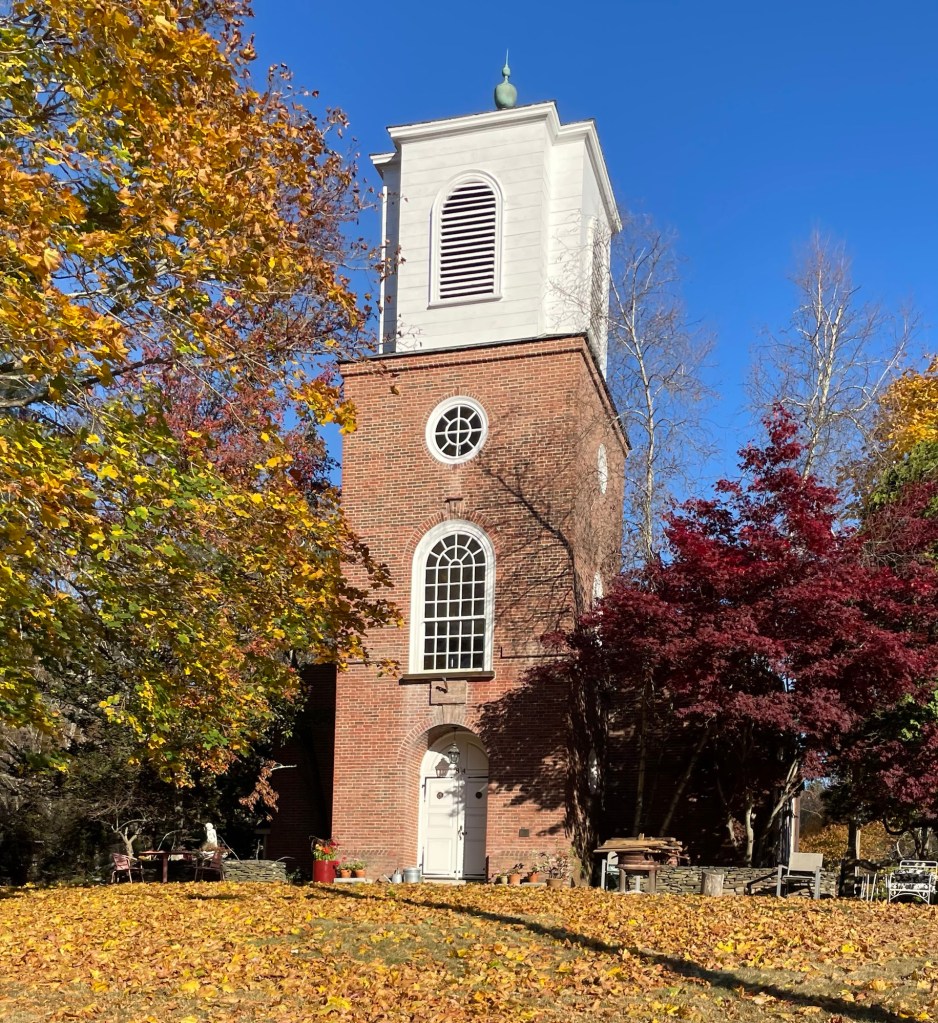
The Byfield Parish Church at 84 Warren Street in Georgetown, Massachusetts, was built in 1931 and is the fourth meetinghouse to occupy the site. The congregation dates to 1701, when sixteen families in this section of Rowley (now Georgetown) near Newbury were set off separate from the Rowley First Parish. Travel for religious services became too arduous, so the local residents petitioned to create their own parish, Byfield. Some accounts state that the first meetinghouse was built in 1702 and it is said to have been razed by 1746 to make way for a new wood frame church with a steeple, a spire, and a weathervane. This church burned in 1833, and it was replaced by a new meetinghouse soon after. The 1833 church was used for almost a century until, in March 1930, it was struck by lightning and burned to the ground. The congregation banded together and had this brick church built, its fourth. Completed in 1931, the Colonial Revival style building was designed by architect, George M. Champney, partner in the Boston office of Derby, Barnes & Champney. The church is sited within a historic cemetery containing the remains of many of the churches members, dating back to 1670. The Byfield Parish Church moved to a new building (its fifth) nearby in 1987, and in 1993, sold this church building to a private owner (retaining and maintaining the cemetery themselves) with the 1931 church converted to a single-family dwelling. How cool!