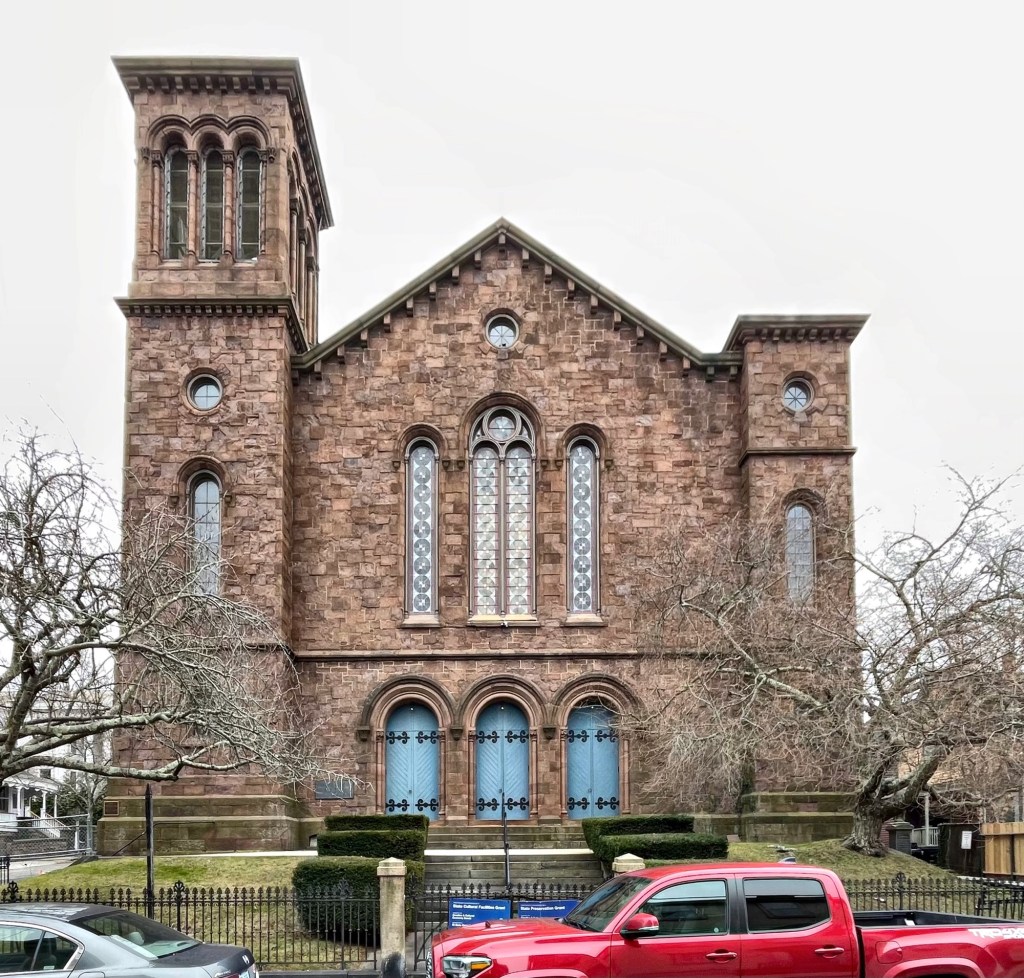
Notre Dame Roman Catholic Church // 1875

Built in 1875, this large Gothic Revival church was built specifically to serve as a place of worship for the French Roman Catholic immigrants from Canada who began moving northern Berkshire County, Massachusetts, who were arriving to work in North Adams’ brickyards and textile factories. Before 1875, the Catholic community in the region had to make due with only occasional visits from a Vermont missionary. In 1871, Father Charles Crevier arrived in North Adams to take charge of the French flock and officially form the parish of Notre Dame du Sacre Coeur, with 750 new parishioners. Funding was acquired to purchase a property in town and erect a suitable church for the large (and growing) congregation. Architect James Murphy, a relatively unknown architect who specialized in ecclesiastical designs, furnished the plans for the church. After loss of industry and a declining population, the church closed in 2005, and the property was sold to the city of North Adams in 2008. The city faced repairing the church building as recently as 2016 with about half of the $100,000 budget coming from the city directly. Its future is unknown, but the town hoped to sell it for a renovation into a hotel or other use to activate the downtown area.

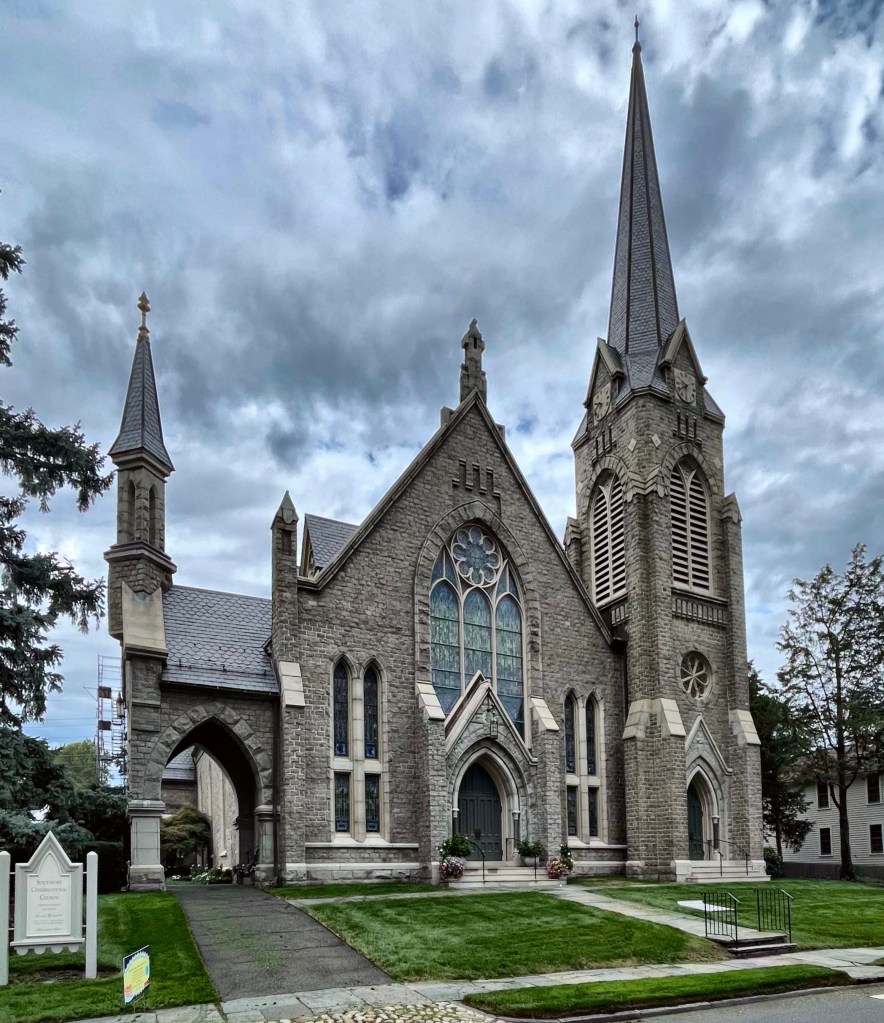
Southport Congregational Church // 1875

Southport was and still is a part of Fairfield, Connecticut, but it has long been very different from the geographic center of town. Largely due to distance, Fairfield Congregationalists in the Southport area of town sought to establish a new parish to worship closer to home. By the 1840s, their request was granted and a small wood-frame Greek Revival house of worship was built in 1843. By 1871, the increase in population and wealth in the village necessitated a new, larger church. The congregation hired the architectural team of Lambert and Bunnell who made a huge statement here! It is constructed of granite ashlar masonry with a steeply pitched roof and soaring spires.

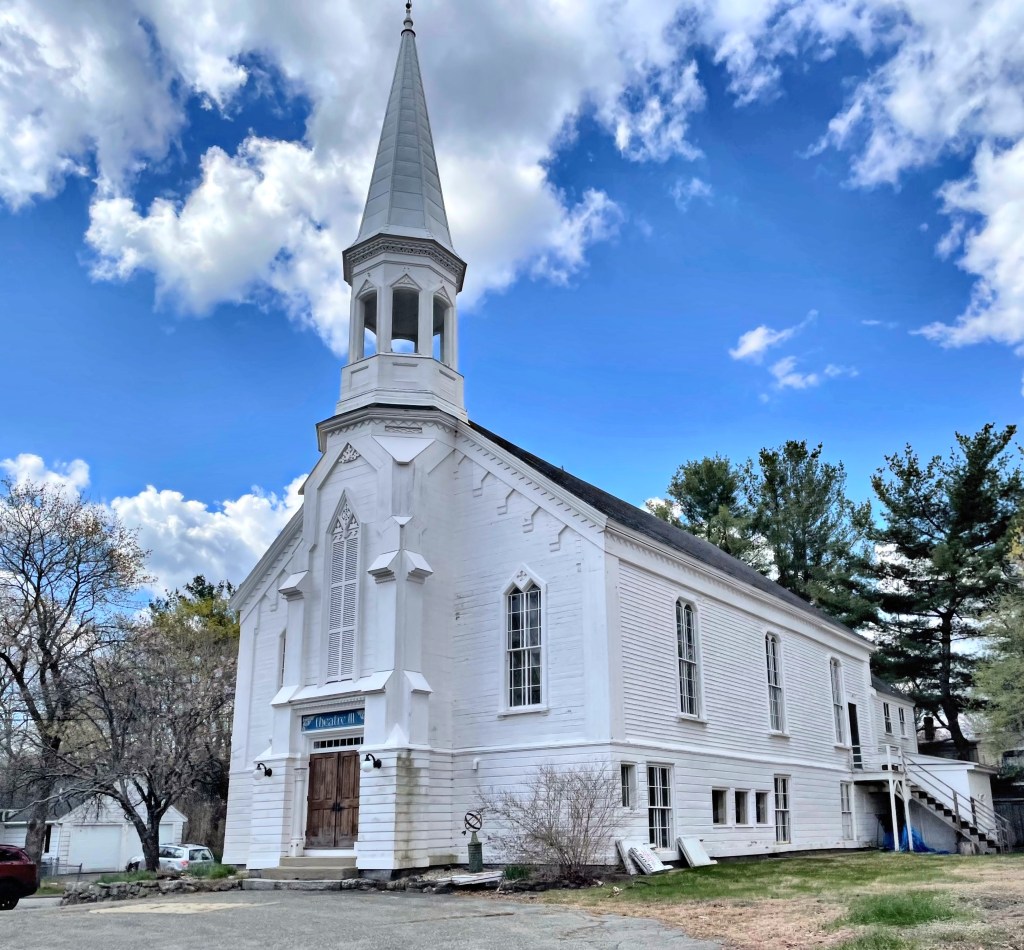
Former West Acton Universalist Church // 1868

This beautiful church in Acton, Massachusetts was built in 1868 by the Universalists of West Acton who sought a house of worship closer to their homes, rather than taking horses to the other part of town every week. The building exemplifies the influence of both Gothic Revival and Italianate styles on rural churches of the time. Gothic elements include the double pointed lancet windows with quatrefoil ornament, buttresses, and pointed lancet panels on the tower and belfry. Italianate elements include the rusticated base and the corbel table at the eaves. Religious services ceased in 1925. At that time, the church building was bought by leading men in the village who gave the building to the West Acton Women’s Club, which began in 1890 by Lucy Mead (the wife of Oliver Mead, who built the Mansard home nearby). In the 1950’s, the church was used as a community center. It is now home to a local performing arts center, Theatre III Box Office.

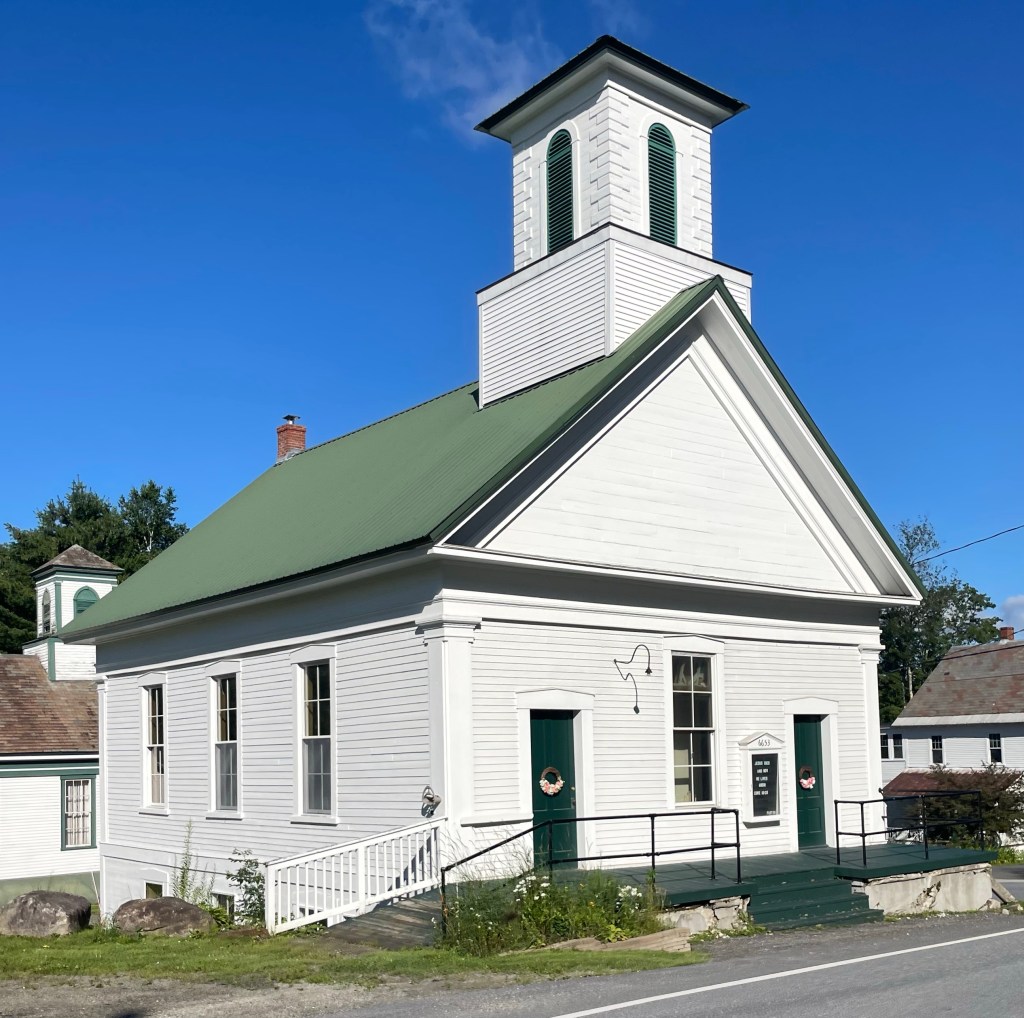
Whitingham Community Church // 1862

This simple, Greek Revival, frame church has a prominent pediment, corner pilasters, and two part steeple. It is built into a steep bank at the side of the road as it curves and descends into Whitingham Village, making it one of the most visible buildings in town. This church was originally built in 1862 by the Methodists who moved their congregation from their old and deteriorated church in the original Whitingham settlement on Town Hill. By the 1870s, the Methodist congregation was in decline. The Baptist congregation started holding meeting at this church regularly in Sadawga Village in 1879 and then purchased it. They made repairs and alterations in 1881. In historic photographs c. 1890- 1920s, the church’s steeple had third and fourth sections consisting of a narrow octagonal section topped by a small bell shaped dome. By the 1940s photographs show these had been removed. The building now serves as the Whitingham Community Church. My friends who tag along with me on visits throughout New England always say that every town has at least one old, white church. They aren’t wrong!

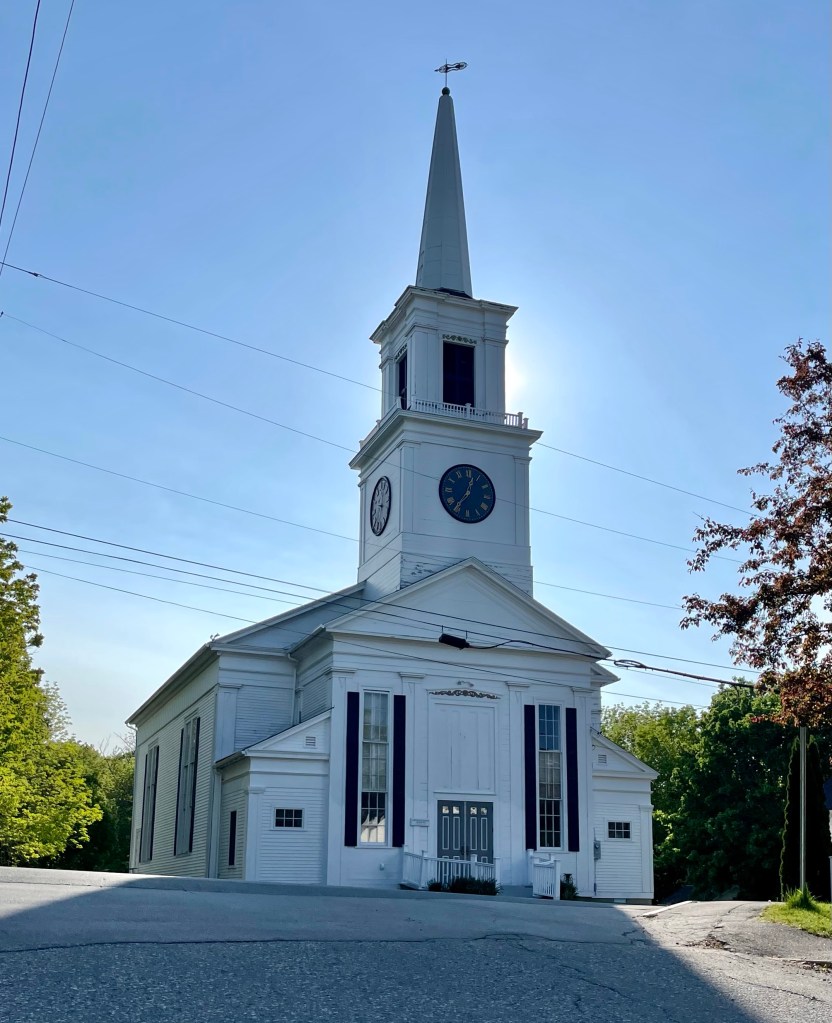
First Baptist Church of Blue Hill // 1817

In 1793, Rev. Daniel Merrill was ordained at the newly-organized Congregational Church in Sedgwick, Maine. Soon after the religious revival of 1799, Rev. Merrill changed his belief from a congregationalist to a Baptist; and in 1805, he and most of his church members were baptized by immersion. Rev. Merrill was
then re-ordained and installed as pastor of a newly-formed Baptist Church in town there. Baptism took hold in Maine (which was then still a part of Massachusetts), and in 1813, the Massachusetts Legislature passed a resolution incorporating the Baptist Society of Bluehill. Funds were gathered and the Baptist Church in Blue Hill began construction in 1817. In 1856, as Blue Hill saw great prosperity, the building was renovated by retired ship carpenter and local builder, Thomas Lord. The updated Greek Revival design has many pilasters and details that highlight the wealth and success of the Baptists in Maine.

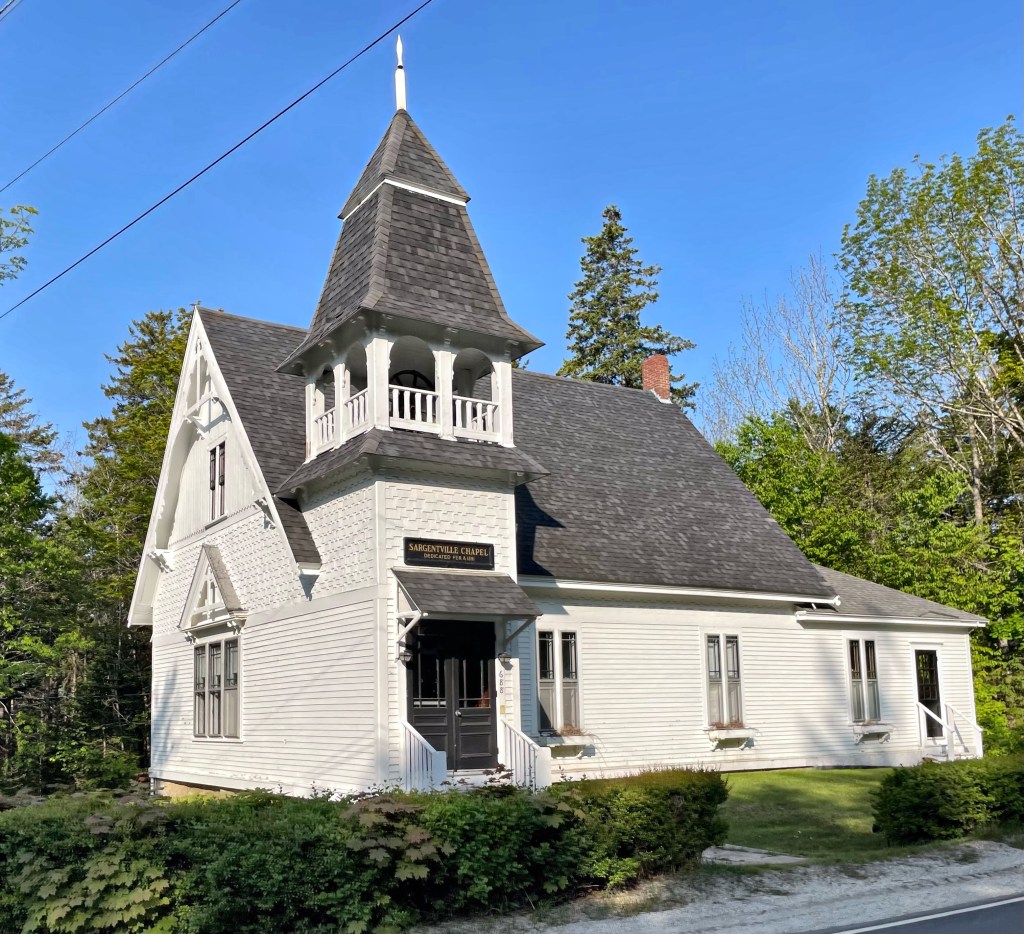
Sargentville Chapel // 1889

The Sargentville Chapel in Sedgwick, Maine was built in 1889 to provide a more convenient site for services, meetings and other community activities for residents of the Sargentville Village in town, a distance from Sedgwick’s main village. A building committee was established with the goal to erect a new chapel, and A.J. Long, a lumber manufacturer and builder submitted the lowest bid of $1,100 to “put up the building, finish the outside, and put on one coat of paint”. The offer was accepted and the first meeting in the chapel took place in January. 1890. The small chapel has been an active community space for members of the Sargentville section of Sedgwick since the late 19th century and the group continues to maintain the Victorian Gothic building extremely well to this day.

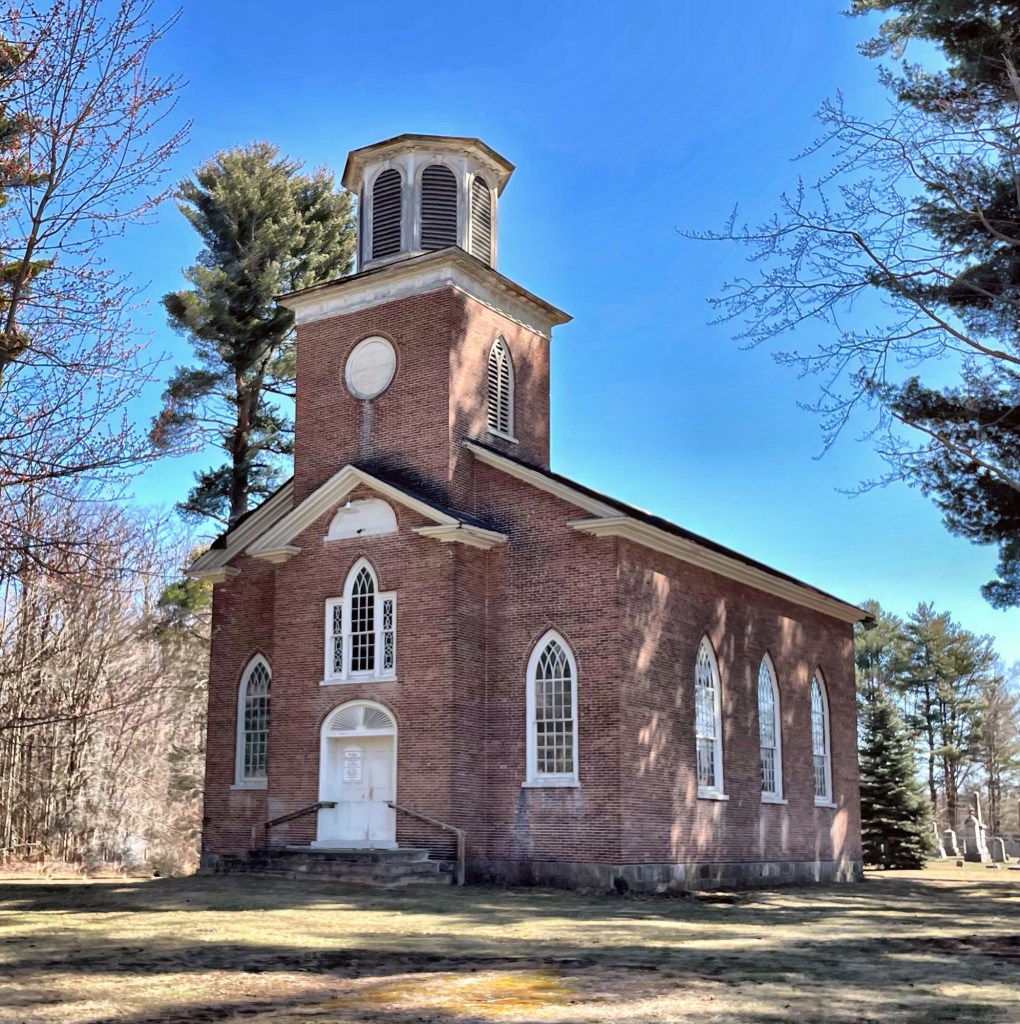
Litchfield Community Presbyterian Church // 1844

Litchfield, New Hampshire remained a rural agricultural town on the eastern banks of the Merrimack River from its founding by white settlers until after WWII when it rapidly became a bedroom community for nearby NH cities and Boston. The area’s Presbyterian residents needed a place to worship, separate from the more common congregationalists, and they built this Gothic and Greek Revival style church near the geographic center of town, a stone’s throw from the Merrimack River. The building features lancet windows, tracery, and a two-tiered belfry with classical pilasters and Gothic finials at the tower.

First Church of Christ Scientist, Providence // 1906

One of the most stunning and monumental buildings in Providence is this building, a church which pretty closely resembles the Rhode Island State House! Christian Scientists in Providence began to hold informal services in 1889 and received a charter from the state legislature in 1895. Construction started on this church, the First Church of Christ, Scientist in 1906 from plans by local architect Howard Hoppin who roughly modeled the building after the congregation’s Mother Church in Boston. The Classical Revival building is capped by a copper hemispherical dome supported by a colonnade of Corinthian columns. The main block of the structure at the street is fairly modest, possibly due to the residential character of its surroundings.

Congdon Street Baptist Church // 1875

The Congdon Street Baptist Church on College Hill is extremely significant as part of the rich history of Providence. Its origins began in 1819, when Moses Brown, an abolitionist, industrialist and member of the Brown Family (who profited on the institution of slavery) gave land to “the people of color” of Providence for a schoolhouse and meeting house. The original building stood slightly north of the present structure and it was built in 1821. The structure provided the first schoolhouse for Black children in Providence. In 1869 the building was torn down, without the approval or knowledge of the congregation by white neighbors because “its proximity displeased them”… Eventually the congregation arranged an exchange of lots with one of the church’s neighbors and architects Hartshorn & Wilcox were commissioned to design the new church building. Hartshorn was the successor of Thomas A. Tefft and this church echoes many of his designs in the Italianate style. The new building was completed in 1875 at the cost of $16,000. It was renamed the Congdon Street Baptist Church. The church has since 1875 served as an important landmark and gathering place for many Providence’s Black residents past and present.

Versailles United Methodist Church // 1876

After the Civil War, the Village of Versailles’ Congregational Church was seeing less attendance and its deathknell was a fire which destroyed the building in 1870. That next year, a vote was taken by members of the Congregational Church as to a preference for their denomination. A majority voted for Methodist Episcopal and asked the New England Conference to appoint a Pastor for the new church. Funds were gathered and this church was opened in 1876, in the Italianate and Victorian Gothic styles. The building sits upon a raised brick foundation with small windows on the facade. In 1887, the Versailles church was linked with Baltic and Greenville (Norwich) the following year.