Greenfield Hill Congregational Church // 1855

Local residents of northern Fairfield successfully petitioned the General Assembly to establish a Congregational church in 1725 as a new Northwest Parish, a distinct group from the Fairfield Congregational Church. Their first meeting house was erected just years later in 1727. A larger, more substantial meetinghouse was built in 1760. The area of Greenfield Hill has always been remote and more suburban, but became important in the late 18th century when Timothy Dwight became minister of the Greenfield Hill Congregational Church in 1783. Dwight would go on to become the eighth president of Yale College (1795–1817). With increased funds and affluent members, another church was built in 1850 from plans by esteemed architect Richard Upjohn, in the Gothic style. Sadly, just years after it was completed, a fire from a furnace inside destroyed the church. So again, they rebuilt in 1855 with the building we see today, sort of. Architect Alfred Nash furnished plans for the building which was more Italianate in design. The church would be modernized in the 1940s in the Colonial Revival style, from plans by local architect Cameron Clark, likely inspired by the collection of Colonial-era homes nearby, including his own home in Greenfield Hill. The church remains a visual anchor for the affluent neighborhood.

Franklin Congregational Church // 1863

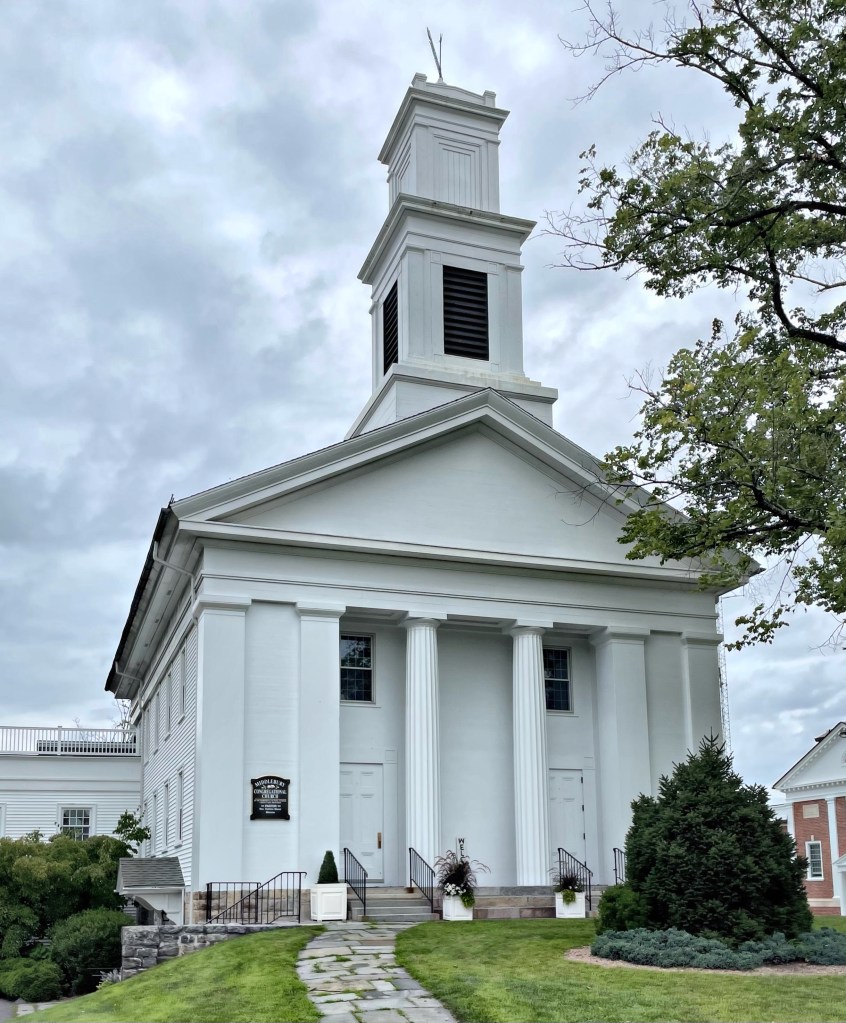
When the town of Franklin, Connecticut was still a part of Norwich, it was known as West Farms. The residents there had a meetinghouse built there as it took too long to travel into Norwich for town meetings and church services. The first meetinghouse was built in 1718 on what became Meetinghouse Hill. Decades later, the primitive building was replaced by a newer structure. That building was replaced two more times until the present Congregational Church was erected in 1863. The building takes cues from the Greek Revival church designs of decades prior and looks to the future with Italianate detailing and steeple. There remains a small, but active congregation here to this day, who maintain the old building very well!

First Congregational Church of Nantucket // 1834

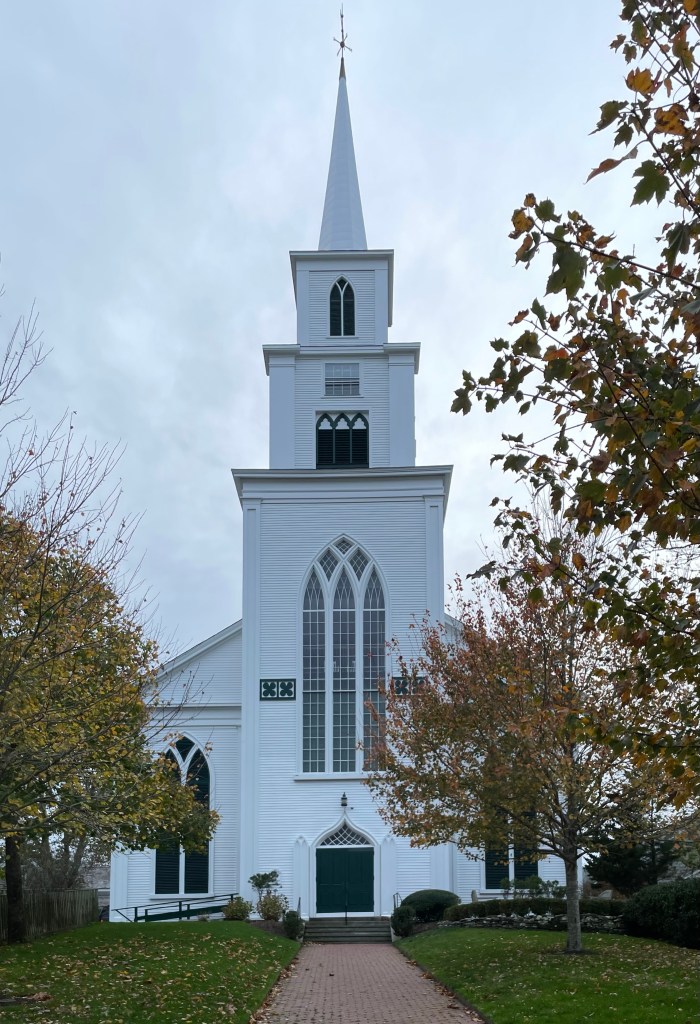
The First Congregational Church is one of Nantucket’s most prominent historic landmarks and is prominently located on a hilltop, being one of the first buildings you’ll see when arriving to the island by ferry. Constructed from a design by Samuel Waldron, a Boston housewright, the present church blends the Greek and Gothic Revival styles elegantly into a single composition. The interior of the church was painted with architectural trompe l’oeil paintings by E.H. Whitaker of Boston in 1852. The steeple was removed in 1849, likely from engineering concerns and high winds on the island. In 1968, the steeple was reconstructed from historic drawings by Philip Graves of Ames & Graves.

Dorset Congregational Church // 1909

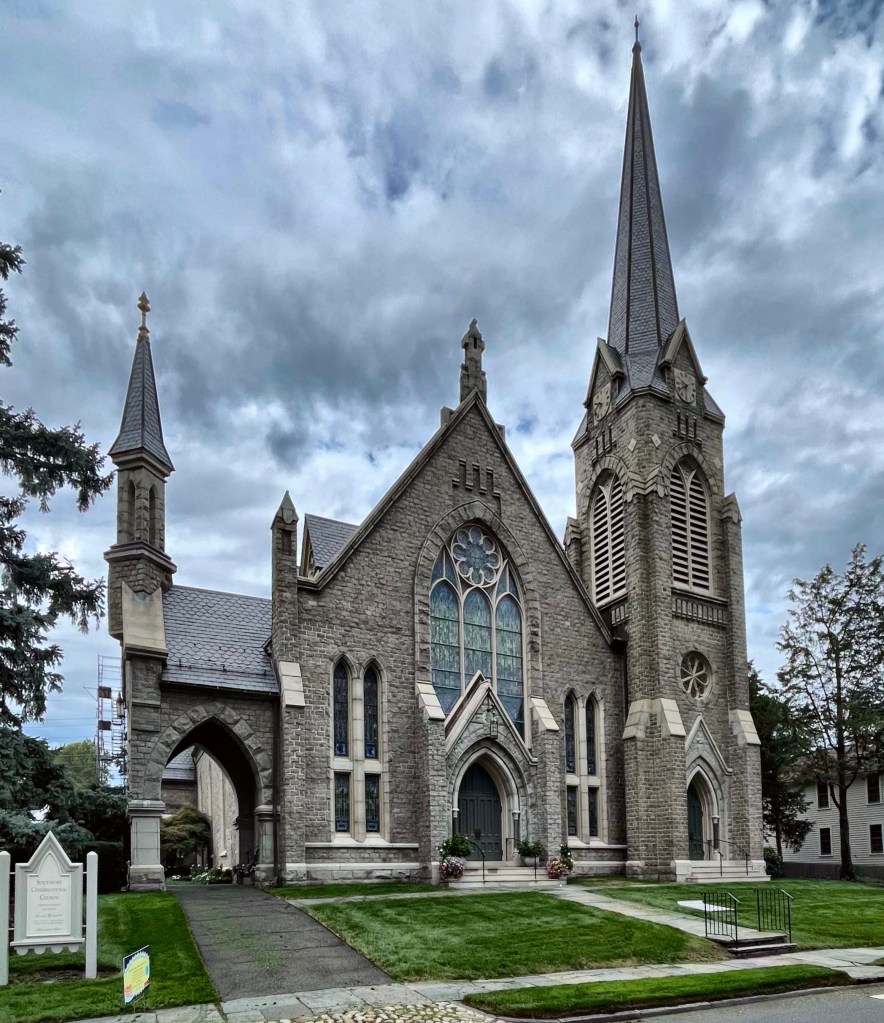
Arguably the most high-style building in the quaint village of Dorset, Vermont is the Congregational Church, which appropriately sits on Church Street. The original congregational church in Dorset was located in nearby Maple Hill Cemetery. When the wood structure burned in 1832, an new wooden church was built on this site. The second wooden building burned in 1907, and then this church was built, but of fireproof construction. Jordan Greene, an architect from New York, designed this Neo Gothic Revival style in the historic district. The church was constructed by the contracting firm of O. W. Norcross, partner in the Norcross-West Marble Company, which donated the building stone from its South Dorset quarry. The design is dominated by a massive square central tower that ascends its facade and is capped by pinnacles. Behind the tower, the gable-roofed church is built of rough-faced Dorset marble laid in patterned coursed ashlar and trimmed with dressed stone. How many other marble churches can you think of?

Congregational Church of Peru // 1845

The centerpiece of the Village of Peru, Vermont is the Congregational Church, a stunning edifice and example of Greek Revival architecture in the small town. Construction on the church began on the Fourth of July in 1845, with contractor and resident J.J. Hapgood utilizing much of the timbers of the former church building in the new church. Since the interior of the old church had been left natural, they decided that wood in the new building should be left unpainted as well. The bell was financed by contributions, most particularly by J.J. Hapgood. In 1853, a tornado swept through Peru, damaging the west end of the church and moving it from the foundation, it survived. The church remains a center of Village life in Peru and is well-maintained by the congregation.

First Congregational Church, Ridgefield // 1888

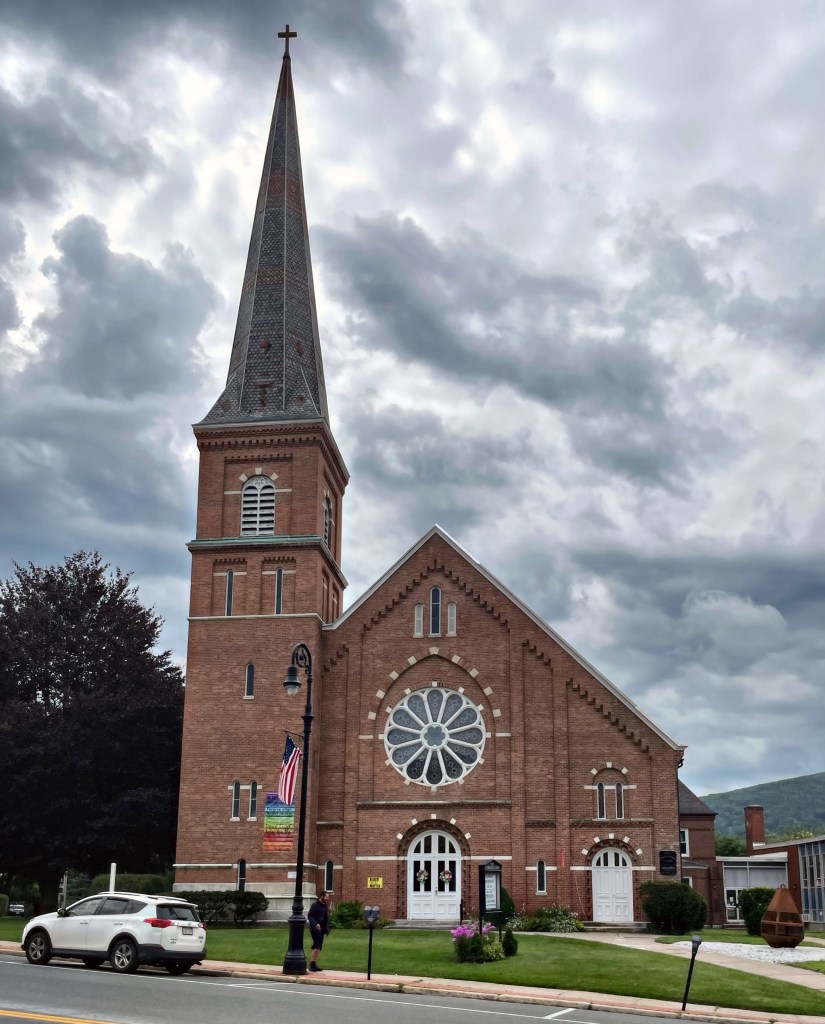
The First Congregational Church was first established in Ridgefield, Connecticut just four years after the establishment of the town. Civic leaders in October 1712 successfully petitioned the Connecticut General Assembly for permission to levy a tax for “the settling and maintaining of the ministry in the said Town of Ridgefield.” Rev. Thomas Hauley, the first minister, also served as town clerk and school teacher. The first meeting house, on the town green, opened for worship in 1726. Plans for a new meeting house were drawn up in 1771 to fit a growing population, but construction was not complete until 1800. The second church was built in a more traditional style with a steeple. With a shift in the towns demographic from rural homeowners to ritzy exurb to New York City, a more suitable church was required by the end of the 19th century. Josiah Cleaveland Cady, one of the many great New York architects at the time was hired to design a new church suitable for the wealthy New Yorkers who summered in town to consider a neighbor, and he did not disappoint! The building blends many styles from Queen Anne, to Victorian Gothic, to Romanesque Revival in a way that isn’t clunky as in some other versions.

North Waterford Congregational Church // 1860

The Town of Waterford, Maine was created as the result of a 1774 grant made by the General Court of Massachusetts to the descendants of a company of Massachusetts soldiers involved in a 1690 expedition against the French in Canada, leading to the Battle of Quebec. The land was surveyed in 1774; in spring of 1775, David McWain of Bolton, Massachusetts arrived with his dog at a lot he bought for $40. He cleared land and built a log cabin, returning to Bolton for two winters until he settled permanently at Waterford in spring of 1777. The town grew around agriculture and industry with sawmills built at streams to manufacture the region’s abundant timber into lumber. The town later became more of a resort area in the early 20th century, with urban-dwellers flocking to the area to take in the fresh air and natural scenery.

This church in North Waterford is located in a more rural part of the town, and was constructed in 1860 by a group of local residents from designs by Maine architect Thomas Holt. The Italianate influence is evident from the round-arched windows set in a recessed arch and a bracketed cornice. The steeple looks to be more contemporary and slightly turns, giving it a really interesting presence.

Bramanville Congregational Church // 1804

Not just your typical white New England church here… this one was moved! This church was built in 1804 in the north parish of Sutton (present day Millbury, Massachusetts). In the 1700s, the members of the northern part of Sutton petitioned to have a parish church of their own, rather than trekking across the large town to gather for town meetings and religious purposes. They were permitted to erect a parish church inn 1743, and built a church. The building was replaced in 1804, thanks to the wealth and new members of town moving there for manufacturing. Years later, the parish petitioned the Commonwealth of Massachusetts to have the North Parish of Sutton become the town of Millbury, due to the difference in needs being a mill town compared to Sutton’s more pastoral living, and they were designated as a town in 1813. The first town meeting of Millbury was held at First Congregational Church of Millbury that year on the town common. As industry along the Blackstone River picked up, so came waves of workers, many of whom were recent immigrants to New England. It was soon decided that the town church should relocate to provide a new center for town. In 1835, this church was moved about a mile away and erected high on a hill, in Bramanville village, a bustling industrial village. The church has remained in its location in Bramanville, even after the town center again moved, this time eastward to its present location. The Greek Revival style church elegantly reflects the significance of ecclesiastical buildings in early New England towns.

Collinsville Congregational Church // 1858

Shortly after Collins and Company was founded in 1826, religious services were held in various homes in the South Canton Village which came to be known as Collinsville. In 1830, the Collins Company erected its first office building on Front Street, and religious services were held there on the second floor. The first church building was erected on land bought by Collins and Company in 1826. By the mid-1850’s, the church membership was outgrowing the building. Although there may have been plans to enlarge the building, tragedy struck and in January 1857, and the church was consumed by fire, which started in the chimney, during a winter storm. The current building was erected almost immediately and dedicated on February 25, 1858. The present church is a grand Greek Revival style building, with a full pediment and large entablature supported by four monumental fluted columns. The two-tiered, square belfry has engaged columns as well. What a great example of a New England church!

Canton First Congregational Church // 1814

In 1750, a new parish church was established as The First Ecclesiastical Society of West Simsbury, with parishioners meeting in members’ homes. Then, Canton Connecticut was still a part of Simsbury. In 1763, the Parish constructed a meetinghouse with the building also used for town meetings and other public gatherings. In 1806, Canton separated from Simsbury and the congregation soon after decided that the nearly 50 year old primitive building needed replacement. A new building was proposed and materials were harvested. Stories report that the first tree felled for lumber for the new church killed a parishioner. The beautiful Federal style church edifice features Palladian windows, a hallmark of the style. The congregation is active to this day.