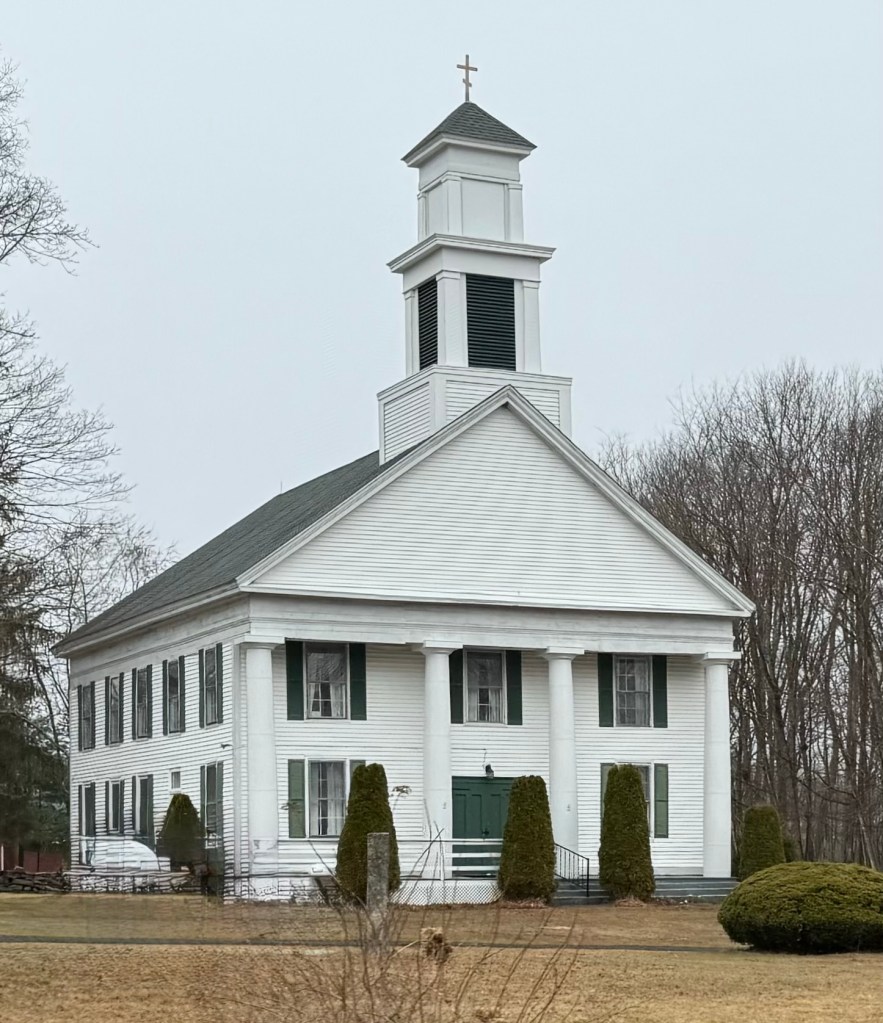
Cornwall Congregational Church // 1842

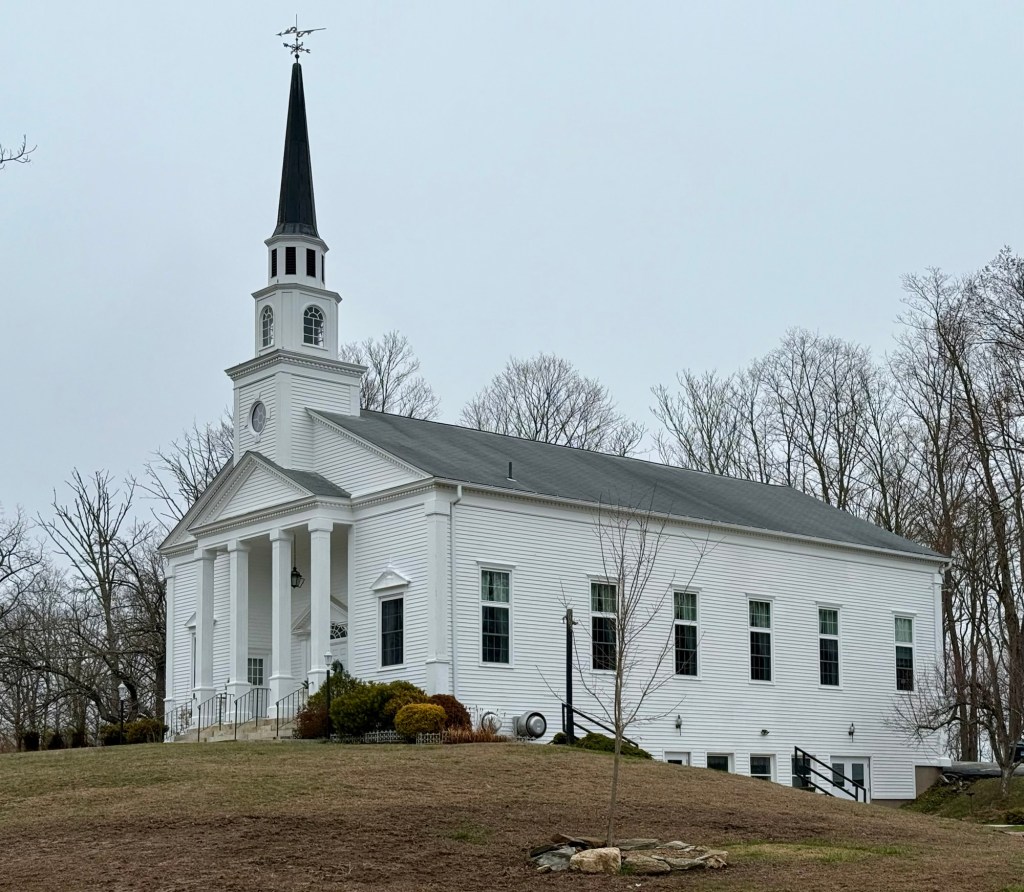
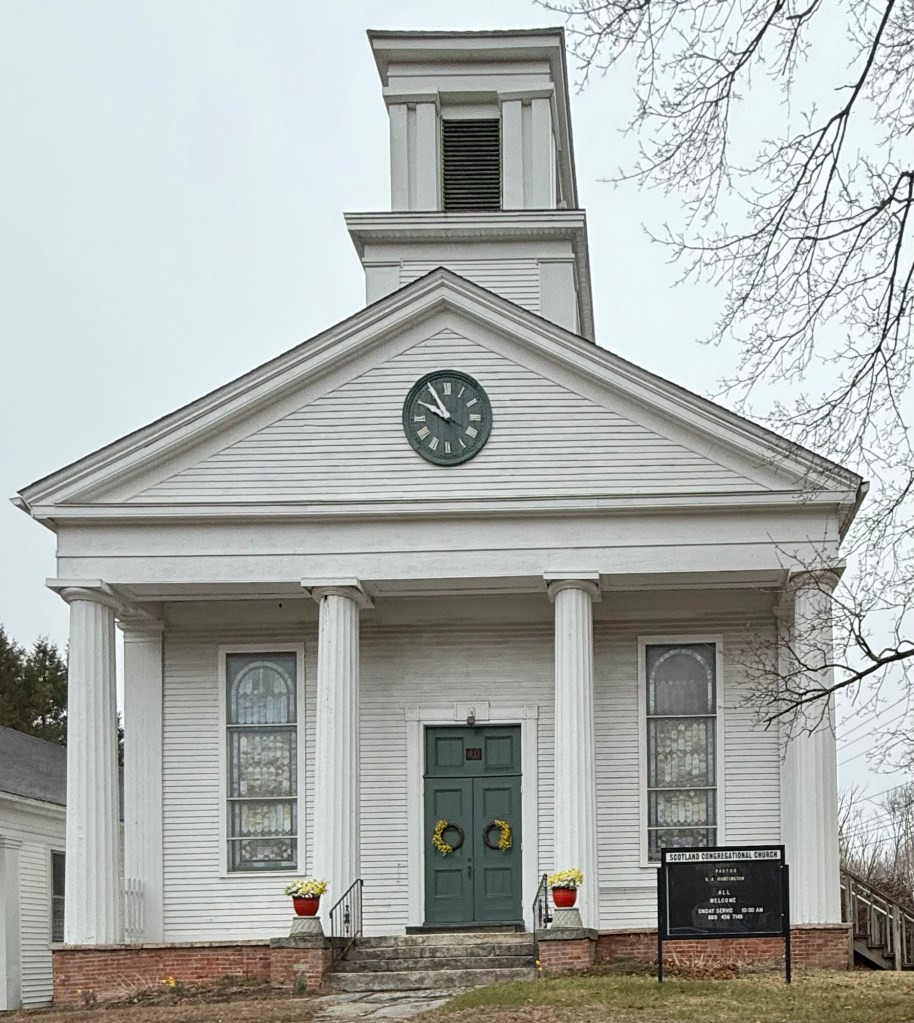
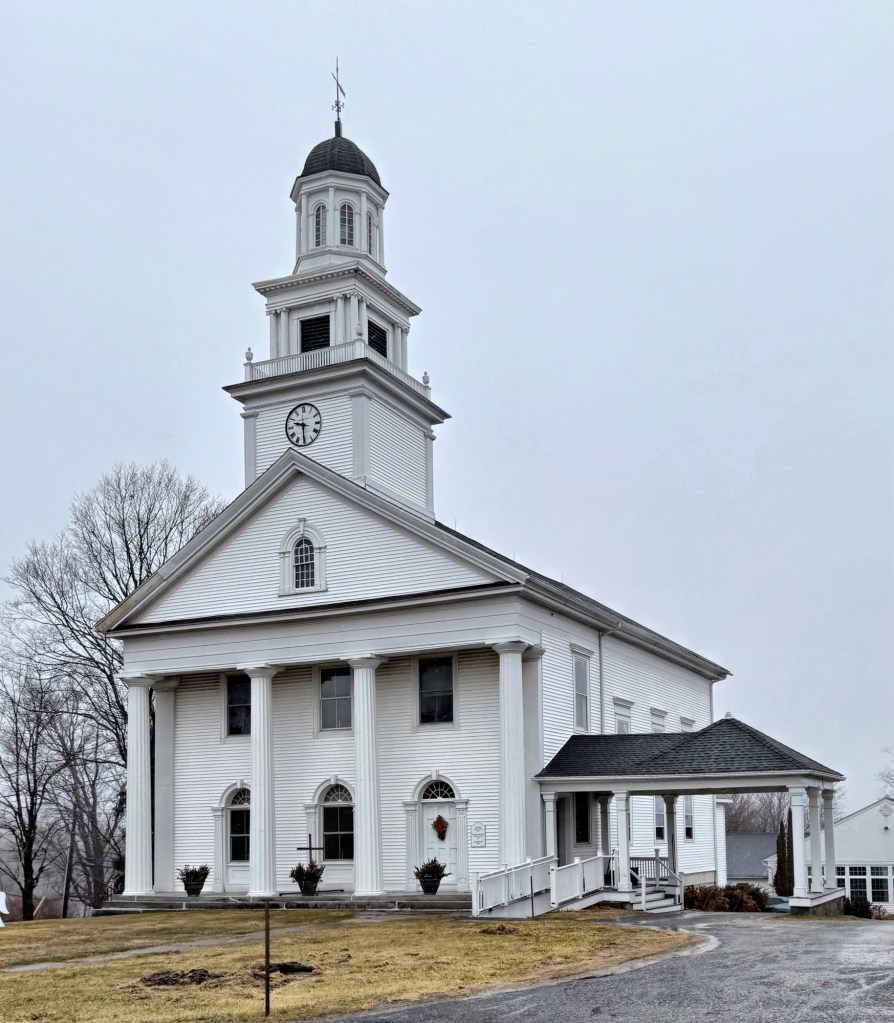
The Cornwall Congregational Church in Cornwall, Connecticut, was erected at 8 Bolton Hill Road in 1842, replacing the colonial-era meetinghouse which had first stood on Old Meetinghouse Hill at Cornwall Center. When members of the church split into two separate congregations due to religious differences, the original congregation moved to South Cornwall in 1790. Another Congregational church was built in North Cornwall for the other group. This wonderful Greek Revival church reflects the enormous popularity the style in the first half of the 19th century. The structure rests on a stone block foundation and is sheathed with clapboard siding. The building incorporates a central entry of paired doors with a Greek Revival surround, flanked by 20/20 windows. The street elevation of the building is dominated by a monumental portico with pedimented gable, broad frieze and fluted Doric columns. The showstopper is the two-stage square belfry, each stage Doric columns and pilasters. The church is active today as the United Church of Christ and is often utilized for town events.

North Cornwall Congregational Church // 1826

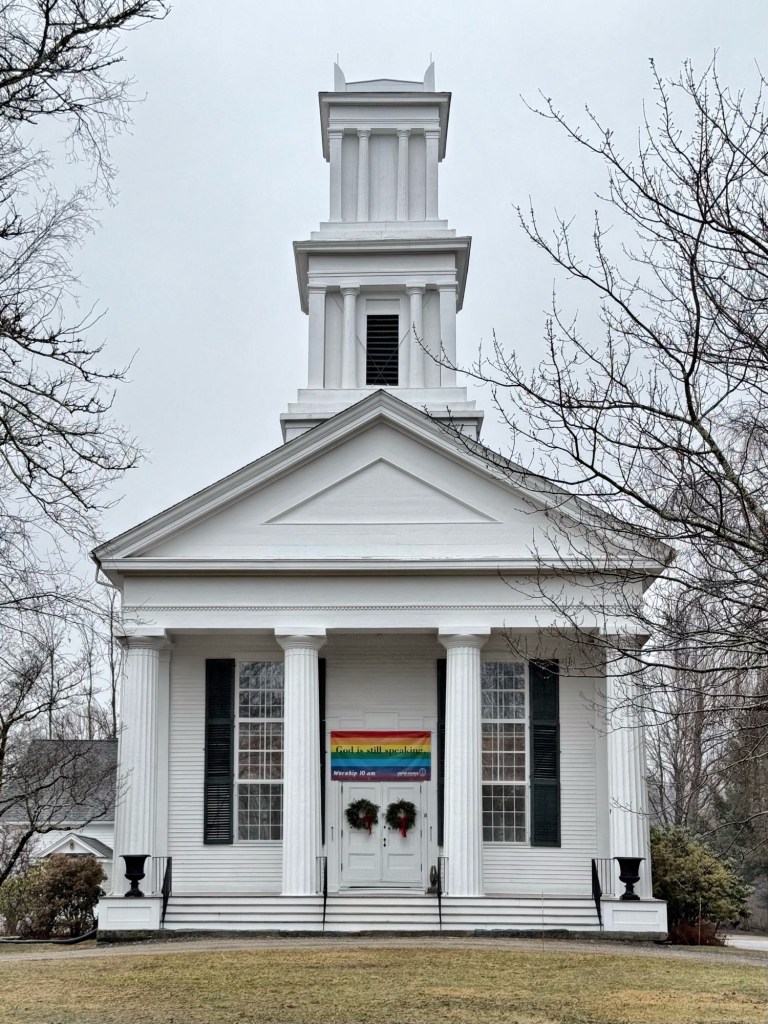
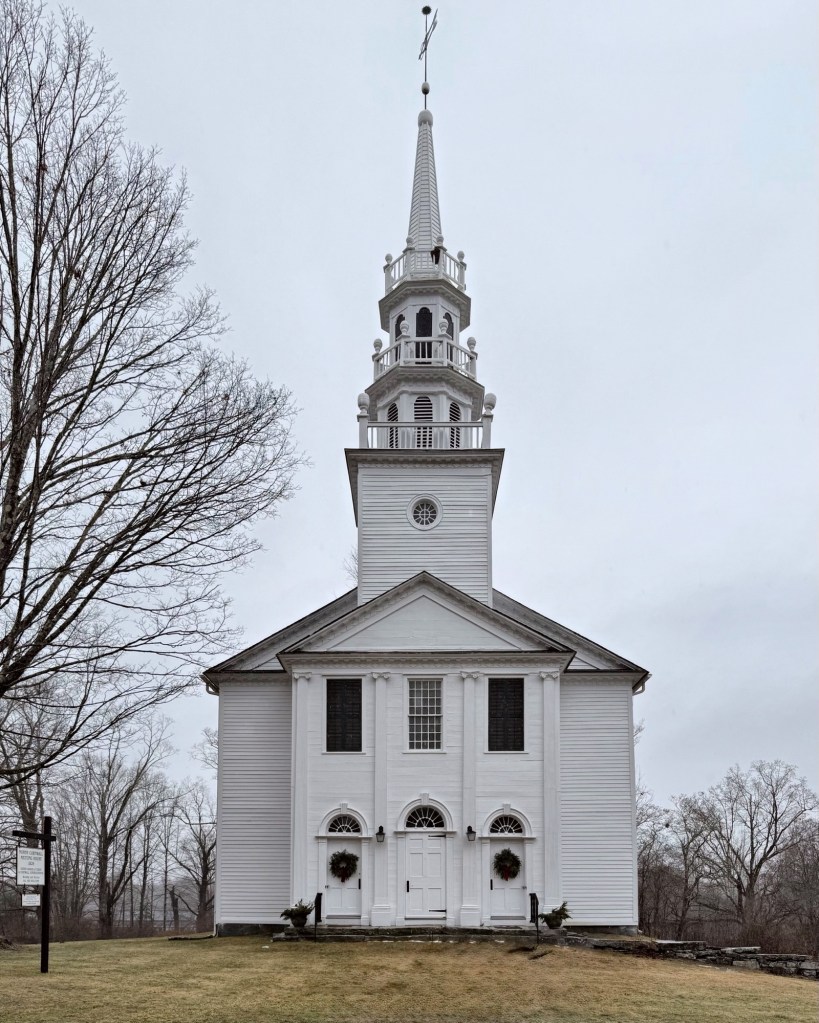
During the nineteenth century several small rural settlements dotted the landscape in Cornwall, Connecticut. In 1782, a group of “strict Congregationalists” seceded from the established Congregational church in town and constructed a “second” church in Cornwall Center. Following this, the town was divided into north and south parishes, with First Church built on the town center and the Second Church, this building, constructed in North Cornwall village in 1826. The North Congregational church is among the town’s finest Federal style buildings in the region and features three entrances with fanlight transoms and the bays of the facade are broken up by two-story fluted pilasters.

Cornwall Hollow Baptist Church // 1844

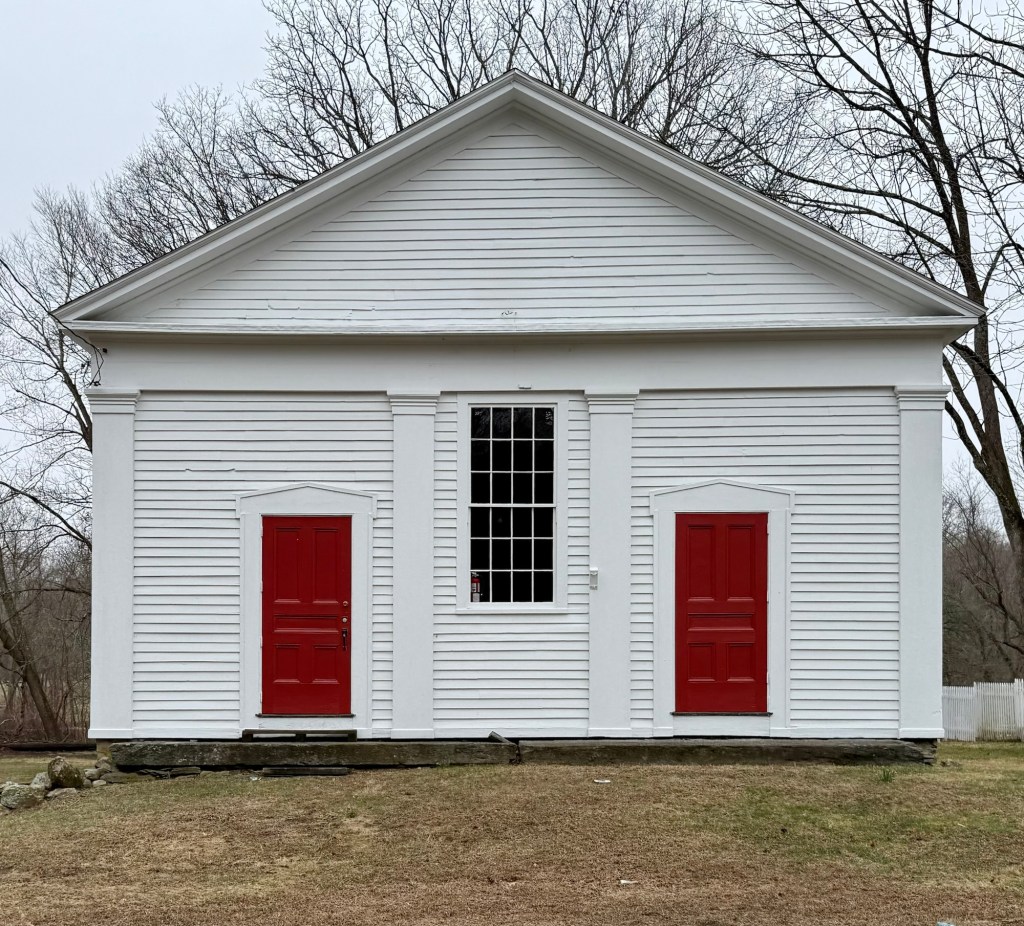
During the nineteenth century several small, rural settlements dotted the landscape of Cornwall, Connecticut. The hamlet of Cornwall Hollow this building, the Baptist Church, and contained a tannery, store, gristmill, sawmill and cemetery. The church at Cornwall Hollow was erected following dissolution of the Baptist congregation at nearby Cream Hill in 1843. A new church constitution was adopted in 1844 and this new meetinghouse erected the following year. At its height the congregation included 100 members. The Greek Revival style church once had a belfry, but it was removed sometime in the 20th century, likely due to repair costs. The interior included a curved ceiling, and windows line the side elevations. The congregation saw dwindling numbers and closed in the early 20th century. It is now privately owned, but lovingly preserved.

Goshen Congregational Church // 1832

The town of Goshen, located in Litchfield County, is located in the northwestern part of Connecticut was first settled by European colonizers in 1738, with the town incorporating a year later. The community was named after the Land of Goshen, a part of ancient Egypt in the Bible. Goshen primarily grew as rural and agricultural in character, with limited industry and commercialization compared to other nearby towns. The town center village was home to the Congregational Church as far back as 1750. In 1832, the present Congregational Church was built from plans by Benjamin E. Palmer, a carpenter-builder who also built the Windham County Courthouse in Brooklyn, Connecticut. The church blends both Federal and Greek Revival styles, and Palmer likely took inspiration from Asher Benjamin’s design guidebooks. The church retains much of its original character even with the altered steeple, porte-cochere, and conversion of three-door facade to a single-entrance in 1894.

St. Alban’s Episcopal Church // 1891

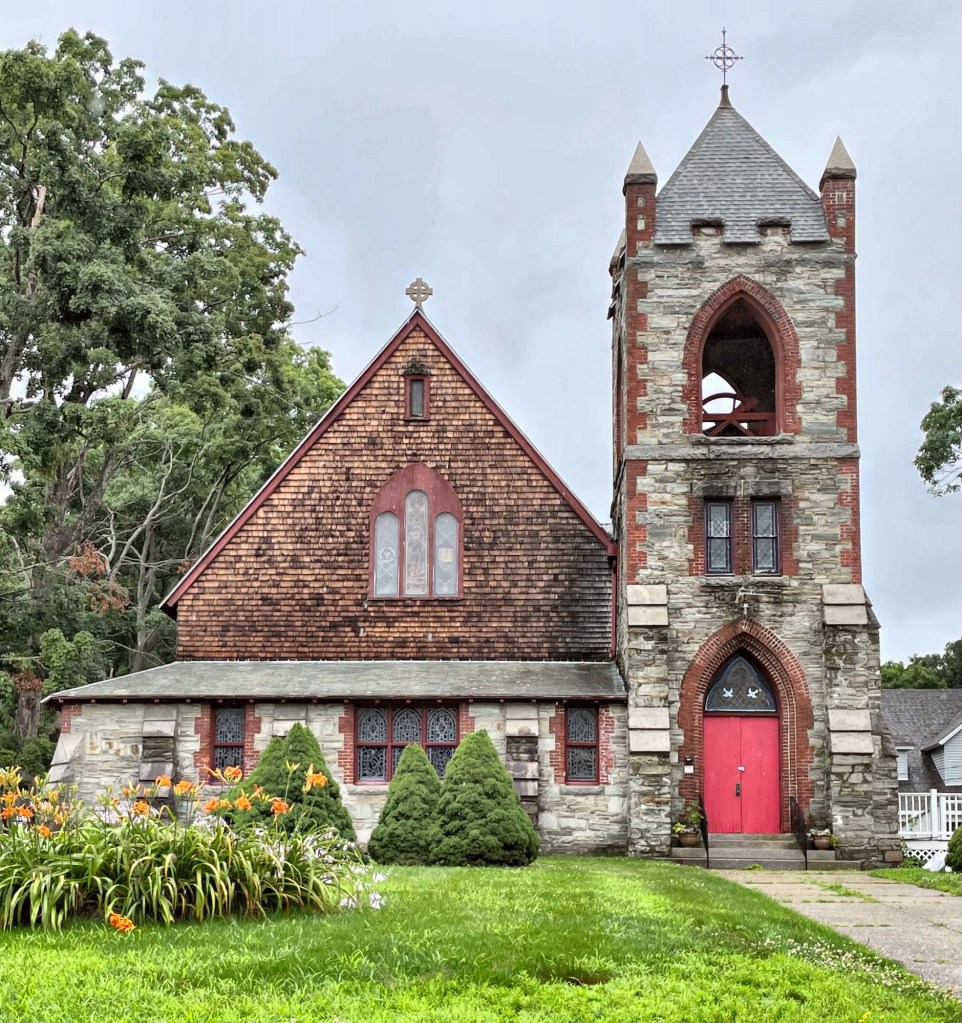
Tucked away off Broad Street in the Danielson village of Killingly, Connecticut, you will find this charming and eclectic church building, long-occupied by the St. Alban´s Episcopal Church. Episcopalians began congregating in the town in the 1860s, and it would be in 1865, when an old academy building on this site was acquired and converted for use as an Episcopal church. By 1891, the relative prosperity of members of the church made it so a new church building was to be built on the site. Worcester-based architect Stephen C. Earle was hired to furnish plans for the new edifice which is eclectic with Victorian Gothic and Shingle style elements. The congregation appears to have either disbanded or merged with a nearby church as the building does not appear to be occupied. 

St. James Catholic Church, Danielson // 1870

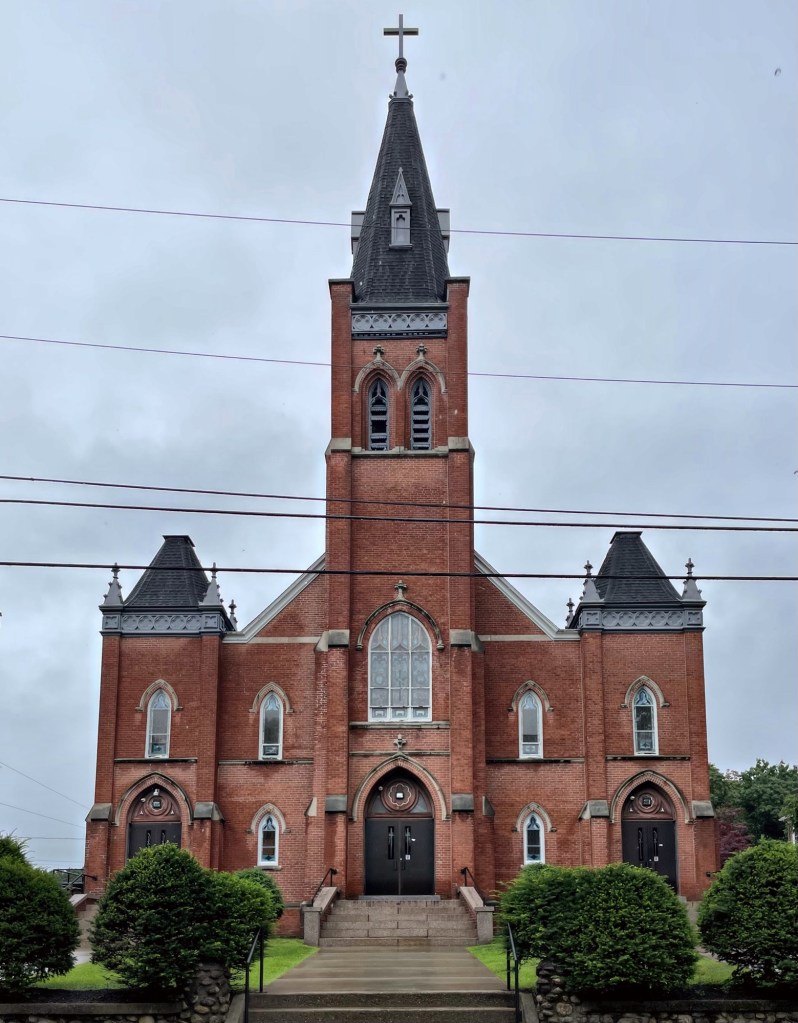
The St. James Catholic Church in Danielson, Connecticut, is an imposing and architecturally ornate example of a church built in the Victorian Gothic style. Catholics in town had their first Mass conducted by Rev. Michael McCabe, a Franciscan friar from Ireland, and the first service was held in a private home. They met in different halls until 1864 when they purchased the old Second Advent Chapel on Winter street and it became the first St. James Church. The congregation, largely of working-class Irish immigrants, eventually was able to afford a new church, this large brick structure, built in the form of a cross. A parish hall and school were also built next door and the campus serves as an important piece of the town´s immigrant and working-class history. 

Chaplin Congregational Church // c.1815

Years before the small town of Chaplin, Connecticut was incorporated as a town, early residents here had this Congregational church built at the future town’s center. The following decades would see the village develop into a cohesive street of Federal and Greek Revival style dwellings and shops, many of which remain to this day. The church was technically completed by 1815, but it would be decades until funding was acquired to add the steeple, pews, and other finishings for the edifice. The structure sits on a raised stone foundation and is prominently sited on the town’s main street.

Eastford Baptist Church // 1843

One thing so many small New England towns have are charming wood-frame white churches from the first half of the 19th century, Eastford, Connecticut is no exception. In 1793, a Baptist Society was organized at Northford (then a part of Ashford), and the first pastor, Daniel Bolton, oversaw construction of the first church there. Fifty years later, the congregation grew and their finances allowed for the construction of this Greek Revival style church in 1843. The building was added onto for a Ladies Benevolent Society and a Sunday School, giving the structure its larger appearance today. While the church is today is covered in later siding, the building is well-maintained and the original siding is likely underneath for a future restoration.

Westford Baptist Church // 1840

The Baptist church in Westford (a village in northern Ashford, yes it’s a little confusing) was formed in 1780. Its growth in the town can largely be attributed to Reverend John Rathburn, who had moved to town from Stonington, and was ordained as its pastor in 1781. A membership of fifty-four was reported in 1795. By the late 1830s, the village thrived due to the success of local businessmen and later, thanks to the Westford Glass Company, located nearby. Members donated to build this Greek Revival style church on a prominent corner in town, replacing the former meetinghouse. By the late 20th century, the church saw dwindling membership and merged with another in town. This church was sold to a neighboring property and is privately owned today.

St. Philip the Apostle Church // 1937

In 1921, the Catholic Diocese of Hartford purchased a Federal style farmhouse with 135-acres of land in Ashford, Connecticut, with the intention of establishing a new parish in the area. The Diocese assigned Father William J. Dunn, a Connecticut native and son of Irish Immigrants, to this daunting task. Since they had no church building at the time, Father Dunn partitioned off a section of his own home to serve as a chapel for about 100 worshipers, until the purpose-built St. Philip the Apostle Church was constructed in the 1930s. Father Dunn convinced summer resident Paul Chalfin to design the new building. Chalfin was not an architect, but he was an architectural designer whose best known building is the Villa Vizcaya in Miami, Florida. Chalfin was openly gay, and his hiring by the Catholic Church to design one of its churches in the 1930s is noteworthy. There were certainly several Irish immigrants and people of Irish descent in the congregation, but many parishioners came from small villages in Slovakia. The dome is a typical feature of churches in those villages and Chalfin included it in his design as a tribute to them. Due to material and construction costs during the Great Depression, members of the church largely built the church themselves with rocks acquired from stone walls and farms nearby. The church was completed in 1937.