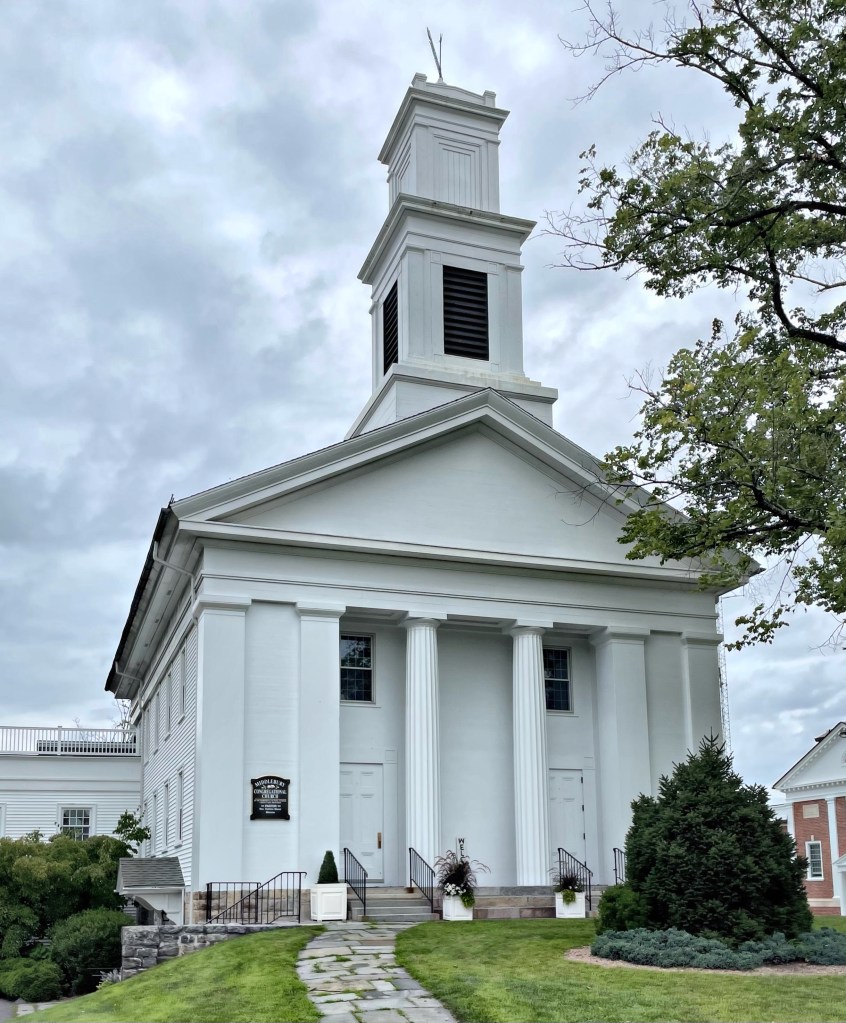
Middlebury Congregational Church // 1935

Located next door to the Middlebury Town Hall, the Middlebury Congregational Church has a very similar history to its Classically inspired counterpart. The congregational church here was established in 1791, less than a year after a separate Middlebury ecclesiastical society was granted and the first church here was erected in 1794. Decades later, a more traditional and larger church was desired by the congregation, so they had a Greek Revival style church built in 1839. Nearly 100 years later, the church (and adjacent original town hall building) burned in a large fire in April 1935. Undeterred, the congregation hired architect Elbert G. Richmond, AIA (1886-1965), who as a young man worked in the New Haven office of J. Frederick Kelly, Connecticut’s first and most famous restoration architect. The present building is a near-replica of the mid-19th century church building, and even has a bell that was recast from pieces of the old bell that crashed through the building during the earlier fire. Talk about rebirth!
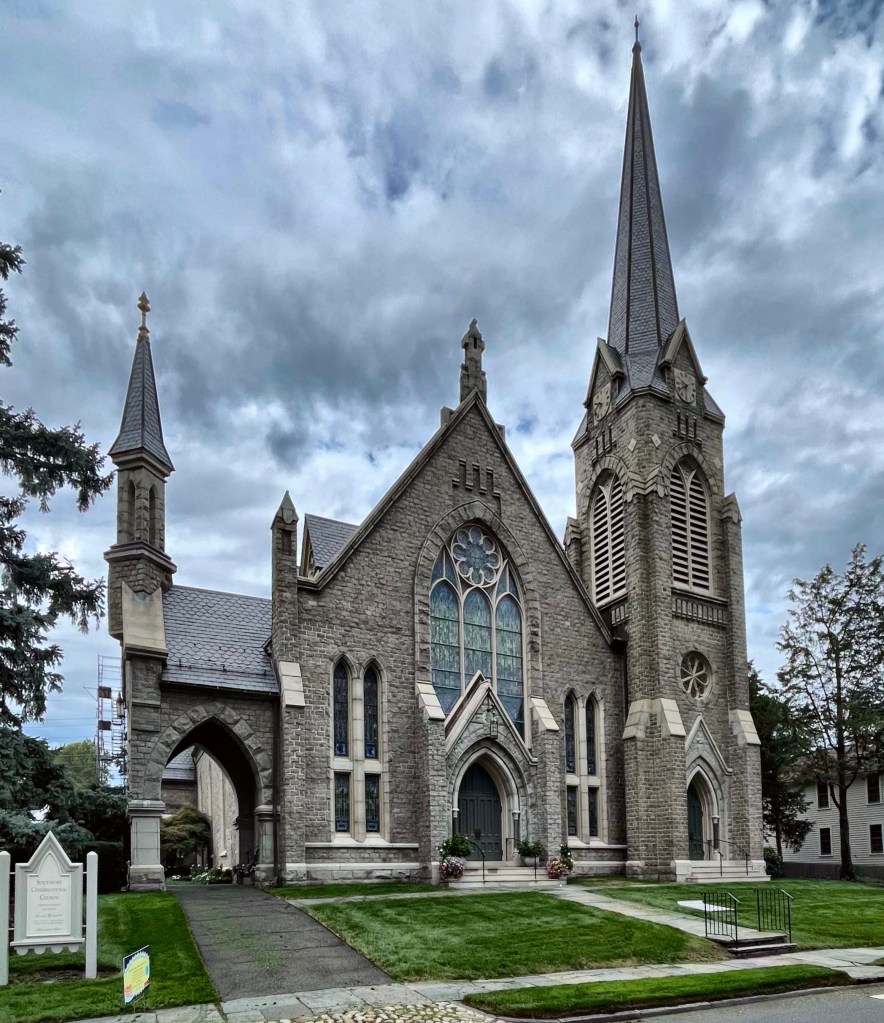
Southport Congregational Church // 1875

Southport was and still is a part of Fairfield, Connecticut, but it has long been very different from the geographic center of town. Largely due to distance, Fairfield Congregationalists in the Southport area of town sought to establish a new parish to worship closer to home. By the 1840s, their request was granted and a small wood-frame Greek Revival house of worship was built in 1843. By 1871, the increase in population and wealth in the village necessitated a new, larger church. The congregation hired the architectural team of Lambert and Bunnell who made a huge statement here! It is constructed of granite ashlar masonry with a steeply pitched roof and soaring spires.

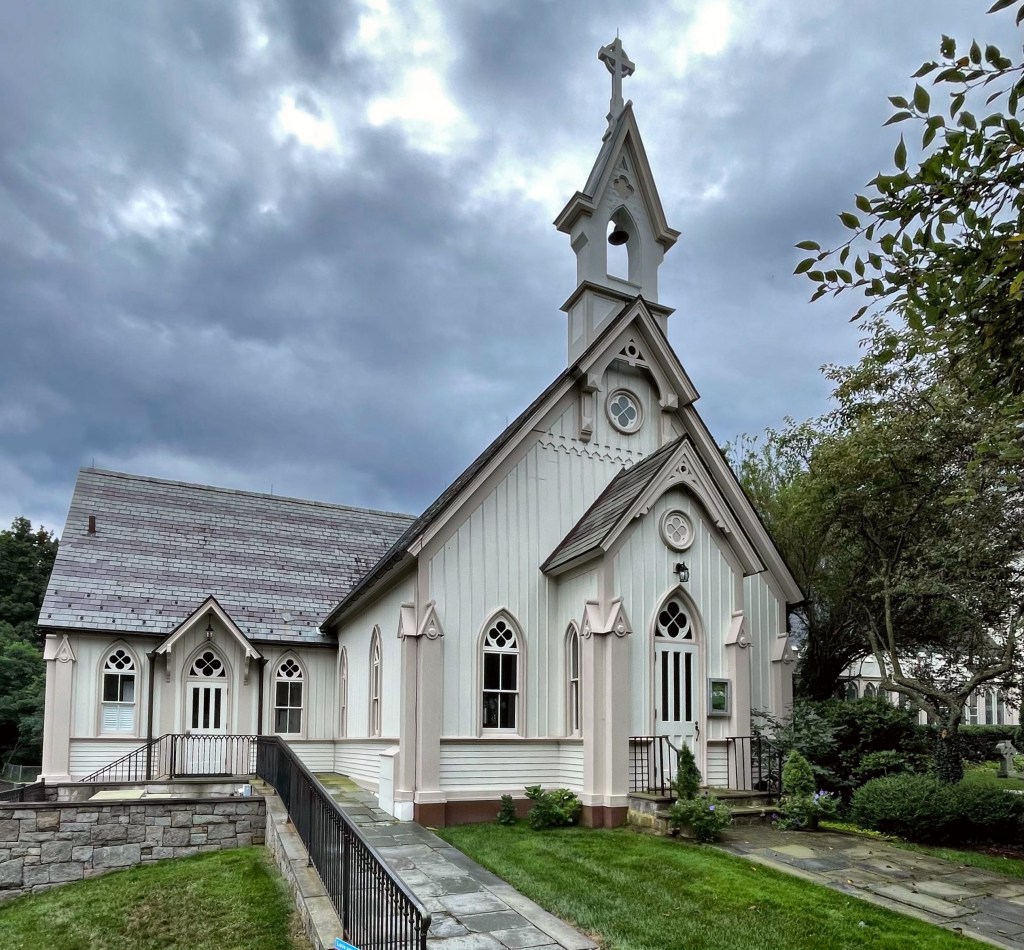
Trinity Parish Chapel, Southport // 1872

The Trinity Episcopal Church in the Southport section of Fairfield, Connecticut was established in 1725. As the parish and town grew, a large and architecturally stunning church was erected in 1862, and housed services for some of the wealthiest and well-connected residents of Connecticut. During Rev. Edward Wells’ rectorship, it was decided that a parish school was needed, and as an ardent believer in religious training, he started planning for a new chapel for use as a school. The Trinity Parish Chapel was designed by Southport architects Disbrow & Taylor and erected 1871-72. This Gothic Revival building is an excellent example of the rural church architecture which enjoyed widespread popularity throughout the country during the mid 19th century. Designed on a simple rectangular and decorative wooden bell cote, the small chapel’s board-and-batten siding and modest though strong Gothic details create a composition which compliments the more grand church just steps away. The chapel was originally built as a free-standing building, but was connected by a large, brick addition in the 20th century.

Greenfield Hill Congregational Church // 1855

Local residents of northern Fairfield successfully petitioned the General Assembly to establish a Congregational church in 1725 as a new Northwest Parish, a distinct group from the Fairfield Congregational Church. Their first meeting house was erected just years later in 1727. A larger, more substantial meetinghouse was built in 1760. The area of Greenfield Hill has always been remote and more suburban, but became important in the late 18th century when Timothy Dwight became minister of the Greenfield Hill Congregational Church in 1783. Dwight would go on to become the eighth president of Yale College (1795–1817). With increased funds and affluent members, another church was built in 1850 from plans by esteemed architect Richard Upjohn, in the Gothic style. Sadly, just years after it was completed, a fire from a furnace inside destroyed the church. So again, they rebuilt in 1855 with the building we see today, sort of. Architect Alfred Nash furnished plans for the building which was more Italianate in design. The church would be modernized in the 1940s in the Colonial Revival style, from plans by local architect Cameron Clark, likely inspired by the collection of Colonial-era homes nearby, including his own home in Greenfield Hill. The church remains a visual anchor for the affluent neighborhood.

Former Noank Methodist Church // 1902

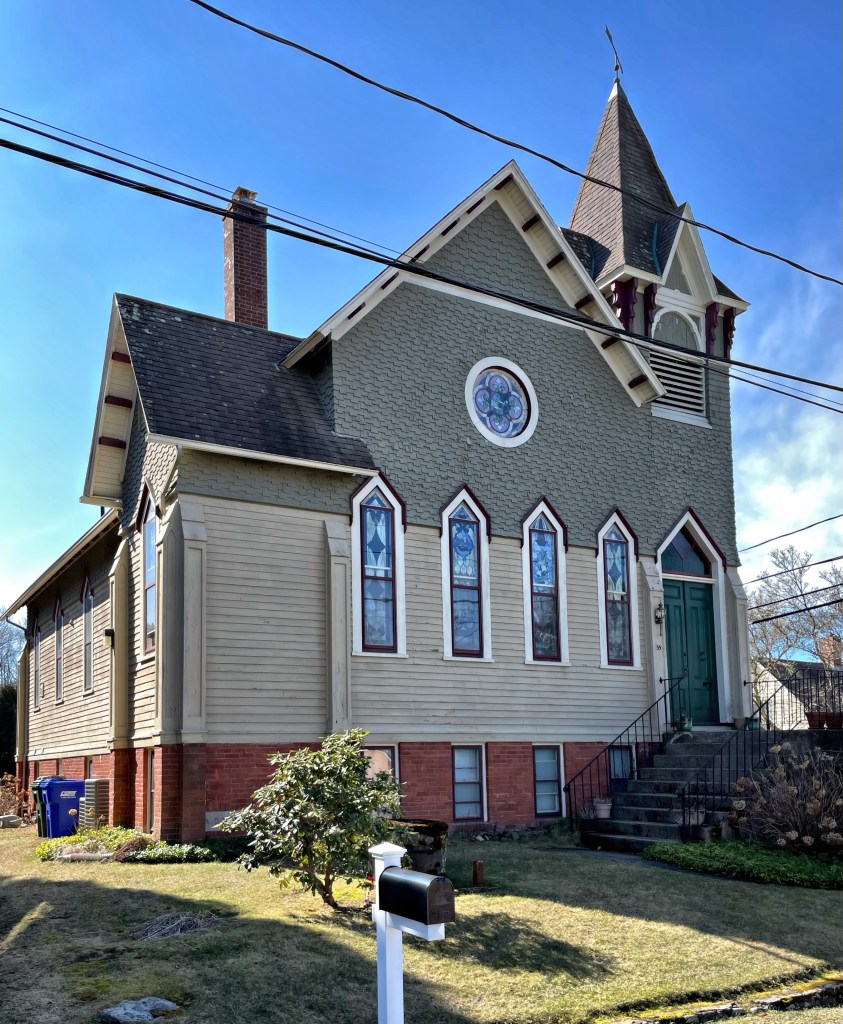
Adaptive reuse of old buildings always makes me so happy to see! Besides the obvious benefit of preserving an old building which contributes to the history and character of an area, there are clear environmental benefits to renovating older buildings for new uses when older uses are no longer viable. In 1902, the village of Noank was bustling with workers in the shipyards, many of whom attended or hoped to attend religious services close to home rather than travelling to adjacent towns. As a result, the local Methodist church-goers had this building constructed. Architecturally, the building is a hodge-podge of styles with interesting lancet windows as a nod to the Gothic style, shingle and clapboard siding which reads Queen Anne. The Noank Methodist Church merged with the Groton Methodist Church to form Christ United Methodist Church, which moved to a new building in 1972. The former church was converted into a residence. Preservation wins!

Versailles United Methodist Church // 1876

After the Civil War, the Village of Versailles’ Congregational Church was seeing less attendance and its deathknell was a fire which destroyed the building in 1870. That next year, a vote was taken by members of the Congregational Church as to a preference for their denomination. A majority voted for Methodist Episcopal and asked the New England Conference to appoint a Pastor for the new church. Funds were gathered and this church was opened in 1876, in the Italianate and Victorian Gothic styles. The building sits upon a raised brick foundation with small windows on the facade. In 1887, the Versailles church was linked with Baltic and Greenville (Norwich) the following year.

Franklin Congregational Church // 1863

When the town of Franklin, Connecticut was still a part of Norwich, it was known as West Farms. The residents there had a meetinghouse built there as it took too long to travel into Norwich for town meetings and church services. The first meetinghouse was built in 1718 on what became Meetinghouse Hill. Decades later, the primitive building was replaced by a newer structure. That building was replaced two more times until the present Congregational Church was erected in 1863. The building takes cues from the Greek Revival church designs of decades prior and looks to the future with Italianate detailing and steeple. There remains a small, but active congregation here to this day, who maintain the old building very well!

First Congregational Church, Ridgefield // 1888

The First Congregational Church was first established in Ridgefield, Connecticut just four years after the establishment of the town. Civic leaders in October 1712 successfully petitioned the Connecticut General Assembly for permission to levy a tax for “the settling and maintaining of the ministry in the said Town of Ridgefield.” Rev. Thomas Hauley, the first minister, also served as town clerk and school teacher. The first meeting house, on the town green, opened for worship in 1726. Plans for a new meeting house were drawn up in 1771 to fit a growing population, but construction was not complete until 1800. The second church was built in a more traditional style with a steeple. With a shift in the towns demographic from rural homeowners to ritzy exurb to New York City, a more suitable church was required by the end of the 19th century. Josiah Cleaveland Cady, one of the many great New York architects at the time was hired to design a new church suitable for the wealthy New Yorkers who summered in town to consider a neighbor, and he did not disappoint! The building blends many styles from Queen Anne, to Victorian Gothic, to Romanesque Revival in a way that isn’t clunky as in some other versions.

St. Mary’s Catholic Church, Ridgefield // 1896

Located just a block of Main Street in Ridgefield, Connecticut, St. Mary’s Catholic Church stands out as a rare example of Victorian Gothic architecture in a village full of Colonial (and Revival) and mid-19th century buildings. The first known Catholic to arrive in town was James Brophy, who’s family settled in Ridgefield in 1848. While growth of a local Catholic church in Ridgefield was slowly being established, the character of the town was changing by the second half of the 19th century, with wealthy New Yorkers building homes for vacationing in the summers. From this, many Irish Catholic immigrants were hired to work on the new estates. The first permanent Catholic church in town was built in 1867 as a modest wood frame church. As the congregation grew, a new church edifice was needed, and after a capital campaign, funds were gathered to erect a new church. Connecticut architect Joseph A. Jackson (who specialized in ecclesiastical design), was hired to furnish plans for the new church. The building exhibits eclectic architectural styles. Gothic design is seen in the pointed or lancet windows, arches and cast iron finials. The Queen Anne style is reflected in the use of textured and varied building materials, such as brick, brownstone, and shingles. And St. Mary’s most unique feature, its unusual steeple with its four turreted abutments and conical roof worked in shingles, is representative of the Shingle style.

Old Baptist Meetinghouse, Willington // 1829

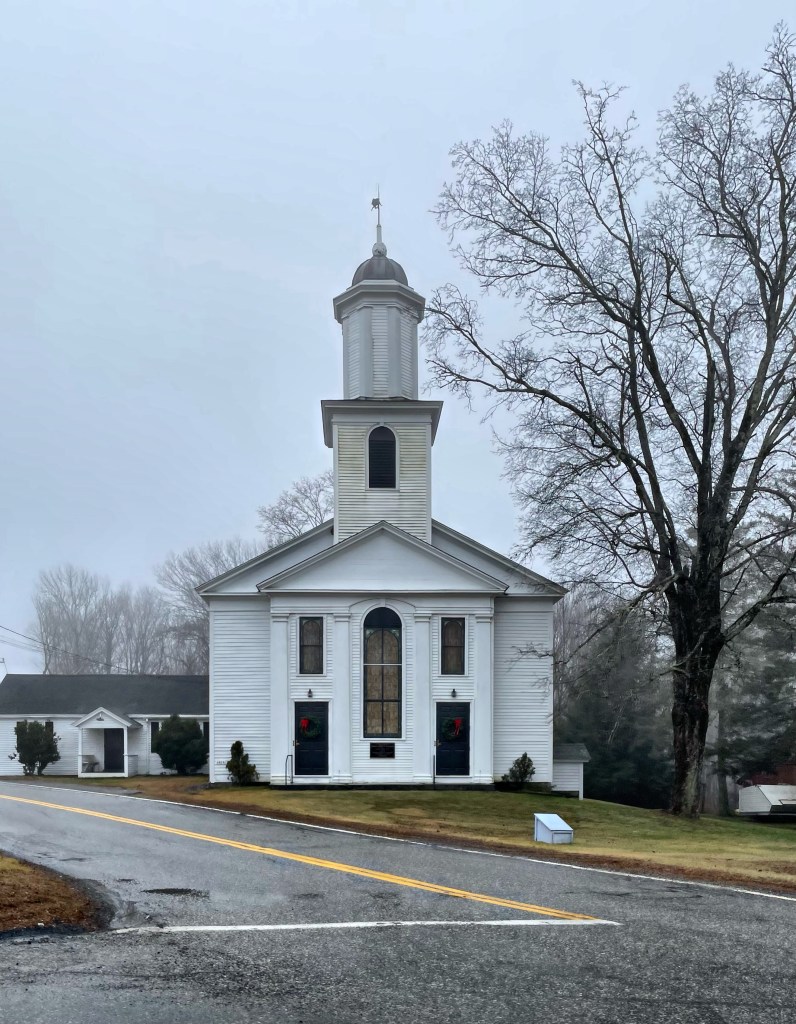
The Baptist Meetinghouse in Willington was built in 1829 by a local carpenter Albert Sharp, in a transitional Federal/Greek Revival style, common for the period. Its clapboarded facade has a projecting pavilion with two entrances flanking a two-story round-arched window. Four pilasters are surmounted by a wide entablature and the flushboarded pediment of the pavilion. Round-arched windows are repeated on the side elevations and the belfry, which is topped by an octagonal drum and a small dome. The Willington Baptist Church was organized in 1828, started by Rev. Hubbell Loomis, the fourth pastor of the Congregational Church across the common. Rev. Loomis was prominent both as a minister and an educator, and founder of Shurtleff College of Illinois. During his pastorate at the Willington Congregational Church, Mr. Loomis had strong tendencies toward Baptist sentiments. From this, membership of the congregational church split, some leaving for a new Baptist belief and others remained at the congregational church. The two congregations were split until 1911, when they again worshiped under the same roof, as the Federated Church of Willington, meeting in this building.