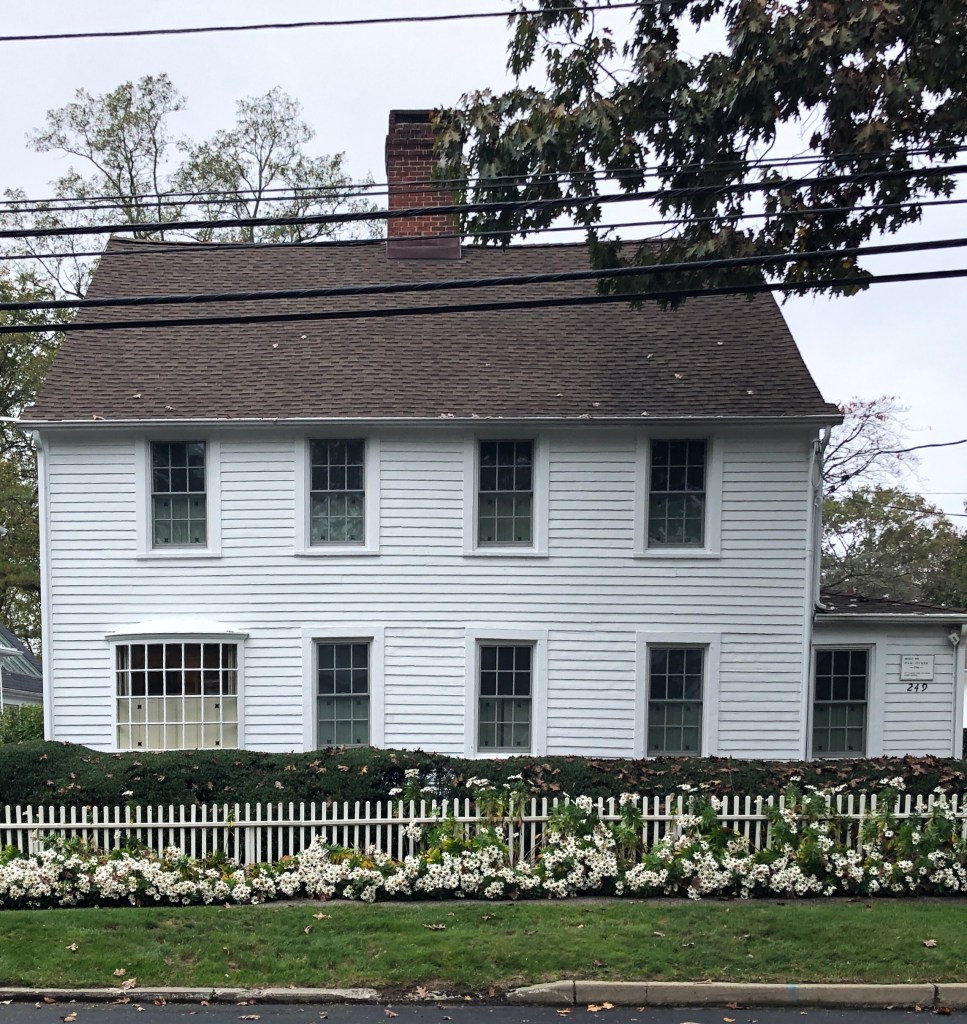
Captain John Maltbie House // 1766

On July 7-8, 1779, the Red Coats marched through Fairfield torching houses to punish the locals for seeking independence. They killed locals, destroying anything they could find on their way out, setting fires to homes and civic buildings around the Green. This home was built by Isaac Tucker, later sold to Jonathan Maltbie, sea captain involved with East Indies trade. He later would fight against the British during the Revolution, and after the war, was hired as captain on one of the first cutter ships built, the Argus. During the British invasion of Fairfield, they attempted to set fire to this home three times, but it seemed to never go up in flames when they returned. The tradition holds that an elderly servant, hiding upstairs, put out the flames and saved the house from destruction, after the British Troops torched it. Burn marks apparently remain inside to this day. Since the home was built, the front door facing the street was relocated to the side, and a large multi-pane bay window was installed in its place.

Phelps-Hatheway House // c.1762

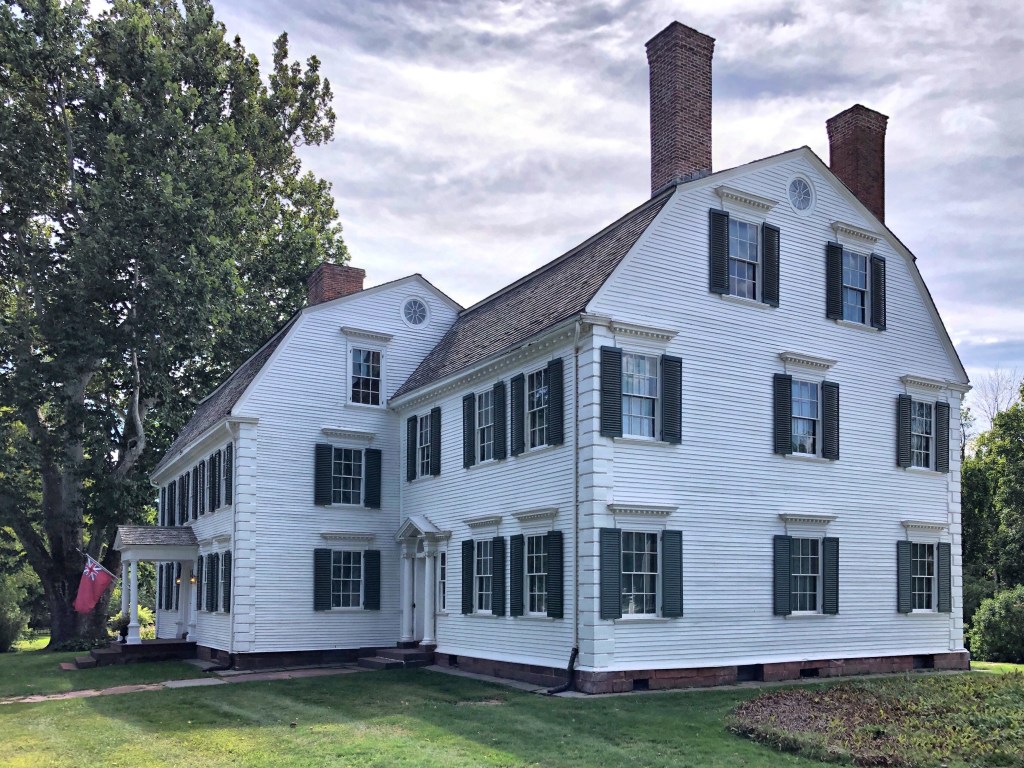
Set back from tree-lined Main Street in Suffield, the Phelps-Hatheway House is but one of many handsome eighteenth and nineteenth century homes in the town. The house began construction sometime between 1732-1762 as a modest gable-roof Georgian home built by Abraham Burbank. In 1788, the home was purchased by Oliver Phelps. at the beginning of the Revolutionary War, Phelps joined the Continental Army and fought in the Battle of Lexington. He left service in 1777 and, relying on his experience as a merchant, became Massachusetts Superintendent of Purchases of Army Supplies, a Deputy Commissary of the Continental Army. He was introduced to Robert Morris, the great financier of Revolutionary times. He supplied troops and received commendation from George Washington for his efforts. After the war ended, he became a prominent businessman and was elected to the Massachusetts Senate in 1785 and served on the Governor’s council in 1786 (Suffield was still a part of Massachusetts at this point).

Upon returning, Phelps hired architect Asher Benjamin (when he was in his early 20s!) to redesign the home into a gambrel roof mansion and construct numerous additions to make the house a suitable home for a wealthy, sophisticated man such as himself. Phelps was a principal in the Phelps and Gorham Purchase of six million acres of land in upstate New York, making him one of the nation’s largest landowners. Phelps lived here until 1802, when he moved to Canandaigua, New York, to more closely oversee the development and sale of his holdings. Phelps or his heirs sold the house, which was purchased by Asahel Hatheway and it remained in the Hatheway family for a century. It is now owned by Connecticut Landmarks and operates as a house museum.

Alexander King House // 1764

Located on the idyllic Main Street of Suffield, Connecticut, the Alexander King House stands as a well-preserved example of a high-style Georgian home. Alexander King (1737-1802) is a prominent figure in Suffield’s history. He was a graduate of Yale, and later practiced medicine in town, as well as serving as Selectman and Town Clerk for almost thirty years. He was also a Justice of the Peace, Representative to the Assembly, participant in agitation against British colonialism, and delegate to the Connecticut Ratifying Convention of 1788, when the state ratified the U.S Constitution. The home eventually was acquired by the Suffield Historical Society, who operate the home as a house museum and holds exhibits on the town’s rich history.

John W. Loomis House // 1740

This stunning home on Main Street in Suffield, CT was apparently built in 1740. By the 1840s, it was purchased by John Wells Loomis, and altered to fit the then-fashionable Greek Revival style, replacing the center chimney with two chimneys, adding pilasters and a Greek Revival entry. John Loomis was the head of the Loomis family which made a fortune in the tobacco industry in Suffield, rolling and shipping products as far away as California. Before his death, John Loomis built his son George a house nearby, knowing that his son would carry on the business, which he did until a couple years after his father’s death when he sold the business and moved to New Haven.

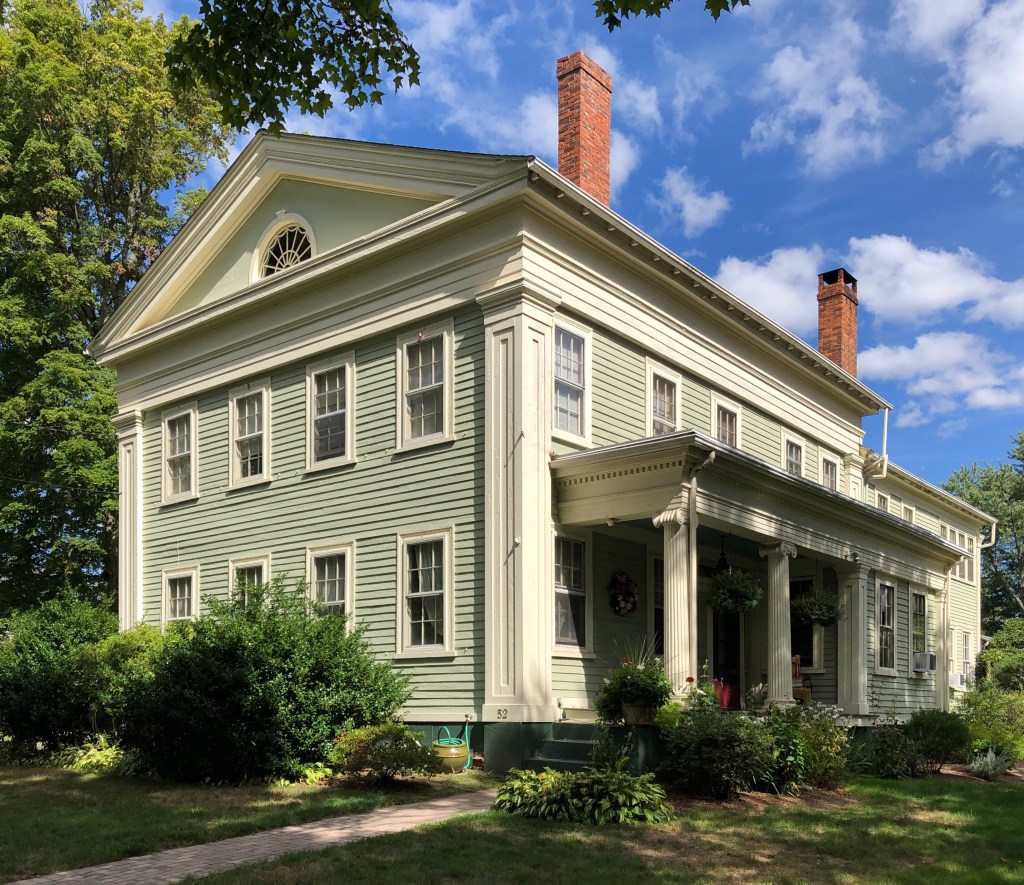
Dr. Asaph Bissell House // c.1835

Dr. Asaph Bissell was born into the wealthy Bissell family which started here when John Bissell, the progenitor of the family in America, came from Somerset, England, and landed in Plymouth, Massachusetts, in 1628. He became one of the settlers of Windsor, CT. His descendant, Asaph Bissell became one of Yale’s earliest medical graduates. Dr. Bissell, a member of the school’s second class, practiced in Suffield, often making house calls from his home right on Main Street. The house is Greek Revival in style with a stunning fan light in the pediment, echoing the Federal style.

Williston Saddle Shop // 1776

Before the invention of the automobile, horses cluttered American streets. Every town would have a saddle shop with a skilled leatherworker who would manufacture saddles, bags, stirrups and other equestrian gear. In Suffield, Connecticut, a man named Consider Williston had a shop built to make and sell saddles. According to the sign on the building, it was built in 1776, which is odd as Consider Williston fought in the Revolutionary War at that same time. The building was eventually converted to a private home and was listed for sale, with images showing the stunning Colonial era wood beams and floors.

Moses Rowe House // 1767

One of the older homes on Main Street in Suffield CT, the Moses Rowe House was built in 1767 and exemplifies the architectural history of town. The house was constructed as a two-story Georgian home with minimal detailing, as the family home of Moses Rowe (1733-1799), his wife, and nine children. According to historical maps of the area, the home appears to have been purchased by Horace Sheldon, who in the 1830s modified the home in the Greek Revival style, increasing the height of the home, adding side porches and the entablature at the roofline.

Dr. Aretus Rising House // 1854

Dr. Aretus Rising was born in Suffield, CT in 1801, part of one of the oldest families in town who settled here. His father was a farmer of modest means who could not afford the ability to let his eight children attend school routinely as he needed help on the family farm. He eventually moved to Western MA where he graduated the Berkshire Medical School in 1826, soon after opening a practice in Florida, NY before moving back to Massachusetts. He operated a doctors office in Suffield starting in 1845, running it until 1871, stopping due to poor health and failing sight. He lived most of his later years in this modest Italianate home. The house features broad overhanging eaves and a porch supported by stunning lattice columns.

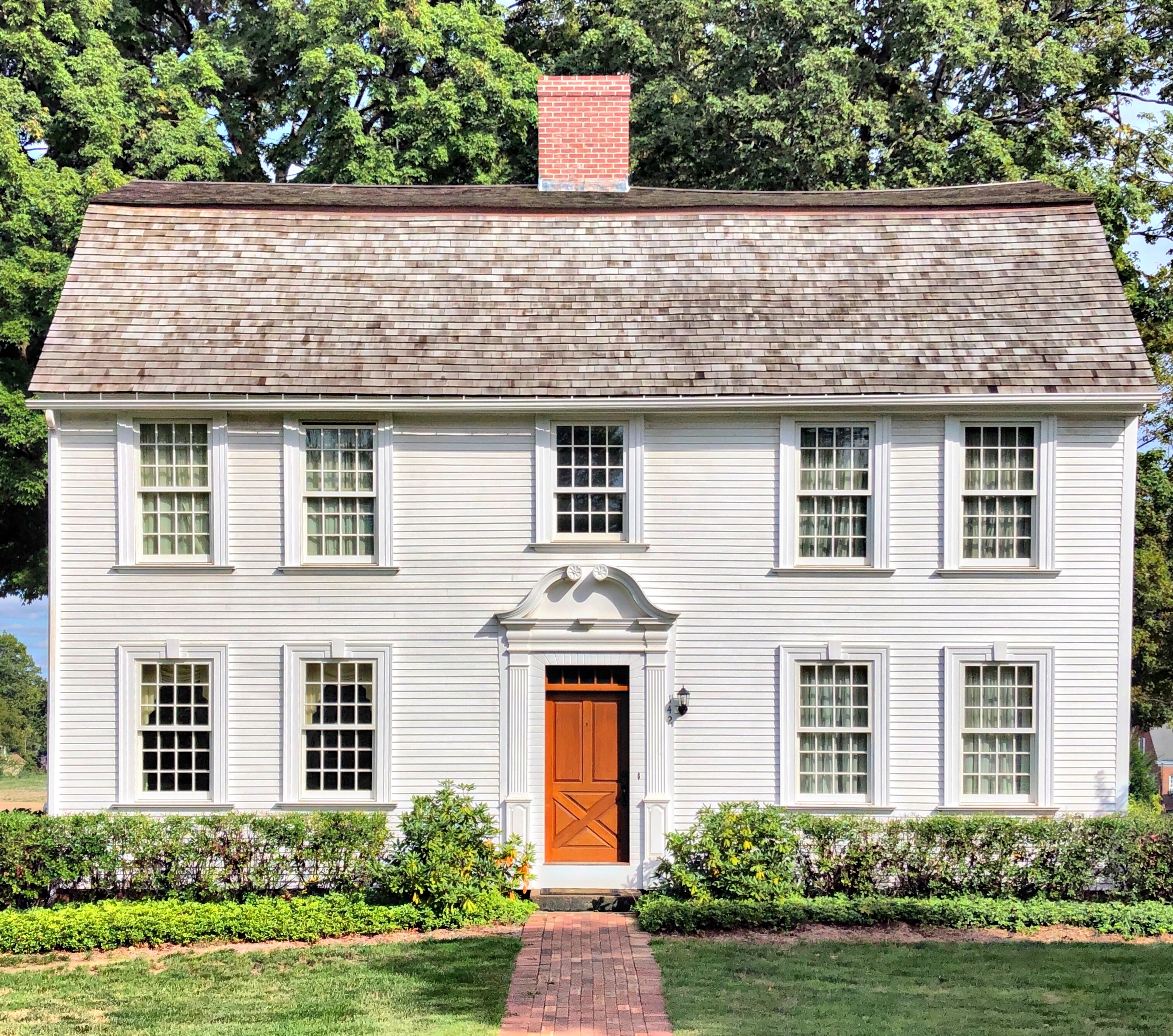
Gay Manse // 1743

Ebenezer Gay (1718-1796), the third minister of the First Congregational Church of Suffield, was born in 1718 in Dedham, Mass. His father was a substantial farmer, and his uncle was the famous minister, Ebenezer Gay of Hingham. Young Ebenezer graduated from Harvard in 1737, and held his first preaching job three years later. Reverend Gay became a candidate for a pastor in the Suffield Congregation, becoming ordained in 1742. That same year he married his wife, Hannah, and they had this massive home built adjacent to the town’s church. Rev. Gay and his wife had no children, but had adopted a black girl “Sybil” who was baptized as the “child of Ebenezer and Hannah”. There were other black members in the Gay household in later years including Titus Gay. “Old Ti” was born in 1787, and lived nearly his entire early life in Suffield, CT. He was born to a family of slaves also owned by Reverend Ebenezer Gay, making him born into slavery. His mother, Rose Gay, was a princess in Africa, and his father was owned by Major Elihu Kent. Reverend Gay was the pastor of the church until his death in 1796. The home was later occupied by other pastors at the church, and was eventually acquired by Suffield Academy for use as housing. The gambrel roof Georgian mansion features a stunning Connecticut Valley doorway with swan’s neck pediment.

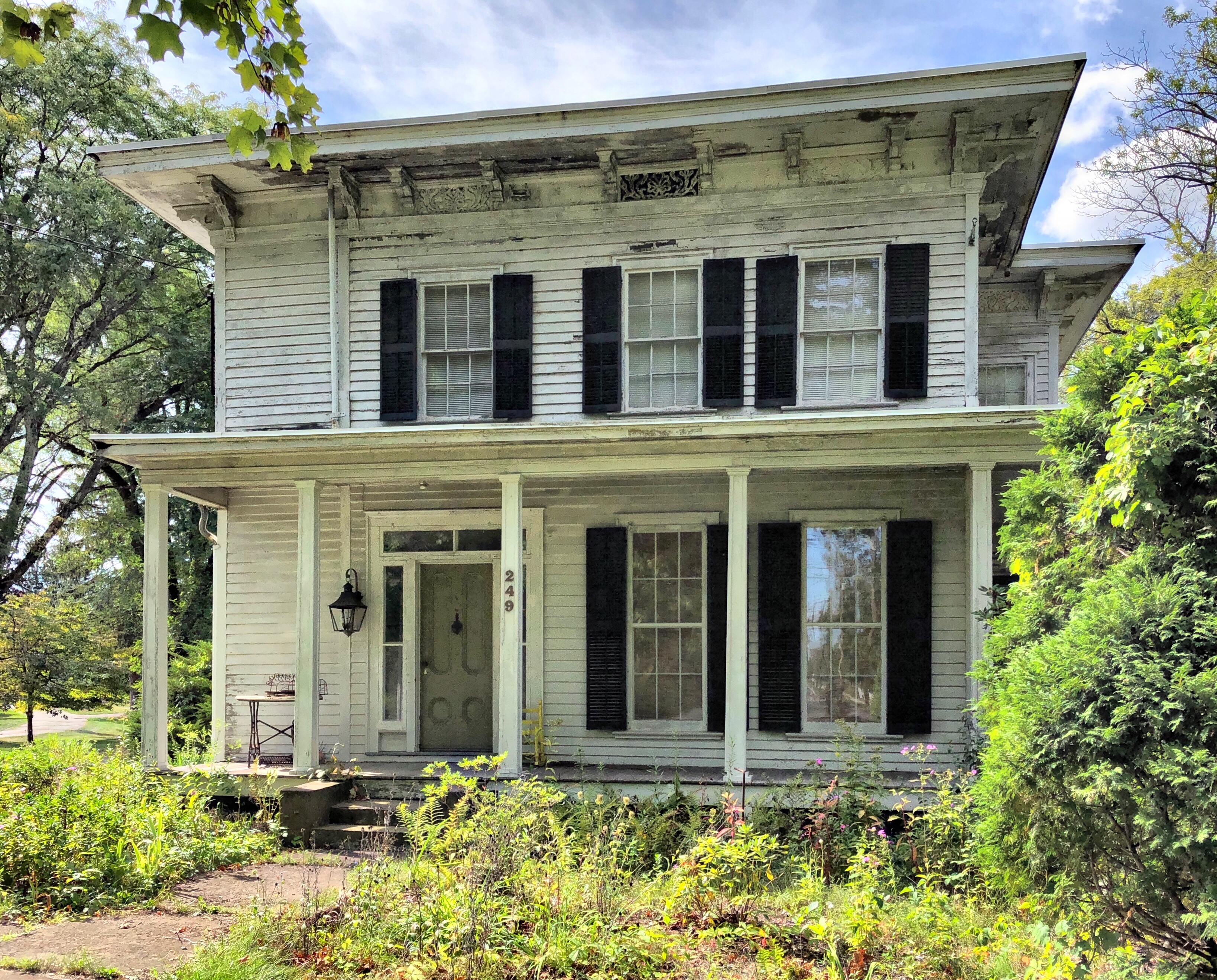
Israel L. Spencer House // c.1855

The Spencer family emigrated from Braintree, England to America in 1638, with Thomas Spencer settling in Hartford, Connecticut in 1640. Thomas Spencer Jr., the second generation in Connecticut moved to modern-day Suffield in the 1670s. Generations later, Israel L. Spencer (1833-1887) became a businessman and politician, later being employed at the First National Bank in Suffield, continuing the family’s legacy in town. Mr. Spencer had this Italianate house on South Main Street built for him and his family. Israel’s son Charles L. Spencer grew up in the home, later following in his father’s footsteps becoming the president of the local bank. Sadly, the home has seen better days, hopefully it can be restored and maintained in the future!