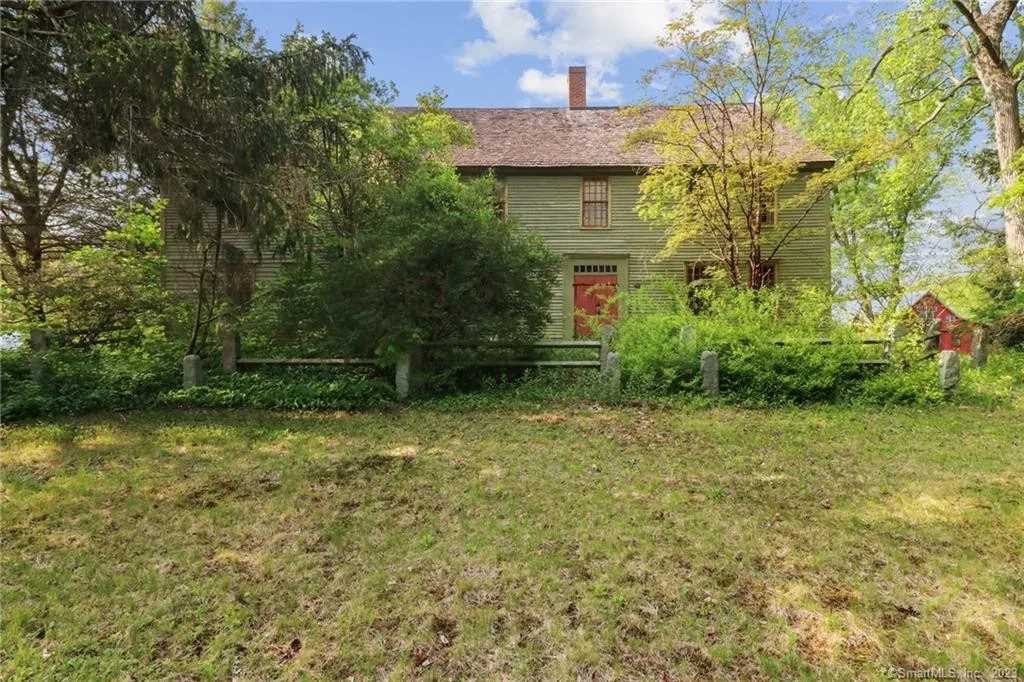
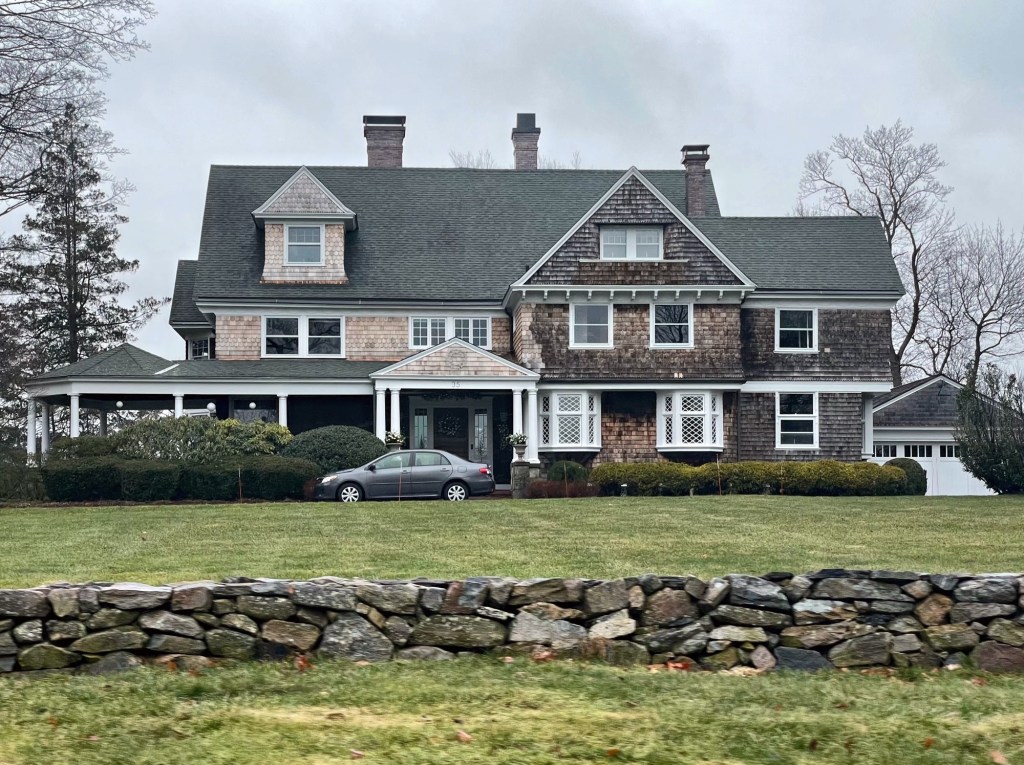
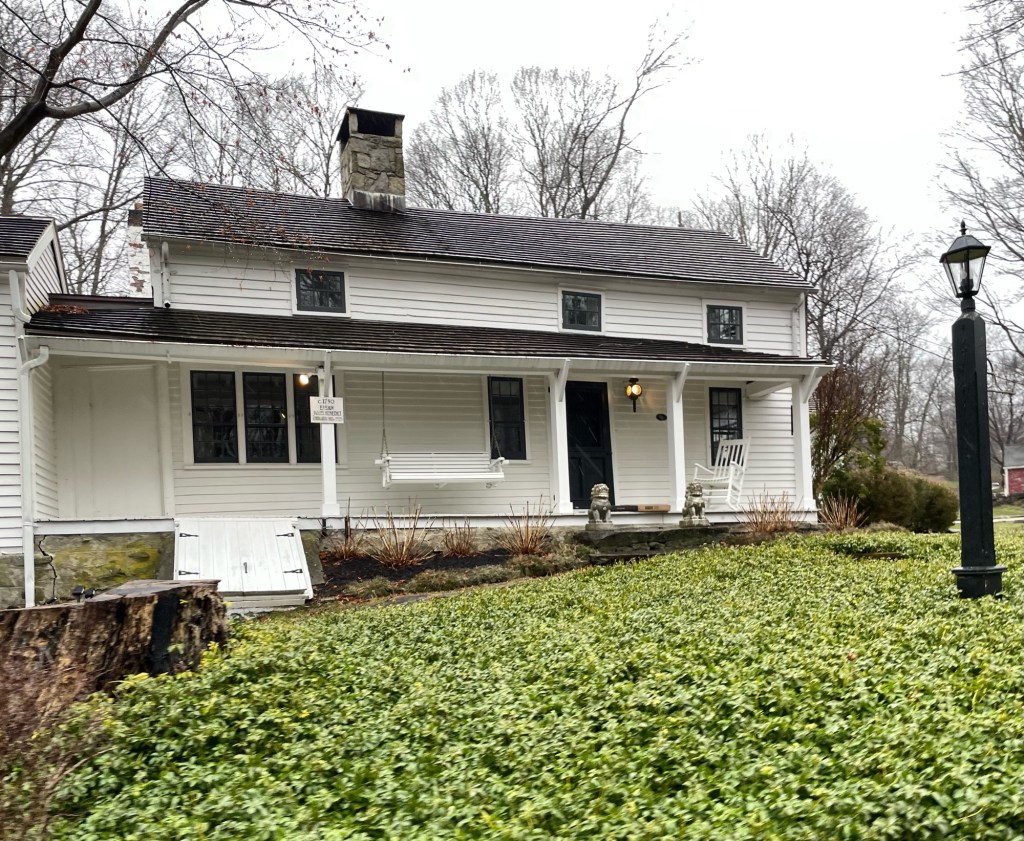
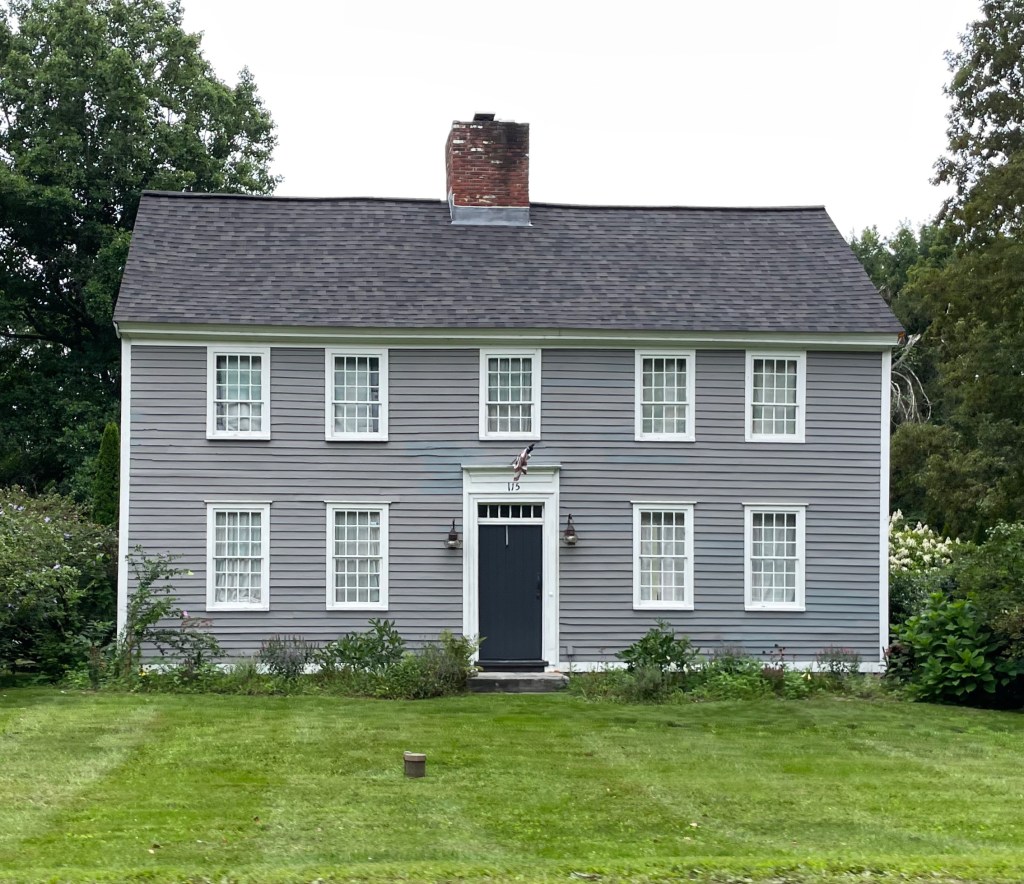
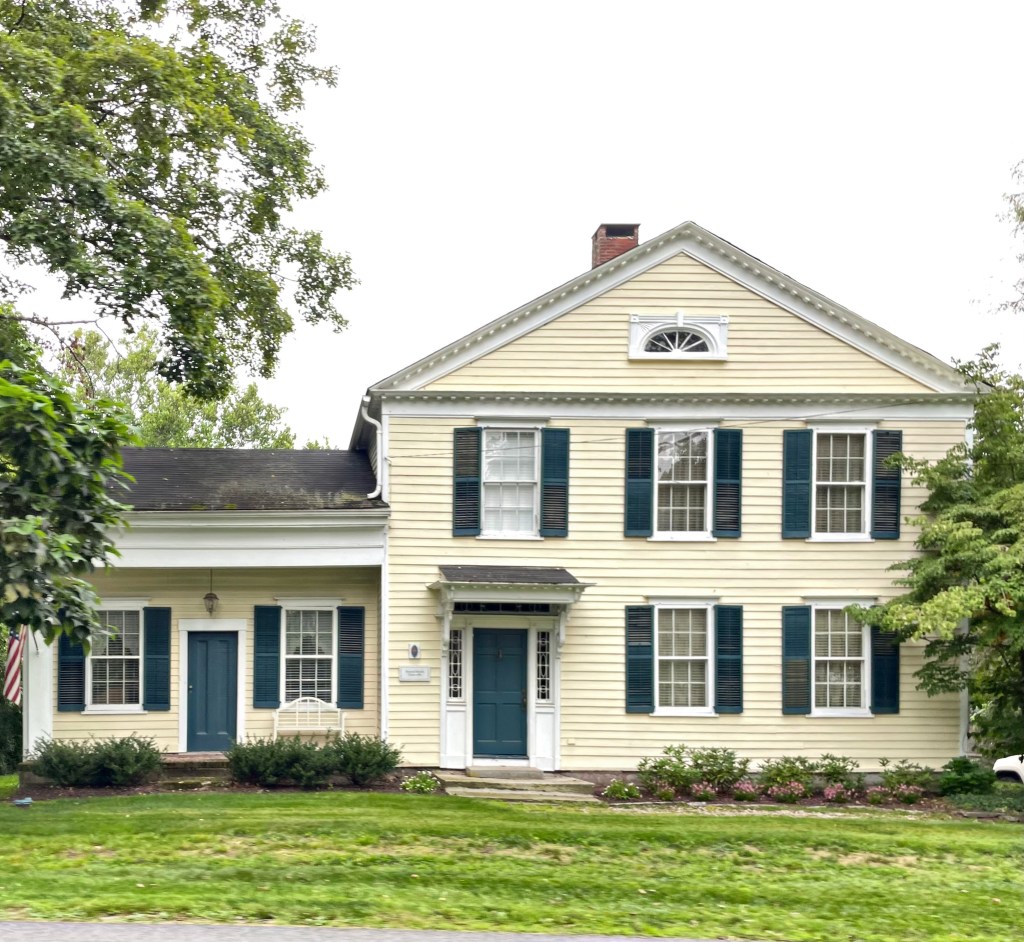
Thompson-Sperry House // 1803

In 1803, General David Thompson (1766-1827) and his wife, Sybil (Norton) Thompson, moved into this recently completed Federal style residence on North Street, the main road through Goshen Village, Connecticut. David Thompson was a merchant and partner in the firm Wadhams & Thompson, occupying a store nearby the Congregational Church. Business partners David Thompson and David Wadhams built near-identical houses across the street from each other, though the Wadhams house has since been gut renovated and lost much of its original fabric. The Thompson House stands out for its Palladian second-story window, glazed with interlacing arcs. The property was owned at the end of the 19th century by Albert Sperry, a Civil War veteran.

Lavalette Perrin House // c.1844

The perfect whimsical blending of the Classical Greek Revival and the intricate details of the Carpenter Gothic styles can be found under one roof in Goshen, Connecticut; this is the Lavalette Perrin House. Built c.1844 for Lavalette Perrin (1816-1889), who graduated from Yale in 1840, and became licensed to preach in 1843. Reverend Perrin was in his late 20s when he accepted the call to become the pastor of Goshen’s Congregational Church in 1843. Upon arriving to town, he had this residence built soon after, blending two differing styles in a blissful composition. Perrin remained in Goshen until he was called to New Britain in 1858, where he remained until his death. Unique architectural features of the home include the flushboard siding, pilaster-and-lintel framed doors and windows (very rare in this form), and wave-like bargeboards. What a special home!

Harris Sayles House // c.1860

This handsome Italianate style house is located on Dog Hill Road in Killingly Center, Connecticut. The house appears to date to the years just before the Civil War and historic maps show that the property was owned by Harris Sayles, a co-owner of the large woolen mill in nearby Dayville. The home was built for Harris and his wife, Phebe. The house stands out for its two-tiered gallery of porches with large chamfered posts and paired brackets and has some Classical corner pilasters and door surrounds noting the transitional period from Classical Greek Revival style to the romantic Italianate style.

Darius Knight House // c.1830

Another of the stunning early 19th century homes in the charming town of Chaplin, Connecticut is this transitional Federal/Greek Revival home built around 1830. The house appears to have been built for Darius Knight (1792-1882), a Deacon at the nearby Congregational Church. Of an interesting note, the Knight House is located across the street from the E. W. Day House, thus the intersection was colloquially known as the Knight and Day Corner. The house’s gable-end form with gable reading like a pediment supported by corner pilasters are all clearly Greek Revival style, but the fan lights in said gable and as a transom window are holdouts of the tried-and-true Federal style which dominated up until that point. What a great house!

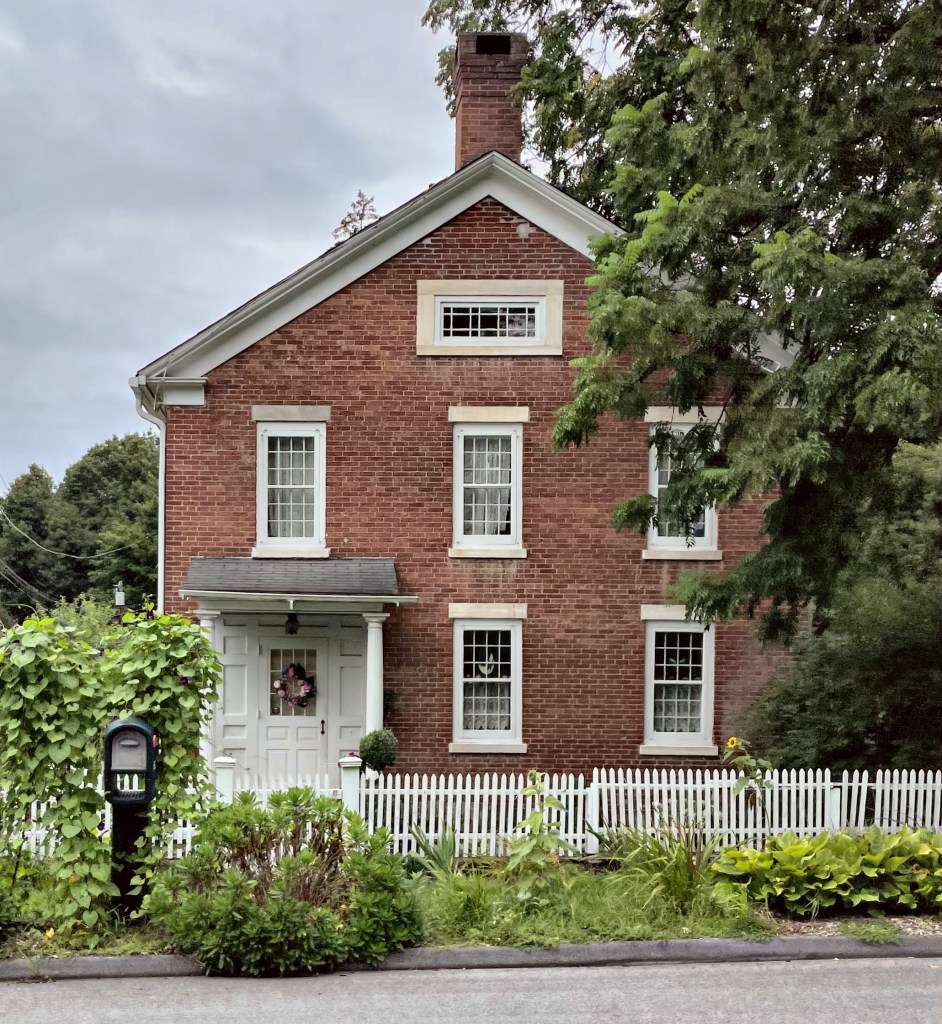
Lincoln-Chrysler House // c.1830

This charming brick Federal house sits on the main street in the quaint village of Chaplin, Connecticut. Due to its style, the house likely dates to 1830 as a late-Federal home as the village was seeing development. The original owner is not known, but the property was later occupied by Mason Lincoln in the mid-late 19th century. By the early 20th century, the property was owned by members of the Chrysler family, first by Mintin Asbury Chrysler (1871-1963), a botanist, mycologists and paleobotanist. The house was later inherited by Mintin’s son, Sidney Chrysler, who was a known puppeteer who converted some spaces in the property for puppet shows until his death in 1999.

Gurley Tavern // 1822

Chaplin, Connecticut was incorporated in 1822 and in that same year, this stately Federal style residence was built and operated as a tavern by Chauncey and Julia Gurley. The house in the late 19th century was used as a private school and residence and was later owned by Ruth E. Snow Bowden (1895-1983) known lovingly as “The Quilt Lady”. Ruth was one of the foremost quilt-makers in Connecticut and her Chaplin home, as a result, became known as The Quilt Shop. By the late 1900s, the tavern was converted to an inn, but closed years later from few bookings. The new owners have restored and maintained this charming old tavern back to its original appearance.

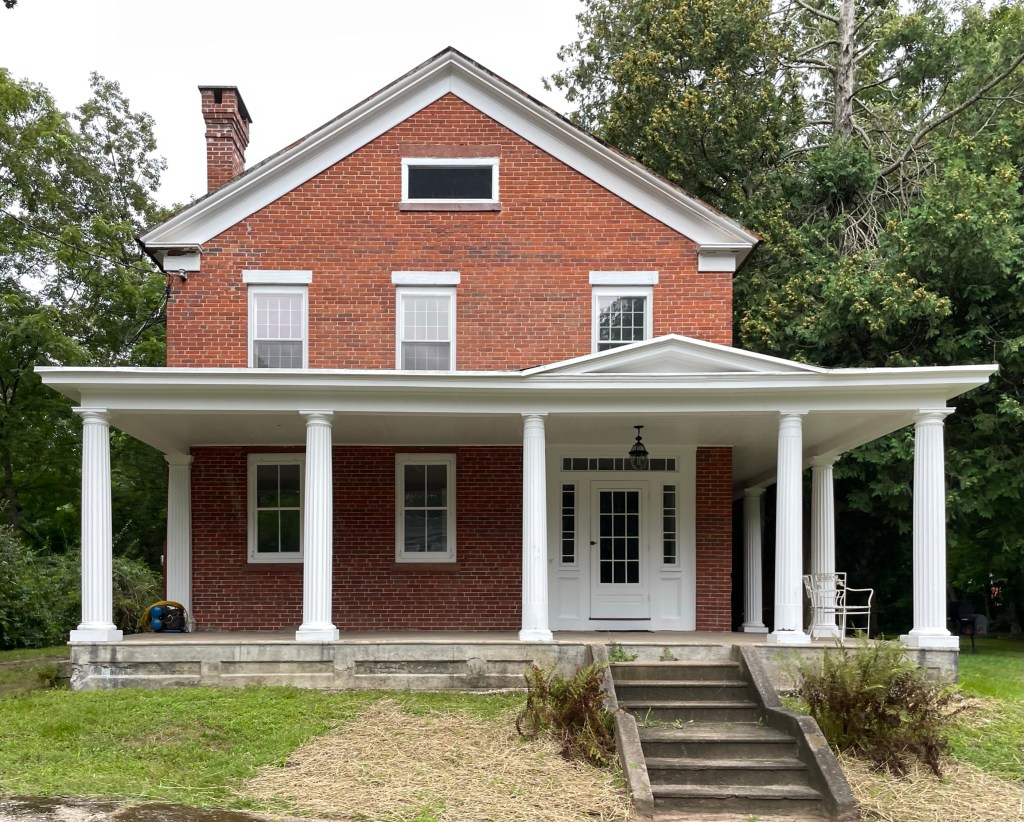
Goodell-Bill House // 1828

One of the finest houses in the small town of Chaplin, Connecticut is this Federal manse, located right on the edge of the town center. The brick residence was built in 1828 by Isaac Goodell (1770-1856) who raised his family in the stately home. After Goodell’s death, the property was inherited by his daughter, Mary and her husband, Lester Bill. The house stands out for its painted brick walls, symmetrical facade with fanlight and sidelights at the entry, and the large Palladian window on the second floor.

Edwin Eaton House // c.1835

Edwin Eaton (1803-1873) was a lumber dealer and master carpenter in Chaplin, Connecticut when he built this home at the edge of the village center. Eaton built this large residence around 1835, after his marriage to Caroline Gaylord in 1831. It is said that he built more than half the houses in Chaplin Center, several meeting houses in other towns, and for a time, sold the timber for the Spragues’ when they were building industrial villages in nearby towns. The Eaton House is presently (2024) being renovated, hopefully the original high-quality woodworking is restored!

Benjamin Bosworth House // 1800

One of the most unique houses in Connecticut is this massive Federal style residence located in the small town of Eastford. Built next to the Congregational Church of Eastford (1829-2023), which burned down in 2023 by arson, the massive house has been known as both the Benjamin Bosworth House and Squire Bosworth’s Castle due to its first owner, Benjamin Bosworth (1762-1850). According to the Bosworth Family, the house was built in 1800 by Bosworth was a wealthy merchant, who hired Vini Goodell, a local carpenter to design and build the large Federal home. The house was completed by 1801 when the local Masonic group met in the building. As Bosworth was also a merchant, he used the basement as a storeroom. The house is also unusual for its monitor roof, a rarity in Federal period construction, which reads like a second structure on the house, due to the building’s size. After Bosworth’s death, the house was occupied by his niece, and was later purchased by Elisha Grant Trowbridge in 1897. Trowbridge was a grand-nephew of General Nathaniel Lyon (1818-1861), a local hero who was the first Union general killed during the Civil War. Trowbridge, an engineer, lived here until he died in 1963 at the age of 96. Later owners have had the monumental task of restoring and maintaining this behemoth of a house, to great success.

Sumner-Carpenter House // 1806

I don’t think any state does the Federal style as well as Connecticut (Massachusetts is a close second)! This is the Sumner-Carpenter House, a high-style example of a Federal residence that is located on the backroads of the small town of Eastford, Connecticut. The house was built in 1806 for John Newman Sumner (1775-1831) who resided here until just before his death. The elaborate Federal period house was sold out of the family. After trading hands a half-dozen times, the property was purchased by David and Harriet Carpenter in 1881. The property remained in the Carpenter family for generations, and remained as such after Orlo Carpenter (1865-1938) was killed in the collapse of a barn during the hurricane of 1938. Architecturally, the house has all of the hallmarks of the Federal style, with the symmetrical main facade five bays wide, with a center entrance flanked by wide sidelights, and topped by a fanlight transom and corniced entablature. The window above the entrance is in the Palladian style, with a rounded center window flanked by narrower sashes. The house is very well preserved and was listed on the National Register of Historic Places for its architectural quality and preservation.