Lincoln Building // 1894

Designed by a prominent architect, Willard T. Sears, the Lincoln Building at Lincoln and Essex streets, is a handsome example of a late 19th century mercantile structure consisting of stores, office & loft space, serving as an important visual anchor the almost uninterrupted neighborhood of the Leather District of Boston. The building is the second of its name, with the first Lincoln Building succumbing to the Lincoln Street Fire of 1893, which started as a small fire in a restroom of a toy wholesaler, eventually spreading to a storage room full of fireworks, which exploded, eventually killing at least five, and forced many others to jump from buildings to seek safety. The replacement building is Renaissance Revival in style with a stone base and classically decorated facades. The recessed entrances set within arches and the series of columned bays at the ground floor are truly special. The building was long-occupied by leather dealers and companies, but was converted to residential use in 2006 with condos on the upper floors and retail spaces on the street.
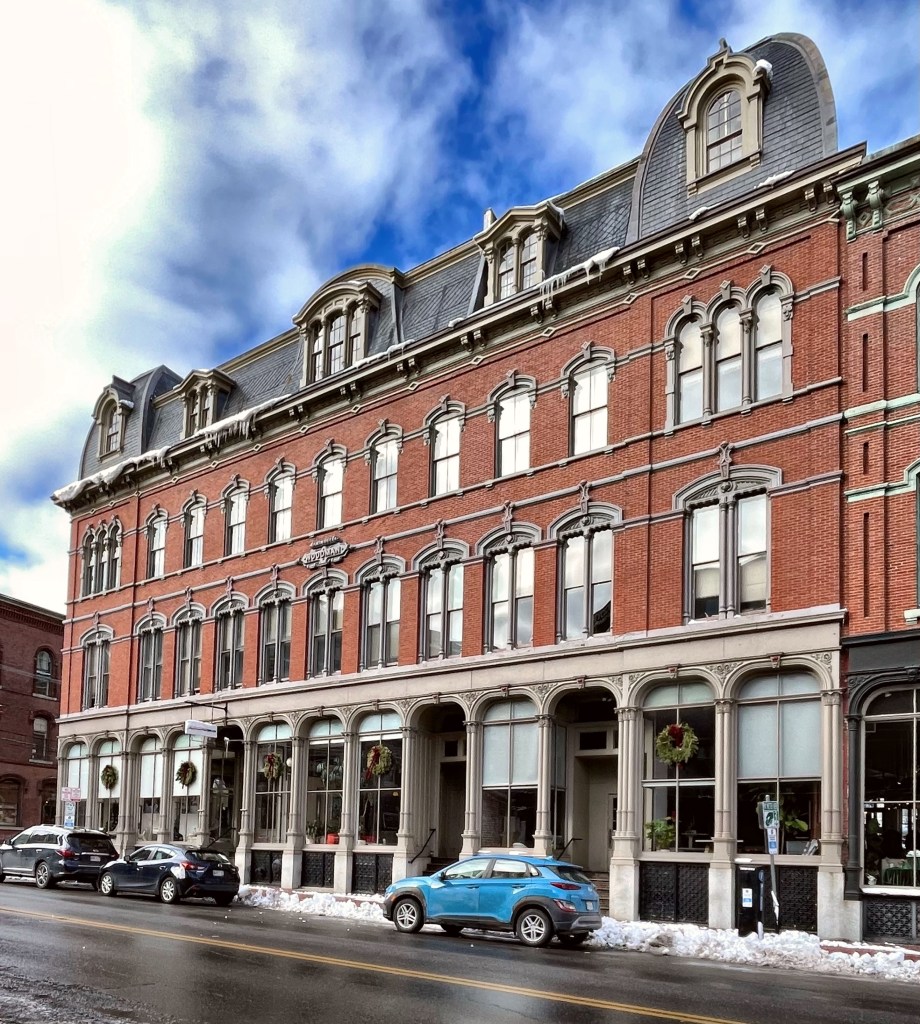
Woodman Block // 1867

Located next-door to the Rackleff Block, this high-style Second Empire commercial block in Downtown Portland, Maine really turns heads. The Woodman Block (like its neighbor) was built in 1867 from plans by architect George M. Harding, who designed the building for George W. Woodman, a drygoods dealer. This stunning commercial block originally housed Woodman’s dry goods firm, Woodman, True, and Company. It later held a druggist and medicine company. The building retains much of its original architectural character minus the iron cresting which once capped the mansard roof. They don’t make them like they used to!

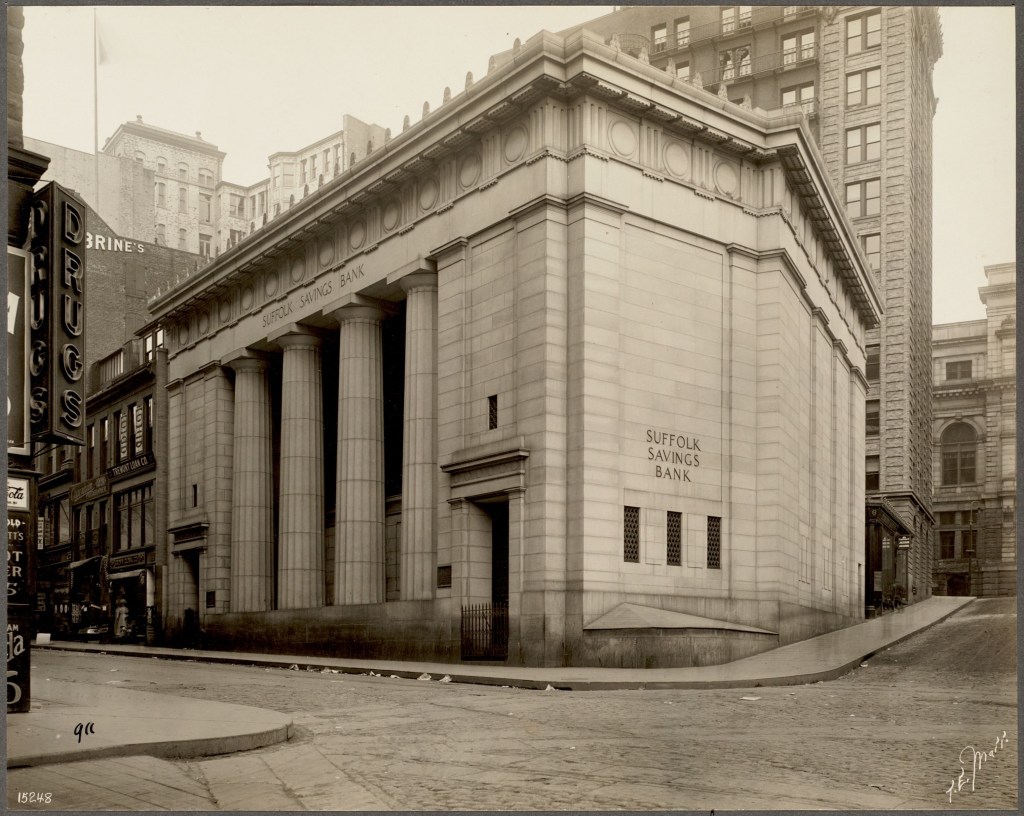
Suffolk Savings Bank // 1906-1967

The Suffolk Savings Bank for Seamen and Others was incorporated in 1833 as a banking institution catered to seamen and merchants who received their earnings after a trip in cash, and wanted a secure place to store their funds. At the time, these men were among the richest in the city, and the bank did very well. It later became a national bank in 1865 and membership boomed. The bank grew and grew until the early 20th century, and it needed a new banking house that showcased their stability, but also provide a visual embodiment of the security their institution provides. The bank’s board hired world-renowned architect Cass Gilbert to design a new building, which would be located on one of the busiest corners in Downtown Boston at the corner of Tremont Street and Pemberton Square. The Classical Revival building was constructed of Hallowell Granite and featured four monumental columns recessed into the Tremont Street facade. Minimal windows allowed for security, while a domed skylight covered in a cap provided light into the rounded banking room below. Inside, the walls and floors were of marble with a tile coffered ceiling. The building lasted until 1965 when Urban Renewal brought the wrecking ball. The bank was demolished by 1967 for the present Center Plaza building in Government Center.

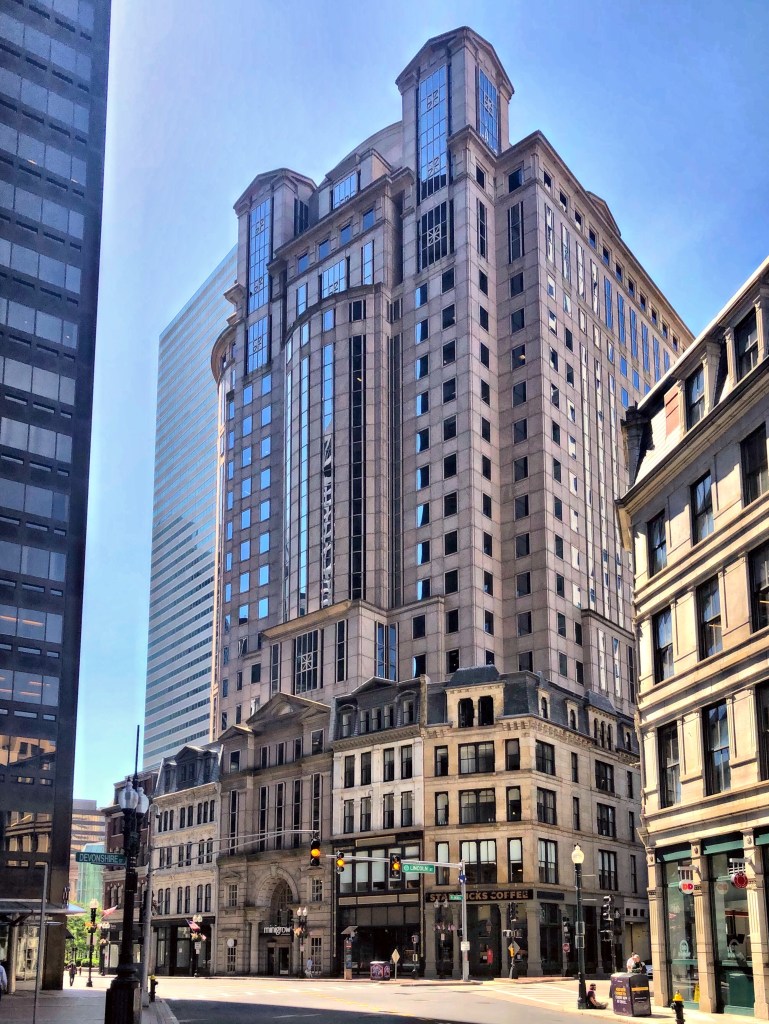
125 Summer Street // 1989

The late 1980s were a time of financial success for developers and banking companies all over the country. It seems that more skyscrapers were constructed in Boston this decade than any other of the 20th century, but working within the confines of the historic downtown of the city, left architects and developers to come up with creative ways to build here. The architectural firm of Kohn Pederson Fox was hired to construct a 20+ story office tower at the southern edge of the Financial District in Boston, while preserving the small-scale commercial buildings there. A row of four-story commercial blocks constructed after the Great Boston Fire of 1872 were retained with the tower seemingly growing out of them. The process here is known as “facadism” which is a valuable preservation tool to balance preservation with density in historic downtowns, though not always done right. This KPF design with its Post-Modern tower in concrete and granite fits well within the streetscape and maintains a walkable block downtown.

What do you think of this design?

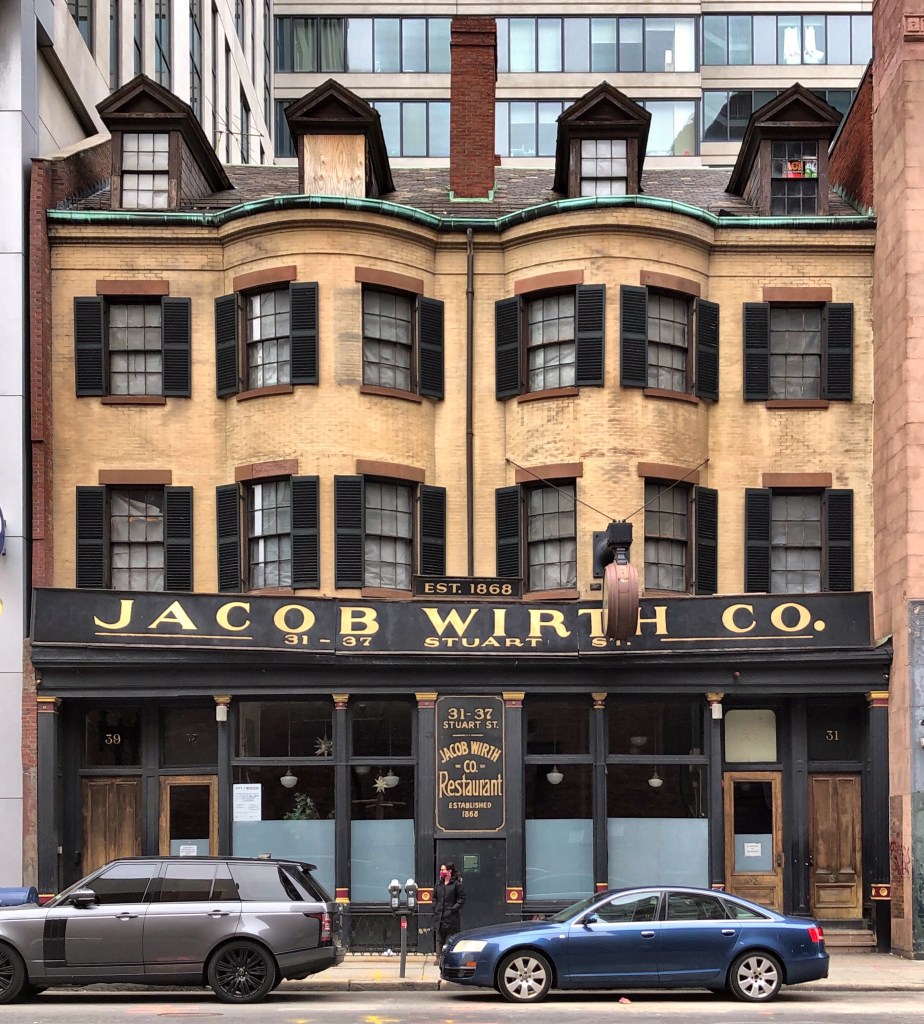
Jacob Wirth Building // 1844

Comprising twin bowfront Greek Revival rowhouses, the Jacob Wirth Restaurant buildings on Stuart Street are scarce survivors of a century of urban change in an area in which the building type once abounded. Built by developer housewrights quite active in the area, the twin houses were soon sold to “gentlemen” for rental purposes. Jacob Wirth, a German emigrated to Boston from Bingen, Germany, and began work as a baker before getting into the restaurant business. Wirth bought the left building seen here in 1878 as his dwelling above and ran his authentic German restaurant below. Due to the success of the restaurant, he purchased the adjacent home in 1889 and constructed the storefront that now unites them. Jacob Wirth ran the restaurant until his death in 1892, which was then managed by his son, Jacob Wirth Jr., who also managed it until his death in 1965! In 2018, Jacob Wirth’s, the second oldest continuously operated restaurant in Boston, closed its doors following a fire. The future is somewhat uncertain for the space, but as it is landmarked, there are protections (even at the interior) of the building.

Did you get a chance to eat at Jacob Wirth’s before it closed?

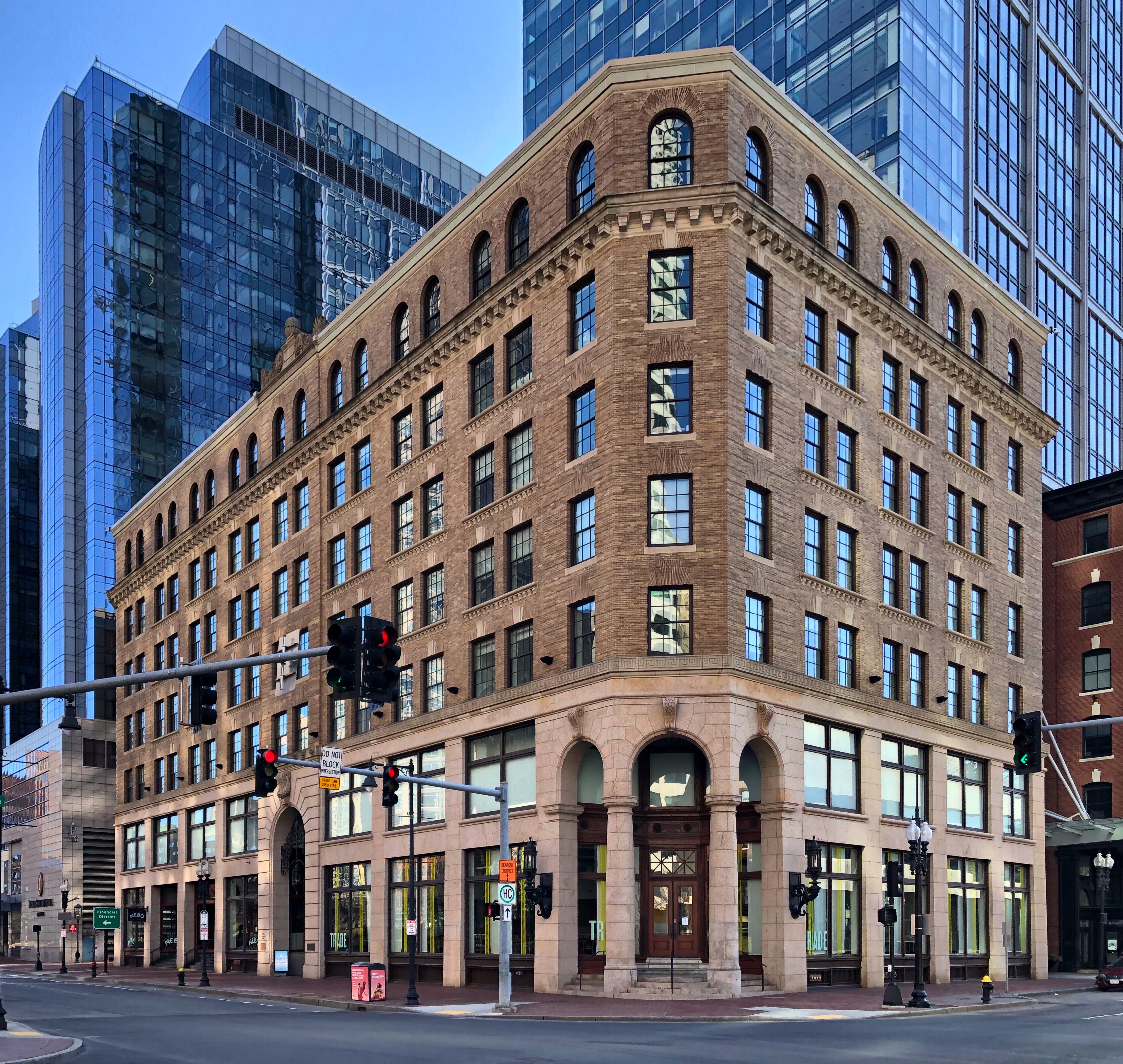
Russia Building // 1897

After the Great Fire of 1872 burned a large portion of Downtown Boston and destroyed the Russia Wharf structures on Atlantic Ave, the city decided to extend Congress St. over the wharf and across a new bridge connecting Downtown to areas being filled in South Boston (now Seaport). The wharf was the center of Boston’s trade with Russia in the late 18th and early 19th centuries. The original wharf buildings were destroyed in the Great Boston Fire of 1872, and the land area was extended by building over the wharf and filling the spaces surrounding it. Three new Russia Wharf buildings were built on the original site of Russia Wharf, near where the Boston Tea Party took place in 1773. Permits were issued in 1897 for the Russia Building and its two neighbors facing Congress St. Opening in 1898, the principle occupant of the Russia Building (seen here) was the Library Bureau, manufacturers of the “Perfected Card System,” library and office Supplies, with branches in other major cities. The buildings were designed by the renowned firm of Peabody and Stearns, who were VERY busy at the end of the 19th and early 20th centuries around Boston.

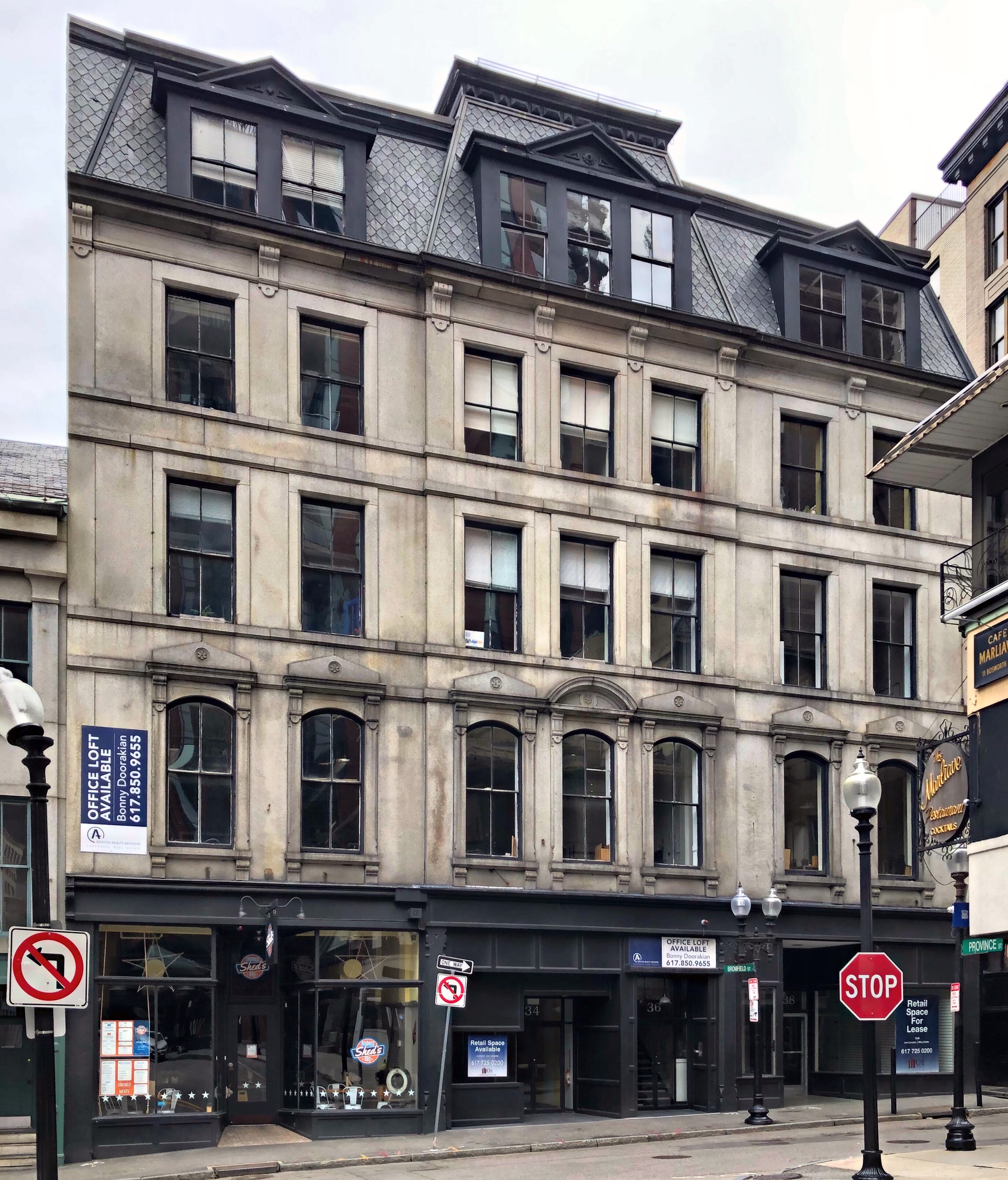
Wesleyan Building // 1870

Located between the heavily-trafficked streets of Tremont and Washington Streets in Downtown Boston, you’ll find the Wesleyan Building, centered on Bromfield Street. Constructed in 1870, the Second Empire commercial building was designed by the architectural firm (and brothers) of Billings & Billings, who designed College Hall at Wellesley College just four years later. The five-story granite-clad structure features neo-Grecian detailing and a mansard roof, showcasing the waning popularity of the Second Empire style by the 1870s. The building was constructed adjacent to the Bromfield Street Methodist Church (demolished around 1913) and housed the offices of the Wesleyan Association, which published the newspaper ‘Zion’s Herald‘, a Methodist publication. The building was also occupied by the Emerson College of Oratory by 1890, which later became Emerson College.