“The Old Castle” // c.1712

Located in Pigeon Cove, the northern section of Rockport, Massachusetts, the “Old Castle” is an iconic landmark in the charming coastal town. The exact year it was built is not known, but it is believed to have been built in 1712 by Jethro Wheeler (1692-1755), a shoemaker who settled here from nearby Rowley. In 1724, Jethro deeded the property to his son Benjamin, and he moved out of town. Benjamin, is turn sold the property to his son Benjamin in 1769. Benjamin Jr.’s son, John D. Wheeler in 1792 inherited the property and added the lean-to/kitchen room to the rear to create the present saltbox roof form. Various Wheelers continued to own the Old Castle for another hundred years. The property was gifted in 1929 to the Pigeon Cove Village Improvement Society, and is presently under ownership of the Sandy Bay Historical Society, who manage the property as a house museum. The house with its overhanging second story reads like a garrison, a common element in First Period houses in Essex County.
Gott House // 1702

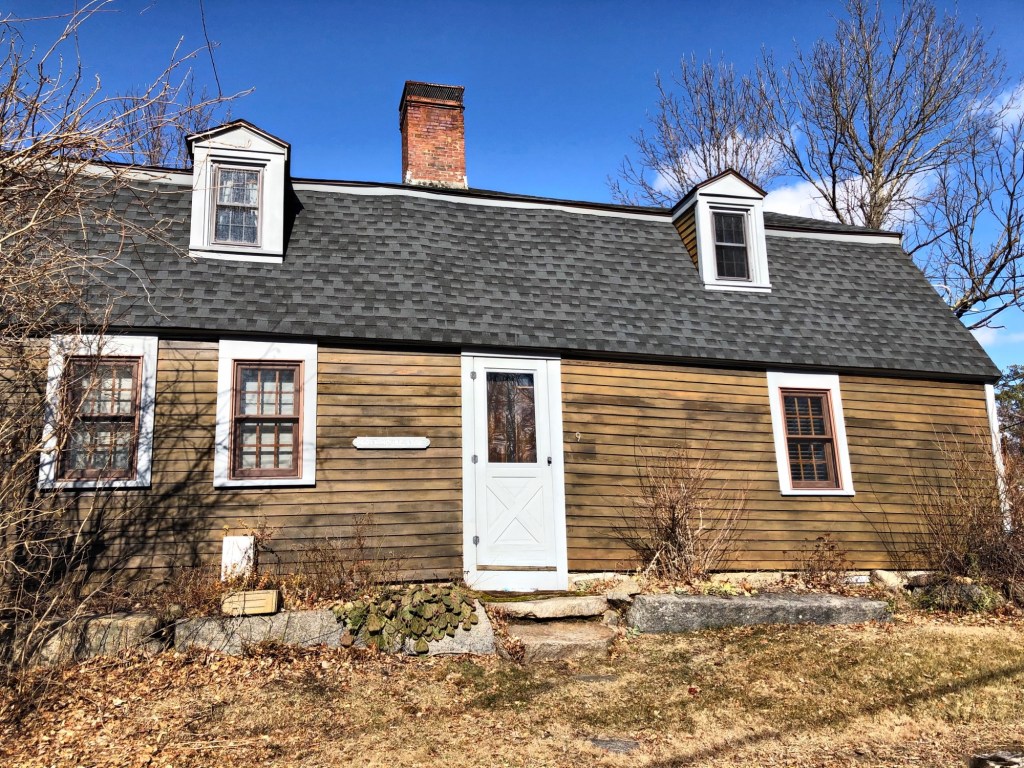
Halibut Point State Park in Rockport is one of the most enchanting places in Massachusetts and it has so many layers of history! Before white settlement, Halibut Point was used seasonally by the Pawtucket people who came to harvest its wild fruits, fish and game on the land. In 1702, Samuel Gott (1677-1748) purchased eight of the 6-acre lots on Halibut Point. At the time, there were no roads to Halibut Point, but Samuel built this house on the land, and he began to farm here. The property passed down the family line and was later owned by Joshua (1754-1846), who came of age just as the War for Independence began. Joshua enlisted with the Revolutionary Army as it was being formed in Boston, and in 1776, he joined General Washington’s forces in the unsuccessful defense of New York. He returned home to lead a long and useful life as farmer and fisherman and was known as Captain Gott. As of the 2010s, the property remained in the same family, handed down through the generations from Samuel Gott over 320 years to today. How cool!

Homan-Devereaux House // 1764

In 1764, Joseph Homan, a wealthy merchant, built this house on a lot that was formerly a “mowing field” in Marblehead, Massachusetts. The Georgian style home is of a more elaborate design, showcasing Mr. Homan’s wealth at the time. His wealth was not all acquired ethically, however. Joseph Homan was engaged in international trade, and enslaved Africans at his Marblehead home. In the Boston Daily Newsletters in September 1770, Homan posted a notice that Jack, one of his enslaved humans escaped. It read: “At Night, a Negro Man, named Jack, about 6 feet high, near 50 years of age, speaks bad English, and Born in Martinico [Martinique]; had on when he went away, a blue Coat with Mohair Buttons, a blue Jacket with black Glass Buttons, blue Breeches with white metal Buttons, and a red worsted Cap, but may have changed his Cloaths [sic], as he had more at Beverly.-Whoever shall take up said Negro, and deliver him to Mr. Brown, Deputy-Sheriff, in Salem, shall have Two Dollars Reward, and all necessary Charges paid them. All Masters of Vessels, and others, are cautioned against carrying said Negro off, as they would avoid the Penalty of the Law.” Homan would later sell the property to Elbridge Gerry, who served as the fifth vice president of the United States under President James Madison, and who Gerrymandering is named after. Gerry gifted the house to his sister Elizabeth, who married Burrell Devereaux a year later. Burrell was a sea captain that later was a privateer.

Reverend Whitwell House // c.1756

Another of the stunning gambrel-roofed Georgian homes in Marblehead is this beauty located on High Street in the village. This house was built around 1756 but is best known for its resident from 1766-1779, as the home of the Reverend William Whitwell (1737-1781), who was the fourth minister of the Old North Church, located just a stone’s throw away. Although this Georgian dwelling looks like a single-family house from the outside, it is actually divided into two houses with separate owners, likely since its construction. Later dormers crowd the roof, but its still a pretty amazing Pre-Revolution home in one of the most charming towns in New England!

John Palmer House // c.1683

In 1682, John Palmer acquired a small piece of land in Marblehead, soon after building this First Period home. The house is said to have framing timbers made of English walnut, salvaged from a sailing vessel off shore, with one timber formerly a mast and still displaying rope marks. The house was willed to his son after his death, who built a larger home soon after nearby. This house was “modernized” with double-hung windows which likely replaced the smaller, diamond pane casement windows typical in homes of this period.

Merritt House // c.1725

In 1725, Samuel Merritt, a fisherman, inherited some of his father’s land in Marblehead and built this house. After Samuel Merritt died in 1743, his second wife Mary, her daughters Mary and Elizabeth and her son-in-law James Dennis, lived in the house. They added the one-story lean-to, giving the house a saltbox roof in 1762. This house, and many others in Marblehead are the reason why human-scaled historic neighborhoods built before the automobile, are some of the best places to explore. Historic preservation equals tourism, which results in tax revenue and property values, stabilizing neighborhoods and cities from the ebbs and flows of the economy. Gotta love it!

Old North Church, Marblehead // 1825

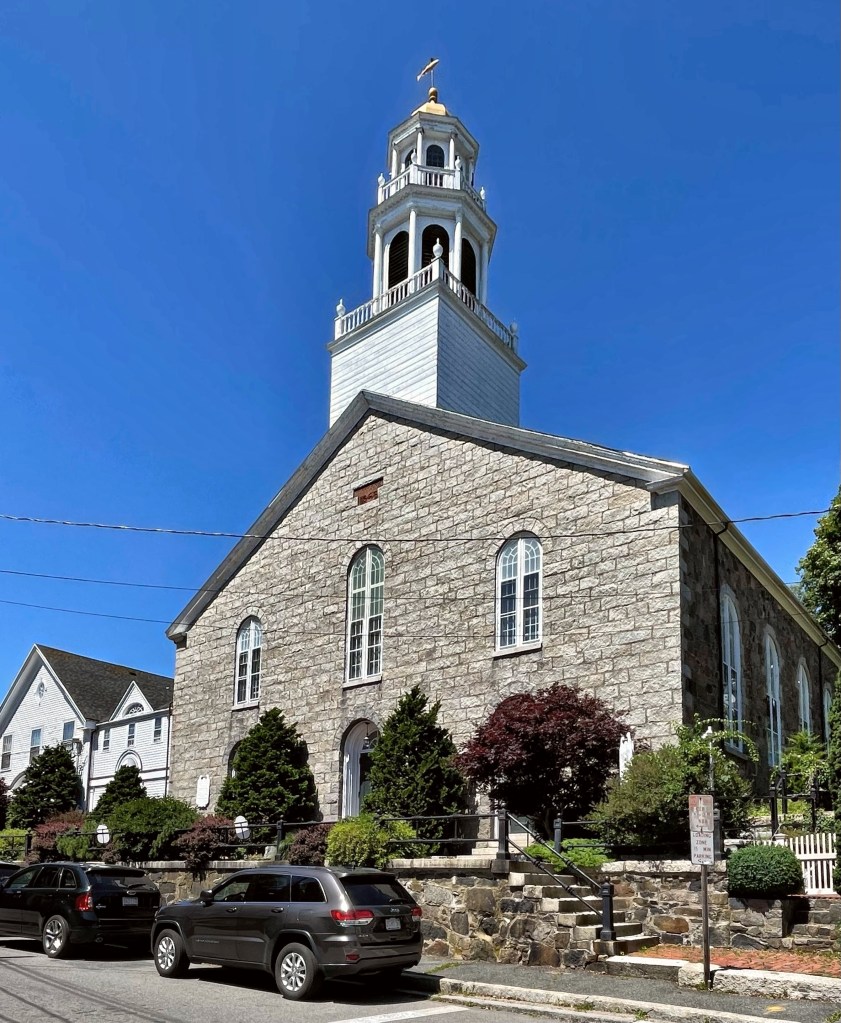
Old North Church, formally the First Church of Christ Marblehead, was organized in 1635 by fishermen and mariners who formed a church to relieve them of the burden of travel to Salem in order to receive church sacraments and participate in civil affairs (before the separation of church and state). They met in member’s homes until 1638, when a meeting house was constructed overlooking the ocean. By 1695, a “modern” church structure was built on Franklin Street. The structure was not adequate for the growing wealth and prosperity of the town, as Marblehead emerged from local cod fishing to overseas trade. In 1824, merchant-politician William Reed helped the congregation acquire a large lot on Washington Street. Within a year, the new stone church was built. The stone to build the church was blasted from the ledge upon which it stands. In 1879, a wooden meeting house was built to accommodate an increased membership at prayer meetings. The detached meeting house was added onto in 1951, connecting it to the stone church. The two attached buildings were designed/re-designed in the Colonial Revival style to add to the architectural composition of the old Federal period church.

Cross-Kimball House // 1804

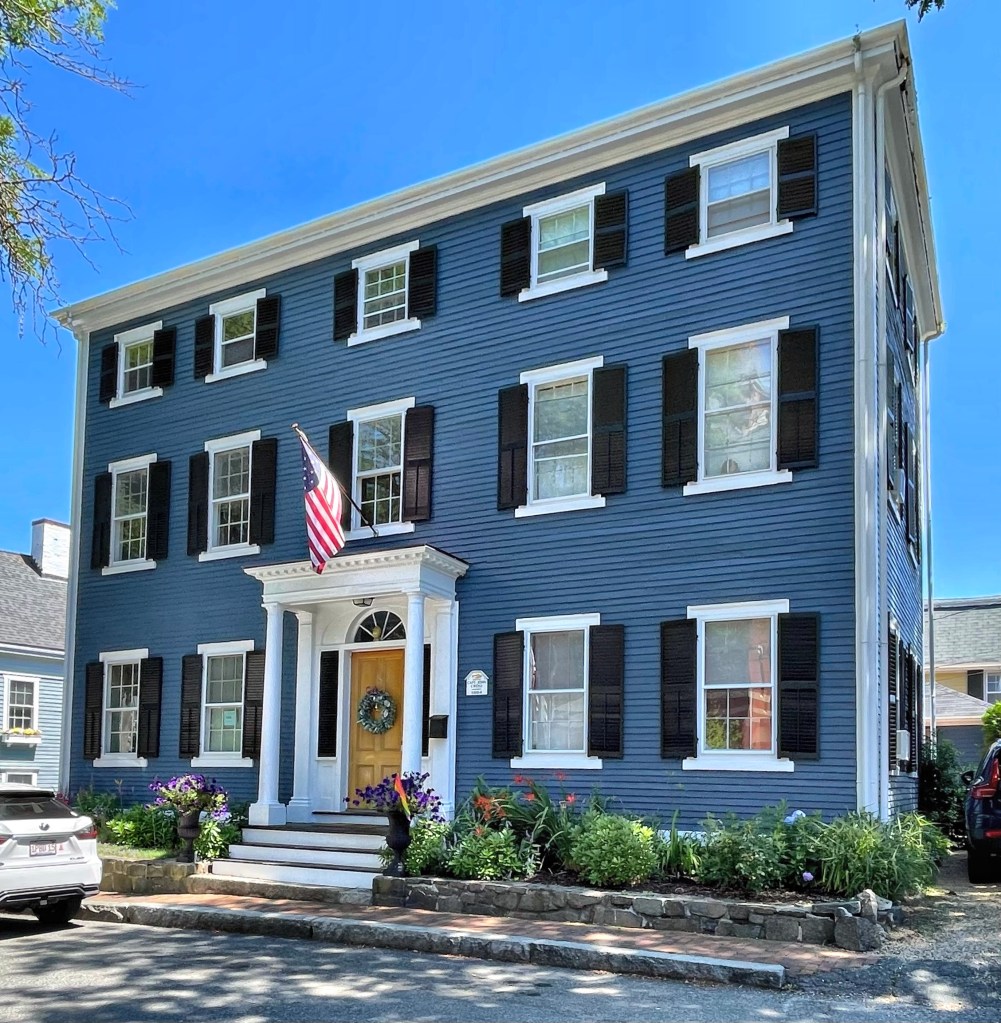
In 1803, sea-captain John J. Cross (1768-1804) began building a large Federal style house on land he purchased from his success on the open sea, largely working for the Hoopers. Sadly, before the home was finished, Captain Cross and all his men aboard his ship, the “Traveller” died at sea. The home, which was to be finished by the time of his return was left abandoned when news got back to the shore of the ship’s loss. His wife and three children were devastated and likely sold the property not long after. The property was owned later by Edmund Kimball, a sea-merchant who married into the Hooper Family. Kimball did well for himself and eventually owned multiple vessels. After his first wife, Mary Hooper Kimball died bearing him six children, Edmund remarried to Lydia Mugford Russell. The family home across from the town’s common has been very well preserved since and is an excellent example of a vernacular three-story Federal home on the North Shore.

Powsland-Homan-Dixey House // 1732

The colonial home at 33 Washington Street in Marblehead was built in 1732 for (and likely by) Jonathan Powsland, a joiner (furniture maker-carpenter). In the 1740s, Peter Homan added the rear lean-to, giving the home a saltbox appearance, possibly after he married into the Powsland family. The home was eventually owned by the Dixey Family. John Dixey (1776-1868) spent a good part of his life as a ship master and had several sons that also went to sea. The most well known son was Richard W. Dixey (1809-1860) who, along with two other Marbleheaders, captained the ship that took the first American Consulate to China.

Homan House // 1744

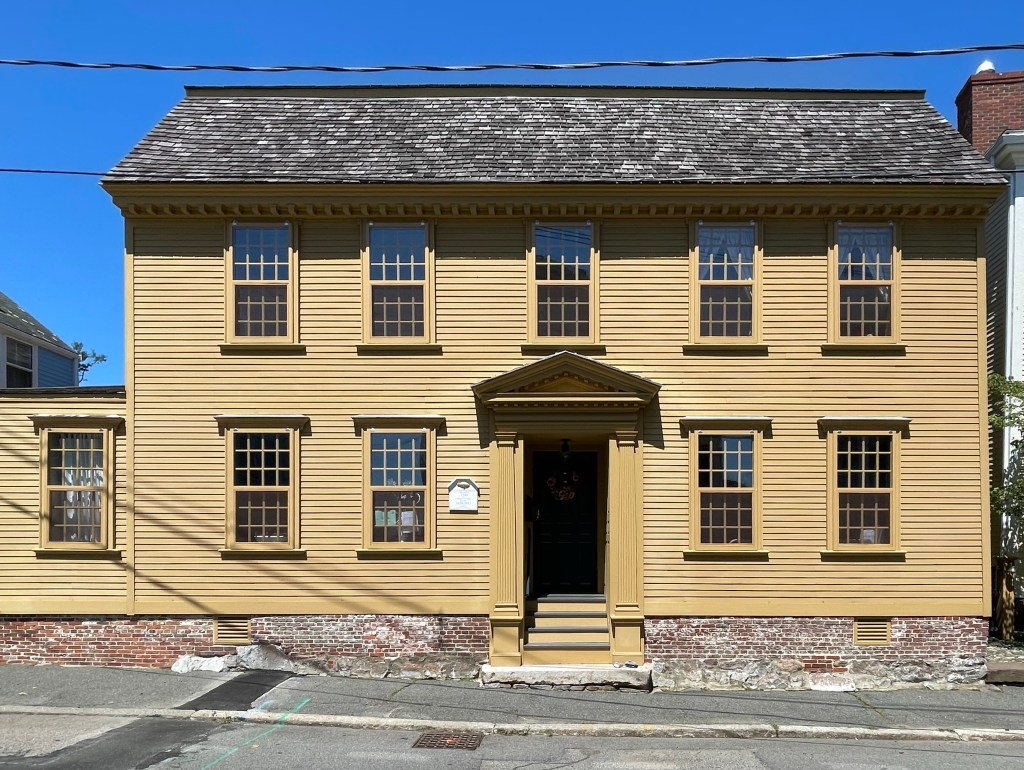
This perfect Georgian house in Marblehead was built in 1744 for Richard Homan (1713-1803), a sea captain who also fought in the Revolutionary War. In 1736, Richard married Hannah Goodwin, the daughter of William Goodwin, a notable housewright. William Goodwin seemingly gave the newlywed couple land on his estate and likely built this stunning home for them. Hannah died in 1772, and remarried in 1776 to Susanna Stacey, who he also outlived. The couple moved to Ipswich, and this home was sold to his son, William. In the 1800s, the property was owned by William Hawkes Jr., a trader and shopkeeper who apparently operated a “rum shop” out of the first floor of the home. It remained in the Hawkes Family until at least 2013. The house features a gambrel roof of cedar shingles, 12-over-12 windows, a pedimented entry, and a period-appropriate paint color.

John Goodwin House // c.1810

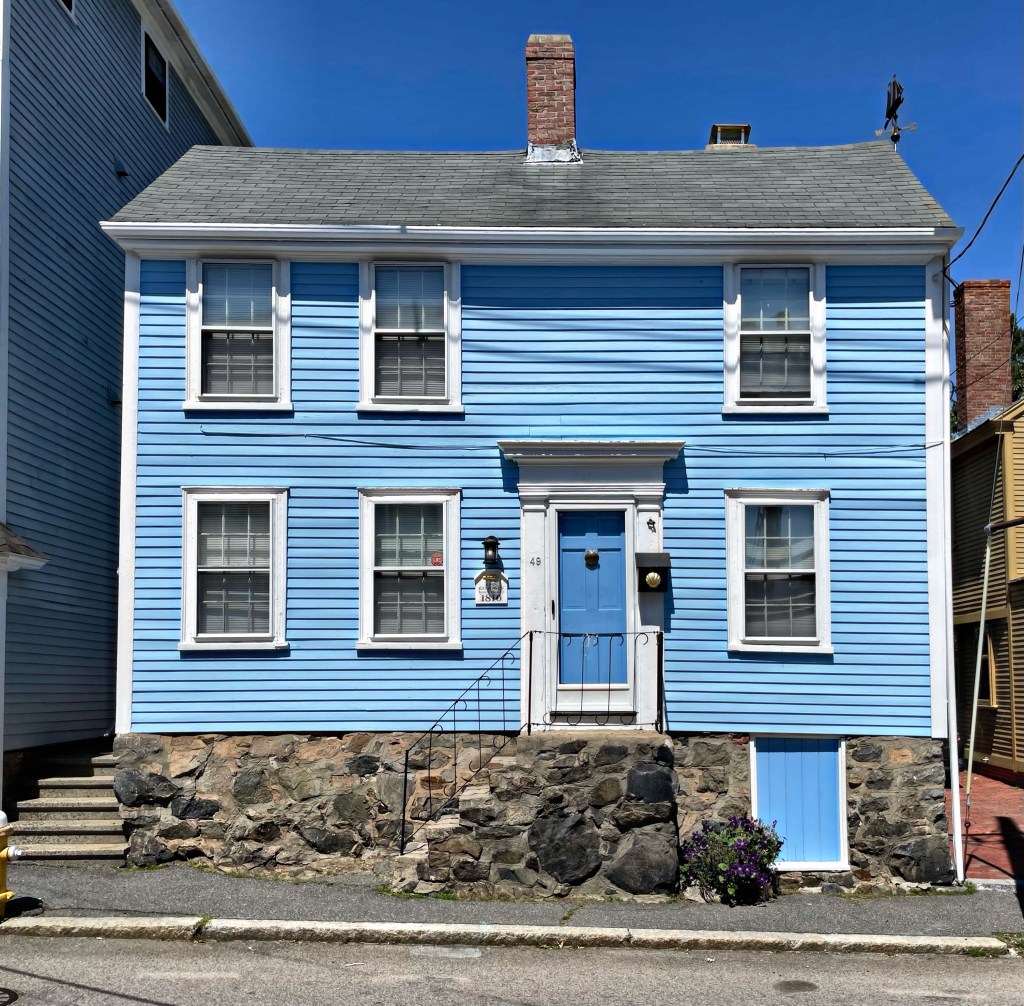
Oh, Marblehead, why are you so pretty? The town of Marblehead was originally called Massebequash after the river which ran between it and Salem. The land was inhabited by the Naumkeag tribe under the sachem Nanepashemet. Epidemics in the early 1600s devastated the tribe’s population leading to it’s colonization. In 1635, the General Court of Massachusetts Bay established the town of Marblehead on land that belonged to Salem. The citizens in Marblehead were less devout and conservative than others in Salem, and they incorporated as their own town in 1649. Now… the name. Marblehead is believed to have gotten its name by settlers who mistook its granite ledges and cliffs for marble. The mistake stuck as the namesake. The town thrived as a fishing village, with many fishermen and sea-based jobs, with homes built on small lots along the warren of narrow streets. This home sits on Washington Street, one of the major streets in the Old Town. The home was built around 1810 for John Goodwin on land formerly owned by his grandfather. The Federal style home sits atop a raised stone foundation and has been excellently preserved.