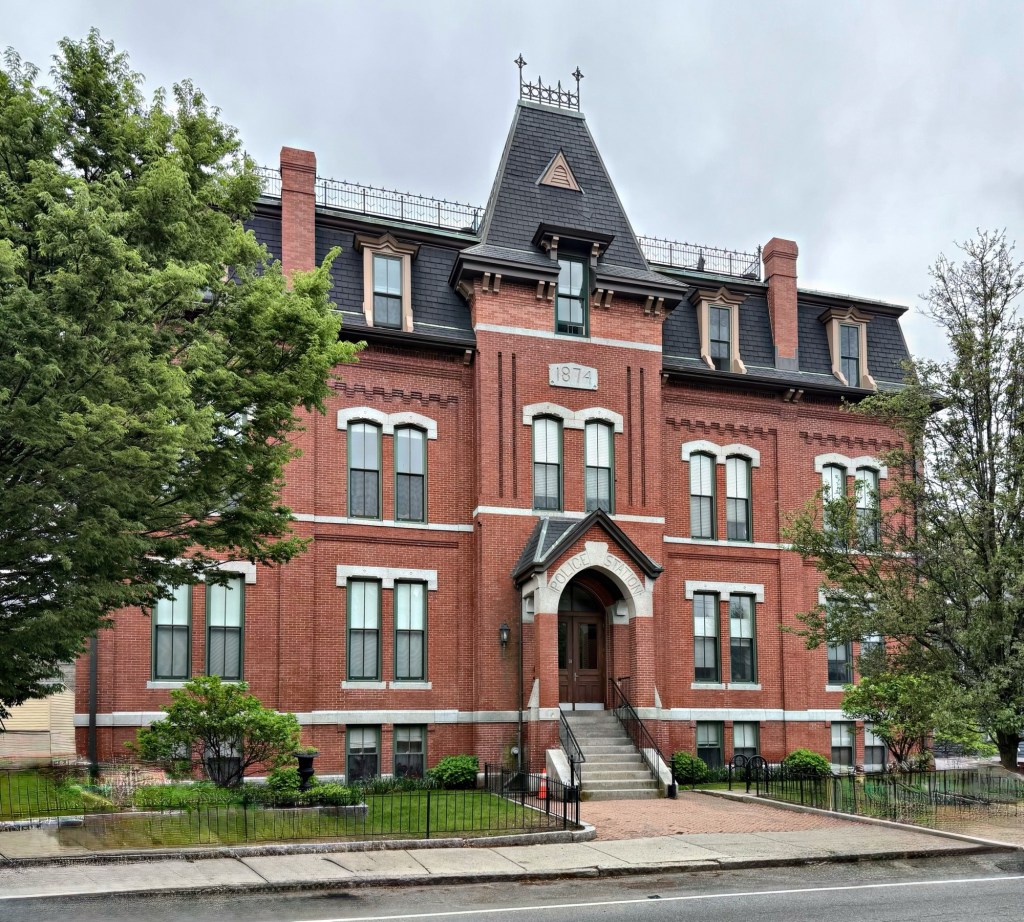
Former Somerville Police Station // 1874

Somerville, Massachusetts, was long part of Charlestown, until it incorporated as a separate town in 1842. From the 1840s until just after the Civil War, Somerville went from a sleepy farming village to manufacturing center, spurring a sharp influx of immigrants to the city, industry boomed and brick manufacturing became the predominant trade. The town of Somerville incorporated as a city in 1872, and one of the first civic buildings constructed as a new city, was this Victorian Gothic building on Bow Street in Union Square to house the growing Somerville Police Station. Built in 1874 from plans by architect, George Albert Clough, a prominent and busy local designer. The handsome station was in use until the new Police Headquarters further east in Union Square was built in 1932. This building was sold off by the city and became offices and housed meeting spaces for a local boy’s club and an American Legion Post until it was converted into housing in the late 20th century. 

Sudbury Aqueduct Waste Weir Control House // 1878

The Sudbury Aqueduct was constructed between 1875 and 1878 and runs for 16 miles from Framingham, Massachusetts to the Chestnut Hill Reservoir in Boston, and was in use for almost 100 years. It was designed to carry water from the watershed of the Sudbury River to Boston and its surrounding communities, supplying the ever growing metro area with fresh drinking water. Along the route, meter and control houses were built along with the Echo Bridge, to guide the running water to Boston for distribution all over the city. City architect of Boston, George A. Clough designed many of the structures along the route including this waste weir structure in Newton Centre. The weir was known as “Clarks Waste Weir” as it was built on the edge of land owned by Charles P. Clark. The aqueduct was taken out of regular service in 1978 but remains an emergency backup. Much of the aqueduct’s route is open to the public as an unimproved walking trail.

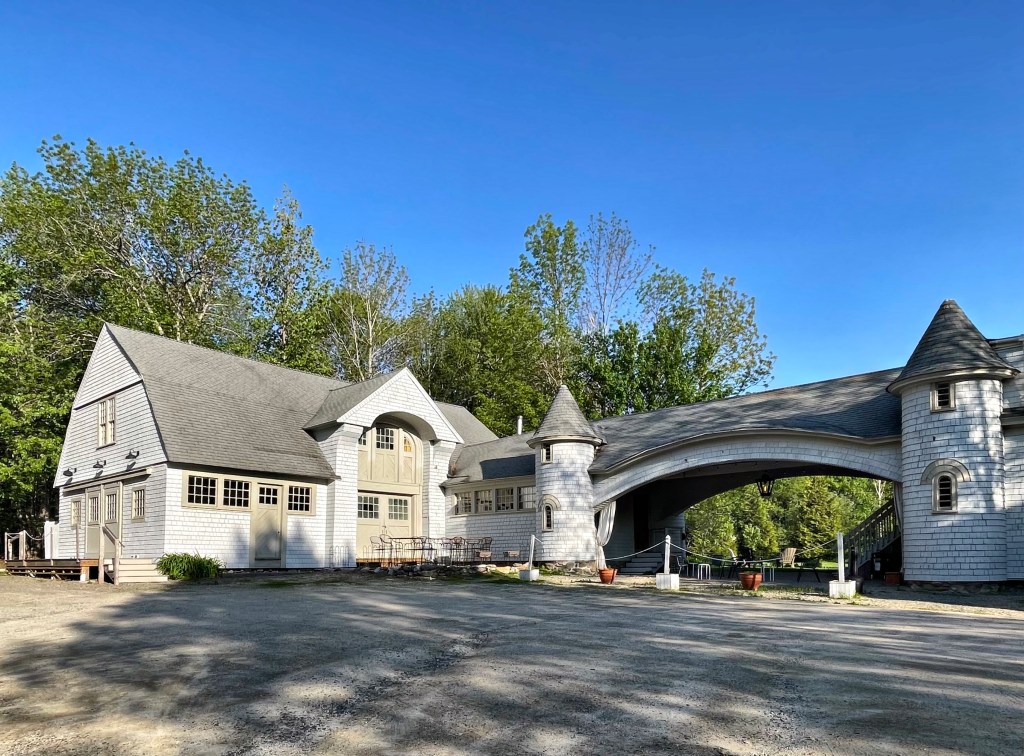
Barncastle // 1884

Barncastle, located in the Town of Blue Hill, Maine, is an elaborate and distinctive house. Designed by George A. Clough and built in 1884, the building is a sprawling complex in the Shingle style with additional eccentric details. As Blue Hill and other coastal communities of Down East Maine saw popularity as summer colonies of wealthy city-dwellers flocking to the rugged coastline, many new residents either built new “cottages” or renovated older (often ancestral) homes. Effie Hinckley Ober (1843-1927) who was born in town, married Virgil P. Kline, personal attorney to John D. Rockefeller, and for thirty years worked as attorney for the Standard Oil Co. of Ohio. Effie founded the Boston Ideal Opera Company in 1879 and traveled with the group extensively, retiring in 1885, upon that time, she would move into Barncastle for summers (then named “Ideal Lodge” after her opera company). In 1884, before her retirement, Effie hired her childhood friend, architect George A. Clough, who was born in Blue Hill and worked in Boston, to completely redesign her ancestral home. Clough’s design engulfed a smaller Cape Cod-style house owned by Effie’s mother Mary Peters Hinckley Ober Atherton, a descendant of early Blue Hill settlers, creating an absolutely elegant Shingle-style summer cottage. The house is highly visible on a main street, but what many do not see is the arch-and-turret link between kitchen wing and carriage barn. “Barncastle” is now home to an elegant inn and restaurant!

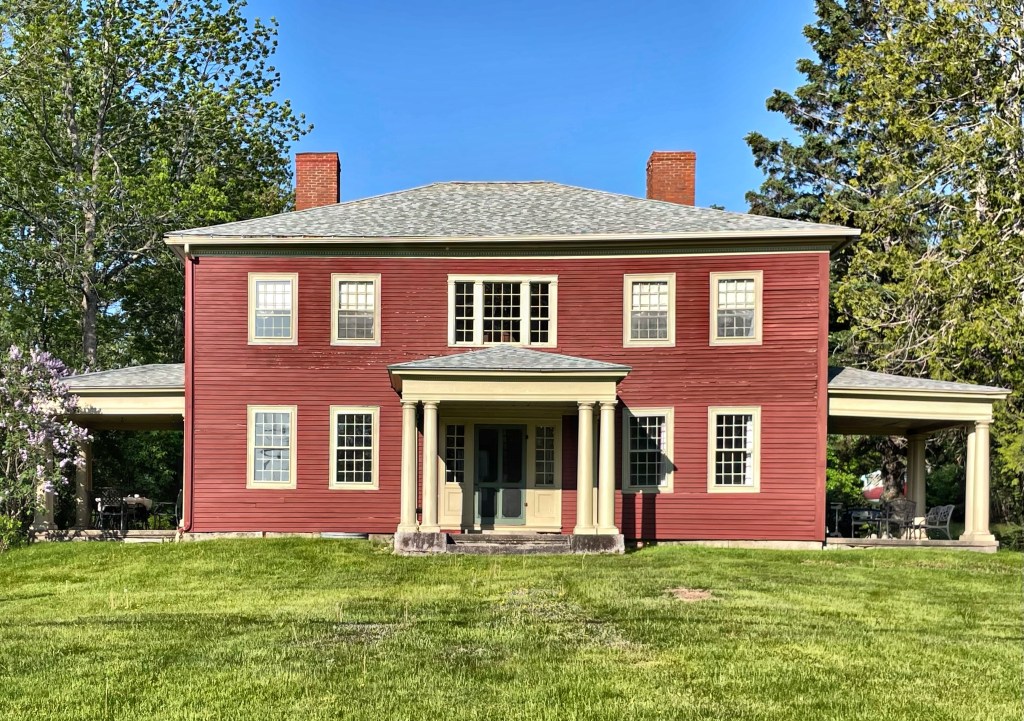
Parker House // 1814

Wrapping up this series on a tour of buildings in Blue Hill, Maine, we have two stunning old homes left! 

This landmark Federal style house was built sometime between 1812 and 1816 by Robert Parker, whose wife was a daughter of Joseph Wood, one of the first two white settlers of Blue Hill. The home is significant not only architecturally, but for its connections to a number of old settlers to Blue Hill and their families.

By the turn of the 20th century the farming, mining and granite producing town of Blue Hill had been discovered. Writers, artists, musicians, and wealthy urban families from all over the East Coast found inspiration or retreat in many coastal Maine communities including Blue Hill, building “cottages” to summer at. Not all those who arrived to Maine were ‘from away’, as many built new or renovated their old ancestral homes to be occupied when seeking the peace and tranquility of coastal Maine. The Parker House was no different. In 1900, it was renovated in the Colonial Revival style as a summer home for Frederick A. Merrill and his wife, Elizabeth, residents of Boston. The couple hired George A. Clough, who worked as the first City Architect of Boston, but grew up locally in Blue Hill. Mrs. Merrill was descended from Mrs. Robert Parker’s sister. The current owner, the Merrill’s great-grandson, has undertaken a restoration of the house which pays homage to its Colonial Revival past. The stunning house can even be rented!

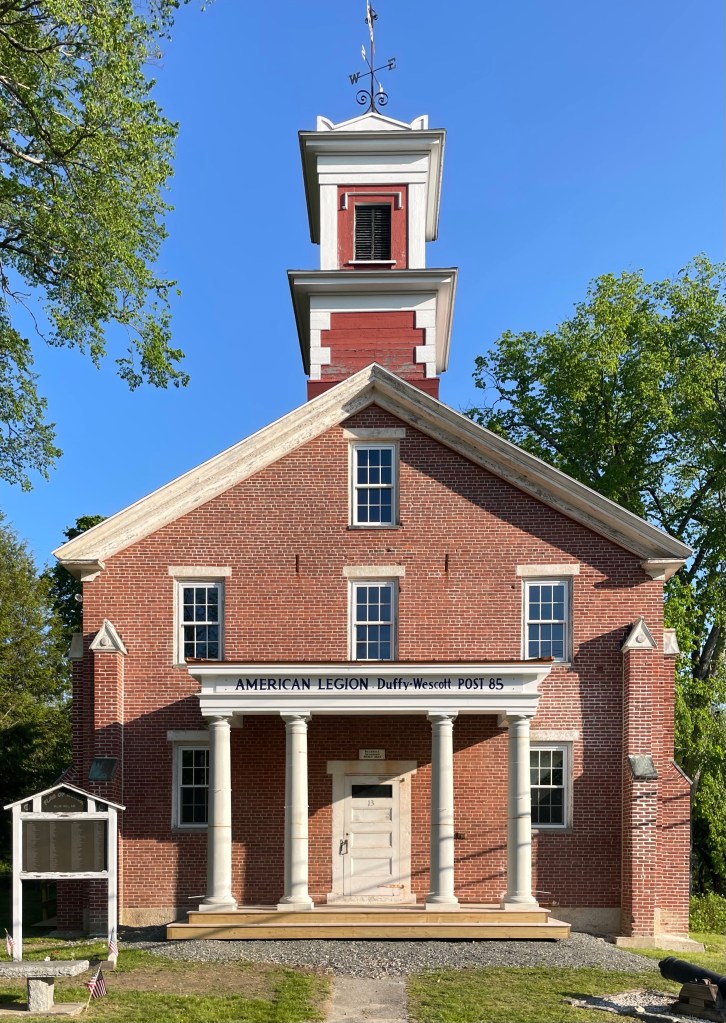
Blue Hill Academy Building // 1833

This gorgeous brick building sits in Blue Hill, Maine and is an excellent example of a Greek Revival style institutional building found on the coast of that great state. The structure was built in 1833 and originally housed the Blue Hill Academy, a school which provided courses in Greek, Latin and (due to the town’s maritime economy), navigation. The original building was constructed decades earlier when the school was founded, but was quickly outgrown. When the George Steven Academy opened its doors a couple blocks away in 1898, the two institutions were merged. The American Legion eventually purchased this building, renting it to the Blue Hill Grammar School. Renovations in 1909 were designed by Blue Hill native, George A. Clough which likely included the portico and elaborate belfry. After years of deferred maintenance on the building by dwindling membership of the local American Legion post, the building’s future was uncertain. Thankfully, the Duffy-Wescott Post 85 stood up and funded preservation and planning for the building and make emergency repairs.

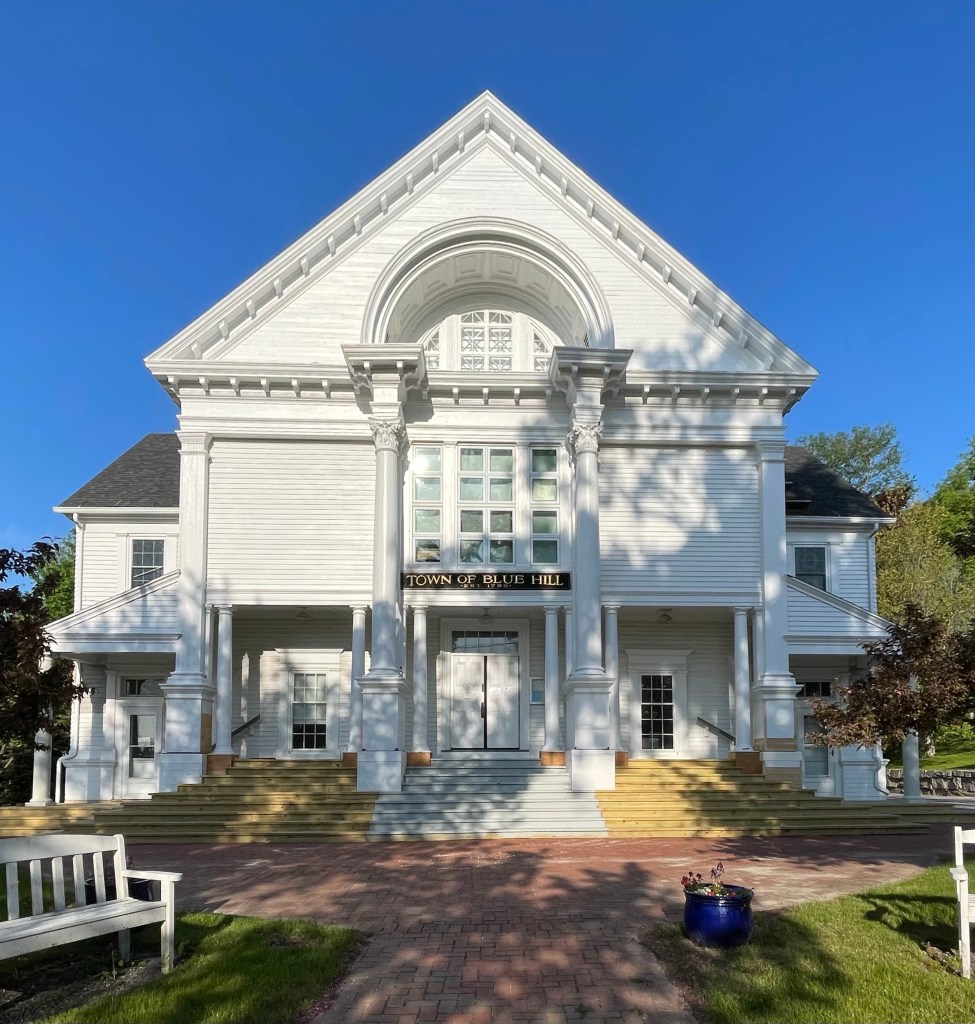
Blue Hill Town Hall // 1895

Blue Hill is a charming coastal town in Hancock County, Maine that retains so much of the charm that has been lost in many other coastal New England villages. Originally settled by the Penobscot Tribe, the town as we know it was incorporated in 1789 under the name “Blue Hill”, named after the summit overlooking the region. The town thrived early as a lumber and wood shingle exporter, later shifting to shipbuilding. The town was also noted for the quality of its granite, some of which was used to build the Brooklyn Bridge, New York Stock Exchange Building, and the U.S. Custom House at Norfolk, Virginia. In 1876, local quarries employed 300 workers. The town’s wealthy summer residents likely sought a new Town Hall for Blue Hill, as in the 1890s funding was acquired to erect a new building. It came as no surprise that George Albert Clough, an architect born in Blue Hill would furnish the plans for the new town hall. George was the son of Asa Clough an early settler and shipbuilder in town. He moved to Boston to work as an architect and later became the City of Boston’s first “City Architect” designing municipal buildings. For the Blue Hill Town Hall, he designed it in the Colonial Revival style, which remains well-preserved to this day.