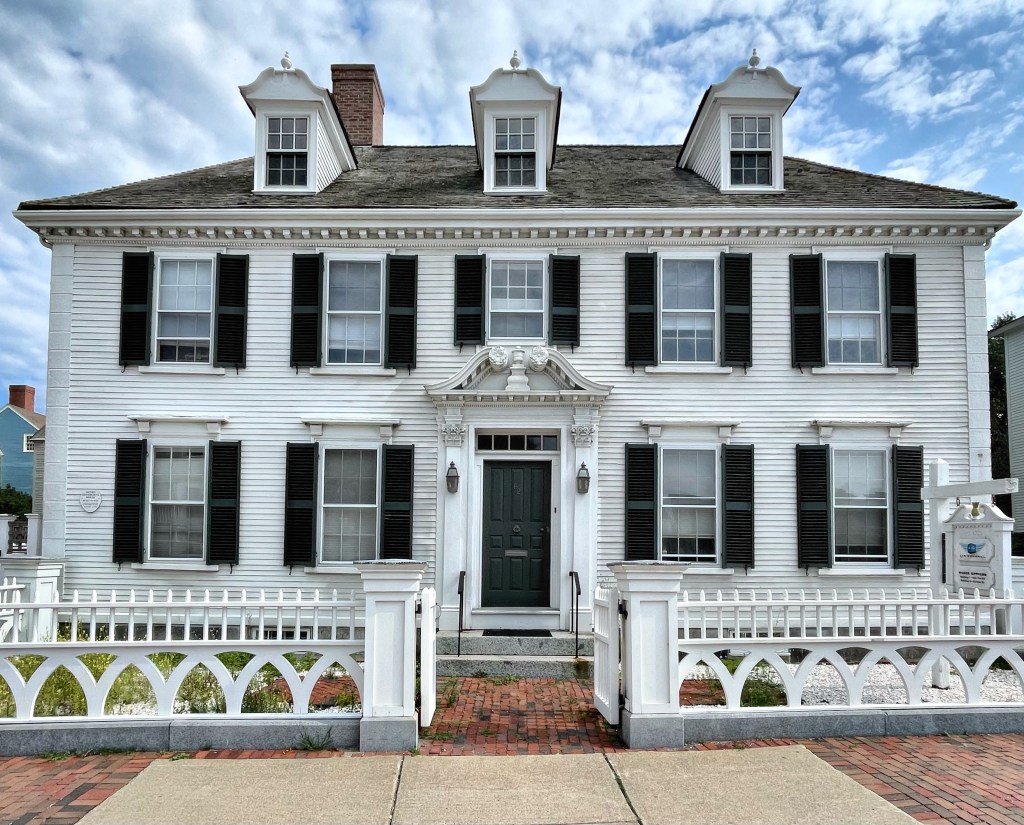
This house in the Hill District of Portsmouth, NH was built sometime between 1766 and 1770; however a sign posted on the house indicates an earlier date of 1725. Regardless, the house is one of the best-preserved Georgian homes in the city. The colonial-era home was apparently built for a Henry Sherburne, who was a member of some of New Hampshire’s leading families. By the 1900s, the property was the only in the city with a surviving scrolled pediment doorway from the period. Like other colonial homes in the old North End of Portsmouth, it was barely saved by the bulldozers and urban renewal when it was moved in 1972 to its present site.
The Whidden-Ward House in The Hill section of downtown Portsmouth, New Hampshire, is an excellent example of a wood-frame Georgian-style residence in the coastal city. The house was built in the early 1720s by joiner, Michael Whidden Jr. As a third generation joiner, Whidden built several houses in the Portsmouth area, this one for his own residence. The house was purchased in the 1770s by Nathum Ward, who “modernized” the house with the triangular pediments over the windows. The house was moved over a block to its present site in the early 1970s as much of the surrounding neighborhood was demolished during Urban Renewal.
Built sometime between 1749 and 1756, the Hart-Rice House, a little-altered example of Georgian architecture, stands out in the densely packed Hill section of Portsmouth, NH. The area contains amazing early homes, largely moved to their sites from nearby, saving them from the wrecking-ball of Urban Renewal in the 1970s. The house demonstrates the high-quality craftsmanship of its owner, ship-joiner Samuel Hart (1701-1766), who likely built the home himself. Decades later, William Rice, a sea-captain, purchased the home. Rice was a known privateer during the War of 1812, causing a lot of trouble for British ships off the shores.
Portsmouth, New Hampshire is one of the most charming towns in New England to explore by foot, largely due to its walkable network of streets and tight blocks filled with preserved Revolution-era homes. Like many other cities all over the region (and nation), Portsmouth was hit by Urban Renewal, a planning tool used nationwide to provide Federal funds to address “urban blight” and revitalize downtown cores after decades of suburbanization and loss of tax revenue. An urban renewal district for Portsmouth was its North End neighborhood, which similar to Boston’s, was home to a vibrant Italian-American population.
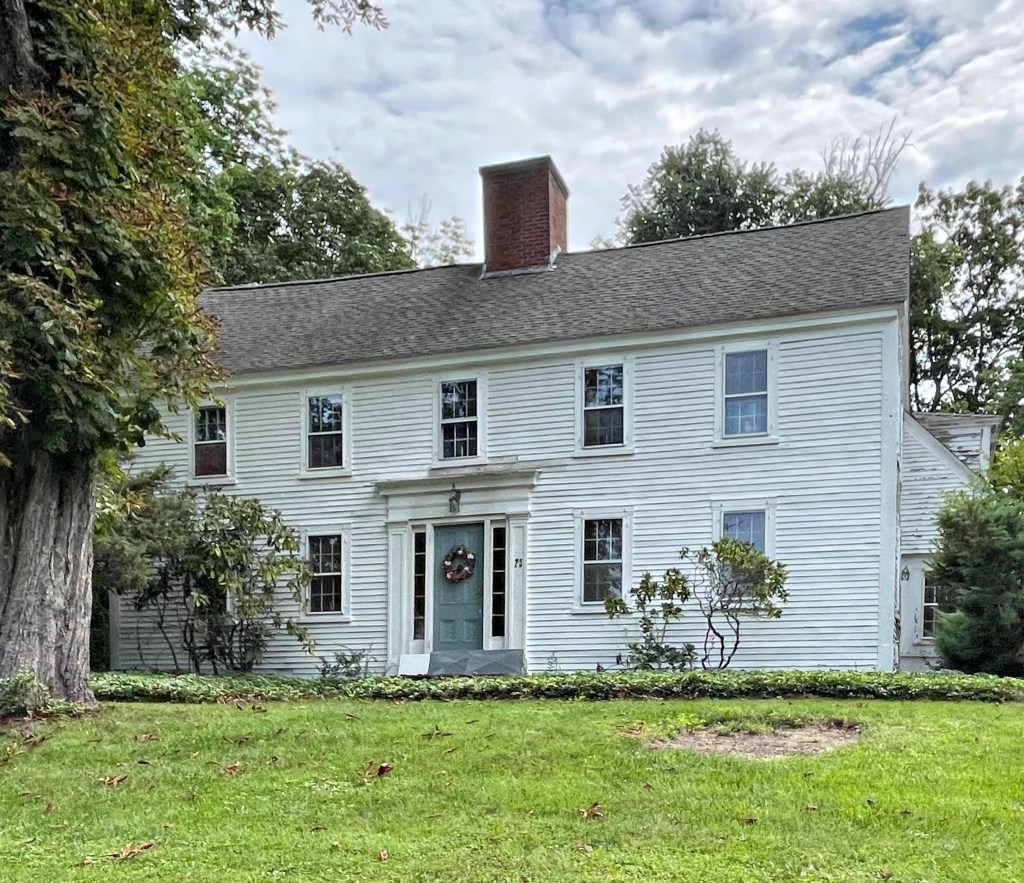
In 1964, federal funds were allocated to the North End project area in Portsmouth, for urban renewal. Prior to redevelopment, the North End was a mix of residential and commercial buildings, with many older houses converted into storefronts with apartments above. In the mid-1960s, the area was considered overcrowded, run down, and a fire hazard. As a result, the Portsmouth Housing Authority proposed the destruction of approximately 200 buildings, a school, and a church and redevelopment for commercial, industrial, and public use, rather than for residences. The project would displace approximately 300 families as a result. In 1968, Portsmouth Preservation Inc., a preservation organization was formed to attempt to save some of the historic building stock in the area slated for redevelopment. After bitter fighting and preservation advocacy, just fourteen houses were saved and mostly moved to an area known today as “The Hill”. This building is one of them. It was constructed around 1725 for Rev. Jabez Fitch, the new minister of the North Church in town. Fitch graduated from Harvard College in 1694 first settling in Ipswich, MA, before becoming minister of the North Church in 1724, a position he held until his death in 1746. The house was one of the few in the urban renewal area to not have been moved.
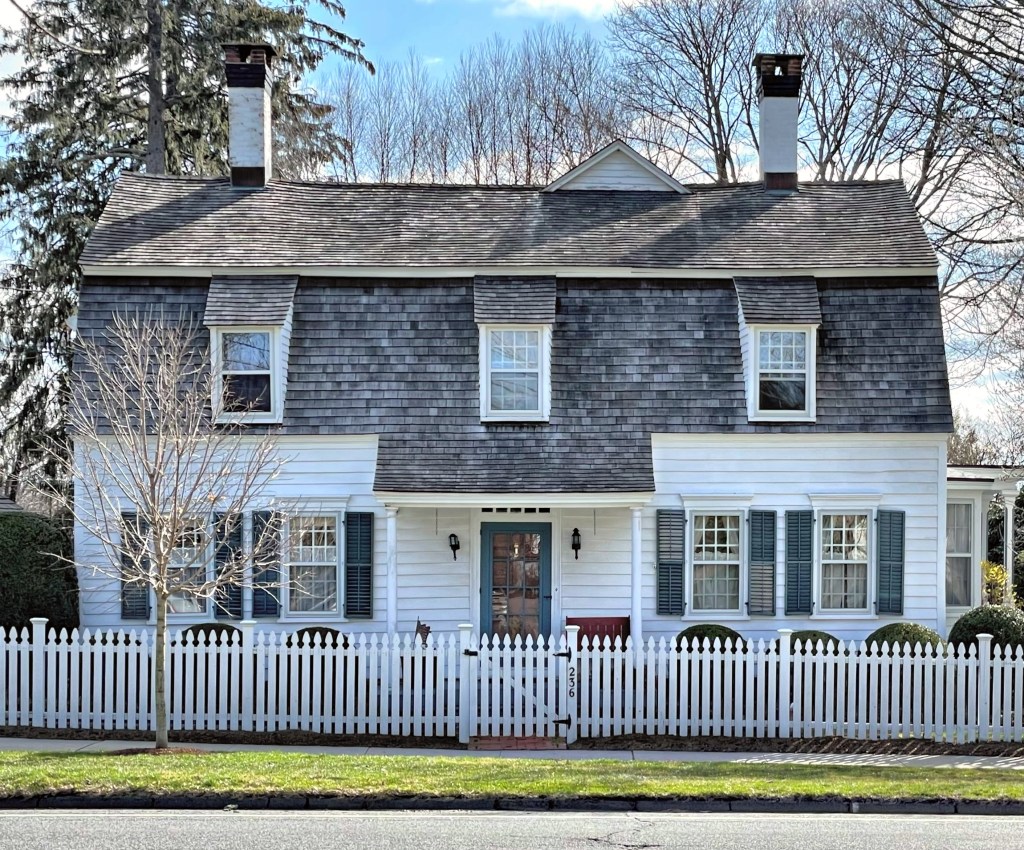
This old Georgian house was built in 1713 on the Proprietors Lot 5, on Ridgefield’s Main Street. Constructed for the first minister of Ridgefield, the home was originally occupied by 25-year-old Reverend Thomas Hawley (1689-1738) not long after his graduation from Harvard in 1709. In addition to being minister of the newly formed Congregational Church, Hawley (also spelled Hauley) also served as school teacher and town clerk. The house employs Dutch Colonial detailing from the gambrel roof to the extended portico over the front door, common in the Dutch colonies in the Hudson River Valley in New York.
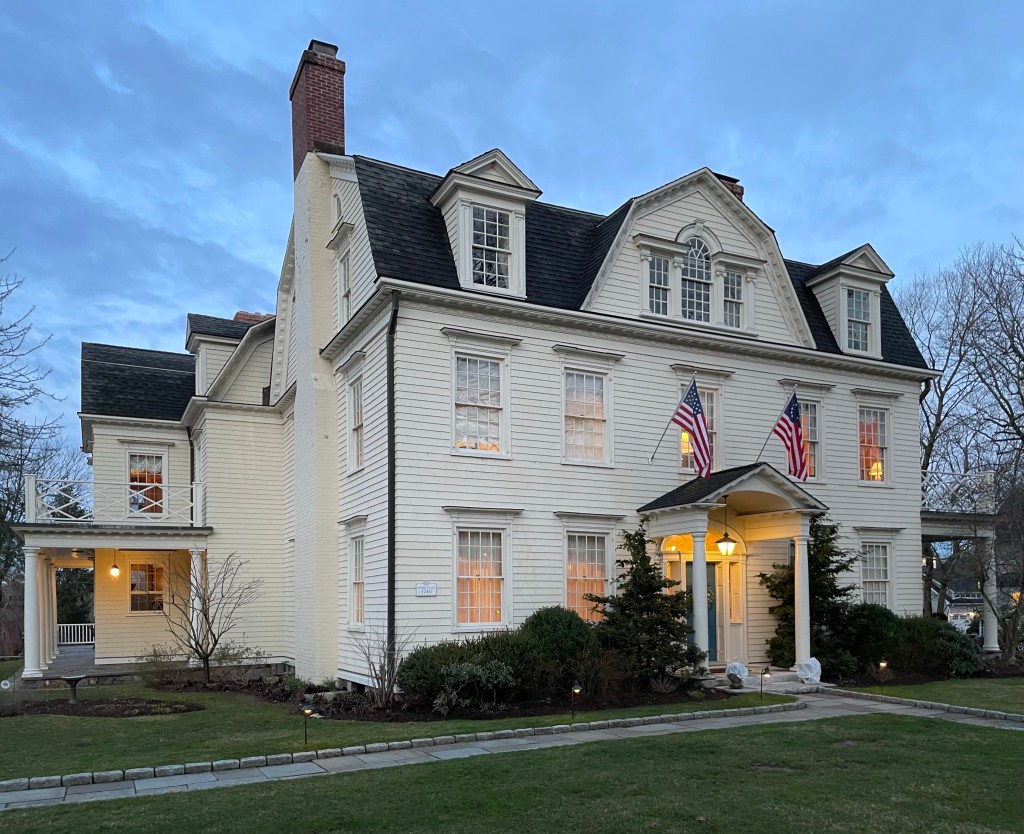
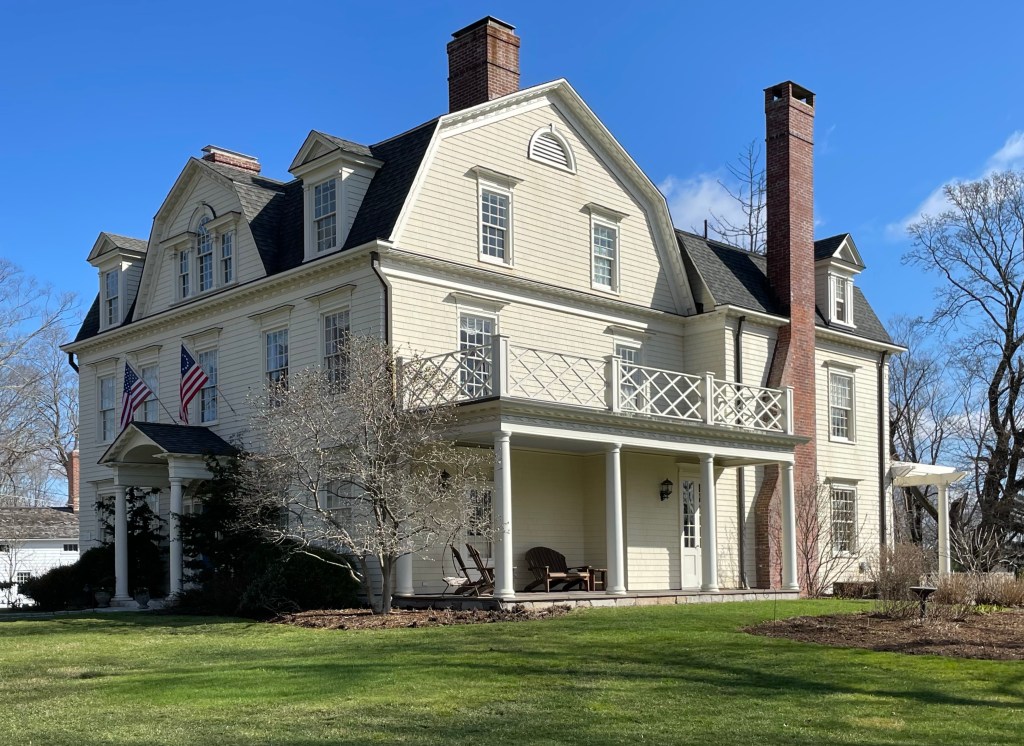
Located on Main Street in idyllic Ridgefield, in Fairfield County, Connecticut, The Fountain Inn provides one of the most welcoming and historical bed and breakfast experiences in New England! The Fountain Inn was built in 1740 as a “city home in the country” for David Hoyt, who showed off his wealth and stature in the young town by having such a high-style home built at the time. Decades later during the Revolutionary War, David Hoyt’s house became a part of the Battle of Ridgefield. After defeating the Colonial militia elsewhere on Main Street, British Gen. William Tryon‘s troops turned their attention to nearby Keeler Tavern, the local militia’s headquarters, which just happened to be neighbors with the mansion owned by David Hoyt, a known Loyalist. General Tryon’s troops practiced their artillery-firing skills on the building pummeling it with cannonballs, sending a message to the head of the local militia. David Hoyt formally demanded a cease-fire, as he was concerned about wayward cannonballs damaging his home. By 1790, with Ridgefield’s British influence diminishing by the day, David Hoyt finally left his Connecticut home and sailed back to England. The home was expanded and modernized over the next two hundred years until the present owners purchased the property and underwent a massive restoration of the Colonial house inside and out as their family residence. In the past year, the inn opened as the Fountain Inn so-named after a Cass Gilbert-designed fountain across the street.
Samuel Burnham bought an older house on this site, and added to it, creating a larger residence for his family (a common occurrence in early Colonial times). One thing he did keep was a 30-foot well within the building to supply the family drinking water. Interior wells were not common, but very useful on the New England “frontier” where attacks from Native American tribes were more frequent. In the event of an attack in town, a family could close their interior shutters, and wait them out with drinking water from their internal well.
God, I love old New England homes! Could you live in one that is older than the United States?
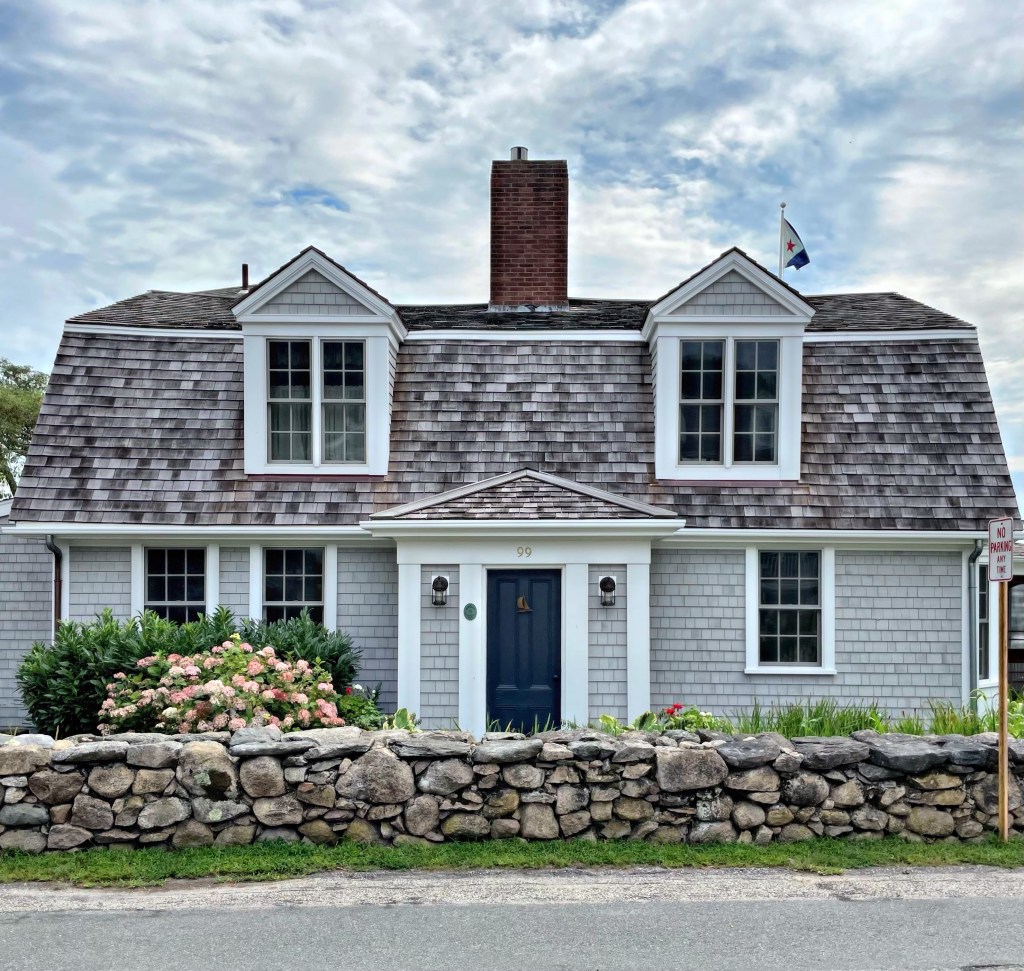
One of the oldest homes in Sippican/Wharf Village in Marion, Mass., this beautiful Cape house with gambrel roof dates to 1784 from deed research. The house was constructed by two owners, Barnabas Luce, innholder, and Stephen Cunningham, a mariner, seemingly as an inn for sailors who would dock their ships in the harbor just behind the property. It was later acquired by Edward Sherman (1790-1867), a shipwright and carpenter who built schooners at the wharfs in town. In 1868, his son Edward Franklin Sherman (1821-1907), also a ship carpenter, sold the waterfront property after his father’s death to Andrew A. Harwood, an admiral in the United States Navy, Commodore of the Washington Navy Yard, and through his mother, Elizabeth Franklin Bache, a great-grandson of Benjamin Franklin! The property remained in the Harwood family until, 1955, when the property was sold to the Beverly Yacht Club. The yacht club was originally named after the town of Beverly, north of Boston, when members broke from the Eastern Yacht Club of Marblehead which was more prestigious. For the first 23 years, the club had no fixed location, but eventually settled in Bourne, and merged with the local Sippican Yacht Club. The Great Hurricane of 1938 destroyed their clubhouse and they were “homeless” for years until moving into this 1784 home, later expanding it to meet growing needs.
Waterford was once part of New London, but it separated in 1801 as the area desired its own town government which took agricultural interests more seriously. In the 19th century, much of the town’s economy was centered around agriculture, with many residents running sheep farms. During the 20th century, sheep farms were replaced by dairy farms. Between 1920 and 1960, there were about 100 dairy farms in Waterford. After WWII, suburbanization occurred and many wealthy residents of nearby New London moved to Waterford for more space. The oldest surviving public building in Waterford, Connecticut is this Colonial-era schoolhouse which was likely built in the 1730s. The Jordan Schoolhouse was built as a rural schoolhouse as farmers wanted their children to be taught writing, reading, arithmetic, and religion, even if they followed their parent’s footsteps in farming. The gambrel-roofed Georgian building was used as a school until the mid-19th century and it was converted to a private home for Asa and Eliza Gallup and their family. The schoolhouse was eventually moved to its current site on Jordan Green in 1972 and is operated as a museum space for the Waterford Historical Society.
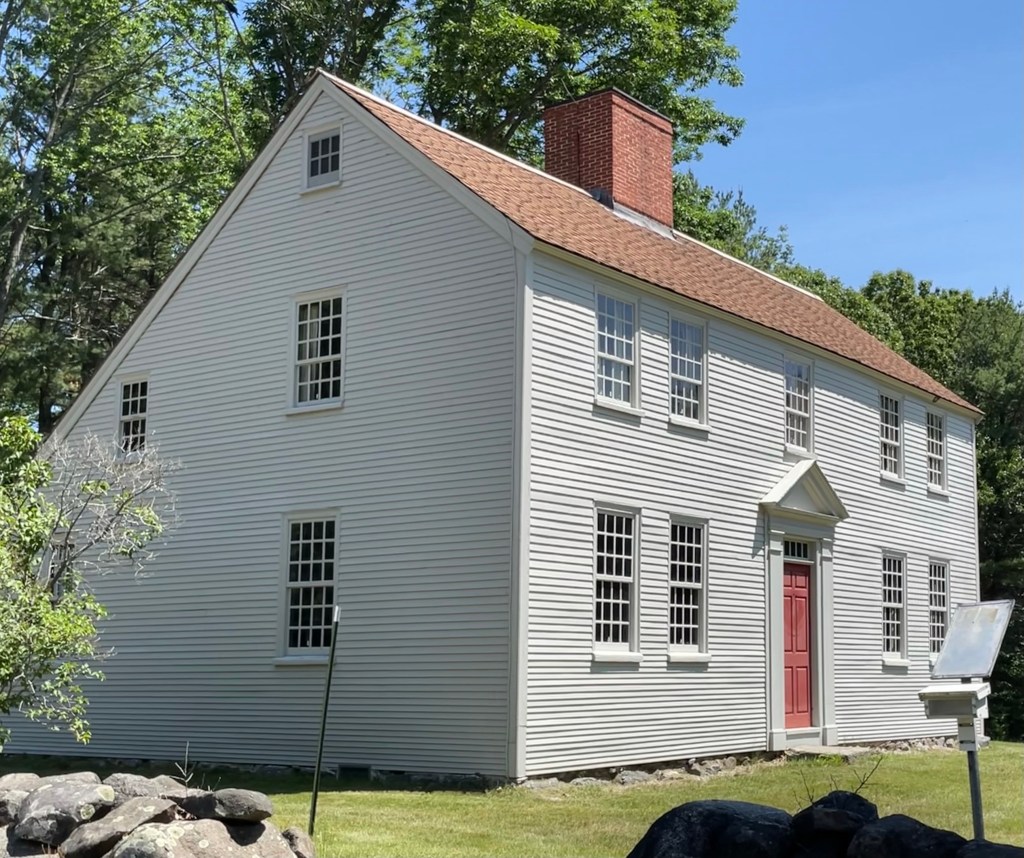
The Old Parsonage in Newington, NH, is a rare survivor from the 1700s in the tiny town. It is one of few extant “saltbox” houses to be found in the New Hampshire seacoast. Like most houses of this type, the parsonage has a lean-to that was added a few years after the house was built. Like the nearby meeting house, the parsonage has long been inextricably connected to the public life and the identity of Newington. Unlike the much-altered meeting house, the parsonage retains the appearance of the 1700s and has been extremely well-preserved, giving a glimpse into 18th century life in Newington. The parsonage is estimated to have been constructed in 1725 when Richard Pomeroy, the first Sexton of the church, sold the property here for 19 pounds, with no mention of a dwelling. It was acquired by a John Knight (1685-1765). After his death, the dwelling was sold to the Town of Newington and restored to be used as a parsonage.




 Buildings of New England