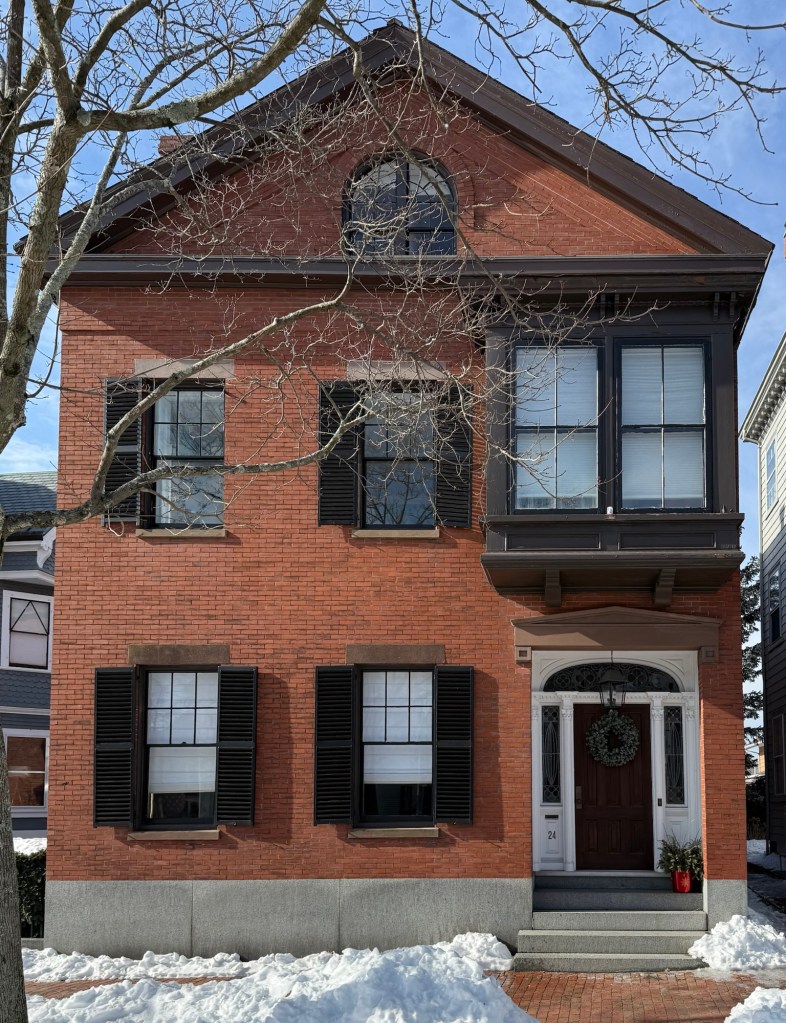
Foster-Beck House // c.1845

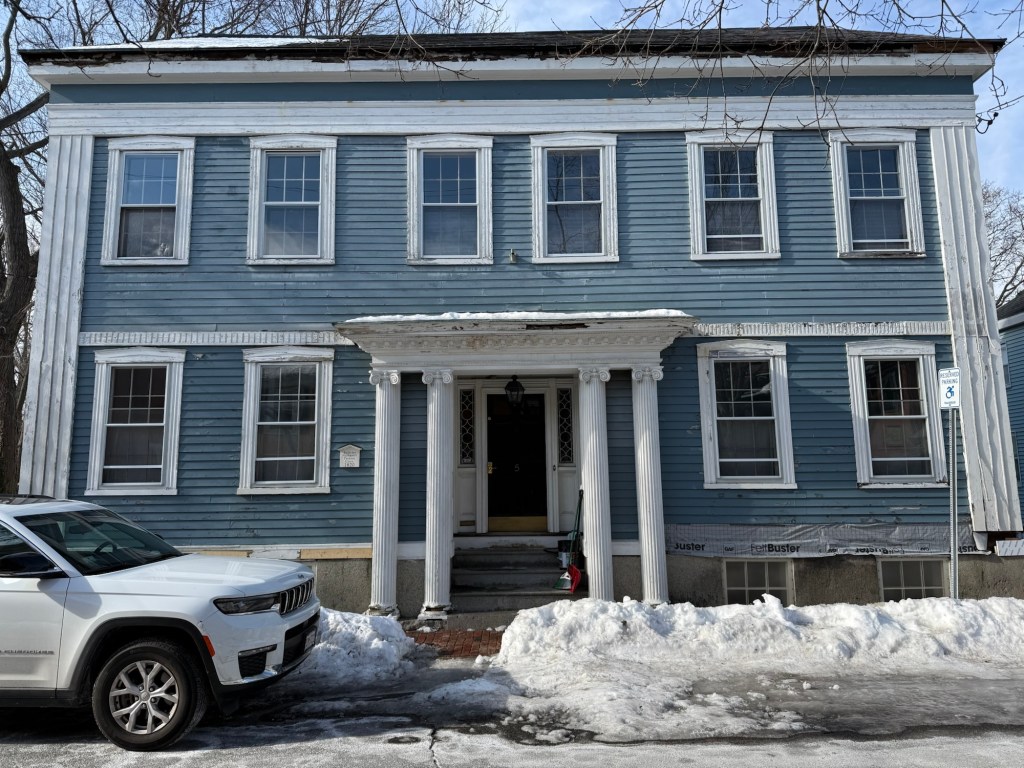
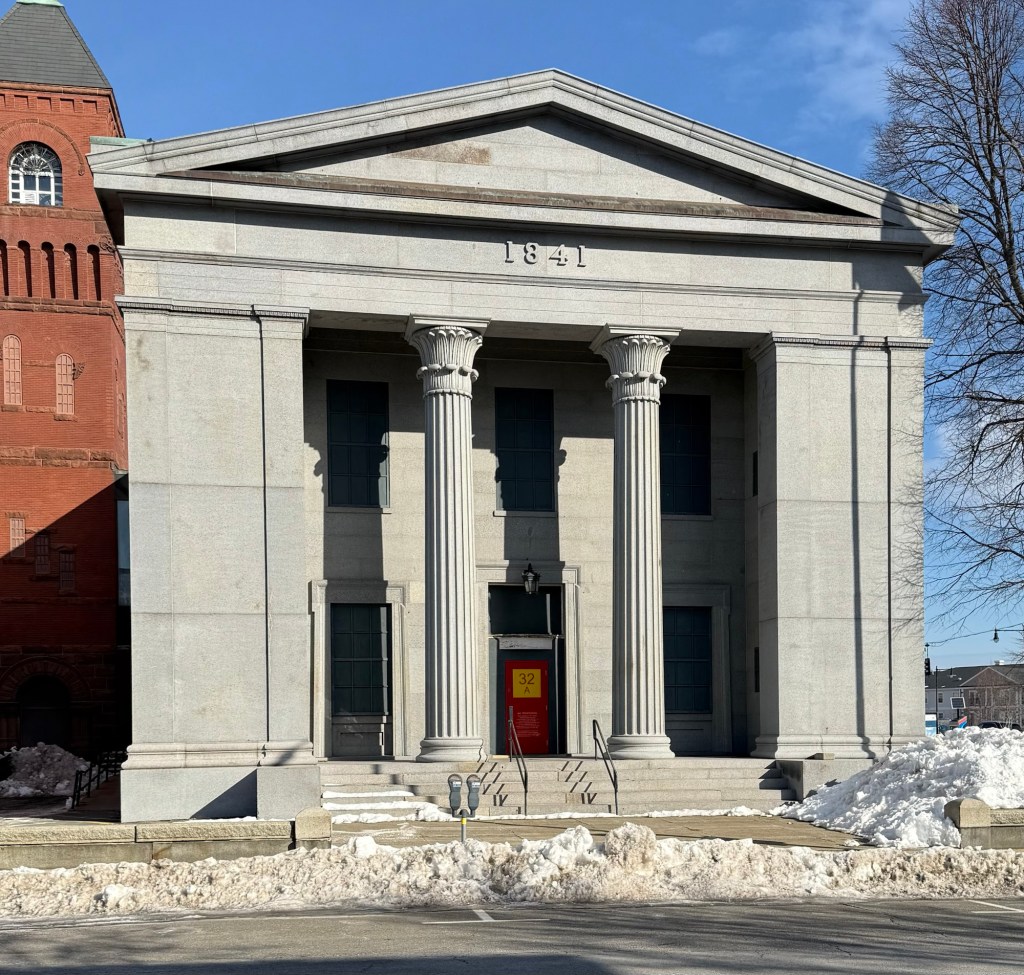
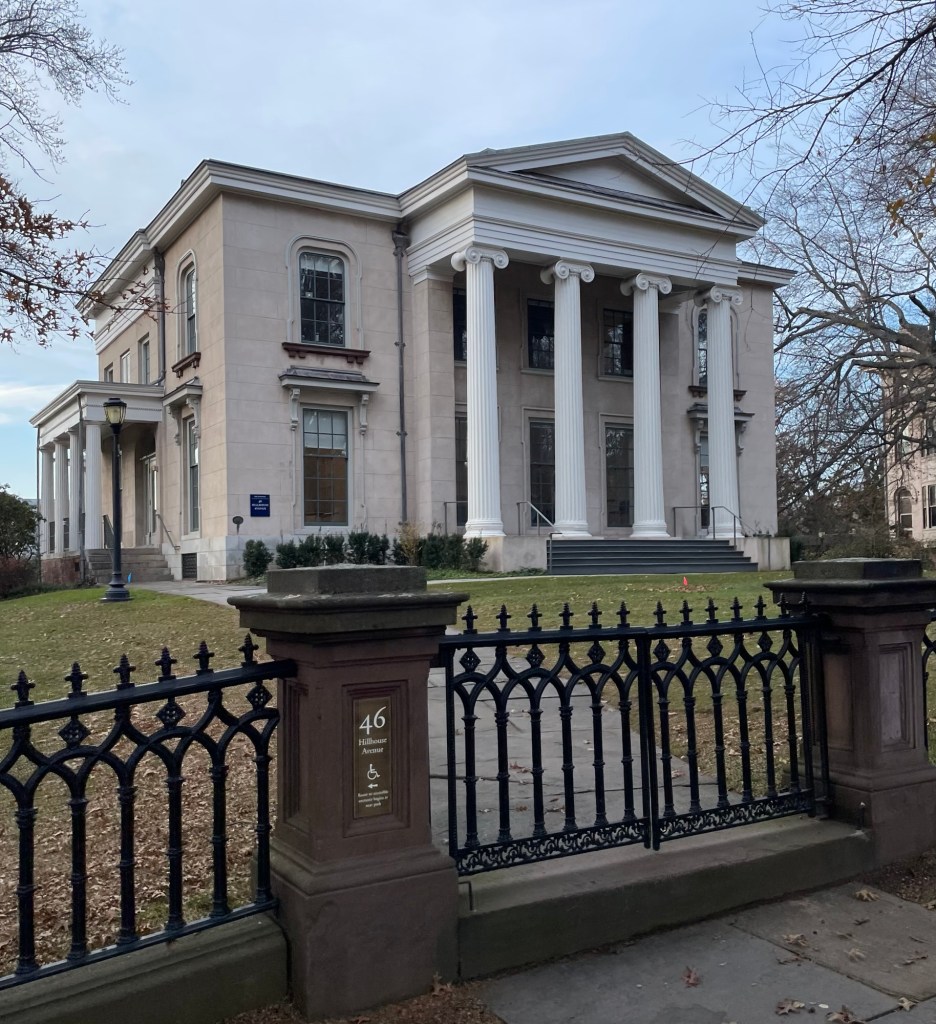
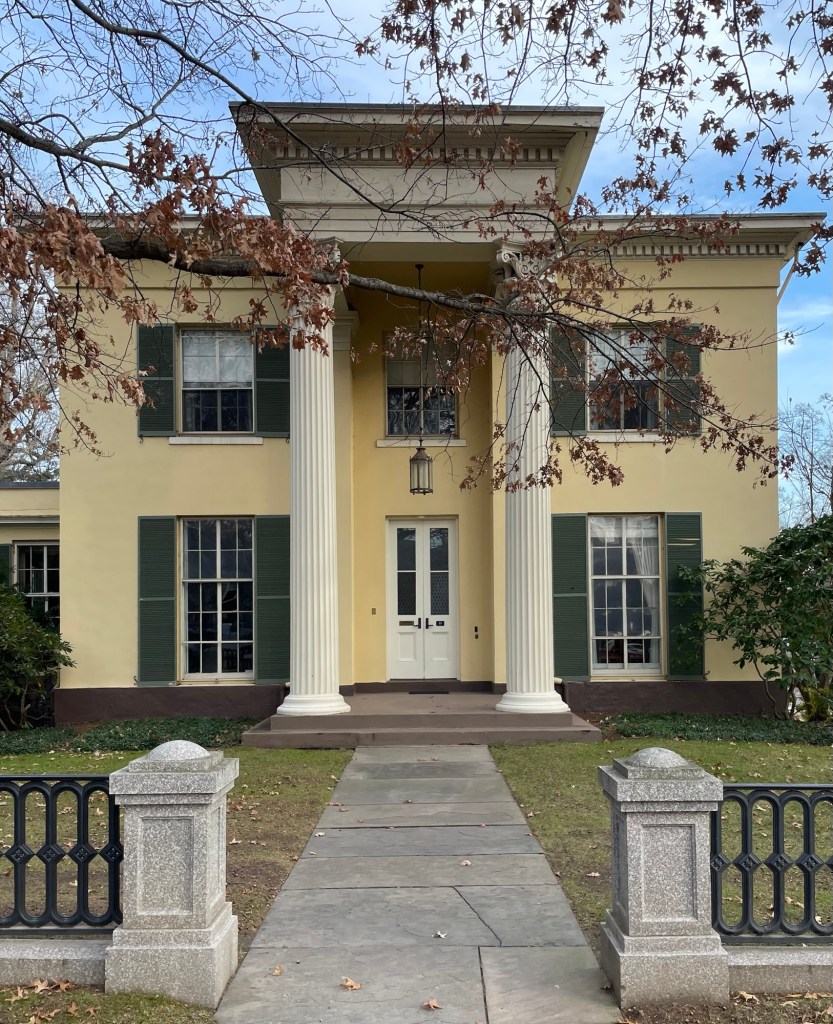
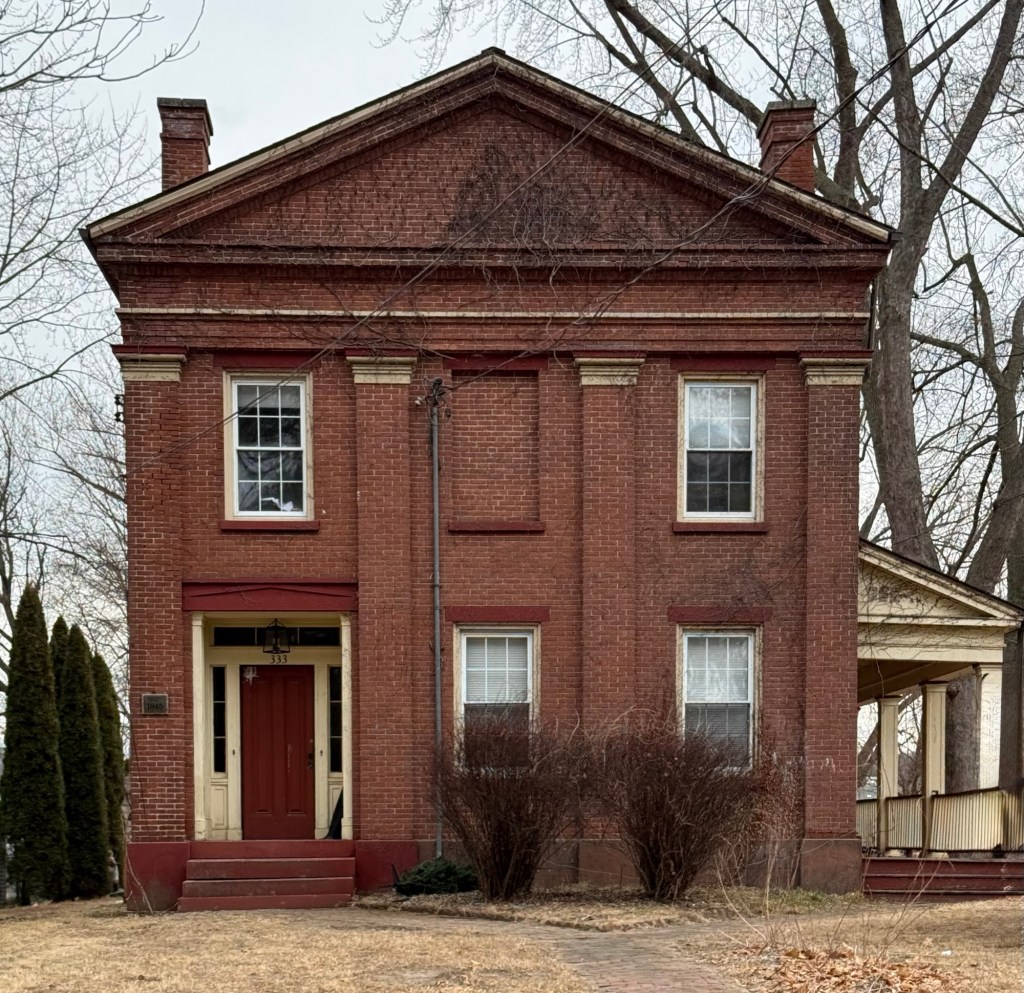
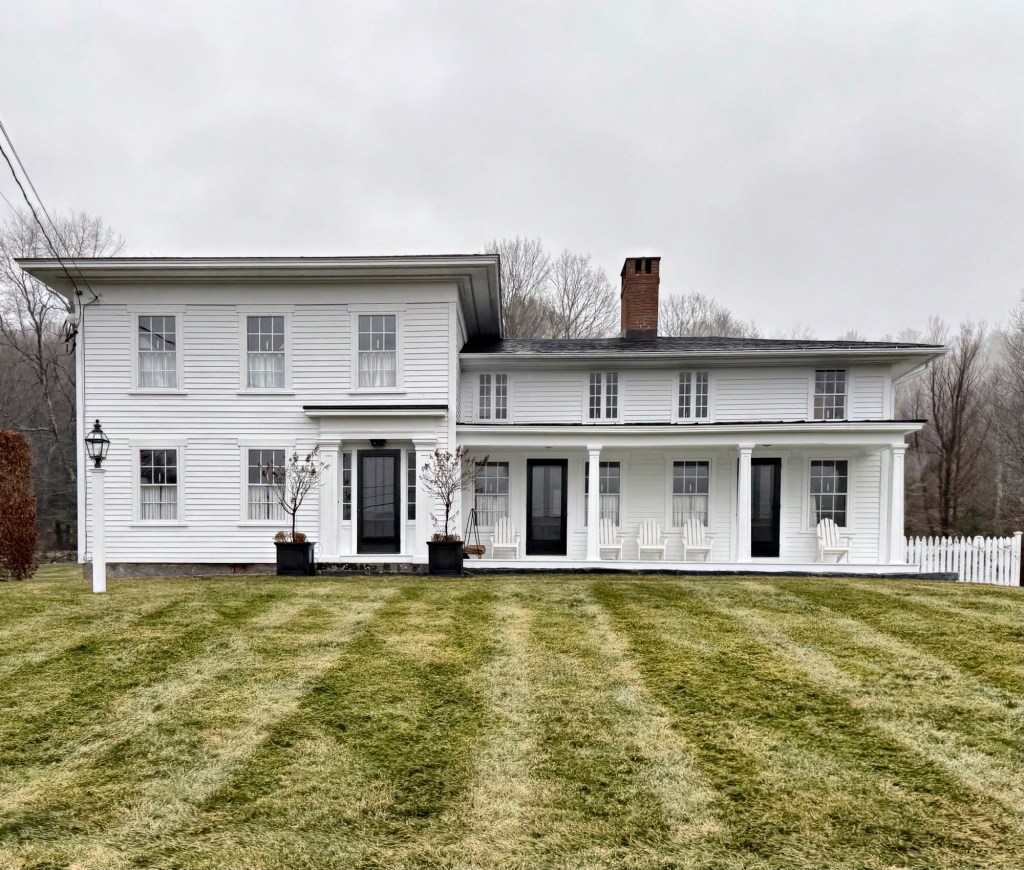
This attractive Greek Revival style residence with later porch was likely built in the 1840s and is one of the finest homes in the village of West Cornwall, Connecticut. The house was likely built for Stephen Foster (c.1816-1863), a merchant and railroad contractor who had constructed a portion of the Housatonic Line railroad near West Cornwall, further opening the village up to trade. Stephen and his wife, Helen, lived here for some time until around 1860 when they relocated to a larger, Italianate style mansion nearby. In 1867, this property was purchased by George Beck, a German immigrant and partner of the Vollmiller Shear Shop, who manufactured metal shears and scissors in West Cornwall. It is likely that Beck was owner of the house at the time the wrap-around porch with scroll-sawn columns.

Myron Norton House // 1840

The Myron Norton House, built in 1840, is located in the central village in Goshen, Connecticut. Built of stone, the house is unique as the only example of a stone house in the village, and the only Greek Revival house that departs from the usual gable-roofed form, having a square plan and hipped roof with monitor. The home was built for Myron Norton (1788-1853) and his wife, Caroline (Marsh) Norton, who outlived her husband by 23 years, living here until her death in 1876. Myron Norton made his fortune patenting and selling pineapple cheese molds, where he pressed the curds from local cows in wooden pineapple-shaped molds to give them the desired shape. It is the house that cheese built!

Israel Snow House // c.1850

The Israel Snow House stands at 9 Water Street in the South End of Rockland, Maine, and it is one of the region’s finest examples of late Greek Revival architecture. The residence was built for Captain Israel Snow (1801-1875), a mariner and captain of several vessels, including the schooner Maria (1829), the brig Snow (1835-36), the brig Lucy Ann (1842), and the Barque Star (1848). In 1850, he and his wife Lucy moved from Thomaston to Rockland, and he would build this stately mansion where they raised seven children. Some records put the construction of this house at 1861, but that seems very late for such an example of this style. In 1863, he founded Snow’s Point Shipyard on Mechanic Street in the South End. Rockland was the fourth largest seaport in the United States in terms of production and commerce at the time, and Snow’s shipyard was a large part of that production. This residence is now offices to the U.S. Fish and Wildlife Service’s Maine Coastal Islands National Wildlife Refuge Complex.

Overlook Mansion // 1842

In about 1842, a Salem merchant, Joseph Adams, built this stately Greek Revival style mansion on Pine Street in Danvers, Massachusetts. Named “Overlook”, the house is a simplified adaptation of the temple-front form with three columns supporting an entablature and closed pediment above. Joseph Adams was an instrumental force who brought an Episcopal church to Danvers, bankrolling the new building there himself. By 1862, the house was owned by Milton P. Braman (1799-1882), who had just retired as pastor for the First Church of Danvers. Of particular note, when news reached Danvers of the assassination of President Lincoln, a gang of men there captured two men who had said unkind words of the late president, and tar and feathered them. A number of the mob were said to have planned to also go to Rev. Braman’s house here to do the same to him, as he was said to have been a “copperhead” a democrat who opposed the American Civil War and wanted an immediate peace settlement with the Confederates. Reverend Braman got wind of the plans of the local mob and had men stationed in the windows with shotguns, with the order to shoot anyone who entered the property. Luckily for all involved, the mob never showed. He would later move to Brookline and Newton. Overlook remains a significant country estate and very well-preserved by the owners.

Adams Hall // c.1828

According to local histories, this significant Greek Revival style property on Elm Street in Georgetown, Massachusetts, was owned by Josiah Adams (1757-1852), a farmer, a Revolutionary War veteran, and a fourth-generation descendant of the immigrant Robert Adams, who arrived here from Devonshire, England by about 1629. In March 1849, the town’s Congregational Society purchased Adams Hall for eight hundred dollars to house the church vestry, which remained in the building for forty-one months until a new building was built for that purpose next door. Later, Adams Hall was owned by Moses Tenney (1808-1903), operator of a prosperous saw mill in Georgetown, and served at one time in the state senate. The structure retains its significant temple-front with four, two-story Doric columns supporting the portico. Also special on this residence is the use of flush-board siding and the oversized first floor windows.

New Gloucester Universalist Meeting House // 1839

Constructed in 1839 by local carpenter/builder Jeremiah Cotton, the Universalist Meeting House of New Gloucester, Maine, is a dignified example of the Greek Revival style in a rural context. The First Universalist Society of Christians in New Gloucester was organized in 1805 with members drawn from nearby communities including those of Gray and Poland. In 1830, the congregation reorganized itself into the First Universalist Society of New Gloucester and Pownal. During its early history services were apparently held at various places in the community for it was not until November of 1838 that a meeting was called “…to take such measures for Building a meeting house as a majority of Subscribers or proprietors may think proper.” After World War I, membership began to decline and from the 1930s until the society’s demise in 1957 services were infrequently held. In 1969 the property was acquired by the New Gloucester Historical Society, who maintained and restored the building. The flushboard siding, fully pedimented gable, pilasters, and symmetrical façade containing two entry doors, all work together to display the Greek Revival style in a high-style example, but in a rural setting. The building appears to be opened periodically by the Historical Society.

Former Boston & Maine Railroad Station // c.1845-1893

Photo courtesy of City of Boston Archives

The Boston & Maine Railroad opened in 1845, and over the years, became the dominant railroad in northern New England with many of its lines terminating at this station for a half-century until the original Union/North Station was built in 1893 consolidating many of these northbound lines under one roof. The Boston & Maine Station was located in Haymarket Square, southeast of the present North Station and the building was a landmark in the Greek Revival style. The brick building with monumental pilasters and pediment at the facade commanded the heavily trafficked site until it was demolished in 1893 when the lines relocated to the newly built Union Station on Causeway Street. The architect for the station was Richard Bond.

Old Pierce School // 1855

Located in the heart of Brookline Village, the old Pierce School sits tucked away behind the Brookline Town Hall and other municipal and institutional buildings. The school was built in 1855 at a cost of $15,000 and later expanded in 1904 from plans by Julius Adolphe Schweinfurth, a prominent local architect. Julius had two brothers who also were architects:  A. C. Schweinfurth, who worked out of California and Charles F. Schweinfurth, out of Ohio. The Pierce School was named after Reverend John Pierce, noted pastor of the Walnut Street church during the mid 19th century. He and his wife, Lucy Tappan Pierce, were active leaders in the abolition movement in Brookline. The school was expanded a number of times until the 1970s, when the present Pierce Elementary School was built, in an unsympathetic Modern design that does little to enhance the busy street. As expected, the 1970s school will soon be demolished and replaced by a new, $212 million school. The old Pierce School will be incorporated into the new development.

Harris and Sabin Sayles Mansion // c.1845

Located in the Dayville section of Killingly, Connecticut, you can find a row of large mansions built for mill owners and managers from the 19th century. This house dates to the 1840s and by the 1860s, was owned by Harris Sayles (1817-1893) and his brother, Sabin L. Sayles (1827-1891) who together, co-owned and operated a large woolen mill in the town (featured previously). It is not clear if the Sayles brothers lived in the home, but they likely rented it to higher-level employees at the mill as they both had other homes in town. The two-and-a-half story mansion is a great example of the Greek Revival style in the town, with the side gable roof extending over the full-height portico with doric columns. The mansion was built across the street from the village church, also in the same style, but that building was demolished by 2011.

Ripton Community House // 1864

The Ripton Community House stands at the center of the rural village center of Ripton, Vermont, a town in the midst of the Green Mountains. The community house was built in 1864 and is an excellent late-example of the Greek Revival style in this part of the state. The building was constructed on land that was deeded by Sylvester Fisher in 1864 to the local Congregational Society with the proviso that a house of worship costing not less than $2000 must be erected within two years. The church was built and maintained by the Congregational Society until 1920 when it was deeded to the Methodist Episcopal Church to be used for religious, social and educational purposes. This restriction was removed in 1928 and it was deeded to the Ripton Community Club which made renovations and used the facilities for club meetings, social events, community dinners, square dancing and more. The club dissolved in 1964 and the building began to deterioriate for years until the town banded together to protect and applied for grants to restore the building to its former glory, what we can all appreciate today when driving through the quaint town.