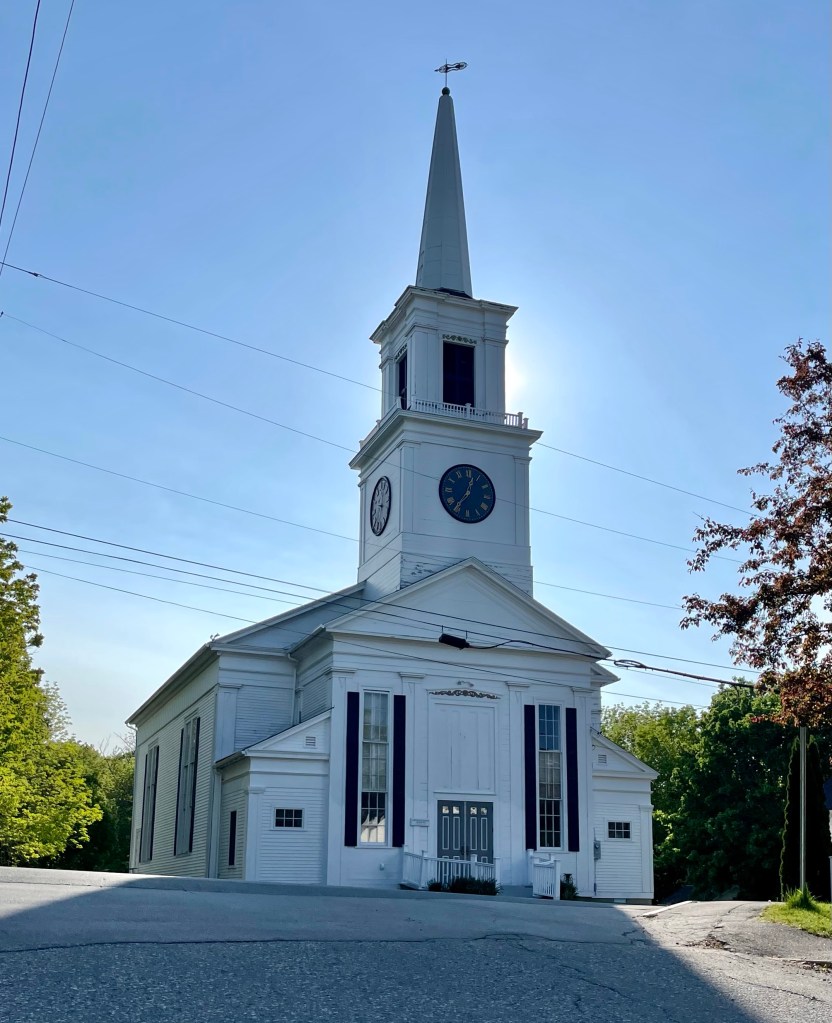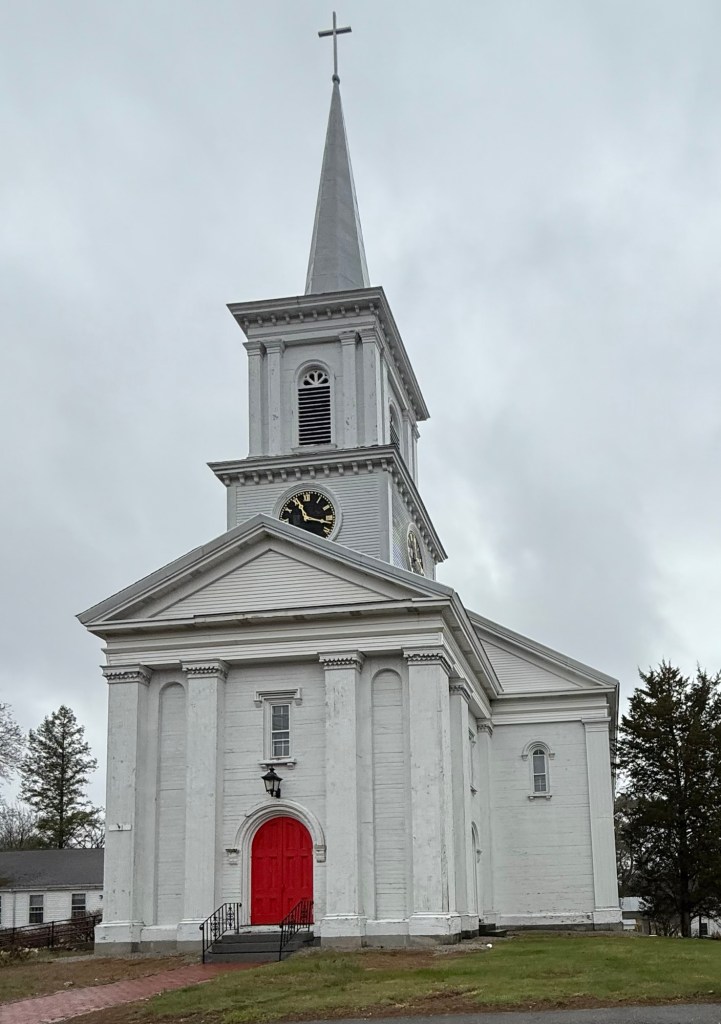
First Congregational Church of Abington // 1849

Abington, Massachusetts was first settled by Europeans in 1668 and was officially incorporated in 1712. Its namesake was is said to have been set by Governor Joseph Dudley as a tribute to Anne Bertie Venables, Countess of Abingdon, wife of the second Earl of Abingdon, who helped Dudley secure the governorship of the Colony of Massachusetts from Queen Anne. Governor Dudley noted in its decree that, “the Town be named Abingdon”. A marginal note on the document gave the spelling as “Abington” with a “t”, which has served as the spelling ever-since. At the center of town, this handsome church is the fourth edifice of the Congregational Church Society in Abington, Massachusetts, and replaced the third church, which was occupied for just thirty years until 1849, when this Greek Revival structure was built. Located a stone’s throw from its former home, this church showcases the increase in membership and relative wealth of the congregation by the middle of the 19th century. The structure with its flushboard siding and bold Doric pilasters, features an arched center entrance and multi-stage tower containing a clock and enclosed belfry.
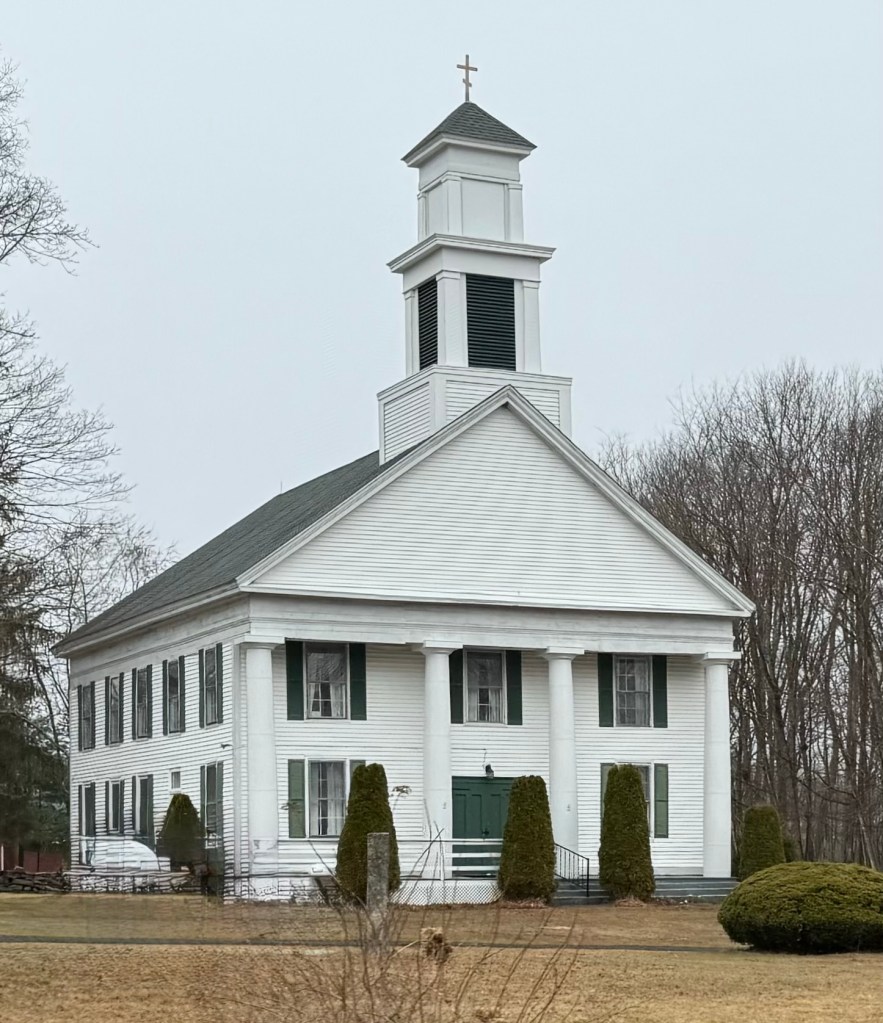
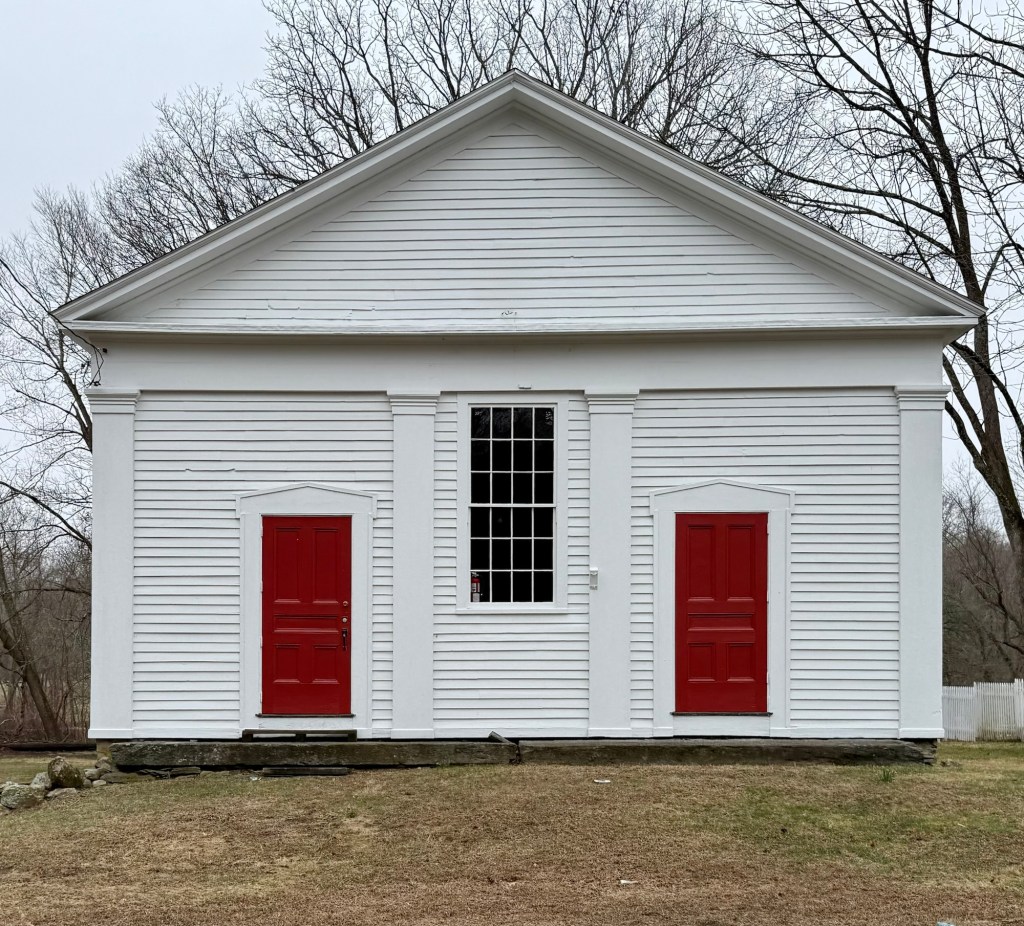
Westminster Meetinghouse // 1770

The Westminster Meetinghouse (aka the Westminster Congregational Church) was built in 1770 by Canterbury, Connecticut residents who in the 1760s, created a separate religious jurisdiction, the Westminster Society, due to their reluctance to travel long distances to Canterbury village for required religious services. Local resident John Parks donated land to be used as a public green, as well as a site for a cemetery and this meetinghouse. Sherebiah Butts, captain of the local militia, was engaged as master builder and architect, who along with his sons and other helpers, constructed the church by 1770. The original church, originally a square-plan meetinghouse, initially faced east, but was rotated to face south by around 1840, when the entire structure was remodelled in the prevailing Greek Revival style. The church is said to be one of the oldest continually utilized meetinghouses in Connecticut.

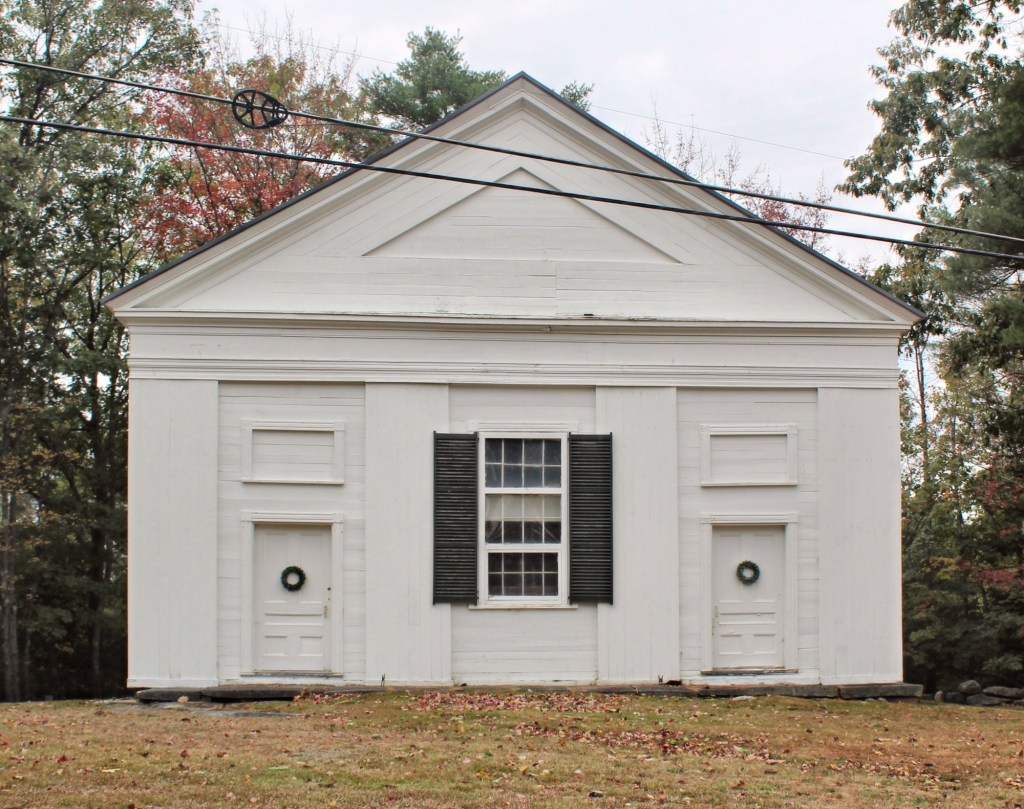
Scotland Universalist Church – Shetucket Grange Hall // 1843

This charming, Greek Revival style building near the town green in Scotland, Connecticut, was built in 1843 as a Universalist Church for area residents who split off from more Congregationalist beliefs. By the end of the 19th century, populations shifted heavily to industrial centers where work was more plentiful, the church appears to have lost much of its membership and the building became a local grange hall. The Shetucket Grange was organized in June 1887, and was a meeting place for local farmers and their families to promote the economic and political well-being of the community and agricultural pursuits. Today, the building is owned by the town, but it’s use is unclear. Greek Revival in style, the building retains much of its original architecture, from its simple form, facade with two entrances flanking a central hung window, and pilasters framing the bays.

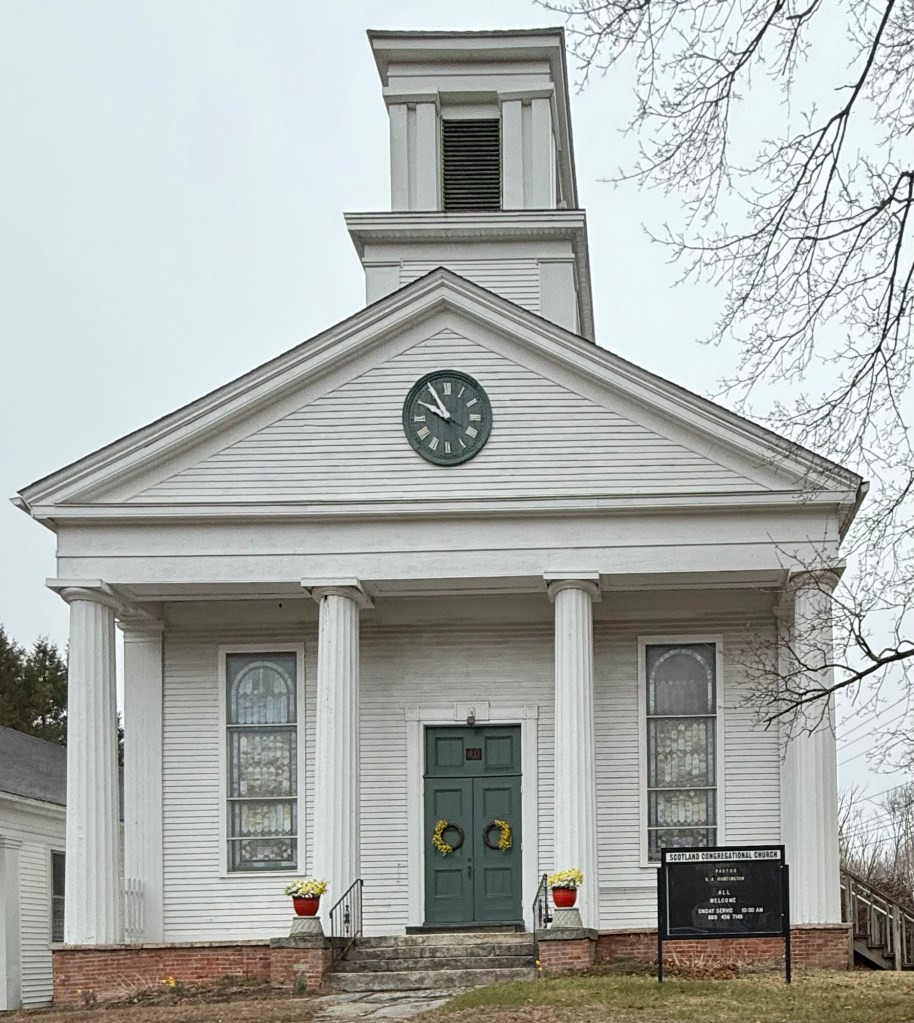
Scotland Congregational Church // 1842

The main visual anchor of the charming town green of Scotland, Connecticut, is this building, the Scotland Congregational Church. Built in 1842 as the congregation’s third building, this Greek Revival style edifice features stately proportions, temple-front with four large Doric columns supporting the portico, and a two-stage belfry. The chapel (some say it was converted from the original town hall) was acquired by the congregation in 1867, and has remained in its new location ever since. Later alterations include the stained glass windows and clock in the pediment, which dates to the early 20th century.

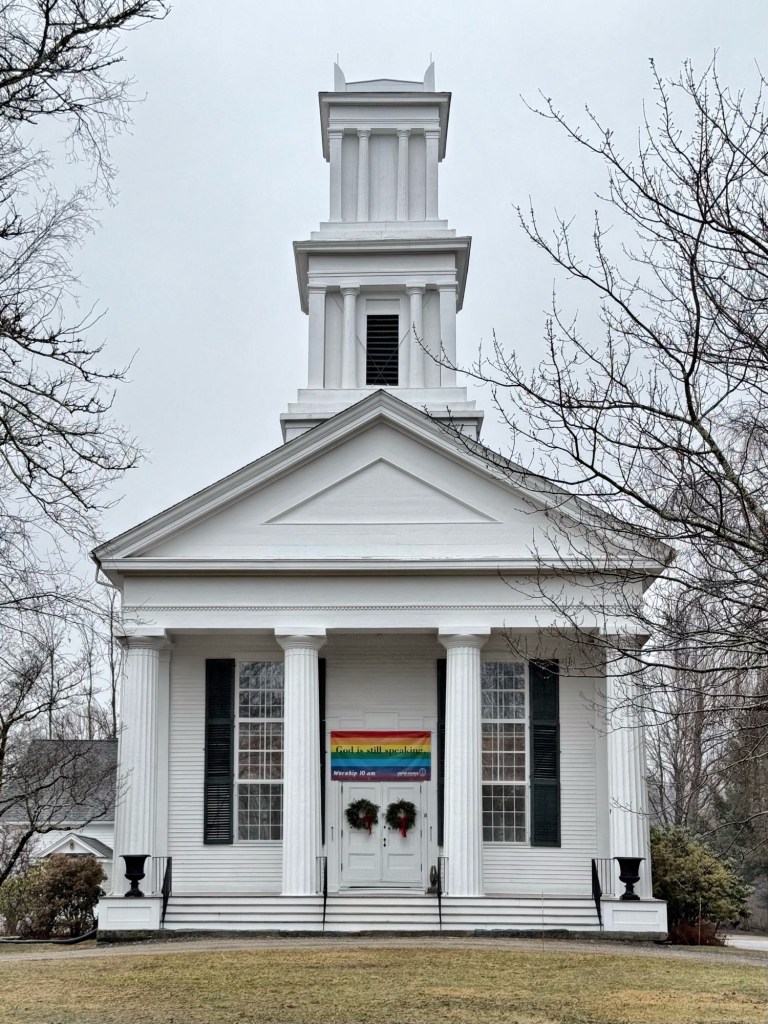
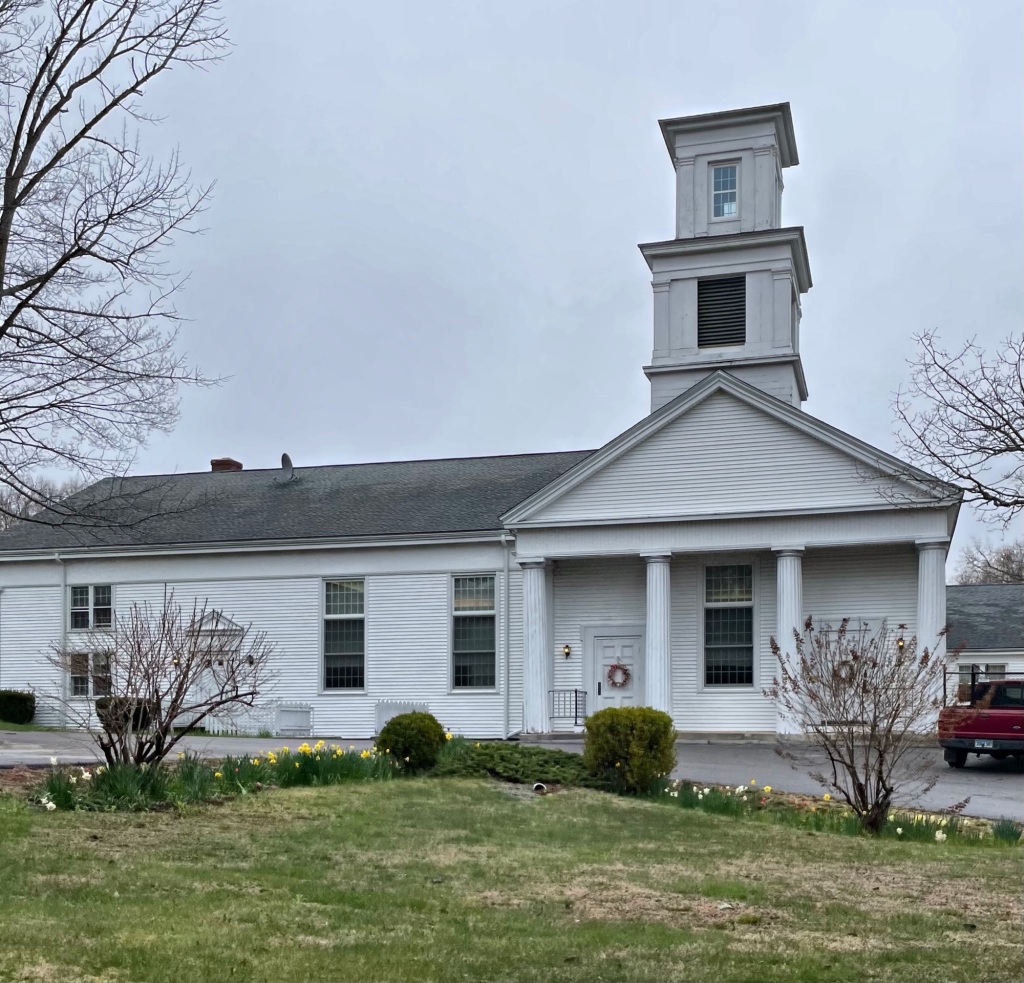
Cornwall Congregational Church // 1842

The Cornwall Congregational Church in Cornwall, Connecticut, was erected at 8 Bolton Hill Road in 1842, replacing the colonial-era meetinghouse which had first stood on Old Meetinghouse Hill at Cornwall Center. When members of the church split into two separate congregations due to religious differences, the original congregation moved to South Cornwall in 1790. Another Congregational church was built in North Cornwall for the other group. This wonderful Greek Revival church reflects the enormous popularity the style in the first half of the 19th century. The structure rests on a stone block foundation and is sheathed with clapboard siding. The building incorporates a central entry of paired doors with a Greek Revival surround, flanked by 20/20 windows. The street elevation of the building is dominated by a monumental portico with pedimented gable, broad frieze and fluted Doric columns. The showstopper is the two-stage square belfry, each stage Doric columns and pilasters. The church is active today as the United Church of Christ and is often utilized for town events.

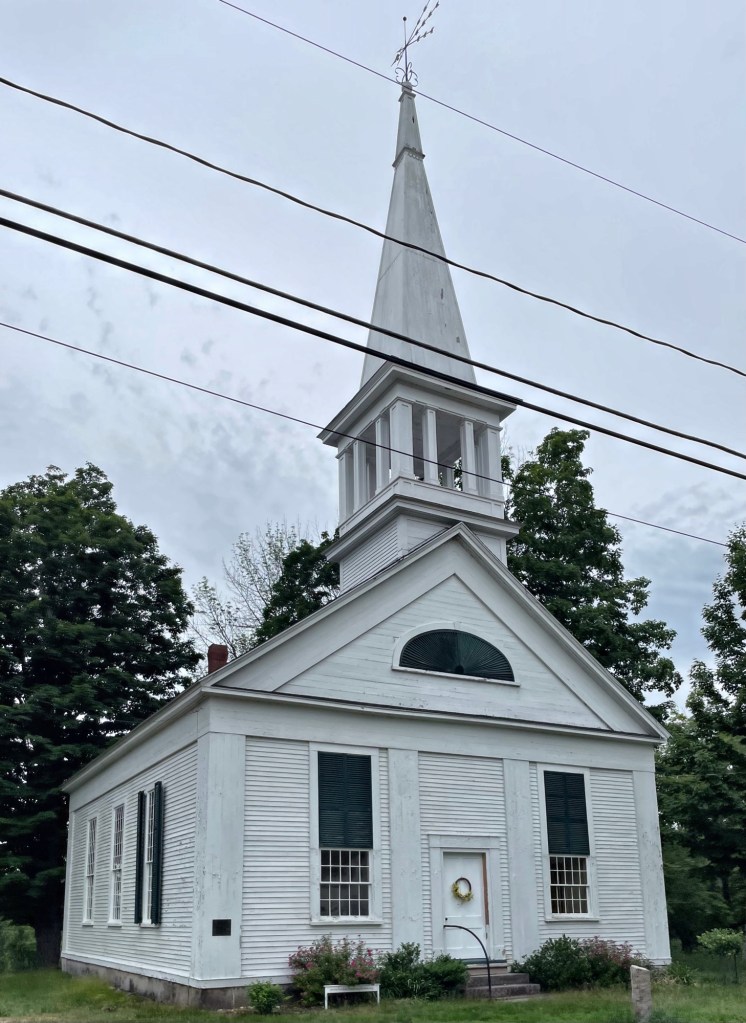
Cornwall Hollow Baptist Church // 1844

During the nineteenth century several small, rural settlements dotted the landscape of Cornwall, Connecticut. The hamlet of Cornwall Hollow this building, the Baptist Church, and contained a tannery, store, gristmill, sawmill and cemetery. The church at Cornwall Hollow was erected following dissolution of the Baptist congregation at nearby Cream Hill in 1843. A new church constitution was adopted in 1844 and this new meetinghouse erected the following year. At its height the congregation included 100 members. The Greek Revival style church once had a belfry, but it was removed sometime in the 20th century, likely due to repair costs. The interior included a curved ceiling, and windows line the side elevations. The congregation saw dwindling numbers and closed in the early 20th century. It is now privately owned, but lovingly preserved.

New Gloucester Universalist Meeting House // 1839

Constructed in 1839 by local carpenter/builder Jeremiah Cotton, the Universalist Meeting House of New Gloucester, Maine, is a dignified example of the Greek Revival style in a rural context. The First Universalist Society of Christians in New Gloucester was organized in 1805 with members drawn from nearby communities including those of Gray and Poland. In 1830, the congregation reorganized itself into the First Universalist Society of New Gloucester and Pownal. During its early history services were apparently held at various places in the community for it was not until November of 1838 that a meeting was called “…to take such measures for Building a meeting house as a majority of Subscribers or proprietors may think proper.” After World War I, membership began to decline and from the 1930s until the society’s demise in 1957 services were infrequently held. In 1969 the property was acquired by the New Gloucester Historical Society, who maintained and restored the building. The flushboard siding, fully pedimented gable, pilasters, and symmetrical façade containing two entry doors, all work together to display the Greek Revival style in a high-style example, but in a rural setting. The building appears to be opened periodically by the Historical Society.

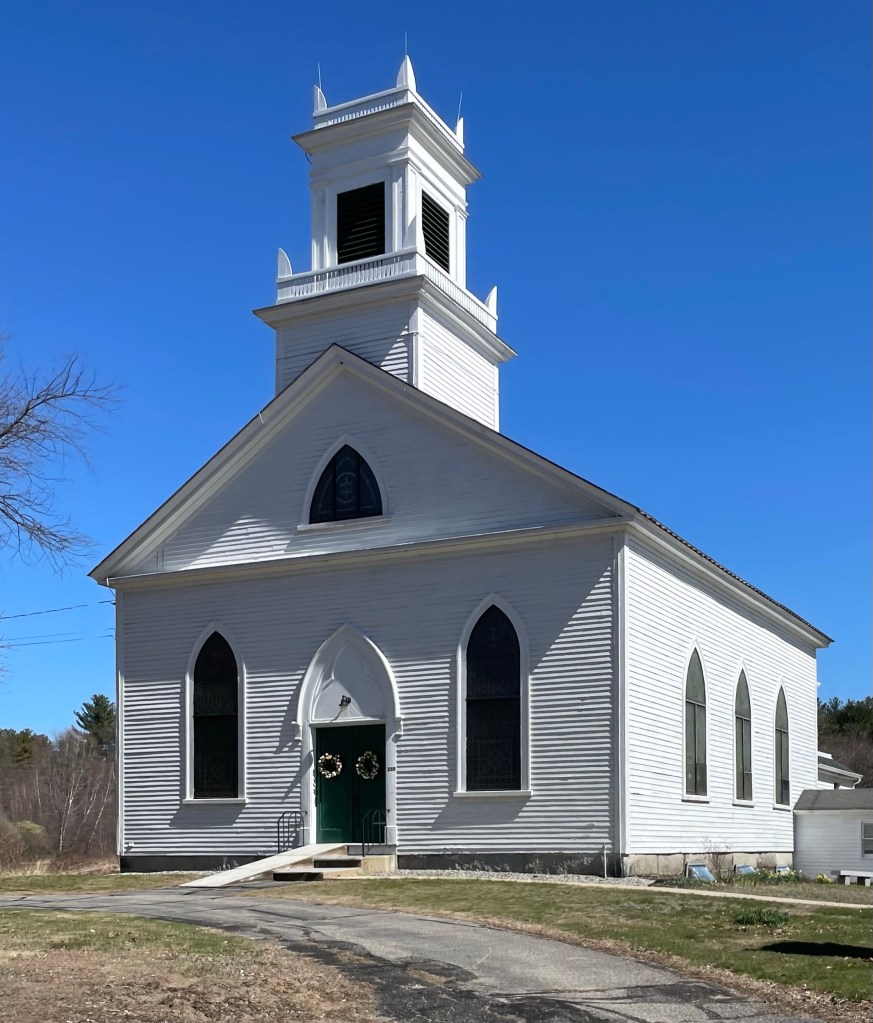
Old Effingham Meetinghouse // c.1800

The location of the Effingham meetinghouse in New Hampshire was a controversial question in the 1790’s, with the villages of Lord’s Hill and Drake’s Corner both vying for the town’s most important public building. After several votes and repeals of votes, the Town’s voters in 1798, chose a committee of hopefully disinterested men from other towns and instructed them to settle on the location. The committee recommended Lord’s Hill, and in June, the Town voted to accept that location. The contract for the meetinghouse was awarded to Isaac Lord, a local landowner and operator of a tavern and store, who promptly erected the building the same year. In its original form, the building had the traditional meetinghouse plan, with its main entry in the long southeast side and a belfry at the northeast end. In 1845, the meetinghouse, by then the property of the Congregational Church, was thoroughly remodeled in the Greek Revival style, what we see preserved today.

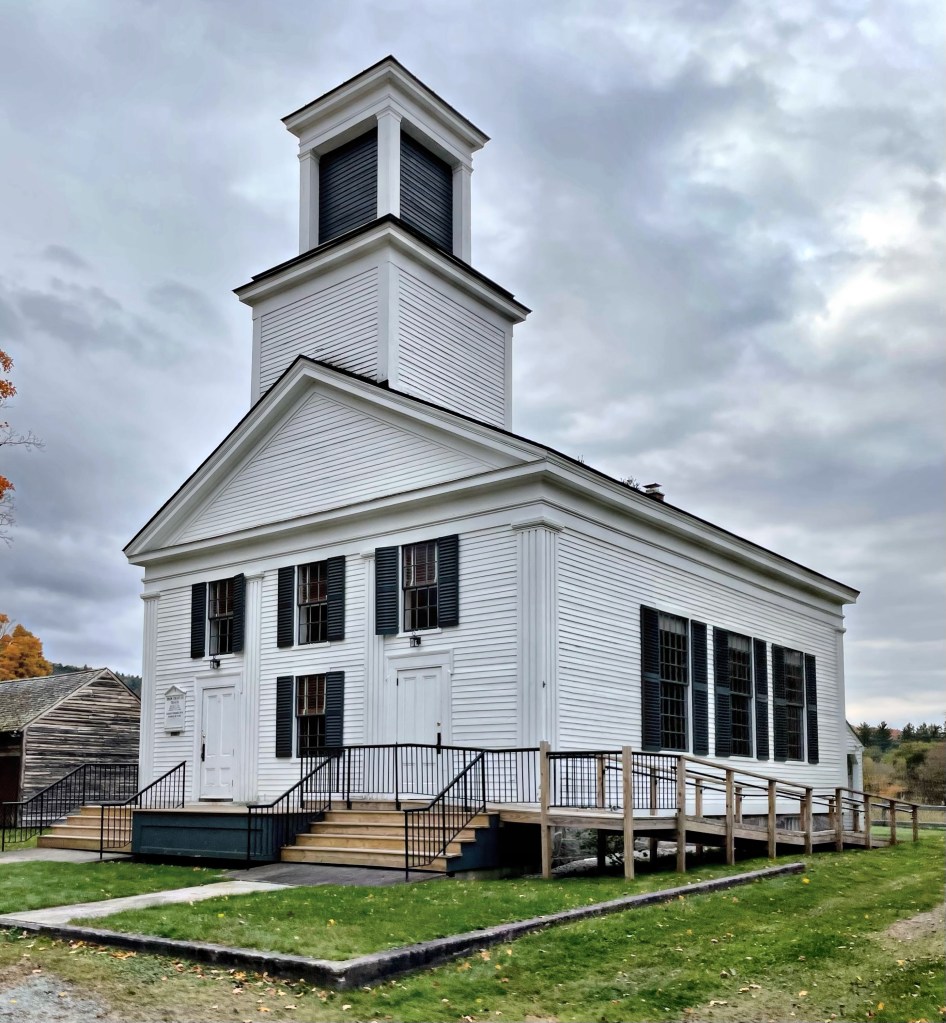
Ripton Community House // 1864

The Ripton Community House stands at the center of the rural village center of Ripton, Vermont, a town in the midst of the Green Mountains. The community house was built in 1864 and is an excellent late-example of the Greek Revival style in this part of the state. The building was constructed on land that was deeded by Sylvester Fisher in 1864 to the local Congregational Society with the proviso that a house of worship costing not less than $2000 must be erected within two years. The church was built and maintained by the Congregational Society until 1920 when it was deeded to the Methodist Episcopal Church to be used for religious, social and educational purposes. This restriction was removed in 1928 and it was deeded to the Ripton Community Club which made renovations and used the facilities for club meetings, social events, community dinners, square dancing and more. The club dissolved in 1964 and the building began to deterioriate for years until the town banded together to protect and applied for grants to restore the building to its former glory, what we can all appreciate today when driving through the quaint town.

Eastford Baptist Church // 1843

One thing so many small New England towns have are charming wood-frame white churches from the first half of the 19th century, Eastford, Connecticut is no exception. In 1793, a Baptist Society was organized at Northford (then a part of Ashford), and the first pastor, Daniel Bolton, oversaw construction of the first church there. Fifty years later, the congregation grew and their finances allowed for the construction of this Greek Revival style church in 1843. The building was added onto for a Ladies Benevolent Society and a Sunday School, giving the structure its larger appearance today. While the church is today is covered in later siding, the building is well-maintained and the original siding is likely underneath for a future restoration.