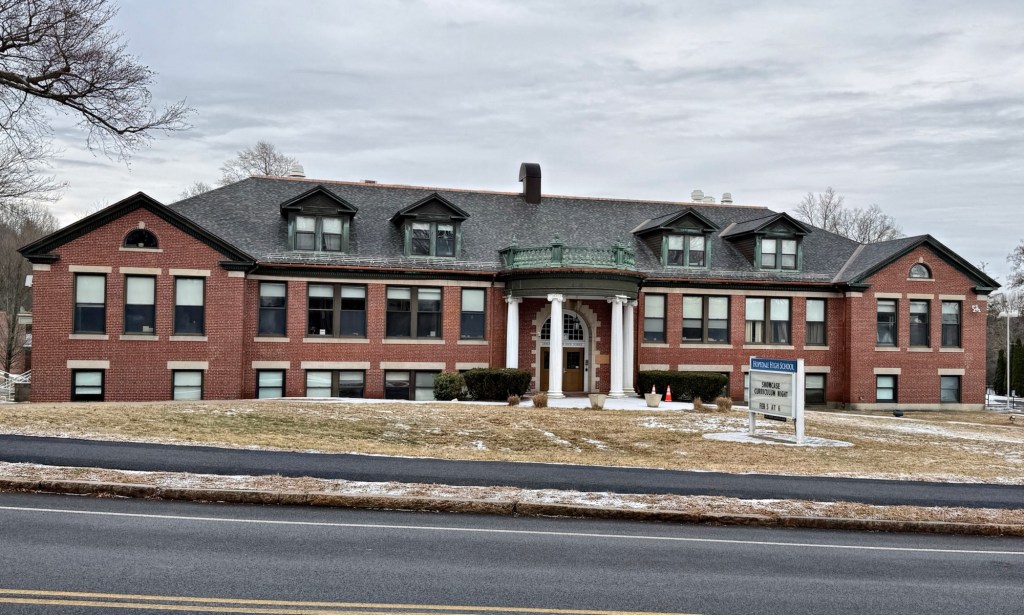
The General Draper Memorial High School is one of the many civic and institutional buildings in Hopedale Village that were donated to the small industrial community by members of the wealthy Draper Family, who operated the Draper Corporation Factory in town. The school was built in 1927 on land donated to the Town by Princess Margaret Bonocompagni, the youngest child of the late William F. Draper, who married Prince Andrea Boncompagni of Italy in 1916. The marriage ended in divorce by 1924 and years later, she had no need for the family home in Hopedale, and bequeathed the site to the community for a new high school in memory of her late father. General William Franklin Draper (1842-1910) was a Civil War veteran who became a politician and managed the Draper company in Hopedale, where he built a massive mansion for his family. The mansion was demolished and replaced by this Colonial Revival style High School, designed by New Hampshire-based architect, Chase R. Whitcher, the handsome structure has since been expanded at the rear to service the growing student population in town.
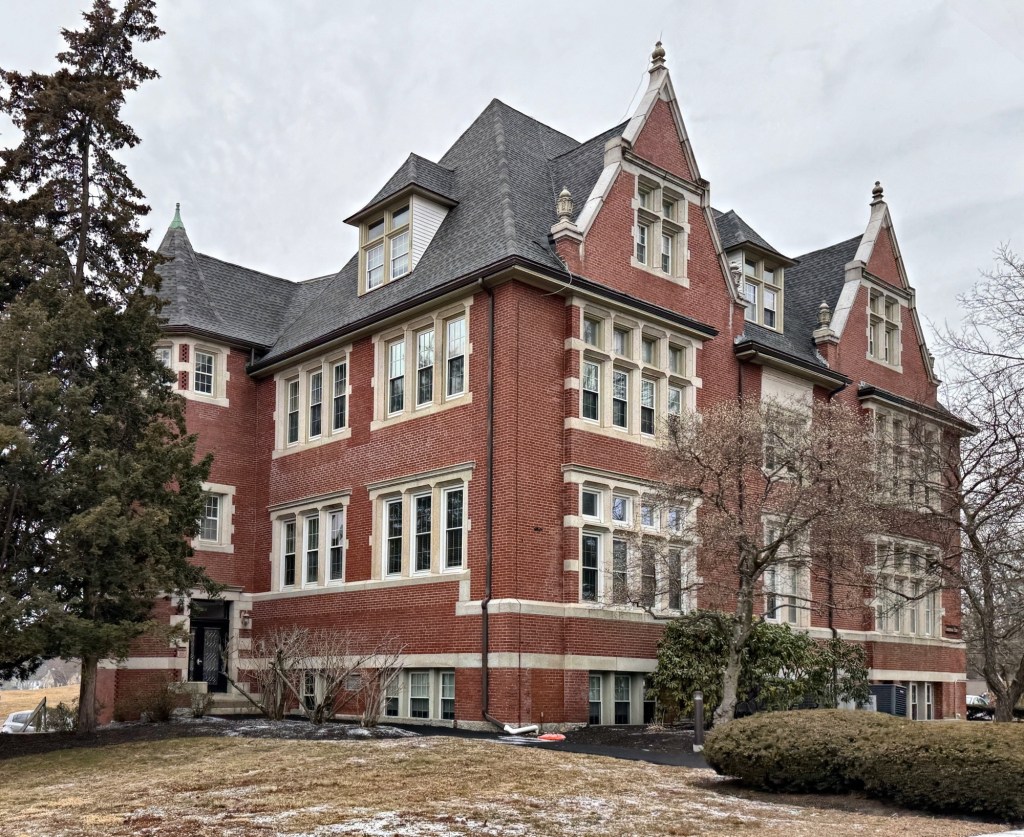
The former Dutcher Street Grammar School in Hopedale, Massachusetts, is a great example of a Tudor Revival/Chateauesque style public school building that has been adaptively reused. Built in 1897, the Dutcher Street School was designed by Charles Howard Walker of the firm, Walker & Kimball, at a cost of $40,000. The school is built of red brick with granite trimmings and is one of the finest late-19th century school buildings in the state. The school closed in the late 20th century after the Draper Factory, the largest employer in town, closed in 1980. Instead of being demolished, the Dutcher Street School was renovated and given an addition to convert the building into condominiums, a great example of adaptive reuse!
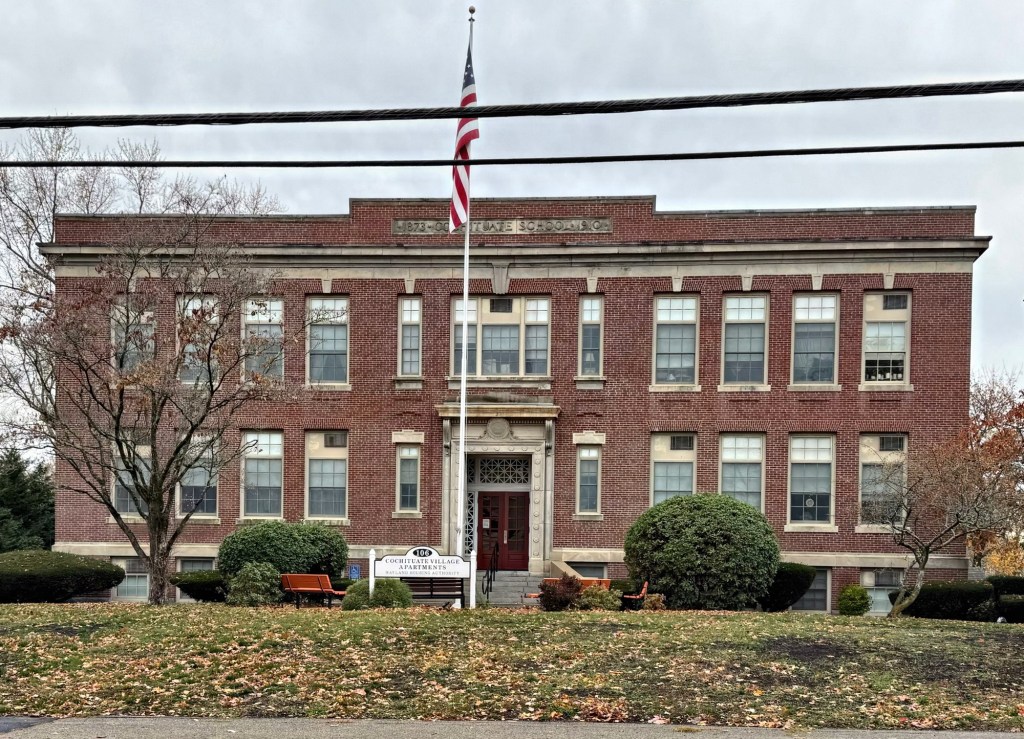
The Cochituate School in Wayland, MA, was built in 1910 to educate the Cochituate Village’s growing student population. The industrial village was dominated by shoe manufacturing with workers largely consisting of first- and second-generation European immigrants who moved to New England for work. Boston architect, Willard P. Adden, designed the school, which replaced an earlier schoolhouse on the site that was outgrown. The two-story, brick school was expanded following WWII, when a long rear ell with classrooms and a cafeteria was designed by Perry, Shaw & Hepburn. In the 1990s, the old Cochituate School was renovated and converted to senior housing administered by the Wayland Housing Authority.
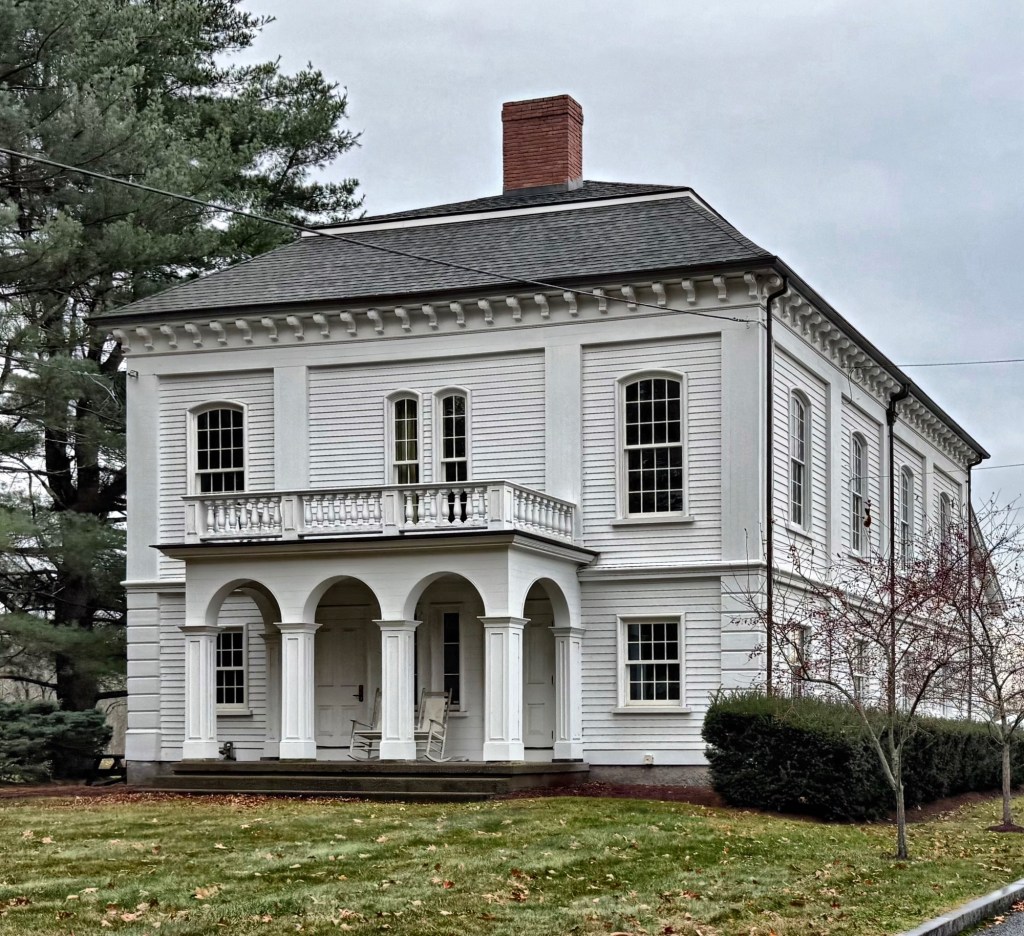
In 1854, at the annual Town Meeting at Wayland, residents voted to build the community’s first High School, this structure, which was completed in 1855. The roughly square building is Italianate in style with the round arched windows and bracketed cornice, but with some holdover features common in Greek Revival architecture, including the tall pilasters dividing the bays, and projecting portico supported by square paneled columns. A few years after opening, the new High School was so underused, the local grammar school held some classes here. By the 1880s, high school students were sent to school outside of town. As the town population began to increase and the size of the student body necessitated a new high school. The town considered repair of this building, which had suffered from neglect, or construction of a new building. In the end, money was appropriated to build a new High and Grammar School in 1896. The town had the first school moved slightly on the town lot to allow space for the new, second school, and sold the 1850s schoolhouse to the local chapter of the Independent Order of Odd Fellows, known as Pequod Lodge. The second high school was demolished in 1978, over a decade after the present High School was built by The Architect’s Collaborative (TAC). In 1978, the Old Wayland High School was sold to the neighboring Trinitarian Church and has been used for administrative purposes and church meetings.
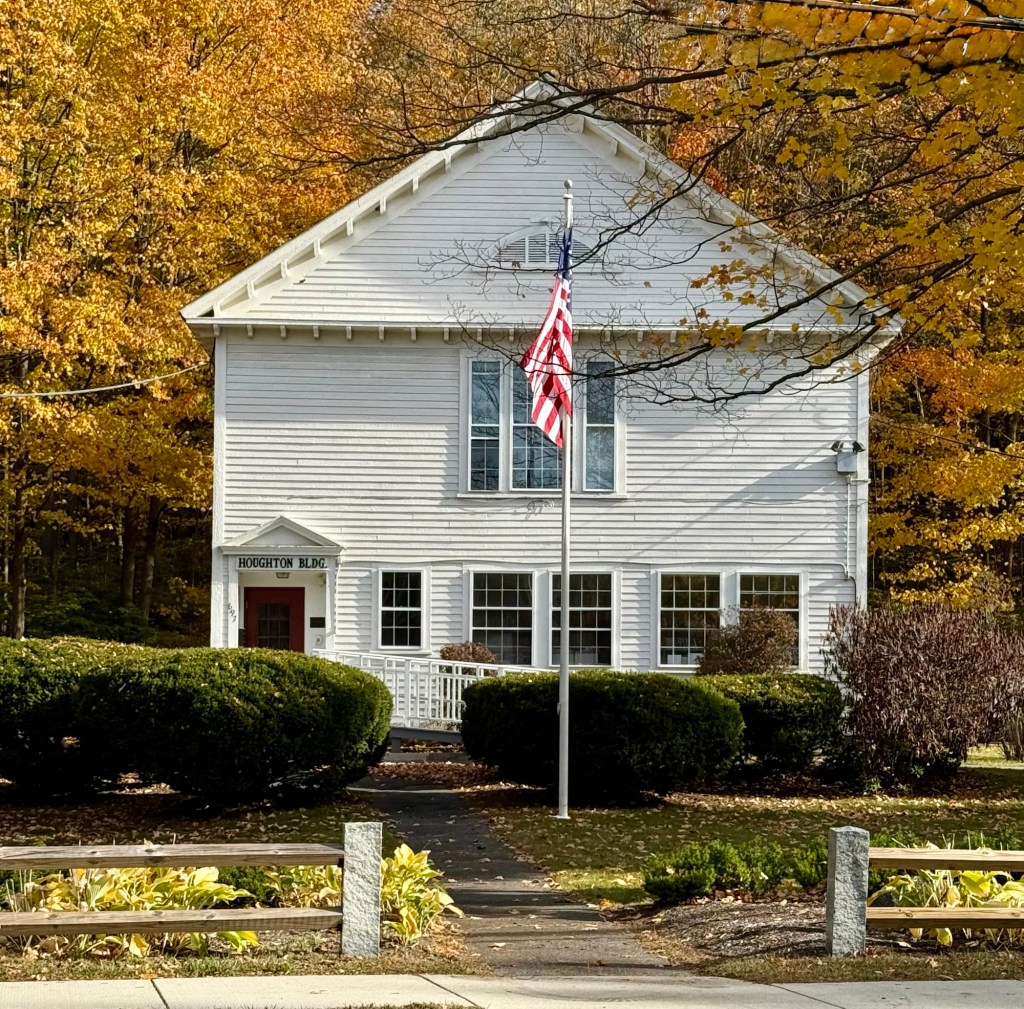
In 1849, the Town of Bolton, Massachusetts, built its first high school, the Houghton School at 697 Main Street in the town center. Blending Greek Revival and Italianate styles, similar to Bolton’s 1853 Town Hall, the Houghton School is a large, two-story, pedimented building of wood-frame construction. Interestingly, the school was largely funded privately by a local resident, Joseph Houghton (1772-1847), who in his will, bequeathed land and $12,000 for a public high school for the town. By the terms of the donation, nine men (all of whom had at one time served as a Bolton tax assessor) and their descendants, were barred from attending the school for a hundred years. Questions about the bequest were put before the Massachusetts Supreme Court, which disallowed this clause. An additional requirement, stipulated that no teacher could serve there longer than two years. That restriction was eventually put aside in the early 20th century. In 1917, the high school was discontinued. The fenestration was likely altered around this time. Bolton began sending its high-school students out of town to a school of their choice, and the Houghton School became the Bolton junior high school. In 1970-71, the building was converted to town offices, with the Town Clerk and Assessor on the first floor and the Police Department on the second. Since 2012, the building houses Bolton Access TV, as well as The Conservation Trust and Friends of the Bolton Library.
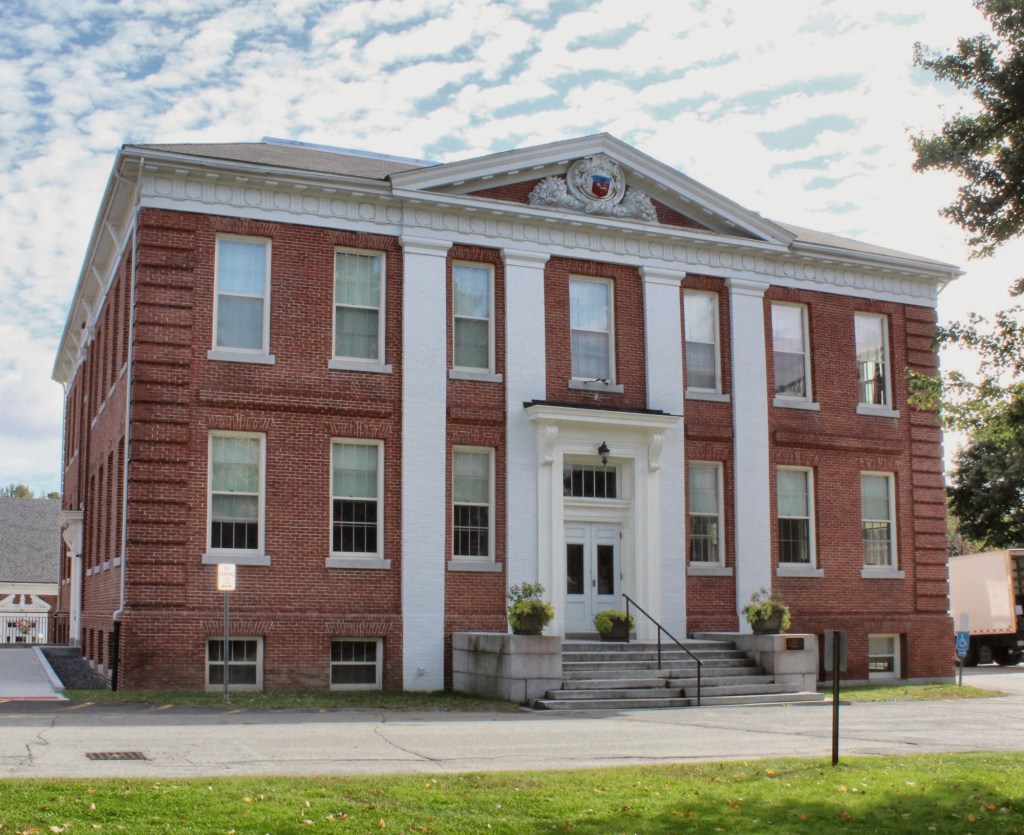
Located across the Town Common from the iconic Bulfinch Church in Lancaster, Massachusetts, this handsome 1904 Colonial/Classical Revival style school building was designed in response to its neighbors and Colonial context of the town of Lancaster. At a Town Meeting in 1903, a local building committee determined that “Bulfinch Colonial” would be the best style for the architecture for a new high school that would be built in the town center, with Herbert Dudley Hale, selected as the architect for the planned two-story brick building. The Center School had been used continuously as a public school until 2001, when it outlived its utility as school facility in town, which was vacated for years until grant funding and a restoration of the building, now known as the Prescott Building, for Town Offices, including the Lancaster Historical Commission. The facade is dominated by its seven-bay symmetrical façade featuring brick corner quoins, double-door entrance, and two-story white-painted brick pilasters framing the entrance and “supporting” the pediment that contains the town crest in high-relief.
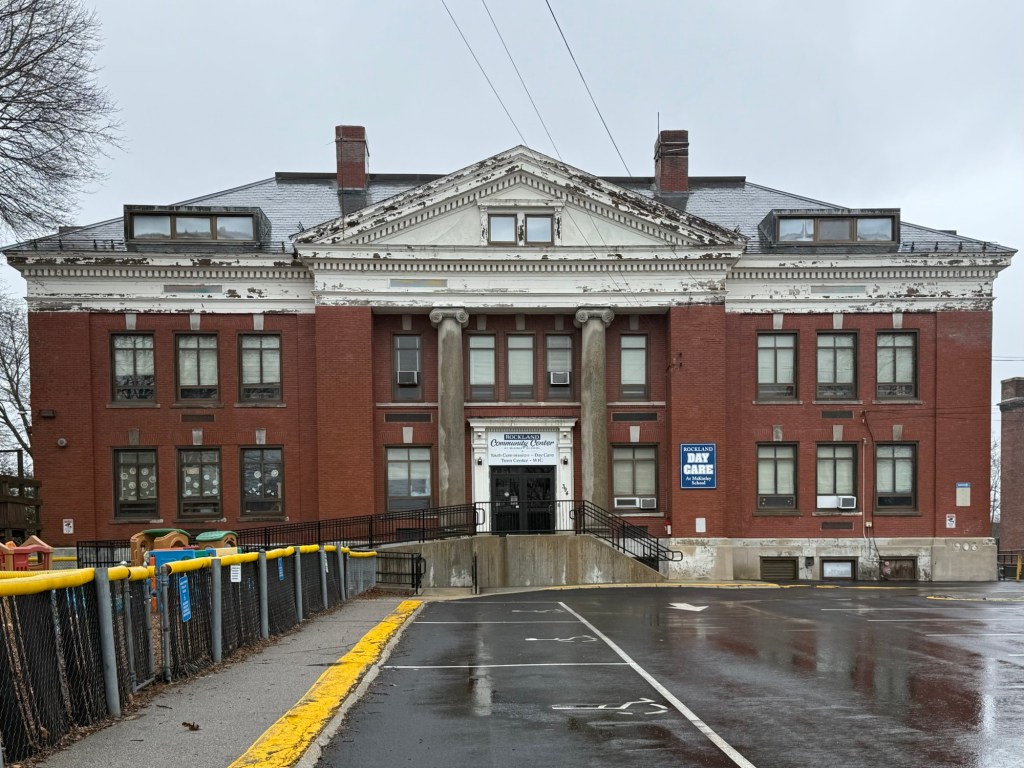
Rockland, Massachusetts, was incorporated in 1874 as the result of a dispute over the construction of an expensive school building in Abington Center in 1871 and the belief that East Abington could develop into a more successful industrial community if separate from Abington. By the turn of the 20th century, there were approximately 900 children in Rockland between the ages of 5 and 15 who were being educated in the local school system, largely comprised of first- and second-generation immigrants, arriving to the area to work in shoe manufacturing. Many smaller, schools dotted the landscape until a larger, consolidated school was built 1892. Decades later, prosperity and a growing population necessitated a new school, and the architectural firm of Cooper & Bailey, designed the town’s first brick school building. Classical Revival in style, the building features a prominent pediment supported by two, two-story Ionic columns and dentilated cornice. The building is now a community center – housing a day care, pre-school and meeting spaces for Girl Scouts. The building also housed Rockland’s senior center prior to the construction of a new senior center elsewhere in town. It suffers from deferred maintenance and is in need of some attention.
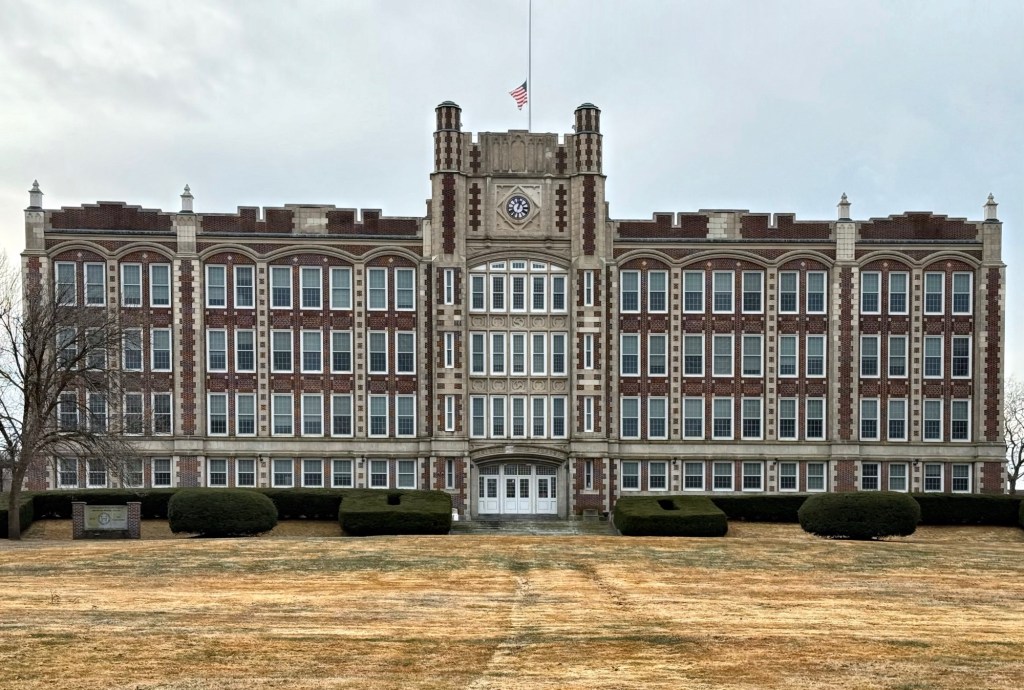
The Old Chicopee High School building is located at 650 Front Street, between the two major population hubs of Chicopee Center and Chicopee Falls and is one of the finest examples of Collegiate Gothic/Neo-Gothic Revival architecture in Massachusetts. The school building was constructed in 1917 from plans by architect, George E. Haynes as a central high school, a single building where pupils from all over the city could be educated. The population growth of Chicopee in the early decades of the 20th century necessitated additions and reworking of the spaces of the building, eventually outgrowing the building after WWII. In 1961, plans for a contemporary high school were completed and this building became a middle school for the City of Chicopee. Architecturally, the building stands out for its siting and high-quality design. The main facade features a central clock tower which contains the main entrance. The use of brick with cast stone trim and the castellated parapet add much dimension to the large building. The City of Chicopee have done a commendable job maintaining this important landmark.
 Buildings of New England