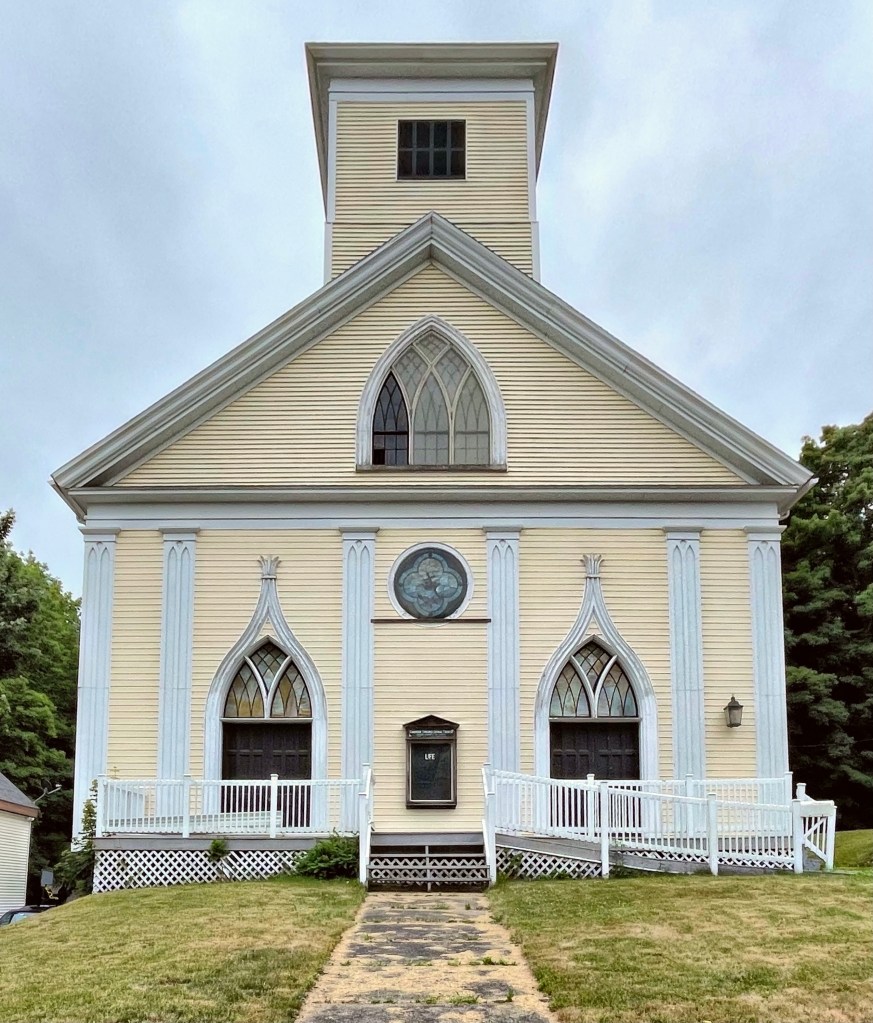
Gardiner Universalist Church // 1843

This stunning Gothic Revival church was built in 1843, on the site of the blockhouse, erected 80 years prior for the settlers of the area from native attack. In the 17th and 18th centuries, many rural parts of New England had blockhouses erected to allow the settlers a defensive fort from attack. The blockhouses were often garrisoned wooden structures with small windows on all sides to allow for gunfire to attackers below. The structure would protect those inside from arrows and melee weapons. This building however, was constructed later for the Universalists, who believed in “universal salvation,” who had been meeting since 1821 in a schoolhouse beside the town common. The church, in its original state with its steeple and clock, was an extremely sophisticated example in wood of the Gothic Revival style with its pinnacles, lancet windows and pilasters. Sadly, the steeple and clock were removed in the early 1920’s for safety reasons as the structure could not support it without significant engineering. The church and congregation changed to the United Church of Christ-Congregational denomination in 1964. After that, the building was occupied by a brewery (believe it or not), before being reverted back to a church by the current congregation.

Hartley Jewett House // c.1895 //

This stunning Queen Anne home in Gardiner, Maine, overlooks the Kennebec River from its high position on a hill. The home was built for Hartley Jewett, who ran a busy lumber mill in town, which sold long lumber, laths, and shingles, some of which ended up on his own home. Maine was huge in the lumber industry, and it’s vast forests were often cut and sent down to cities like New York and Boston on rail to supply their own building booms.

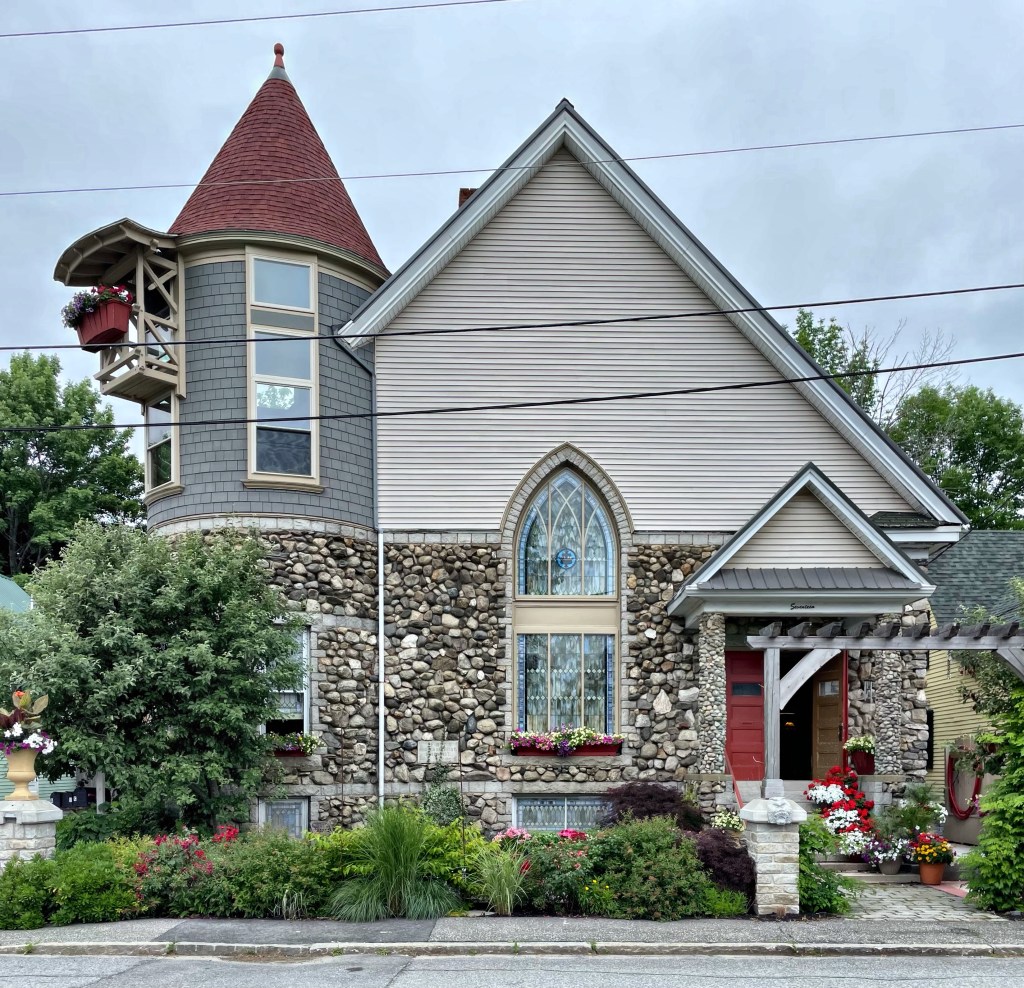
Christian Science Church, Gardiner // 1905

The first purpose-built Church of Christ, Scientist church in Maine is this turn-of-the-century edifice constructed in 1905 in Gardiner. Organized in 1897, this Christian Science Society of Gardiner met for several years in members’ homes and public places nearby until Palmer Noyes and his wife Caroline funded the new building. Caroline and Palmer helped establish the first such church in Chicago, after the couple witnessing a ‘healing’ and then heard Mrs. Mary Baker Eddy lecture in 1882. This church in Gardiner was seemingly designed by Caroline, who was likely inspired by architectural influences on the churches in town, from Gothic style lancet windows, to the shingle style facades. The building was eventually converted to a development center for the disabled, and is now known as “The Stone Turret”, a bed & breakfast, with amazing stained glass windows!

Governor Henry Lippitt Mansion // 1865

North (secondary) facade

New England is lucky to have so many diverse house museums where architecture and history nerds like me can tour old houses and envision what it was like to live in that era. The Governor Henry Lippitt mansion in Providence stands out as one of the most significant Victorian-era homes in Rhode Island, and contains one of the best-preserved Victorian interiors in America. The mansion was likely designed by local architect Russell Warren, and modified by Henry Lippitt (1818-1891), heir to one of Rhode Island’s leading textile manufacturing families, for his wife Mary Ann Balch (1823-1889) and their six children who survived to adulthood. While Henry was a prominent businessman, his wife Mary may have been even busier. Mary owned and managed rental properties in Providence, including this mansion, giving her husband Henry life tenancy. She oversaw day-to-day running of the mansion, supervising the servants while teaching her daughter Jeanie, who became deaf at age four due to complications from scarlet fever, to read lips and continue to develop her speech. The Lippitt Mansion is an early, and high-style example of an Italianate Villa/ Renaissance Revival design, which moved away from the more prescribed forms of architecture towards the more eclectic, Victorian-era mode. The home features two main facades, with the smaller, west (main) facade featuring a central pavilion with ornate foliate frieze and Corinthian columns, and the north (side) facade – my favorite – with a more commanding presence with a bold porte-cochere. The home remained in the Lippitt family for 114 years, and was later acquired by Preserve Rhode Island, who opened it to the public as a museum in 1993.

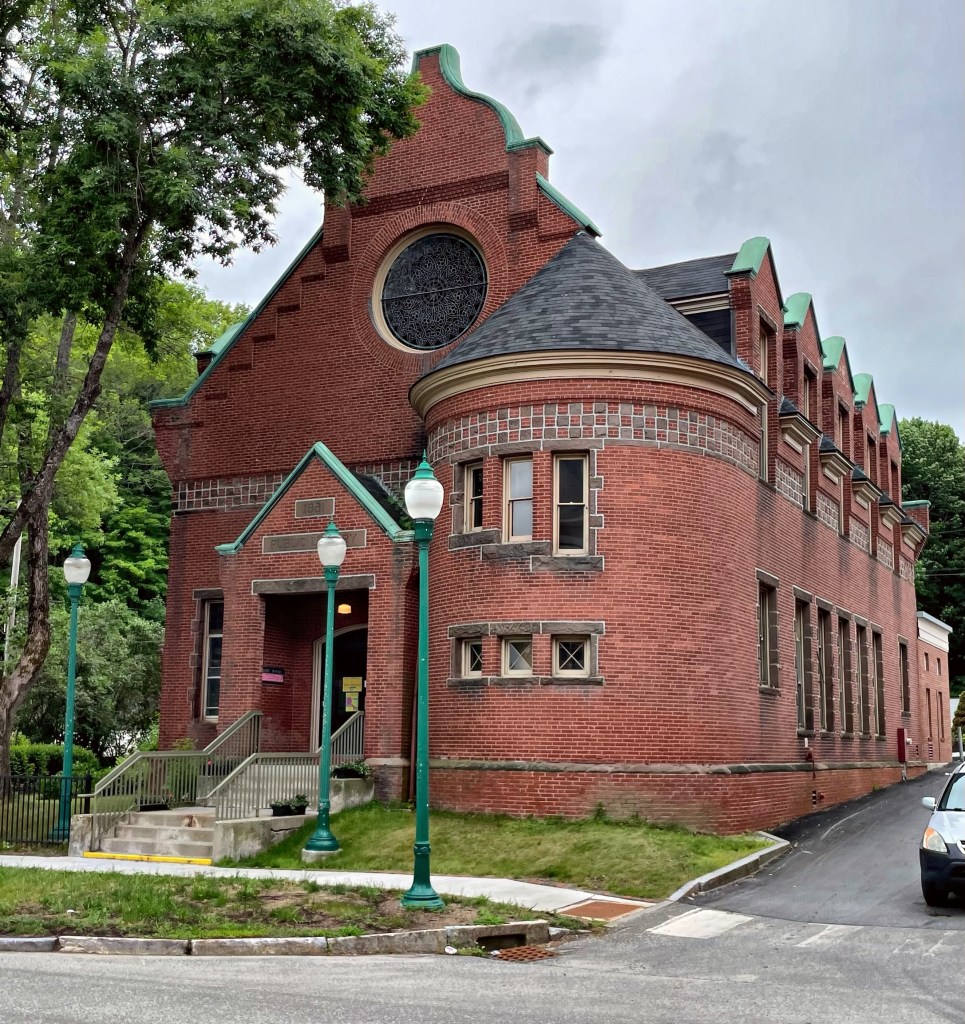
Gardiner Public Library // 1881

Possibly my favorite building type, the local town library buildings of New England, always amaze me with their small scale, yet architectural variety and intrigue. The library in Gardiner, Maine is no exception! This library building was constructed in 1881 from plans by Henry Richards, who was actually born in town in 1848. Henry graduated from Harvard in 1869, and soon after, took a post-graduate course in architecture at MIT. After completing schooling, he was a draftsman with Ware and Van Brunt. Soon after, he was a draftsman with Peabody and Stearns from 1872 to 1876, and then practiced architecture briefly on his own in Boston. During this time he married Laura Elizabeth Howe, daughter of Samuel Gridley and Julia Ward Howe. They moved to Gardiner, Maine and settled in a Federal house (featured previously), to learn more about Laura Richards and their house, check out the last post. Henry lived to be 100 years old! The library building is Queen Anne and Romanesque in style with a round corner tower with conical roof, brownstone and brick construction, and a stained glass ocular window with ogee parapet at the gable end roof. The small local library was added onto numerous times to hold a growing collection which includes works from Laura E. Richards, and Edwin Arlington Robinson, both Pulitzer Prize winning authors who lived in town.

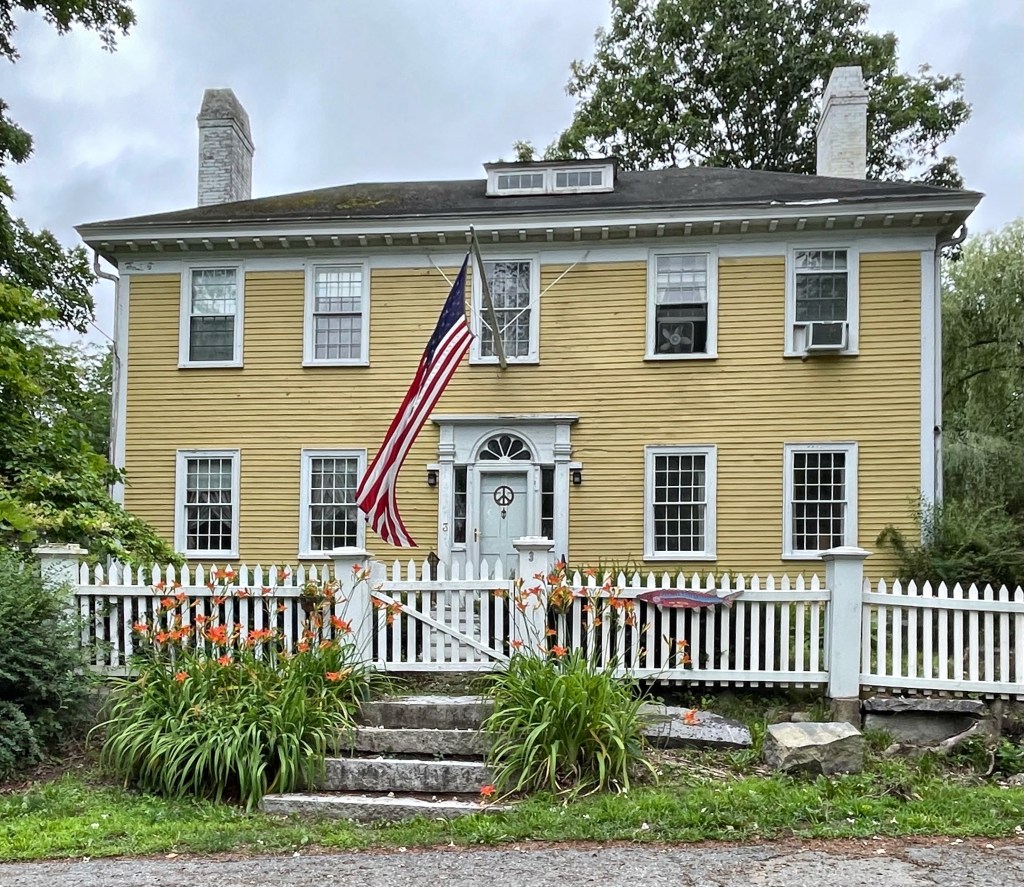
Laura Richards House // 1810

This stunning Federal style house in Gardiner, Maine, was built about 1810 by Ebenezer Byram, who had purchased the land from Robert Hallowell Gardiner, a descendant of Dr. Sylvester Gardiner, the “founder” of the town. Dr. Gardiner was a resourceful Boston druggist, who was one of the principal owners of the Kennebec Purchase, known as the Plymouth Company, who purchased land on the west side of the Kennebec River in Maine. Dr. Sylvester Gardiner had been attracted to the Gardiner area for a number of reasons, primarily because of the depth of the water of the river to the point of Gardiner as the head of navigation for ships here. This house overlooking that river was purchased in 1878, by Henry and Laura E. Richards. Laura Richards (1850-1943) was the daughter of Samuel Gridley Howe, an abolitionist and the founder of the Perkins Institution and Massachusetts School for the Blind. Her mother, Julia Ward Howe wrote the words to The Battle Hymn of the Republic, a tune that I am sure most of you have heard of, but never knew the name. Henry and Laura moved to Gardiner in 1876 after suffering financial reverses in Boston, where Henry worked at his family’s paper mill, and it was about that time that Laura Richards began her writing career. At this house in Gardiner, Laura wrote more than 90 books including biographies (including one on her mother), poetry, and several children’s books. Even more impressive, Laura was awarded one of the first four ever Pulitzer Prize in 1917 for her biography on her mother, years before women were even afforded the right to vote!

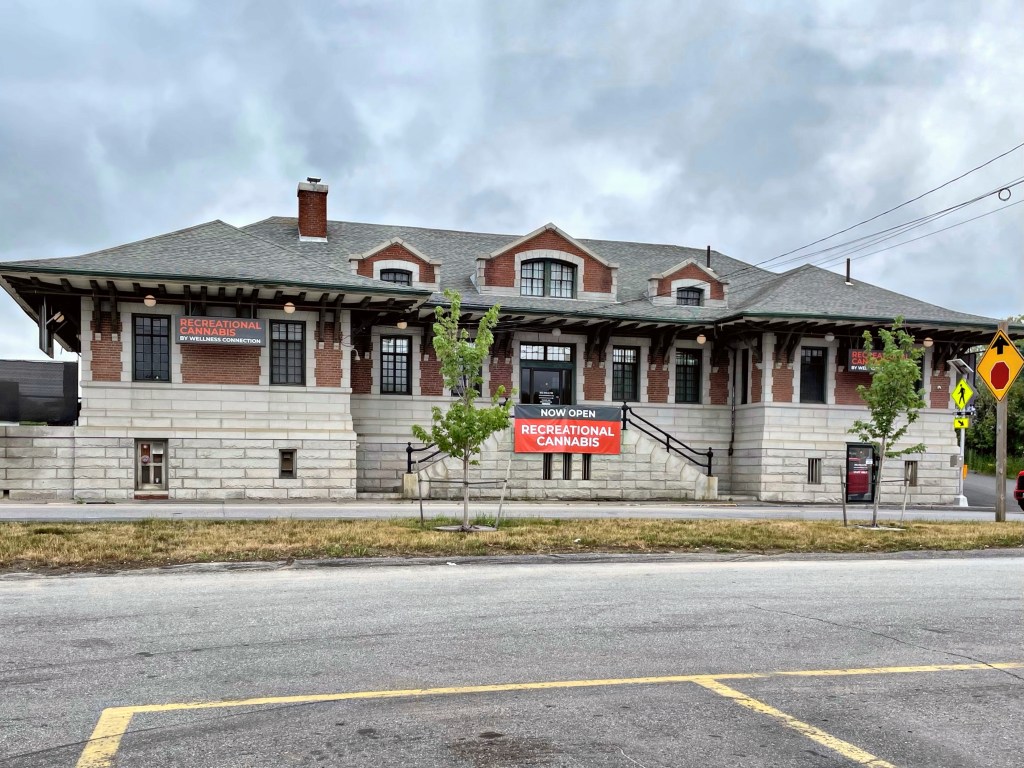
Gardiner Train Depot // 1911

The first train arrived in Gardiner, Maine in 1851. Rail here introduced a new mode of transportation for passengers and freight, which previously relied on horse or ship up the Kennebec River. When the old station was deemed too small and outdated, the Maine Central Railroad Company decided to hire Portland architect, George Burnham to complete plans for a more fitting station. This building is a mix of styles, the two I would categorize it as are Romanesque Revival and Spanish Revival. The building incorporates a number of influences of the two along with a deep overhanging roof supported by large brackets, heavy rusticated granite blocks at the base, and quoining around the windows and corners. The station was in operation until about 1960 when rail service here halted. Since that time, the building has been adaptively reused as a retail store, today as a recreational cannabis dispensary. So you can get high and look at cool architecture!

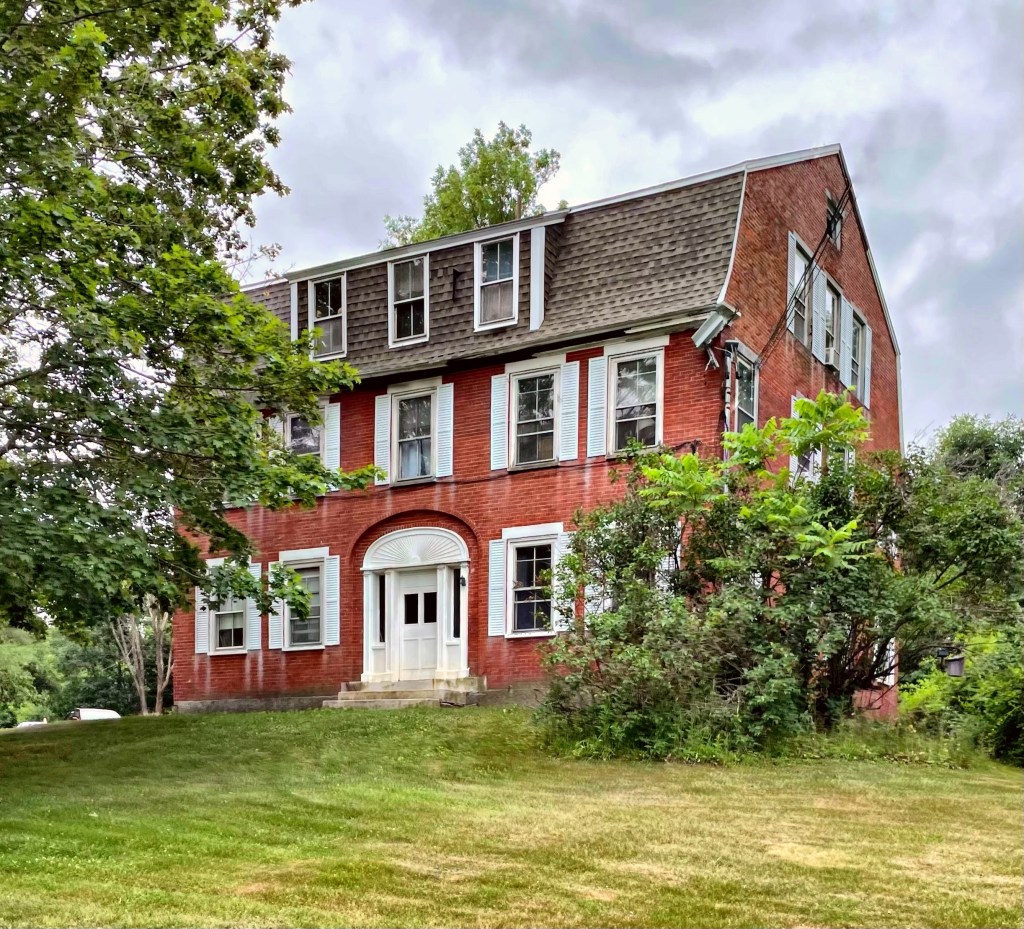
Gardiner Almshouse // 1834

This large brick Federal house was built on the outskirts of Gardiner, Maine, in 1834. Ebenezer Moore, the builder, worked as a carpenter and house-wright in town and showcased his skill on his own brick mansion, selling it to a C.E. Bradstreet. By the late 1840s, the town of Gardiner decided that it would need a new almshouse, city-provided housing for the poor, so they purchased the Bradstreet house and 14-acres of land. In the 1848 town report documents noted, “The establishment is a brick one, of two stories, containing thirty-six fine rooms, including seven fitted for the insane in the most admirable manner, together with a spacious hall. The building is every way a most excellent one for the purpose, and is a monument of the humanity and generosity of the city.” The almshouse served as a working farm where the poor could harvest their own crops and contribute in a small, closed society. The almshouse burned in 1909, and was immediately rebuilt using the outside brick walls. In the Colonial Revival manner, a gambrel roof replaced the former gable roof, which added a third story to the almshouse. The building was eventually sold, as new housing models for low-income residents took off. The former almshouse was converted to an apartment building in 1970, a use that appears to continue to this day.

Tucker Octagon House // 1856

The Octagon form of architecture was conceived in 1848 in the prolific mind of Orson Squire Fowler, phrenologist and author of books on sex, family relations, and many other subjects. His book A Home for All, or, the Gravel Wall and Octagon Mode of Building struck the fancy of a certain few, and Octagon homes were built across the country, for just about a decade until they fell out of favor almost overnight. This home in West Gardiner, Maine, was built by Jesse Tucker in 1856 on land his father had cleared, replacing a more standard structure. The new octagon house was being constructed as a gift to Jesse’s soon-to-be wife, but tragically fell from the roof of the barn when building, and died. The home was completed, and it was seemingly acquired by Jesse’s twin brother David. The home remained in the Tucker family until the 1950s.

Captain Nathaniel Stone House // 1872

The Captain Nathaniel Stone House in Farmingdale, Maine was constructed in 1872 on a small plot of land overlooking the Kennebec River. The charming home was constructed by Nathaniel Stone (1797-1884), a retired ship chandler,(a dealer in supplies or equipment for ships) who moved back to his hometown after making his fortune in Boston. He lived here with his wife, Martha, and his adopted son, Uriah, in this fashionable Second Empire style. Nathaniel died in 1884, outliving his wife by two years. The property was willed to his adopted son Uriah, who quickly sold the home on account of him seeing ghosts inside, he refused to live there because of it. The home was acquired by William Ring, a businessman who owned real estate in nearby Gardiner, Maine. Between 1886 and 1912 he and his family resided at the former Stone House, but by the turn of the Twentieth-century he grew increasingly in debt, and on several occasions he borrowed against his property to meet his obligations. Before the home went up for auction in 1912, a massive fire broke out in the home, destroying all the interior woodwork, and William perished inside. Although significantly damaged, it was largely rebuilt to its original appearance by its eventual buyer and has been an architectural landmark on the Kennebec River ever since. Now that I think of it, maybe Uriah Stone could see the future and saw William Ring as a ghost!