Warren Town Hall // 1890

Warren, Rhode Island, is one of the lesser-visited coastal communities of the state, but retains one of the best waterfront historic districts in all of New England. With a small population of just over 11,000 residents, the downtown is extremely walkable with a tight network of streets, lined with stellar buildings and homes of nearly every architectural style and period, and are largely preserved showcasing what New England communities were like in centuries past. On bustling Main Street, the Warren Town Hall was designed by the Providence-based firm of William R. Walker & Son, architects, and constructed between 1891-1894. Designed in the Romanesque Revival style, the two-story building with five-story central tower also features Classical detailing like the terra cotta swags and brick pilasters. Before the 1938 Hurricane, the tower was even higher, incorporating an open stage topped by a parapet and a clock face on each of the segments of its still extant dome, which now has a slightly reconfigured mini-cupola topping. Additional detailing includes a terra cotta bust of the sachem/leader Massasoit with leafage, above a fluttering ribbon inscribed “Sowams,” the Wampanoag settlement that preceded Warren. The Warren Town Hall remains well preserved by the local government and a visual landmark on the town’s Main Street.

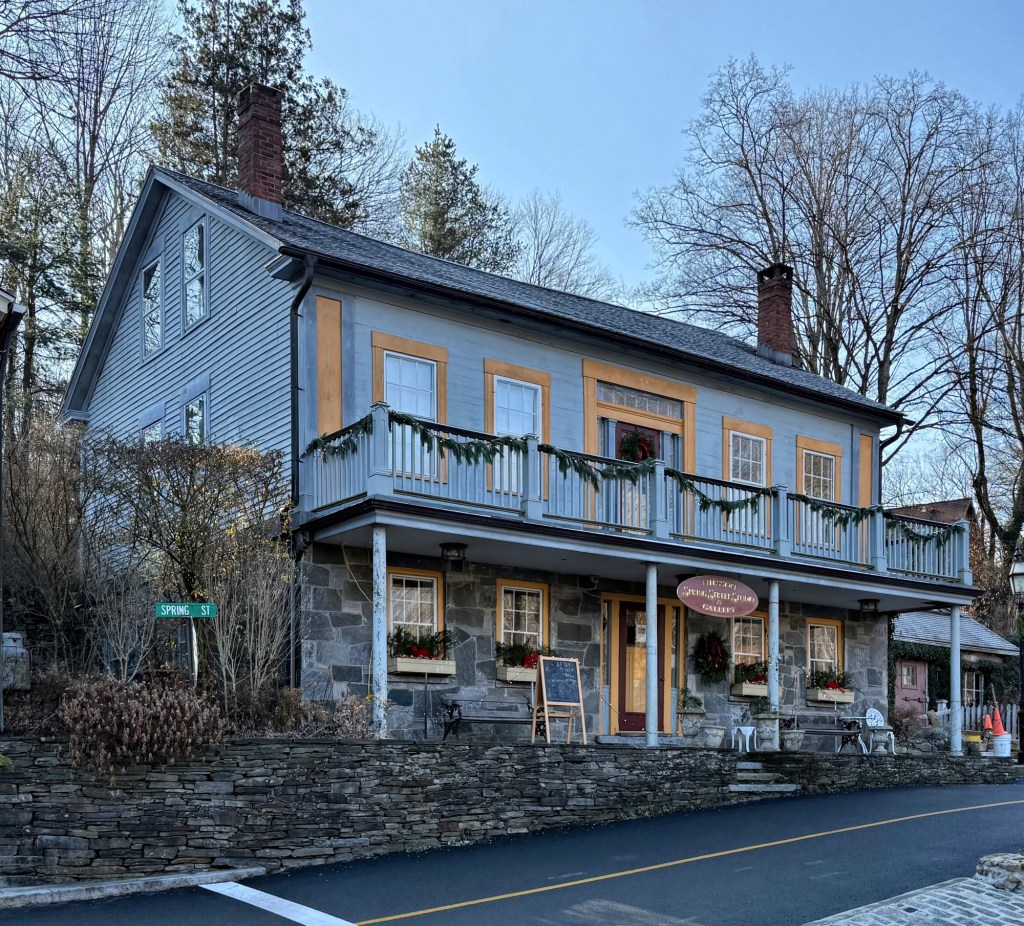
Chester House Hotel // c.1840

This altered building in the center of Chester Connecticut’s village Main Street, has historically been known as the Chester House, a hotel and tavern to provide lodging and drinks to travelers passing through the area in the mid-late 19th century. The structure, built atop a raised stone foundation, was constructed in the Greek Revival style around 1840, and long had a sheltered two-story portico supported by four monumental columns under a gabled roof which resembled a pediment. In 1903, a fire destroyed the upper floor and the roof was removed, creating a flat roof design. Later in the 20th century, a shallow side gable roof replaced the flat roof and the columns on the facade were also removed, giving the building the appearance we see today. The hotel closed, but the historic structure remains an anchor to the town’s vibrant commercial center, and houses a local business.

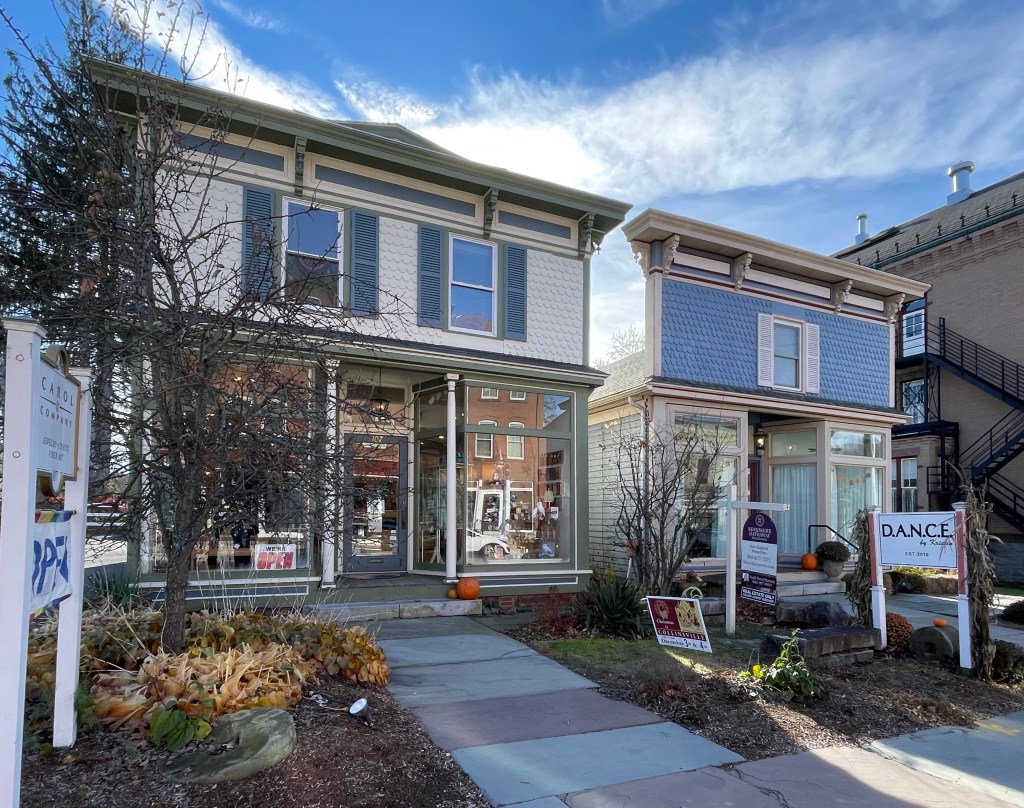
Collinsville Stores // c.1880

These two Italianate-style stores sit on Collinsville’s Main Street, a walkable main street village along the banks of the Farmington River. Each structure has a central, recessed entry with storefront windows meeting the sidewalk. One structure is two stories with a very shallow gable roof and the other is 1 1/2 stories with a false front. These false front facades remind me of old frontier towns in western movies, they are great!