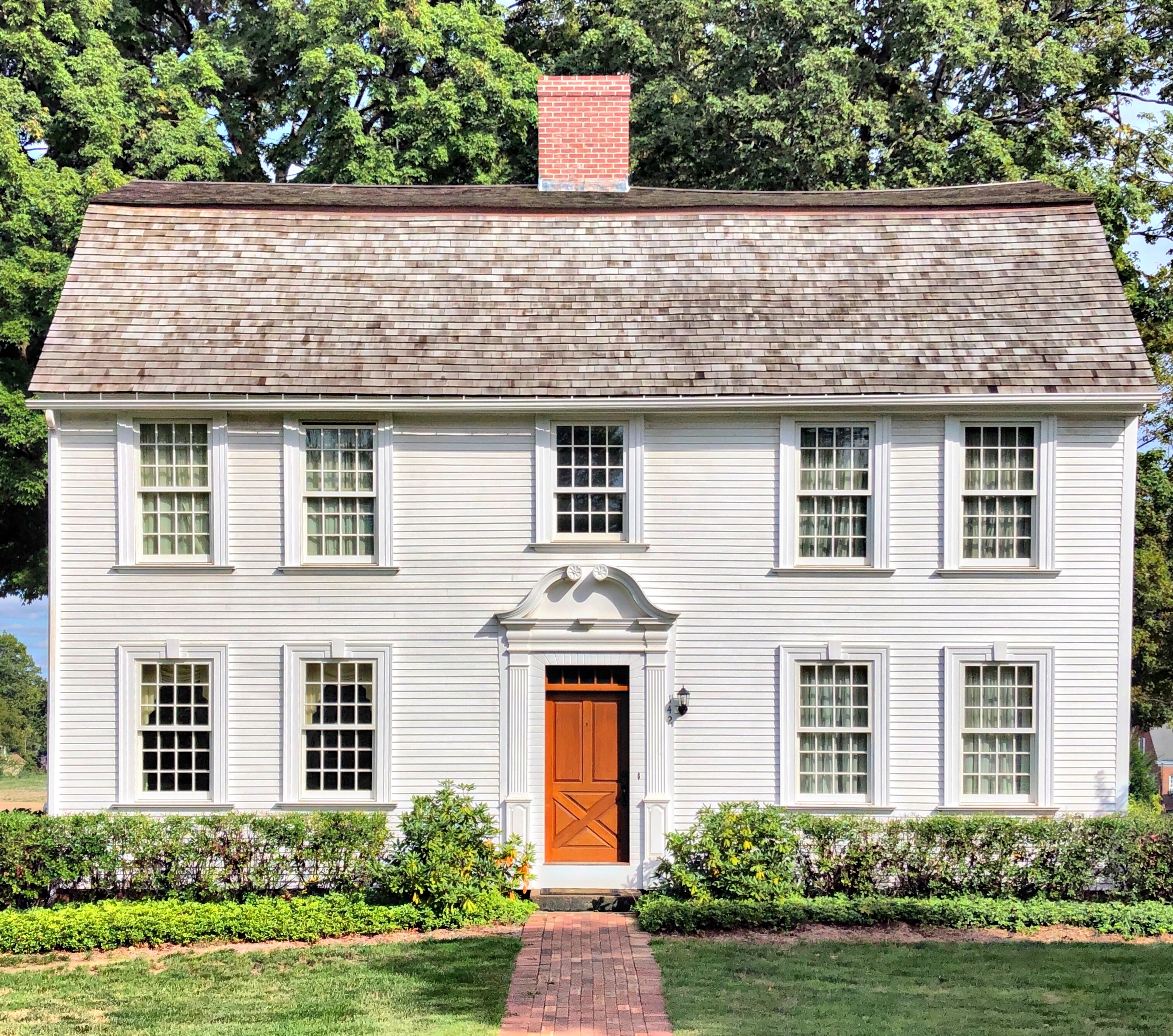
Gay Manse // 1743

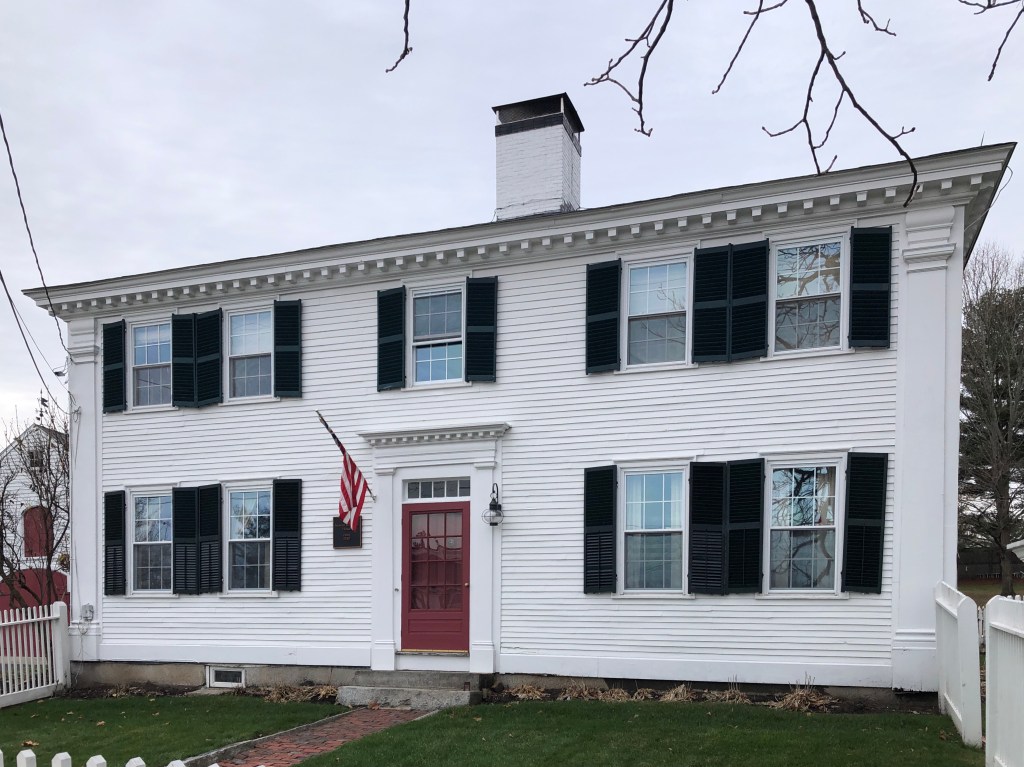
Ebenezer Gay (1718-1796), the third minister of the First Congregational Church of Suffield, was born in 1718 in Dedham, Mass. His father was a substantial farmer, and his uncle was the famous minister, Ebenezer Gay of Hingham. Young Ebenezer graduated from Harvard in 1737, and held his first preaching job three years later. Reverend Gay became a candidate for a pastor in the Suffield Congregation, becoming ordained in 1742. That same year he married his wife, Hannah, and they had this massive home built adjacent to the town’s church. Rev. Gay and his wife had no children, but had adopted a black girl “Sybil” who was baptized as the “child of Ebenezer and Hannah”. There were other black members in the Gay household in later years including Titus Gay. “Old Ti” was born in 1787, and lived nearly his entire early life in Suffield, CT. He was born to a family of slaves also owned by Reverend Ebenezer Gay, making him born into slavery. His mother, Rose Gay, was a princess in Africa, and his father was owned by Major Elihu Kent. Reverend Gay was the pastor of the church until his death in 1796. The home was later occupied by other pastors at the church, and was eventually acquired by Suffield Academy for use as housing. The gambrel roof Georgian mansion features a stunning Connecticut Valley doorway with swan’s neck pediment.

New Kimbell Building // 1902

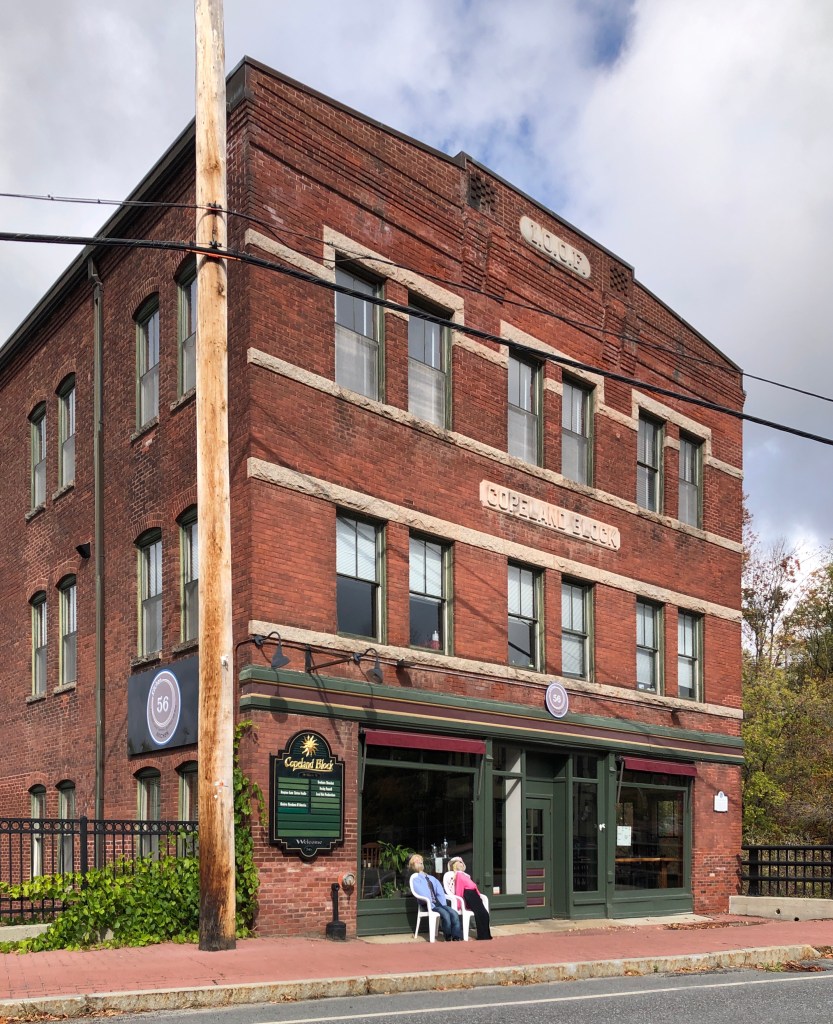
Located on Main Street in North Adams, you’ll find this monstrous commercial block looking like it belongs in New York, not in Western MA. North Adams in the early 20th century was booming as an industrial center with a rapidly growing population. Due to this, business owners had the capital and clientele needed to erect large commercial buildings. A man named Jencks Kimbell owned a couple large parcels of land on Main Street and ran a livery stable there until his death in 1858. The business was ran by his sons until their death and the property was willed to their widows Clara and Lydia who saw the potential for the site to make them money. In 1902, the two widows erected this magnificent block on Main Street, with a stone facade. Built on top of a quicksand pit, it was the first building in North Adams to be built on steel pilings. I could find no information on the architect, but it is Eclectic to say the least! It has Romaneque arches, monumental pilasters with Corinthian capitals, and a Swan’s neck broken pediment at the parapet.

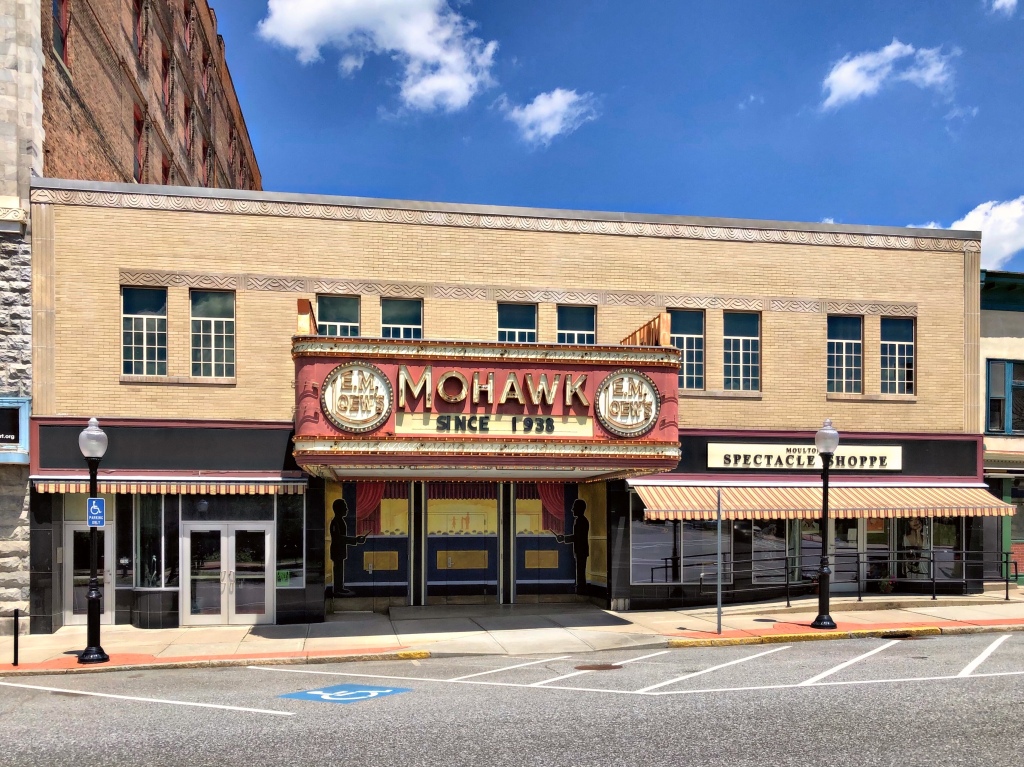
Mohawk Theater // 1938

Local theaters once dominated the urban landscape, providing flashing neon lights and marquees on Main Street USA. After WWII, many downtowns saw populations move to the suburbs and through the advancement in technology, many of these historic movie houses were demolished. Large cineplexes with 10+ screens were built, and the death of the small movie theater coincided with the death of many Main Streets in the mid and late 20th century. Fast forward to today, we see many Main Streets thriving (before the COVID crisis) thanks to women and minority-owned businesses investing in their communities.

The Mohawk Theater in North Adams was built in 1938 and is an excellent example of Art Deco architecture in Western Massachusetts. Loews Cinemas hired the Boston architectural firm of Mowl & Rand to design the 1,200 seat theater which also featured a Native American motif at the lobby. The theater was sold in 1987 to a private investor, who opened the theater for occasional concerts and films, but efforts to maintain the Mohawk were short lived. In 1991, its doors were closed for good.

Edgartown Customs House // c.1825

Edgartown in the early 19th century was booming as one of the major whaling towns in America. As goods were imported and exported in and out of the burgeoning town, a Customs House was required to essentially tax the goods. Until around 1825, the Customs House in Edgartown was located in private homes until the demand grew for a stand-alone structure on Main Street. This Federal style building was constructed to house a Customs office upstairs with two commercial spaces on the ground floor.

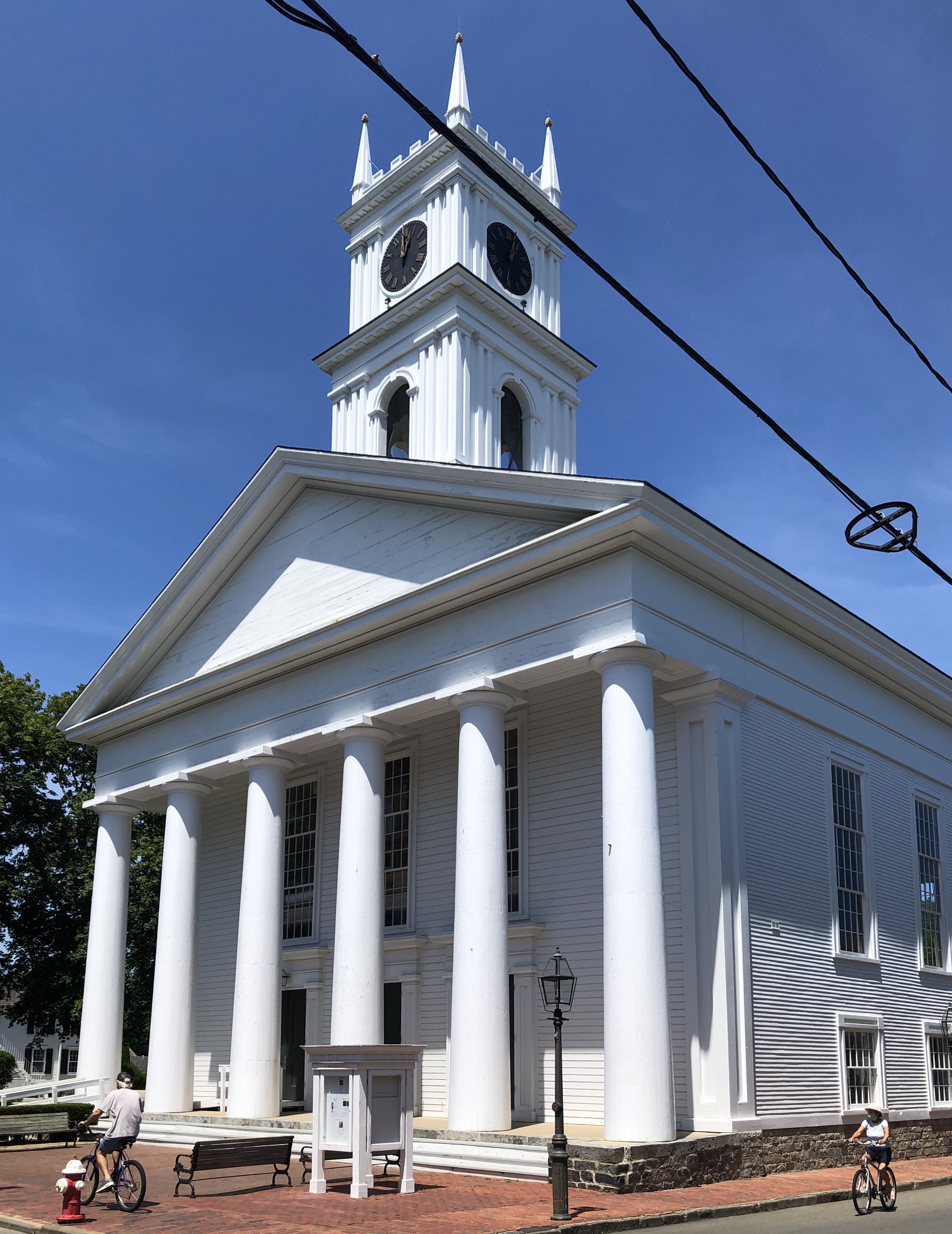
Old Whaling Church // 1843

Methodists on Martha’s Vineyard arguably left the largest lasting mark between religious groups on the island between Wesleyan Grove in Oak Bluffs and this stunning church in Edgartown. The Methodists in Edgartown grew with the success of the whaling industry there and their former church was outgrown, requiring a larger and more prominent worshipping space in town. Designed by Frederick Baylies, Jr., the Old Whaling Church was built by skilled shipwrights for Edgartown’s Methodist whaling captains and is regarded as one of the finest examples of Greek Revival architecture in New England. The Old Whaling Church was not only funded by mariners and those dedicated to seafaring trades, it was quite literally built by them, too. Baylies hired a crew of local carpenters who were equally as skilled in building churches as they were in constructing ships. The church is topped by a Gothic Revival clock tower which has crenellations, rounded arches, engaged pilasters, dentil cornice moldings and four spires capped with gilded acanthus leaf finials. The church was acquired by the Vineyard Trust in 1980, and they converted the old sanctuary into a performing arts space. The congregation meets in the former sanctuary in the summer months and in the vestry in the winter with its smaller numbers.