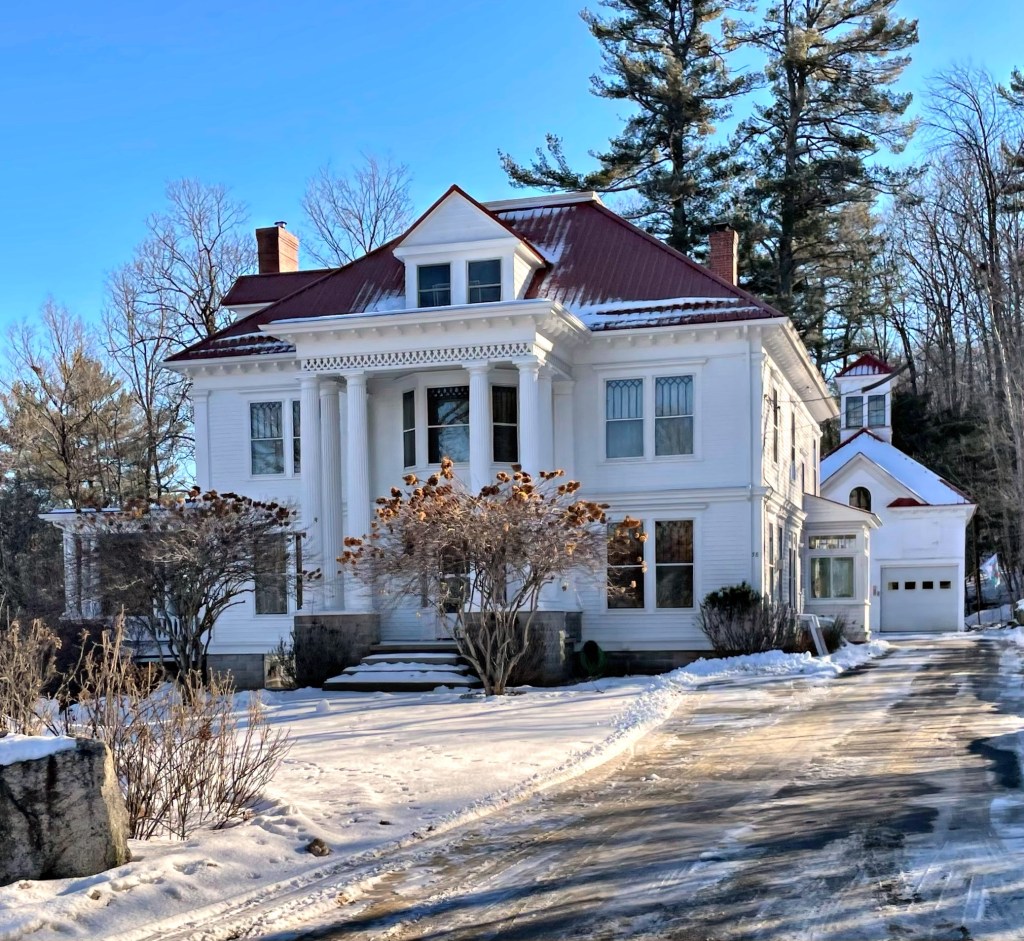
Francis Ashby Waldron (1816-1898) was born in Buckfield, Maine to an old New England family. He moved to Portland for job opportunities and worked as a merchant, eventually establishing Waldron and True with business partner Samuel True. The firm was engaged in dealing grain, salt, corn, and more. After a few years of profits, Francis had this Italianate style mansion built on the fashionable Deering Street just west of Downtown. The property was passed down to his children after his death in 1898, and it remained in the family until 1950. The house originally had a prominent belvedere at the roof, but it was eventually removed. The former Waldron House is now maintained as a law office.
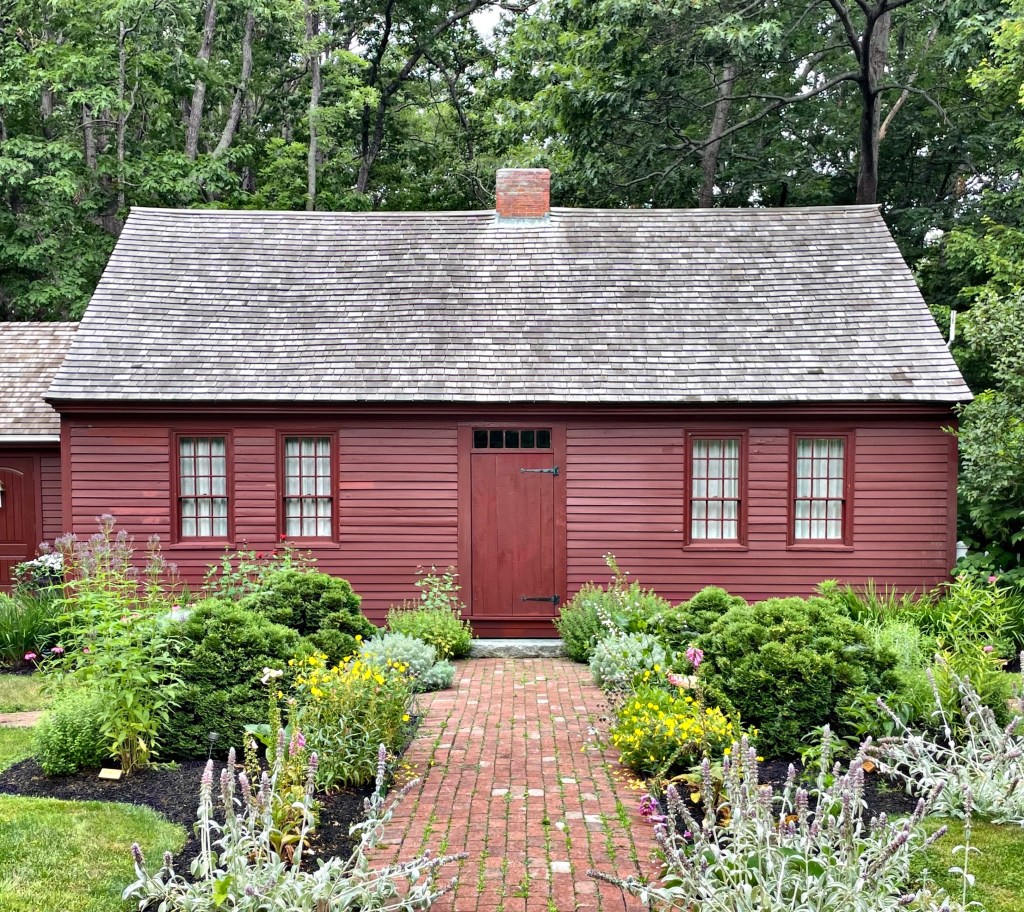
One of the oldest extant houses in the village of Ogunquit Maine is this charming Cape house thought to have been built in the 1780s. The house was later purchased by James Winn (1783-1861) and his wife Philadelphia Maxwell Winn (1785-1855), probably about the same time as the birth of their first child, James Winn Jr. in 1808. Both James Sr. and his son in 1846, launched a 161–ton brig out of Kennebunkport with Captain James at the helm. After several trips James Jr. succumbed to an illness that was aboard the vessel and died at the New York Marine Hospital. Over 150 years later, the house, largely untouched, was seemingly threatened by development pressure on the busy highway. In 1980, the home was donated to the town by then-owner, Phyllis Perkins, and moved nearby to a park on Obed’s Lane. It now houses the Ogunquit Heritage Museum.
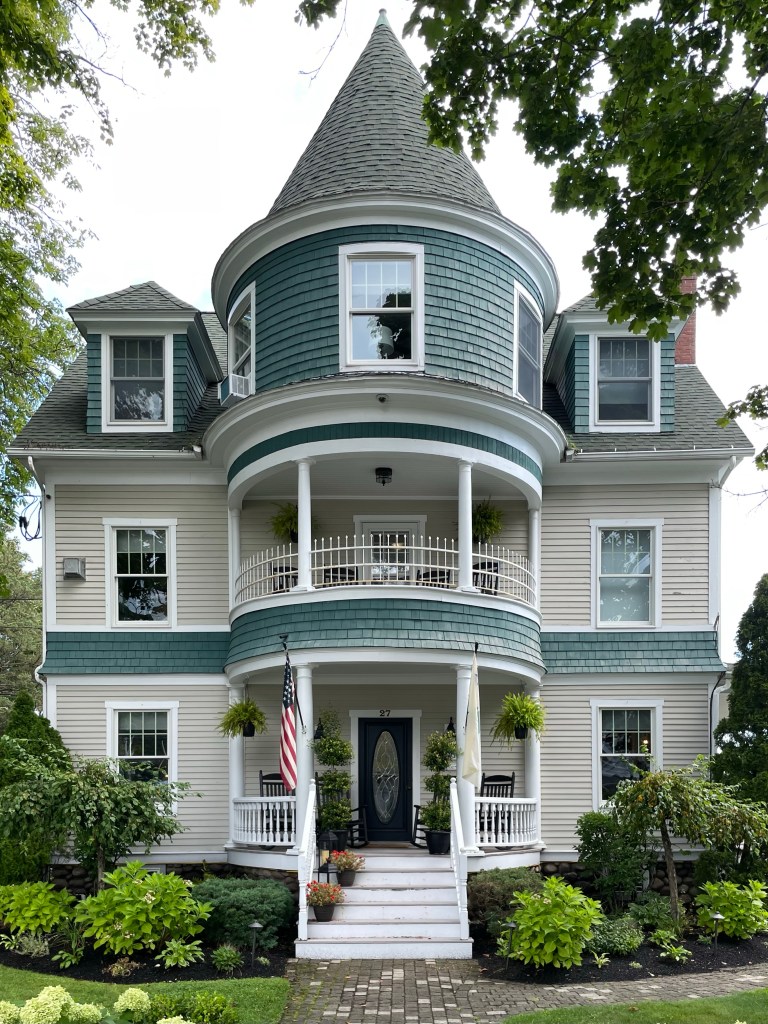
One of the most charming buildings in the quaint village of Ogunquit Maine has to be this Victorian inn, located right on Shore Road, the town’s main thoroughfare. The house had its beginnings in 1889 when Joseph H. Littlefield constructed it for his wife Ellen “Nellie” Perkins and their family of four children. Joseph was a member of the esteemed Littlefield Family, which goes back to before Edmund and Annis Littlefield and their six children traveled from England and settled in the town of Wells in 1641. The family was prosperous in the area, and Joseph used his wealth and position in local affairs to develop summer cottages and buildings at the beginning of the town’s large development boom in the late 19th century and early 20th, catering to summer residents and tourism. The Littlefield House was passed down to Joseph and Nellie’s children after their passing, last occupied by Roby Littlefield (1888-1988), who served in local and state politics. It was Roby who was instrumental to establishing the Ogunquit Beach District, which allowed the government to acquire the beachfront in Ogunquit, making it public. The old Littlefield House is now an Inn, known as the Nellie Littlefield Inn & Spa, and it retains so much of its original charm.
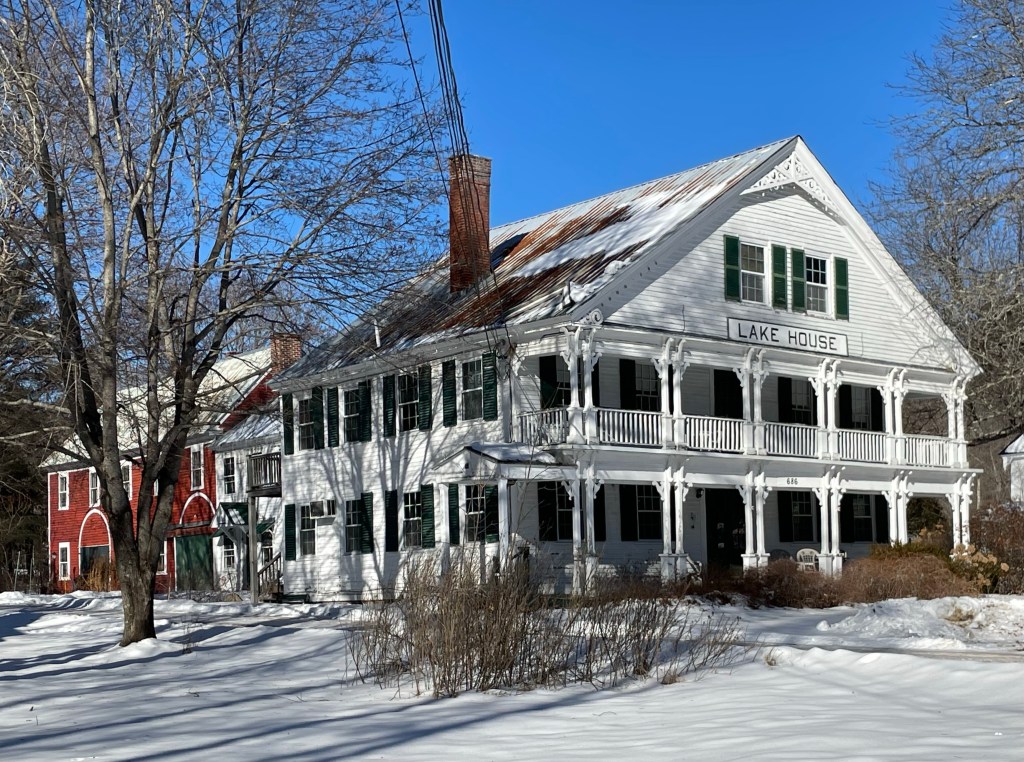
Eli Longley (1762-1839) came to Waterford, Maine by way of Bolton, Mass., in 1789 and erected a log cabin in town. As the first settler to build in this part of town, he owned a substantial piece of property, which was frequently travelled through as the area was being developed. Seeing a need for lodging, he built a one-story tavern in the location of this building, which was added onto and modified as demand and the area’s population grew. Longley would also subdivide some of his land for house lots along the new town common, selling to new settlers as they arrived. Longley sold the tavern in 1817, which was acquired later in 1847 by Dr. Calvin Farrar. Taking advantage of a nearby mineral spring, Dr. Farrar opened a successful hydropathic spa, which used natural waters to cure patients of their ailments. The spa was taken over by Dr. William P. Shattuck, who expanded the site as the “Maine Hygienic Institute”, a hospital exclusively for lady patients employing eclectic treatment. This business and the tourism it generated helped shift the town from a sleepy village to a tourist destination by the late 19th century, where city-dwellers would flock to view the natural scenery and breathe in the clean air. In the 1860s-70s, Shattuck “modernized” the Lake House Hotel with the two-story Victorian-era porch and sawn decorative trim.
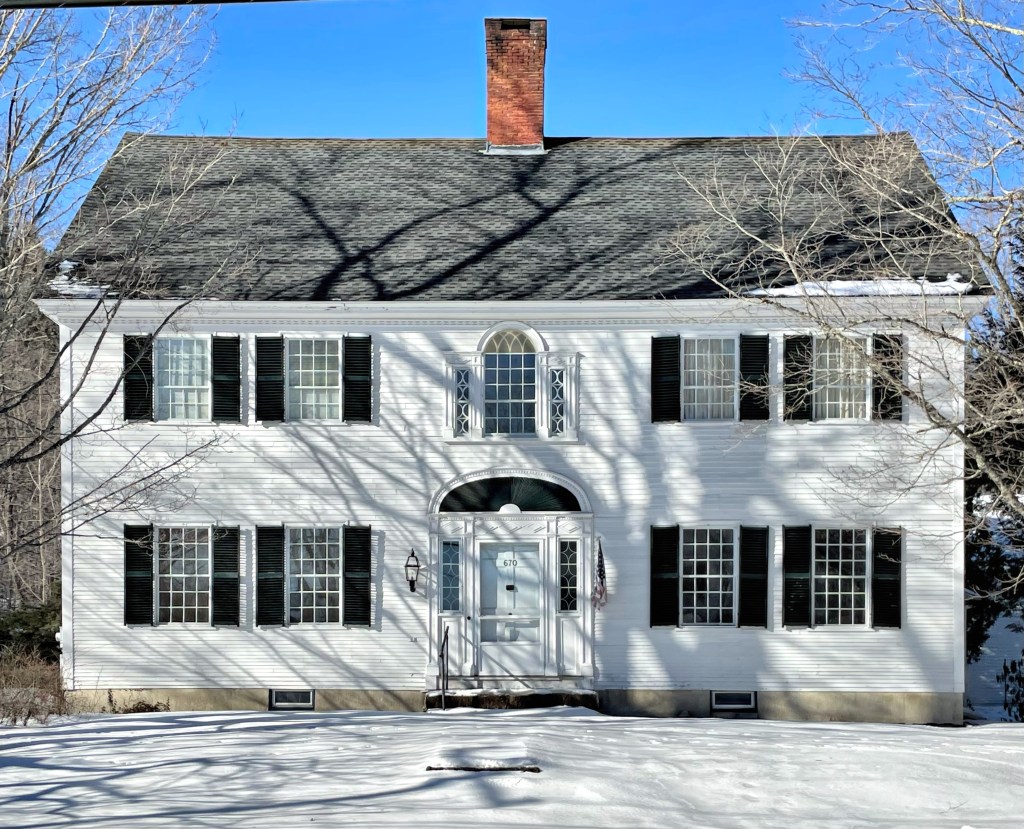
The most architecturally significant example of the Federal style in Waterford, Maine, is this c.1810 home built for Ambrose Knight, who operated a store in town. The high-style Federal home features a well-proportioned fanlight over the entrance with a Palladian window above, all with geometric moulding. The home was likely built by a housewright who employed designs from Asher Benjamin’s pattern books for builders, as the high-style features and Palladian windows are uncommon in this part of Maine.
Dr. Leander Gage (1791-1842) came to Waterford from Bethel, Maine in 1817. He erected and lived in this Federal style house which overlooks much of the South Waterford village. Gage was a prominent medical practitioner in town and involved in local politics as a moderator at town meetings and as a school committee member until his death. The home has a Federal style stable and 1840s barn attached and had remained in the Gage family until at least the 1980s.
One thing about Victorian-era houses that I love so much is the fact that it’s so rare to find two houses that are the same! The uniqueness and detail is just amazing and stalking these homes never gets old! This 1886 beauty was built as a double-house for Stephen Cummings of Norway, Maine. Cummings was a member of the family which built many of the grand homes in town as they ran a woodworking and carpentry company. Architect John B. Hazen designed the Stick style home with a octagonal bay at the facade, capped by a tower, giving the home a sort of pagoda effect.
This two-and-a-half story mansion sits on a steep hillside overlooking Downtown Norway, Maine. The home was built in 1908 for Edwin Cummings, who appears to have been a son of Charles B. Cummings, who ran a profitable woodworking and carpentry firm in the village. Charles Cummings was the owner of the Evans-Cummings House (featured previously) and updated it to show off his carpentry skills. The house here is a great example of Neo-Classical architecture with the monumental columns to create a prominent portico. The home retains the original windows which really complete the facade!
The most iconic house in Norway, Maine has to be the Evans-Cummings House (also known locally as the Gingerbread House) on Main Street. The ornate Victorian era home was originally built in 1855 for Richard Evans, who was born in Portland in 1805 and after training as a carpenter, moved to Norway in 1833 for work. He and his wife, Mary Warren Hill, had eight children and they resided in the home until their death. In 1890, Charles B. Cummings bought the house in 1890 and hired local architect John B. Hazen to remodel the house. Hazen added the gingerbread adornments for which the house is now known colloquially. The home attracted a lot of attention in the region, and the later heirs continued that whimsical appeal. When the home was willed to Fred and Cora Cummings, they were said to have kept a stuffed peacock at the top of the stairs, which delighted children when they toured the home. The house eventually became used as storage by the owners of the local Advertiser Democrat newspaper, and its future was threatened. Since 2012, a local group, Friends of the Gingerbread House, have poured tens of thousands of dollars and an equal amount of time restoring the iconic home to her former glory! Preservation is important!
Last up on our tour of Scandinavia (Denmark, Sweden and now Norway) Maine, is Norway. The town of Norway centers around Pennessewasse Lake, which supported native people in the region for thousands of years. It wasn’t until after the American Revolution that European settlers established the town. By 1789, a sawmill and gristmill were established, the first road was built in 1796, and the town of Norway was officially incorporated on March 9, 1797. Before incorporation, the township adopted the name Rustfield, to recognize the contributions of prominent landowner Henry Rust of Salem, Mass and the community once petitioned the Massachusetts General Court to be named Norage, meaning “falls” in the native peoples’ language. Norway won the name, but the origin of the town’s name remains unknown. The town leaned more towards industry than Denmark and Sweden due to the stronger rivers, and its population increased as a result.
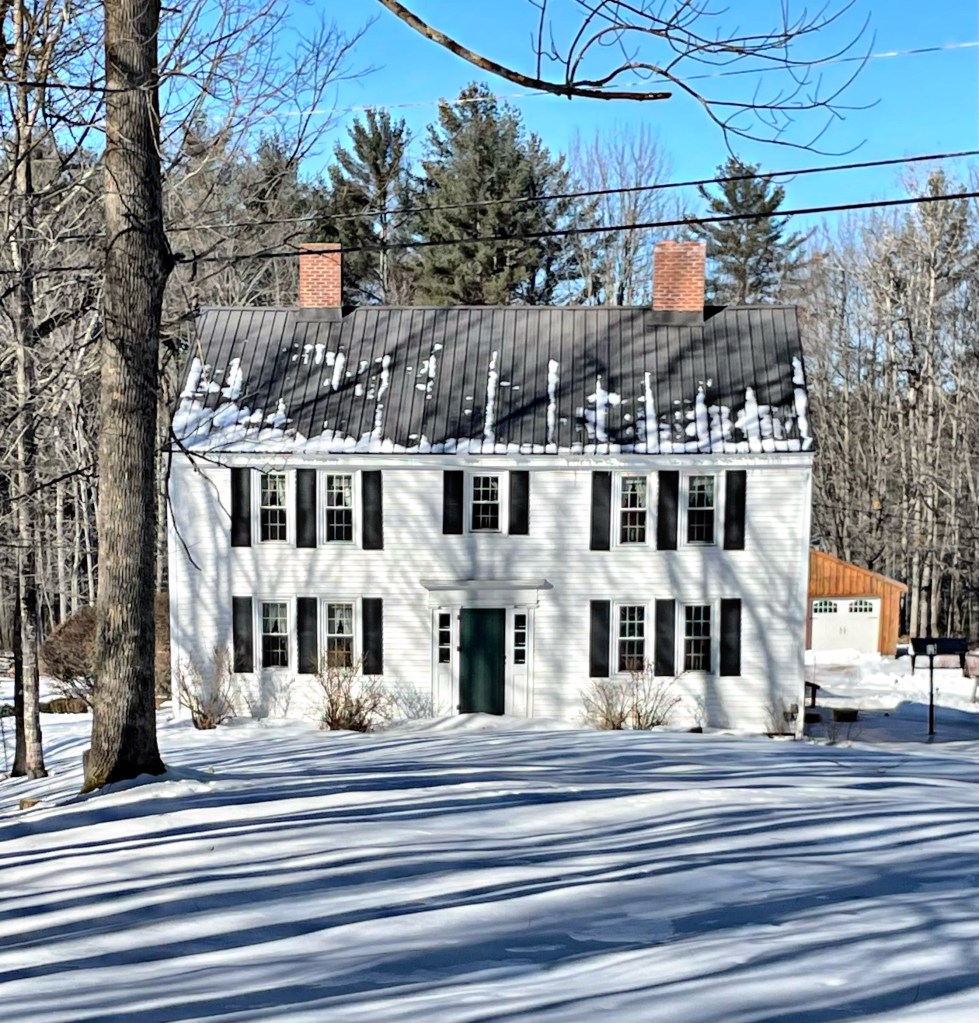
This historic farmhouse sits on the eastern edge of Pennessewasse Lake and is one of the oldest extant homes in town. It was built in 1792 just years after land here was purchased by Nathaniel Bennett in 1790. Nathaniel and Elizabeth Bennett resided in the home until they died, childless. The home was eventually purchased by Don Carlos Seitz, publisher of the New York World, who grew up and was educated in town. Seitz operated the property as a gentleman’s farm, and is responsible for naming the property “Cedarbrook Farm”. His estate sold the property to one of his hired hands in 1927. It remains very well preserved and was listed on the National Register of Historic Places in 1996 as the Nathaniel and Elizabeth Bennett House.




 Buildings of New England