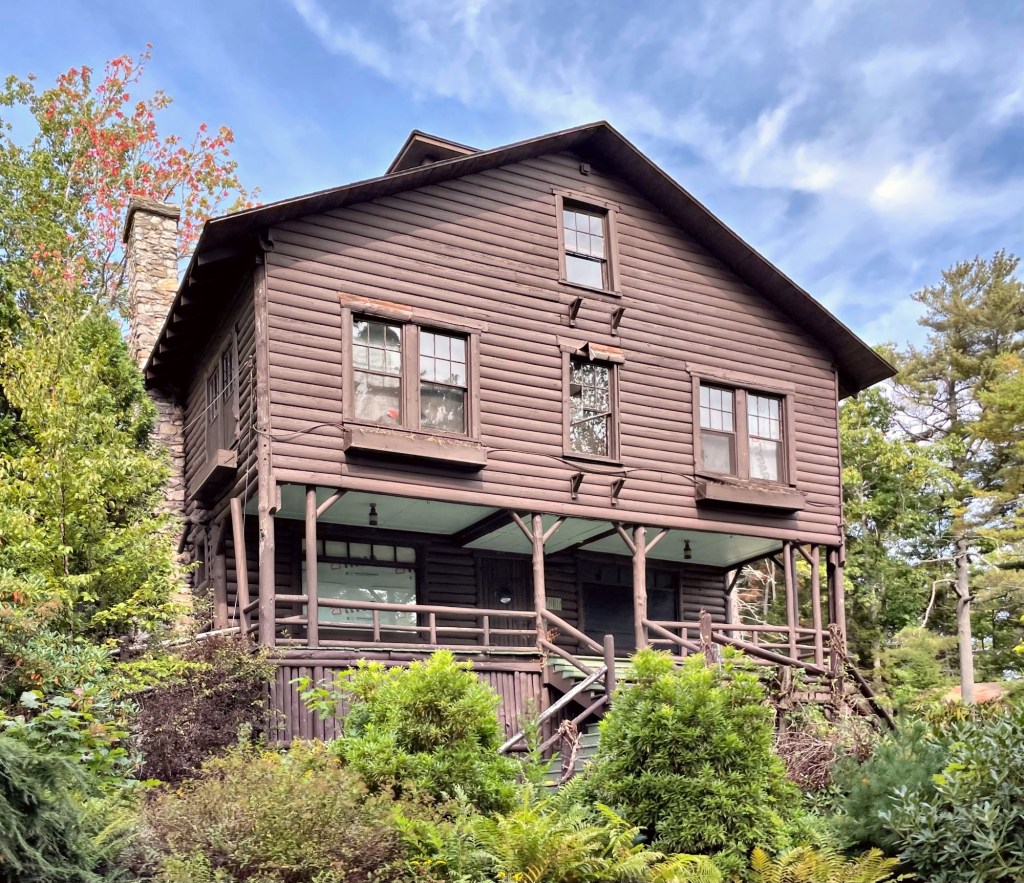
Sprucewold Lodge // 1927

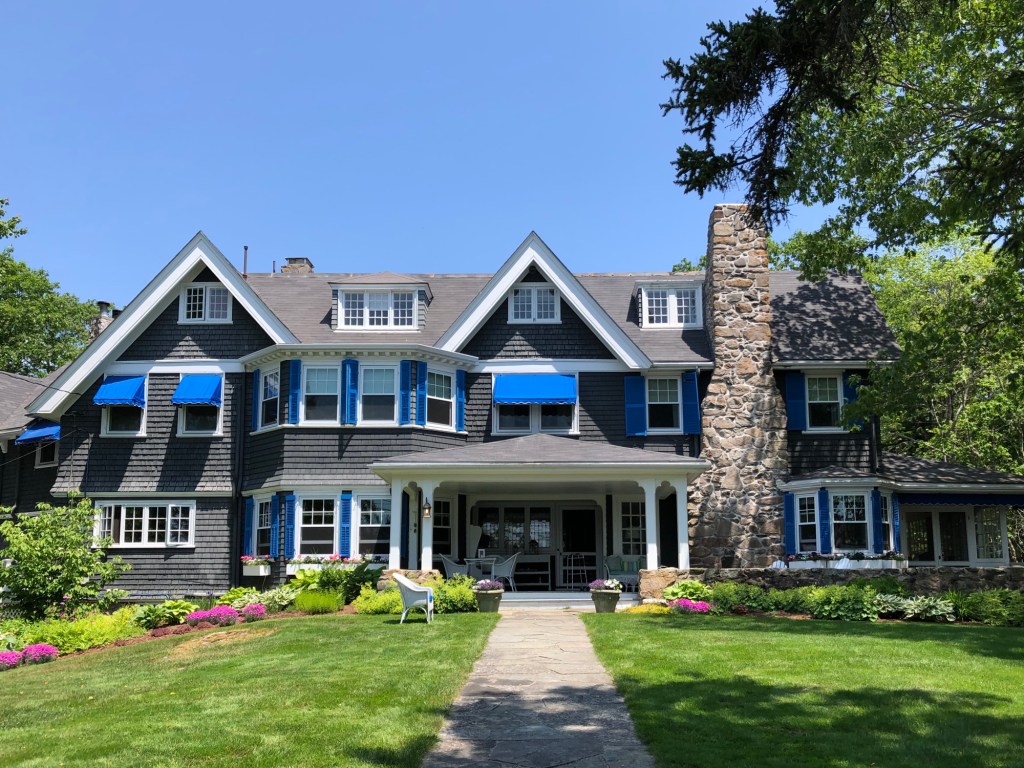
Sprucewold Lodge, nestled in the picturesque coastal town of Boothbay Harbor, Maine, boasts a rich history that dates back to the early 20th century. Established in 1911 by a group of visionary investors and rusticators, the lodge was designed as a summer retreat for families seeking solace in nature. Like the Spruce Point Inn, the building was developed with modest means, but quickly expanded and grew as the unique and rugged site on Spruce Point drew flocks of visitors every year. Its unique blend of craftsman and Adirondack style architecture and stunning natural surroundings quickly made it a popular destination. The investors hired Portland architect John P. Thomas to design a grand log hotel. The hotel was advertised as the largest log cabin in the world until it burned down just years later in 1930. A 31-room annex, this building, was added in 1927 and assisted to serve the over 60 rental cabins, tennis courts, a swimming pool, recreation hall, and a thirty-car garage. When the original Sprucewold Lodge burned down, this building became the new lodge, and it has remained so nearly 100 years later. This enclave of rustic log cabins on Spruce Point is very evocative of the early days of Maine, and it is easy to see why the state garnered the nickname, Vacationland.
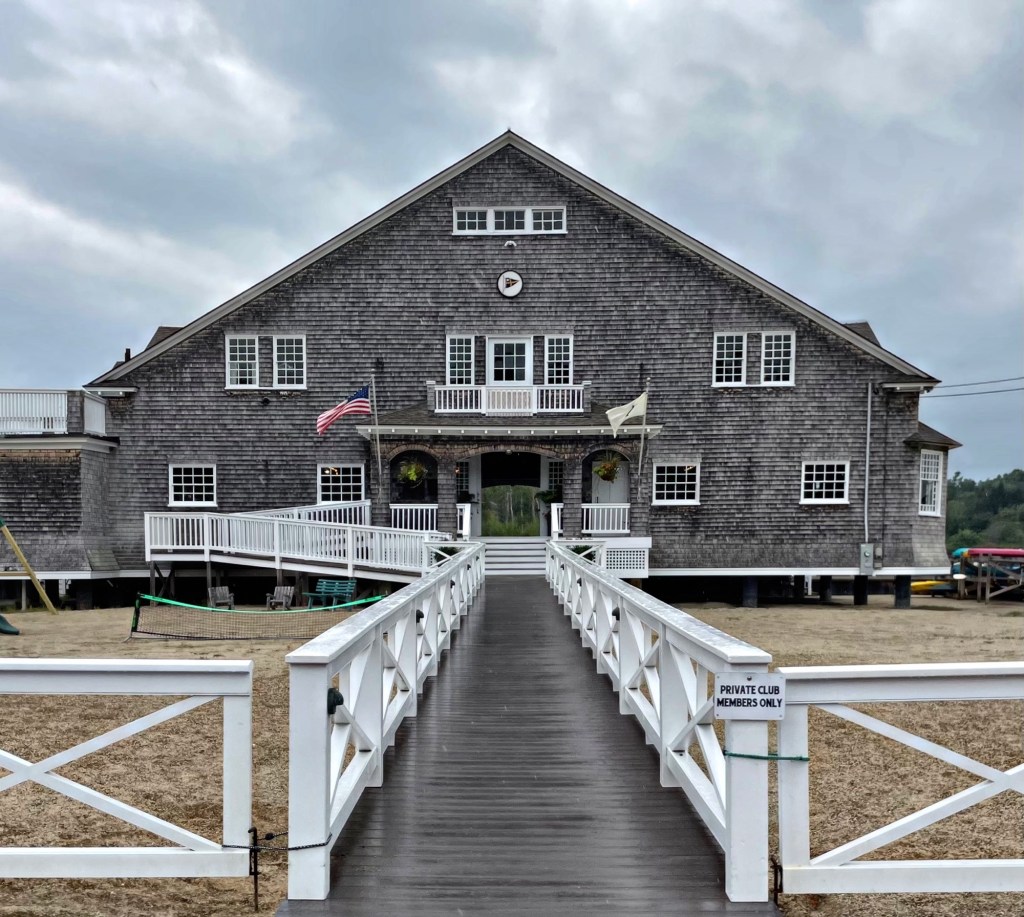
Kennebunk River Clubhouse // 1889

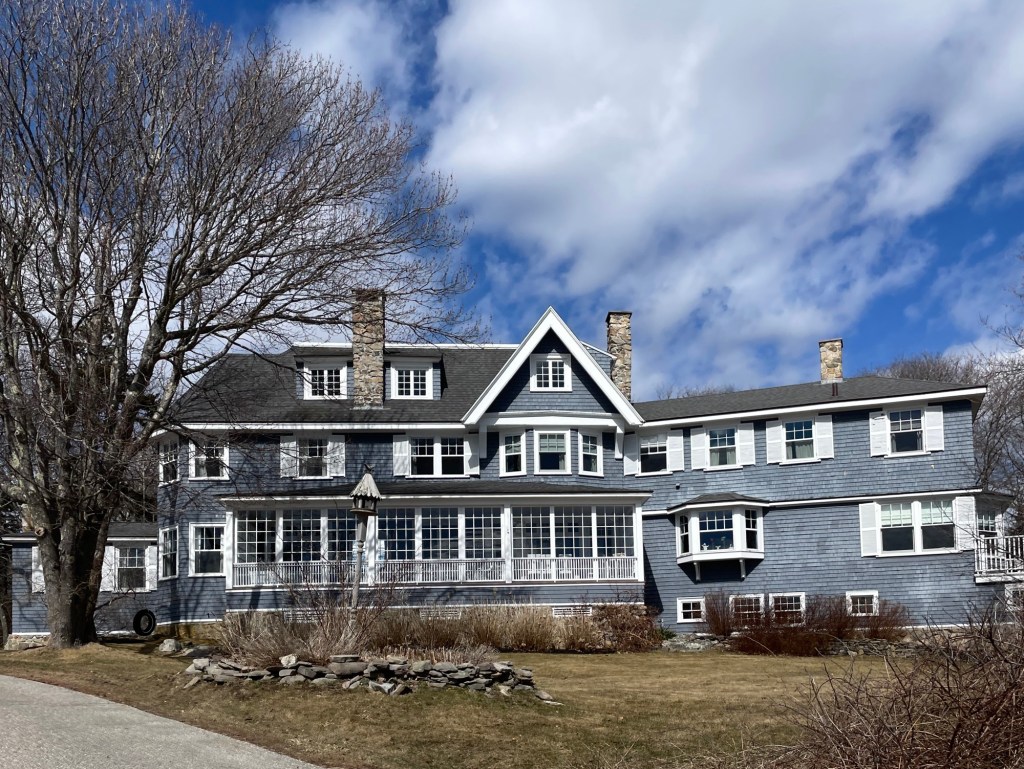
A canoe club formed by John B. McMaster, Prosper L. Senat and Henry E. Woods in the early 1880’s grew to a large “Lobster Club” by 1888. In 1889, the club decided to build this Shingle style boat house and the organization changed their name to the ‘Kennebunk River Club’ and hired Lowell, Massachusetts architect, Frederick W. Stickney to design a new boathouse. It opened in August 1890. The club grew quickly as Kennebunkport continued to become a premier summer destination with wealthy residents building summer “cottages” in town. In the building, canoes were built and hired out to club members by members of the Penobscot tribe who came to Kennebunkport from Old Town each summer working here. The clubhouse is one of the finest Shingle style recreational buildings in New England.

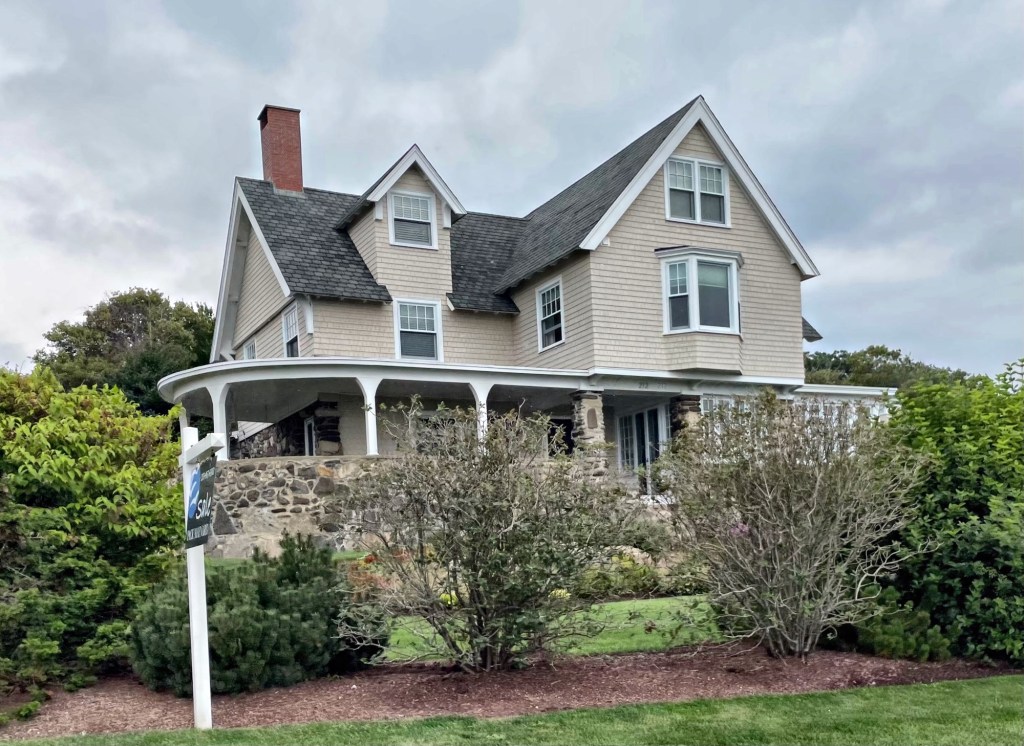
Point O’ View Cottage // 1892

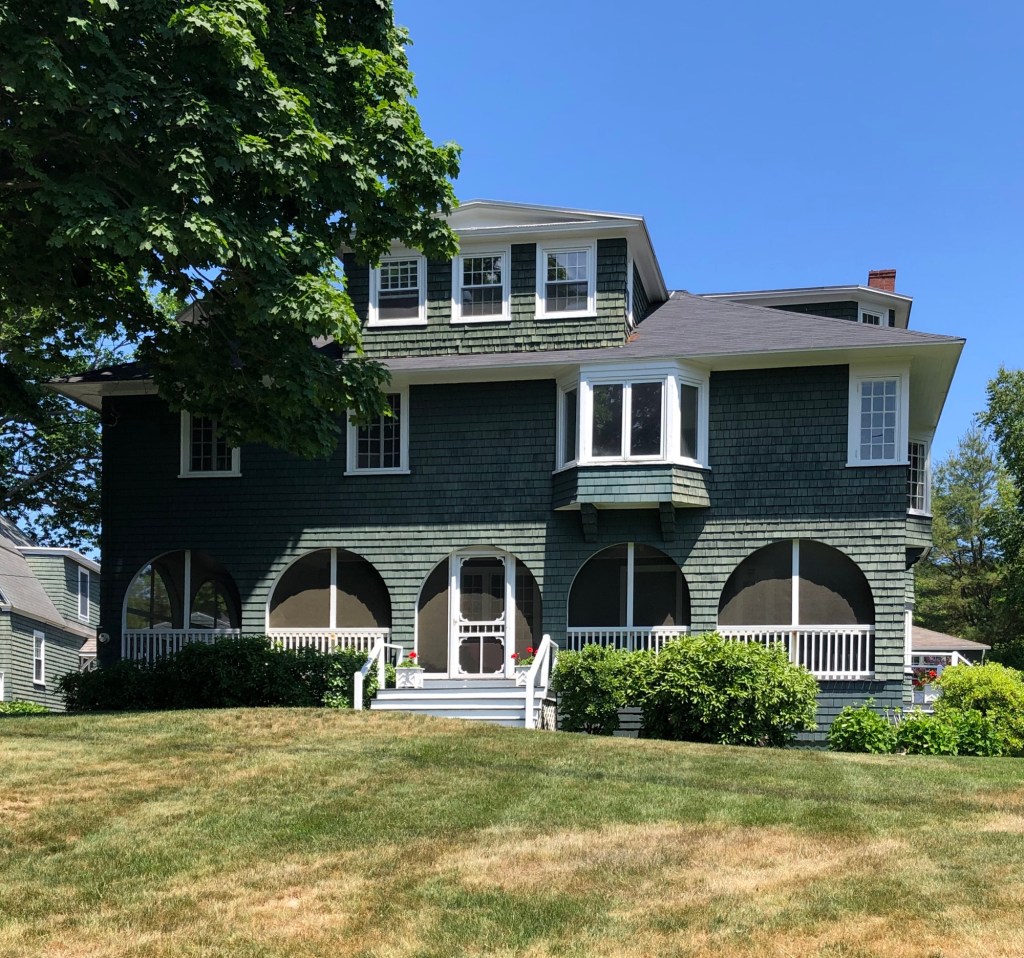
The Point O’ View Cottage in Kennebunkport sits on a large lawn on the rugged Maine coast, with sweeping views of the Atlantic Ocean. Built in 1892 by Burleigh S. Thompson as a rental property (he rented it for $1,500 for the summer) the nine-bedroom “cottage” was designed in a Tudoresque version of the Queen Anne architectural style and originally named Fort Bradford. The cottage (like others built for Mr. Thompson) was designed by Henry Paston Clark, THE architect for the Cape Arundel Summer Colony in the 1890s, who also designed St. Ann’s Episcopal Church and other cottages nearby. The cottage was renovated more in keeping with the Shingle style and was entirely clad in cedar shingles, but it retains its perfect, rustic stone foundation and rounded porch. It is now known as Point O’ View Cottage. What a view it has!

Kewaydin Cottage // 1900

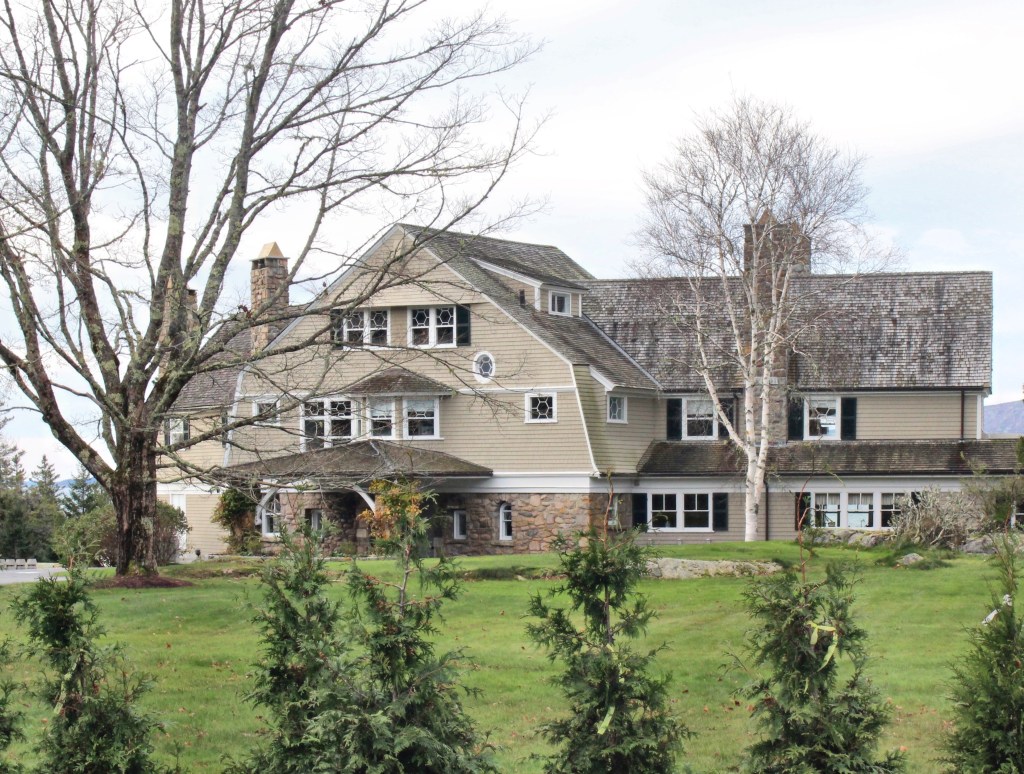
Every good summer cottage needs a name, and this charmer in the Cape Arundel Summer Colony of Kennebunkport, Maine, is no exception! This is “Kewaydin” a massive summer home built for Eben Caldwell Stanwood Jr. (1856-1906) a merchant and later banker of Boston, Massachusetts. Stanwood hired the Boston firm of Chapman & Frazer to design the cottage, which blends Shingle style and Queen Anne elements in a rustic composition that has such great curb appeal! The use of cedar shingles and rubblestone chimneys, paired with the vergeboards and complex roofline with dormers, makes this one of the gems of Kennebunkport!

Pine Haven Cottage // 1902

Pine Haven Cottage sits on a rise overlooking the Atlantic Ocean in the Cape Arundel summer colony in Kennebunkport, Maine. Built in 1902 for Thomas Brodhead Van Buren, Jr., a silk importer in Manhattan as a summer home, the cottage was designed by Henry Paston Clark and his partner, John W. Russell in an eclectic example of the Shingle style with gable roofs, vergeboards, stone foundation, and a prominent porch that has since been enclosed.

Chester Guild Cottage // 1902

One of the many stunning summer “cottages” built in the Cape Arundel summer colony of Kennebunkport, Maine, is this turn-of-the-century Shingle style dwelling built for Chester Guild of Boston. Chester Guild III was born into the wealthy Guild Family of Roxbury with his father being a successful leather dealer. Chester Guild spent summers with his family in Kennebunkport beginning in the 1890s, eventually had this cottage built in 1902. The Shingle style dwelling remained in the family for five generations and is very well-preserved, showcasing the hallmark elements of the ubiquitous coastal Maine architectural style.

Whelen Cottage // c.1891

For the last cottage on Grindstone Neck, I present the stunning Whelen Cottage. Charles S. Whelen (1850-1910), a banker and philanthropist who served as one of the directors of the Gouldsboro Land Improvement Company and as one of several of its stock agents in Philadelphia, purchased a house lot for him and his wife Migonette Violett. The couple did not hire Lindley Johnson, like so many other cottage-holders did, but they worked with esteemed architect Wilson Eyre to design the home. The Whelens were typical of the type of person who chose to summer on Grindstone. While comfortably well off, they were not in a financial position to commission the sort of cottages built on an ever increasing scale in Bar Harbor. The property left the Whelen’s ownership in 1897, and the house was altered and enlarged in 1900. The large porte cochere, porch, and additional rooms added at this time by William Winthrop Kent, an alumni of H. H. Richardson’s office.

McCrea Cottage // 1891

In 1891, Laura Denby McCrea, a wealthy widow based Philadelphia, sought to maintain her social standing all year by building a summer cottage on Grindstone Neck, a summer colony in Winter Harbor, Maine. She was one of the first to build a cottage here, and she hired renowned architect Wilson Eyre to furnish plans for the rustic home. The Shingle style house is dominated by its massive gambrel roof and was historically clad entirely with wood shingles (asphalt shingles have since replaced cedar at the roof).

Far From The Wolf Cottage // 1891 & 1902

John Godfrey Moore (1847-1899) was born in Steuben, Maine, a small town just east of Mount Desert Island, the son of a ship captain. He moved to New York City at 18 and would become was a wildly successful businessman, financier and Wall Street stock market promoter during the Gilded Age. He gained fame by successfully suing the United States government in 1893, to stop the new income tax Act from coming into effect, delaying it by 20 years. Oh how the rich stay rich… He purchased a 2,000-plus acre estate on the Schoodic Peninsula and formed the Gouldsboro Land Improvement Company, which sought to develop the peninsula into a summer colony that would rival Bar Harbor. As part of this, Moore was a huge reason for Winter Harbor separating from Gouldsboro, to lower his and his neighbors’ property taxes. He built a cottage here in 1891 and named it “Far From The Wolf” a cheeky reference to its comfortable distance from Wall Street. He died unexpectedly in 1899. His second wife Louise and daughters Ruth and Faith did not share his aspirations for Winter Harbor, and their visits to the area became less frequent. A large portion of his land on the Schoodic Peninsula became a part of Acadia National Park. His property in Winter Harbor was sold, expanded in 1902, and renamed “Ingleside” by Frank B. Noyes, a publisher and later founder of the Associated Press. The home was for a time operated as an inn, and was recently sold for $1 Million at auction. What a steal!

Tonandowa Cottage // c.1892

One of the two largest summer “cottages” on Grindstone Neck, Winter Harbor, Maine is this massive Shingled mansion overlooking Frenchman’s Bay. Due to its scale and design, the house possibly replaced a more modest cottage in the early 20th century. The “cottage” was owned by Samuel Price Wetherill, a Philadelphia-based manufacturer and businessman. Wetherill spent most of his time at a Rittenhouse Square Beaux Arts mansion in Philadelphia, which after his death, was purchased by the Philadelphia Art Alliance. The Wetherills hosted lavish events in the mansion and clearly wanted to make a statement with their summer home, which rivals almost any “cottage” in the more prestigious Bar Harbor over the bay.