Chester Masonic Temple // 1907

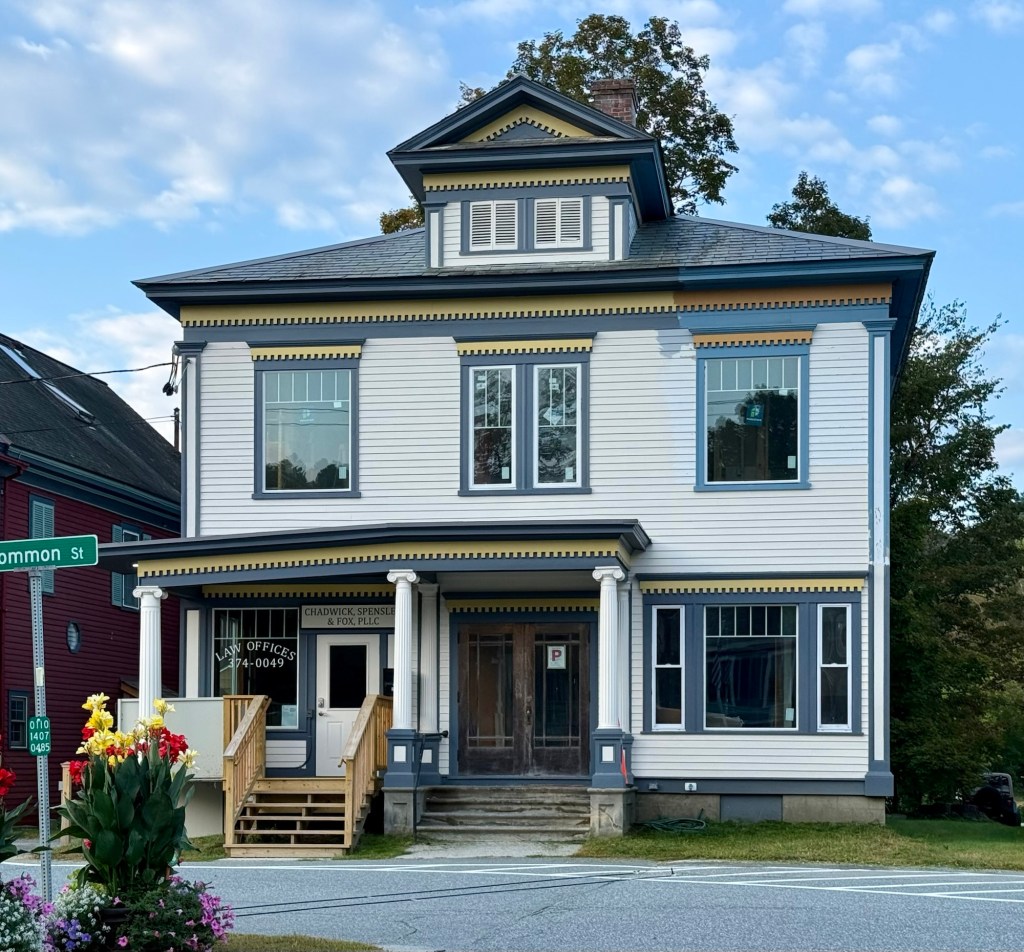
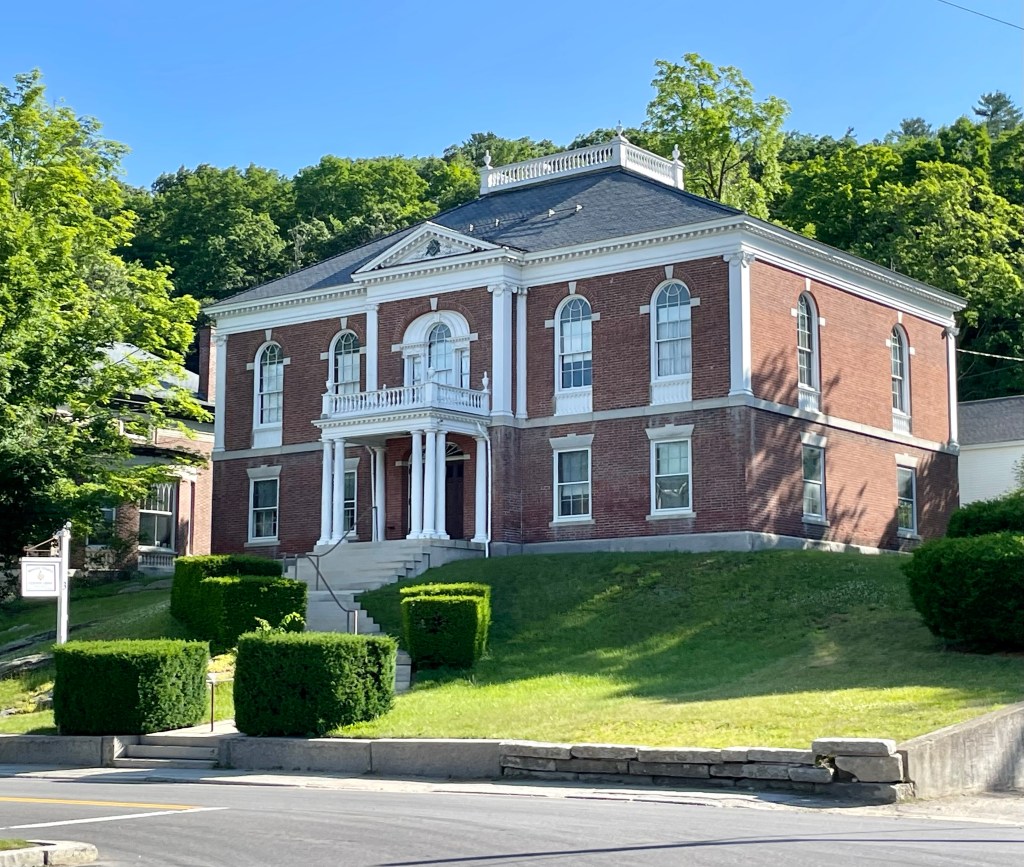
Built in 1907, this handsome building on Main Street in Chester, Vermont, has long been the home to the Olive Branch Lodge 64 of the Freemasons, an international fraternal organization. Colonial Revival in style, the building features corner pilasters that support a denticulated entablature along the eaves of the slate hip roof. A projecting portico over the front entrance is supported by classical Ionic columns. The 1920s marked a heyday for Freemasonry, especially in the United States. By 1930, over 12% of the adult male population of the United States were members of the fraternity. Following the Great Depression and WWII, membership sharply declined in fraternal organizations, like the Masonic Temple. A number of years ago, the Lodge here moved to a new building in a nearby town, and a local law firm purchased the building and spent 18 months renovating the building for use. Today, the historic character and even symbology remain on the building, while it houses a local business. 

First Universalist Church of Somerville // 1917

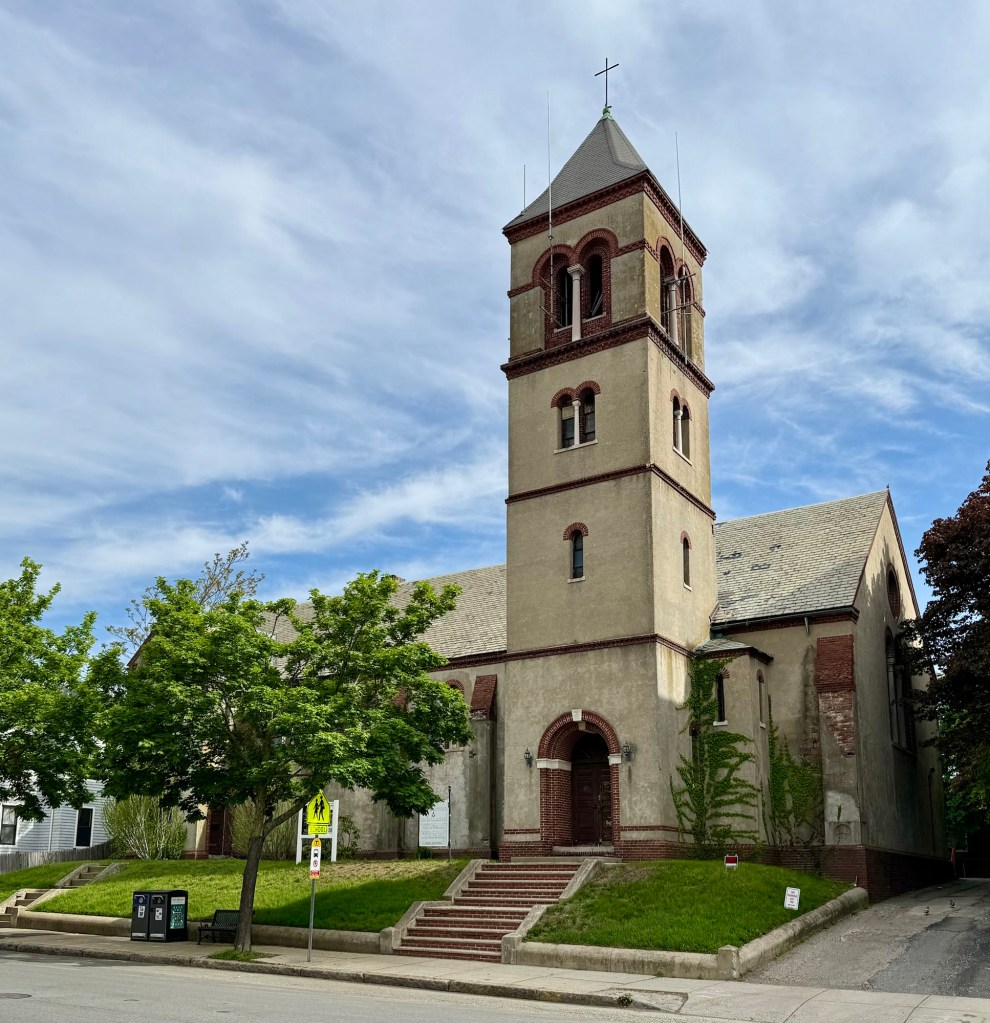
The First Universalist Church of Somerville is located on the north side of Highland Avenue across from the First Unitarian Church of Somerville, in a completely different design. The congregation acquired this site in 1915, and the church was built from 1916 to 1923 to a design by the noted ecclesiastical architect Ralph Adams Cram, who produced a somewhat more Romanesque plan than the typical Gothical Revival work he is best known for. One of the key members of the building committee was Gilbert Henry Hood of the Hood Milk Company family. The new church was planned to house an “assembly room,” Sunday school classes, and a parish house. The church operated here for decades, but most recently was home to the Highland Masonic Building Association as the King Solomon’s Lodge. The lodge moved from the building and the property was purchased by a developer who hoped to demolish the building and erect a housing development. The building was deemed significant and “preferably preserved” by the Somerville Historical Commission, and landmark designation was initiated. The building was recently re-listed for sale, and would make a great adaptive reuse or even partial demolition for housing incorporated into the old church. Kudos to the Somerville Historical Commission for standing firm on this significant church by a nationally recognized architect.

First Congregational Church of Abington – Abington Masonic Hall // 1819

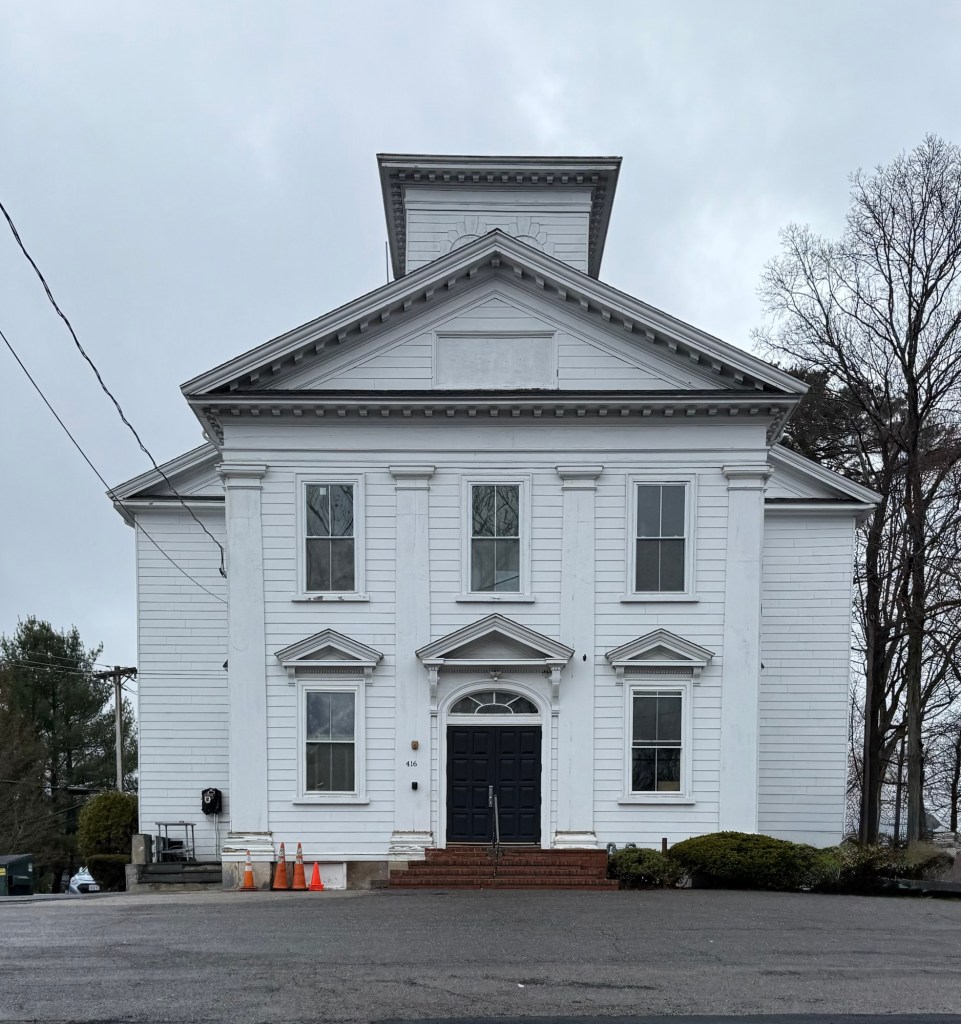
The First Congregational Church of Abington, Massachusetts, was established in 1711. Besides the First Church, there were three additional churches founded in the town’s other villages: The Second Church in South Abington (now Whitman) Third Church of East Abington (now Rockland), and the Fourth Church at North Abington. This edifice was the third building of the congregation, and was built in 1819. The structure was only used as a church for 30 years until 1849, when the congregation built a new church nearby. This structure was sold and converted to a Masonic Hall and District Court for some years. Major changes to the building include the destruction of the steeple from the Gale of 1869, and in 1885, the present entryway was added, extending about 20 feet from the facade to provide a more adequate stairway to the second floor. Today, the building is used as a church for a local Brazilian congregation.

New Gloucester Masonic Lodge // 1902

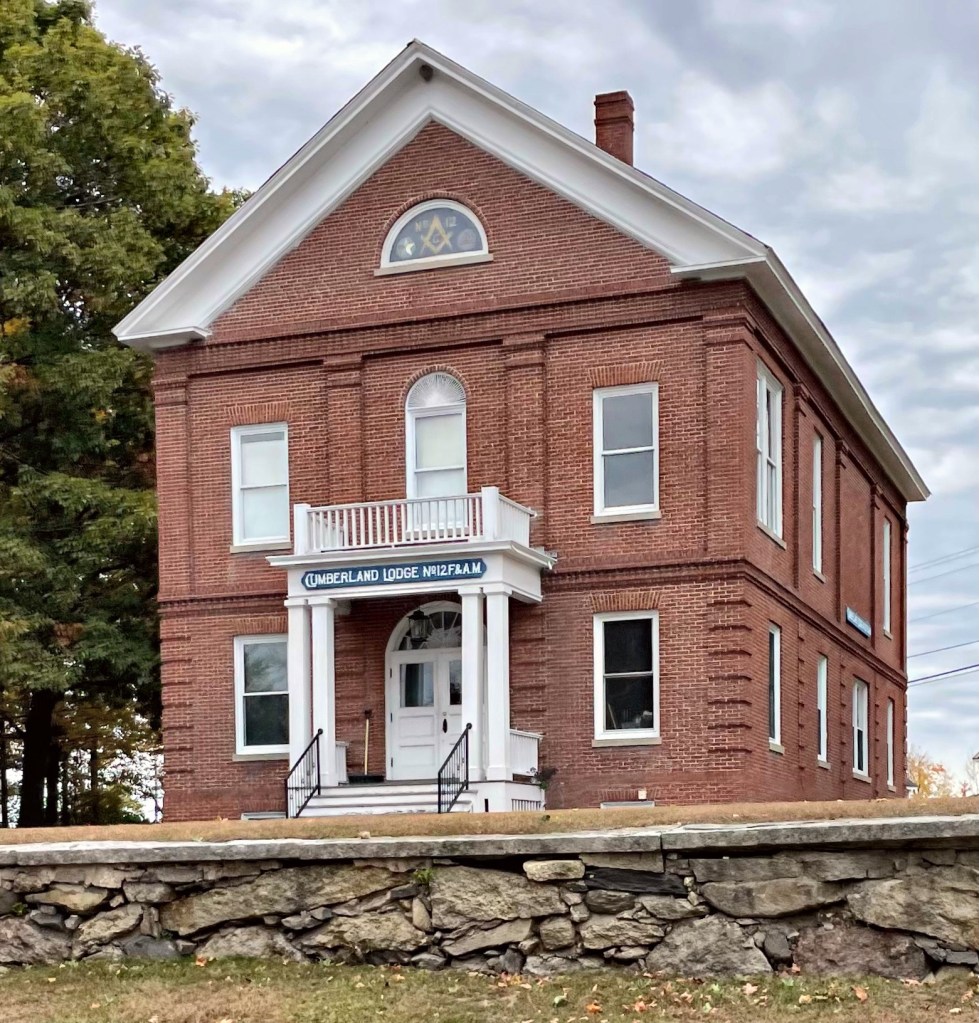
Built in 1902 and dedicated in June 1903, the Cumberland Lodge of Ancient, Free and Accepted Masons #12 is located at the corner of Route 100 and Bald Hill Road in New Gloucester, Maine. The building was constructed as a centennial celebration of the local Masonic Lodge chapter’s founding a century earlier. The impressive and detailed brick structure exhibits engaged brick pilasters and a stained glass lunette (half-round) window in the gable. The building is still occupied and owned by the local Masons who hold meetings in the hall.

Warren Masonic Temple // 1796

Located next door to the Randall House (last post) on Baker Street in Warren, Rhode Island, this early building has some history! Constructed in 1796 by the Washington Association, Inc., this two-story Federal period building is considered to be the oldest Masonic hall building in the state of Rhode Island. The elongated building is fairly plain in plan, but is adorned by corner quoins, elaborate pedimented entries, ornate cornice, and (now filled) ocular windows in the gable ends. The Lodge was likely built by local carpenters using Asher Benjamin’s plan books for the detailing.

Vincent’s Pharmacy and Waterbury Masonic Hall // 1834

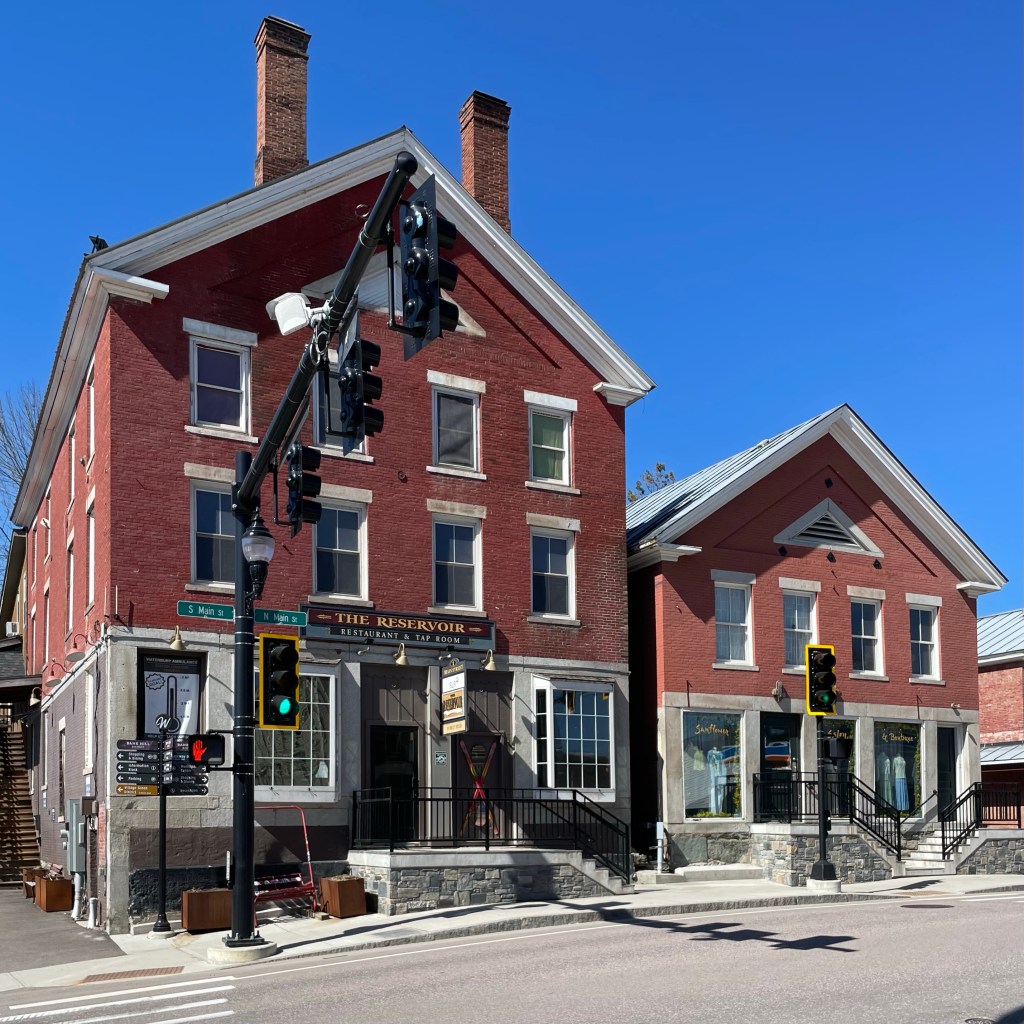
While of different scale, these two brick buildings on Main Street in Waterbury, Vermont compliment each other very well. Vincent’s Pharmacy, the smaller building, was built in 1834 in the Federal and Greek Revival styles by Dan Carpenter, early lawyer and judge, to house a pharmacy business that he ran with his son, William. Next door, dating from approximately the same year as the pharmacy, the larger structure housed Waterbury’s first Masonic hall in 1860’s and in successive years a hardware business. The former Masonic hall is now home to The Reservoir, a great local restaurant that I grabbed lunch in while visiting the town.

Wilton Masonic Temple // 1898

Located adjacent to the Gregg Free Library (Wilton’s Public Library), you will find the town’s Masonic Temple, a textbook example of Colonial Revival architecture. The building was dedicated in 1898 and sits on a prominence overlooking the Souhegan River, which supplied power and jobs to the East Wilton village. The brick building exhibits flared lintels, arched windows, a fanlight transom over the door, dentils, and prominent balustrade. The building appears to have been the work of architect Ernest Machado, an unsung specialist in Colonial Revival designs.