Ebenezer Lothrop (1743-1815) purchased land on the Old Kings Highway in Barnstable for 63 pounds, 6 shillings , 8 pence from Sturgis Gorham in 1771, building a home soon after. The old house was likely built as a one-story half cape with a door on the side with two windows to its left. When the house was moved in the 1820s by Ebenezer’s heirs, it is possible the second floor was added, which was followed later by the rear wings and wrap-around porch. The home is very well preserved and is excellently located on a raised lawn.
In 1739, recently married Daniel Davis (1713-1799) and Mehitable Lothrop Davis (1717-1764) inherited land in Barnstable Village from Mehitable’s father Thomas as their wedding present. The young couple broke ground on a new family home that year. Daniel Davis fought in the American Revolution and was was a selectman, assessor, town clerk, and treasurer for Barnstable and represented it at the Massachusetts House of Representatives and Council. Davis also held the position of Guardian of the Mashpee Indians, a position begun in 1746 when Massachusetts appointed white guardians to manage each Indian reservation in the province, the Mashpees protested. Daniel Davis died in the home in 1799. The house retains much of its original design from the multi-pane double-hung windows to the large, central chimney.
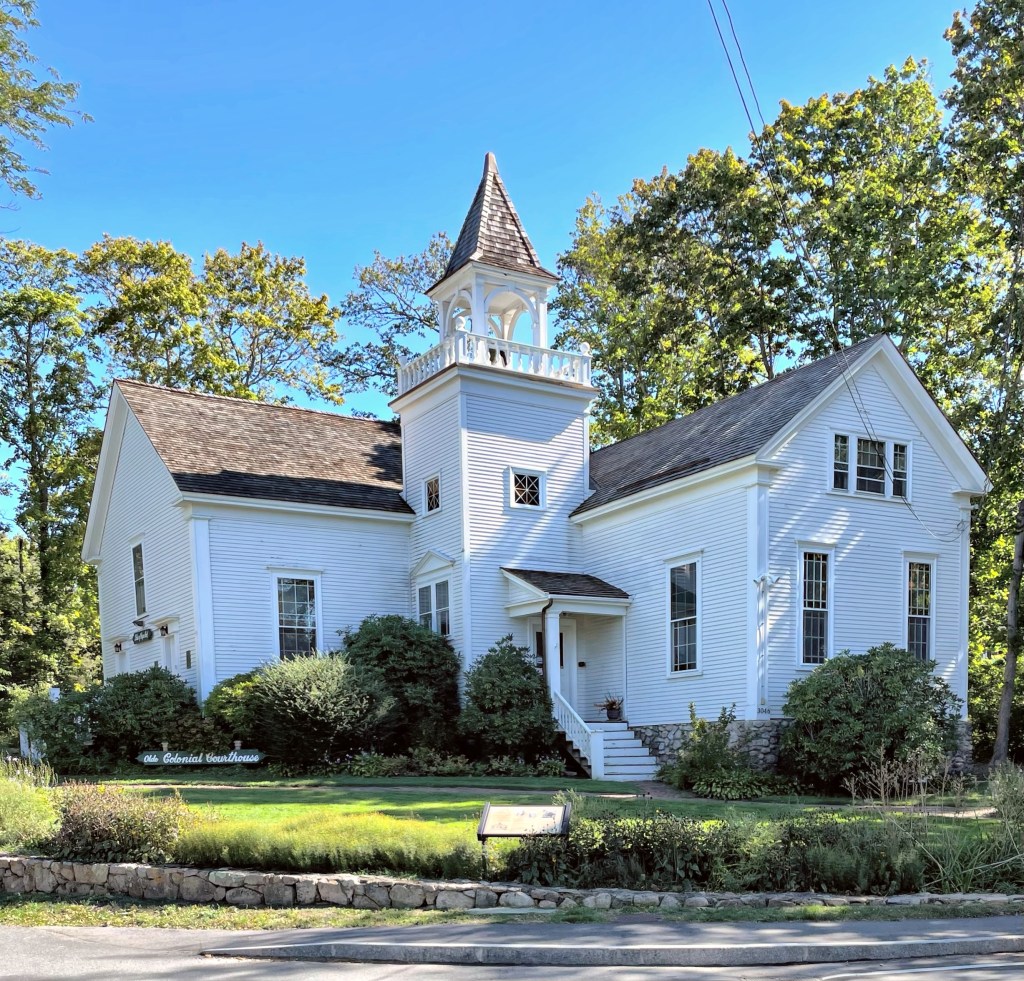
This historic building was constructed in 1763 as the Barnstable County Courthouse replacing an even earlier courthouse building that was outgrown in the village. The building served primarily as a courtroom with jury deliberations carried out in one of the nearby taverns. Additionally, large town meetings were sometimes held in this building until it too was outgrown. This courthouse was the site of a mass protest on Sept. 27, 1774, after Britain revoked Massachusetts Bay’s 1691 charter — one of a series of Coercive Acts intended to punish the colonists for the Boston Tea Party the previous year. As a result of the protest, all Barnstable county officials agreed to ignore Parliament’s new rules, effectively freeing Cape Cod of British control. The significance of this building cannot be understated as the building is one of only two remaining Massachusetts colonial-era courthouses where such protests occurred. The county dedicated its new courthouse in the 1830s, consolidating all court functions in a large, granite structure closer to the present center of Barnstable Village (featured previously). This building was acquired by the Third Barnstable Baptist Church, who renovated the building at the time and again in 1905. After the church was disbanded in 1972, the building was purchased by Tales of Cape Cod, a nonprofit volunteer group committed to preserving the Cape’s history. What a building to be based out of!
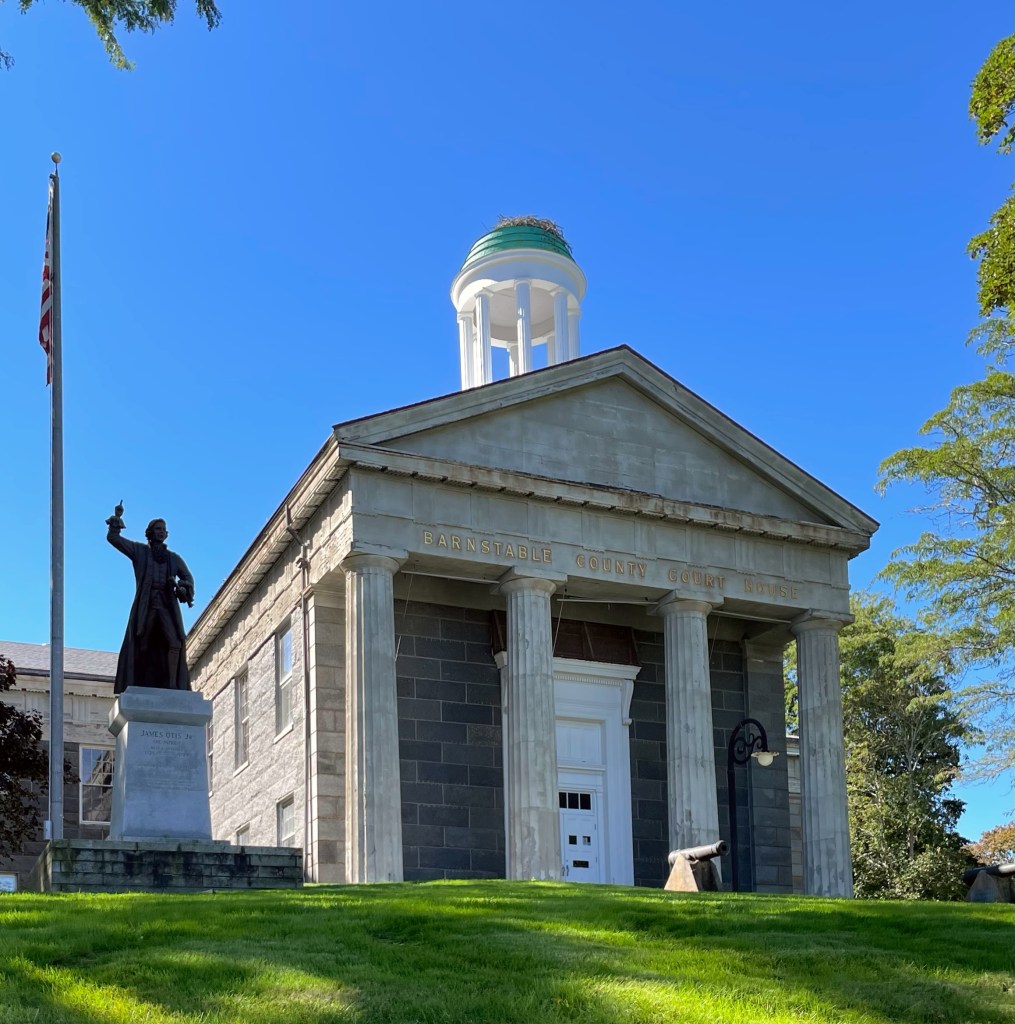
Perched atop a hill in Barnstable Village, the old town center of the historic Cape Cod town, the Barnstable County Courthouse sits proudly as a well-preserved example of the Greek Revival architectural style in a civic building. The building was constructed in 1831 from plans by renowned architect Alexander Parris, who designed the iconic Quincy Market in Boston just years earlier in the same style. Due to its highly visible location along the Old King’s Highway and public function, the courthouse was likely instrumental in popularizing the Greek Revival style on the Cape. The building was constructed of Quincy granite with a portico and fluted Doric columns made of wood fashioned to look like stone (which fooled me from the street). The building has been expanded five times between 1879 and 1971, with each addition made cognizant of the architectural significance of the building. At the front of the building, two bronze statues of Mercy Otis Warren and James Otis, Jr frame the building. The Barnstable Superior Court is located in the building today.
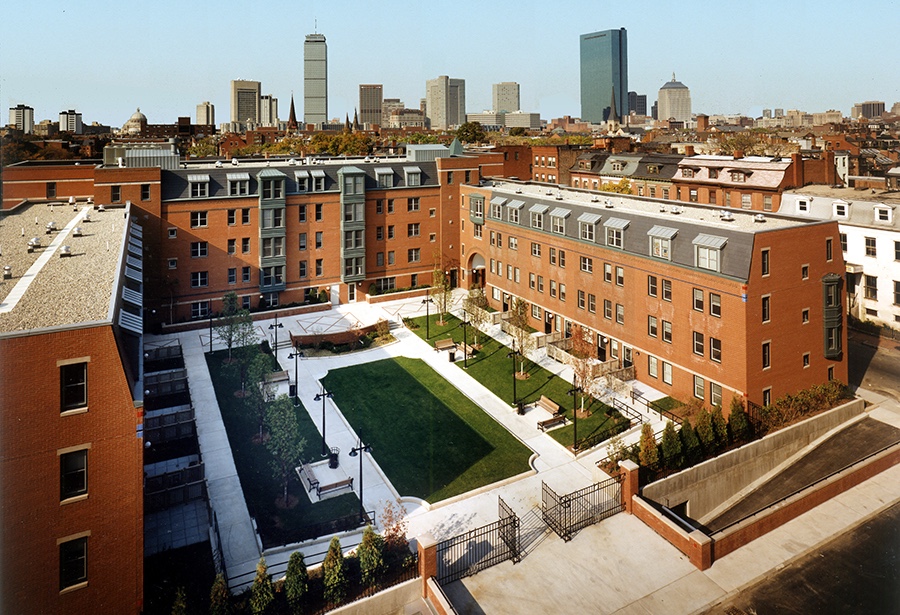
Appropriate infill construction can be a very difficult thing to accomplish, with some developments hitting the mark and others adversely impacting the historic neighborhoods where they were built. Boston is home to many examples of both occurrences, but I wanted to share a very successful infill project in the South End neighborhood, Langham Court. As the South End resurfaced as a desirable neighborhood, long-time residents were priced out, which led to the Boston Redevelopment Authority to fund projects to provide much-needed housing for the local community. This site which once housed over 20 townhouses, was razed by the 1960s in a period of urban renewal where existing housing was deemed unsafe and inadequate. The local design firm of Goody/Clancy was hired, and they masterfully designed a U-shaped complex of 84 mixed-income units that fits well within its surroundings. The design exhibits dormers, bays, arched and vaulted entries, a combination of mansard and flat roofs, stringer courses and textured brickwork, and a palette of well chosen materials all at a scale that blends in the 1990s building to its surroundings which came nearly 150 years prior. The complex remains as a testament to good-quality design even for affordable housing, which notoriously gets the short end of the stick design-wise.
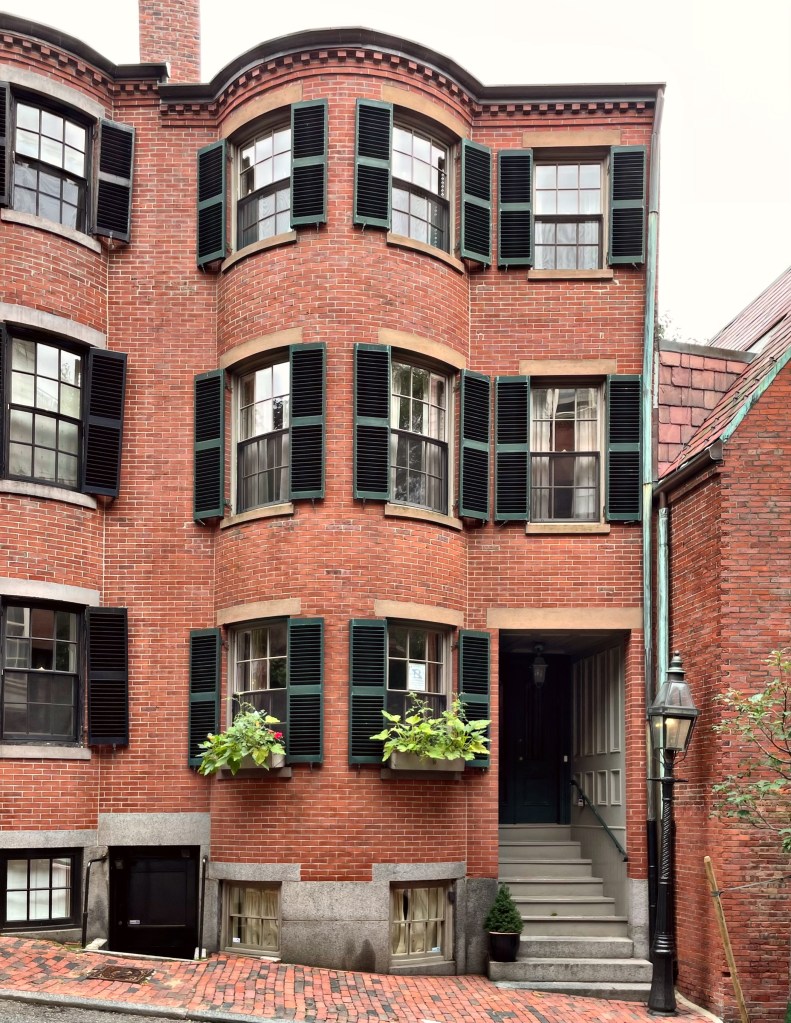
Just steps from the iconic Louisburg Square in Boston’s exclusive Beacon Hill neighborhood, a man named Joshua Bennett in 1834, purchased two recently completed townhouses built by housewrights Samuel H. Mitchell and Loring Dunbar. Joshua Holden Bennett (1792-1865) was born in Billerica, Massachusetts and split his time between his hometown and Boston. Bennett and his family owned the two identical bowfront houses until about 1930, likely renting them out to middle-upper class families. The home on the right (pictured) was later purchased by Benjamin B. Gillette an organist at a local church. After WWII, property values in Beacon Hill began to falter and this property and its neighbor became lodging houses of rented rooms to a more wealthy clientele than those on the North Slope of the hill. The home last sold in 1989 for $753,000 and is estimated at a value today at over $4,000,000!
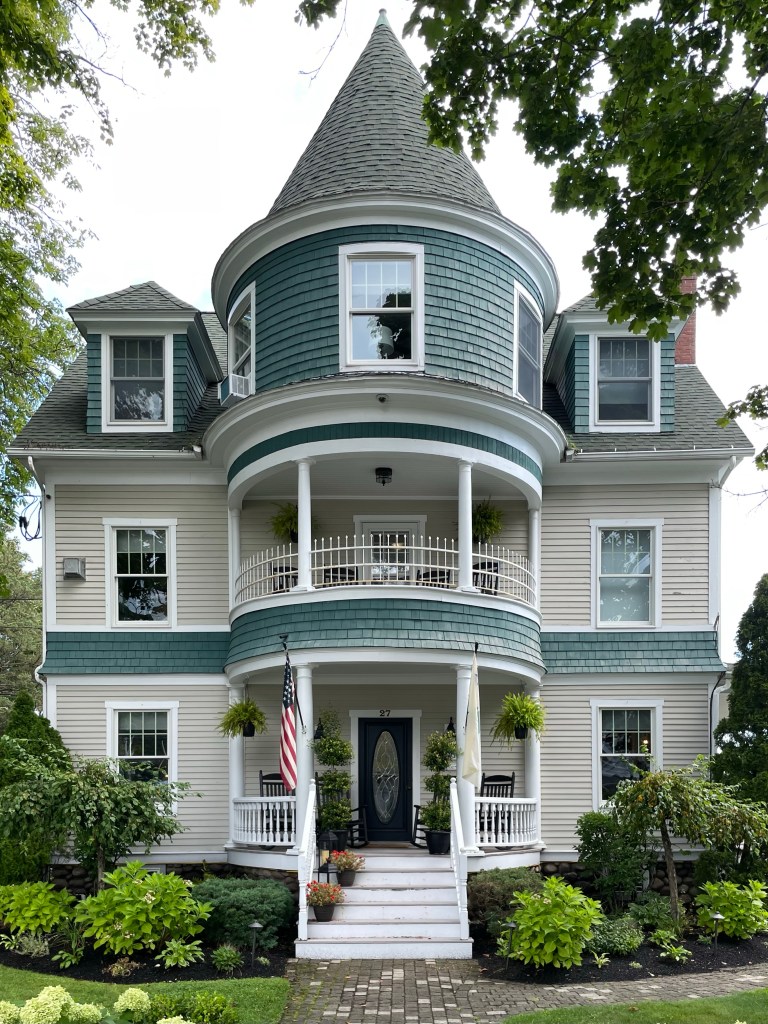
One of the most charming buildings in the quaint village of Ogunquit Maine has to be this Victorian inn, located right on Shore Road, the town’s main thoroughfare. The house had its beginnings in 1889 when Joseph H. Littlefield constructed it for his wife Ellen “Nellie” Perkins and their family of four children. Joseph was a member of the esteemed Littlefield Family, which goes back to before Edmund and Annis Littlefield and their six children traveled from England and settled in the town of Wells in 1641. The family was prosperous in the area, and Joseph used his wealth and position in local affairs to develop summer cottages and buildings at the beginning of the town’s large development boom in the late 19th century and early 20th, catering to summer residents and tourism. The Littlefield House was passed down to Joseph and Nellie’s children after their passing, last occupied by Roby Littlefield (1888-1988), who served in local and state politics. It was Roby who was instrumental to establishing the Ogunquit Beach District, which allowed the government to acquire the beachfront in Ogunquit, making it public. The old Littlefield House is now an Inn, known as the Nellie Littlefield Inn & Spa, and it retains so much of its original charm.
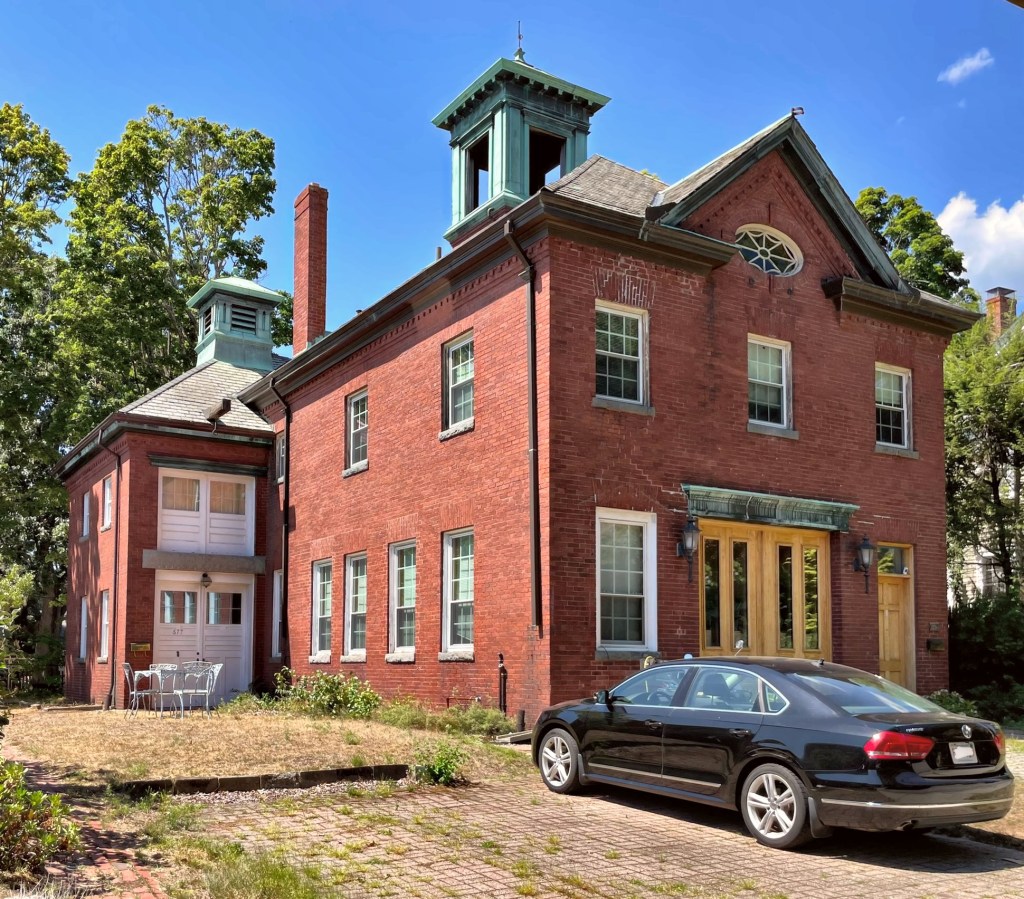
The Newton Lower Falls Firehouse was built in 1900 to serve the village’s fire prevention needs. As nearby Waban Village’s population surged (along with a stronger tax base) the City of Newton constructed a new fire station in 1918, that could serve both areas. This, the already outdated station, was converted to a village library on the ground floor with a janitor’s apartment and storage above. The space was determined to be surplus by the City and was sold off in 1979, quickly converted to housing by a developer. The building retains much of its original character, down to the hose-drying tower.
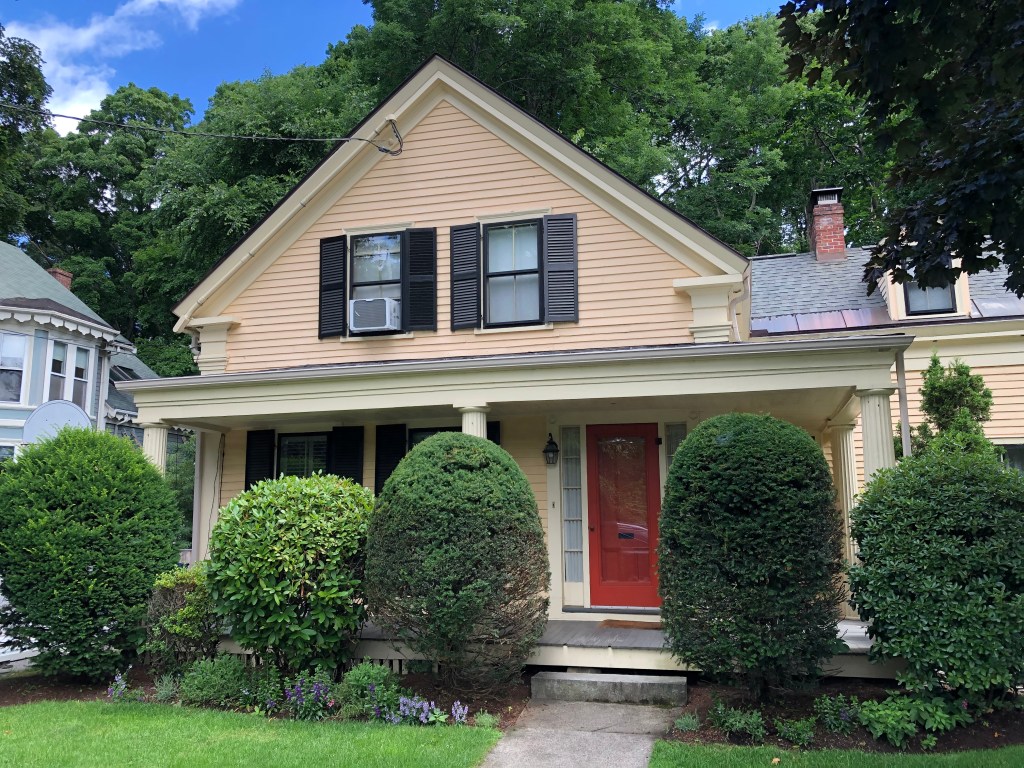
My favorite of all workers cottages/houses in Newton’s Lower Falls village is this home, a c.1840 dwelling which is a vernacular Greek Revival style home with excellent proportions and design. Toward the middle of the 19th-century, the Newton Lower Falls Village developed into a premier paper-manufacturing center of eastern Massachusetts, largely due to the water power supplied by the Charles River. One of the most successful paper mills in the area was owned by Lemuel Crehore (1791-1868), who with his success, built workers cottages for his employees and their families! This home was occupied by Nathaniel Wales and his wife Abigail (Jackson). Nathaniel was from Watertown and came to Newton to work in the paper industry. He left and went to Canada in 1802 to create a paper mill there, soon after returning to marry Abigail. The home features a full-length front porch with tapered columns, pilasters at the entry, and Victorian-era windows in a 2-over-2 configuration.
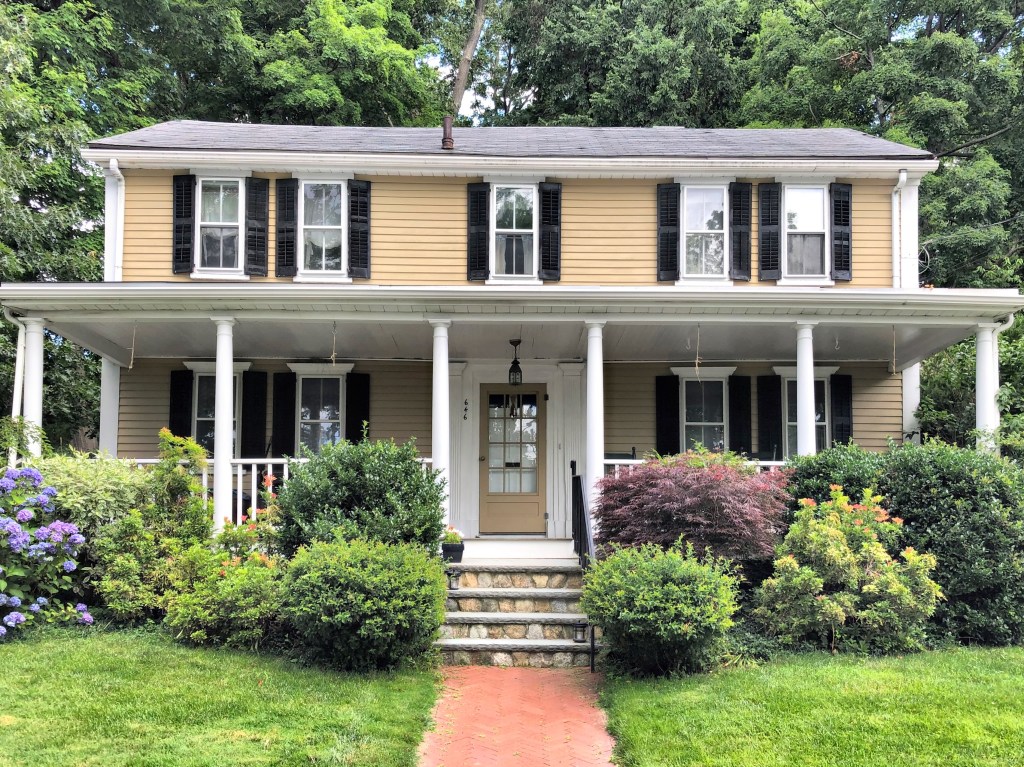
Toward the middle of the 19th-century, the Newton Lower Falls Village developed into a premier paper-manufacturing center of eastern Massachusetts, largely due to the forests and water power supplied by the Charles River. One of the most successful paper mills in the area was owned by Lemuel Crehore (1791-1868), who with his success, built workers cottages for his employees and their families (imagine if businesses did that today)! This Greek Revival workers cottage was occupied by employees of the mill before it was sold when the mill closed, to a house painter. The modest house stands out for the gorgeous wrap-around porch supported by fluted Doric columns, an off-center entrance with sidelights, and corner pilasters.


 Buildings of New England