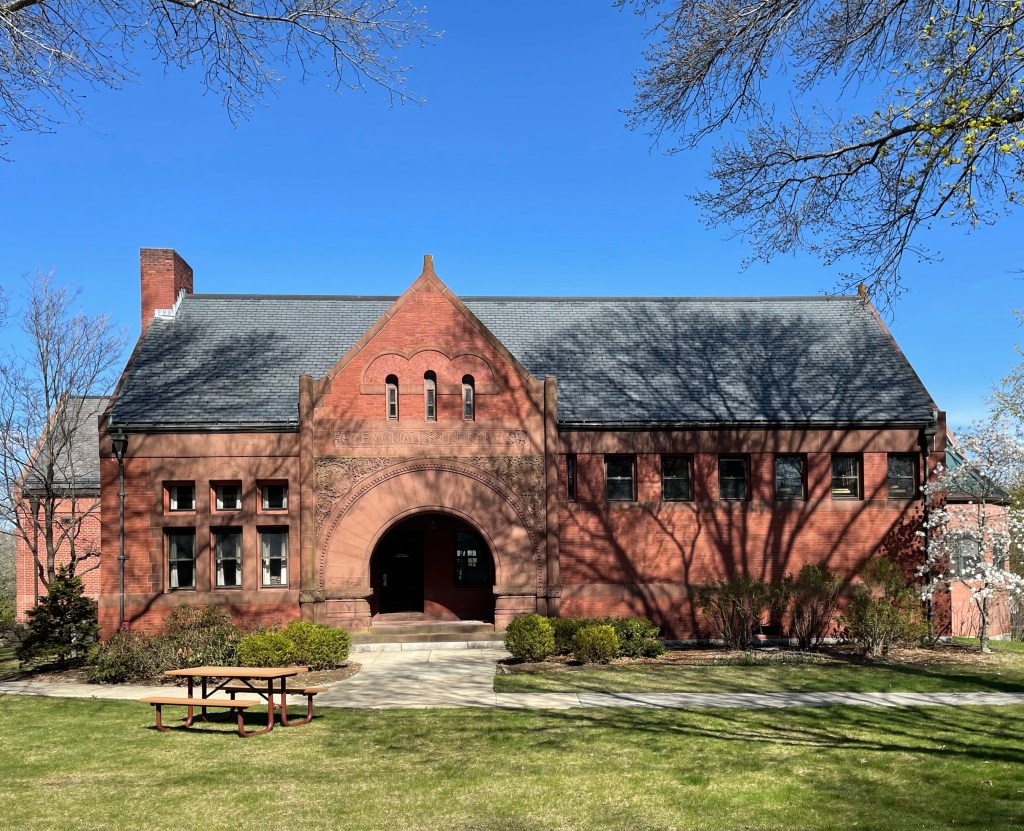
In 1888, William Allan Wilde, a Boston publisher who grew up in Acton, purchased land on Main Street to be used as the site for a new memorial library, in “memory of those brave and patriotic men of Acton who so freely gave Time, Strength and Health, and many of them their Lives in the war of the Rebellion, 1861-65.” The former Fletcher Homestead which was located here, was moved to a nearby street. The Richardsonian Romanesque building was designed by the Boston architectural firm of Hartwell and Richardson. The building displays traditional Romanesque materials with its brick wall surfaces, brownstone and terra cotta trim and detailing, and slate roof. The large Syrian arched entry is a hallmark in the Richardsonian Romanesque style, which works extremely well with this design.
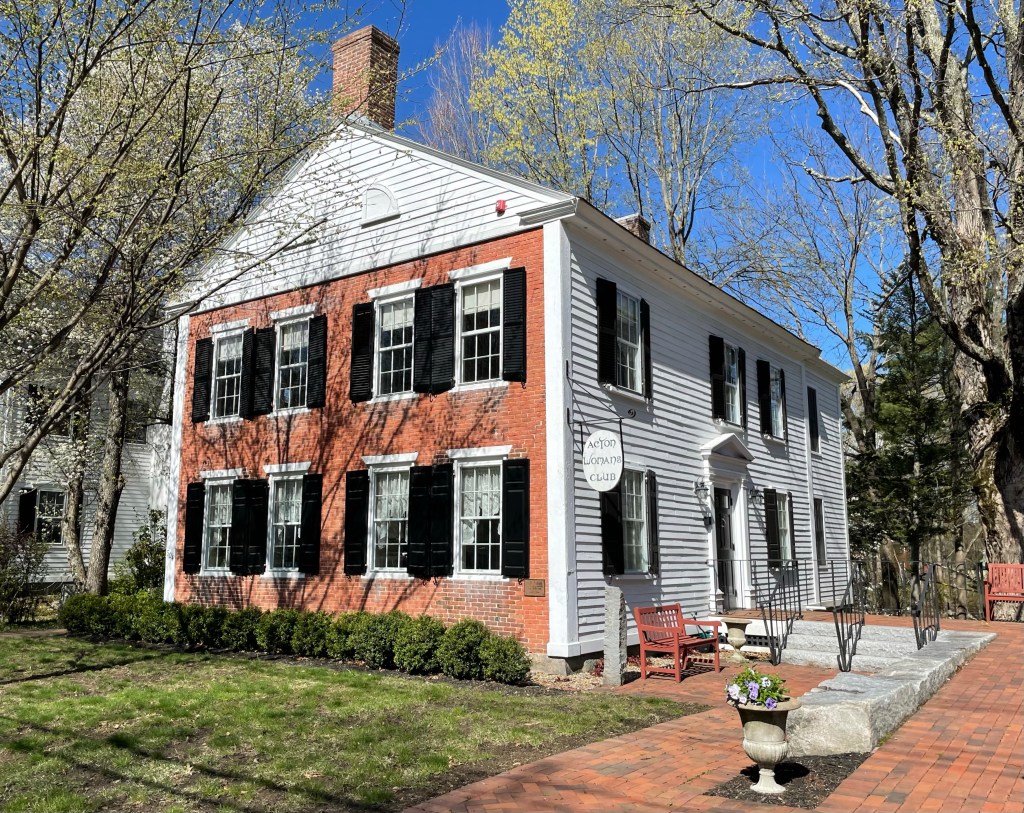
In 1912, a group of under twenty young mothers of Acton, Massachusetts, formed a club to provide a space to discuss issues ranging from child-rearing to larger topics like prohibition and women’s right to vote. The women began meeting at their homes before it was determined that they would need a permanent home. In 1915, the Acton Women’s Club acquired the old Dr. Cowdrey House (last post) next door occupying it and the attached barn. The 1829 Chapel for the Evangelical Society in Acton was part of the property and deteriorating. The Acton Women’s Club decided to sell the historic Cowdrey Home and use those funds to restore and occupy the old brick-end chapel. In 1940, the Club ceremoniously held a Mortgage Burning Party, having proudly paid off its debt. Today, the Acton Woman’s Club is the oldest and last standing brick- ended Federal structure in town.
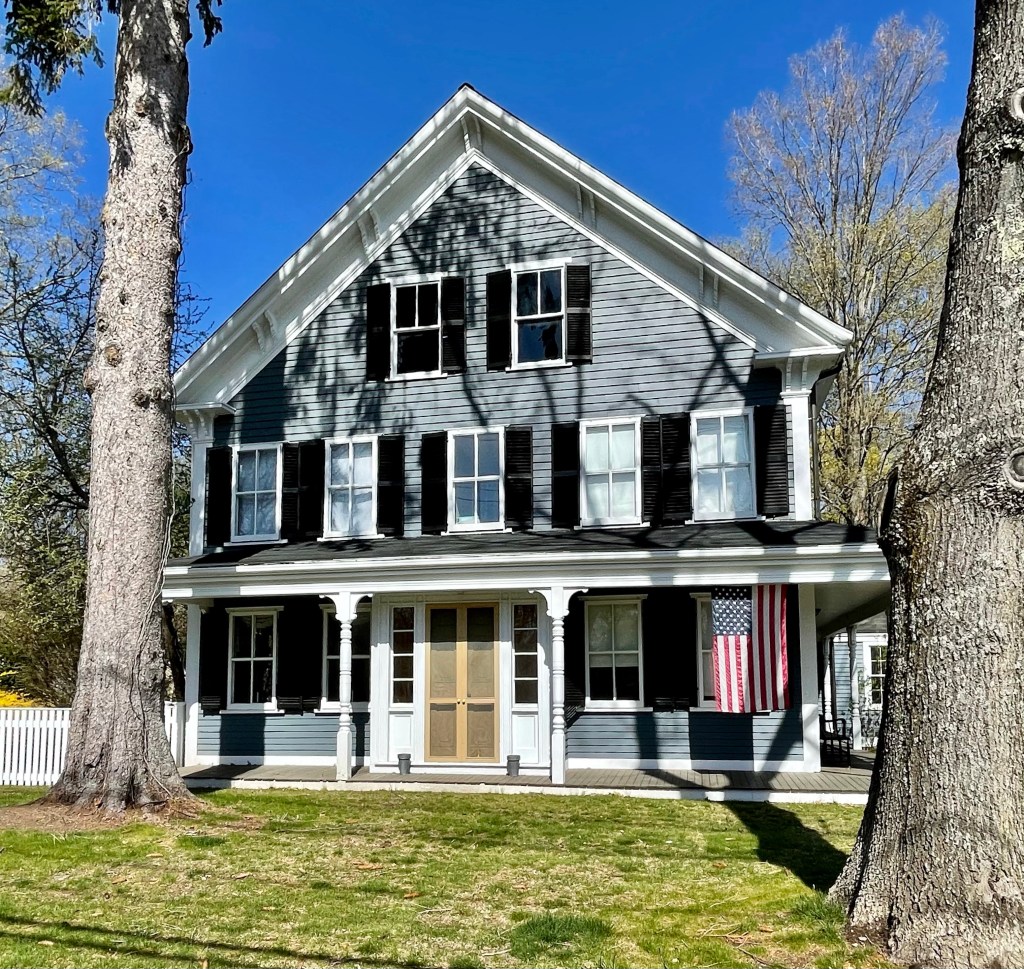
Located in Acton Center, the Dr. Harris Cowdrey House represents the emergence of Acton, Massachusetts from a sleepy rural town to a wealthy suburban town. This home was built in 1830 by Dr. Harris Cowdrey (1802-1875) as a 1 1/2-story gable end Greek Revival home. It was evidently enlarged to its present size decades later, possibly around the time Dr. Cowdrey and his wife Abigail growing their family. The Cowdreys had two children , Arthur who became a physician, after serving in the Civil War as a surgeon, and a daughter Helen who married a doctor herself, Dr. Charles Little also of Acton. After Dr. Harris Cowdrey died in 1875, Helen Cowdrey Little (who’s husband died young at just 32 years old) remained in Acton living with her mother in this house until 1886 when both women died. The home was later occupied by the Acton Women’s Club, who ran a crafts school for children out of the barn. The house showcases the original Greek Revival form, but features mostly Italianate detailing from the brackets, to the wrap-around front porch supported by turned posts.
Acton, Massachusetts, was once part of Concord, the first inland colonial town established in the Massachusetts Bay Colony in 1635. 100 years later in 1735, land that we know today as Acton, separated from Concord to become their own town. Acton’s second Meetinghouse was located here in Acton Center, which was selected for its location more accessible to all houses and farms in the town. The Second Meetinghouse was built in 1806, and burned to the ground in 1862. Immediately after, a town committee was formed to construct a new town hall. Opening in 1863, Acton’s Town Hall stands as a stunning Italianate building with tripartite arched windows, corner quoins, a two-stage cupola with clock, and a bold (and historically appropriate) paint scheme. Acton’s Town Hall remains as one of the finest extant in the state.
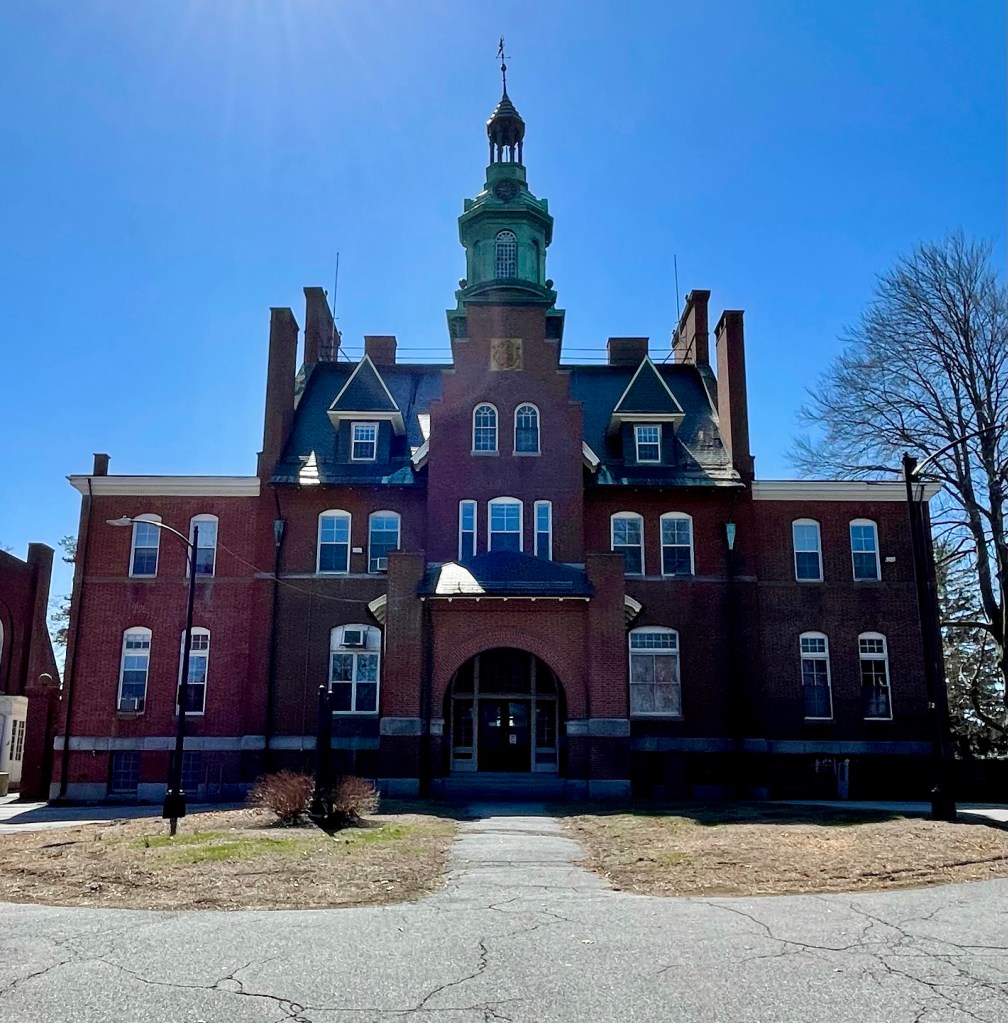
The Tewksbury State Hospital was established in 1852 as one of three Massachusetts State almshouses (along with Bridgewater and Monson). The almshouses were needed due to the unprecedented influx of Irish immigrants at that time, many of which found difficulty locating work. These almshouses represented the state’s first venture into care of the poor, a role previously filled by the cities and towns up to that time. In 1866, when Tewksbury began accepting the “pauper insane”, it became the state’s first facility to accept cases of chronic insanity specifically. Decades later, Massachusetts Governor Benjamin Butler accused the almshouse in Tewksbury in, “trading in bodies of dead paupers and transporting them for a profit to medical schools,” and “tanning human flesh to convert to shoes or other objects”. The facility was later investigated, and no conclusive evidence was found. In the late 19th century, a major rebuilding (and re-branding) campaign to upgrade the old almshouse by replacing its early wood-frame buildings with more durable and fireproof masonry ones was undertaken. One of the earliest “new” buildings was this Queen Anne-style Administration Building, standing at the head of the former entrance drive, which creates a fairly foreboding presence. This building was designed by Boston architect John A. Fox, and showcases the epitome of Queen Anne institutional design. The hospital runs today much like a traditional campus, with some of the older buildings unused, providing a strange composition. The former Administration Building is now home to the Massachusetts Public Health Museum.
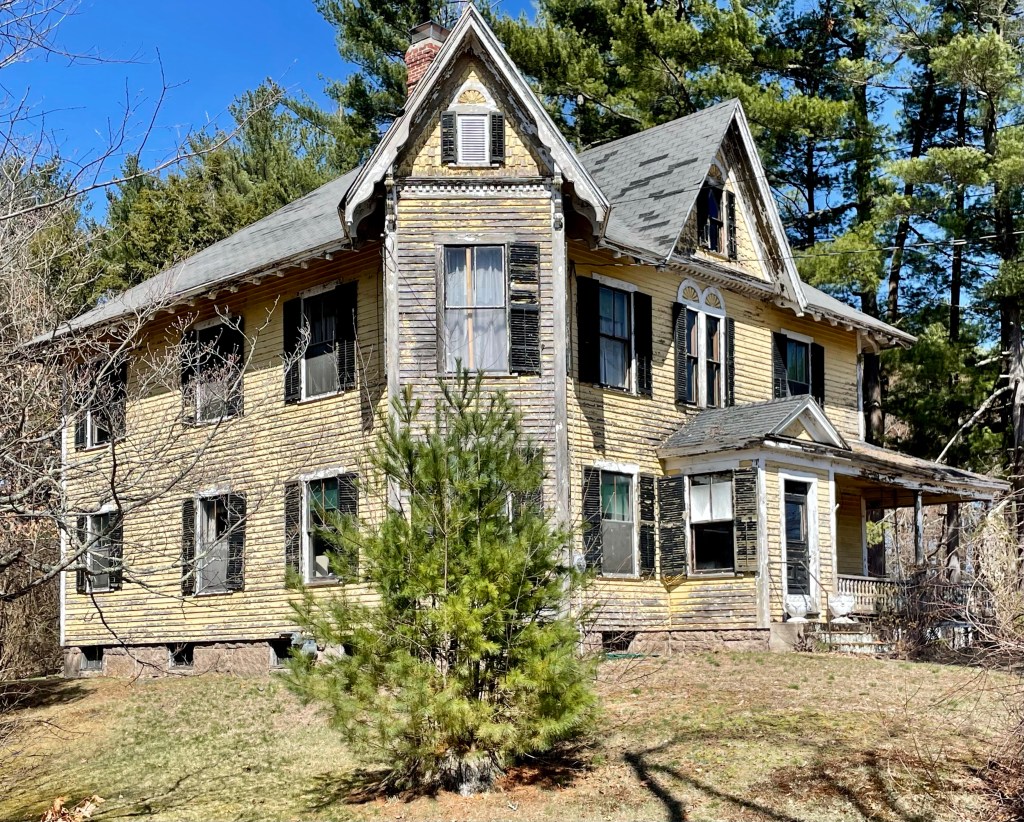
In 1894, Hiram P. Dinsmore, a clerk at the nearby Tewksbury Almshouse, purchased land not too far from his work to build a home for his family. The well-designed late-Victorian home features a wrap-around porch, a corner tower, twin sunburst or flower motifs, and the use of shingle and clapboard siding, all hallmarks of the Queen Anne style. After Hiram’s death, his wife and children lived in the home, and it was later willed to his daughter Beatrice and her husband, both of whom worked at the Tewksbury Almshouse (since renamed Tewksbury Hospital). The home has seen some deterioration with large sections of siding completely open to the elements unobscured by paint and a sagging porch roof. Hope to see this beauty restored.
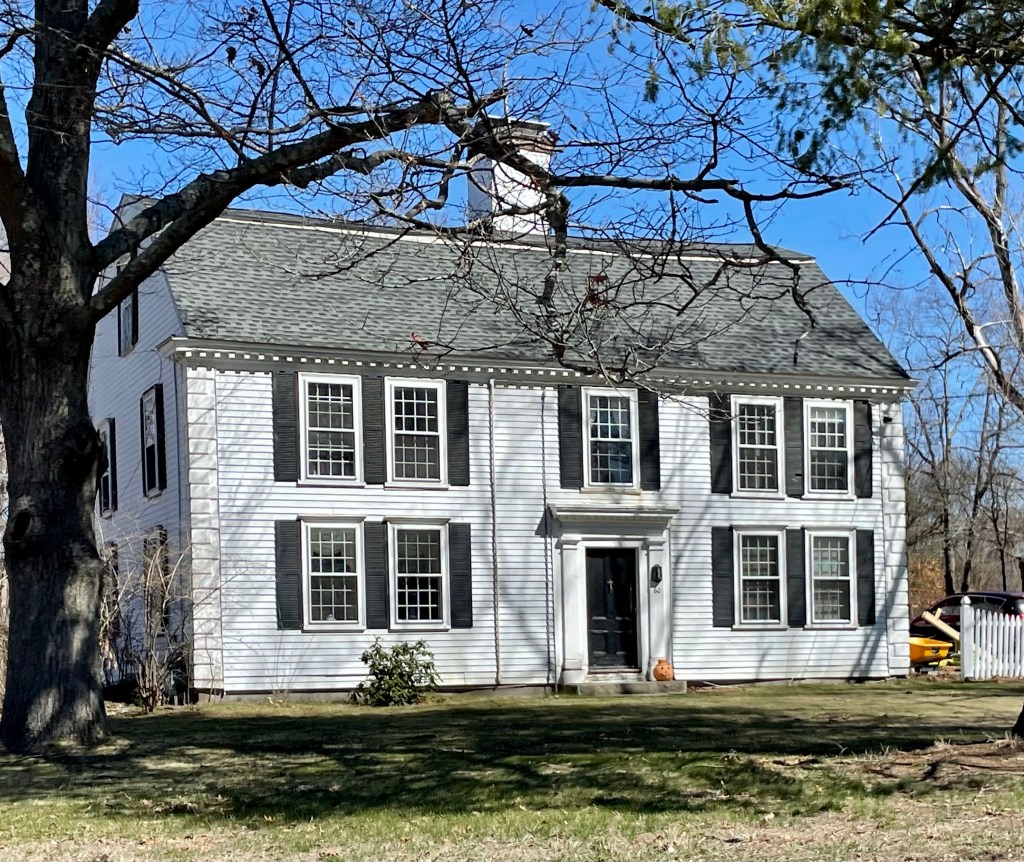
Sampson Spaulding (1711-1796) studied at Harvard University to become a minister. At the age of just 23, he was called to be the first minister at the new First Congregational Church in 1736. To entice the young minister to the rural new town of Tewksbury, this Georgian mansion was constructed, probably with help from his new congregation. He married Mehetable Hunt, a local woman, and they had six children. Rev. Spaulding was stricken with paralysis in 1791 in the middle of a church service, and he died five years later. He became one of the first burials in the new cemetery in town, now known as the Tewksbury Cemetery. The gambrel-roofed Georgian mansion stands today as one of the oldest homes in Tewksbury.
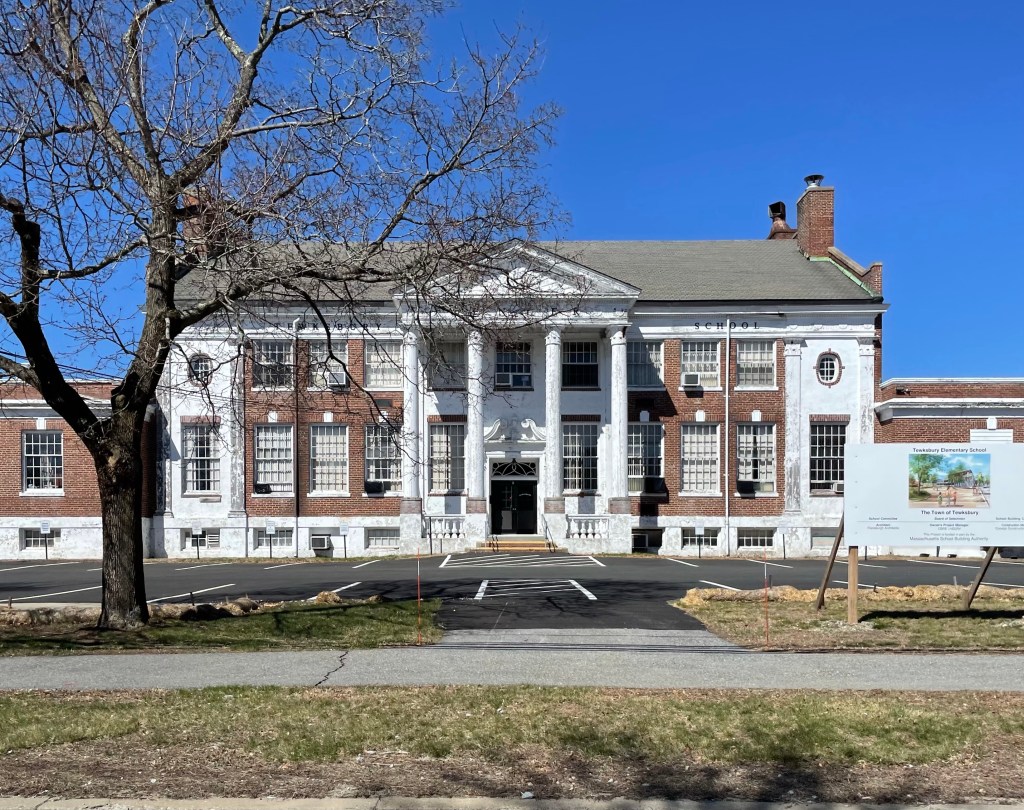
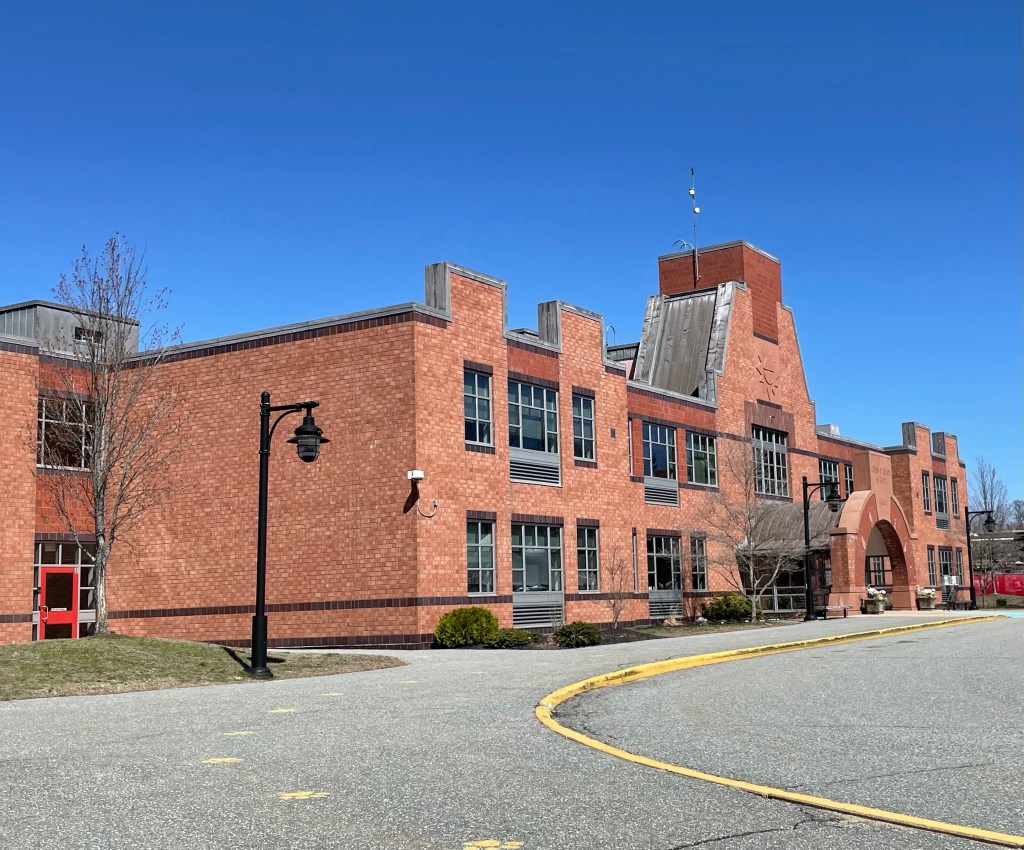
Built in 1934 as the fourth high school for the town of Tewksbury, this Neo-Classical school building has seen better days. The Center School was designed by Miller and Beal architects of Portland, Maine, and likely funded with assistance of New Deal program funding during the Great Depression. The next year, Tewksbury Stadium was dedicated in 1938, which was a Works Progress Administration (WPA) project. The Tewksbury Center School retains many of the details that characterize its Neo-Classical Style including: the front gable entry portico supported by two-story Corinthian columns and pilasters, the wide frieze band with the band of dentil molding, the decoratively clad end bays framed by Corinthian pilasters, the broken pediment of the door surround, and keystones in the brick lintels. The town needed to expand at the end of the 20th century, and hired Architectural Resources Cambridge to design the John F. Ryan Elementary School, located behind this building. The Ryan Elemetary School is a pleasing design which is Post-Modern in style. The Center School has been used as offices for the School Department and was recently proposed to be demolished for surface parking, and a new school constructed elsewhere on the site. This seems very wasteful, and epitomizes the lack of regard for environmental or historical conservation in many cities and towns.
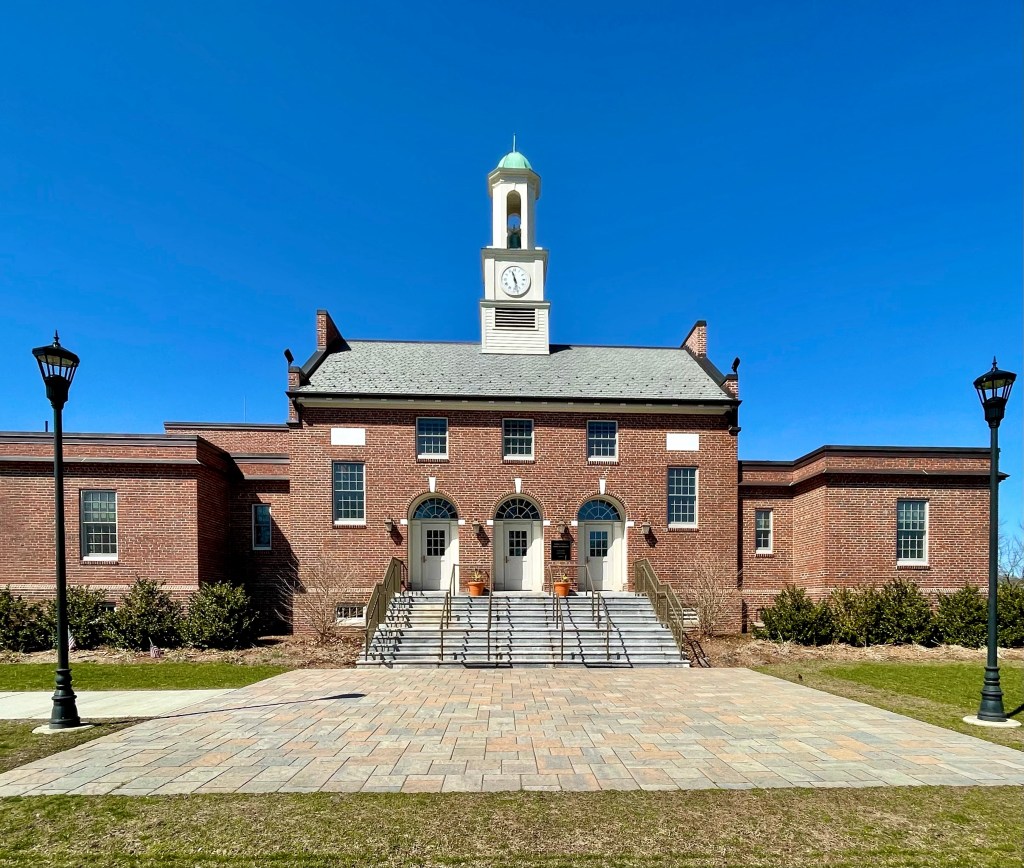
The town of Tewksbury, Massachusetts was colonized in 1637 and was officially incorporated in 1734 from the town of Billerica. The town was historically home to at least two raids by native peoples during the infamous King Phillip’s War, which killed dozens of men, women and children settlers. The town is named after Tewkesbury, England, likely inspired by some of the original settlers. The town grew as a rural village until it became a suburb of adjacent Lowell and Andover, Massachusetts. The town’s older Town Hall building burned in 1918, and funding was quickly acquired to erect a new, suitable building for the town. The Boston-based architectural firm of Kilham & Hopkins was hired and they designed this gorgeous Colonial Revival building. The symmetrical building features a main two-story block with a rear and side wings. The facade features three entrances with recessed fanlights above. A slate roof is capped by a towering cupola, which adds an additional flair to the building. The structure was so well-designed, it was featured in the Architectural Record in 1919, a national publication.
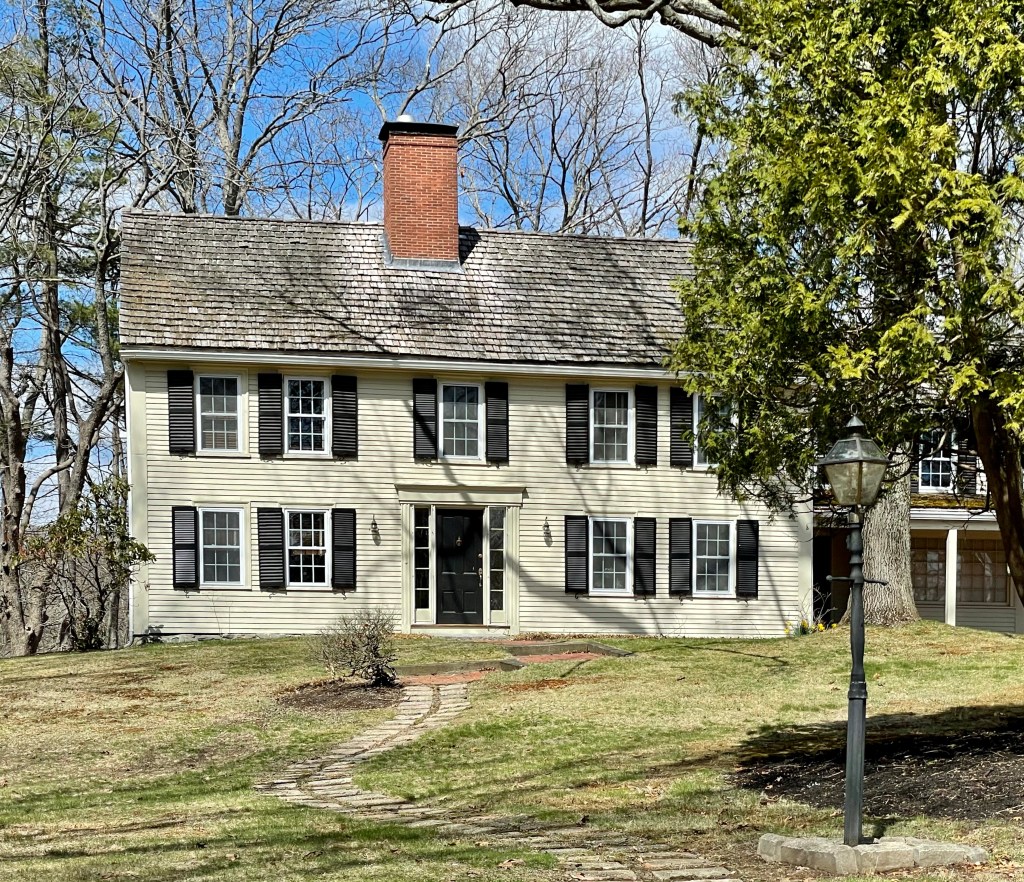
Another of Oak Hill Village’s pre-Revolution homes is this stunner! This home was built some years before 1718 and was eventually occupied by Robert Murdock (1663-1754) and wife Hannah Stedman. Murdock emigrated from Scotland to Plymouth, MA in 1688 with his brother, later settling in Roxbury. In 1703, Robert bought a house and 120-acres of land here, and worked as a housewright. Like the King House (last post), the house was likely rebuilt or modified substantially at this time. Robert also served as a selectman, Constable, Surveyor of Highways, and Assessor in town until his death; and his son, Robert Murdock Jr., took over the property. By the mid-18th century, the estate was purchased by Jeremiah Wiswall (1725-1807). Wiswall served as Captain of the militia at the battle at Concord and Dorchester Heights during the Revolution and held a number of positions in the community including Overseer of the Poor, Constable, Selectman and as a hogreeve (person charted with the prevention or appraising of damages by stray swine). He was very involved in the events leading up to the Revolution including the committee on the tea embargo and drilled with the militia. He also lent money to the town to hire soldiers and owned a house designated as a place to receive smallpox inoculations in 1777, though it is unclear if it was this house he used. The house was eventually slated for demolition in the 1960s, but was saved by Dr. Roy Carlson, President of nearby Mount Ida College (now owned by UMass. For $1, he purchased the home from a developer and paid for it to be moved from its original location at the corner of Brookline and Dedham streets a ¼ mile southwest to its current location, on Carlson Ave, and it served as the President’s House.

 Buildings of New England