Galvin Cottage // c.1882

Hull Hill is a relatively unknown enclave of summer cottages that sit on a rise overlooking Boston Harbor in the coastal community of Hull. The development of Hull Hill began in the 1870’s but became most active in the 1880’s and 1890’s. The land here was previously maintained as pasture and gardens by Hull villagers, but the land here was eventually sold and developed when the Hingham Water Company came to Hull in 1882. That same year, the railroad arrived which provided easier access to the town. This cottage on Andrew Avenue is one of the earliest summer residences built here, and dates to the late 1870s or early 1880s. The cottage was owned by Owen Augustus Galvin, a Boston lawyer, and his wife, Jane Sullivan Galvin. The unique cottage features a hexagonal section with a roof extending down to meet the wrap-around porch. The cottage exemplifies late 19th century cottage/resort architecture.

Point Allerton Life Saving Station // 1889

The United States Life-Saving Service was a United States government agency that grew out of private and local humanitarian efforts to save the lives of shipwrecked mariners and ship passengers. It began in 1848 when the congress appropriated $10,000 to establish unmanned lifesaving stations along the New Jersey coast south of New York Harbor. That same year the Massachusetts Humane Society also received funds from Congress for lifesaving stations on the Massachusetts coastline. It was decided to establish a life saving service station at Point Allerton after 61-year-old Joshua James and his crew rescued 29 people from four vessels wrecked in the Boston Harbor during the great storm of November, 1888. The United States Corps of Engineers had this Queen Anne style life saving station built at the northern shores of town, overlooking the Boston harbor. Joshua James became the Keeper of the station at 62, seventeen years past the mandatory retirement age of 45 for a federal appointment with the new U.S. Life–Saving Service. The station is the best-preserved of 32 stations that once lined the Massachusetts coast (most have since been demolished or adapted to other uses). It is now operated as the Hull Lifesaving Museum.

Point Allerton Artillery Fire Control Tower // 1942

Those who have visited the tip of the coastal Boston suburb of Hull, Massachusetts, will recognize this tall tower, but may not have known its intended purpose. This is the Point Allerton Artillery Fire Control Tower, built atop the highest point in the town, to serve as part of the Coastal Defenses built around the World Wars. Several fire-control stations were built at Point Allerton going back to 1907, but this seven-story concrete tower is the last to remain here. This tower was built around 1942, as the US Government grew increasingly serious about the potential for war, with new batteries and surveillance bases built all along the coast, many of which remain to this day. Fort Revere, a remnant of the coastal defenses, remains in Hull, nearby. This 7-story fire control tower is the center of Point Allerton, and by virtue of its base elevation (124 feet), had its top observation level at 179 feet above sea level, making this the tallest observation point in the Boston harbor defenses. The tower was later deaccessioned by the government and is owned and maintained lovingly by a private homeowner on their land. The tower is luckily preserved for future generations to learn about this lesser-known part of Boston-area history.

Conant-Cushing House // c.1890

Atop the Great Hill on Point Allerton in Hull, Massachusetts, this large summer “cottage” stands out for its unique architecture and siting overlooking the bluffs and Atlantic Ocean. The Shingle style house was built around 1890 by Edward D. Conant, a real estate agent and developer of Newton as his family summer home. The architect is not clear, but the house exhibits a unique four-story crenellated tower, giving the appearance of a castle from a distance. The house was later owned by Cardinal Richard Cushing (1895-1970) as his own summer residence. Cardinal Cushing served as Archbishop of Boston from 1944 to 1970 and was made a cardinal in 1958. Cushing’s main role was as fundraiser and builder of new churches, schools, and institutions, and he helped then-presidential candidate John F. Kennedy deflect fears of papal interference in American government if a Catholic became president. Kennedy grew up spending summers at his grandfather’s home in Hull (featured previously). The Conant-Cushing House remains significant even with 20th century renovations.

Old Nantasket Beach Police Station // c.1930

The area of Nantasket Beach in Hull in the late 19th century was a hotbed of taverns, thievery, and brothels. To counter this trend of unsavory uses, the Metropolitan Park Commission (MPC) of Greater Boston acquired about 25 acres of land at Nantasket, which included roughly one mile of shoreline extending north from Atlantic Hill in 1900. The initial appropriations provided for only minimal facilities, such as a bathhouse and a few incidental buildings, one of which was a waiting room for those arriving or departing from the new railroad station (since demolished) at the beach. The MPC hired the Olmsted Brothers landscape architects to design the paths and landscaping for the new park, and they worked with architects Stickney & Austin who designed many of the early buildings here. This stucco structure was built around 1930 and served as MPC offices and a police station until 1992. The building has been vacant since 1992, but a recent push to convert the nearly 100 year old structure into the Nantasket Center for the Arts is slowly materializing. Fingers crossed to see this building preserved and used for the arts!

Nantasket Beach Bath House // 1935

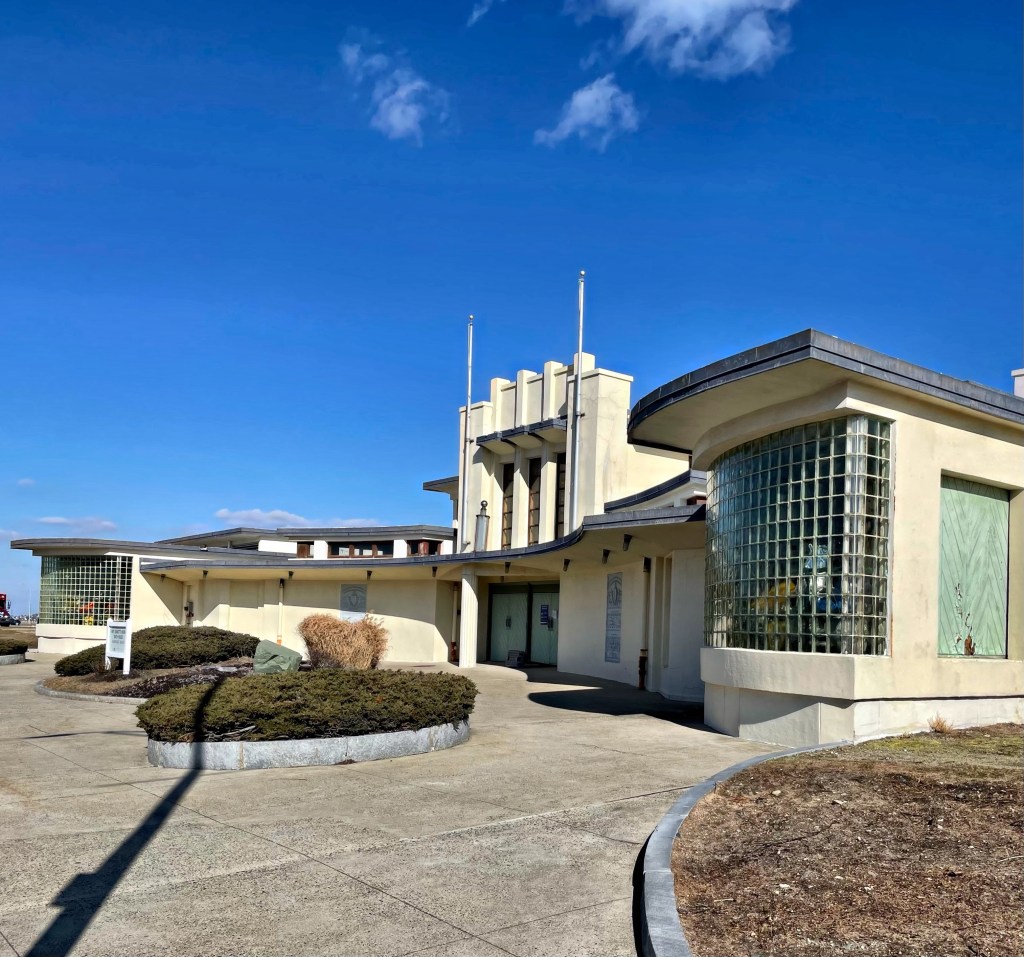
A part of any large public beach in Massachusetts is the public bathhouse, where visitors can go to the bathroom, change, and store belongings in lockers. Ever since the Massachusetts Parks System of Boston acquired land at Nantasket Beach, a bathhouse was here for visitors. The earlier building by Stickney & Austin burned down and was soon replaced. This amazing Art Moderne bathhouse features a central mass with wings adorned by glass block. The architects Putnam & Cox created a whimsical 1935 Moderne design that blends into the sandy beach. The building suffered from the salt air and cold winters and went through a massive restoration in the late 1990s, it was then re-opened and re-named after Mary Jeanette Murray, a state representative.

Nantasket Beach Waiting Room // 1903

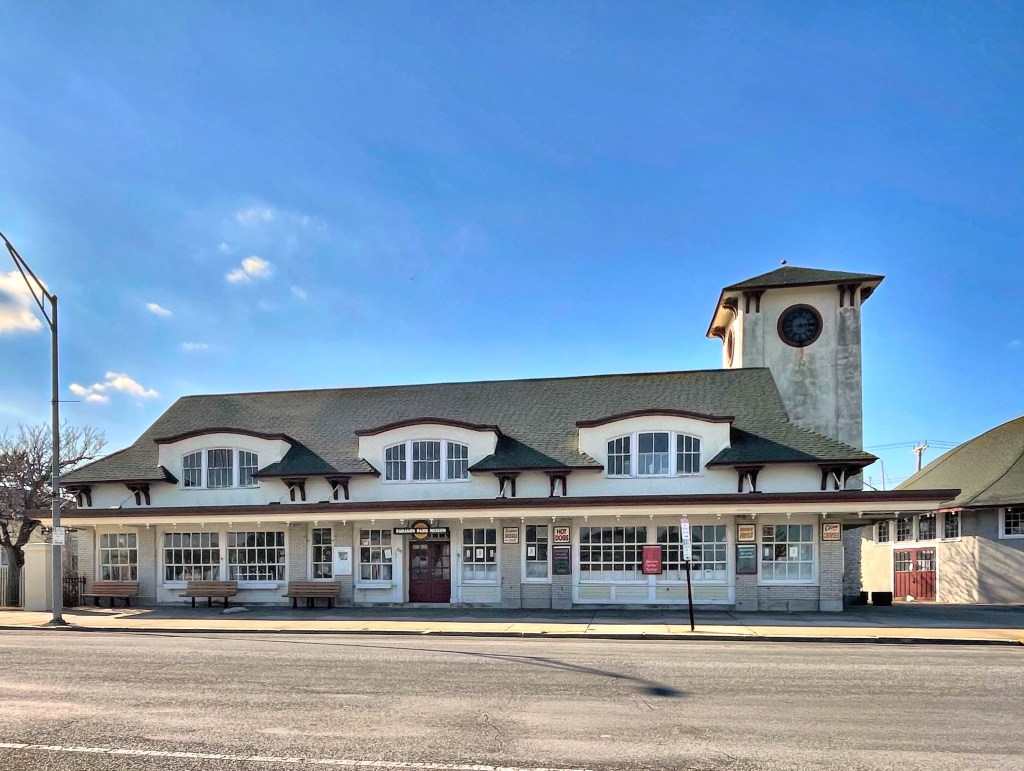
The area of Nantasket Beach in Hull was in the late 19th century, a hotbed of taverns, thievery, and brothels. To counter this, the Metropolitan Park Commission of Greater Boston acquired about 25 acres at Nantasket, which included roughly one mile of shoreline extending north from Atlantic Hill in 1900. The initial appropriations provided for only minimal facilities, such as a bathhouse and a few incidental buildings, one of which was a waiting room for those arriving or departing from the new railroad station (since demolished) at the beach. The MPC hired the Olmsted Brothers landscape architects to design the paths and landscaping for the new park, and they worked with architects Stickney & Austin who designed many of the early buildings. Stickney & Austin designed this stucco-clad building with clock tower to provide shelter from the elements and summer sun for visitors of the reservation. The building is a blending of the Arts and Crafts and Spanish Revival styles, both common at the beginning of the 20th century. The building now houses the Paragon Park Museum, after they relocated the Paragon Park Carousel next door to this building.

Paragon Park Carousel // 1928

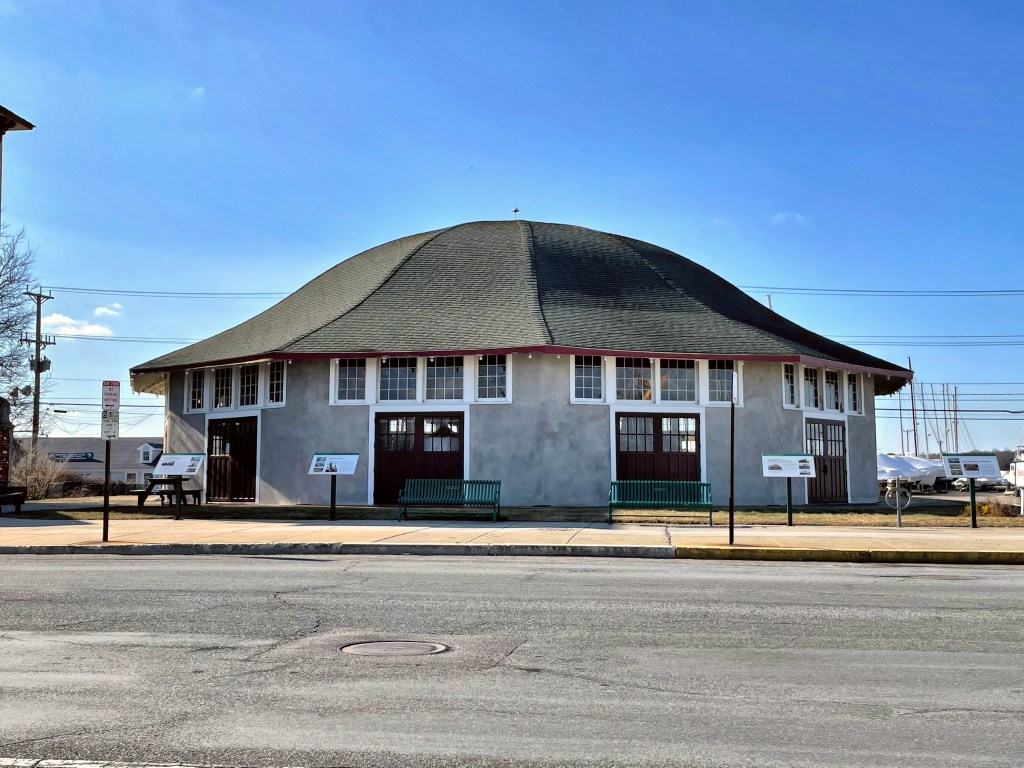
The Paragon Park Carousel at Nantasket Beach in Hull, was built in 1928 for the Paragon Park Amusement Park (featured previously), and is possibly the oldest remaining feature of the old park. When the park was created, many wealthy summer residents clutched their pearls as their quiet, peaceful summers would soon be overrun by those looking for rides and pleasure. From its inception in 1905, Paragon Park placed a carousel at the hub of its amusement attractions, just south of the main entrance gate. While this was just the first of several carousels to be installed in the park, its inclusion in the earliest iteration of Paragon Park shows the importance of the form as an attraction. The current carousel was built in 1928 by the Philadelphia Toboggan Company for Paragon Park, the carousel featured two chariots pulled by two horses each and had four rows of horses (66 in all). One of only 18 four-row carousels ever produced by Philadelphia Toboggan Company it is some forty feet in diameter. Housed in a specially built twelve-sided stucco structure to protect the delicate motor and paint in poor weather. When Paragon Park was sold to developers in 1986, parts of the carousel ride were auctioned off, but most were purchased by a locally organized preservation committee. That same year, it was moved a short distance to its present location to save it from the wrecking ball. It is now operated by the Friends of the Paragon Carousel.

Paragon Park // 1905-1984

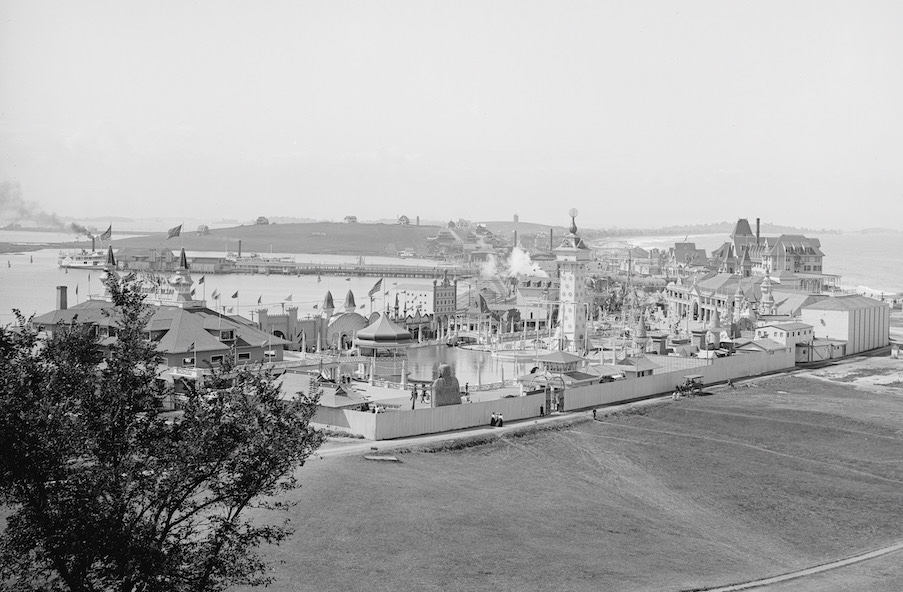
The Nantasket area of Hull on Boston’s south shore had been a popular summer destination since the middle of the 19th century, when resort hotels were developed there to take advantage of the ocean breezes and sweeping vistas. Paragon Park, an amusement park developed at the turn of the century was a great addition to provide activities for the summer visitors and resident alike. Convenient transportation in the form of steamship service and an electric railroad from Boston added to the appeal of the area. The park developed rapidly over the early 20th century and featured rides, activities and shows. The park was thought to be a mini World’s Fair, featuring a lagoon at the center with small boats to ride, and new expositions and features added every summer. The park struggled in the second half of the 20th century as the land value was more expensive and the park was only open a couple months a year. It sold in 1984 to developers who sold off many features and demolished almost all of the structures. The Giant Coaster, built in 1917 was one time, the largest roller coaster in New England. When the park was purchased, the roller coaster was sold to Six Flags America near Washington D.C. and is now The Wild One.

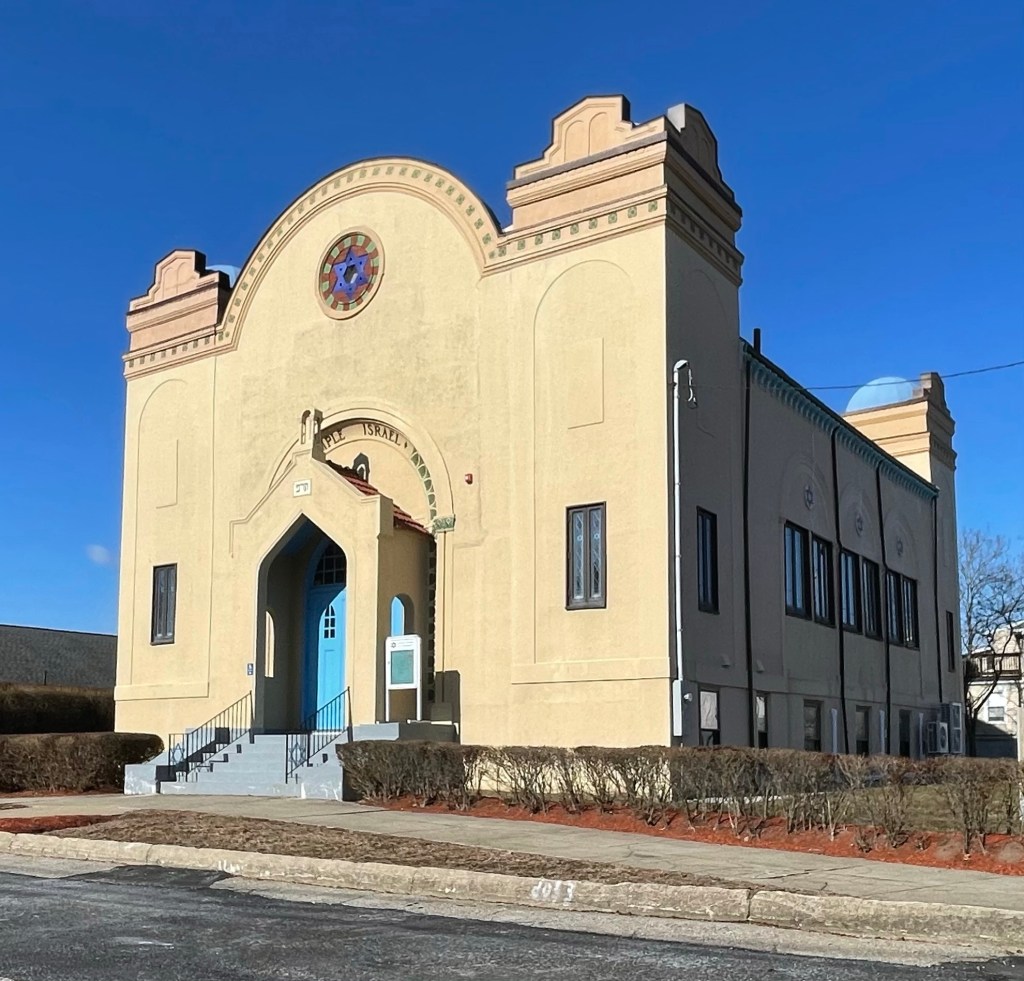
Temple Israel Synagogue // 1920

In the early 20th-century, Hull was linked by ferry, railway and road to Boston and this resort town became a popular urban recreational destination. Between 1915 and 1920, Jewish Bostonians started buying property and building summer homes in the area. The new Jewish summer residents required a temple for worship when away from their main homes. In 1920, land was purchased just north of the bustling Nantasket Beach for the erection of a place of worship. This temple was likely built by a Jewish architect/builder Joseph Rudnick, who arrived in Boston from present-day Lithuania in 1886. Unable to speak English, he hired a tutor to teach it to him, and quickly began working on constructing apartments and other buildings all over the Boston area. Temple Israel of Nantasket remains a handsome and rare example of a 1920 American
wood-framed, stucco-clad synagogue, with an active congregation.