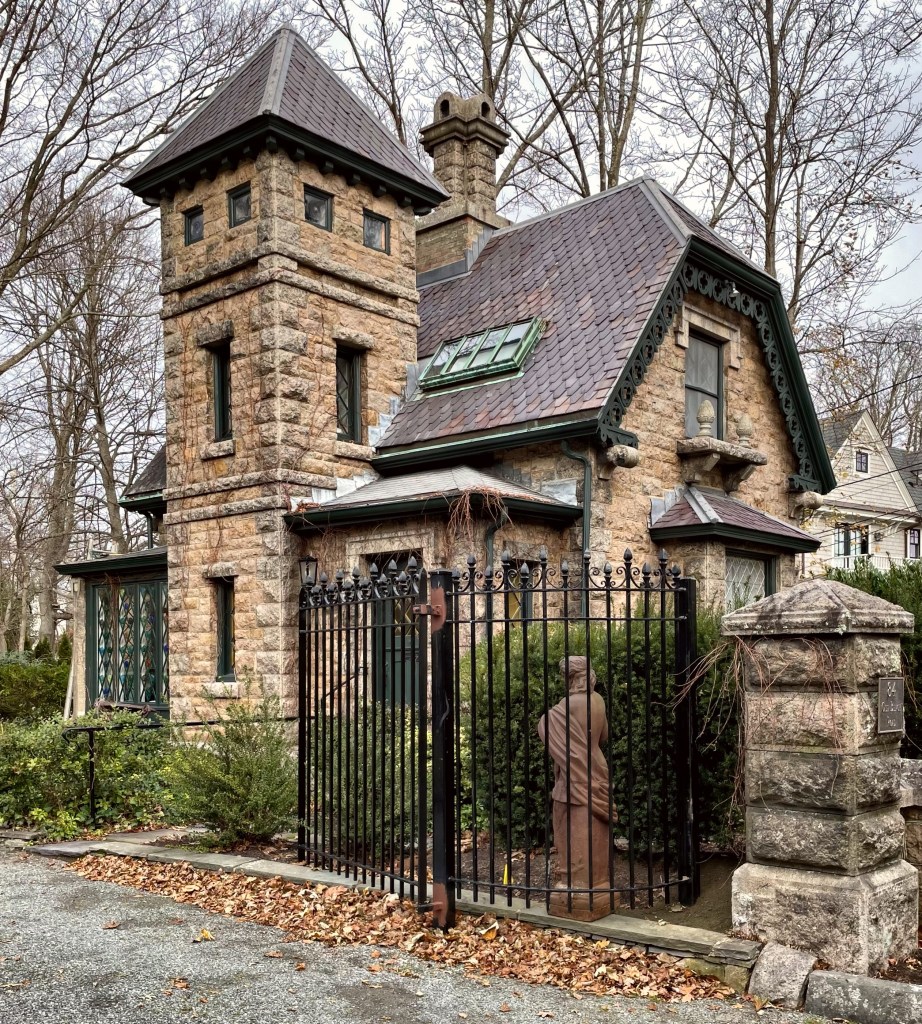
Belair Gate Lodge // 1870

Located at the historic entry to Belair (last post), one of the largest estates in Newport, you would be greeted by this charming stone building, the Belair Gate Lodge. The building is symmetrically massed, 1½-story and built of rough-face-granite-ashlar, similar to the main house. This building can be classified as French Eclectic in style and was designed by Newport architect Dudley Newton, who also designed the 1870 Second Empire renovations to the main house at the same time for owner George Henry Norman. When the Belair estate was subdivided, the gate lodge was sold off as a separate unit, and is now a single family home, aka my dream home. There is something so enchanting about gatehouses!

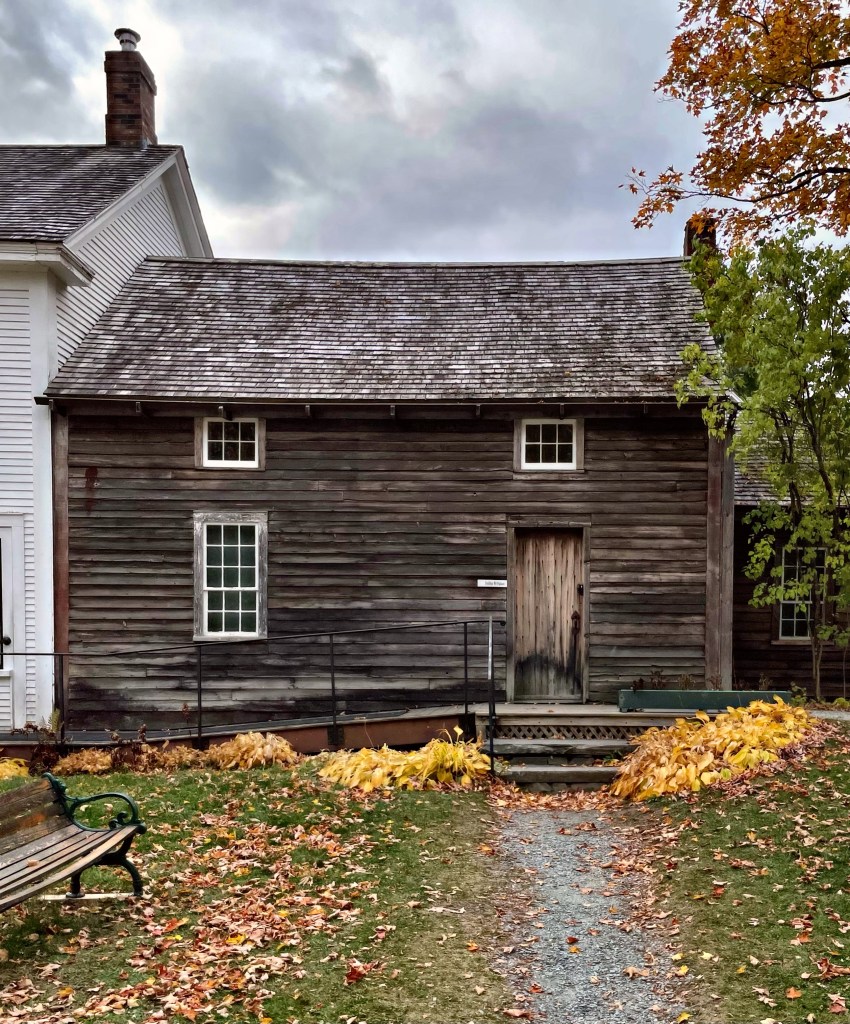
President Calvin Coolidge Birthplace // 1840

The President Calvin Coolidge State Historic Site in Plymouth, Vermont preserves the birthplace and childhood home of Calvin Coolidge, the 30th President of the United States. This iconic historic village appears much as it was during Coolidge’s lifetime. The homes of the Coolidge family, their relatives and friends are joined by the 1840 church, 1890 schoolhouse, cheese factory, and historic agricultural structures and barns. More on all of these later. First up is the birthplace of President Coolidge. This squat 1 1/2-story dwelling was built in 1840 at the rear of the Coolidge Family store which fronts the main road. By the 20th century, the old home was altered, but was restored in 1971 just in time for the 100th birthday celebration by the State of Vermont for Coolidge, dedicating the village as a historic museum.

Jethro Coffin House // 1686

Here it is… The oldest house in Nantucket! The Jethro Coffin House dates to 1686, and when it was built, Nantucket’s English population totaled several hundred, and the native Wampanoag outnumbered them by at least three to one. The home was built seemingly as a wedding gift from twenty-three-year-old Jethro Coffin (1663–1727) to his new sixteen-year-old wife Mary Gardner (1670–1767). The marriage merged two of the old Nantucket families and was built on Gardner family land out of lumber transported to the island from Exeter, New Hampshire, where Jethro’s father, Peter Coffin, owned timberland and a saw mill. The First Period house has small windows of small panes of glass as the material was shipped from England at high cost. The large central chimney would heat the entire home on cold winter nights. Mary and Jethro sold their Nantucket dwelling to Nathaniel Paddack in 1708 and moved to Mendon, Massachusetts, when Jethro inherited property there. By the late nineteenth century, the house was abandoned (for some time it was used as a barn) and had fallen into disrepair. A Coffin family reunion held on the island in 1881 renewed interest in the property and off-island members of the family bought the old Coffin House. The Nantucket Historical Association acquired the house in 1923, and four years later, Historic New England), commenced an extensive reconstruction in an attempt to return the house to its historic appearance. It remains a location of pride for residents and visitors to the island to this day.

Otis Company Mill #1 // 1845

This five-story granite mill building was one of the major catalysts for the 19th century population surge in Ware, Massachusetts. As New England’s fledgling textile industry of the era played a vanguard role in transforming the U.S. into an industrial nation, the significance of this type of mill can hardly be understated. The Otis Mill #1 in Ware is one of the last remaining granite textile mills of this early period in central/western Massachusetts. The mill was built in 1845 for the Otis Company, which initially manufactured woven cotton fabric, but later branched out into stockings, woolen shirts and drawers underwear. The company was Ware’s largest employer for about 100 years! The company prospered thru WWI employing over 2,500 people. During the 1920’s the business began a decline due to the southern state’s mills and lack of modernization. In the mid 30’s the Otis Co sold its property to the citizens of Ware, which they formed Ware Industries, Inc to continue the major employer in the town. Due to this Ware came to be known nation-wide as “The Town That Can’t Be Licked.” The mill is now home to local small businesses as a sort of incubator, providing jobs to local residents!

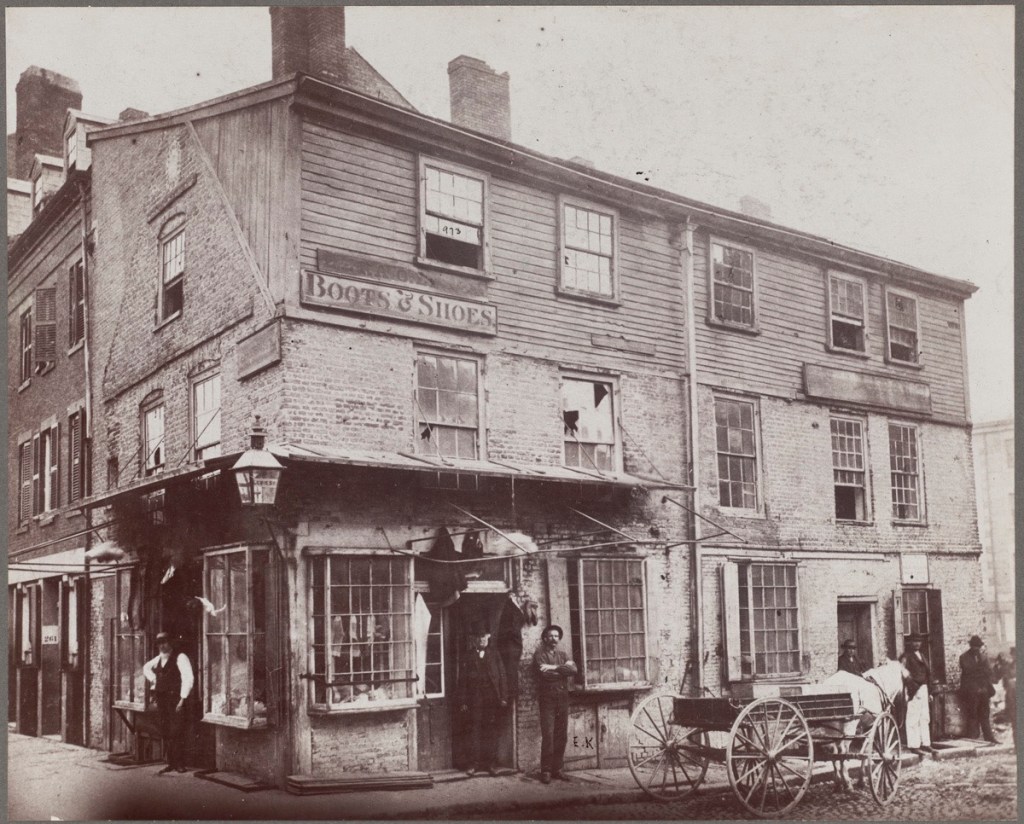
King’s Head Tavern // 1691-1870

Another of Boston’s Lost buildings is the King’s Head Tavern, an old establishment that was built in the early days of Boston and rebuilt following a fire in 1691. It stood on the corner of Lewis and North Streets, in the North End near Scarlett’s Wharf. Due to its proximity to the harbor and wharfs, it became the first place weary sailors stopped to get a drink on solid ground. The two-story, brick tavern was capped with a gambrel roof, which was later filled with wooden additions giving the structure a boxy look. The establishment was named the King’s Head Tavern after a popular London tavern of the same name. Like much of the North End, surging immigrant populations put immense strain on the built environment and many older buildings were demolished in the late 19th and early 20th centuries for tenement housing. The old King’s Head Tavern was demolished in 1870, just two years after the photo was taken.

First Everett High School // 1893

While Everett’s population had remained small compared to nearby towns throughout much of the nineteenth century, its close proximity to Boston resulted in dramatic population growth between 1885 and 1915. During this late industrial period Everett’s population was one of the fastest growing in the state, doubling between 1870 and 1880, nearly tripling from 1880 to 1890 and doubling again between 1890-1900. The City of Everett immediately went about erecting a new schoolhouse to educate its youth. Architects Loring & Phipps were retained to prepare plans for the new high school. Ground was broken in August 1892 and the building was dedicated just over a year later in September 1893. The school was opened to 175 students on Monday, October 2, 1892 with a capacity of 550 students (as it was realized that the city would continue to grow). The building is high-style Queen Anne with red brick and mortar and light sandstone trimming. In 1905, the capacity of the high school was nearly doubled by the construction of an addition on the west end of the original building. Even doubling the size of the school did not prove adequate as the building was outgrown less than a decade later. From this, the Second Everett High School was built a block away. The First Everett High School is now known as the Whitney Lorenti House, a low income, elderly housing complex.

Leonard Proctor House // c.1810

In the early 1780s, Leonard Proctor and Salmon Dutton and their families, moved from Massachusetts and settled in present-day Cavendish, Vermont and gave their names to the two major settlements on the Black River, Proctorsville and Duttonsville. Leonard Proctor was born in Westford, Massachusetts and fought in the Revolutionary War at a young age. He settled in Cavendish in 1782 and built a modest house/tavern, and underwent developing the village in his name, Proctorsville. By the early 1800s, Leonard was a highly esteemed member of town and had the funds to erect the finest Federal style manse in the village, to showcase the stability and wealth of his community. The home exhibits scalloped cornice moldings and the carved wood flowering vines springing from urns on the upper pilasters that have a folk/Federal quality that stands out as a very unique design detail. Carved Adamesque bell flowers that flank the door suggest Asher Benjamin’s Windsor influence. Elliptical sunbursts above the pilasters, elaborate guilloche friezes, and the broad semielliptical attic light have a later Federal character. It is possible that Leonard had this house built, and it was “modernized” by one of his heirs.

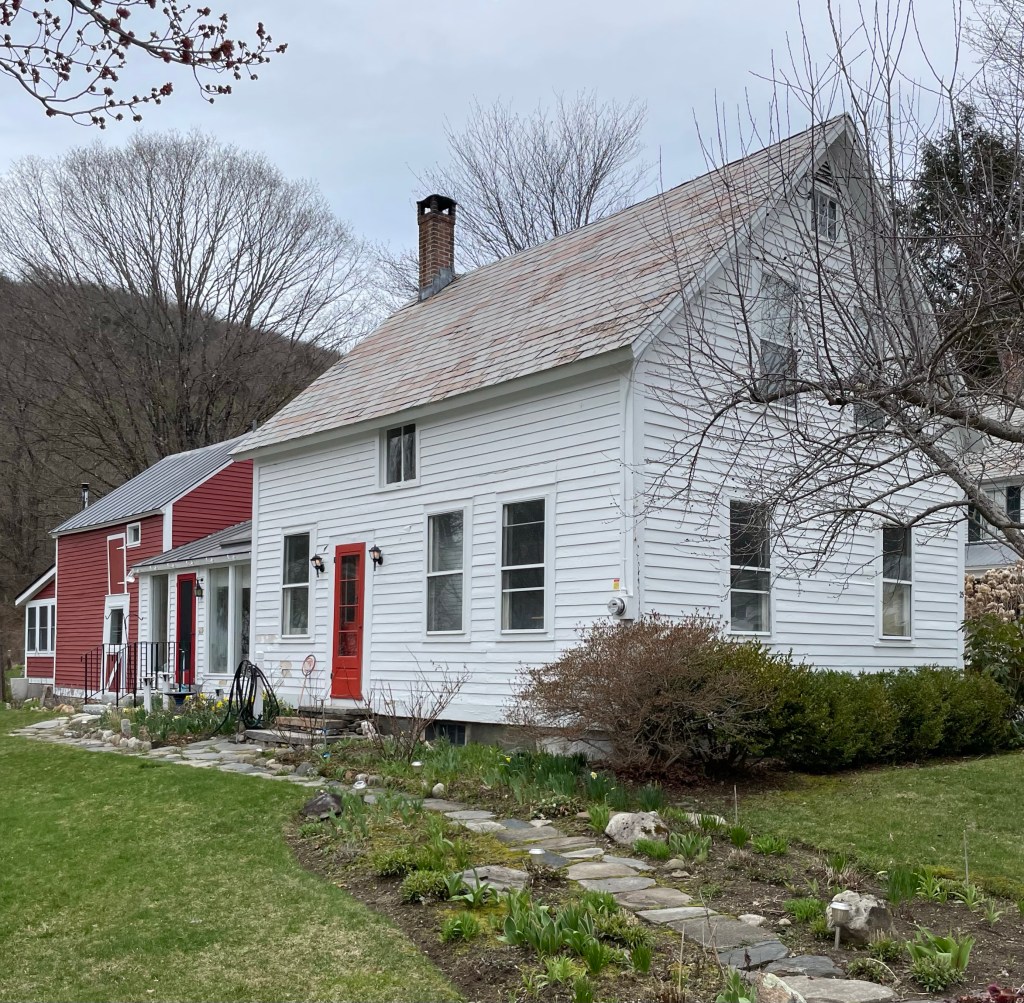
Church House // c.1840

When you think of the quintessential New England Village, what do you think of? These villages of white houses around a town green, usually anchored by a congregational church with a tall, white steeple, have been the subject of myriad photographs and memories for decades. Why are so many like this? Well, historically, the bright white we know of as a common house color was not available until the 1920s. Before the early 1900s, “white” paint was more cream or off-white as we would describe it. Many such villages started seeing white paint proliferate as Titanium Dioxide was mixed with pigments to generate the bright white, about at the same time Colonial Revival style homes saw a second resurgence in popularity. The bright-white paint was more expensive and represented stability and prestige. Publications like Yankee Magazine showed photographs of these charming villages blending into the freshly fallen snow or fall foliage and the romanticization of New England truly began. Newfane, Vermont is one of these villages, which are dominated by the bright white paint. It is an obvious choice, especially due to the number of classically inspired Greek Revival style houses.

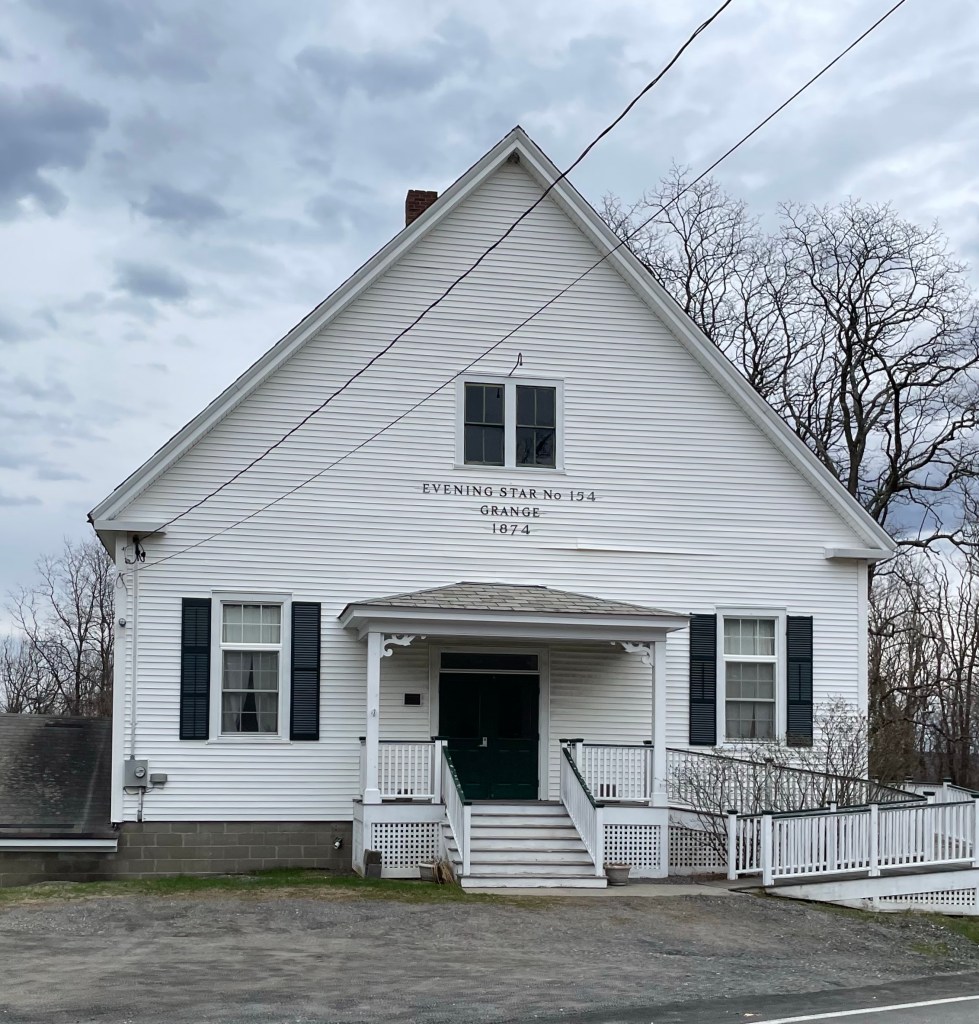
Evening Star Grange Hall // c.1874

Rural New England towns like Dummerston, Vermont long relied on agriculture as a means of life. From this, local farmers and their families would organize in regional Grange Halls through the The National Grange of the Order of Patrons of Husbandry, an agricultural advocacy group. Many rural communities in the United States still have a Grange Hall and local Granges still serve as a center of rural life for many farming communities. The local Evening Star Grange was organized in Dummerston Center in 1874 with 32 members, growing by the end of the 19th century. This building would have held meetings where farmers could share trade secrets, make deals, and “talk shop” regarding farm life. Such buildings are significant as community centers for agricultural communities and should be preserved for future generations.

First Congregational Church, Ridgefield // 1888

The First Congregational Church was first established in Ridgefield, Connecticut just four years after the establishment of the town. Civic leaders in October 1712 successfully petitioned the Connecticut General Assembly for permission to levy a tax for “the settling and maintaining of the ministry in the said Town of Ridgefield.” Rev. Thomas Hauley, the first minister, also served as town clerk and school teacher. The first meeting house, on the town green, opened for worship in 1726. Plans for a new meeting house were drawn up in 1771 to fit a growing population, but construction was not complete until 1800. The second church was built in a more traditional style with a steeple. With a shift in the towns demographic from rural homeowners to ritzy exurb to New York City, a more suitable church was required by the end of the 19th century. Josiah Cleaveland Cady, one of the many great New York architects at the time was hired to design a new church suitable for the wealthy New Yorkers who summered in town to consider a neighbor, and he did not disappoint! The building blends many styles from Queen Anne, to Victorian Gothic, to Romanesque Revival in a way that isn’t clunky as in some other versions.