Queset House // 1854

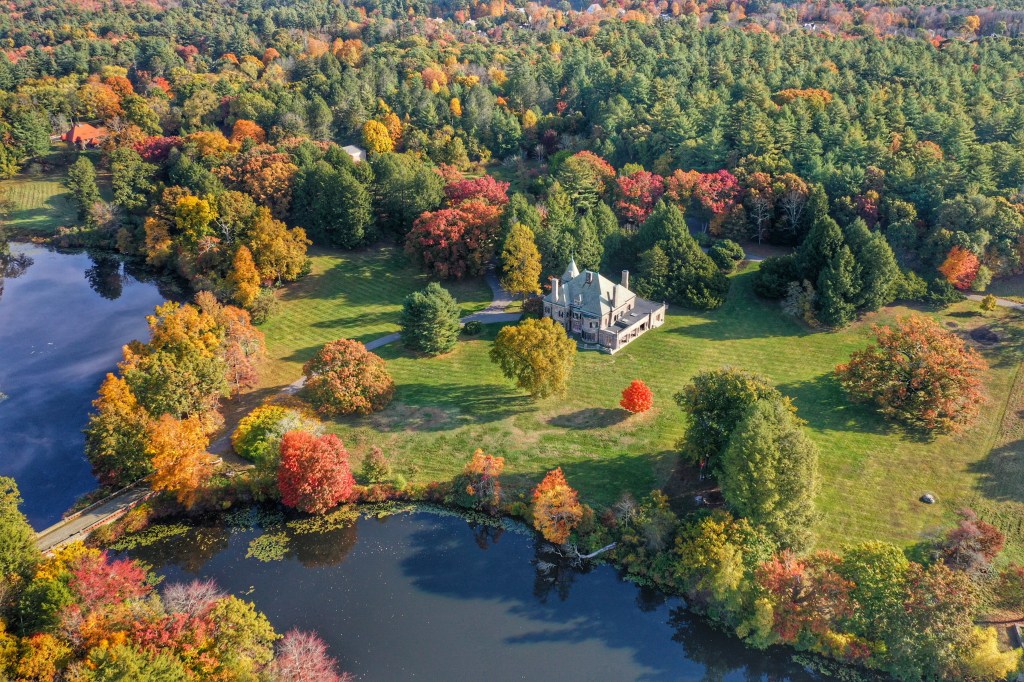
Tucked away behind the Ames Free Library in Easton, you will find one of the most stately examples of Gothic Revival architecture in a house in New England. The house is known as Queset House. Queset was commissioned to be built in 1853 and it was completed the following year for Oakes Angier Ames, of the wealthy Ames Family, who ran a shovelworks in town, and built some of the most handsome structures in the state. The house’s front portion design was drawn from a plan by noted architect Andrew Jackson Downing (who died in 1852). Downing collaborated with Alexander Jackson Davis who provided architectural drawings. The two architects created pattern books which greatly influenced Gothic Revival and Italian Villa style architecture for the next decades, with many wealthy people hiring builders to complete homes in their designs. Queset House is different than most in that the house is constructed of local stone. Oakes would later hire Harvard-educated architect John Ames Mitchell, (a first cousin of Oakes Angier and architect of the nearby Unity Church in Easton) designed the rear addition in 1873, adding the copper-clad chimneys. In the later years of his life, Oakes wanted to help further-improve his town and worked with his family to consult with starchitect H. H. Richardson and landscape starchitect Frederick Law Olmsted on projects in town (the Library, Town Hall, Rockery). After his death in 1899, the home was occupied by his son, famous theatrical producer Winthrop Ames, and his wife. The family would eventually gift the property to the Town of Easton, who today occupy it as an extension of the Public Library, open to the public!
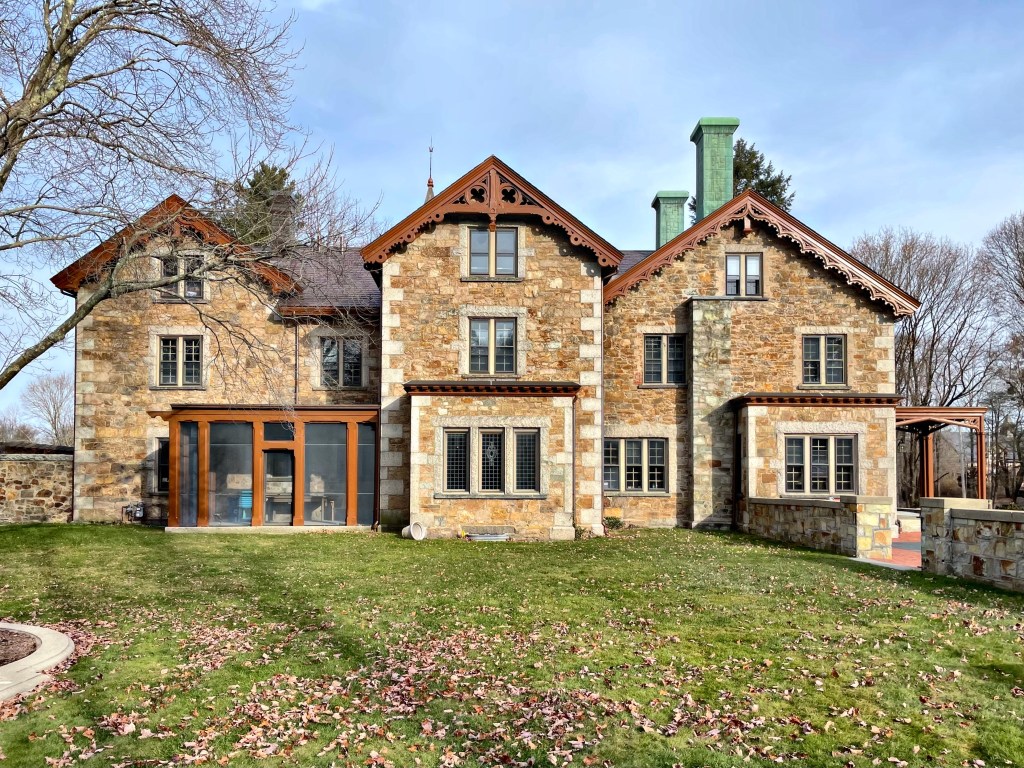
Side view.

Langwater // 1859

The country estate of Frederick Lothrop Ames (1835-1893), “Langwater” sits in North Easton amongst a collection of some of America’s greatest architectural treasures, all thanks to the Ames Family. The Ames family was a wealthy family which had lived in Easton for many generations. Frederick’s grandfather Oliver Ames Sr. founded the Ames Shovel Works in Easton, Massachusetts. The Shovel Works earned the family a huge fortune, during a time when aggressive canal and railroad expansion was built by the hands of thousands of men using shovels. Frederick’s father Oliver Jr. was president of the Union Pacific Railroad during the building of the transcontinental railroad. Frederick’s cousin Oliver Ames was governor of Massachusetts 1887–1890. Frederick himself was Vice President of the Old Colony Railroad and director of the Union Pacific railroad. At the time of his death, Ames was reported to be the wealthiest person in Massachusetts. With this immense wealth, Frederick built a castle where he would spend most of the year, overseeing his various businesses, in his hometown of Easton, Massachusetts. The mansion was designed by architect George Snell and built around 1860, with a couple additions and updates until Frederick’s death. A few years before his death, Frederick hired famed architect Henry Hobson Richardson, who he already worked with in designing the Oakes Ames Memorial Hall(Easton’s Town Hall), to design a gate house leading to Langwater (more on that later).

Collinsville Stores // c.1880

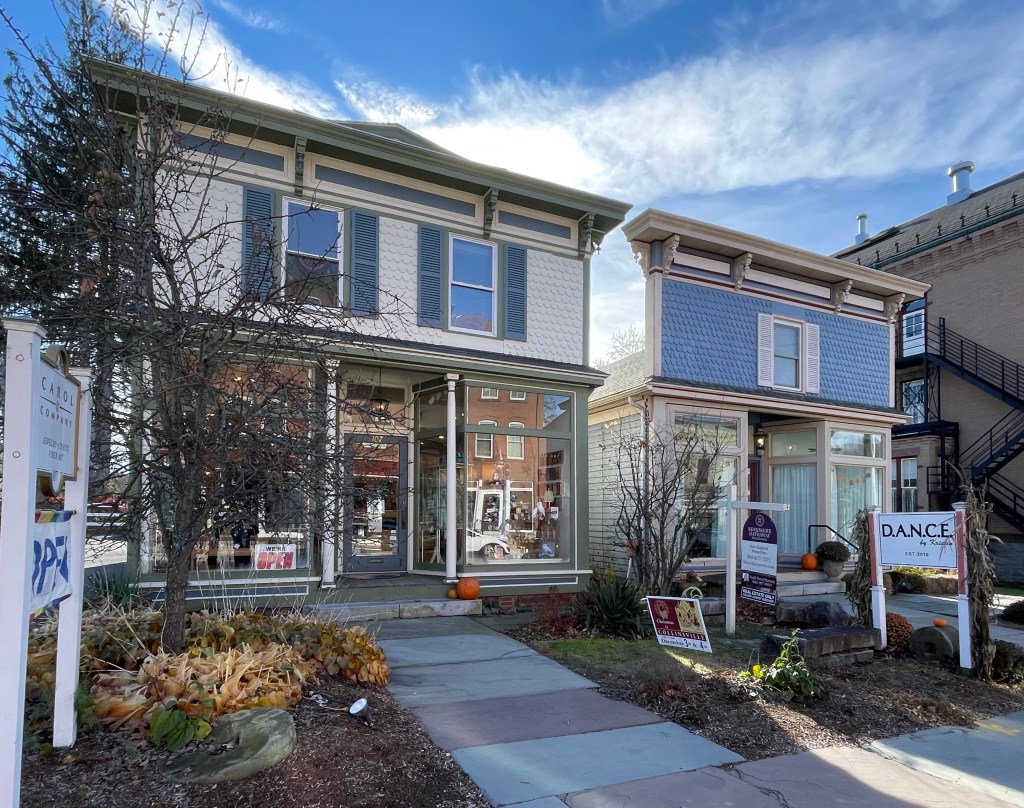
These two Italianate-style stores sit on Collinsville’s Main Street, a walkable main street village along the banks of the Farmington River. Each structure has a central, recessed entry with storefront windows meeting the sidewalk. One structure is two stories with a very shallow gable roof and the other is 1 1/2 stories with a false front. These false front facades remind me of old frontier towns in western movies, they are great!

North Canton Methodist Church // 1871

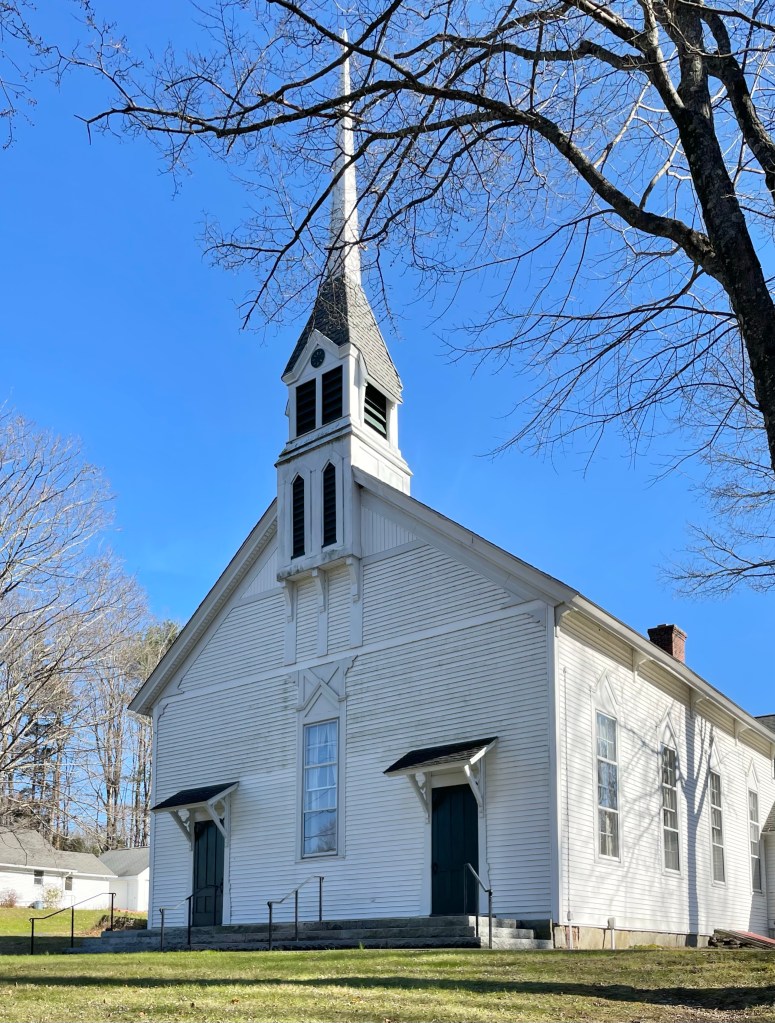
This modest country church in North Canton Village, CT is a fine example of a restrained Stick style church building. The simple plan, steeply pitched roof, adorned woodwork trim to resemble the bracing underneath, and the central spire all work together to create such a beautiful architectural composition. The building was constructed in 1871, and formally opened for its first service one year later.

Canton Center Schoolhouse // 1872

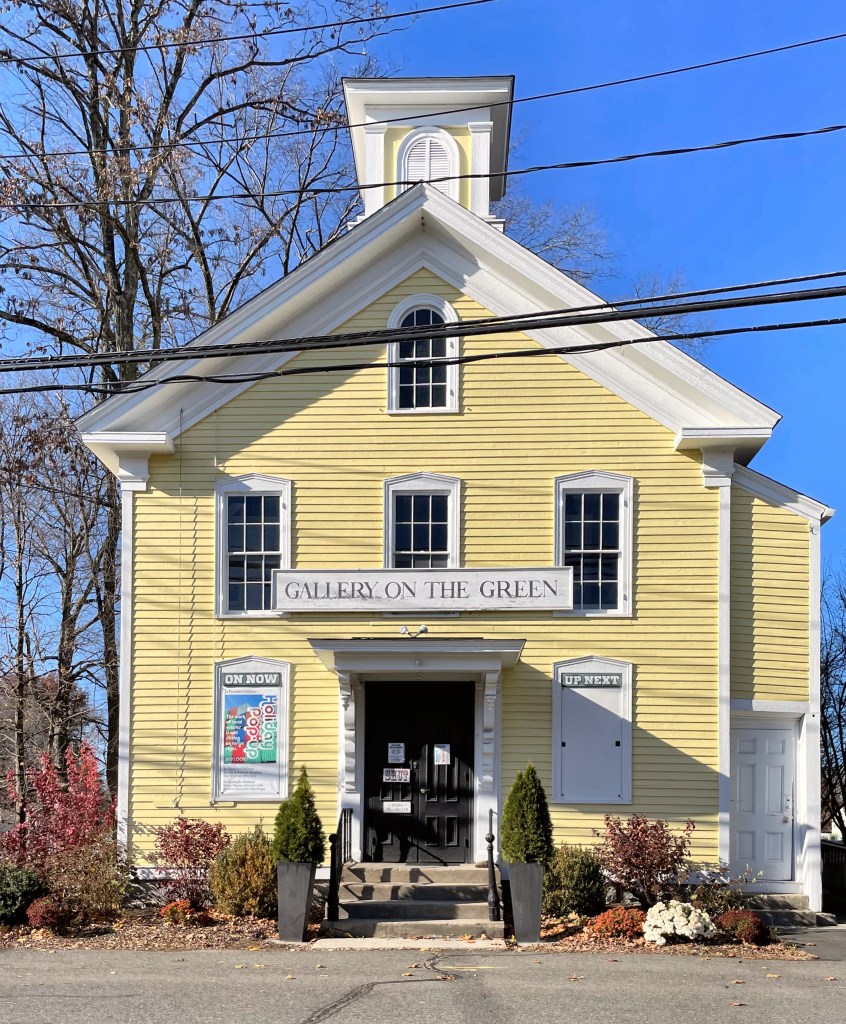
Canton, Connecticut, the only town in the state named after a city in China! The land which we now know as Canton had long been inhabited, specifically by the Wappingers, a group in the larger Algonquin speaking tribes. Canton was incorporated out of Simsbury in 1806, and named after the City of Canton in China (now known as Guangzhou), though I am not sure why. The town quickly developed two main villages. Collinsville sits on the Farmington River and its power was harvested for industry; while the center village grew differently as an agricultural village of farms. At the center of town sat a green for civic and town functions and gatherings. The town constructed a school here as far back as 1759, when the rural village was still a part of Simsbury. This is the fourth building on the green and it was built in 1872, and can be classified as Italianate in style. The building was occupied as a school until 1949, and it was used for other city uses until 1971, when the building was rented to the Canton Artist’s Guild and the building was renamed Gallery on the Green. The building remains community-focused and holds exhibits of local artists! Much of the rest of Canton Center lost all of its bucolic charm when the main road became commercialized, prioritizing speeding cars over a walkable village.

Old Settlers’ Burying Ground // 1674+

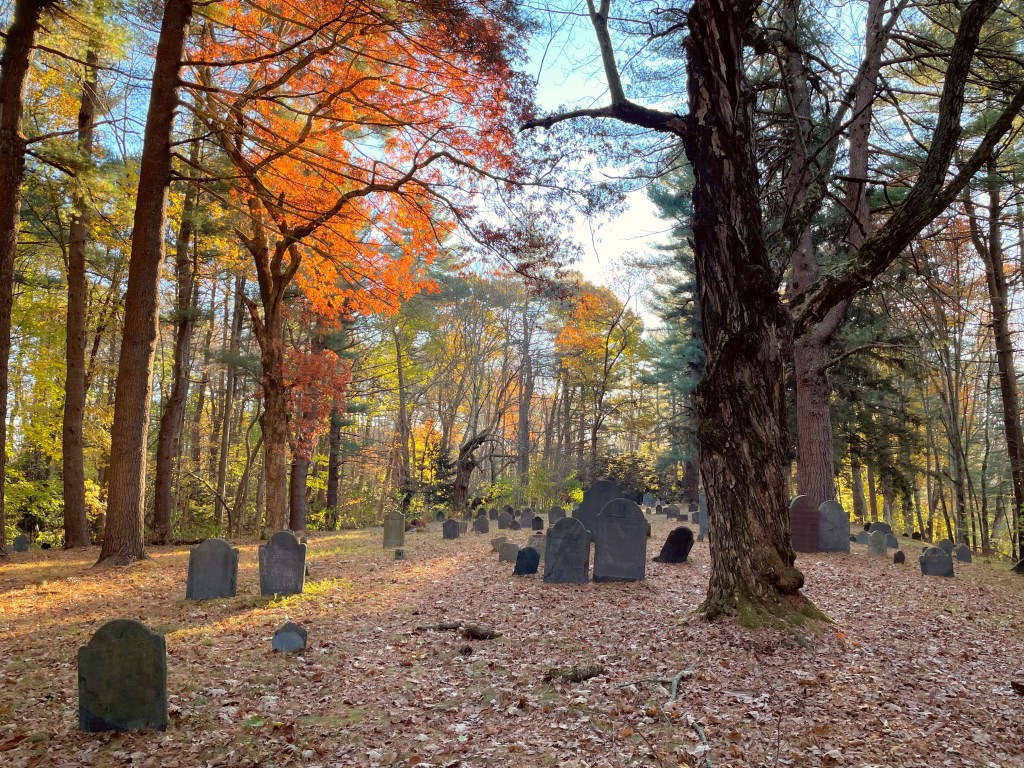
I know.. I know.. It’s not a building, but I couldn’t help myself but to find this hidden cemetery and take some photos! Tucked way off a street, across railroad tracks and down into a grove of trees, I came across this Colonial-era cemetery known as the Old Settlers’ Burying Ground. Established by 1674, it is the town’s oldest formal cemetery with gravestones dispersed, both standing up to the heavens and seemingly jutting out of the ground like crooked teeth. The Old Settlers’ Burying Ground contains approximately 196 stones and an estimated 230 burials. The stones in the cemetery reflect the continuum of headstone iconography popular from the 17th through 19th centuries, depicting winged death’s head, soul effigy, heart, hourglass, skeleton, and cherubs, to name a few. The cemetery is thought to possibly have unmarked graves of the colonists who were killed during the Lancaster Raid, the first in a series of five planned raids on English colonist towns during the winter of 1675 as part of King Philip’s War. Metacom, known by English colonists as King Philip, was a Wampanoag sachem involved in leading and organizing Wampanoag warriors during the war. The tension that led to these raids began from the decline in the fur trade due to overhunting, the decrease in the native population due to European-derived diseases, and the invasion of English livestock on native land. According to one estimate, at least fourteen Lancaster inhabitants died and twenty-three were captured and taken as prisoners, some of those 14 are likely buried here in unmarked graves.

Burbank Homestead // c.1800

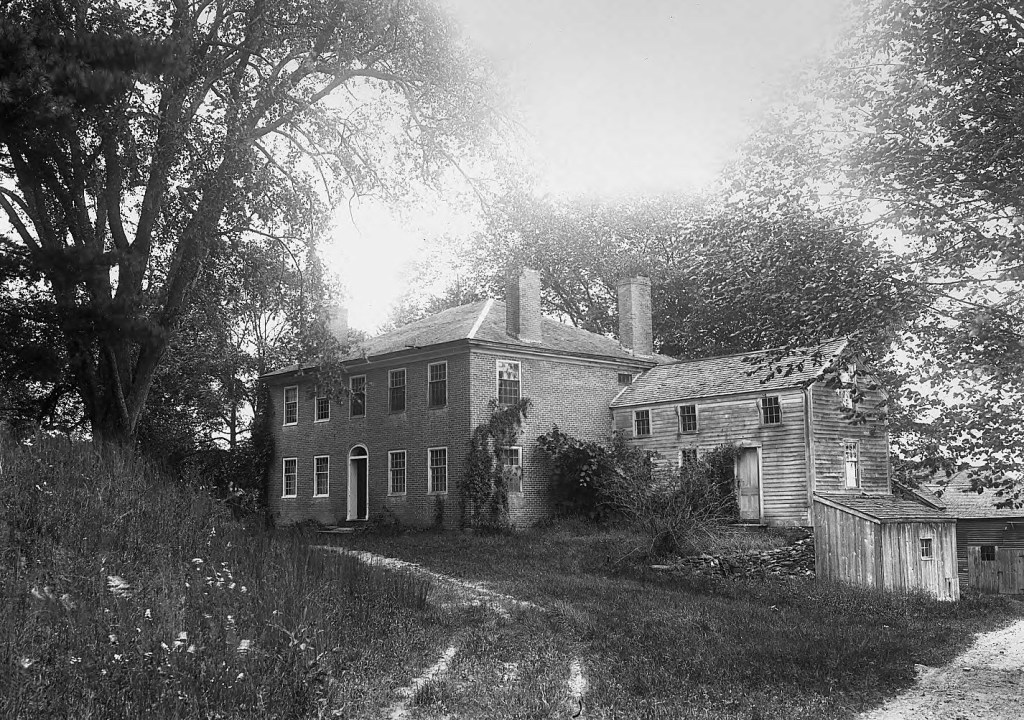
Do you like McDonalds french fries? If you do, you can thank Luther Burbank, who was born in this house!

Image courtesy of Lancaster Historical Society

This Federal style home formerly in Lancaster, MA, was built around 1800 by housewright Simon Willard. The brick farmhouse saw generations of the Burbank Family live, marry, and die here. In 1849, Luther Burbank was born in an upstairs bedroom, as the 13th of 15 children of Samuel Walton Burbank and his three wives (not at the same time). Growing up on the farm, Luther enjoyed the plants in his mother’s large garden. When his father died when he was 18 years old, Burbank used his inheritance to buy a 17-acre plot of land in nearby Lunenburg. There, he developed the Burbank potato. He soon after sold the rights to the Burbank potato for $150 and moved to California, where he spend the remainder of his life. Today, the Russet Burbank potato is the most widely cultivated potato in the United States. The potato is popular because it doesn’t expire as easily as other types of potatoes, and it is the most commonly used potato for McDonalds iconic fries. In his life, Burbank created hundreds of new varieties of fruits (plum, pear, prune, peach, blackberry, raspberry); potato, tomato; ornamental flowers and other plants. He did more than I could possibly list, I highly suggest reading about him online. He was even so inspiring that Frida Kahlo painted Burbank as a tree/human hybrid, sprouting out of his corpse underground (seriously). In the 1930s, Henry Ford came to Lancaster and negotiated with the Dexter family, who then owned the house, to move the wood-frame ell to his museum in Dearborn, Michigan, where it remains to this day. The brick house was demolished by the Federal Government when the nearby U.S. Army Base at Fort Devens was expanded in the site.

Lancaster Industrial School for Girls – Rogers Cottage // 1855

The Lancaster Industrial School for Girls in Lancaster, Massachusetts, was was established in 1854 as one of the most progressive correctional institutions of its day, and the first in the U.S. for girls. Throughout the 19th century, state governments struggled with how to best deal with youthful law-breakers and vagrants. Some states began to provide correctional facilities, often known as “Industrial Schools,” while other states continued to incarcerate “delinquents” in prisons alongside adults who often were charged with much more heinous crimes. Institutions like the Lancaster Industrial School led the way in social reform, copying a cottage system created in France that emphasized a wholesome, family-like atmosphere and the opportunity to rise above the “low life” slums from which Victorians assumed delinquent children came from. All girls who were under 17 years old at the time of commitment, were housed in one of eight “cottages” where they would each have their own rooms and chores. The Rogers Cottage seen here was one of a handful of the earliest cottages, all identical in design. Matrons and teachers taught the girls the domestic arts, including how to cook and sew. The Industrial School closed in the 1970s and has been used in an ever-diminishing role by the State of Massachusetts ever since. There have been talks about this complex being sold for redevelopment with some old buildings saved, but I am not holding my breath.

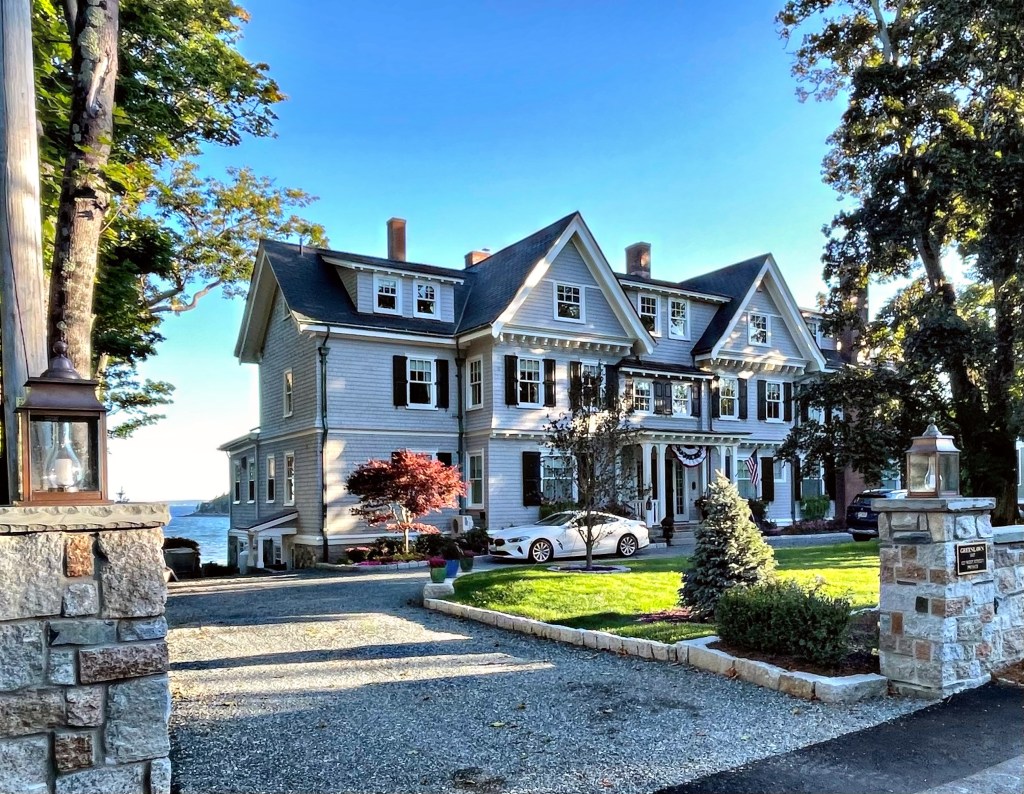
“Greenlawn” // 1887

West Street in Bar Harbor was laid out in 1886, and developers laid out house lots on both sides, with larger, more expensive land right on the water. One of the earliest homes built on the street is Greenlawn, constructed in 1887 for William Rice, an industrialist who co-founded Rice & Hutchins, a shoe manufacturing company with main offices in Boston. The architectural firm of Rotch and Tilden, comprised of partners Arthur Rotch and George Thomas Tilden. Both had studied at the Massachusetts Institute of Technology and at École des Beaux-Arts in Paris. Both had worked at the architectural firm of Ware and Van Brunt, and would be best known for their Gilded age mansions in New England. By 1896, the cottage was owned by William L. Green, which is likely when the cottage’s name “Greenlawn” stuck. The house recently sold for $4.25 Million and the interiors are gorgeous!

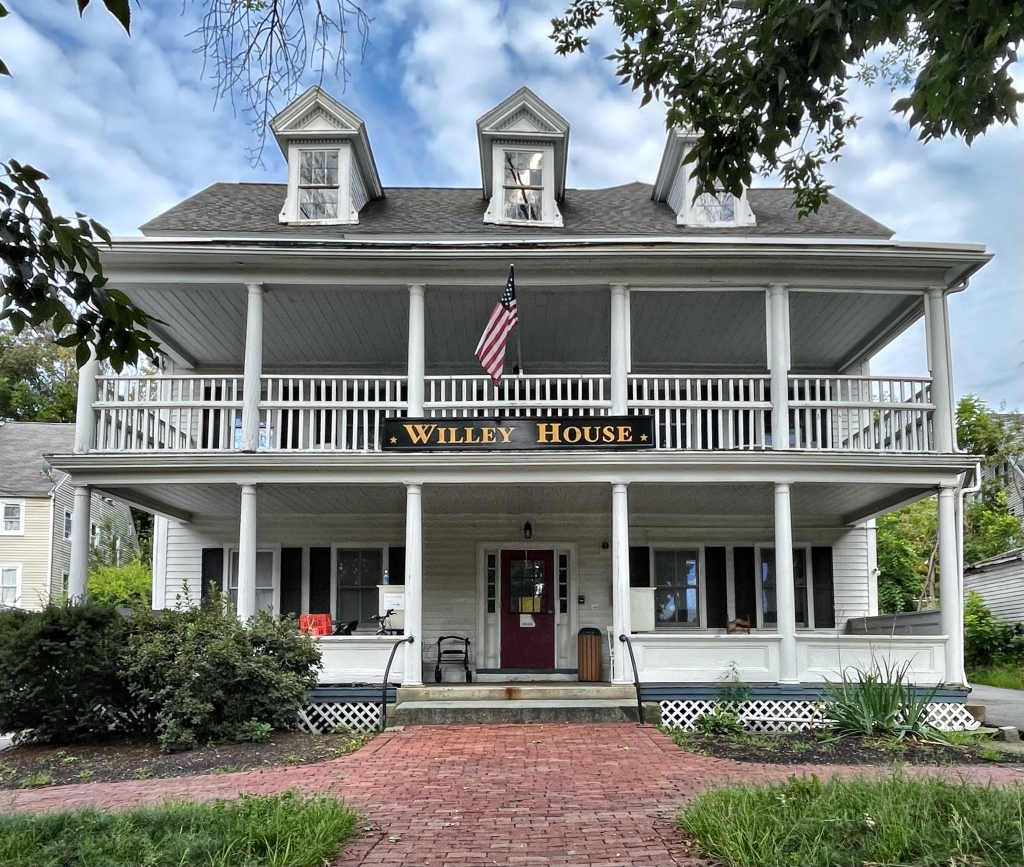
Willey Hotel // pre-1822

Originally an old tavern/inn, this wood-frame building in Newmarket, NH, was built for a member of the Rundlett Family who settled in town from nearby Portsmouth. The old building was known as Rundlett’s Tavern for a number of years, later renamed the Washington House, and eventually Silver’s Hotel by 1870. Under owner Joseph B. Silver, the Federal style building was updated with Victorian-era flair, marketing to visitors of town who had business with the Newmarket Manufacturing Company across the street. After Silver died in 1898, the building was purchased by George H. Willey and renamed the Willey Hotel/Willey House. He oversaw renovations in the 1920s to give it the Colonial Revival appearance we see today. The building is now apartments.