Touro Jewish Cemetery and Gate // 1677

Located just a short walk from the oldest extant Jewish synagogue in the United States, Touro Synagogue (last post), the Touro Jewish Cemetery and stately gate, showcase the significance and position Jewish residents held in Newport, going back to Colonial times. The earliest Jews in Newport arrived from Barbados, where a Jewish community had existed since the 1620s. They were of Spanish and Portuguese origin; their families had migrated from Amsterdam and London to Brazil and then to islands in the Caribbean. After the completion of the synagogue in 1763, the Jewish community in Newport realized the need to acquire land for a Jewish cemetery. Two of the original immigrants, Mordechai Campanal and Moses Pacheco purchased the lot at the corner of what is now Kay and Touro Streets for this purpose. In 1843, the cemetery funded the erection of a cemetery gate and fencing to surround the plot. They hired architect Isaiah Rogers to design the gate, which he took inspiration from his design at Boston’s Granary Burying Ground, completed just two years earlier. The Egyptian Revival gate is a very rare example of the style in the United States. On the granite gate, the torches turned to face downward are an acknowledgement of the ending of life’s flame.

Langwater // 1859

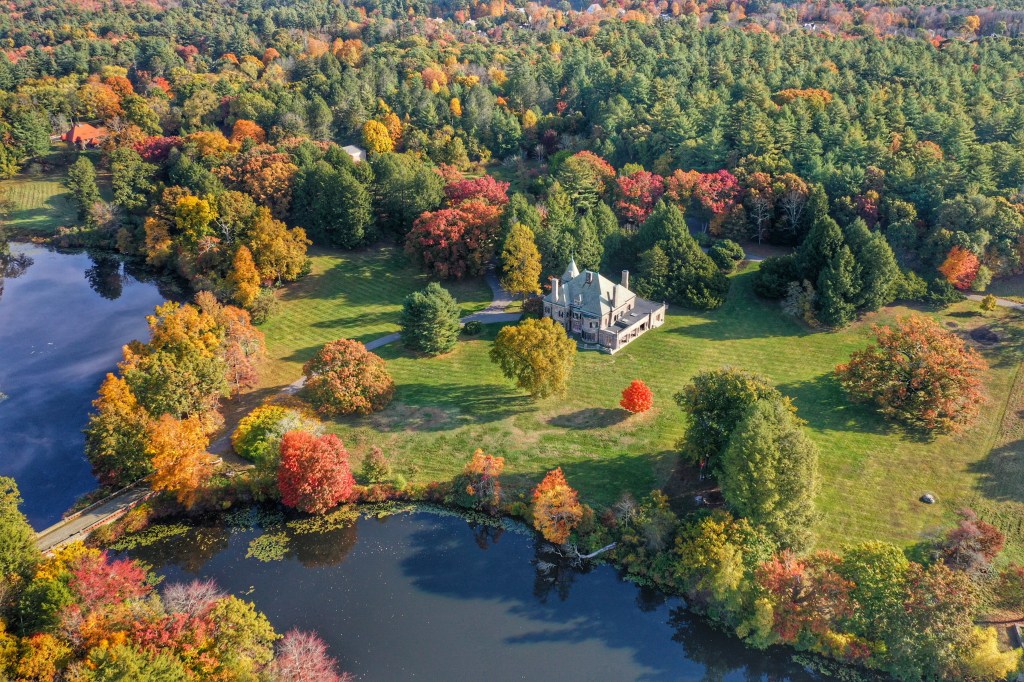
The country estate of Frederick Lothrop Ames (1835-1893), “Langwater” sits in North Easton amongst a collection of some of America’s greatest architectural treasures, all thanks to the Ames Family. The Ames family was a wealthy family which had lived in Easton for many generations. Frederick’s grandfather Oliver Ames Sr. founded the Ames Shovel Works in Easton, Massachusetts. The Shovel Works earned the family a huge fortune, during a time when aggressive canal and railroad expansion was built by the hands of thousands of men using shovels. Frederick’s father Oliver Jr. was president of the Union Pacific Railroad during the building of the transcontinental railroad. Frederick’s cousin Oliver Ames was governor of Massachusetts 1887–1890. Frederick himself was Vice President of the Old Colony Railroad and director of the Union Pacific railroad. At the time of his death, Ames was reported to be the wealthiest person in Massachusetts. With this immense wealth, Frederick built a castle where he would spend most of the year, overseeing his various businesses, in his hometown of Easton, Massachusetts. The mansion was designed by architect George Snell and built around 1860, with a couple additions and updates until Frederick’s death. A few years before his death, Frederick hired famed architect Henry Hobson Richardson, who he already worked with in designing the Oakes Ames Memorial Hall(Easton’s Town Hall), to design a gate house leading to Langwater (more on that later).

Collinsville Stores // c.1880

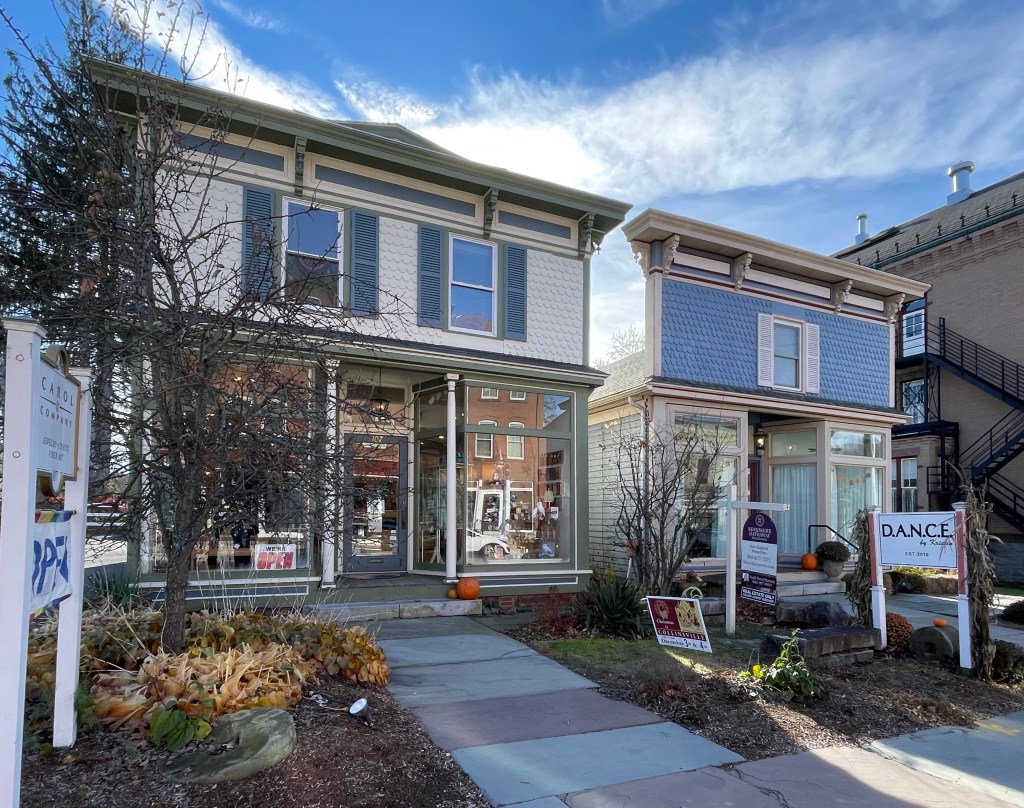
These two Italianate-style stores sit on Collinsville’s Main Street, a walkable main street village along the banks of the Farmington River. Each structure has a central, recessed entry with storefront windows meeting the sidewalk. One structure is two stories with a very shallow gable roof and the other is 1 1/2 stories with a false front. These false front facades remind me of old frontier towns in western movies, they are great!

Case-Crowley House // 1840

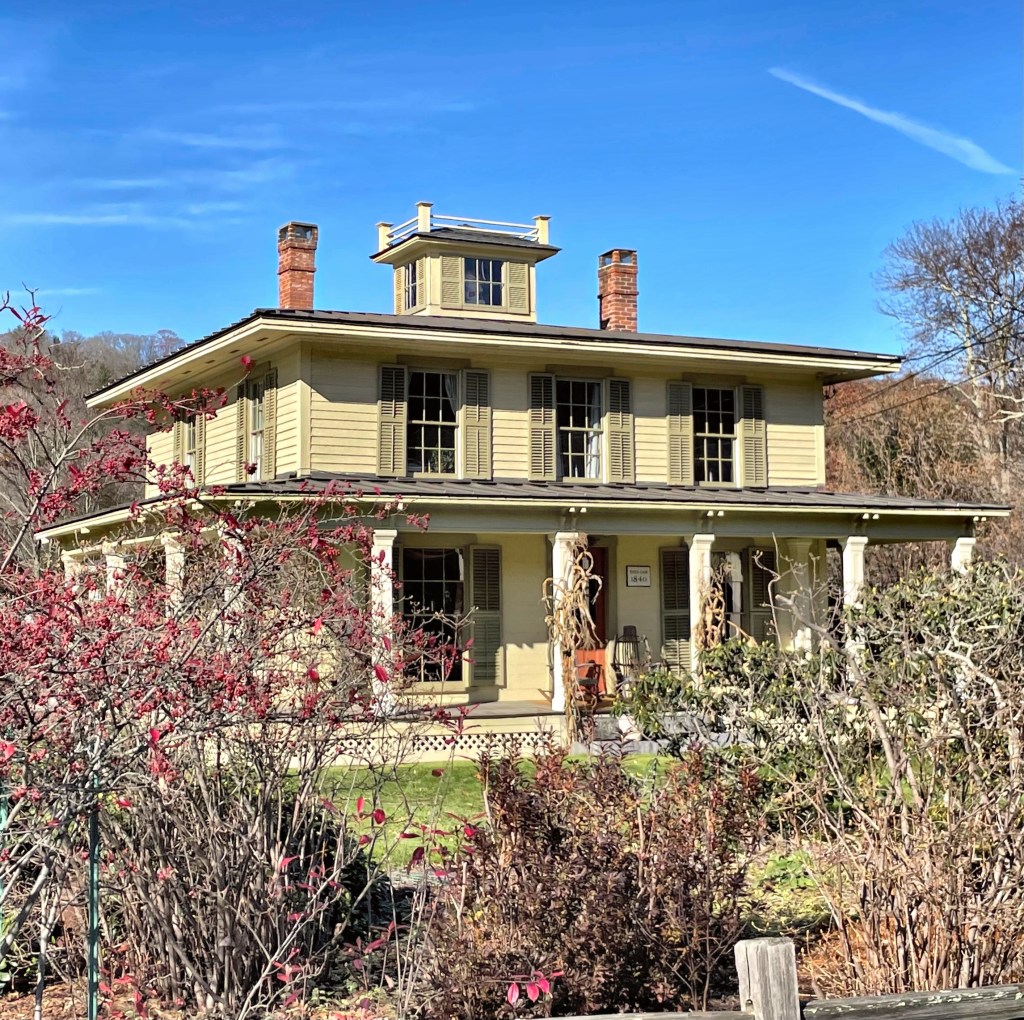
Built in 1840 for Titus Case, this old house looks very different than it would have been when first constructed. The house was originally Greek Revival in style, probably with a gabled roof, common of the region and style. Case died in 1845, and the home was later purchased by Jeremiah Crowley who ran the Canton Creamery nearby. After the Civil War, he “modernized” the house in the then fashionable Italianate style, with a low-sloped roof with overhanging eaves, large brackets, a cupola, and a wrap-around porch.

North Canton Methodist Church // 1871

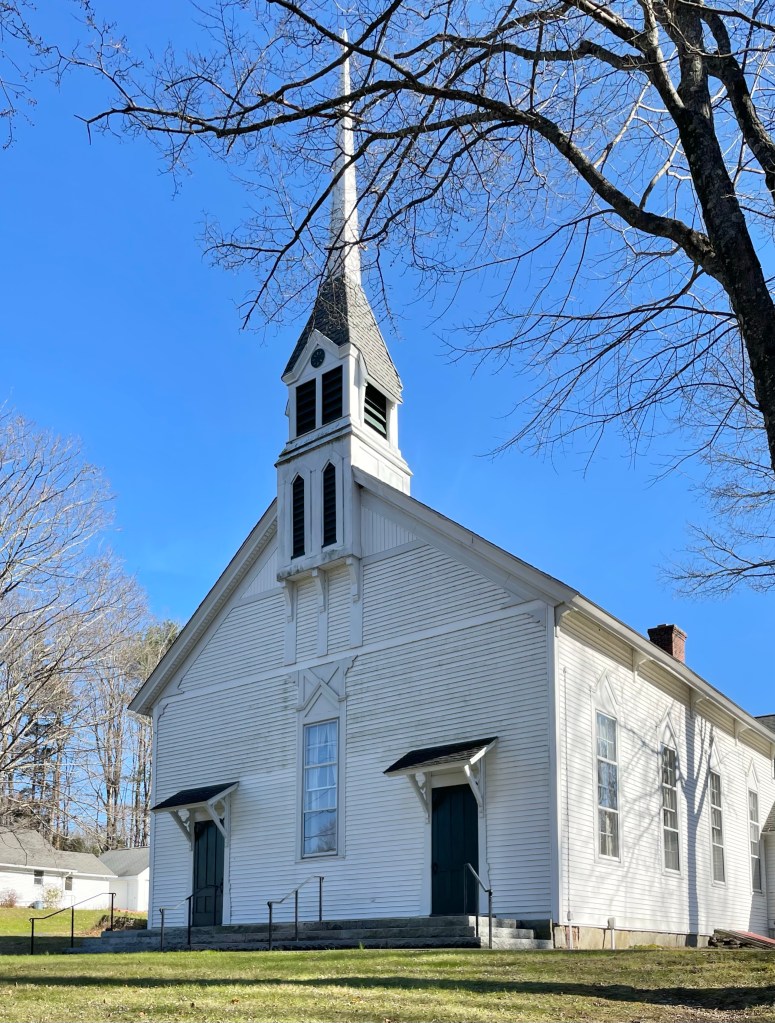
This modest country church in North Canton Village, CT is a fine example of a restrained Stick style church building. The simple plan, steeply pitched roof, adorned woodwork trim to resemble the bracing underneath, and the central spire all work together to create such a beautiful architectural composition. The building was constructed in 1871, and formally opened for its first service one year later.

Canton Center Schoolhouse // 1872

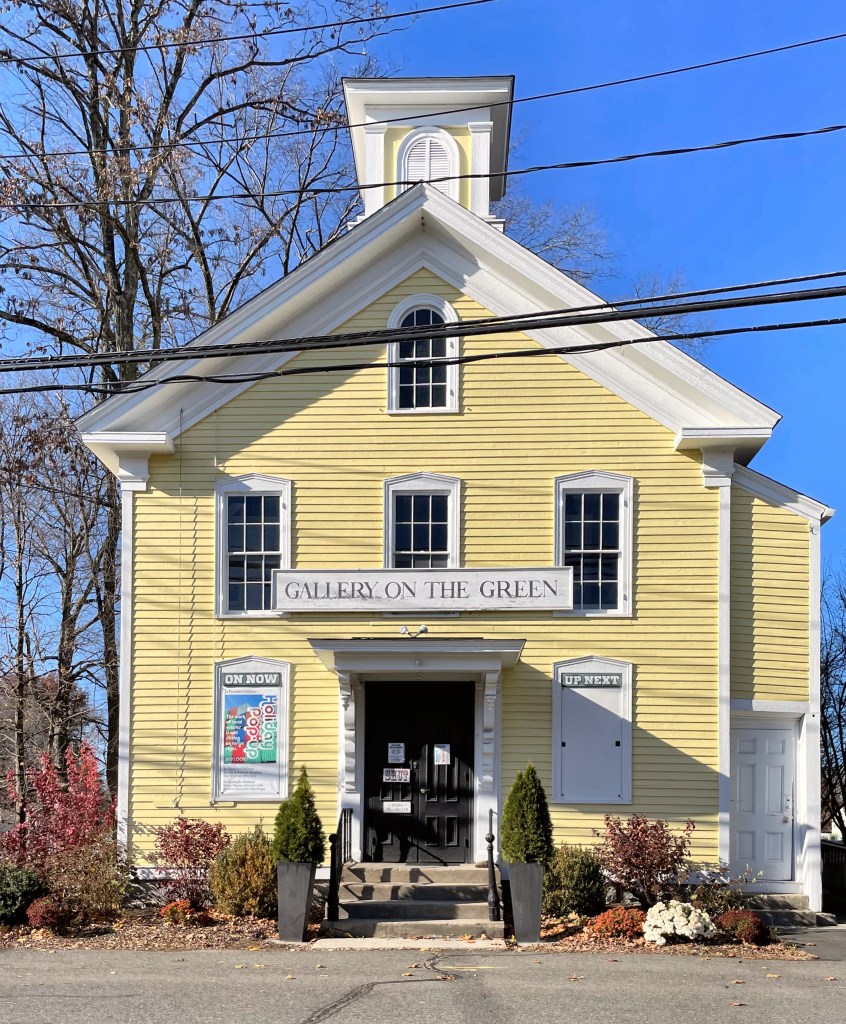
Canton, Connecticut, the only town in the state named after a city in China! The land which we now know as Canton had long been inhabited, specifically by the Wappingers, a group in the larger Algonquin speaking tribes. Canton was incorporated out of Simsbury in 1806, and named after the City of Canton in China (now known as Guangzhou), though I am not sure why. The town quickly developed two main villages. Collinsville sits on the Farmington River and its power was harvested for industry; while the center village grew differently as an agricultural village of farms. At the center of town sat a green for civic and town functions and gatherings. The town constructed a school here as far back as 1759, when the rural village was still a part of Simsbury. This is the fourth building on the green and it was built in 1872, and can be classified as Italianate in style. The building was occupied as a school until 1949, and it was used for other city uses until 1971, when the building was rented to the Canton Artist’s Guild and the building was renamed Gallery on the Green. The building remains community-focused and holds exhibits of local artists! Much of the rest of Canton Center lost all of its bucolic charm when the main road became commercialized, prioritizing speeding cars over a walkable village.

Newhall-Lane House // 1809

The Newhall-Lane House (could be the home of many wives) was built in 1809 by Pliny Newhall, a bricklayer. He purchased the land here at a prominent crossroads in Lancaster in 1808 from his employer who owned a brickyard across the street. At a previous home in town, Newhall’s wife Patty died giving birth to their son, at just 23 years old. Their son also died during childbirth. He remarried and had a full family to grow into the couple’s new house. They relocated to Lincoln and the home was sold to Captain Anthony Lane, who was the son of Deacon Jonas Lane, an important figure in Lancaster town history. Jonas had four wives, outliving three of them. Captain Lane himself, was married twice while living in this house; he had no children from either marriage. Although he was a talented craftsman and cabinetmaker, Captain Lane listed his occupation as farmer. The house is significant architecturally, as a fine example of Federal style architecture in Lancaster . Its sophisticated design is reflected in the graceful entrance. One of the unique features of the house is the pedimented gable of the facade which in combination with the narrow plan of the house, creates a delightful massing in this distinctive combination of Greek Revival and Federal styles.

Old Settlers’ Burying Ground // 1674+

I know.. I know.. It’s not a building, but I couldn’t help myself but to find this hidden cemetery and take some photos! Tucked way off a street, across railroad tracks and down into a grove of trees, I came across this Colonial-era cemetery known as the Old Settlers’ Burying Ground. Established by 1674, it is the town’s oldest formal cemetery with gravestones dispersed, both standing up to the heavens and seemingly jutting out of the ground like crooked teeth. The Old Settlers’ Burying Ground contains approximately 196 stones and an estimated 230 burials. The stones in the cemetery reflect the continuum of headstone iconography popular from the 17th through 19th centuries, depicting winged death’s head, soul effigy, heart, hourglass, skeleton, and cherubs, to name a few. The cemetery is thought to possibly have unmarked graves of the colonists who were killed during the Lancaster Raid, the first in a series of five planned raids on English colonist towns during the winter of 1675 as part of King Philip’s War. Metacom, known by English colonists as King Philip, was a Wampanoag sachem involved in leading and organizing Wampanoag warriors during the war. The tension that led to these raids began from the decline in the fur trade due to overhunting, the decrease in the native population due to European-derived diseases, and the invasion of English livestock on native land. According to one estimate, at least fourteen Lancaster inhabitants died and twenty-three were captured and taken as prisoners, some of those 14 are likely buried here in unmarked graves.

Safford House // 1799

Located in Lancaster, Massachusetts, the Thomas Safford House has stood for over 220 years, but is slowly decaying. Built in 1799 for Thomas Safford, a baker, the house is an excellent example of a Federal-style homestead that appears much like it did when built (besides the neglect). After two subsequent owners, the property was purchased in 1890 by Pauline Revere Thayer, a direct descendant of Founding Father, Paul Revere. Pauline added a large wrap-around porch and balcony to the house, which served as a vacation home for working girls from Boston. She appropriately named the house “Goodrest” where the girls could enjoy their summers, without working in poor conditions. After she died in 1934, the property was acquired by the Commonwealth of Massachusetts as the residence for the head of the Lancaster Industrial School for Girls. The Lancaster Industrial School for Girls was a reform school and the country’s first state reform school for girls, opening in 1856. This school paved the way of social reform, moving away from child imprisonment for “delinquents” towards a correctional paradigm. This was in part achieved because of the observed benefits of environmental change in children, as well as the importance of education. The bucolic, open-air setting was believed to be beneficial for childhood development, compared to a prison setting common before-hand. In 1935, the Safford House was restored to the original appearance, and the porches removed. The State of Massachusetts owns this house and the rest of the severely deteriorating buildings on the campus. It is a shame to see such significant buildings intentionally left to rot.

Isaac Farrar Mansion // 1836

The Isaac Farrar Mansion in Bangor, Maine not only looks gorgeous, it is significant as the one of the first known works of architect, Richard Upjohn. It is important because it shows that English-born Upjohn, who is best-known for launching the popularity of the Gothic Revival style in the United States, began his career by building in the Greek Revival style, the traditional style of the time. This mansion was designed for Isaac Farrar, a lumberman and merchant, and later, President of the Maritime Bank of Bangor. Charles B. Sanford, who lived in the house from 1865-1878, was proprietor of the Sanford Steamship Lines. The home had a few more subsequent owners until 1911, when it was acquired by the University of Maine Law School, which used it as a residency until 1929. It was soon after purchased the Bangor Symphony Orchestra, who renamed it “Symphony House”, and operated the Northern Conservatory of Music on the premises, also hosting the music branch of the Bangor Public Library. In 1972 the school closed, and the symphony sold the building the following year to the local YMCA, which now uses it as an exhibit and reception space. While some aspects of the house look to be from the early 20th century, it retains much of the Greek Revival design by Upjohn. Talk about a full history!