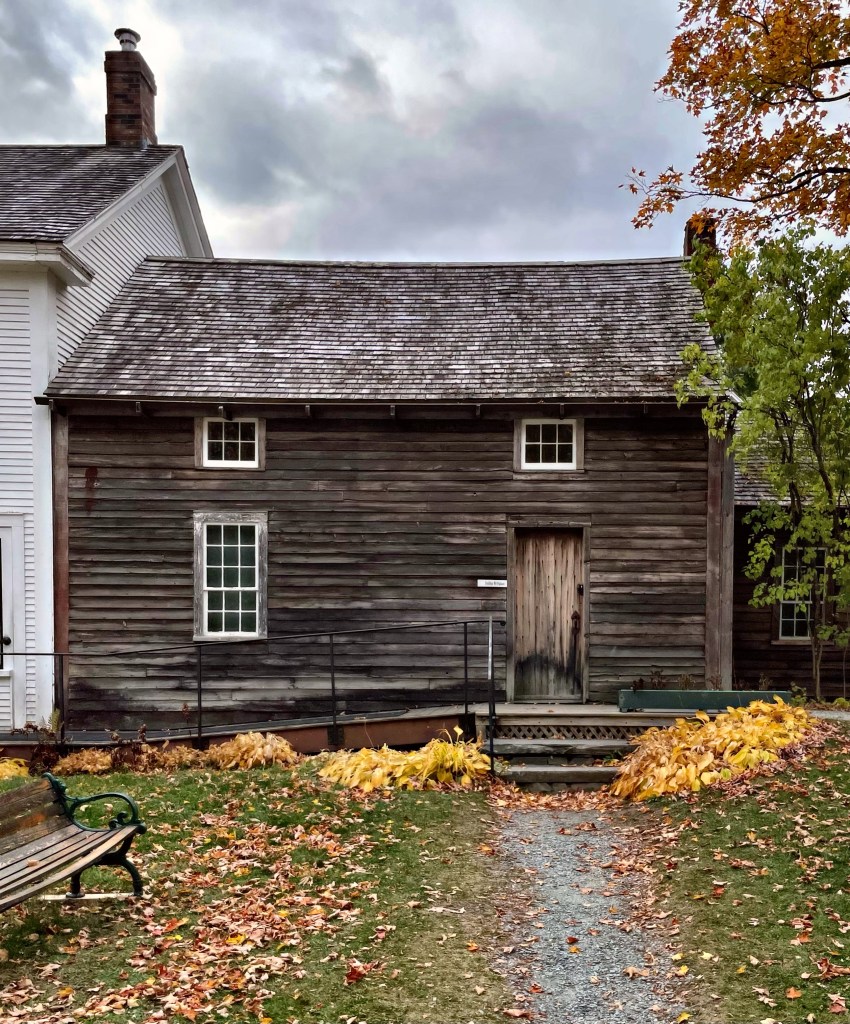
Isaac Newton Center Homestead // c.1850

Isaac Newton Center (1811-1889) was born in Windham, NH and arrived to the rural town of Litchfield, NH in its early days. Upon arrival, he appears to have built this homestead sometime in the mid-19th century based on its style. Like many in town, he was a farmer and was involved with the local Presbyterian Church, which is still neighboring this old farmhouse. After his death, the old farmhouse and homestead was inherited by Isaac’s youngest son, Isaac Newton Center, Jr., who was engaged in local town affairs, serving as City Clerk, Treasurer, Forest Fire Warden, and Library Trustee. The house appears as a melding of late Greek Revival and Italianate, possibly from the 1850s or 1860s.
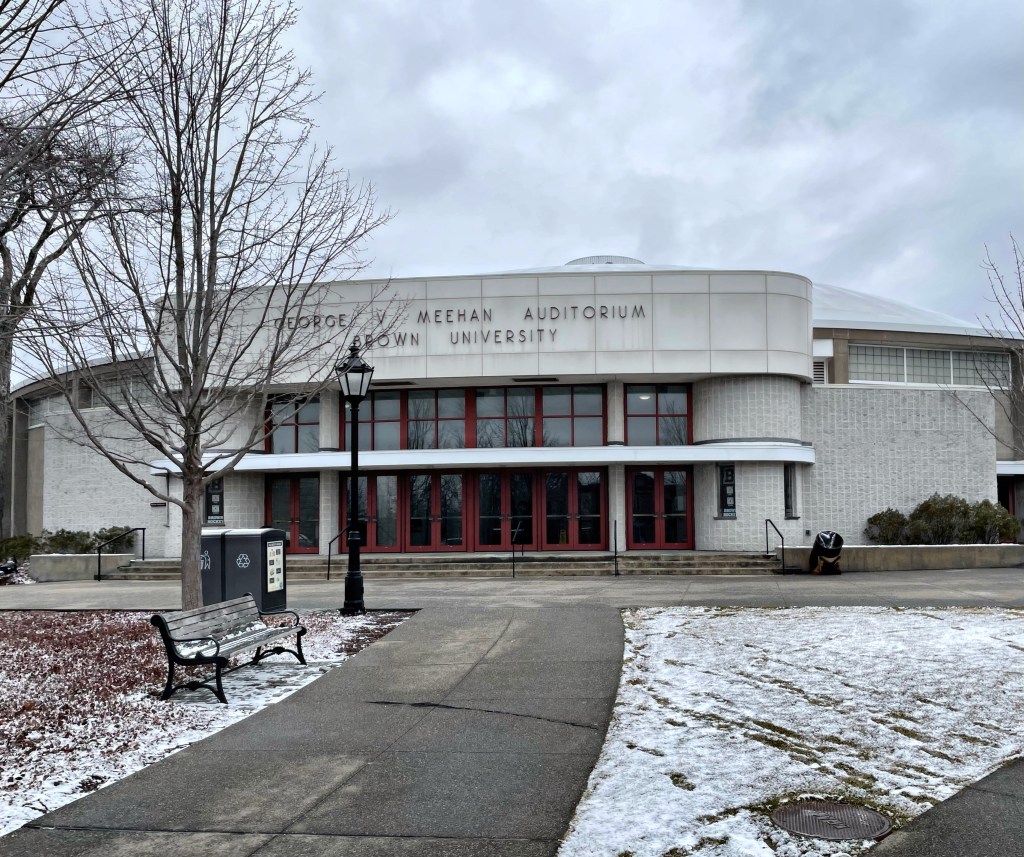
Meehan Auditorium – Brown University // 1962

Across from the new Nelson Fitness Center at Brown University in Providence, Rhode Island,Meehan Auditorium is an excellent example of a 1960s institutional athletic facility. The auditorium was dedicated at the Brown-Princeton hockey game on January 6, 1962 and was named after George V. Meehan, donor of half a million dollars for its construction. The new facility filled the need for a skating rink and large auditorium for indoor functions, specifically for ice skating and hockey and was the first building of the new athletic plant at Aldrich-Dexter Field east of the campus. The building was designed by Perry, Shaw, Hepburn & Dean, a prominent firm who designed many collegiate buildings in the 20th century, all over New England.

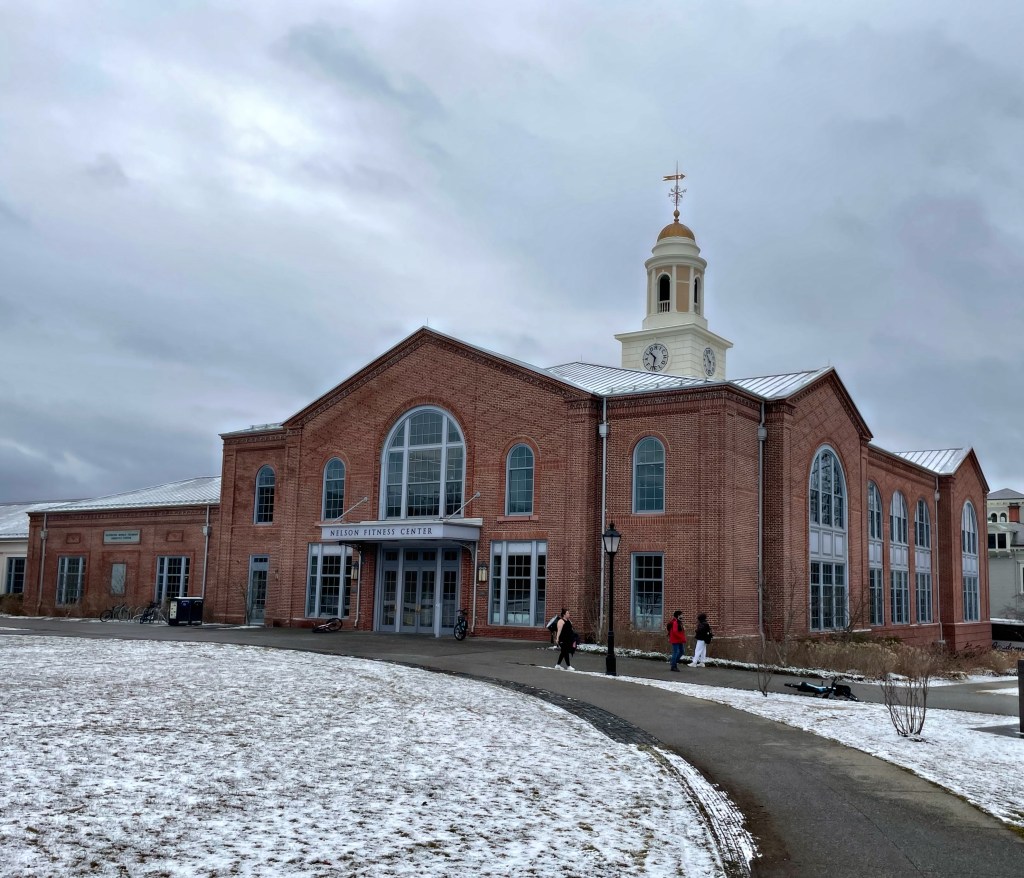
Nelson Fitness Center – Brown University // 2012

When I walked by Brown University’s athletic center, I assumed it was an older building, but was so plesantly surprised to learn that the building was actually completed in 2012! The 84,000-square foot aquatics and fitness center is a $46-million addition to the existing athletic facilities built on and near the site of the former Smith Swim Center. Designed by Robert A.M. Stern Architects and constructed by Shawmut Design and Construction, the project includes the Katherine Moran Coleman Aquatics Center, the Nelson Fitness Center, the David J. Zucconi Varsity Strength and Conditioning Center. Architecturally, the buildings seamlessly blend into their surroundings thanks to timeless traditional design and high-quality materials. The stunning cupola was actually the original cupola from Marvel Gymnasium, a Brown University gymnasium demolished in 2002, it was added atop the Nelson Fitness Center preserving some history of old Brown. American colleges and universities need more of this high-quality design, kudos RAMSA Architects.

Giddings Homestead // c.1800

This old gambrel-roofed home sits on the beginning of Pautipaug Hill Road just outside the industrial village of Baltic, in Sprague, Connecticut. The house’s history is a little unclear, but it shows up on historic maps as being owned by W. Giddings. This appears to have been Walter Giddings (1788-1854). Walter may have built or inherited this property from his father Nathaniel, who died in 1809. Walter married Laura Lucretia Fillmore in 1811 and they had four children. Laura died in 1827 at just 37 years old and Walter remarried within a year to Lydia Lathrop Ladd. The property remained in the Giddings Family at least into the second half of the 19th century. It was later “Victorianized” with two-over-two windows, side and front porches, and a octagonal bay window. The home has been suffering from deferred maintenance for over 15 years (as far back as Google maps goes) and was listed for sale, so here’s to hoping this old beauty survives!

President Calvin Coolidge Birthplace // 1840

The President Calvin Coolidge State Historic Site in Plymouth, Vermont preserves the birthplace and childhood home of Calvin Coolidge, the 30th President of the United States. This iconic historic village appears much as it was during Coolidge’s lifetime. The homes of the Coolidge family, their relatives and friends are joined by the 1840 church, 1890 schoolhouse, cheese factory, and historic agricultural structures and barns. More on all of these later. First up is the birthplace of President Coolidge. This squat 1 1/2-story dwelling was built in 1840 at the rear of the Coolidge Family store which fronts the main road. By the 20th century, the old home was altered, but was restored in 1971 just in time for the 100th birthday celebration by the State of Vermont for Coolidge, dedicating the village as a historic museum.

United Methodist Church of Nantucket // 1823

The United Methodist Church of Nantucket stands prominently at the top of Main Street on land was obtained from Peleg Mitchell in 1822. Construction on the site began in 1823 with the massive structure originally built with a pyramidal hip roof of enormous timbers brought to the island on whaling vessels. In 1840, the roofline was amended with the present gable roof, constructed over the original hip roof. The church is a highly significant example of Greek Revival architecture on the island and a more rare example of the temple-front form seen there. Deferred maintenance threatened the building to the point that in 1995, the building was listed as one of the most endangered buildings in Massachusetts. A restoration was undertaken funded by private contributions and the Massachusetts Preservation Project Fund, preserving the building for another 200 years.

Otis Company Mill #1 // 1845

This five-story granite mill building was one of the major catalysts for the 19th century population surge in Ware, Massachusetts. As New England’s fledgling textile industry of the era played a vanguard role in transforming the U.S. into an industrial nation, the significance of this type of mill can hardly be understated. The Otis Mill #1 in Ware is one of the last remaining granite textile mills of this early period in central/western Massachusetts. The mill was built in 1845 for the Otis Company, which initially manufactured woven cotton fabric, but later branched out into stockings, woolen shirts and drawers underwear. The company was Ware’s largest employer for about 100 years! The company prospered thru WWI employing over 2,500 people. During the 1920’s the business began a decline due to the southern state’s mills and lack of modernization. In the mid 30’s the Otis Co sold its property to the citizens of Ware, which they formed Ware Industries, Inc to continue the major employer in the town. Due to this Ware came to be known nation-wide as “The Town That Can’t Be Licked.” The mill is now home to local small businesses as a sort of incubator, providing jobs to local residents!

Manley-Lefevre House // c.1820

The last (but certainly not least) building in Dorset, Vermont I’ll be featuring is the Manley-Lefevre House aka. Marble House! This stunning Federal period home was built around 1820 by Martin Manley (1783-1856) on land originally owned by his father George. The house is constructed of ashlar marble that was quarried with hand tools from the lower quarry located approximately 200′ behind the site of the house with dressed marble finished in town and brought back for installation at the lintels, sills, and door surround. In 1907, Edwin Lefevre, Sr. (1871-1943) traveled by train from Bronxville, New York to Dorset at the suggestion of the artist Lorenzo Hatch, with the intention of locating a summer residence for his family. They purchased this home, which became known as “The Old Stone House” and hired Eugene J. Lang, a New York architect, to remodel the house, design a kitchen wing and remodel the barn into a garage (1909). While in Italy, Lefevre fell in love with the formal gardens there, and wanted something like this for his country estate. Upon his return, he retained garden designer Charles Downing Lay to design the gardens that surround the house. The country estate is now home to The Marble House Project, a multi-disciplinary artist residency program.

The Dorset Inn // 1796

One of the oldest continually operating inns in America, the Dorset Inn remains a visual and historical anchor to the charming little village of Dorset, Vermont. The Federal period building was historically known as the Hodges Hotel before becoming The Washington Hotel in about 1858 (the porch was added at that time to make it resemble George Washington’s Mt. Vernon home). The name became the Dorset Inn in 1904. As constructed in 1796, the main block possessed a five-bay facade arranged symmetrically around a central entrance; an 1858 extension added two bays on the west, when it was modernized. Though the inn has seen changes and modernizations over time, the building has such a historic character that brings in people from all over the country to experience the best of Dorset every year.

Dorset Congregational Church // 1909

Arguably the most high-style building in the quaint village of Dorset, Vermont is the Congregational Church, which appropriately sits on Church Street. The original congregational church in Dorset was located in nearby Maple Hill Cemetery. When the wood structure burned in 1832, an new wooden church was built on this site. The second wooden building burned in 1907, and then this church was built, but of fireproof construction. Jordan Greene, an architect from New York, designed this Neo Gothic Revival style in the historic district. The church was constructed by the contracting firm of O. W. Norcross, partner in the Norcross-West Marble Company, which donated the building stone from its South Dorset quarry. The design is dominated by a massive square central tower that ascends its facade and is capped by pinnacles. Behind the tower, the gable-roofed church is built of rough-faced Dorset marble laid in patterned coursed ashlar and trimmed with dressed stone. How many other marble churches can you think of?