Denmark Odd Fellows Hall – Denmark Arts Center // 1884

This two-and-a-half-story building sits on Main Street in the small town of Denmark, Maine, and has contributed to the town’s cultural life since it was built in 1884. The Independent Order of Odd Fellows (IOOF) is a non-political and non-sectarian international fraternal group that promotes the ethic of reciprocity and charity. It was founded in 1819 by Thomas Wildey in Baltimore, Maryland, evolving from the Order of Odd Fellows founded in England during the 1700s. New buildings sprouted up all over the United States in the 19th century, in cities as large as New York City and towns as small as Denmark. This IOOF Hall is Italianate in style, with brackets at the cornice and hoods and round arched windows in the gable end; it also shows some Greek Revival details with corner pilasters and the pediment. When Raymond Hale, the last member of the IOOF Lodge passed away, the town purchased the old Odd Fellows Hall. The city could not maintain the property and had no good use for it. Residents in town voted in 1991 to sell the building rather than demolish it. Local residents bid on and won the building with the aim to convert it to a local arts center. In August 1994 the owners signed over the deed of the Odd Fellows Hall to the Denmark Arts Center, a non profit organization. From that time until present, the old building, now the Denmark Arts Center, has again served as a community focal point, providing cultural activities for the people of Denmark and surrounding towns.

Ingalls Homestead // c.1794

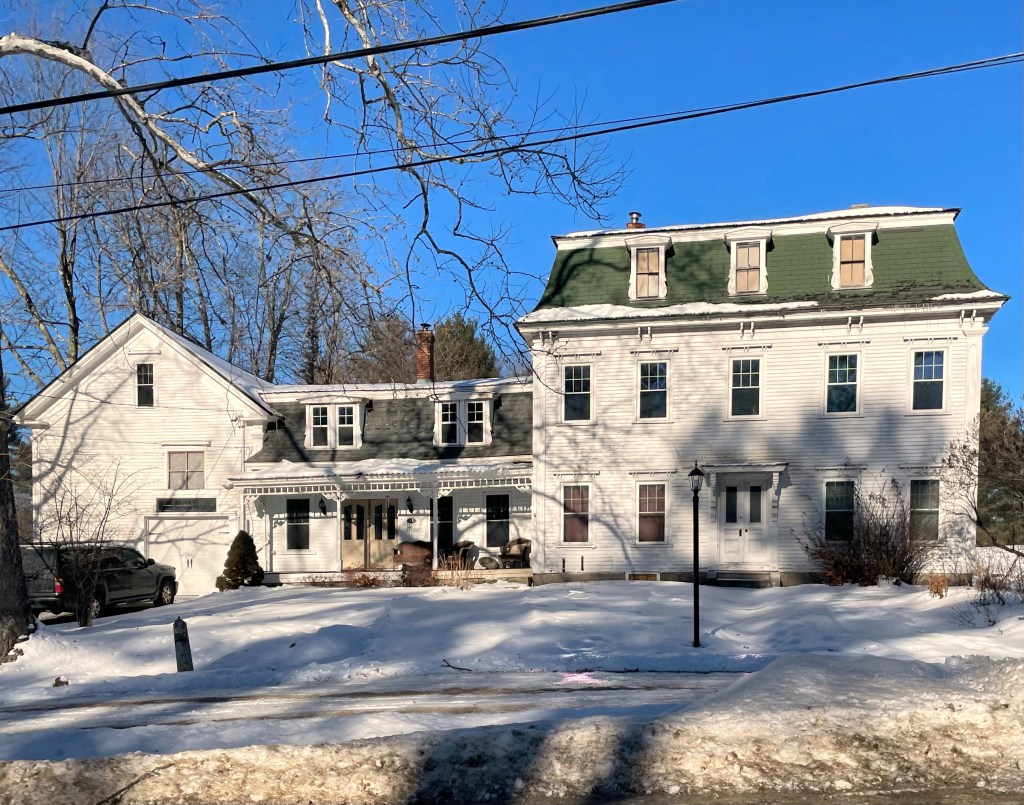
Cyrus Ingalls (1768-1832) moved to the wilderness of Maine from his relative comfort in Andover, MA at the end of the 18th century. When he arrived to Maine (which was part of the Commonwealth of Massachusetts until 1820), he built a grist mill on Moose Brook in what is now known as Denmark, Maine. Not far away, he built his homestead, a modest 1 1/2-story cape house on the newly laid Main Street where he raised his family. In the home, Cyrus had at least two sons, Cyrus Jr., who would inherit the homestead, and Rufus, who later served as Quartermaster General of the Union Army during the Civil War. After Cyrus’ death in 1832, the property was completely overhauled by Cyrus, Jr., who built a massive Greek Revival mansion likely in the 1840s or 50s, incorporating the former homestead as an ell (seen on the right in the image). The homestead remains an extremely significant architectural and historical landmark in this part of Maine, and is located across from the town’s Civil War Monument, possibly bankrolled by the Ingalls Family.

Boothby House // 1870

The Second Empire style did not take off in Maine as it did in other parts of New England (and the U.S. for that matter), so it’s always a treat to spot one driving the backroads of the Pine Tree State! This house in Denmark, Maine, was built around 1870 for E. A. Boothby, who worked as Assistant Engineer of the Maine Central Railroad. The Second Empire style is evident here from the mansard (French style) roof, bracketed eaves, and a hooded double-door entry.

Denmark Old Schoolhouse // c.1850

Welcome to Scandinavia of Maine, Oxford County! The rural county is home to towns named Denmark, Norway, and Sweden, but no Finland sadly! The land that is now known as Denmark, Maine, was once part of Pequawket, a village of the Sokokis Abenaki tribe. In 1725 during Dummer’s War, the village was attacked and the tribe abandoned the area fleeing to Canada. Settlers established a township with many settlers coming from Andover, Mass. The town was incorporated as Denmark in 1807, and named in a show of solidarity with the country of Denmark, after England attacked Denmark’s capital, Copenhagen that year. The town was mostly agricultural, with some industry along the ponds and the Saco River. The town saw a boost in popularity in the early 20th century as a location for summer camps, including Camp Wyonegonic, founded 1902, which is the oldest girls’ camp in the country.

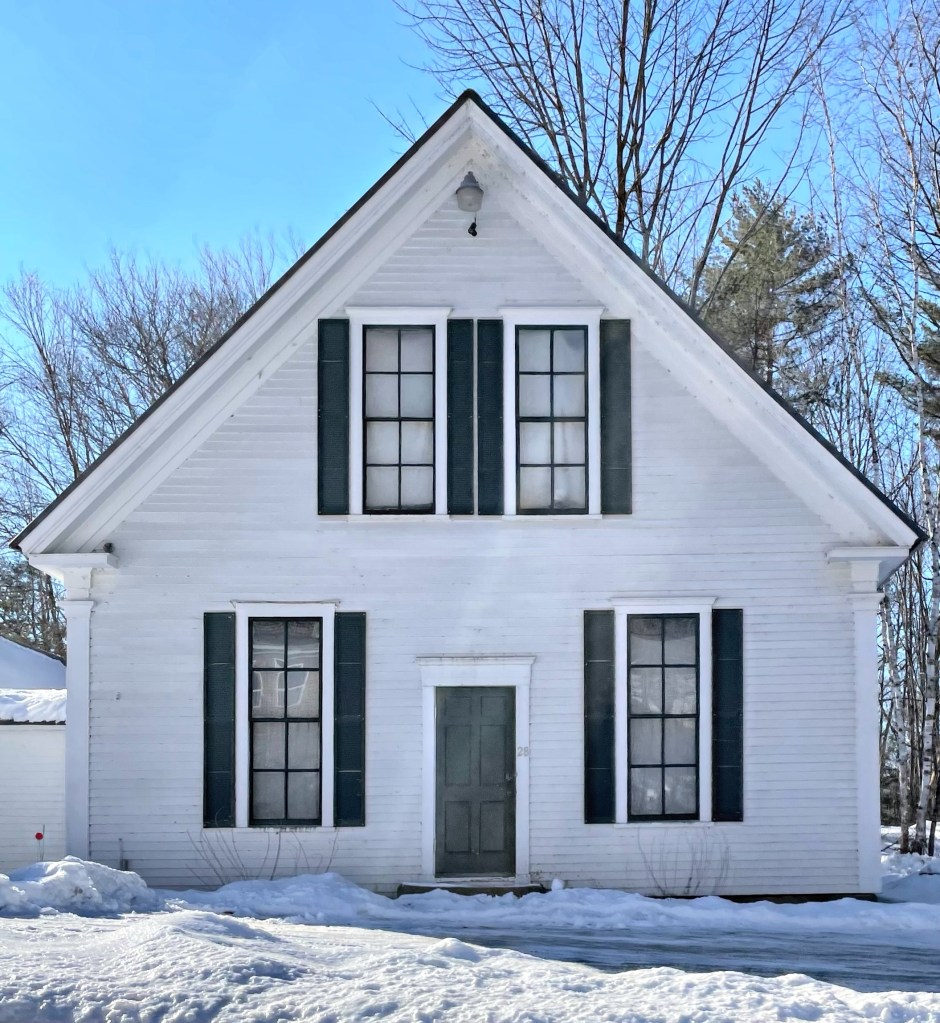
This building in Denmark Village appears to have been constructed in the mid-19th century as the village school. The vernacular Greek Revival building has very tall, multi-paned windows, Greek Revival trim, and modest proportions which really are pleasing to look at. It shows up on an 1880 map as “Old School House”, and appears to be a private home today. Stay tuned for more on the Scandinavian towns of Maine!

Baylies Mansion // 1903

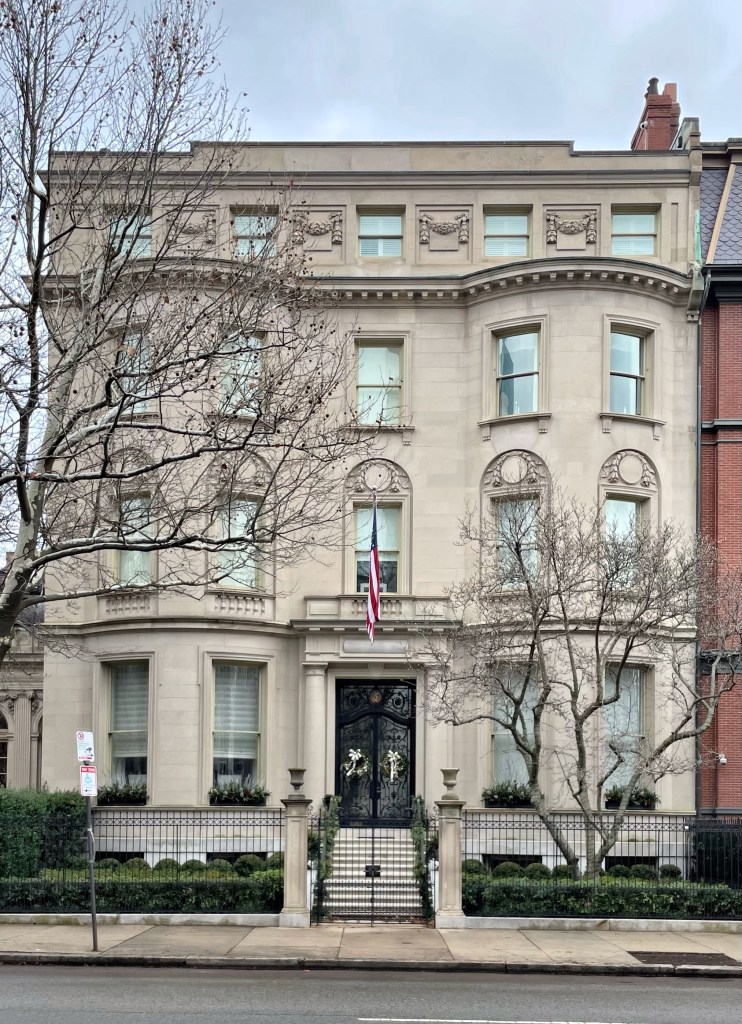
Commonwealth Avenue in Boston’s Back Bay neighborhood is a dream, no matter what time of year, though I am a huge fan of it in the winter so the leaves don’t obscure the architectural details! This home just steps from the Public Garden was built in 1903 for Walter Baylies (1862-1936) and his wife, Charlotte. The couple had purchased a c.1860 Second Empire mansion (basically a sister house or twin to the adjacent at 3 Commonwealth Ave), and demolished it for a more “modern” residence. Baylies was extremely wealthy with investments in nearly everything, and he wanted his city residence to stand out amongst the earlier, brick and brownstone townhouses on the eastern edge of the neighborhood. Architect Arthur Rice designed the house in the Renaissance Revival style, and it is finished with Indiana Limestone. Of particular note is the one-story ballroom, which was built to the side of the home, set back behind a small garden. An empty house lot, formerly occupied by a stable, was used simply for the Baylies’ ballroom, constructed in 1909 for their daughter. Talk about a status symbol! The home was purchased by Walter’s heirs in 1941 by the Boston Center for Adult Education. The home was again purchased in 2020, and is back to a single-family home! I can’t even imagine how stunning the interior is!

Orrin Holt House // c.1840

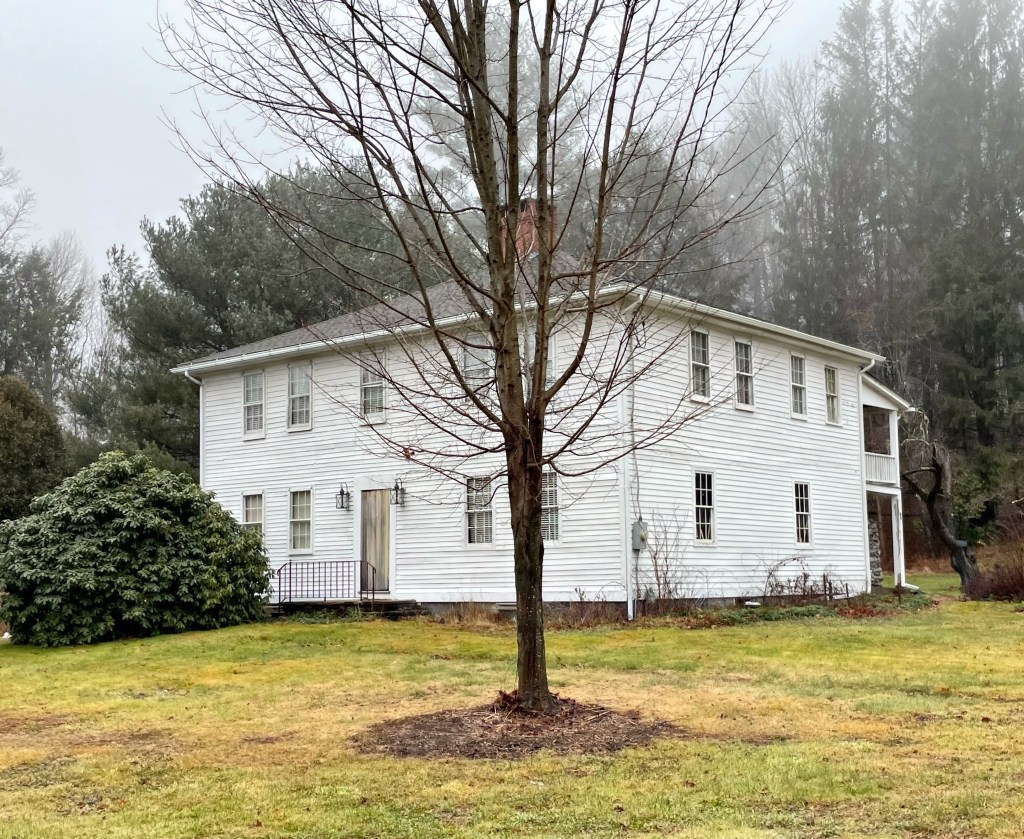
Located on Tolland Turnpike in Willington, east of the Town Common, this temple-front Greek Revival home stands in an excellent state of preservation. The home was built for General Orrin Holt (1792-1855) in about 1840 after his work as a member of the Connecticut State House of Representatives 1830–1832, and in the Connecticut Senate in 1835 and 1836. He was re-elected as a Democrat to the Twenty-fifth Congress, serving until 1839. After leaving Congress, he served as Inspector General of the Connecticut State Militia, until his death in 1855. He likely built this home after leaving Congress in 1839, in his hometown. There is something about a temple-front home like this, they are so stately!

Daniel Glazier Tavern // 1815

The Daniel Glazier Tavern is located at the west end of the Willington Green, an area showcasing great vernacular examples of Federal and Greek Revival architecture. The tavern was apparently built by Daniel Glazier as a stop along the route connecting Norwich, CT to Springfield, MA, where visitors could grab a bite to eat and/or stay the night to rest. Daniel’s son Isaac was the first tavern-keeper, followed by Daniel’s son-in-law Arial Eldridge until his death in 1849. The ballroom of the tavern had long been used in the winter months for town meetings, as he basement of the Town Meetinghouse, used for town meetings, lacked any form of heat. Since 2009, the property has been owned by the Willington Historical Society, who have restored the building.

Old Baptist Meetinghouse, Willington // 1829

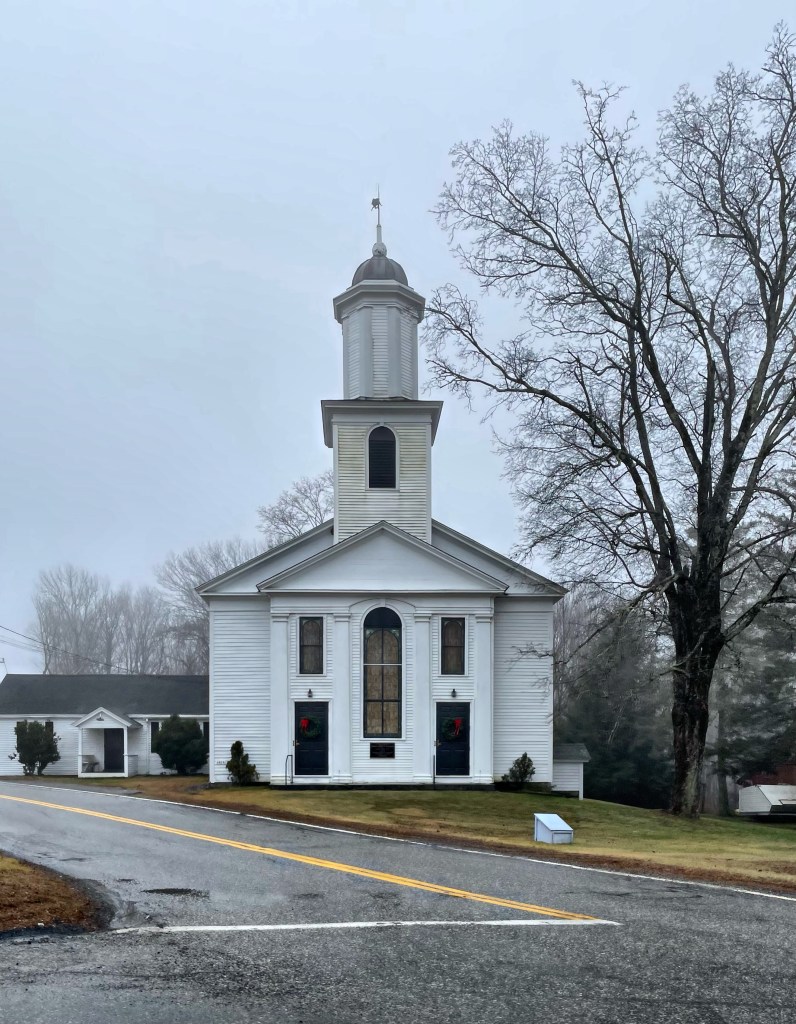
The Baptist Meetinghouse in Willington was built in 1829 by a local carpenter Albert Sharp, in a transitional Federal/Greek Revival style, common for the period. Its clapboarded facade has a projecting pavilion with two entrances flanking a two-story round-arched window. Four pilasters are surmounted by a wide entablature and the flushboarded pediment of the pavilion. Round-arched windows are repeated on the side elevations and the belfry, which is topped by an octagonal drum and a small dome. The Willington Baptist Church was organized in 1828, started by Rev. Hubbell Loomis, the fourth pastor of the Congregational Church across the common. Rev. Loomis was prominent both as a minister and an educator, and founder of Shurtleff College of Illinois. During his pastorate at the Willington Congregational Church, Mr. Loomis had strong tendencies toward Baptist sentiments. From this, membership of the congregational church split, some leaving for a new Baptist belief and others remained at the congregational church. The two congregations were split until 1911, when they again worshiped under the same roof, as the Federated Church of Willington, meeting in this building.

Old Willington Congregational Church // 1876

The Congregational or Town Church of Willington, Connecticut, has existed since the town’s incorporation in 1728, but originally met in a member’s small home on the Town Green. The Victorian Gothic style church we see today was built in 1876, after members gathered funds to construct the building. Land, materials, and labor were donated to offset costs for the small congregation. The church flourished until a split in the beliefs led to the formation of the Baptist Church of Willington. Eventually, the Congregational Church merged with the Willington Baptist Church in 1911 to form The Federated Church of Willington. The congregation then moved to the Baptist meeting house across the Green. In 1924, the Old Congregational meeting house, which was erected in 1877, was sold for $1 to the Town of Willington with certain restrictions, the most important of which was that, if it should cease to be used for public meetings under the control of the selectmen, possession would revert to the Congregational Ecclesiastical Society. From 1926-1974, the church was used as town hall (when the smaller building next door was outgrown. The church’s bell was removed during World War II to allow plane-spotters to use the tower. Instead of being placed back in the tower, it was mounted on a pedestal outside the building, where it remains today. The Willington Town Offices moved to a former industrial building a short distance away, but retain and maintain the building.

Deacon Turner House // 1849

The Deacon Turner House, built in 1849, is an impressive Greek Revival house located at the Town Common in Willington, Connecticut. The Greek Revival portion was constructed onto an earlier house or store that was built 50 years prior. The one-story structure was likely moved and incorporated into the current house as a rear ell. The present house was designed by architect Augustus Treusdel of Coventry and built for Deacon John Turner by Emery Williams a well known local builder. John Turner was Deacon of the Willington Congregational Church, nearby.