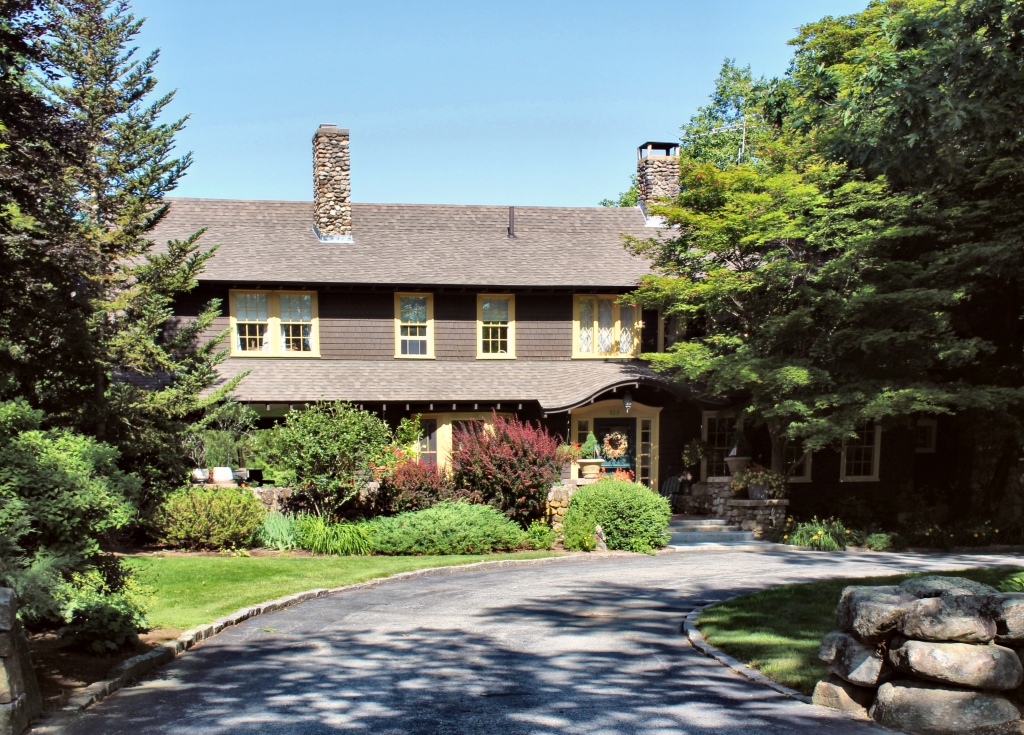
Harry A. Gregg, was the son of David Gregg, a lumber dealer and wooden goods manufacturer who built a mansion in Wilton’s East Village. Harry followed in his father’s footsteps, running the day-to-day business out of their Nashua, NH offices. With a lot of spare money, Gregg purchased pastoral land in Wilton Center and built a summer residence which may have also served as a gentleman’s farm. The Arts and Crafts style home showcases the best in the style with rubblestone, shingles, organic forms and exposed rafters. The house is pretty perfect!
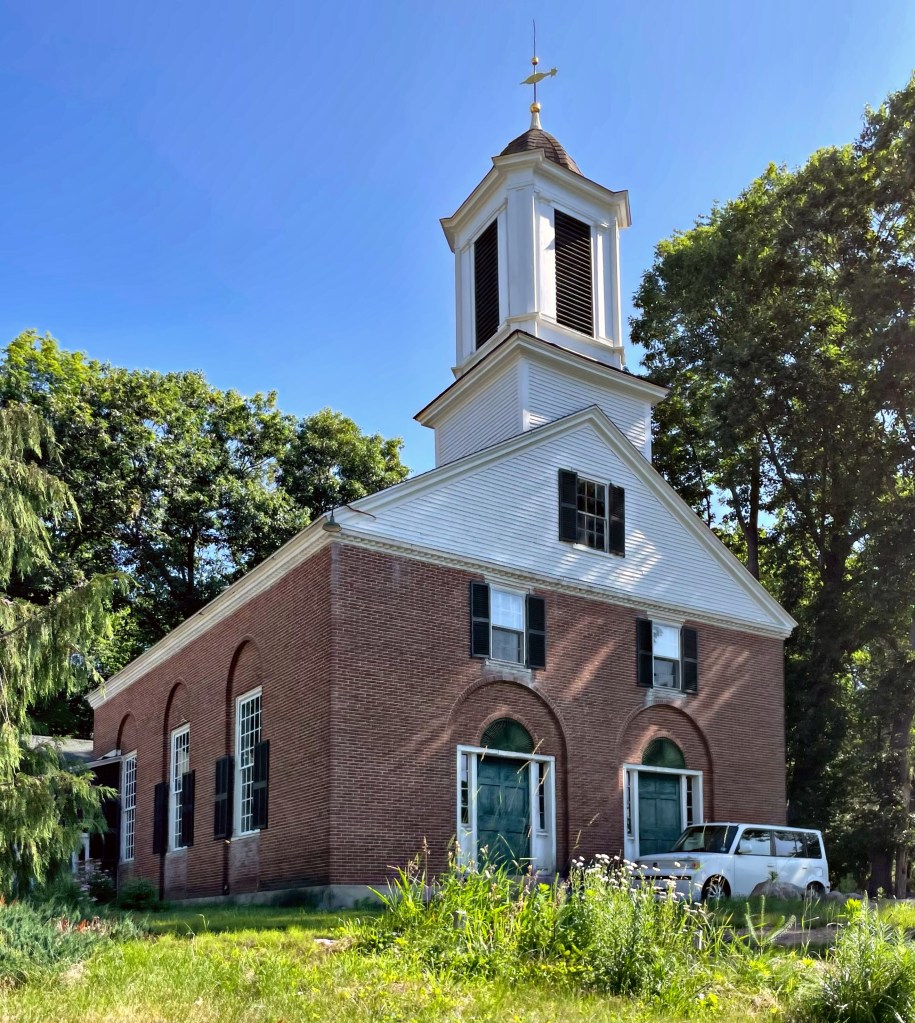
Located next to the Blanchard House, the old Wilton Center Baptist Church stands as one of the only brick buildings in Wilton Center, New Hampshire. Baptists in town originally met and worshipped in nearby Mason, NH, but eventually began services in town. By the 1820s, a new edifice was needed, and the members pooled resources, largely from wealthier members for funding for a new church. The Federal style brick church is stunning with its recessed arched panels surrounding the windows and doors, and its steeple. The building has been converted to residential use.
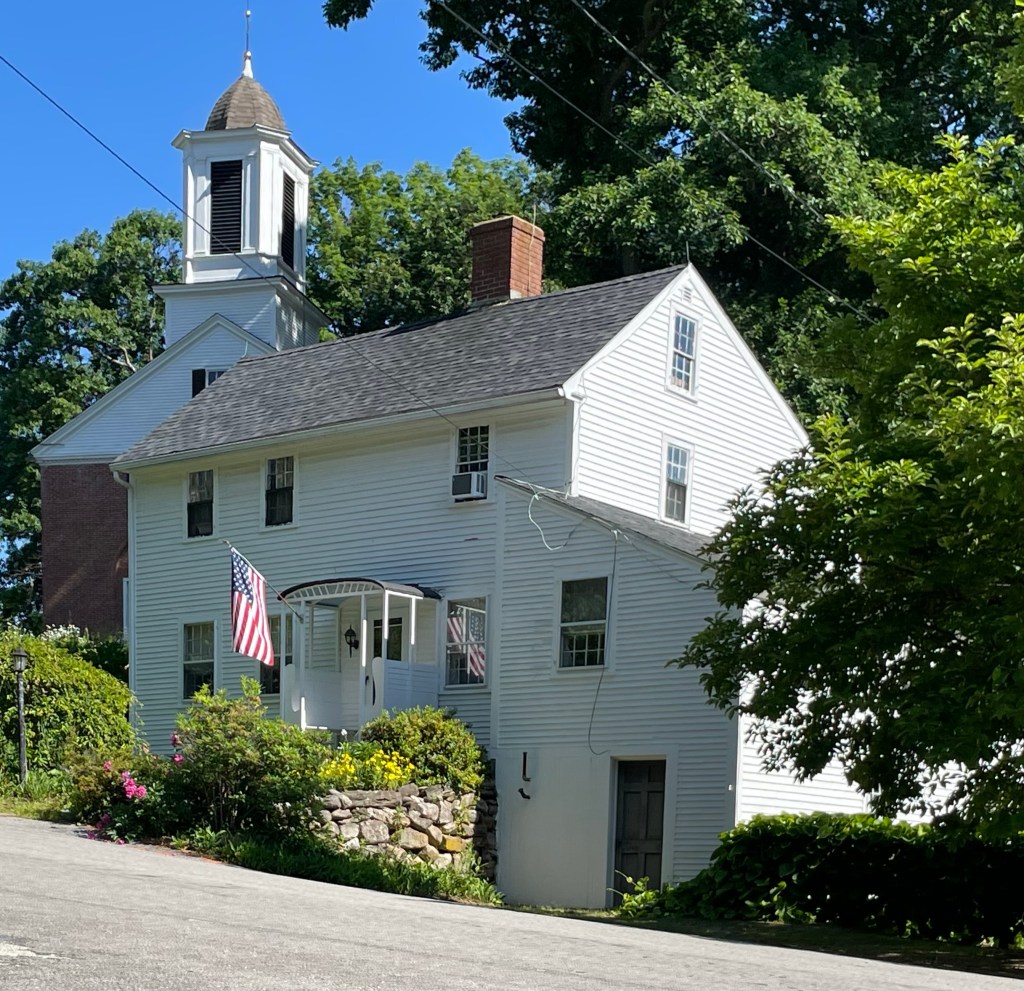
One of the oldest extant homes in Wilton Center is this Revolutionary-era Georgian house. The home was likely built in the 1770s and has a sloping saltbox roof at the rear. The house was the property of the Blanchard Family to this day. The house shows the more rural, vernacular Georgian style common in small towns in New Hampshire from the 1700s.
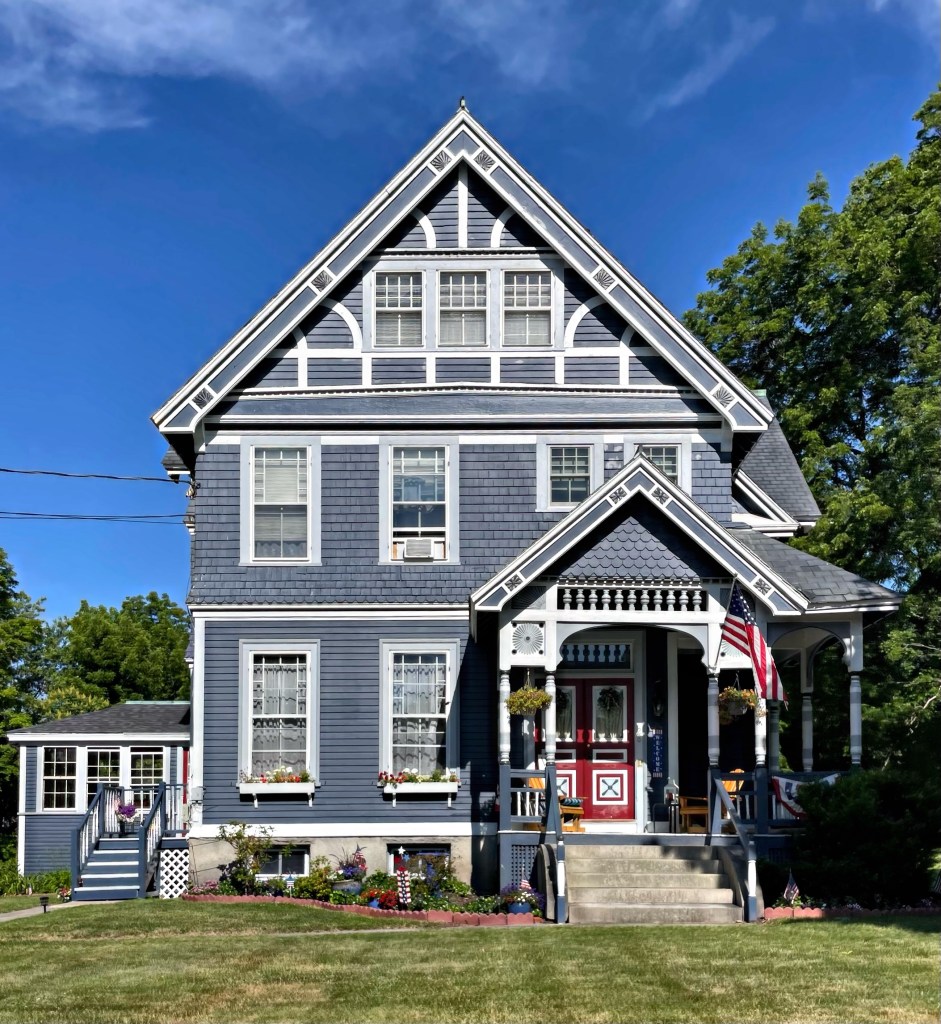
When you look up Queen Anne architecture on Google, this house in Wilton, NH should pop up! The Frederick Colony House was built around 1885 for the mill-owner who built a large cotton mill (last post) in town at the same time. Frederick Colony (1850-1925) was from a prominent textile and cotton mill-owning family based in Massachusetts and Keene, New Hampshire. Colony purchased land along the Souhegan River and built a new mill, there to make his own fortune, and that he did! The Frederick Colony House remains as one of the best-preserved homes in Wilton, and recently sold. Those interiors!
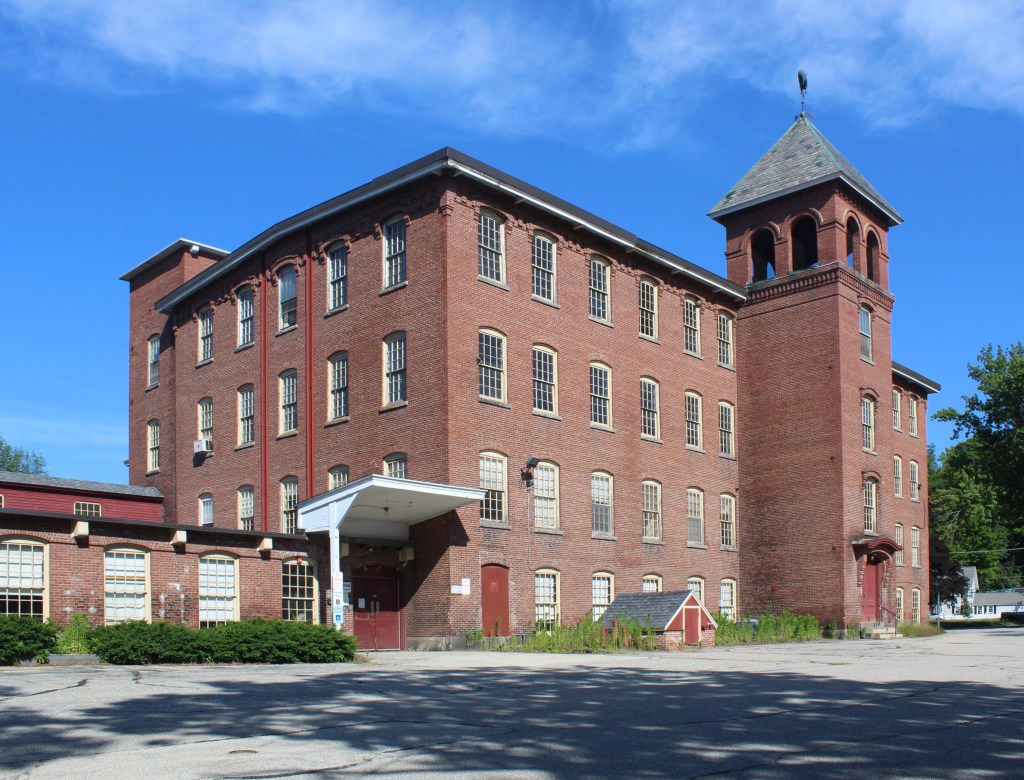
The site along the southern bank of the Souhegan River in East Wilton, NH has been the location of successive mills since 1814. These wooden mills were wiped out by fire, and the land was vacant until 1882, when members of the mill-owning Colony family of Keene, NH bought the site for a new cotton mill. That year they built a three-story brick mill building atop a raised basement level. Colony Bros., the company, began their manufacturing in early 1883. They produced woolen flannel and other woolen goods and employed 70 workers in the factory. The building was powered by steam and water from the adjacent Souhegan River. In 1894, the Colony Bros. mill passed into the hands of Philip Amidon, who formed the Wilton Woolen Company, who produced everything from traditional woolen goods to the finest cashmere. In 1932, the struggling mill was purchased by the Abbotts, owners of two local mills and others in Massachusetts. Abbott Worsted produced a very fine finished cloth, with much of their product going to New York City where it was made into fine men’s suits. The building was later purchased in 1971 by Leonard Peterson, to house his growing company, Label Art. The company has for many years been a nationwide distributor of pressure sensitive labels. Their occupancy likely saved the buildings from the wrecking ball, like so many others did at the time!
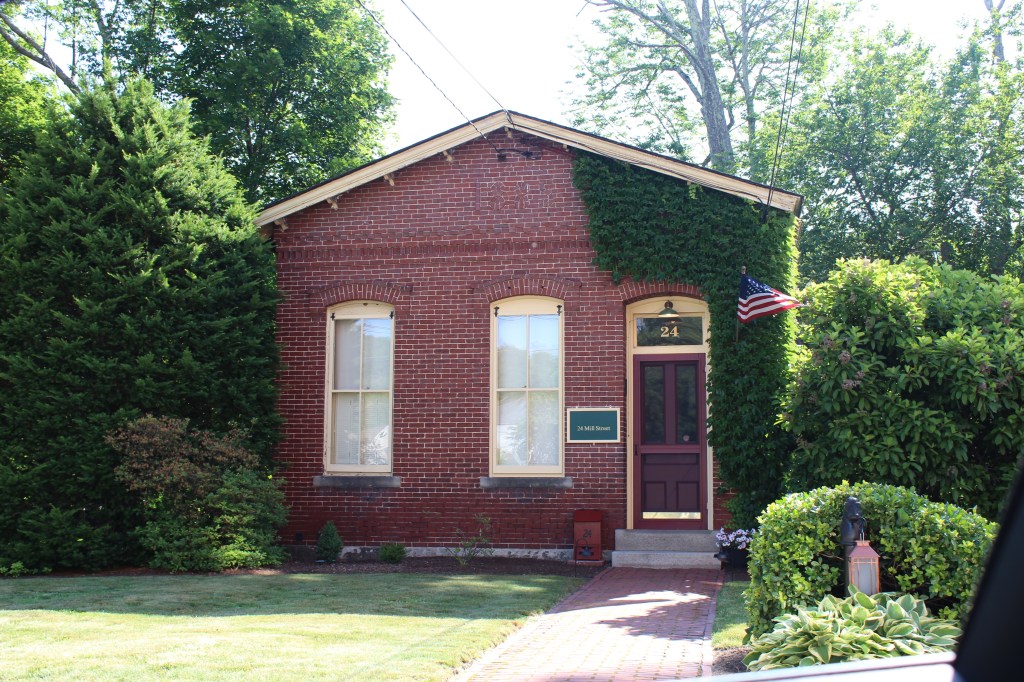
Oh, and how cute is the 1885 office for the mill?! The date is found in the brickwork!
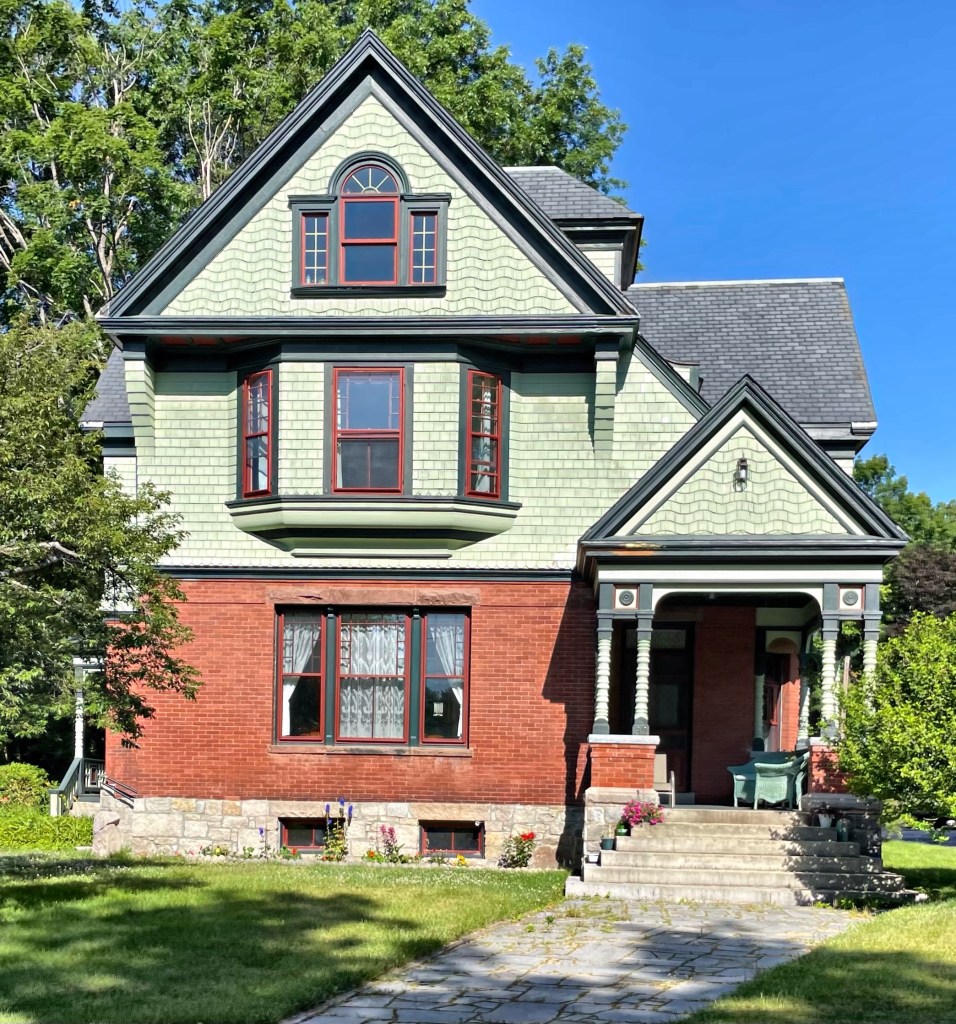
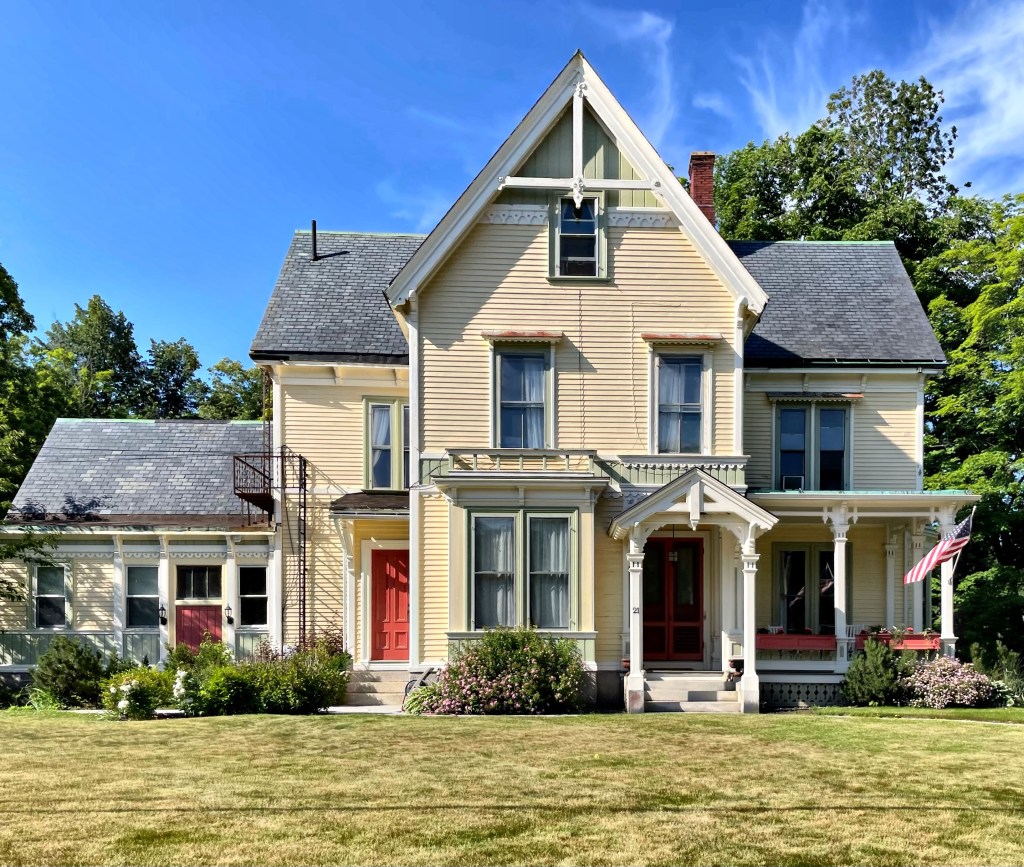
David Whiting (1810-1892) was one of the most prominent men in Wilton, NH in the 19th century. He was involved in local business and politics, eventually using his prominent land at a convergence on Main Street to erect the Whiting House, a large hotel. The building burned down in 1874, along with his other buildings nearby. He donated some of the land to the town, who built the present Town Hall, and he built a new home on another part of the site. This house was likely built for David Whiting as his own residence, shortly after the fire. The house was designed in the fashionable Stick style and represents the best in Victorian-era architecture.
The Wilton Public and Gregg Free Library is the public library for the town of Wilton, New Hampshire and is among the town’s most grand architectural designs. The library was the gift of David Almus Gregg (1841-1928), a native of Wilton who owned a successful building parts business in Nashua manufacturing doors, window blinds, and window sashes with his father, David Sr., who lived in the home featured previously. Gregg was significantly involved in the design and construction of the building, providing the highest quality building materials and contractors to the project, which was estimated to cost $100,000 when completed in 1907. The architectural firm of McLean and Wright was commissioned to design the building, who completed it in the Classical Revival style, like many of their other library designs in New England.
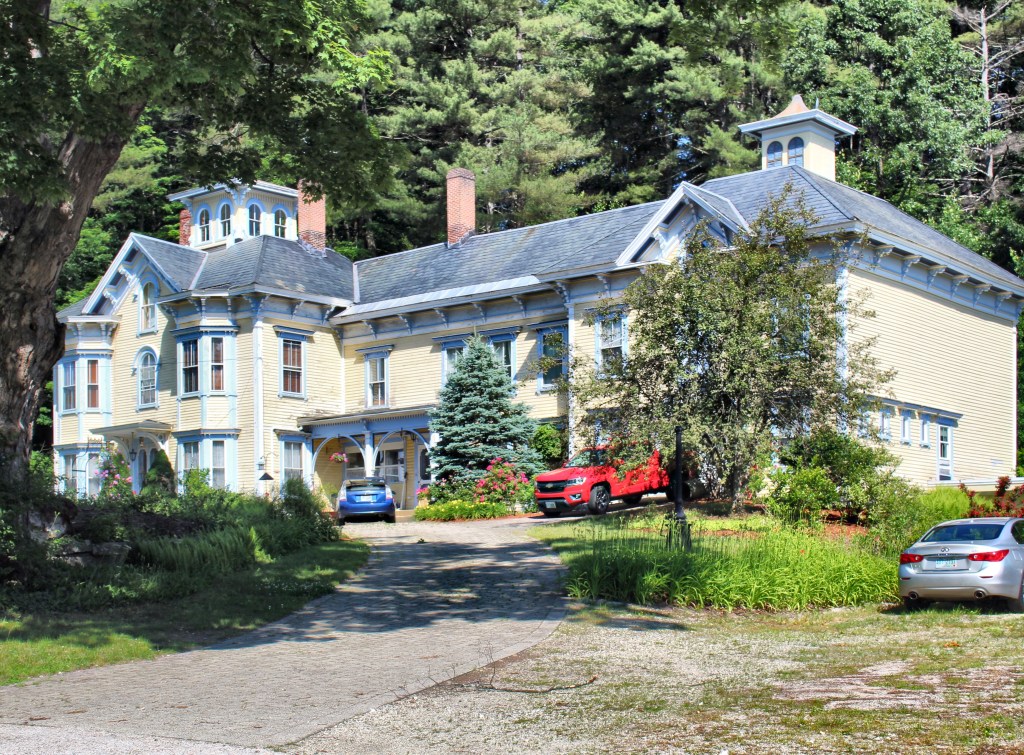
Located in the western part of the East Village of Wilton, New Hampshire, this stunning Italianate manse stands out as one of the most architecturally grand in the area. The home was built for David Gregg (1816-1880), a merchant who was engaged in lumber dealing in Michigan as an investment. His company was based out of Nashua and manufactured wooden blinds, doors, window sashes and was co-owned by David and his son, David Jr. David was likely retiring from business by the late 1860s and built this large home on a hill outside the village. At about this time, he became involved with local politics, which he was involved with until his death in 1880. The Italianate style home features round arched windows, brackets, a belvedere at the roof, and what appears to be an attached, converted carriage house. The home was eventually turned into a bed and breakfast, but it has since been converted back to a private home.
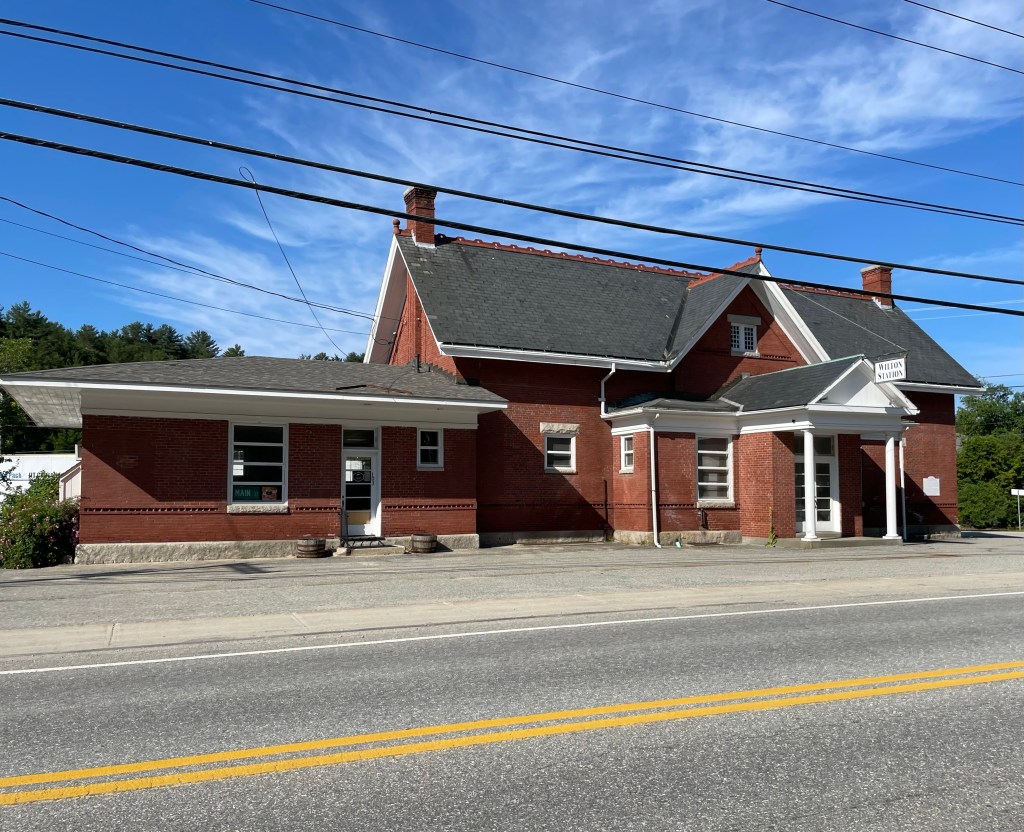
The coming of the railroad to Wilton, New Hampshire was largely due to the rapid increase in the number of mills and factories built in and around the East Village along the river beginning in the early 19th century. This increase was the impetus to Wilton business leaders of the time to petition the state for a charter to form the Wilton Railroad Company which was granted in 1844. The first official run of a wood-burning steam engine from Nashua City Station to the newly constructed Wilton Station occurred on Dec. 1, 1851. The small, wood-frame station was deemed obsolete, and replaced by 1860 with a more substantial structure. In this time, the town prospered, and the local mills cranked out everything from worsted yarn to wooden boxes and furniture. After thirty years of use, however, this second station began to show its age; the tin roof was rusting and it leaked. In 1888, a derrick on a wrecker train caught the side of the building and heavily damaged it, requiring the demolition of the station. By 1892, it was replaced by this new brick station. Between the World Wars, automobile use dominated the American transportation landscape, shifting demands from rail to road. In the late 40’s, a restaurant opened in part of the building, operating until the early-to-mid 50’s. The station was closed when passenger service finally ended and the building, undergoing “adaptive re-use”, into a medical center. It operated for some time as a scenic, heritage railroad stop from 2003-2006.
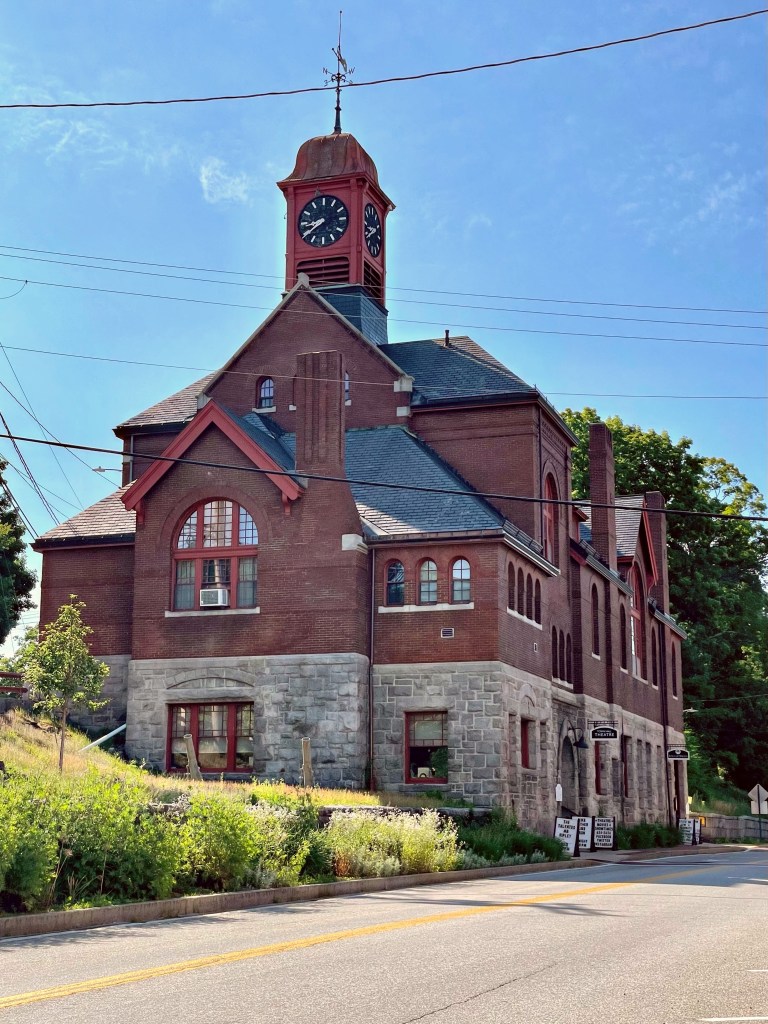
Welcome to Wilton, New Hampshire! With a population less than 4,000, the tiny New England town sure packs a lot of old buildings into its borders. The town was first part of a township chartered as “Salem-Canada” in 1735, by Colonial Governor Jonathan Belcher of Massachusetts, which then claimed this area. The land here was granted to soldiers from Salem, Massachusetts, who had served in 1690 under Sir William Phips in the war against Canada. “Salem-Canada” was one of the towns on the state’s border intended to provide protection against attack from native tribes. In 1762, residents of the town petitioned New Hampshire Governor Benning Wentworth to incorporate the town as Wilton, likely named after Wilton, England. The town prospered as a sleepy farming town, largely concentrated around Wilton Center. By the 1860s, the village of East Wilton developed around the Souhegan River, with mills and businesses centered there. The town decided to relocate their town hall “closer to the action”. Land was acquired on a triangular piece of land in the center of the village, which was recently cleared by the destruction of Whiting House, a hotel that formerly occupied the site. The architectural firm of Merrill & Cutler of Lowell, MA, were hired to design the building, which blends Richardsonian Romanesque and Queen Anne styles perfectly on the difficult site, opening in 1885. Silent movies were first shown in the auditorium in 1912 and by the 1930s, the auditorium was used most often as a movie theater. A large part of the building has since been occupied as a theater for the community.
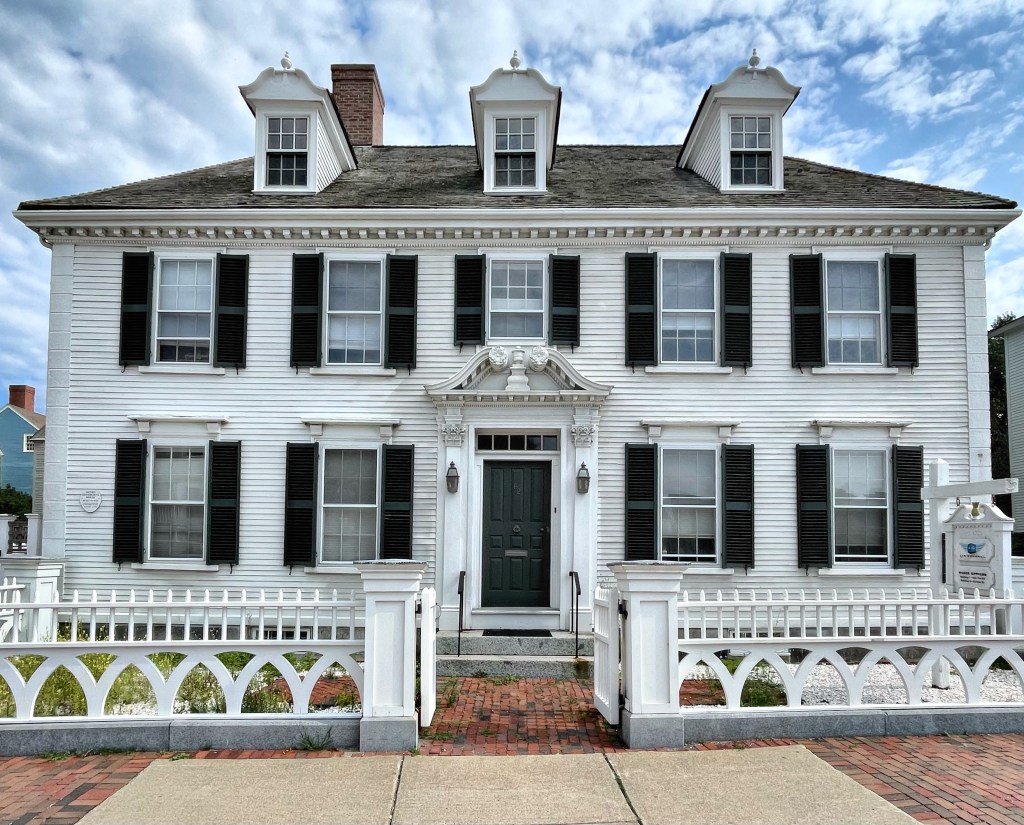
This house in the Hill District of Portsmouth, NH was built sometime between 1766 and 1770; however a sign posted on the house indicates an earlier date of 1725. Regardless, the house is one of the best-preserved Georgian homes in the city. The colonial-era home was apparently built for a Henry Sherburne, who was a member of some of New Hampshire’s leading families. By the 1900s, the property was the only in the city with a surviving scrolled pediment doorway from the period. Like other colonial homes in the old North End of Portsmouth, it was barely saved by the bulldozers and urban renewal when it was moved in 1972 to its present site.
The Whidden-Ward House in The Hill section of downtown Portsmouth, New Hampshire, is an excellent example of a wood-frame Georgian-style residence in the coastal city. The house was built in the early 1720s by joiner, Michael Whidden Jr. As a third generation joiner, Whidden built several houses in the Portsmouth area, this one for his own residence. The house was purchased in the 1770s by Nathum Ward, who “modernized” the house with the triangular pediments over the windows. The house was moved over a block to its present site in the early 1970s as much of the surrounding neighborhood was demolished during Urban Renewal.
Built sometime between 1749 and 1756, the Hart-Rice House, a little-altered example of Georgian architecture, stands out in the densely packed Hill section of Portsmouth, NH. The area contains amazing early homes, largely moved to their sites from nearby, saving them from the wrecking-ball of Urban Renewal in the 1970s. The house demonstrates the high-quality craftsmanship of its owner, ship-joiner Samuel Hart (1701-1766), who likely built the home himself. Decades later, William Rice, a sea-captain, purchased the home. Rice was a known privateer during the War of 1812, causing a lot of trouble for British ships off the shores.
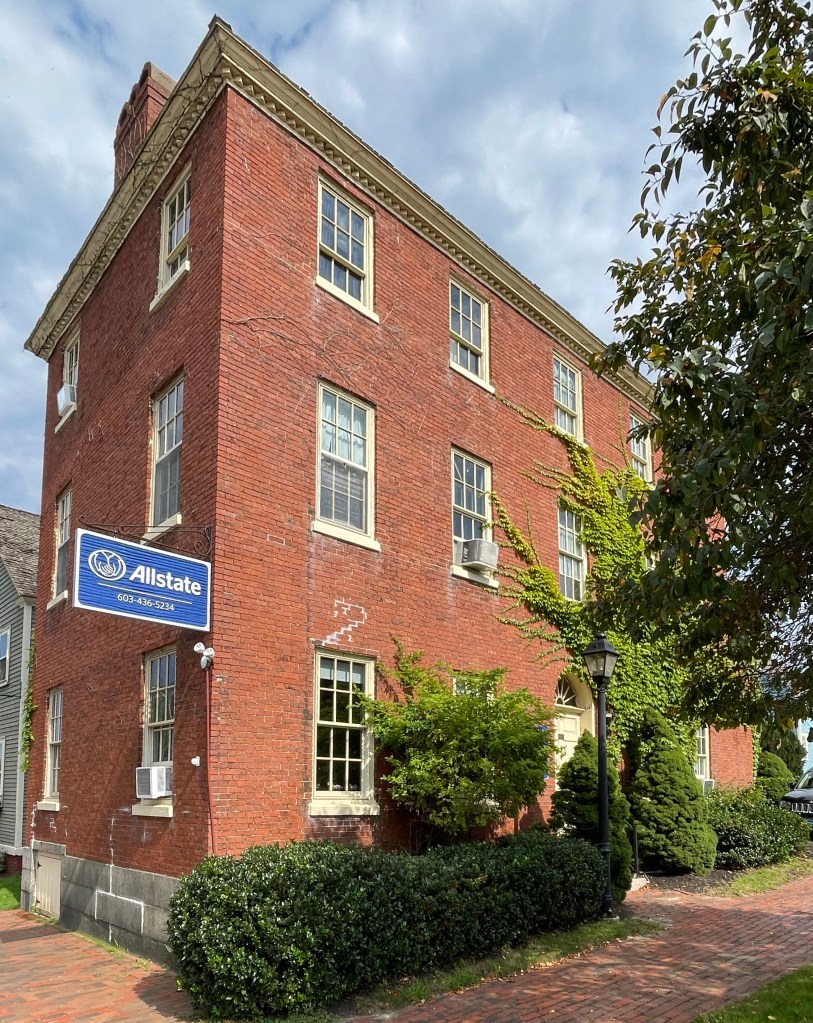
Continuing with my mini-series on The Hill, a neighborhood of 18th and 19th century houses and buildings saved from Urban Renewal in Portsmouth’s North End neighborhood, I present the James Neal House. Built in 1831 and taxed a year later, the house stands out as a late Federal style property, a style that was well on its way out in popularity. Additionally, the home is the only extant brick house in this area of town from the period. James Neal was listed in directories as a merchant, possibly being involved in the shipping of goods from plantations in the Caribbean, which were farmed by enslaved Africans. James died just a few years after his home was built. The brick house is three-stories with a hipped roof. The entry is surmounted by a semi-circular fanlight set within a recessed opening, a modest take on the Federal style.