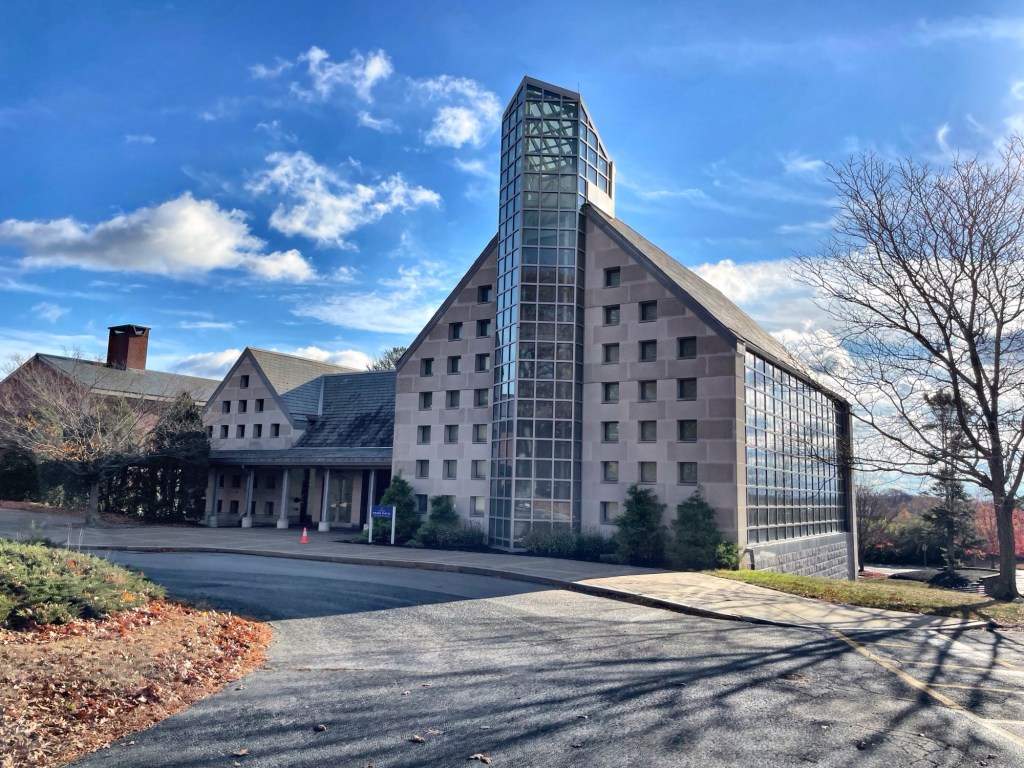
The last building constructed on the former Andover Newton Theological School in Newton, Massachusetts, was Wilson Chapel, located at the edge of the campus. The building is a modern interpretation of the traditional New England meetinghouse, and was completed in 2007 from plans by Context Architecture. The limestone building is punctuated by a grid of square punched windows and raised panels with the primary facade dominated by a glass tower, resembling the more traditional steeple. To me, the building does an excellent job at respecting the basic forms of a New England chapel, while utilizing contemporary materials and design elements to distinguish it as a 21st century structure.
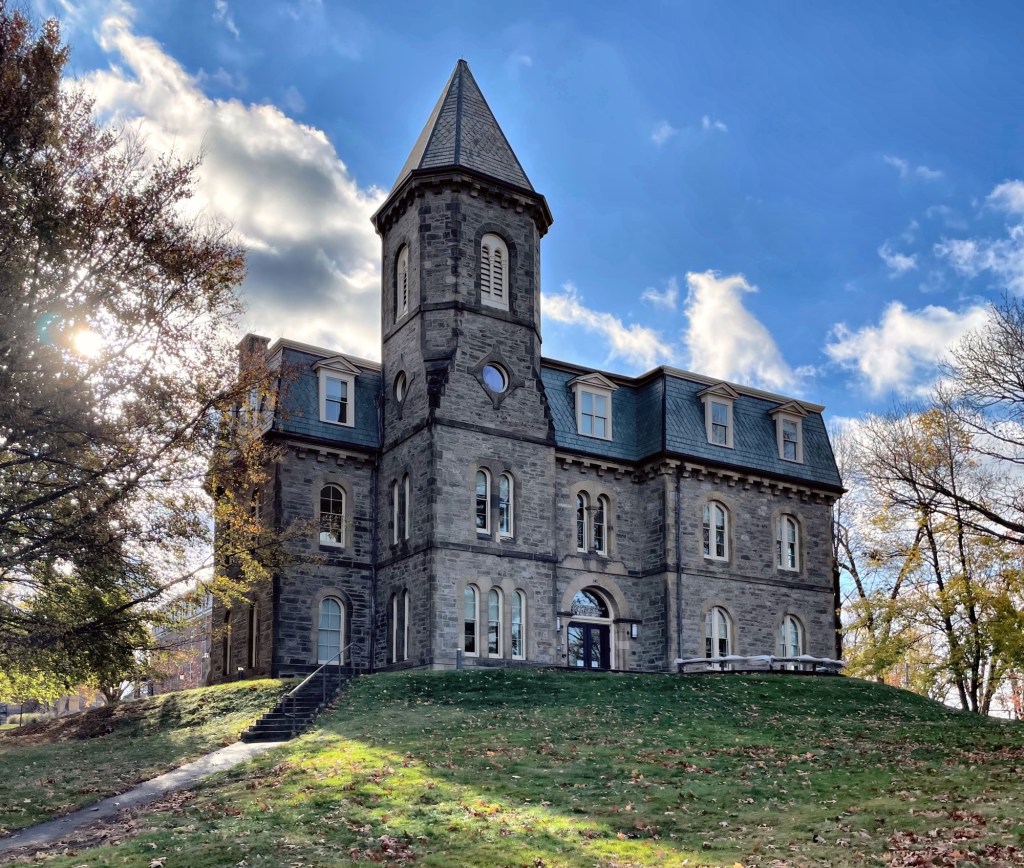
Colby Hall sits perched atop a hill overlooking Newton Centre, Newton, and is located in the Andover Newton Theological School campus. The building was constructed in 1886 for the Newton Theological Institution, which was founded on this site in 1825, and used for the a Baptist seminary, educating young students in theology. By the 1860s, the school had outgrown its space and following a donation from benefactor, Gardner Colby (1810–1879), who was treasurer of the school (and was also the benefactor and namesake of Colby College in Maine) plans were drawn up for the new lecture spaces and chapel building. The unique building was designed by Alexander Rice Esty, a prominent architect at the time, and it blends Second Empire and Romanesque Revival styles under one roof. The three-story structure is of a light buff, rough cut stone with sandstone trim and features an imposing four-story tower at the eastern end. In November 2015, the school announced that it would sell its campus and become part of Yale Divinity School in New Haven, Connecticut. The Newton campus was purchased by the Windsor Park School with Colby Hall now occupied by the Boston Psychoanalytic Society & Institute.
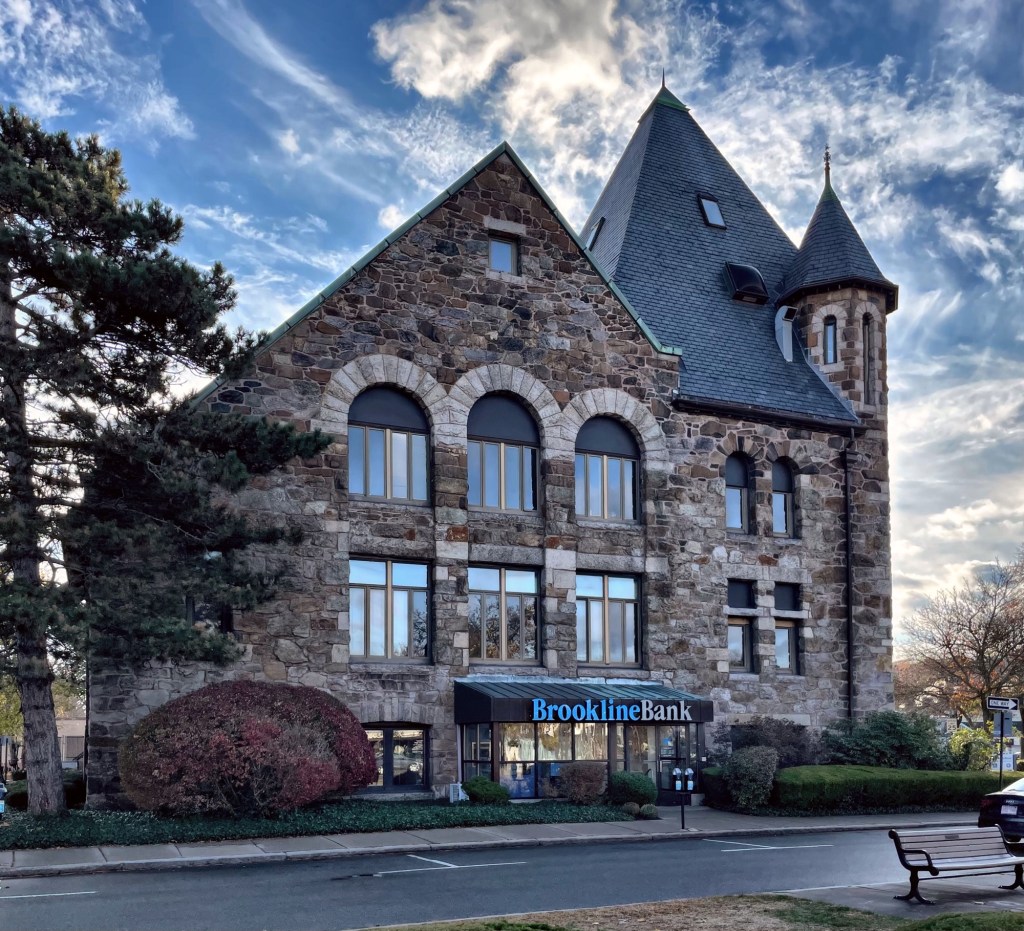
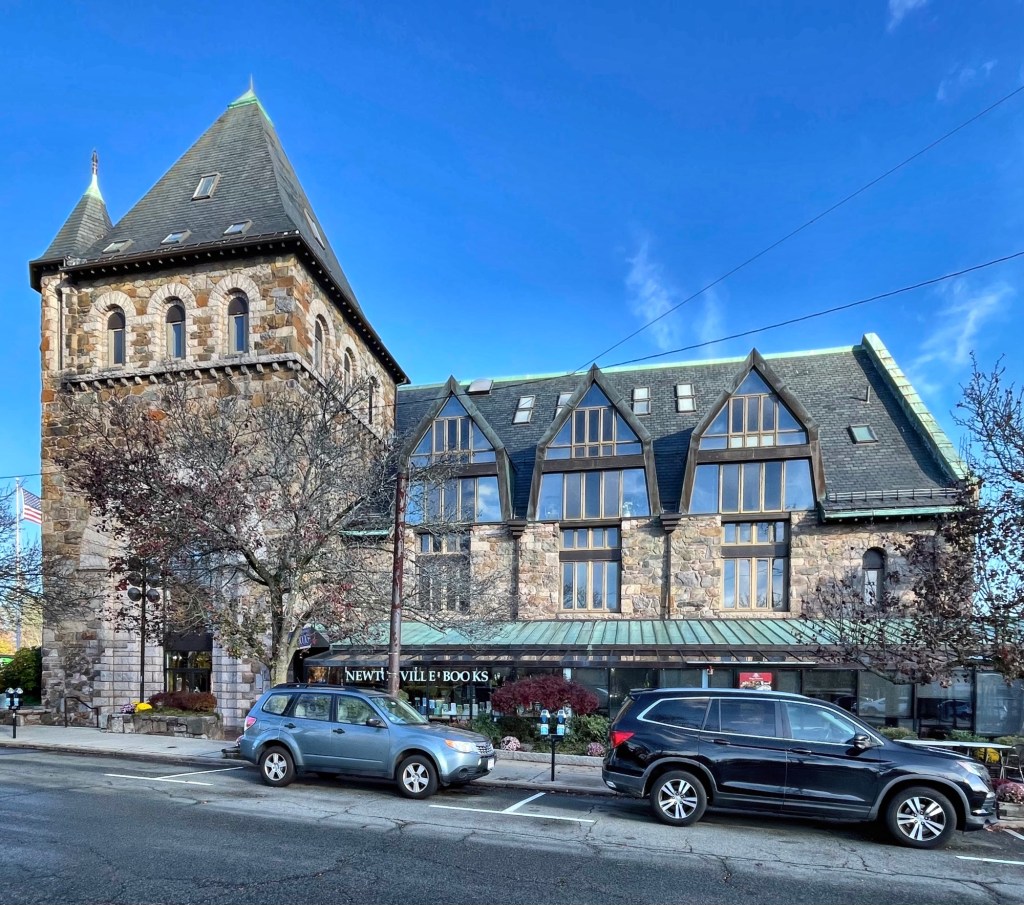
This building, the former Newton Centre Methodist Episcopal Church, is Romanesque in style, and is one of the more notable adaptive reuse projects in Newton. The church was designed by the esteemed architectural firm of Andrews, Jacques & Rantoul and completed in 1899 for the local Methodist Episcopal congregation. The edifice is built of locally quarried rubblestone, often called Roxbury Puddingstone, and trimmed with rough cut Milford granite. The granite is used at the windows, forming the arches and heads, and most strikingly in the large arched entrance. The church eventually closed and was renovated with modern windows, additions, and more, and currently houses a restaurant, bank, book store, and professional offices.
The former First Congregational Church (now the Greek Evangelical Church of Boston) of Newton Center, Newton, is a landmark example of the Neo-Gothic architectural style for a church building. Built in 1904, the structure resembles an English village church in the form of a Roman Cross with short trancepts. The structure is constructed of Quincy granite and was designed by the architectural firm of Shepley, Rutan & Coolidge. The First Congregational Church of Newton was originally established in 1664 as a parish church when Newton was still a part of Cambridge (then known as Newtowne). The parish has had six meeting houses built by the Congregation, with the last four on this site. Seeing dwindling membership in the mid-20th century, First Church in Newton dissolved in 1972, after more than 300 years of service to the Newton community. Luckily, the newly formed Greek Evangelical Church of Boston would buy the church that same year and has maintained the significant edifice ever-since!
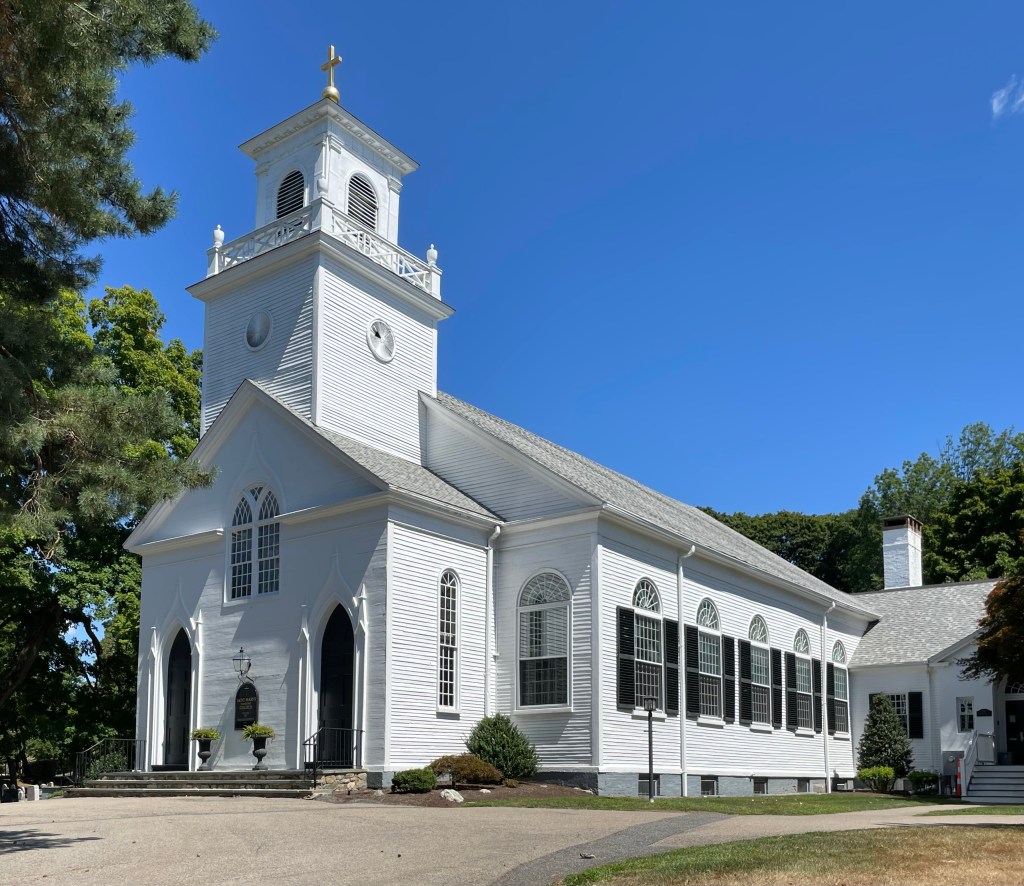
Lower Falls Village in Newton, Massachusetts was first settled in the early 18th century by colonists due to the area’s natural waterfalls and rapids which was perfect for early industry. By the early 19th century, up to four paper mills lined the Charles River here at a dam which provided power and steady water supply for their facilities. The village saw a large population increase from that point until the end of the 19th century when larger mills in the state were built. One of the major community spaces for the growing village was it’s main church, St. Mary’s Episcopal Church, which is the oldest extant church in Newton and the first Episcopal church built immediately west of Boston. The cornerstone for the building was laid in September 1813 containing a package of coins and a silver plate. Previously services had been held in the Lower Falls schoolhouse, with the first Episcopal service held in 1811. The land for the church was donated by Samuel Brown a wealthy Boston merchant who invested in the paper mills in Lower Falls. Many of the founding members and parishioners were in the paper making business in Lower Falls and buried in the adjacent cemetery. The Federal style church was altered in 1838 and given Gothic detailing, including lancet windows and finials at the steeple. In 1954, the bell tower was altered with the gothic finials replaced with the current urns on the balustrade, the gothic arched openings were changed to the current arched shape, and entablature, pilasters, and a cross were added.
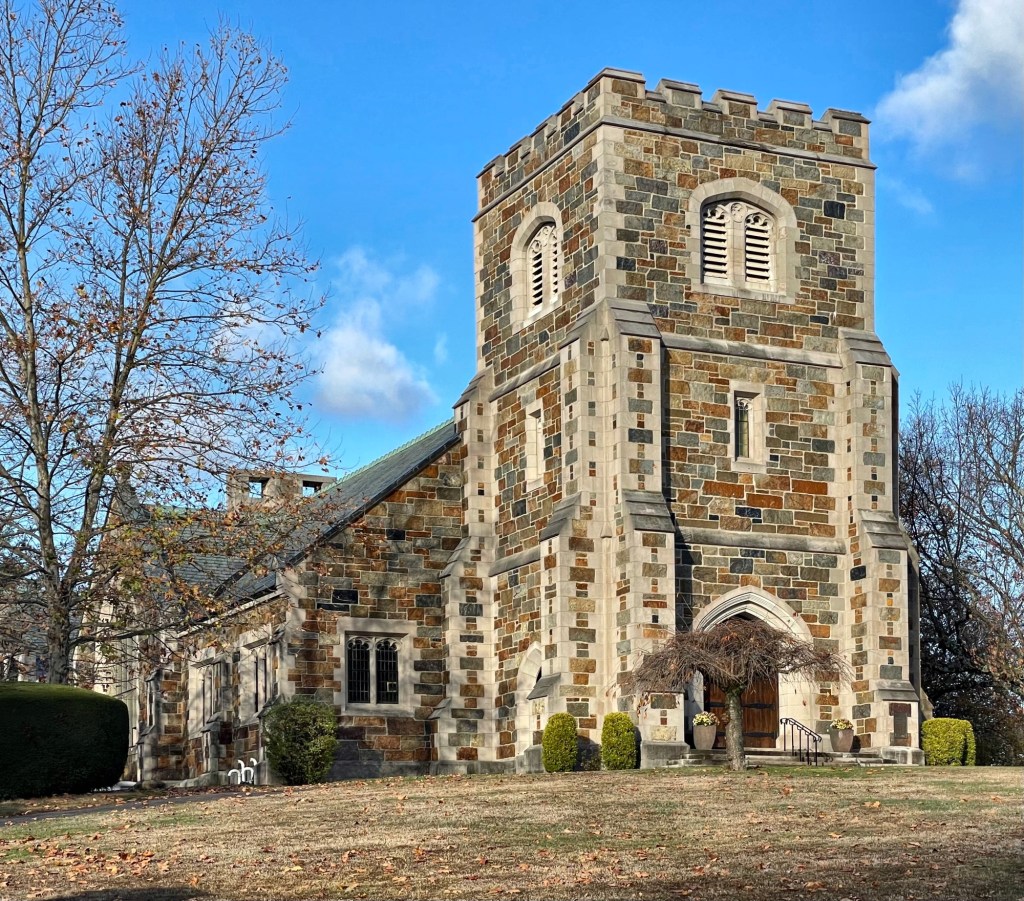
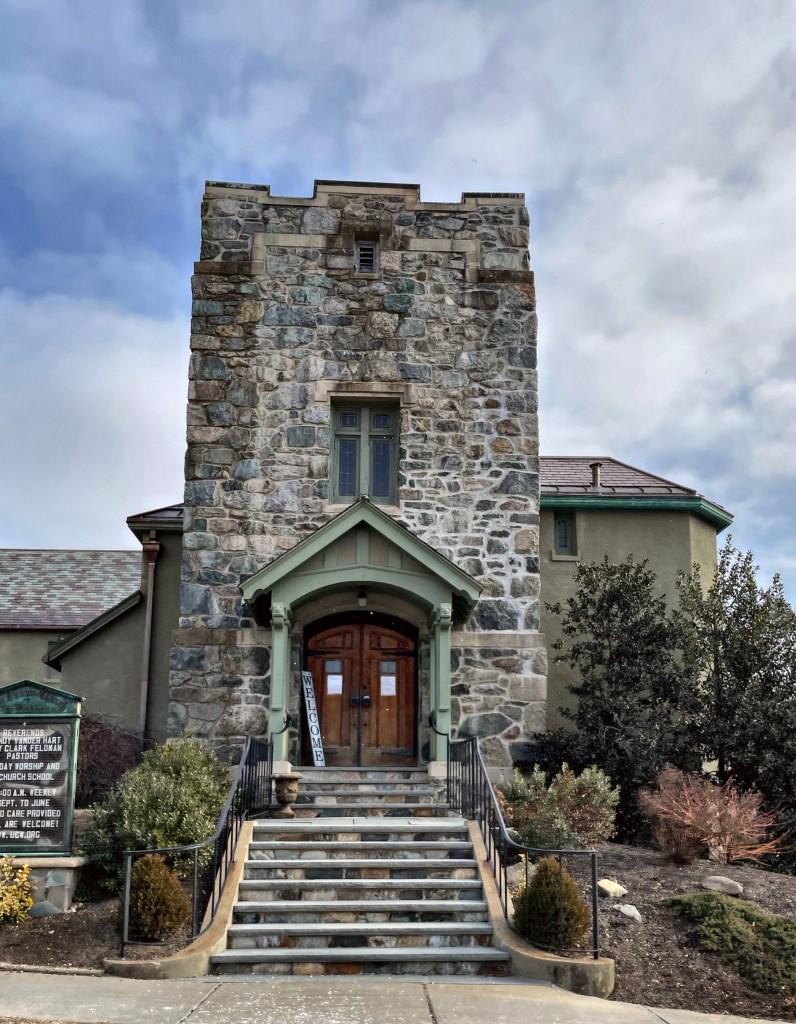
In 1904, residents of the newly established village of Waban in Newton, Mass., began meeting with the hope to establish a non-denominational church there. As the population of the village grew rapidly in the first decade of the 20th century, funding surged and it was determined that a place of worship was necessary. William C. Strong, a Waban resident and well-known horticulturist, donated the land from his large holdings, many of which was already being developed for house lots. The church building, designed by Boston architect James H. Ritchie, had its cornerstone laid in November 1911. Construction followed rapidly and the building was formally dedicated in September, 1912. The building follows the Arts and Crafts movement, especially Ralph Adams Cram’s revival of the English parish church.
 Buildings of New England