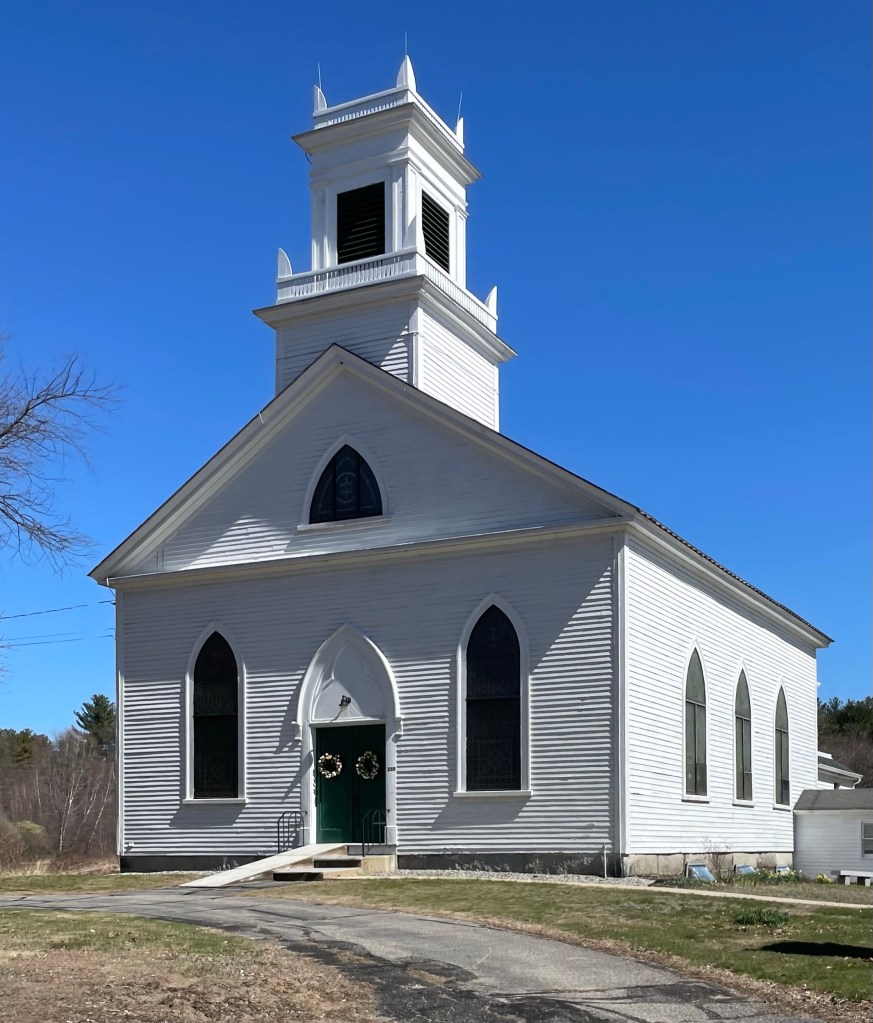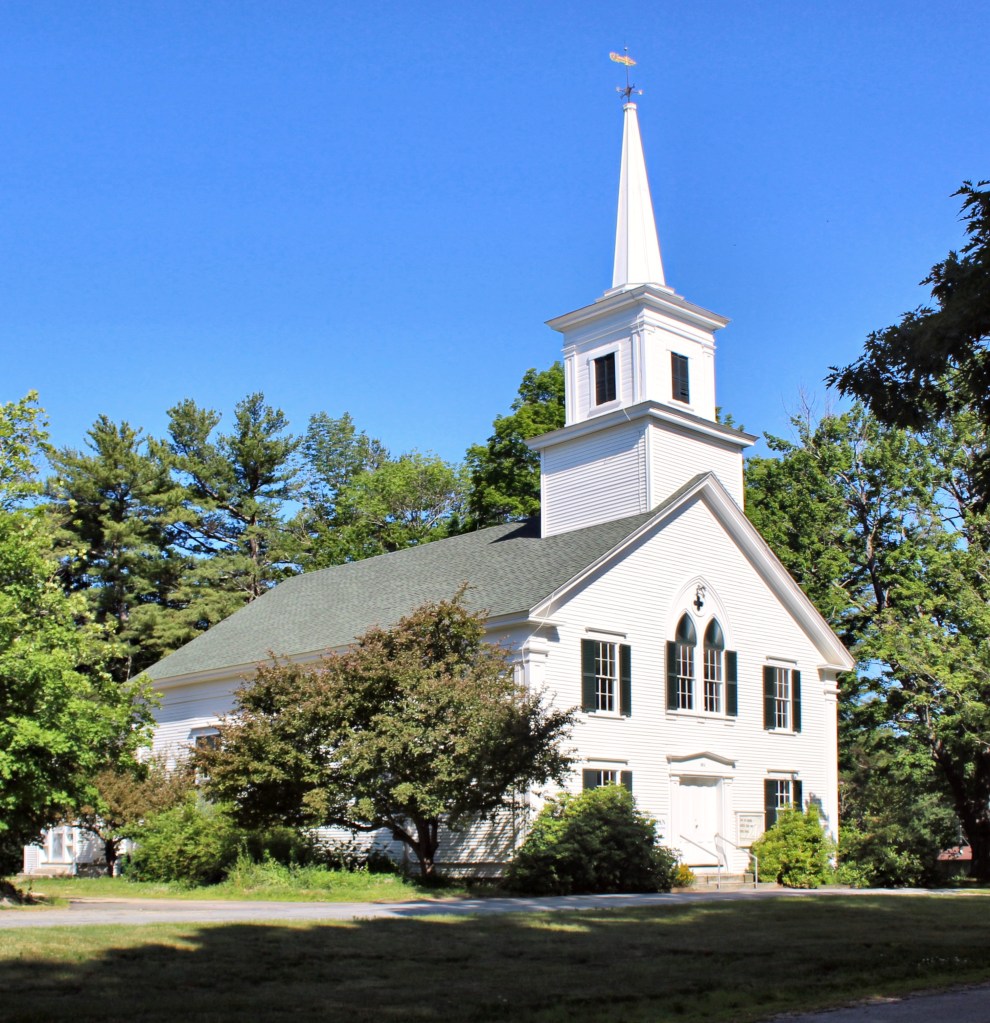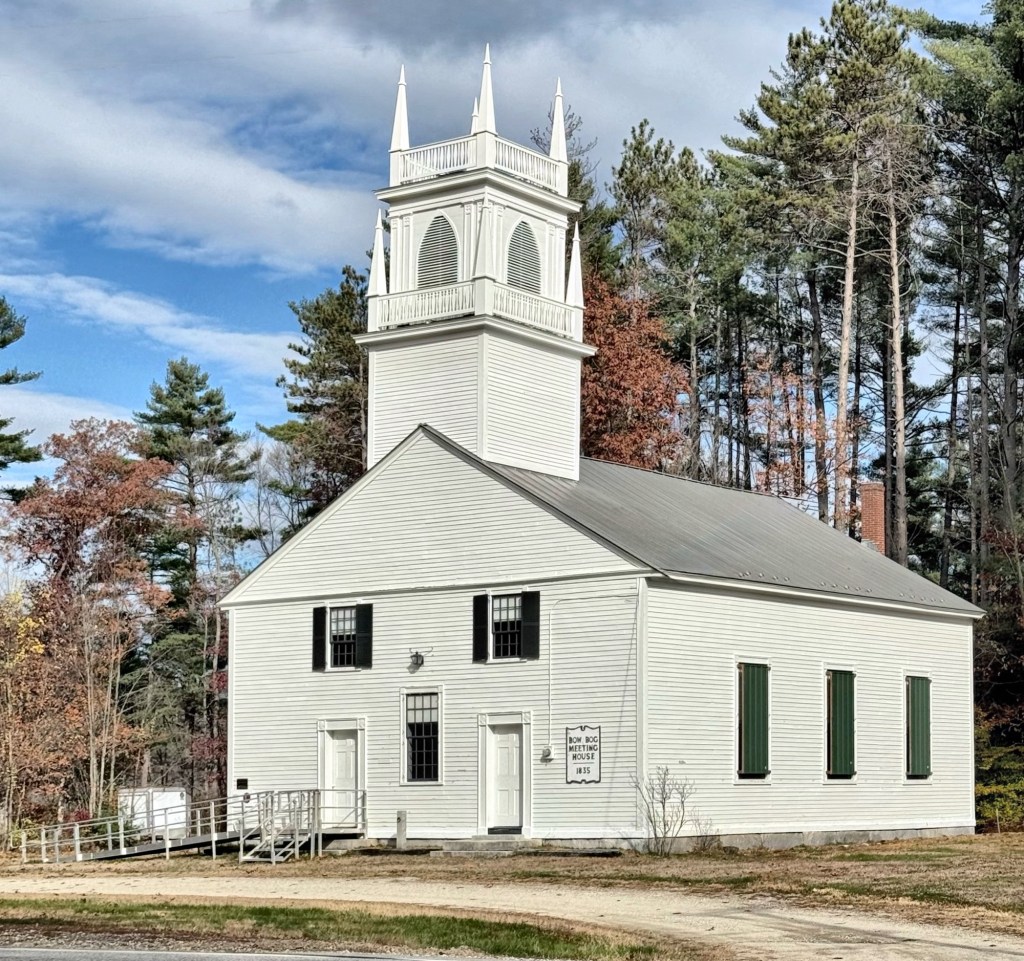
Bow Bog Meetinghouse // 1835

The Bow Bog Meetinghouse in Bow, New Hampshire, was built in 1835 for the First Methodist Episcopal Church and Society in town. Designed in the Greek and Gothic revival styles, the traditional form and paired entries with two stage belfry is adorned by finials and pilasters, showcasing an elegant blending of these two styles. built by George Washington Wheeler for the First Methodist Episcopal Church and Society of Bow in 1835. Mary Baker Eddy, founder of the Christian Science Church, mentioned Reverend Orlando Hinds as a contributor to her early religious teachings. She maintained close ties with this Church, donating funds for the bell in 1903. The Church provided religious instruction and social activities for 116 years and in 1951, the Church was closed and the Bow Bog Meeting House Society acquired the building. In 1970, they restored it to nearly its original condition, and it was acquired by the town in 1985.
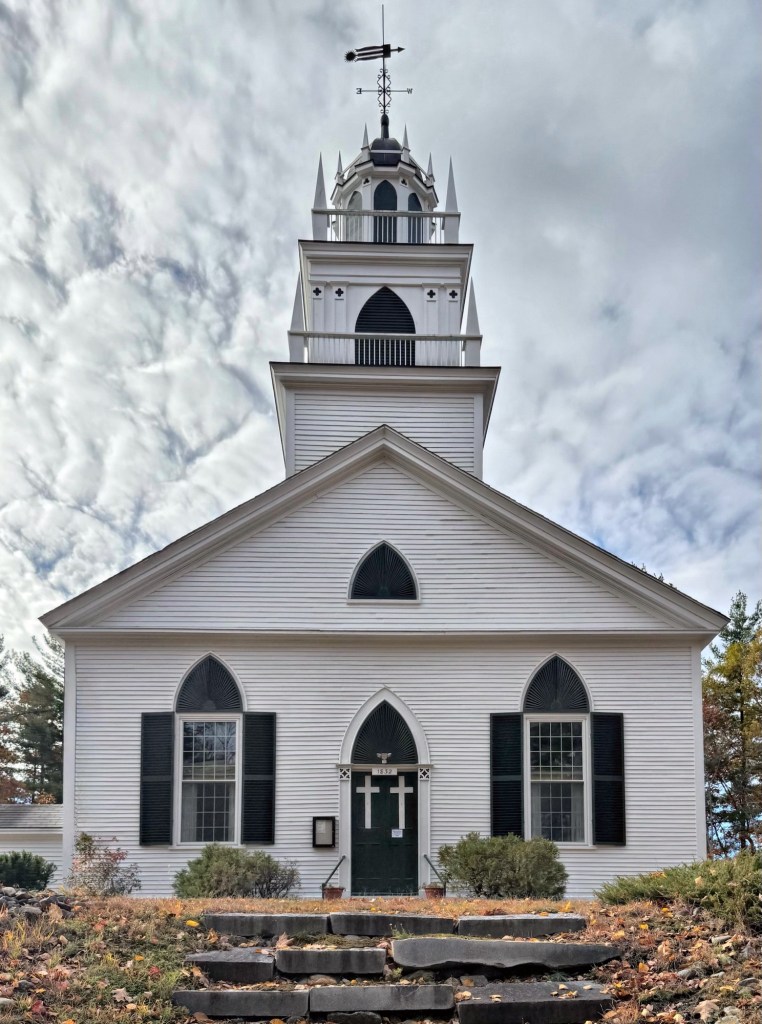
Bow Baptist Church // 1832

The Bow Baptist Church congregation was established in 1795 and reorganized in 1816. Prior to erecting its beautiful church building in 1832, meetings were held in member homes and the old Townhouse. Designed in the Gothic Revival style with some Greek Revival pilasters in the steeple, the church stands as an important early building for the community. Since its establishment, the congregation has advocated for causes of abolition and temperance and is presently known as the Crossroads Community Church, a non-denominational house of worship. Tragedy struck in 2018, when a lightning-strike hit the steeple, sparking an intense blaze that fire crews managed to prevent from spreading to the rest of the nearly 200-year-old structure. The steeple was completely destroyed, and the interior below sustained heavy water damage. Undeterred, the congregation worked to rebuild the steeple, bringing this nearly 200-year-old church back to her former glory.

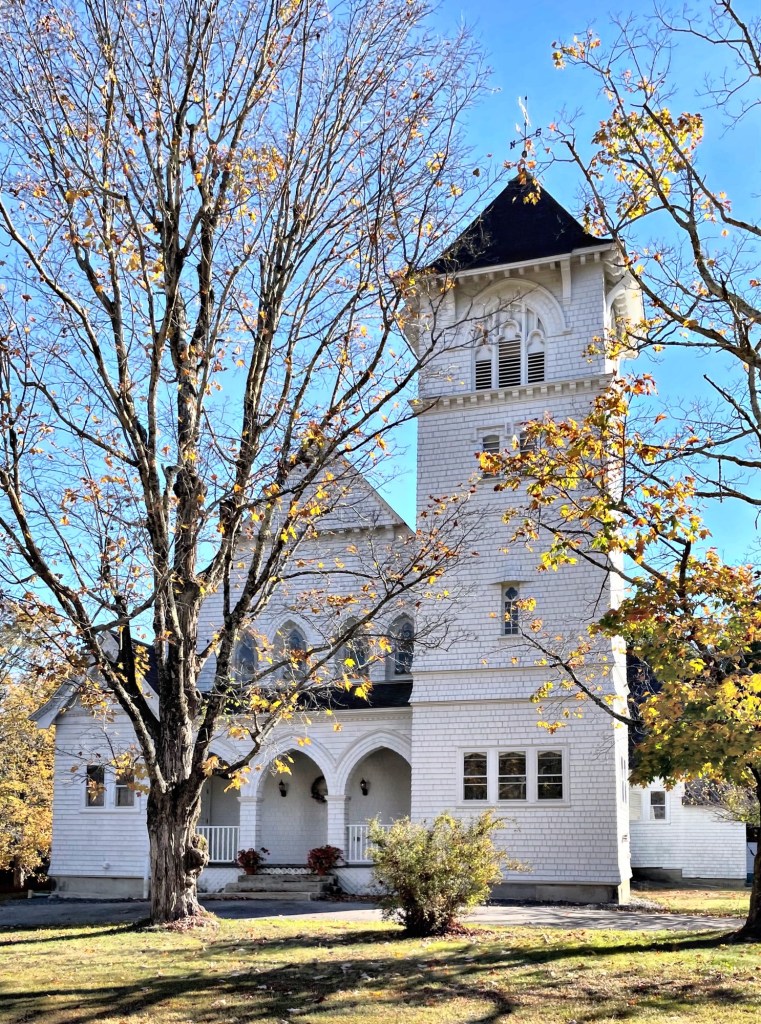
New Ipswich Congregational Church // 1903

The New Ipswich Congregational Church was built in 1903, replacing the former 1813 Meeting House on the site, the fourth in the town, which stood here until a fire caused by lightning destroyed it in 1902. Interestingly, the design is more Victorian than Colonial Revival, which makes this church stand out amongst the village dominated by Georgian, Federal and Greek Revival style residences. The present building blends the Shingle style with Gothic elements with the tracery at the belfry and lancet windows. The architects were Gay & Proctor of Massachusetts who created a statement building with iconic tower that has been well-preserved by the congregation ever since.

Litchfield Community Presbyterian Church // 1844

Litchfield, New Hampshire remained a rural agricultural town on the eastern banks of the Merrimack River from its founding by white settlers until after WWII when it rapidly became a bedroom community for nearby NH cities and Boston. The area’s Presbyterian residents needed a place to worship, separate from the more common congregationalists, and they built this Gothic and Greek Revival style church near the geographic center of town, a stone’s throw from the Merrimack River. The building features lancet windows, tracery, and a two-tiered belfry with classical pilasters and Gothic finials at the tower.

First Unitarian Church of Wilton // 1860

Wilton, New Hampshire’s original land grant included 240 acres for a church and stipulated that a building must be erected by 1752. From this, settlers built a log church. For the first ten years traveling preachers supplied the pulpit. In 1763, Rev. Jonathan Livermore became the first settled minister. In April 1773, the town voted to provide six barrels of rum, a barrel of brown sugar, half a box of lemons and two loaves of loaf sugar for framing and raising a new meetinghouse. In 1859, a fire destroyed the Revolutionary-era church/meetinghouse, and members immediately began the construction of a new, modern building. The present building blends Greek and Gothic revival styles in a later, vernacular form.