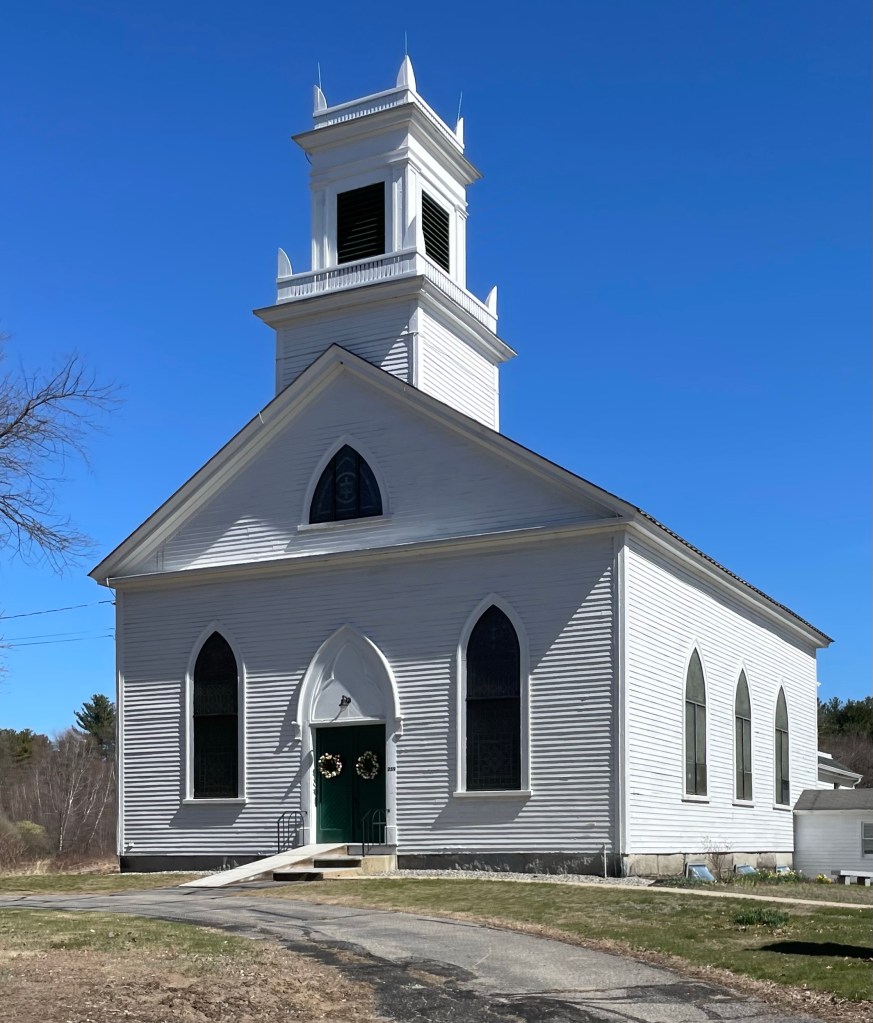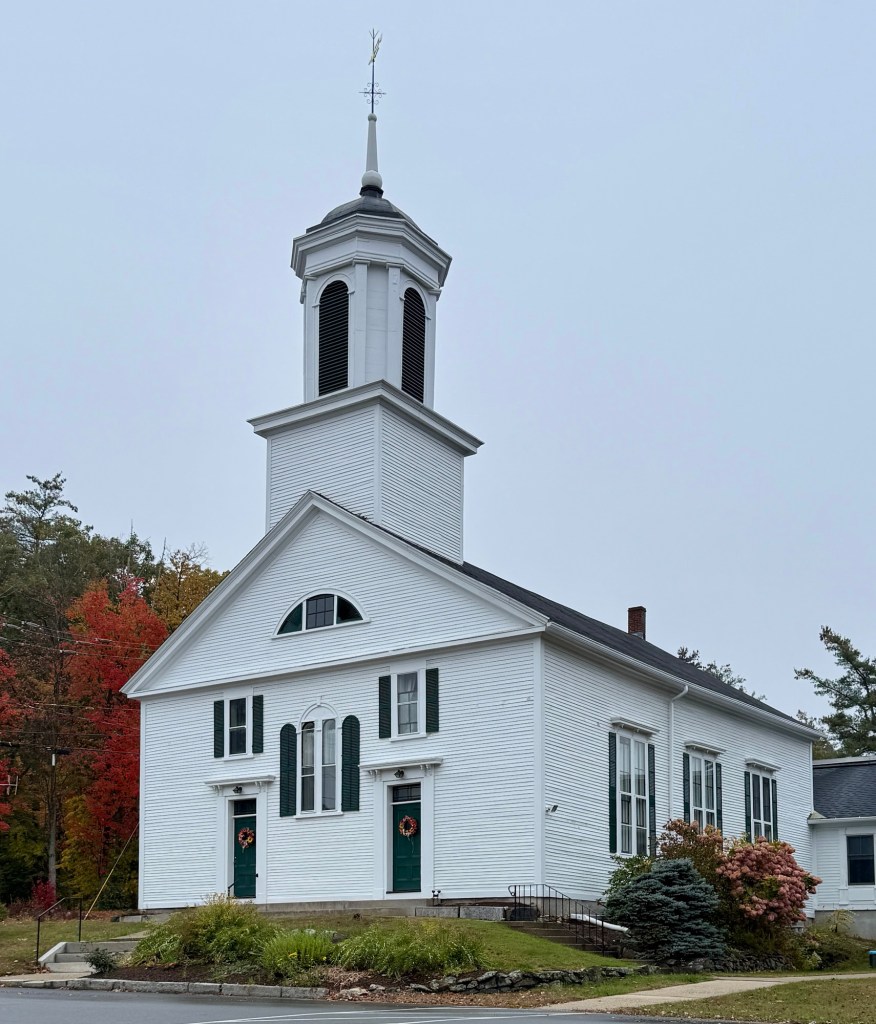
The area now known as the town of Windham, New Hampshire, was colonized and settled by Scots-Irish immigrants in 1719. Many were from Londonderry in present-day North Ireland and they settled in Southern New Hampshire establishing a colony, which was closely tied to the Presbyterian Church, similar to in their homeland. An early church was built, but the congregation preferred a central location. When a new meetinghouse was built in 1798, the congregation utilized the building for its sermons. Being a town-owned building, the townhouse was used for town meetings and church services for any denomination wishing to worship there. There was dissolution of church from state in New Hampshire in 1819 with passage of legislation that ended support of churches through taxation. In 1833, the congregation sought their own house of worship and purchased a lot nearby and sold pews to area families to help fund the building. Completed in 1834, the Windham Presbyterian Church has long served as a landmark in town. At its peak in 1845, the church had 250 members out of the total population of the town at 818. In 1874, extensive repairs were made to the church, with the windows replaced and modified to accommodate the lowered gallery. The Greek Revival style building with its Italianate alterations (round arched windows and door and window hoods) has been lovingly preserved by its congregation for nearly 200 years.