Highgate Manor // c.1870

Henry Baxter (1821-1897), a doctor and owner of a local mill and multiple area farms, built one of the most remarkable Second Empire style houses in New England, and it can be found in the small town of Highgate, Vermont! Dr. Baxter was said to have acquired an earlier Federal period house on the site in the 1860s and began planning a high-style Mansard estate here for his family. The earlier Federal house was incorporated as a rear ell and the new Second Empire mansion was built in front. Architecturally, the house stands out for its bellcast mansard slate roof topped by a square belvedere with arched windows and heavy scrolled brackets. His patented medicine, Dr. Baxter’s Mandrake Bitters, was sold throughout Vermont in the late 19th century and afforded him the wealth to erect this stately home. There are many unsubstantiated claims of Dr. Baxter “performing experiments on his children” for the sake of people to state that the house is haunted, but this appears to be lore in poor taste. It is said that the house was also a stop on the Underground Railroad, but that appears unproven as well. After Dr. Baxter’s death in 1897, the property became a lodge and restaurant. A basement bar was built and during prohibition, was said to have hosted the likes of Al Capone. Today, Highgate Manor, with its larger-than-life lore, remains one of New England’s most important and high-style Second Empire houses in one of the most unlikely places. It goes to show that it is worth exploring all of New England!

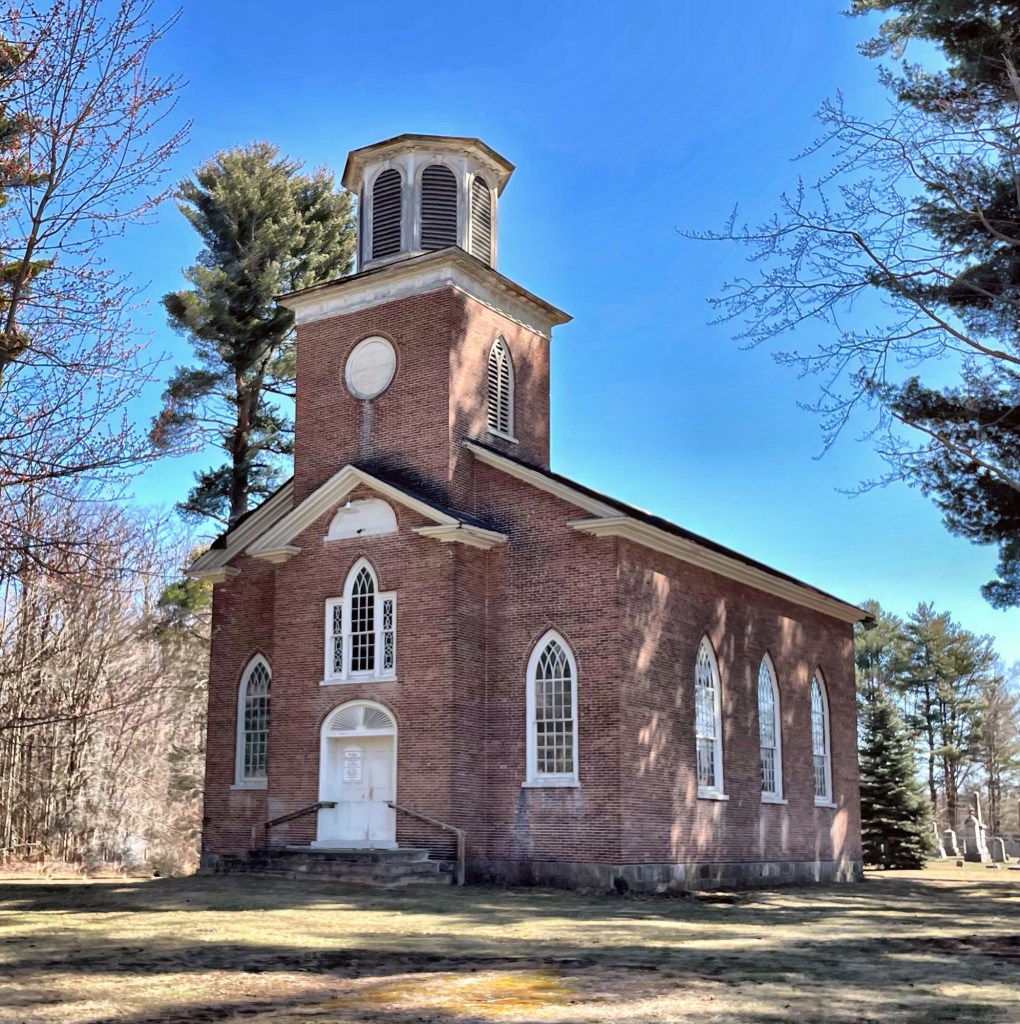
St. John’s Episcopal Church, Highgate // 1831

St. John’s Episcopal Church stands in a grove of pine trees at the southeastern end of the Highgate Falls village green in Highgate, Vermont. The church is built in a transitional style which combines the pointed arches of Gothic architecture with a unique Gothic-Palladian window, but with a traditional plan and massing commonly found in Federal style churches in New England. The church was built between 1831-1833 by Joel Whitney of nearby Enosburg, and was consecrated on May 21, 1834, by Rev. John Henry Hopkins, the first Bishop of the Episcopal Diocese of Vermont. The congregation was a full parish until 1896 and maintenance has since struggled due to dwindling use. The wooden steeple was removed in the late 20th century, but the church stands as an important architectural landmark for the small town.

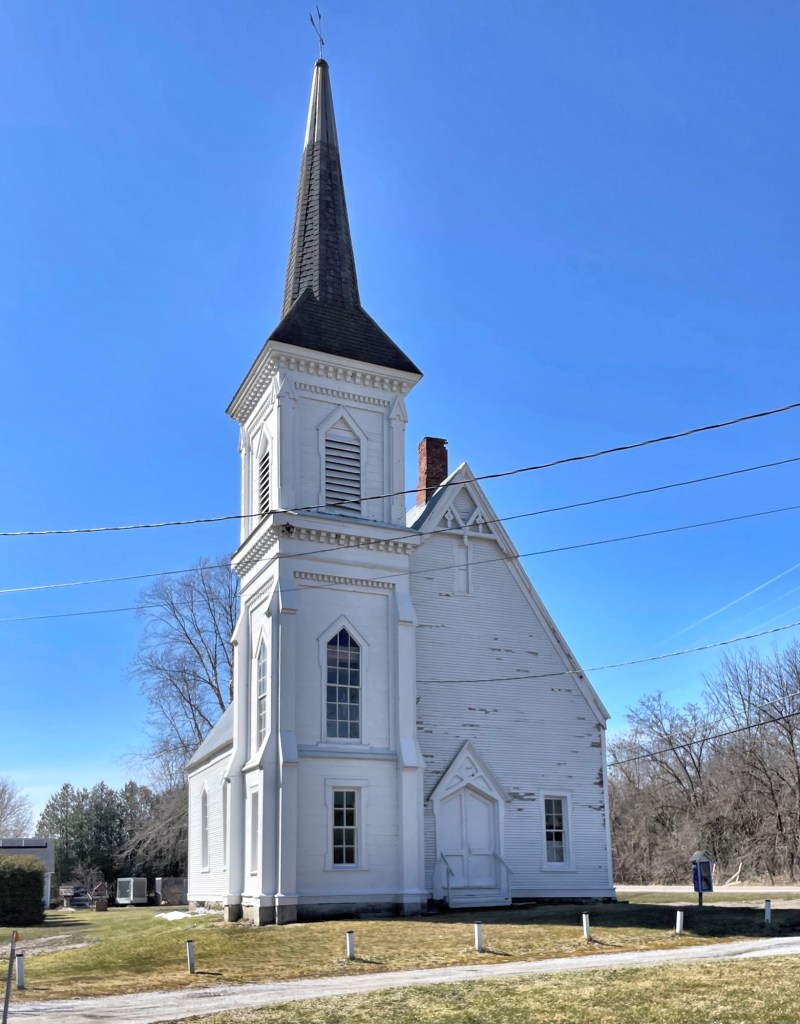
Highgate Springs Union Church // 1877

Rural parts of Vermont always surprises me with amazing old buildings. This white wood-frame church is known as the Highgate Springs Union Church, an 1877 edifice which effortlessly blends Victorian Gothic and Stick style details. The building became the village’s union church, providing a worship space for members of all denominations who on their own, could not afford the cost of building and maintaining a building. The small congregations eventually moved out and the church appears to now be largely unused beyond small events or weddings/funerals. I am glad to see it is kept up well at least!

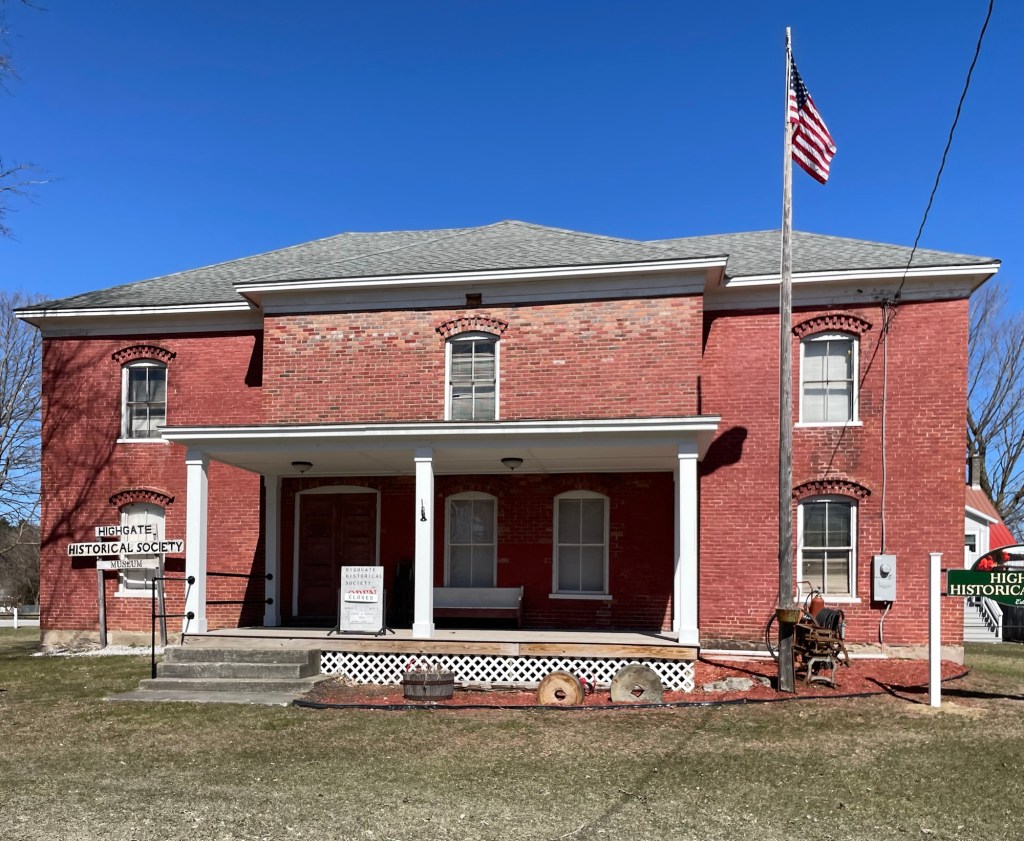
Place House – Highgate Historical Society // c.1868

Highgate, Vermont sits at the Canadian border and first white settlement occurred in the 1780s. The new town of Highgate was named after the London suburb of the same name. The town grew in population and was largely a farming town with small industry along the the Missisquoi river. Most houses in town were built in the second half of the 19th century and into the 20th century, like this brick building in Highgate Center. The structure was originally built as a residence for James P. Place (1822-1888), who was employed as Sheriff beginning in 1868. The building may have even included a jail cell! After his death, the building became a catholic school and later became the home of the local Independent Order of Odd Fellows (IOOF) Hall. Today, the former Place House is home to the Highgate Historical Society and used as the town’s museum.

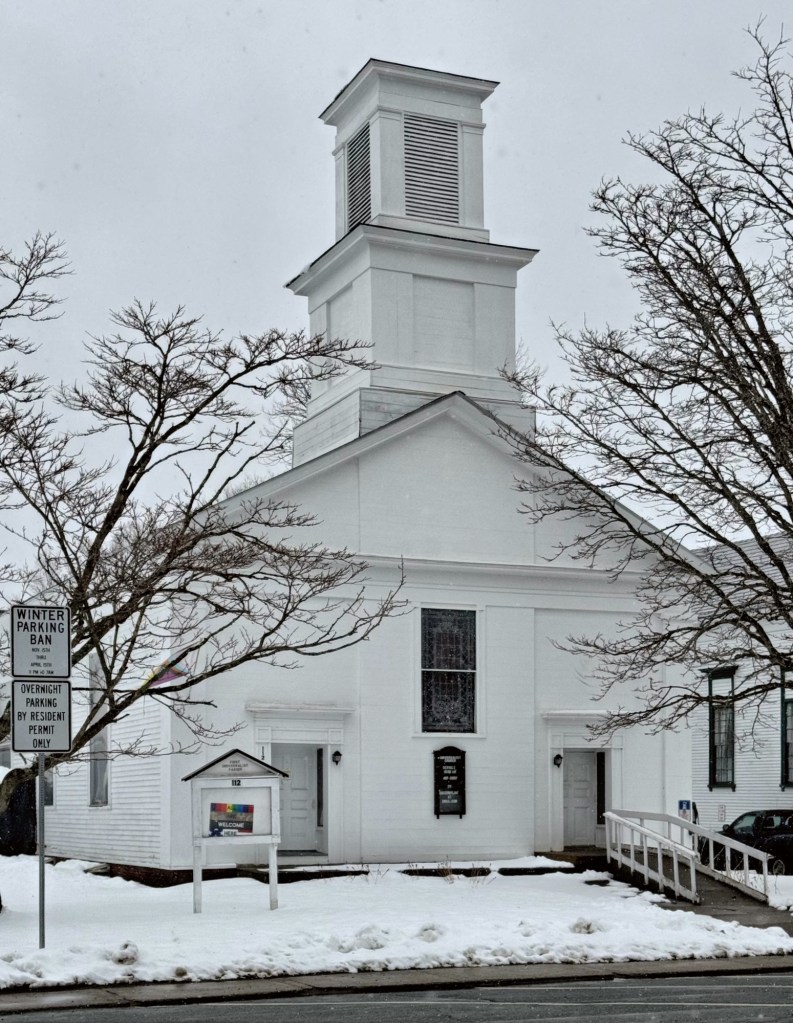
Derby Line Universalist Church // 1840

Located adjacent to the former IOOF Hall of Derby Line, Vermont, the Derby Universalist Church stands as an well-preserved example of a New England village church in the Greek Revival style. The church was erected in 1840 as the Derby Line Free Church for local Episcopalians. In 1871, Universalist Unitarians were able to acquire the church and they have remained here ever since. The building has a boxed belfry with projecting pilastered facade and smooth siding, all hallmarks for Classically designed churches of the 1840s.

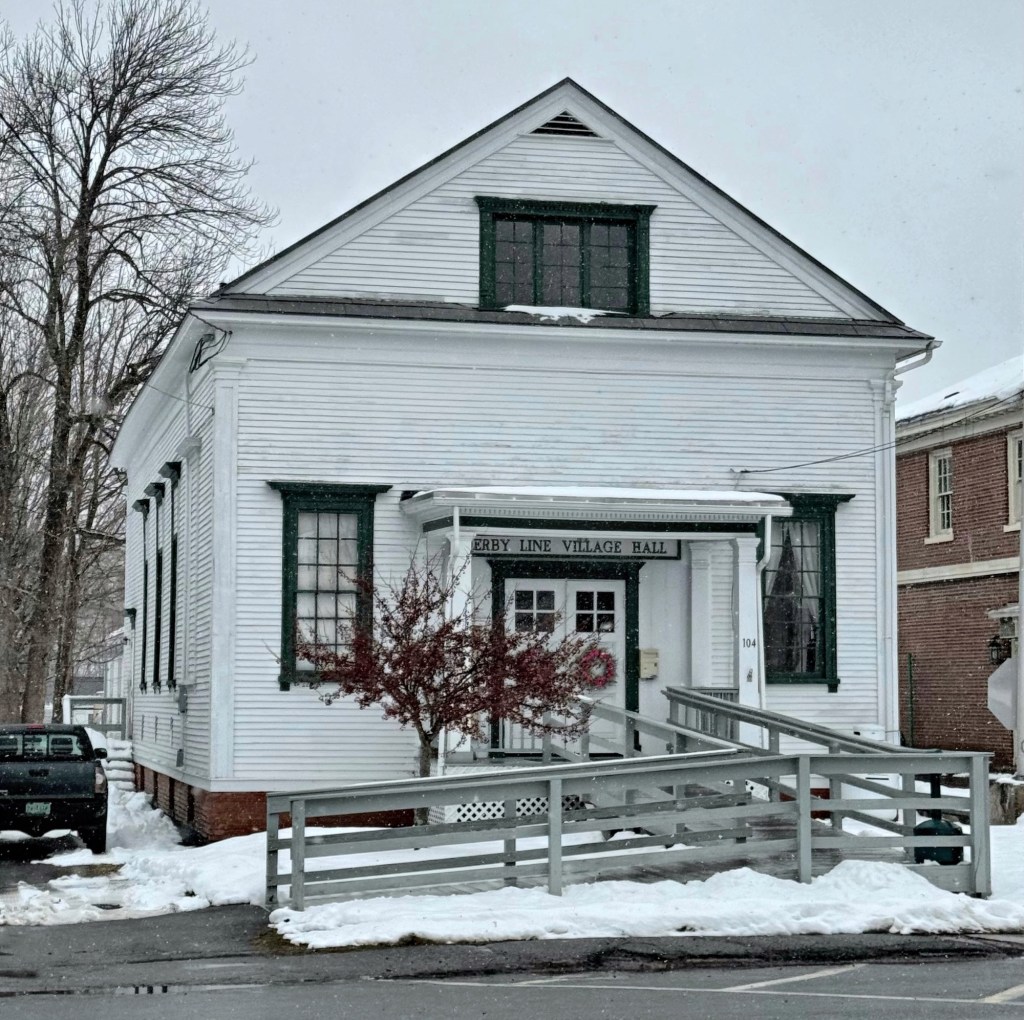
Derby Line Village Hall // 1887

This small wood-frame structure sits in the middle of Derby Line Village and is a good example of a local meeting hall embellished with Classical details. This structure was originally built as an Odd Fellows Hall in 1887, where local and regional members could hold events and meetings. In 1940 the IOOF Hall was moved back on its lot so that It had a similar set back to other buildings on the street, and it was renovated to a village hall for all residents, a use that remains to this day.

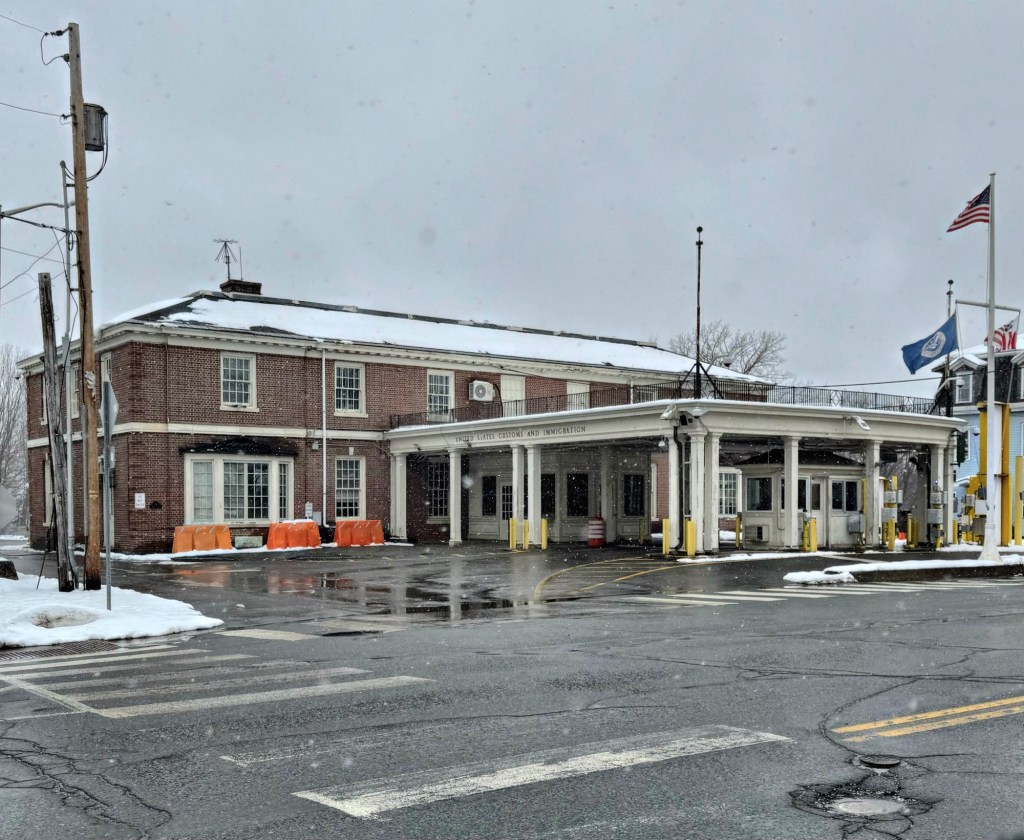
Derby Line Border Station // 1932

Located on the border of Canada in the northern part of Vermont, Derby is a charming town named after Derby, in England.  Located in the region known as the Northeast Kingdom, the area has benefitted from timber, maple sugaring, hop vineyards, and dairy production in its history since it was settled in 1795. This border crossing is located between the villages of Derby Line, Vermont and Stanstead, Quebec, both of which are developed up to the border, and without the security and signage, you’d never guess they are different countries! The cross-border relationship was cemented in part by the construction in 1904 of the Haskell Free Library and Opera House (last post), which straddles the border and provides library services to both communities. This station was formally opened in 1932, when the main building was completed. It is one of several standardized inspection station layouts developed by the United States Treasury Department, and was the largest and most architecturally sophisticated of those built in Vermont in the 1930s. It was built as part of a program to improve border security developed to respond to increased use of the automobile, increased illegal border crossing, and smuggling related to Prohibition. After the 9/11 terrorist attacks, the border was secured and a new station directly on the border was built.

Cyrus Eaton House // 1834

Built in 1834 by Cyrus Eaton, a businessman who emigrated to Orleans County from Canada, this cape house blends Federal and Greek Revival styles under a charming roof. Mr. Eaton was a trustee of the Orleans County Grammar School in Brownington, Vermont and helped African American Alexander Lucius Twilight build the Old Stone House. Two of Eaton’s sons and one daughter enrolled at the school, located just nextdoor from their home. In 1971, the property was purchased from a private owner, and has since been part of the Old Stone House Museum and Historic Village’s gorgeous campus.

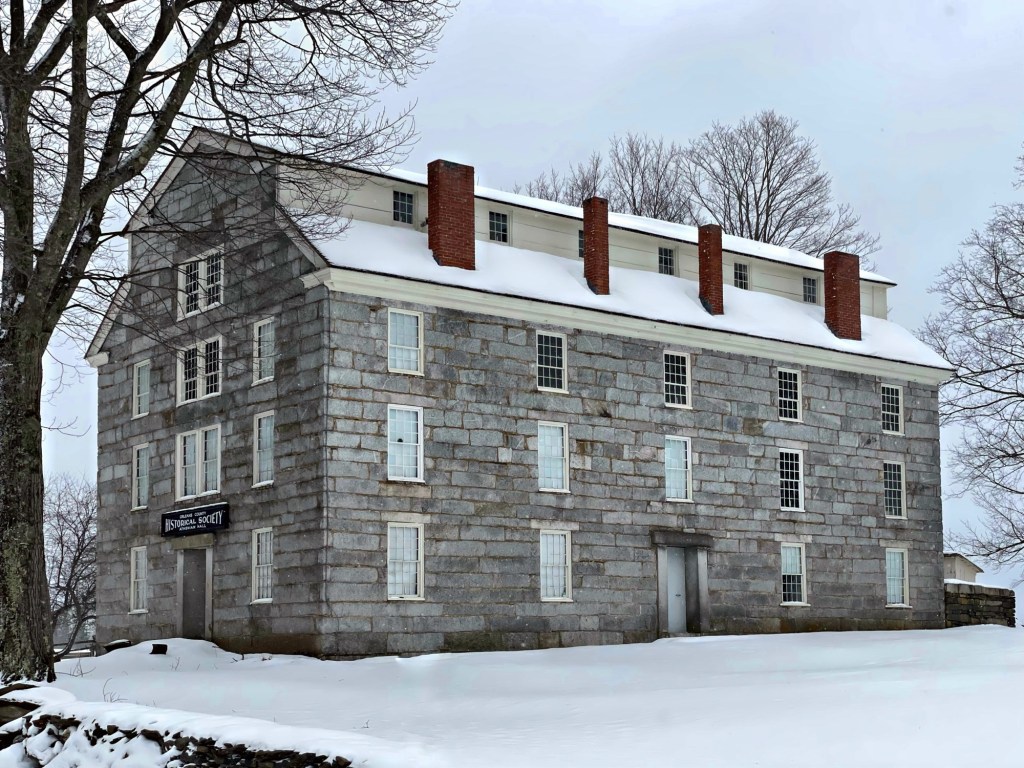
Athenian Hall – Old Stone House // 1836

Across from the Alexander Twilight House (last post) in Brownington, Vermont this massive stone structure which is possibly the first granite public building constructed in the state. Alexander Twilight (1795-1857) is reputed to be the first African American in the United States to graduate from college, where he was likely inspired by the large granite dormitories there (a private institution). Twilight served as headmaster of the Orleans County Grammar School, which due to its rural location, required many students to travel long distances for their education. As a result, they boarded with families in town, including with Twilight. Athenian Hall was built to accommodate the larger number of students attending the Grammar School. The building closed in 1859, two years after the death of Alexander. The building sat vacant for much of the late 19th and early 20th centuries until 1918, when the Stone House was put up for auction. A representative of the railroad in the state of Vermont bid on the structure with the hopes of using the granite stones for bridge abutments. Luckily for us, The Orleans County Historical Society outbid the railroad and won the auction. The building was opened as a museum in 1925 and is today part of the Old Stone House Museum and Historic Village.

Alexander Twilight House // c.1830

The highlight of the town of Brownington, Vermont is the Old Stone House Museum & Historic Village, a collection of amazing 19th century architecture set amongst the rolling hills of the Northeast Kingdom. One of the buildings in the village is this structure, the Alexander Twilight House. Alexander Twilight (1795–1857) was born in Corinth, Vermont, on September 23, 1795. He was raised by a fair-skinned mother, Mary Twilight, and a mixed-race father, Ichabod Twilight. Twilight entered Middlebury College in 1821 and graduated in 1823, possibly making him as the first person of color to graduate from an American college. Alexander Twilight accepted the call and moved to Brownington to serve as the town’s reverend.  He also served as headmaster of the Orleans County Grammar School.  To meet growing enrollment needs, he designed, raised funds for, and built the first granite public building in Vermont, Athenian Hall, which contained classrooms and a dormitory. He had this Federal style house built in the village, large enough to house some students in his home. Before building his Federal style home, he lived in a much smaller, vernacular home, which was added onto the rear of this home as an ell (later separated by the museum). Elected to the Vermont General Assembly in 1836, Twilight became the first African American to serve in a state legislature in the United States. In 1847, after conflicts with the Orleans County school administrators, Twilight moved to Quebec, Canada for five years, but then returned to serve as headmaster in Brownington.  He died on June 19, 1857 and is buried in the Brownington churchyard

Original Twilight House