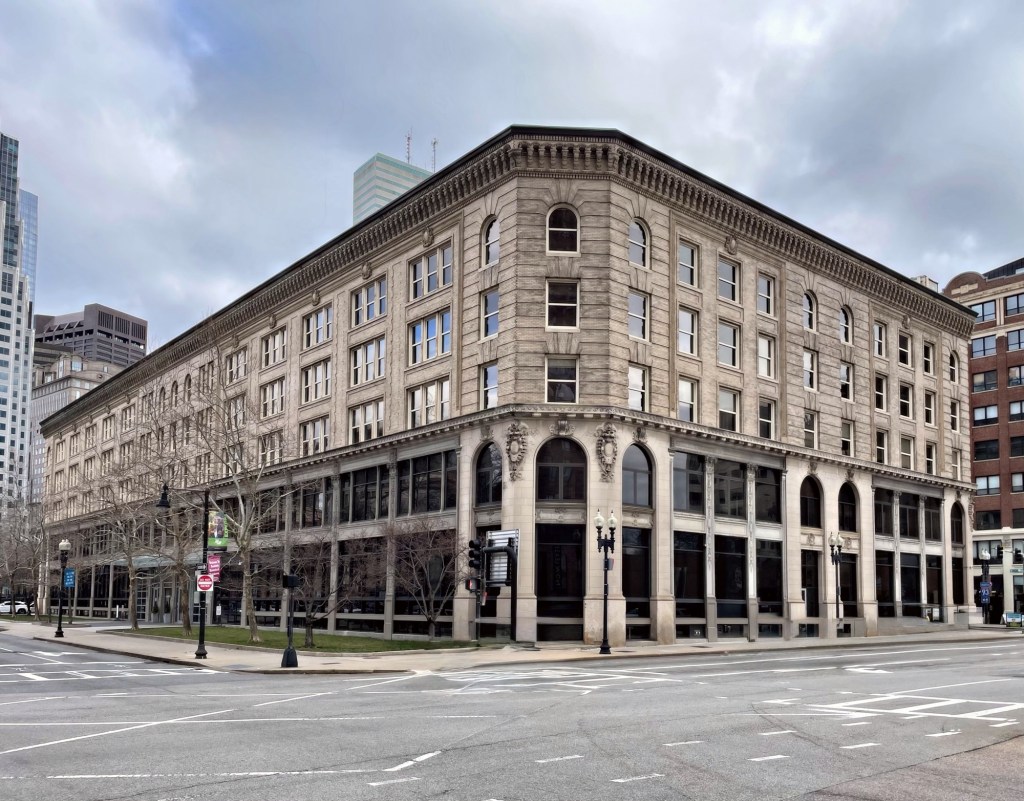
Albany Building // 1899

One of the last major 19th century buildings erected in Boston’s Leather District is also one of the finest examples of Beaux Arts architecture in the city. This is the Albany Building, built in 1899, and fills an entire city block. The Albany Building was designed by Peabody and Stearns and built by Norcross Brothers as the offices for the United Shoe Machinery Corporation. Its two-story base is adorned with swags and cartouches and its fifth floor is topped with a complex cornice. The use of beveled corners and ornate detailing break up the massing of the building which otherwise, would read like a box. The building today serves as an important visual gateway into the Leather District and its context of late 19th century commercial blocks centered around the leather and shoe manufacturing businesses.
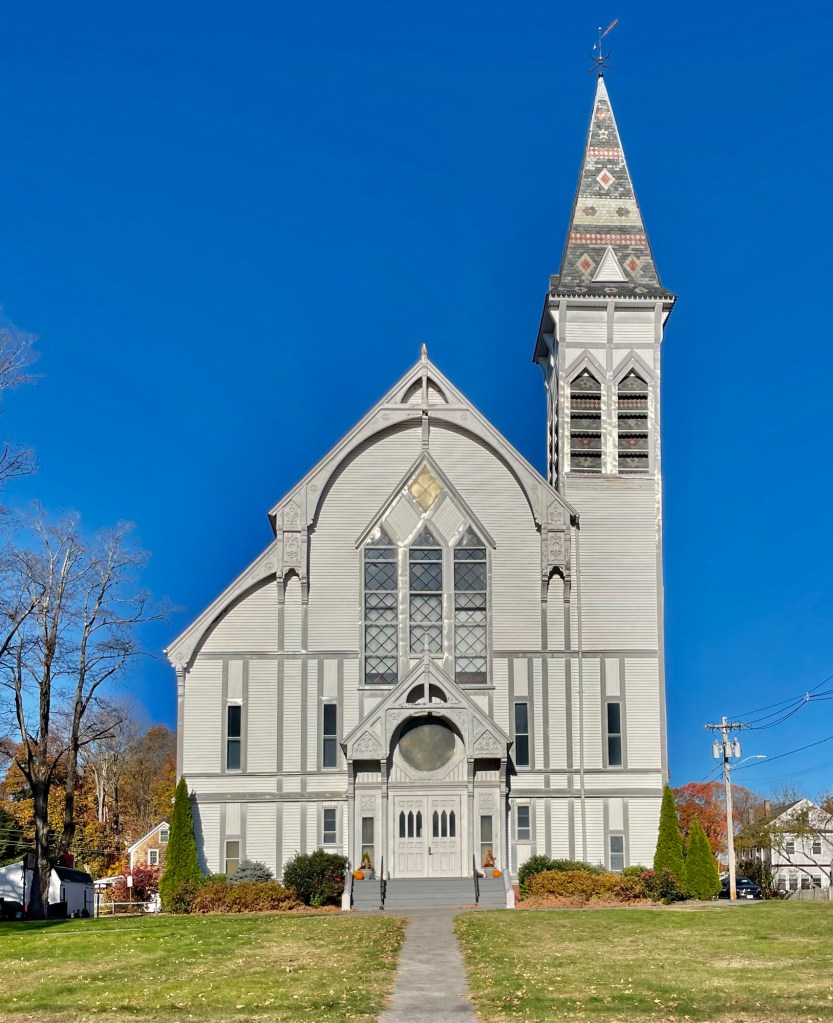
First Congregational Church of Georgetown // 1874

The First Congregational Church of Georgetown, Massachusetts, is significant both architecturally as a Victorian Gothic/Stick style church designed by a prominent architectural firm, and historically as an important gathering place for the town’s members for 150 years. The congregation however is much older than 1874, as when Georgetown was then a part of Rowley, Massachusetts, members here in 1731 petitioned to create their own parish in Rowley to travel a shorter distance to services. The church, then known as the Second Church of Christ in Rowley, was organized in 1732 with services held in a rustic Meeting House. A second meetinghouse was built in 1769, which was both outgrown and in much need of repairs by the time the congregation decided to build a new building on a new site in the new commercial center of town. The congregation hired the esteemed firm of Peabody & Stearns to design the church which today, is the most high-style and architecturally grand building in the suburban town.

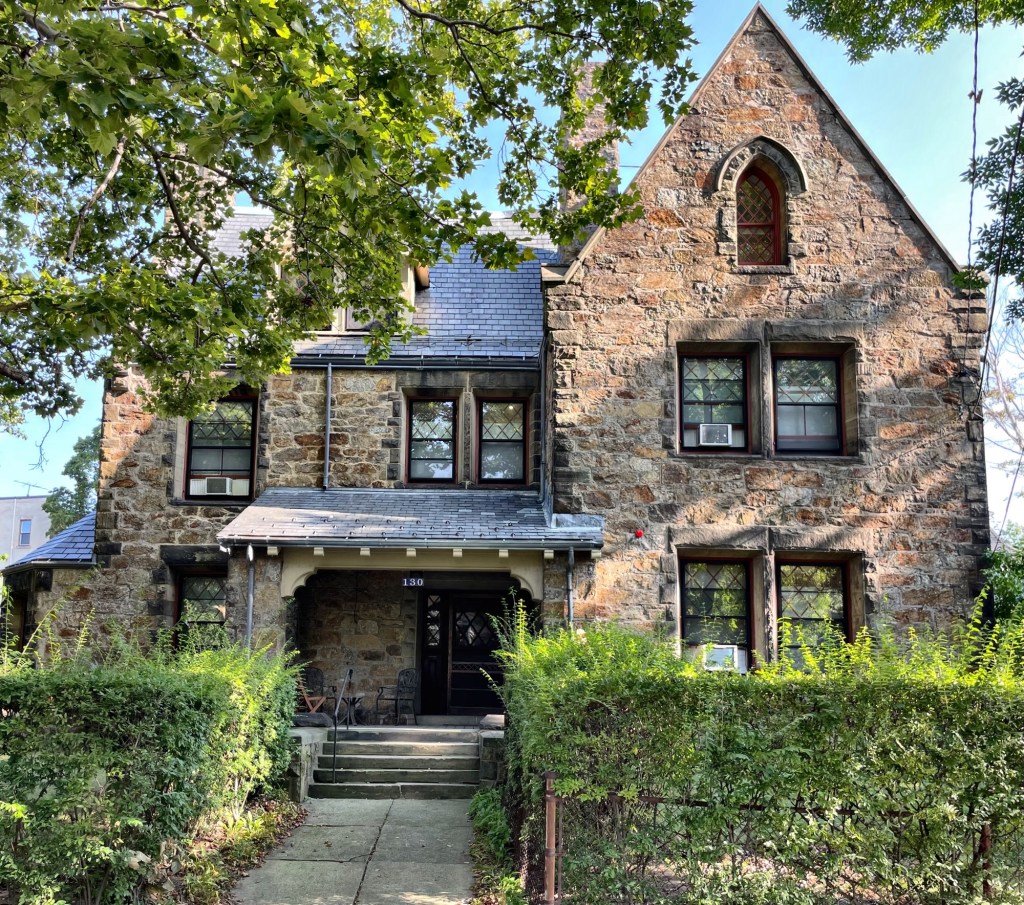
St. Paul’s Church Rectory // 1886

Located next door to the St. Paul’s Episcopal Church in Brookline, Massachusetts, the church’s rectory is equally stunning and compliments the 1850s Gothic church. The Rectory was built in 1886 from plans by Boston architects, Peabody & Stearns, in harmony with the architecture of the Church, with masonry walls of Brighton puddingstone with Nova Scotia freestone trimmings. The Rectory’s architectural style, is somewhat Jacobethan/Tudor due to the pitch of the roof, elbows on the parapet wall, diamond panes in the sashes of the windows, and projecting bay window on the second floor.

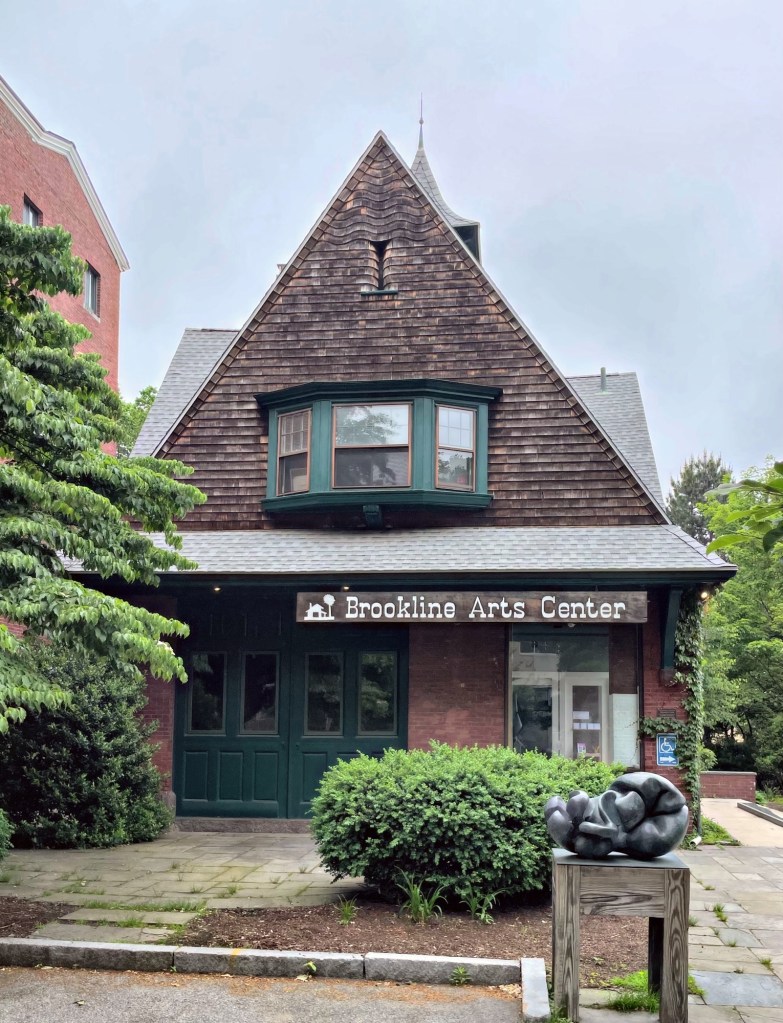
Brookline Arts Center – Former Fire Station // 1886

The Longwood area of Brookline, Massachusetts, is among my favorite neighborhoods to stroll and admire great old buildings. The area is home to many grand houses, churches and later high-style apartment buildings but this diminutive building is often overlooked at the edge of the neighborhood! The structure was erected in 1886 by the Town of Brookline as a new Chemical Engine House. The locally renowned architectural partnership of Peabody and Stearns designed the Shingle style fire station for the town, an important hire as the surrounding neighborhood was dominated by stately old homes in a suburban setting. Eventually, in 1965, the firehouse was closed and in 1968, the Brookline Arts Center renovated the building, where their programs have been continuously based in the years since. The brick and shingle building is maintained by the non-profit, preserving a significant piece of the town’s history for the public to enjoy!

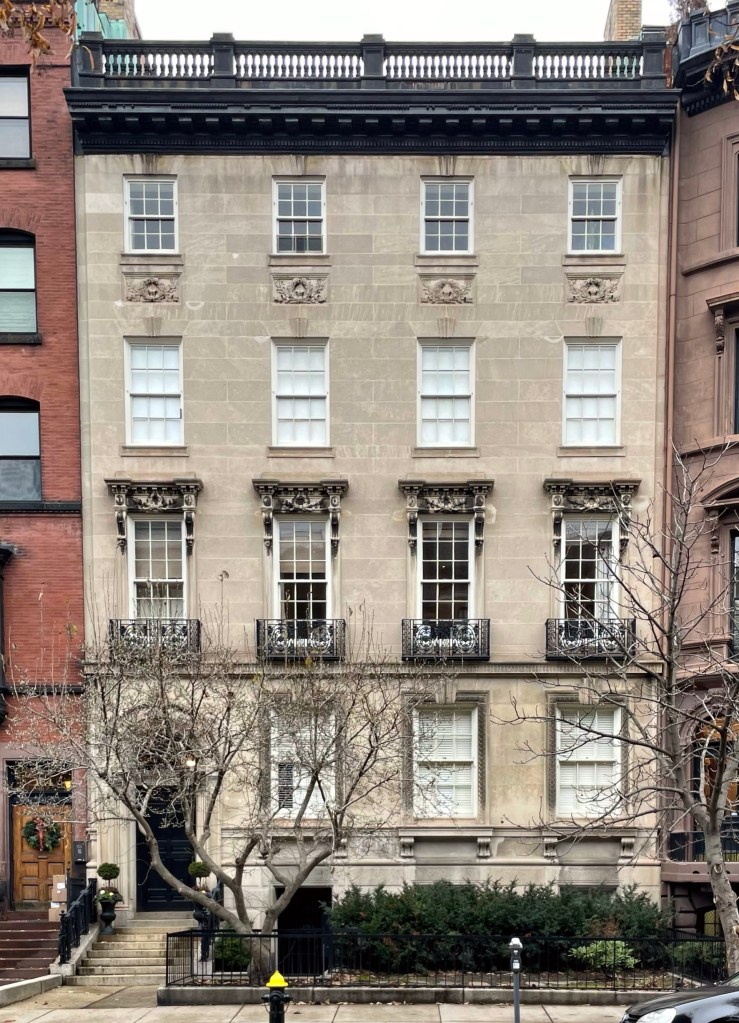
John and Gertrude Parkinson House // 1902

Teardowns have always been a common occurrence in cities, though replacement buildings from before WWII tended to be more substantially designed and built. This stately manse on Beacon Street in the Back Bay was built in 1902 on a lot previously comprised of two townhouses! This residence was built in 1902 for John and Gertrude Weld Parkinson from plans by the renowned firm of Peabody and Stearns. The Classical Revival style house has a limestone face and chunky stone lintels at the second floor to break up the facade. After income tax was introduced in the early 1900s and changing economic conditions for wealthy homeowners shifted, large single-family homes were no longer the norm. This home (and many others in Back Bay) was converted to a multi-family apartment building and today is home to eight condo units.

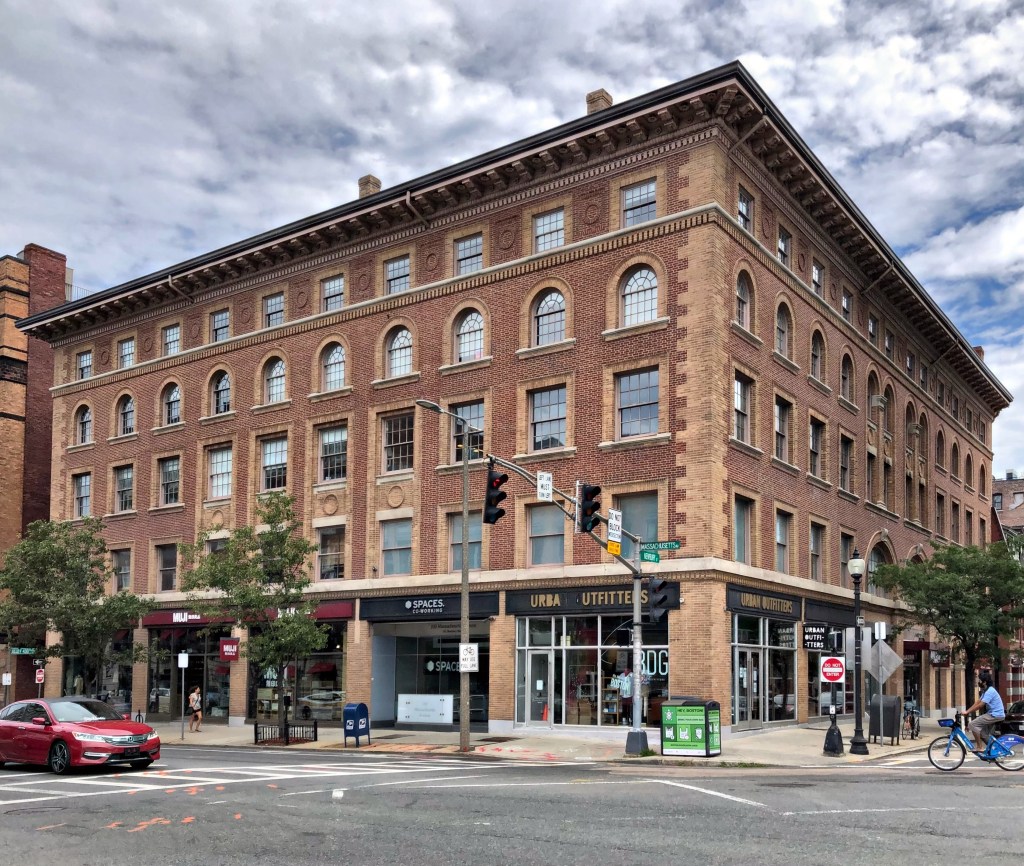
Charlesgate Stables // 1892

Buildings not built for people, but for horses! This handsome masonry building sits at the heavily trafficked corner of Newbury Street at Massachusetts Avenue in the Back Bay neighborhood of Boston. It may get overlooked by some, but when you are not attempting to avoid shoppers on Newbury and cars and bicycles speeding along Mass. Ave., you’ll notice the amazing brickwork and details found on the former Charlesgate Stables. The building was constructed in 1892 as a five-story plus basement brick livery stable for owners Charles Kenney and Eugene L. Clark. Their permit called for storage of over 200 horses and other goods. The architectural firm of Peabody and Stearns designed the building to fit well within the surrounding area which is dominated by large, ornate townhouses and institutions. Inside the building horses were led up ramps to second floor stables leaving the first floor for carriage storage. This layout made it very difficult to save horses when fires occurred. The Renaissance Revival style building with contrasting brick was purchased by the Maxwell-Briscoe Trust after owners Eugene Clark died in 1907 and Charles Kenney died in 1909. The trustees were manufacturers of the Maxwell automobile, and they converted the former stable into an auto salesroom and garage, to keep up with the shift from horses to automobile. The building today has been converted to commercial use with retail on the ground floor and offices above.

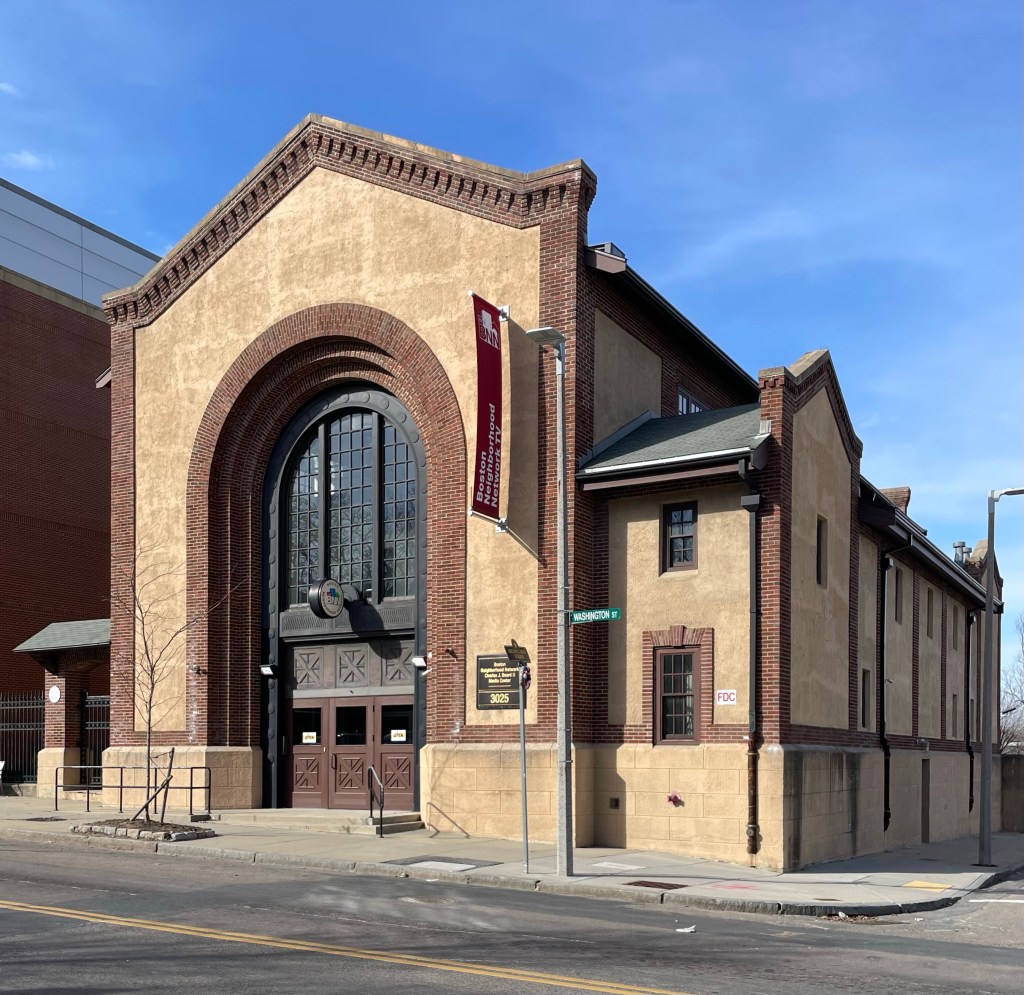
Egleston Square Substation // 1909

Streetcar suburbs of Boston have long been connected to the city by horse-drawn streetcars. As the city expanded and transportation shifted electrical, things changed in a big way! By the time the last horse-drawn streetcar was retired in 1897, the West End Street Railway Company had replaced its fleet of 9,000 horses with electric streetcars. Things were built upwards, with an elevated railway constructed between 1898 and 1901 that ran down Washington Street in the Roxbury neighborhood of Boston along the boundary of Jamaica Plain. The route had a stop in the middle of Egleston Square, with the surrounding neighborhood largely occupied by wood-frame, detached triple-deckers, two-family, and single-family houses, with many occupied by workers from the breweries nearby. Located on Washington Street in Roxbury, the Egleston Square substation was built in 1909 by the Boston Elevated Railway Company (predecessor of the Massachusetts Bay Transportation Authority) to convert AC (alternating current) electricity to DC (direct current) for use by its street railway cars and elevated cars. The building was designed by Robert S. Peabody of Peabody and Stearns, a prominent and expensive firm (yes the MBTA once invested in their infrastructure). After the station was effectively abandoned by the MBTA, the substation fell into disrepair, with a roof in failure in 2005. It was then acquired by Boston Neighborhood Network Media, a local nonprofit, who have converted it for use as office and television studio space. Scott Payette was the firm responsible for the intensive restoration and renovation.


Williams-Sears House // 1905

Why cant we all have siblings this generous??

Located in Boston’s Back Bay neighborhood, this home was actually constructed as two attached homes for Ralph Blake Williams and his sister, Ruth (Williams) Sears, the wife of Dr. George Gray Sears. In 1905, Ralph B. Williams hired architect Julius A. Schweinfurth, who trained in the architectural firm of Peabody and Stearns, to design a double-townhouse, for him and his sister. After completion, Williams lived in the larger side (right three bays) with his widowed mother, and Ruth lived in the smaller home (left two bays) with her husband. After successive ownership, the buildings were and turned into a lodging house, soon after purchased together in 1955 and turned into a school, the Chandler School for Women. The homes remained separate until 1959, when the school demolished the interior party wall, effectively combining the two properties into one, this is likely when the Sears’ front door was filled in, leaving one front door in the center bay. In 1971, the New England College of Optometry purchased the building and occupies it to this day for classrooms and offices.