Welcome Congdon House // c.1820

In 1820, Joseph Dorr, a trader, purchased this house lot in Providence’s East Side overlooking present-day Downtown. He had this Federal style house built with a symmetrical five-bay facade with fanlight transom over the door. He occupied the house until 1827 when he sold the property to a Charles Hadwin. In 1832, the property was acquired and soon after purchased by Welcome Congdon (1794-1874) who lived there until his death. The house was more recently added onto with a Modern addition on the side, to provide additional, private space for the owners who live directly next to a public park.
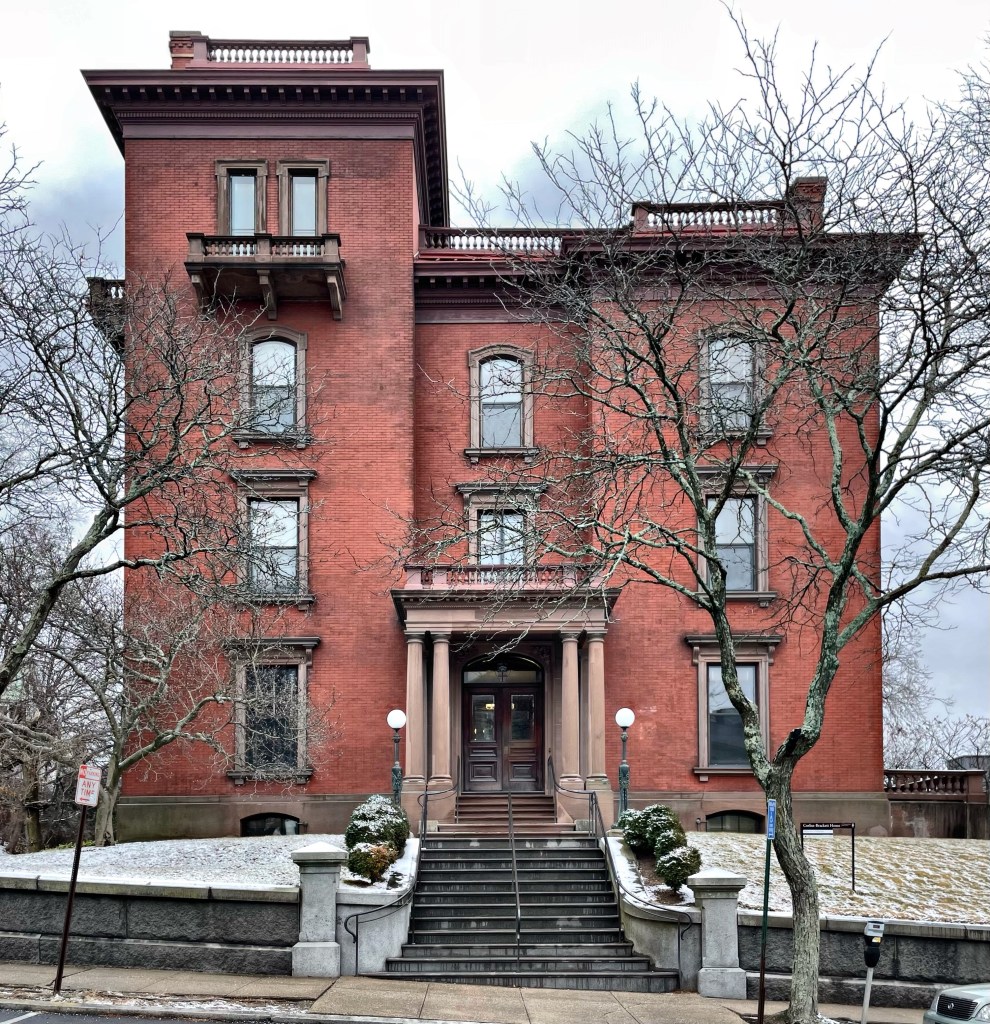
George Corliss – Charles Brackett House // 1878

This mansion, one of the finest in Providence, was built in the late 1870s by George H. Corliss for his second wife. Corliss (1817-1888) was the inventor of the most widely used industrial steam engine of the nineteenth century. Corliss’ first wife Phebe died in 1859. Seeking companionship, George remarried in 1866 to Emily Shaw who was eighteen years younger than he. Ms. Shaw suffered from poor health and she with the assistance of her doctor, convinced Mr. Corliss that she escape the cold winters of Rhode Island for Bermuda. It does not appear that they relocated to Bermuda, but Corliss stated, “I will build Bermuda for Mrs. Corliss.” He did, and this is it. Corliss used his engineering skills to build a state-of-the-art, climate-controlled building, cool in the summer, warm in the winter. The Italianate Villa is one of the largest in town but employed a style that was dated upon completion. In 1929, Corliss’s great-nephew, screen-writer and movie producer for Paramount Studios Charles Brackett inherited the house. He in turn eventually transferred the house over to Brown in 1955, who have maintained the old mansion to this day!

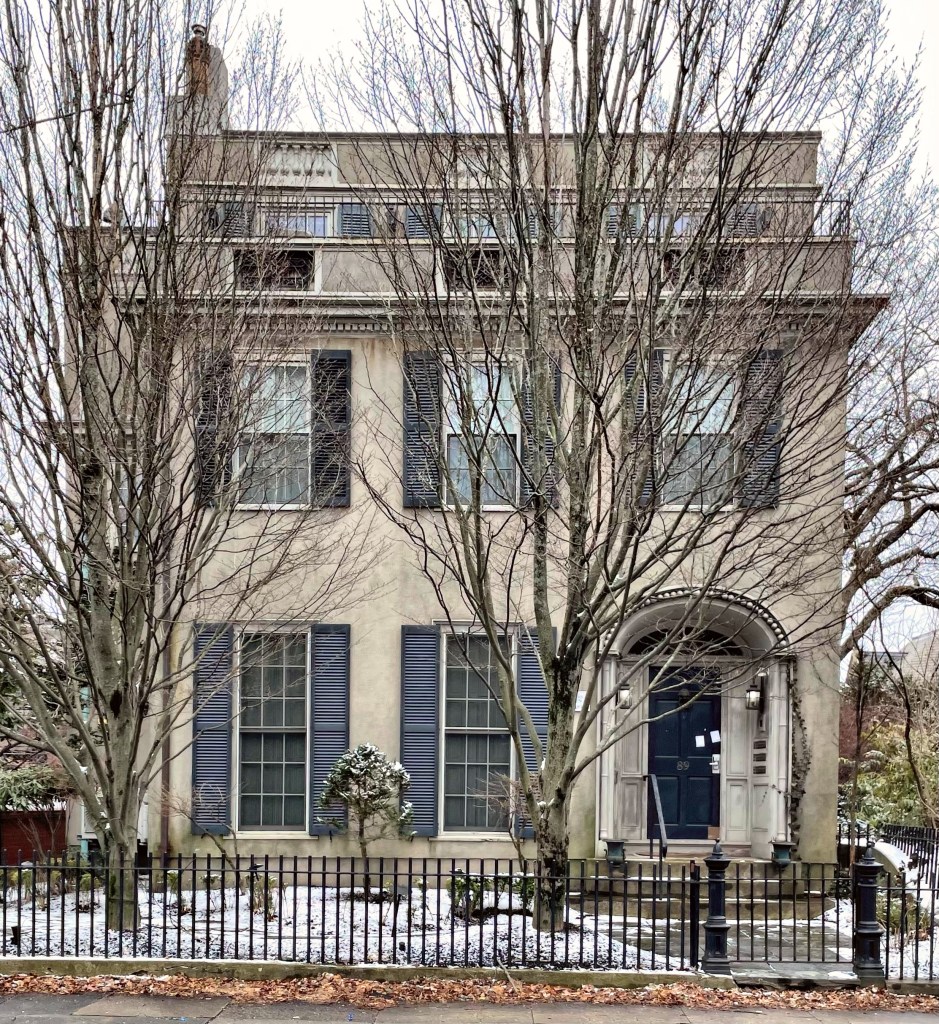
Benjamin Bliven House // 1849

Although Benjamin Bliven built this house, he never owned the property, but the name lives on! This house on Angell Street in Providence was originally constructed in 1849 in the Greek Revival style, popular at the time. Bliven, a musician, rented the property to tenants until the deed was transferred to Abby W. Watson, wife of Robert W. Watson (owner of the property next door and featured on this account previously). The first owner-occupants were Grace A. and Eugene H. Greene, who bought the property in 1898. The house was completely remodeled in the early decades of the 20th century with Regency/Colonial Revival detailing. Changes including the former roof with its gable-end facing the street boxed off, a new modillion cornice with parapet above; recessed attic story with balustrade; small wing to the east. The stucco siding and Federal entry is icing on the cake!

Samuel B. Wheaton House // 1850

Another Italianate mansion on Angell Street in Providence is the Samuel B. Wheaton House which is presently occupied by Brown University’s English Department. Samuel Burr Wheaton (1807-1863) was a merchant who also served as president of the Phenix Bank. The building is capped by a shallow hip roof which is not visible from the street and wide, overhanging eaves supported by brackets. The house is a Villa in plan as it features irregular massing and not a symmetrical form, just sans tower. The Wheaton House was acquired by Brown University who has since added onto the rear of the house for the English Department offices and classroom spaces. LLB Architects is credited with the contextually designed additions which utilizes lead-coated-copper clad connectors that are recessed between sensitively-scaled brick pavilions that preserve the integrity of the original house by letting it stand proud of the later additions.

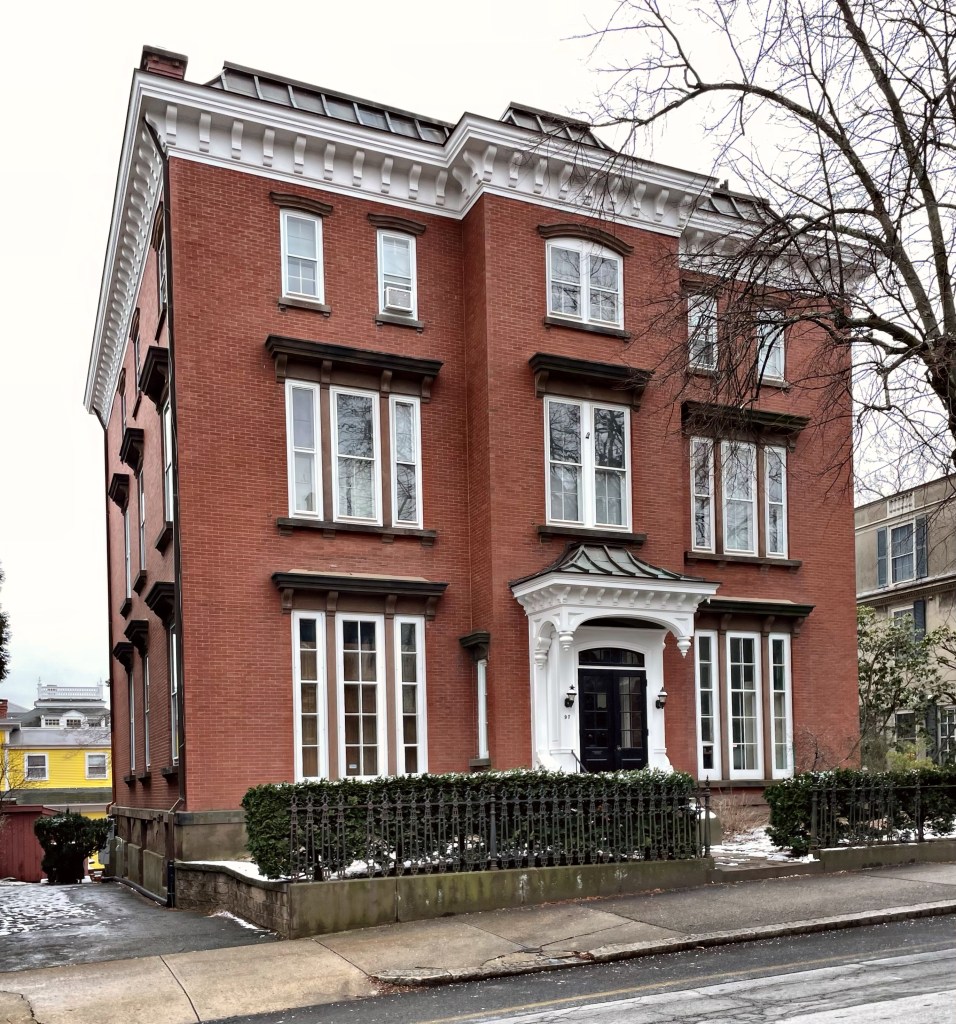
Watson-Knight Mansion // 1854

No town does Italianate architecture quite like Providence! Case in point, the Watson-Knight Mansion, a relatively overlooked example of the style found on Angell Street in College Hill. In 1854, a house lot here was purchased by an elderly Matthew Watson (1786-1857), who possibly lived in half of the house for a few years until his death. Directories also list his son Robert as living in the home in 1854. The three-story brick mansion has a boxy form with symmetrical facade. Brownstone hoods and sills are located at the windows and add depth to the otherwise blank facade. A projecting wooden door hood with hanging pendants covers the large entry. The home remained in the Watson Family until it came under the possession of Robert Brayton Knight (1826-1912) a businessman and mill owner who became the largest individual owner of cotton mills in the world, with upwards of twenty distinct establishments under his personal control. He co-founded what became the Fruit-of-the-Loom brand with his brother in the 1850s. The building has since been divided into apartment/condominiums.

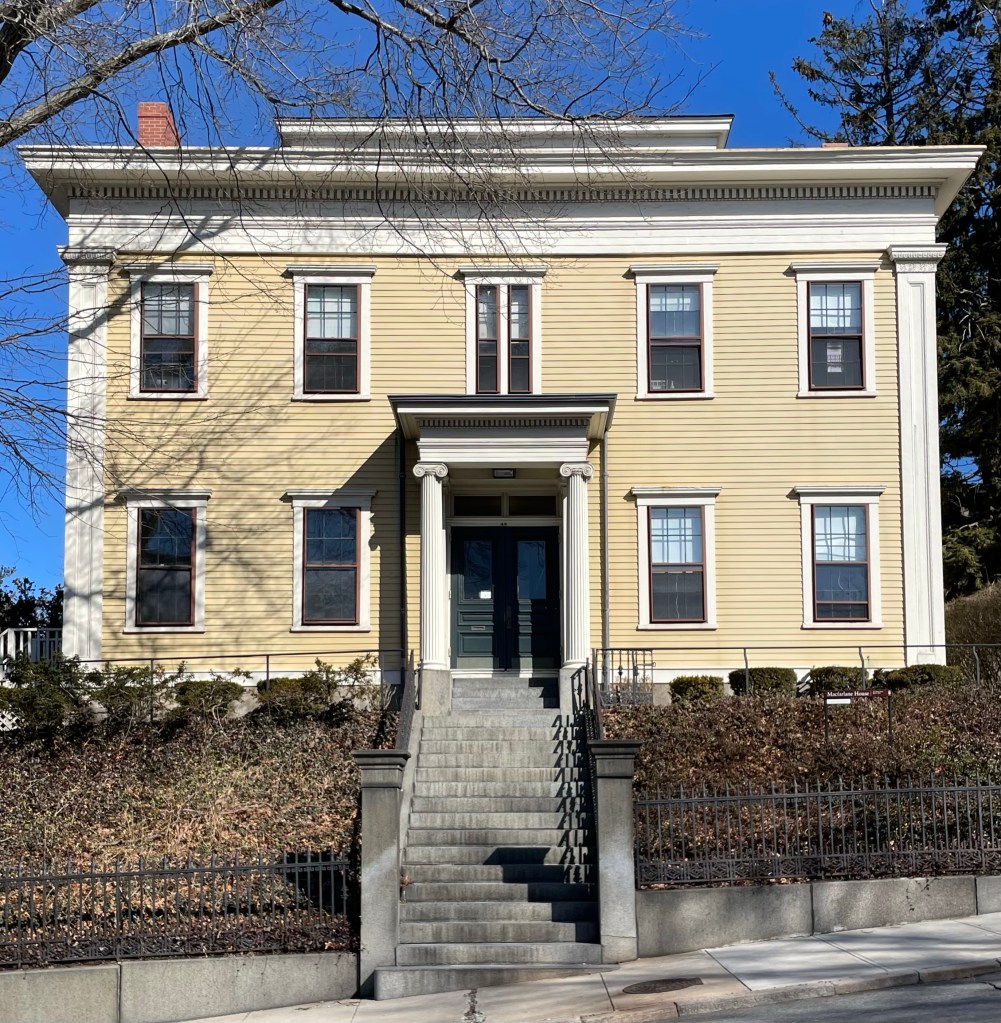
King-MacFarlane House // 1845

William Jones King (1803-1885) was born in Providence, Rhode Island as the eldest son of Elijah and Nancy King. His father Elijah was a master-mariner and a wealthy ship-owner, engaging in trade with the West Indies, likely partaking in the transport and sale of humans like many Rhode Island “merchants” at the time. Elijah was travelling to Martinique in 1815, when the Great Gale of 1815, the largest hurricane on record at the time in New England, intercepted the ships and capsized them. Elijah and his crew died at sea. After his father’s untimely death, which left the family poor, William (as the eldest at just 12 years old) became the sole support of his mother and three younger siblings at the time. William eventually became a clerk at the Union Bank in town, moving up the ranks until he became a cotton merchant. He had this home built a few years after his marriage to Lydia Gilbert. The house is an excellent example of a traditional Greek Revival home in the College Hill section of Providence with corner pilasters and central Ionic portico all sited high on a landscaped terrace behind an iron fence. The house is now owned by Brown University and has been renamed MacFarlane House after Walter Kilgore MacFarlane, Jr., a Brown alumnus in the class of 1923. The house today houses the main office of the Classics Department at Brown University.

Captain George Benson House // 1797

One of the finest Federal period mansions in Providence is this well-sited home on College Hill known as the Captain George Benson House. George Benson was a partner of the mercantile firm of Brown, Benson & Ives, who made immense sums of money at the end of the 18th century. The firm did well as the movement to abolish the transatlantic slave trade grew at the time in Rhode Island, many abolitionists placed their faith in so-called “legitimate commerce,” an African trade centered on commodities other than enslaved people. In 1794, the firm run by Nicholas Brown, Jr., and his partners George Benson and Thomas Ives, tried the legitimate trade, and dispatched the ship Charlotte to Freetown Africa, under the command of Benson’s half brother, Martin. George’s half-brother Martin was a slave trader, a job that may have accounted for the unusually explicit tone in a 1794 letter of instructions: “by no means take any Slaves on board the Ship on any terms whatever as we desire to have nothing to do with business.” Three years later, George had this Federal style mansion constructed on the peak of College Hill which remains one of the best in the area over 200 years later.

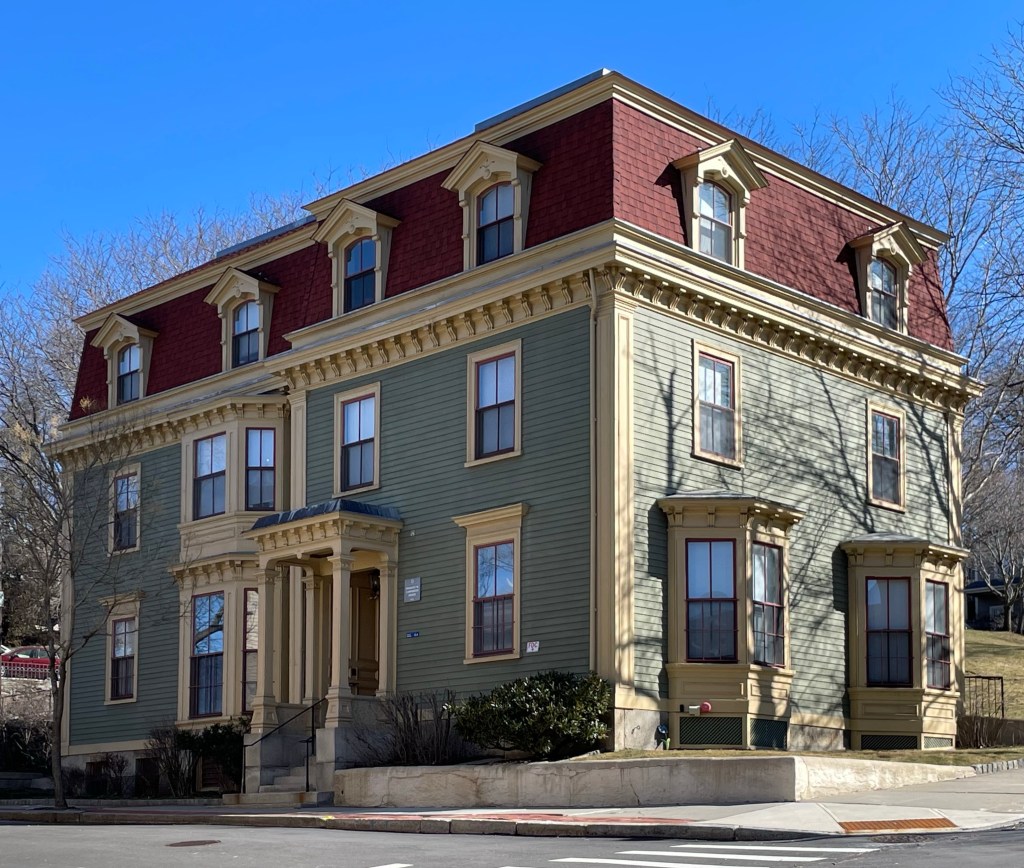
Francis Carpenter House // c.1857

I love a good Second Empire style house with a mansard roof, and luckily, New England is full of amazing examples. This house in Providence’s College Hill neighborhood dates to about 1857 and appears to have been built for Francis W. Carpenter, a successful businessman who would later serve as President of the Congdon & Carpenter Company, an iron and steel company which was founded in 1792. Carpenter did very well for himself and would later move out of this house and into a stunning Beaux Arts mansion further up the street (featured previously), designed by the premier architectural firm of Carrère and Hastings. The house is today owned by RISD, and appears to be used for residences.

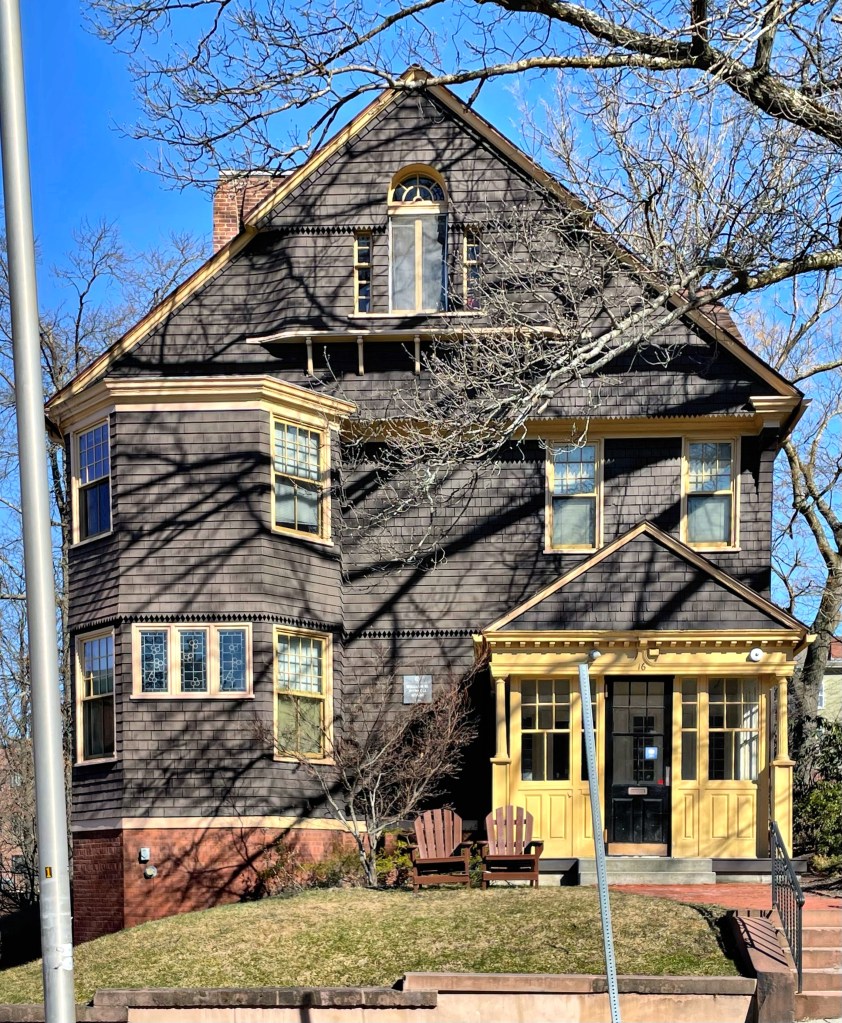
Dunnell House // 1884

William Wanton Dunnell (1850-1933) was born in Pawtucket, Rhode Island and was educated in Rhode Island schools. He eventually helped run his family’s cotton goods business, which grew over the next decades. The Dunnell Finishing Works factory was a success in Apponaug (Warwick) Rhode Island, and he had over 500 employees turning out over 1,000,000 yards of printed cloth a week! Before all this, William had this amazing house built in College Hill, Providence for his family. The local architectural firm of Stone, Carpenter & Willson was hired and blended Shingle, Queen Anne, and Colonial Revival styles elegantly under one roof. I am particularly fond of the sawtooth shingles, Palladian motif windows in the gable, and undulating facade. The house is owned today by RISD.

Pardon Miller House // 1822

Pardon Miller, a watchmaker and silversmith in Providence had this Federal style home built in 1822 in Providence’s high-value College Hill neighborhood when he was in his 20s. The home and its neighbor were built at the same time, seemingly by the same builder as they share a lot of similarities in design and detailing. The house remained in the Miller Family until 1882, and it is now owned by the Rhode Island School of Design (RISD). The homes on the northern side of Angell Street, like this house, are largely built on a raised foundation with high retaining walls, which showcases the “hill” in College Hill.