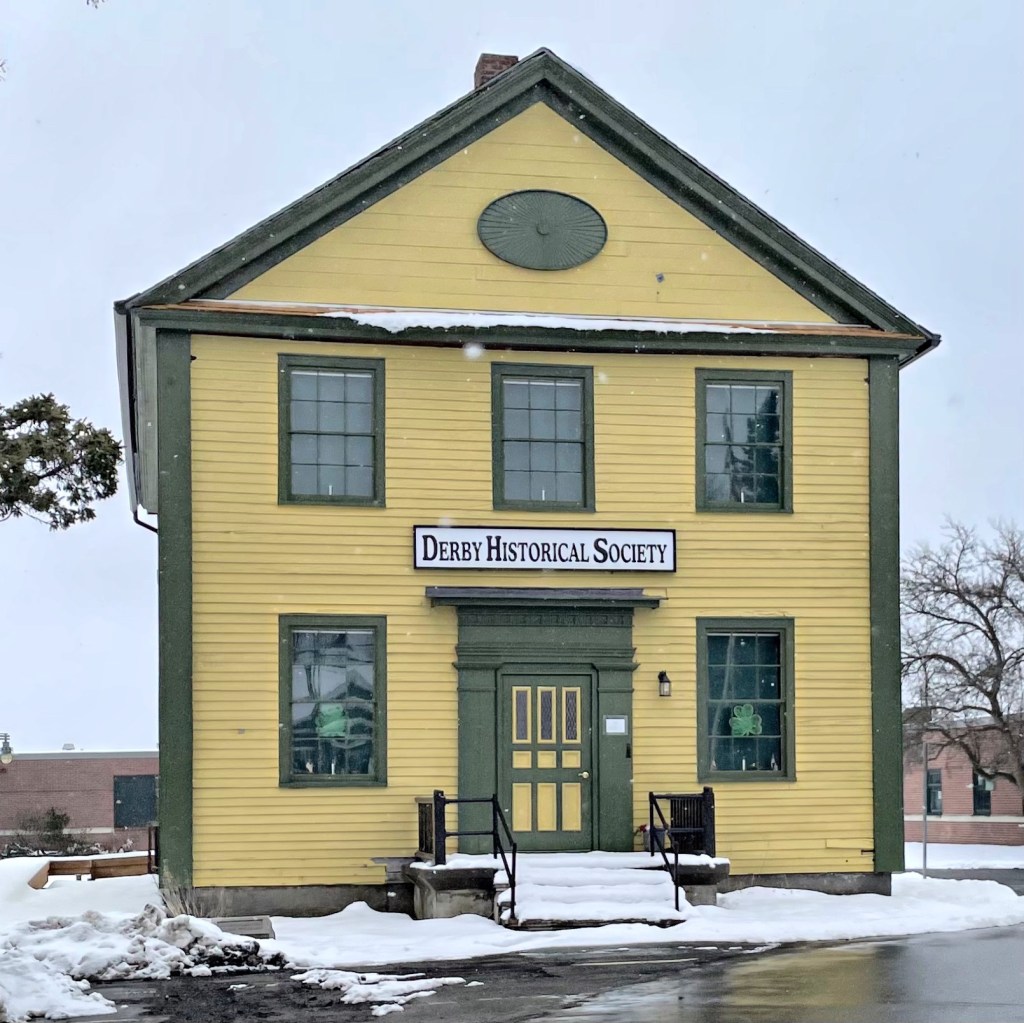
Old Derby Academy Building // 1840

The Derby Literary and Theological Institute, a private boarding school, was opened in 1840 by the Danville Baptist Association on a one-acre plot of land donated by local landowners Lemuel Richmond and Benjamin Hinman. The academy housed 147 students of nearby towns for classes. Two years later, an atheneaum was established in the building as a local library for residents. The building would later become Derby’s public Jr. and Sr. High School as the town’s population at the time was just over 2,000 residents. The school was eventually outgrown and a modern school was built, located nextdoor. This building was gifted to the Derby Historical Society who maintain it to this day.

David A. Ellis School // 1932

In the early decades of the 20th century, Boston’s population grew to a point that existing infrastructure was becoming an issue. The Boston School Committee as a result, acquired sites via eminent domain, and built ten new school buildings citywide in 1932 alone! The City of Boston acquired this site a decade earlier, but finally broke ground on the David A. Ellis Elementary School in 1931 from plans by architect Ralph Templeton Cushman Jackson. The building is a rare example of a Art Moderne style school building in Boston, and it was named for David Ellis (1873–1929), former chairman of the School Committee. The brick building stands out for its brickwork and sections of terracotta tiles in geometric designs. They don’t make them like they used to.

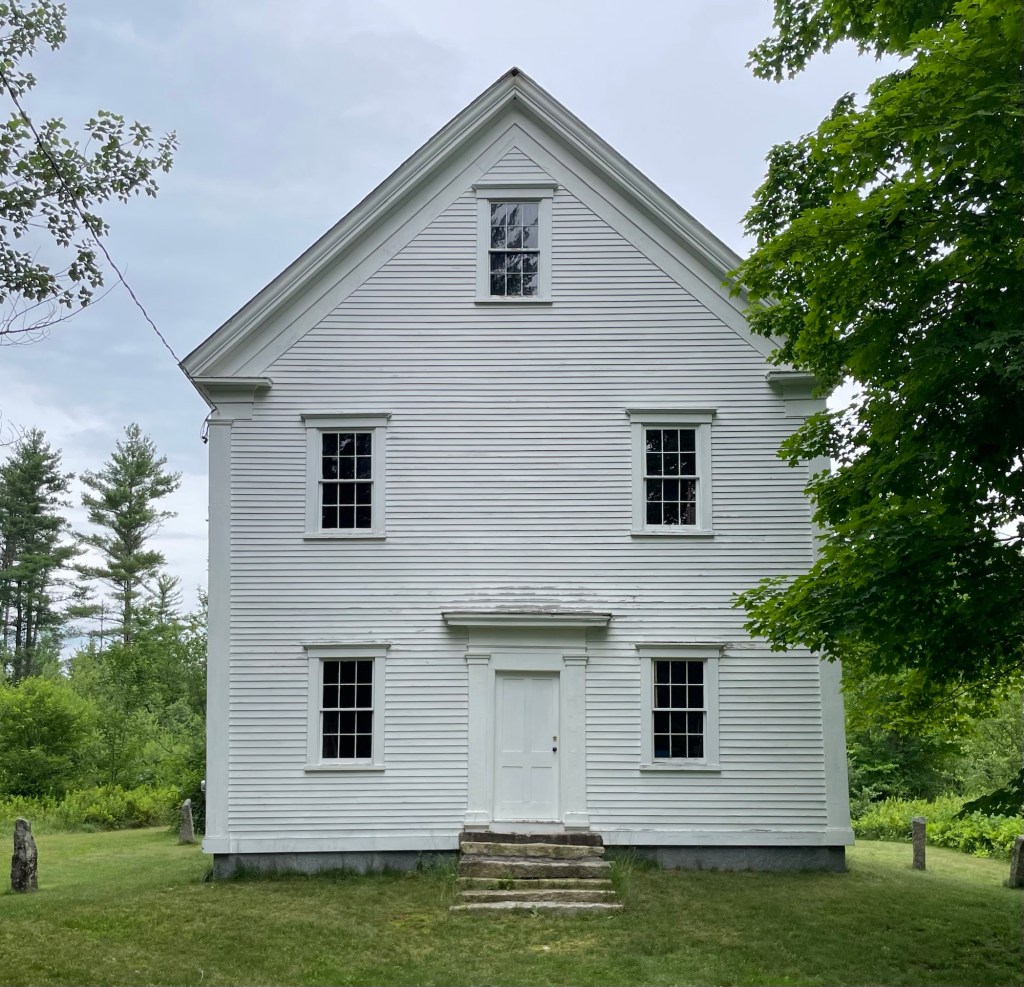
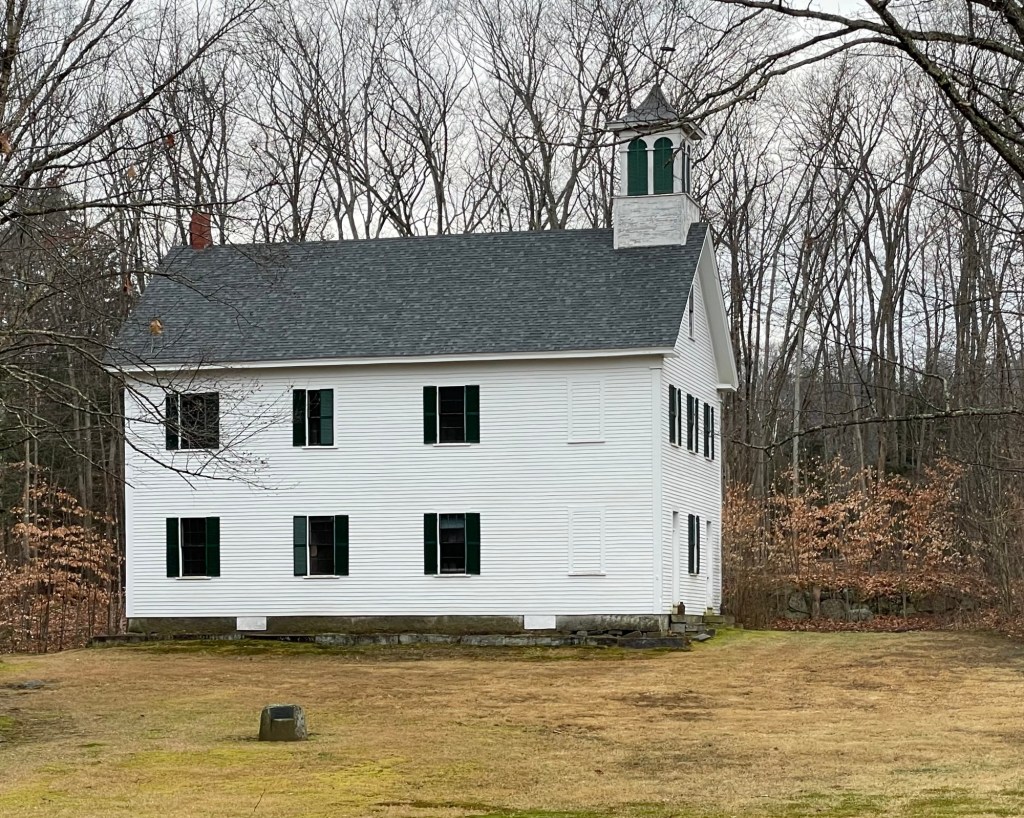
Clinton Grove Academy // 1874

Clinton Grove Academy of Weare, New Hampshire was the first Quaker seminary in the state when it was founded in 1834 by Moses Cartland (1805–1863). Moses Cartland was a Quaker abolitionist who served as the first Principal of the school and for fourteen years after. He later would move to Lee, NH, and aided those who escaped slavery in the south, sheltering them and assisting them on their way north to Canada. The original Academy here served as a private high school and included a classroom building, boarding house, barn and sheds. Students came from as far away as Ontario, Nova Scotia, Minnesota and Texas to study here under Mr. Cartland. In 1872, the Academy complex burned. It was quickly rebuilt as one structure here, in 1874. This building served as a district school until the 1930s. Today, it looks like the building is largely vacant, anyone know what its purpose is?

Murdock Hall – MCLA // 1896

In 1894, the Massachusetts legislature decided to build four Normal Schools for the purpose of training teachers for teaching in public schools. North Adams was chosen as one of the sites because it was a commercial and industrial center of the Berkshires, and because the city agreed to contribute the land and provide other support. The training of teachers for the public schools was especially important for North Adams in the 1890s, as the city was growing at a rapid rate due to an influx of immigrant laborers working in local factories and raising families in the city. Local architect Henry Neill Wilson was hired to furnish plans for the school building, completed in 1896, which was designed in the Renaissance Revival style. In 1932, the Normal School became the State Teachers College of North Adams, reflecting the increased importance of education as an academic discipline. In 1960, it changed names to North Adams State College with an expanded focus to include professional degrees in business administration and computer science. In 1997, the College joined the State University system and renamed again as Massachusetts College of Liberal Arts.

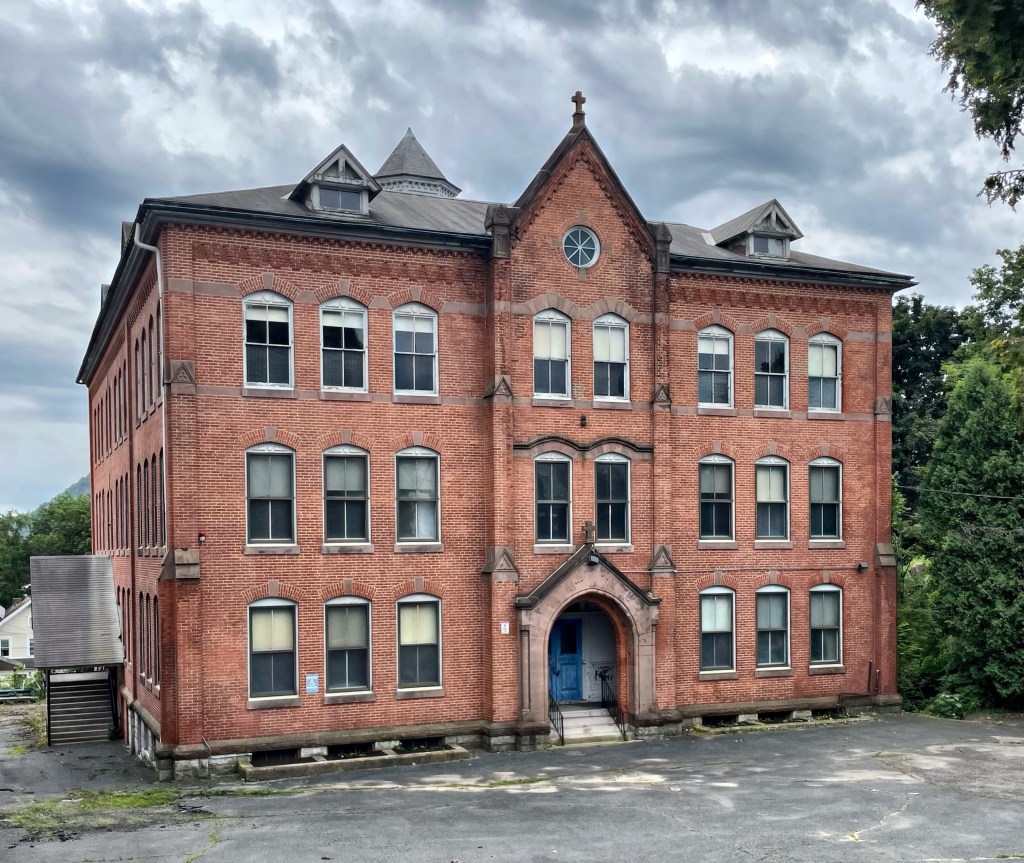
Former Notre Dame Parochial School // 1898

Located next door to the former Notre Dame Roman Catholic Church in North Adams, Massachusetts, this stunning former school building stopped me in my tracks. The sad fact is that the former school is seemingly vacant makes me really sad and concerned for the future of the building. This beauty was constructed in 1898 to serve as a school associated with the Notre Dame Roman Catholic Church located to its east. Local architect Edwin Thayer Barlow, who formerly worked with Carrere and Hastings, designed the building in the Queen Anne and Romanesque Revival styles, both popular at the time. The school remained in operation until the 1968-1969 school year, after several years of declining enrollment. The City of North Adams leased the school beginning in the 1969-1970 school year to relieve overcrowding at the public schools. In 2008, the City of North Adams purchased the school and church properties from the Springfield Roman Catholic Church Diocese after the church closed in 2005, but no plans have yet materialized to restore the beauties. What would you like to see this building converted into?

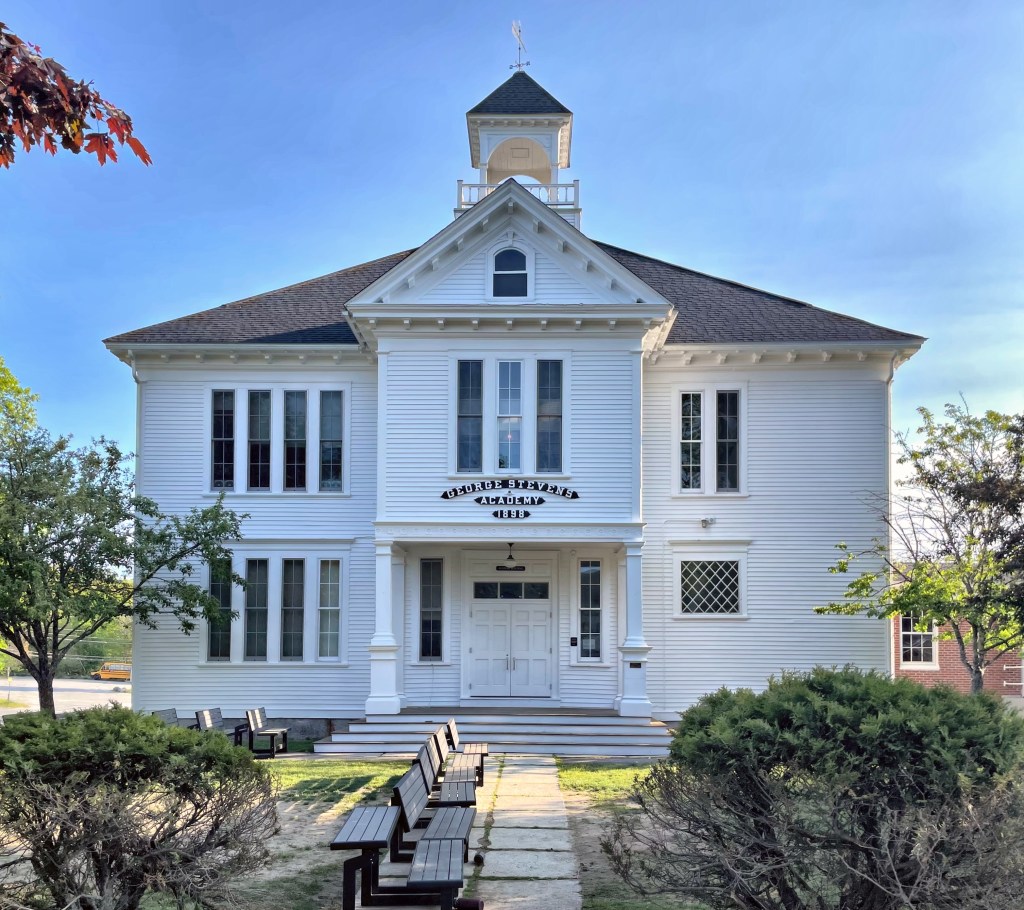
George Stevens Academy Building // 1898

For part one of the George Stevens Academy, see the previous post on the George Stevens House here.

In his 1852 last will and testament, Blue Hill shipbuilder George Stevens appointed five trustees, providing them with land, his “homestead and appurtenances,” and generous funds “to erect, when they deem it expedient, a suitable and convenient building for an Academy, for the purposes of education forever.” After George’s widow died, the trustees made good on George’s will, and in 1898 this Academy Building was opened to its first class of students. The Colonial Revival style building has many full-height windows to allow light and air into the classrooms and a belfry at the roof with a bell to notify pupils when class would begin!

Blue Hill Academy Building // 1833

This gorgeous brick building sits in Blue Hill, Maine and is an excellent example of a Greek Revival style institutional building found on the coast of that great state. The structure was built in 1833 and originally housed the Blue Hill Academy, a school which provided courses in Greek, Latin and (due to the town’s maritime economy), navigation. The original building was constructed decades earlier when the school was founded, but was quickly outgrown. When the George Steven Academy opened its doors a couple blocks away in 1898, the two institutions were merged. The American Legion eventually purchased this building, renting it to the Blue Hill Grammar School. Renovations in 1909 were designed by Blue Hill native, George A. Clough which likely included the portico and elaborate belfry. After years of deferred maintenance on the building by dwindling membership of the local American Legion post, the building’s future was uncertain. Thankfully, the Duffy-Wescott Post 85 stood up and funded preservation and planning for the building and make emergency repairs.

Margaret Fuller Primary School // 1891

The Margaret Fuller Primary School (now Community Academy) is a public school in Boston that shows how much attention to detail the school department and the city architect paid when designing these structures in the late 19th and early 20th centuries. The Fuller School was constructed in 1892 to alleviate an overcrowded school district resulting from rapid urbanization. Jamaica Plain was one of Boston’s first streetcar suburbs largely spurred by the growth of the Boston and Providence Company Railroad between 1860 and 1890, when the area saw a shift from large bucolic estates to subdivided urban housing (largely triple-deckers and apartment buildings along major routes). With the surge in population, many new schools were built city-wide, including this primary school which was designed by Edmund March Wheelwright (1854–1912), a prominent Boston-based architect who served as City Architect for Boston from 1891 to 1895. Architecturally, the building is a stunning example of the Colonial Revival style with red and buff brick walls which are laid in a Flemish bond and rusticated at the first story with single recessed courses of buff brick. An arched entrance and Palladian window with iron false balcony sit at the central bay. The school was named after Margaret Fuller Ossoli (1810-1850) an early transcendentalist and writer advocating for women’s rights born in Cambridge.

Versailles School // 1924

While Baltic has long been the dense population center of the Town of Sprague, Connecticut, the Village of Versailles has also had ties to industry and growth. The village was originally named Eagleville but was renamed sometime in the late 19th century. The village is located along the Shetucket River and has had industry, which was slower to grow than neighboring Baltic. The village had a wood-frame school building, which was consumed by fire in the early 20th century. In 1924, this substantial “fire-proof” school was built just at the time the Town of Sprague was consolidating schools, in the three main population centers: Baltic, Hanover and Versailles. The schools were consolidated again and this building was sold in the mid-1950s. It was later a Masonic Lodge and is now a commercial use, occupied by Dark Manor, Inc., a haunted house company.

Academy of the Holy Family // 1914

Built adjacent to and just a few years after the St. Mary of the Immaculate Conception Church in Baltic (last post), the Academy of the Holy Family stands as a high-style Colonial Revival building in the town. The building stands four full floors with a raised basement and attic story, and is symmetrical in its design. A large fan-light transom and stone trimmings add much depth to the buildings large massing. The structure was built in 1914, and has housed the Academy of the Holy Family, a private, Roman-Catholic all-girls prep school, which is still active today.