Colt Memorial School // 1906

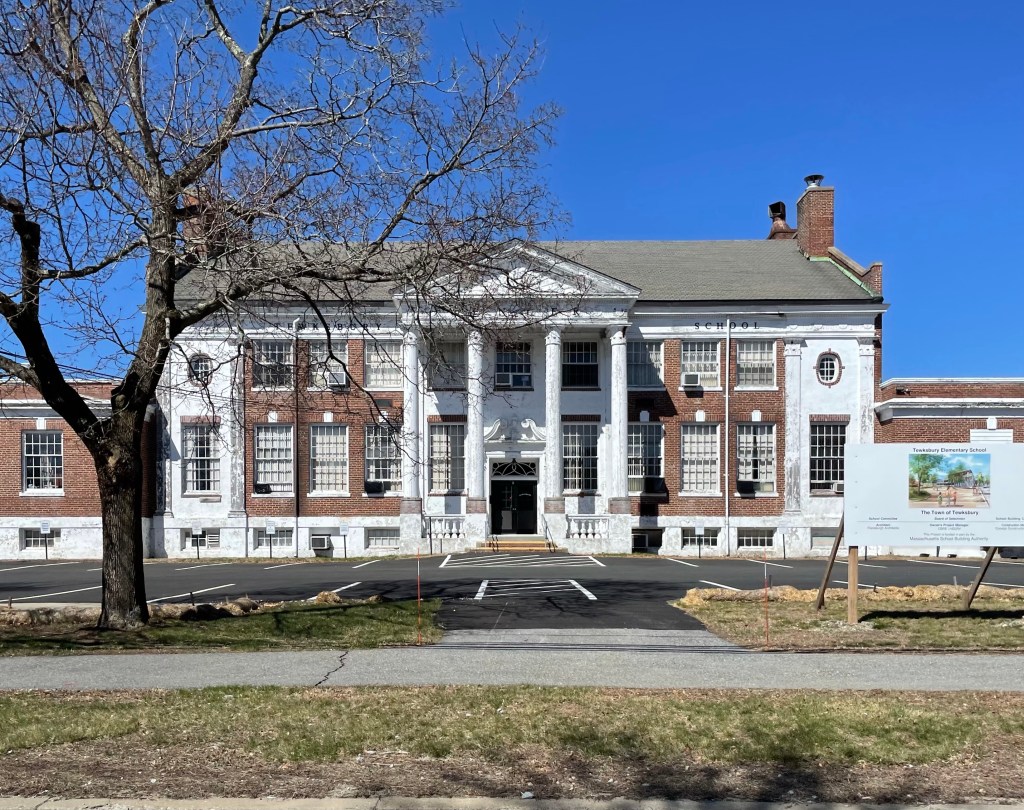
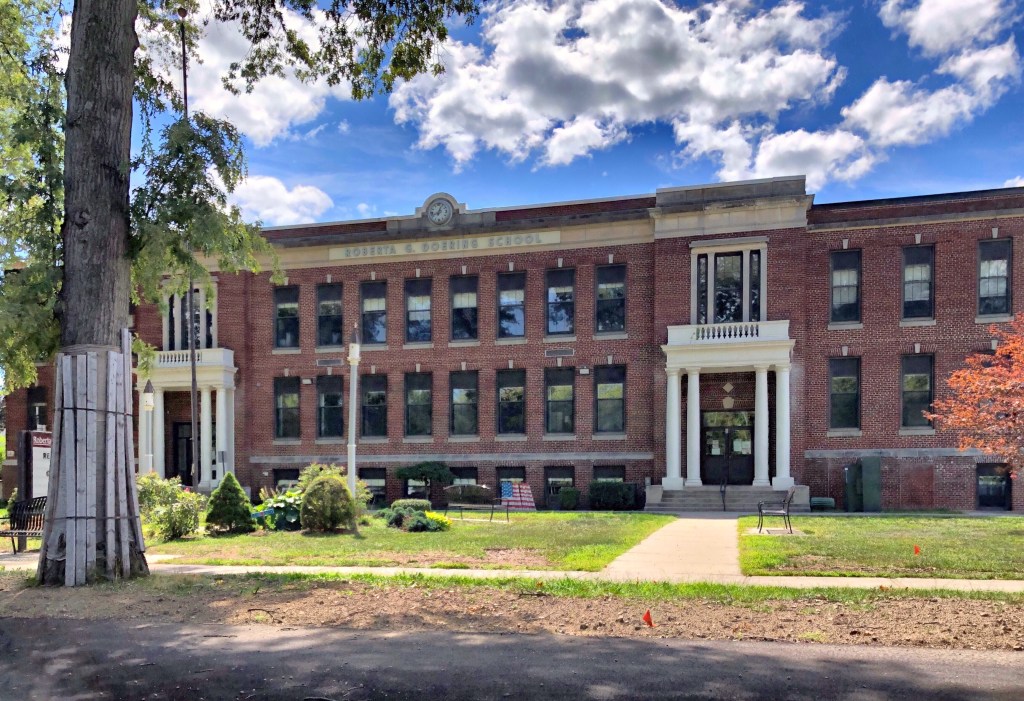
Similar to Burnside Memorial Hall nearby, this school building in Bristol was also constructed as a memorial, in the form of an architectural statement-piece. The school building was gifted to the town of Bristol by Samuel P. Colt, who resided in a mansion nearby, Linden Place, and also owned a massive country estate in town, where his prized cows were cultivated. The school building was funded as a gift in memory of his mother Theodora DeWolf Colt and showcases his everlasting love for her. Designed by Cooper & Bailey of Boston, this monumental, 2-story, hip-roof Renaissance Revival structure was built of white marble with 2-story, cast-bronze window bays. The symmetrical facade has a central Corinthian portico with fluted columns and a pediment containing cherubs around the Colt family crest. The school was used as the town high school until the 1960s when it was outgrown, the building has since been used as an elementary school, the nicest one I have ever seen!

Washington Center Schoolhouse // 1883

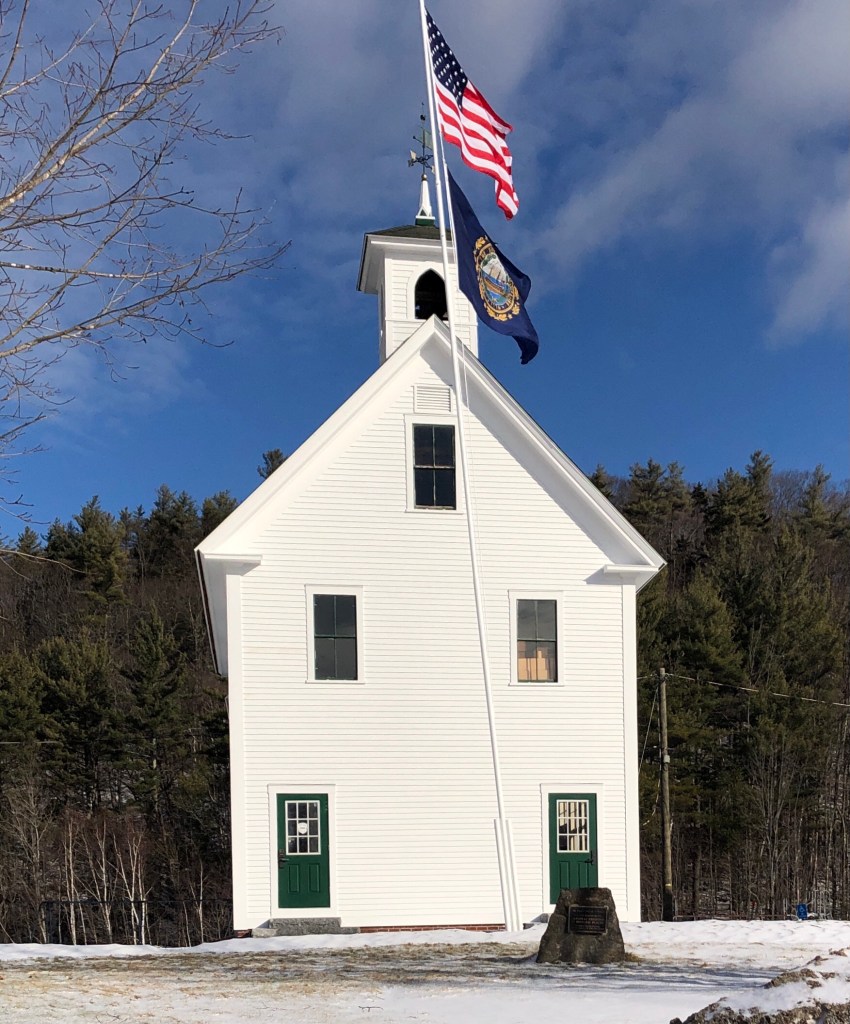
Adjacent to the Washington Meeting House, the Washington Center Schoolhouse perfectly compliments the Georgian building, despite being constructed 100 years later. Constructed in 1883, this building served as the principal school house in Washington, and was known as the Center School. There had been an earlier school house near this site, a small brick structure, but by the 1880s it was both worn out and too small and replaced. Eventually, it was decided to build a new school in the general style of the other town buildings, and place its facade flush with the Church (next post). The building now appears to be home to the town’s police department.

Putterham School // 1768

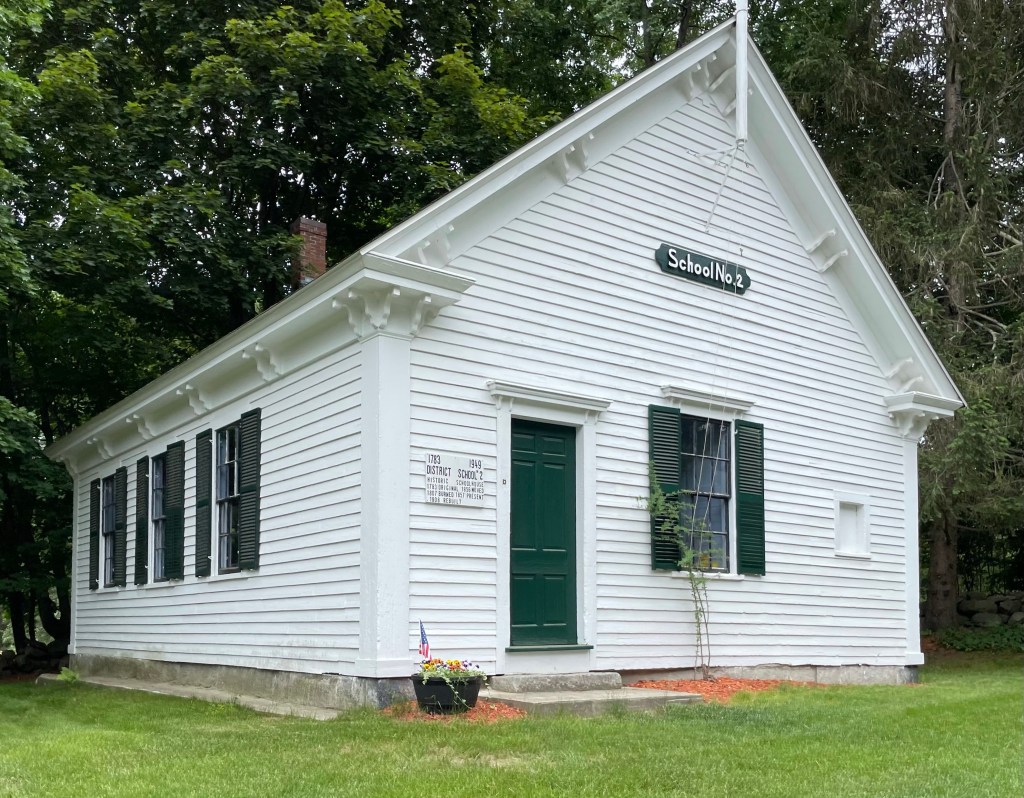
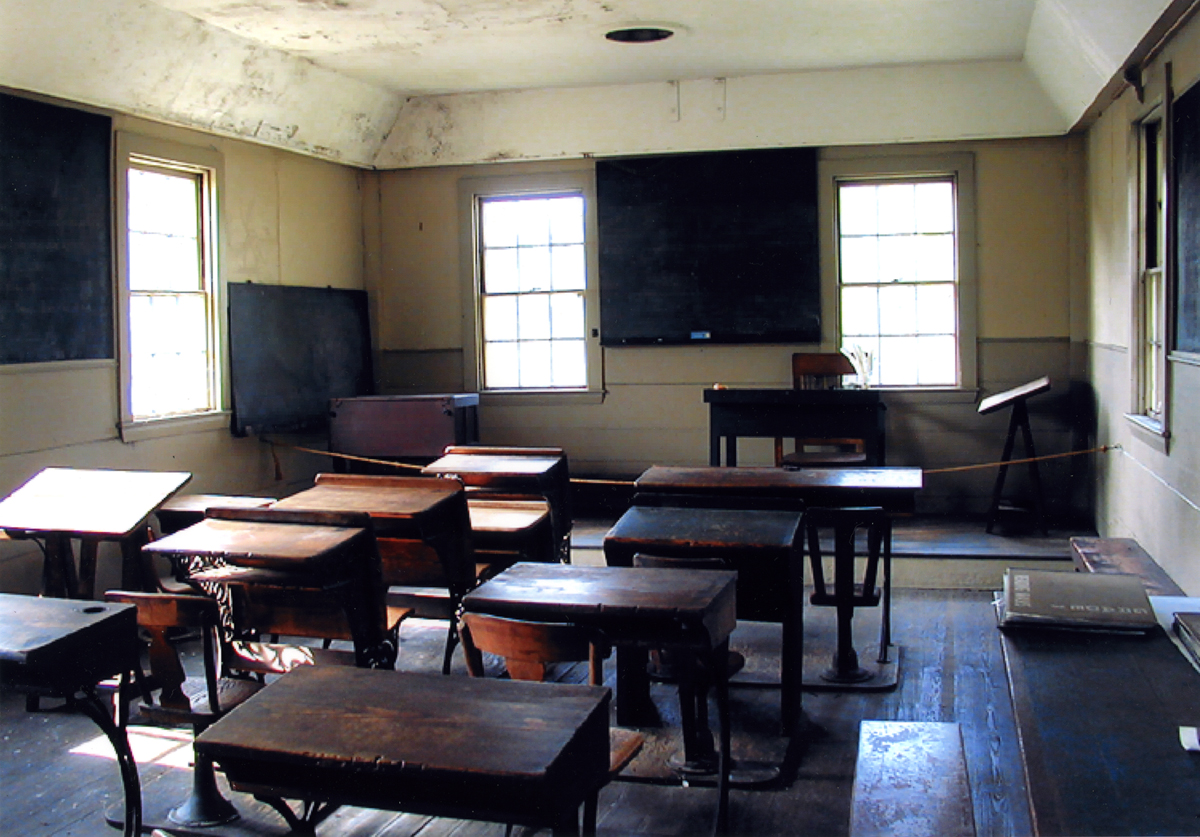
Colonial-era one-room schoolhouses once dominated the landscape of New England, providing a learning space for young children. The number of these structures have plummeted due to changing development patterns and limited funding to preserve or adaptively reuse such buildings. In the town of Brookline, this c.1768 schoolhouse has been altered frequently, showing various styles and techniques in construction used during the eighteenth, nineteenth, and twentieth centuries. The original one-room school house was enlarged in 1840 by an addition to the rear to fit additional pupils. In 1847 a shed was built for storing coal or wood and providing an entry vestibule. According to town records, in 1855 the ceiling in the schoolroom was raised, the windows enlarged, and the desks and chairs repaired. The double privy was built around 1898, probably replacing an earlier single privy. There is some evidence that in 1938 the school was used temporarily as a Catholic church and at some time following World War II as a synagogue. In 1966, the school was moved from its original site on Grove Street to its present location at Larz Anderson Park for the future preservation of the building by the town and local historical society. The schoolhouse is normally open for tours at various points during the year or by appointment.

Oliver Ames High School // 1896

I’m starting to see a trend in Easton, almost everything is named after the Ames Family! In 1893, Oliver Ames (1831-1895), a grandson of shovel company founder Oliver Ames and son of Oakes Ames, offered to fund the construction of a new high school building if the town would pay the cost of building its foundation and grading the site. While governor of the Commonwealth of Massachusetts (1887-90), Ames had hired Boston architect Carl Fehmer as consulting architect to the State for the extension to the Massachusetts State House, and it was Fehmer who secured the design contract for the new school in Easton. The refined Colonial Revival school building features a central pavilion with an entrance set within an ornate stone architrave with a Classical entablature with central pediment. The school was outgrown in 1957 and became the town’s middle school, outgrown again in the 1990s. The town sold the school to a developer with preservation restrictions and it is now used as apartments!

Agawam High School // 1921

This stunning High School building in Agawam was built in 1921 as the town’s first high school. William Pynchon purchased land on both sides of the Connecticut River from the local Pocomtuc Indians known as Agawam, which included present-day Springfield, Chicopee, Longmeadow, and West Springfield, Massachusetts. The purchase price for the Agawam portion was 10 coats, 10 hoes, 10 hatchets, 10 knives, and 10 fathoms of wampum. Agawam and West Springfield split in 1800, with Agawam incorporating as a town on in 1855. The town stayed fairly rural until the 20th century with the proliferation of the personal automobile and suburbanization from the industrial and urban center of Springfield. This increase required a new, modern high school to be constructed in town. The building was converted to a middle school in 1972.

Agawam Center School // 1939

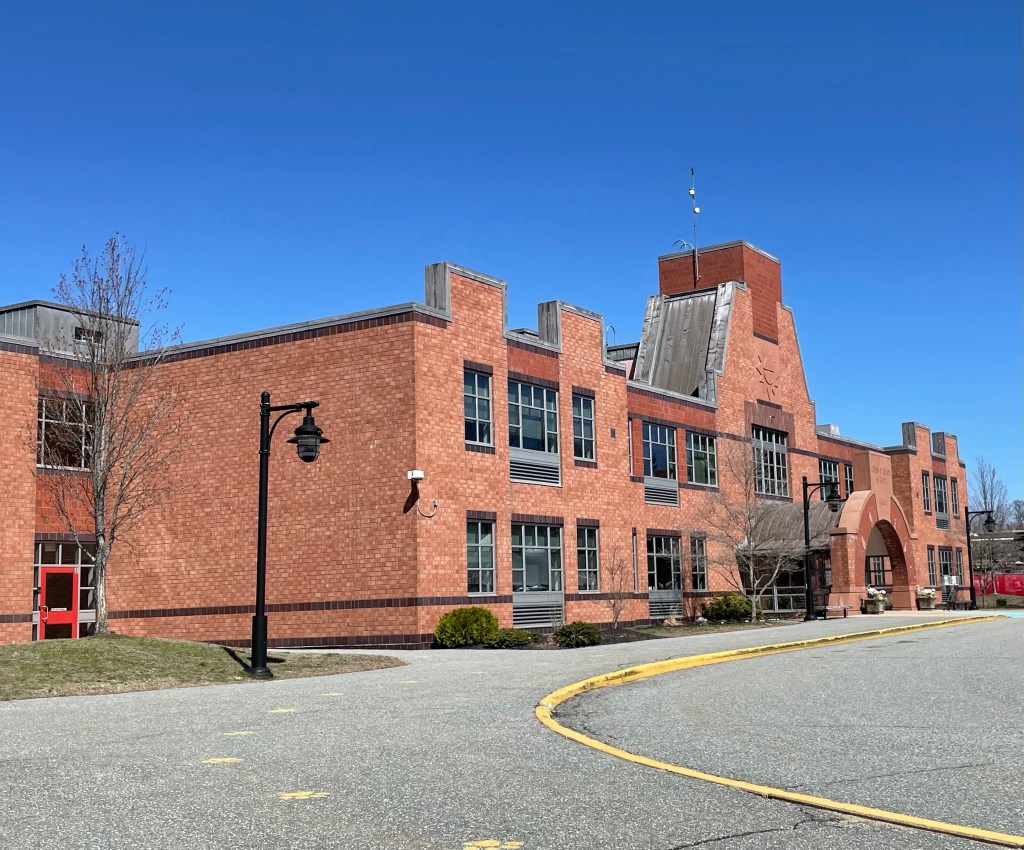
Located in Agawam Center this interesting architectural example of a late-Tudor Revival school building really caught my eye. The building replaced a 1870s town hall and two-room schoolhouse which were both outgrown as Agawam’s population increased due to the proximity of nearby Springfield. The architect was Paul B. Johnson, who was based out of West Springfield and ran a small architectural office there. He attended Cornell and MIT for architectural training and worked primarily around Springfield. The school building is constructed of a deep red brick, laid in varied relief for a rough faced surface and a cast stone Tudor arch around the main entrance for contrast. The school was later renamed after Benjamin Phelps, the first superintendent of schools in Agawam.