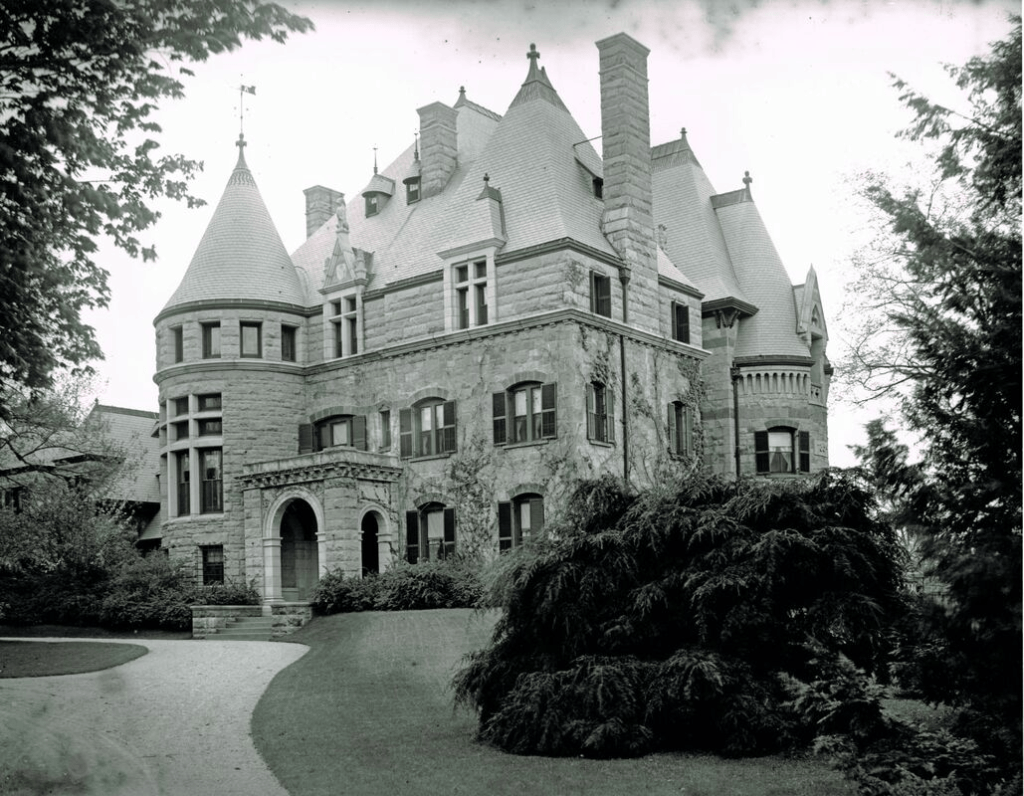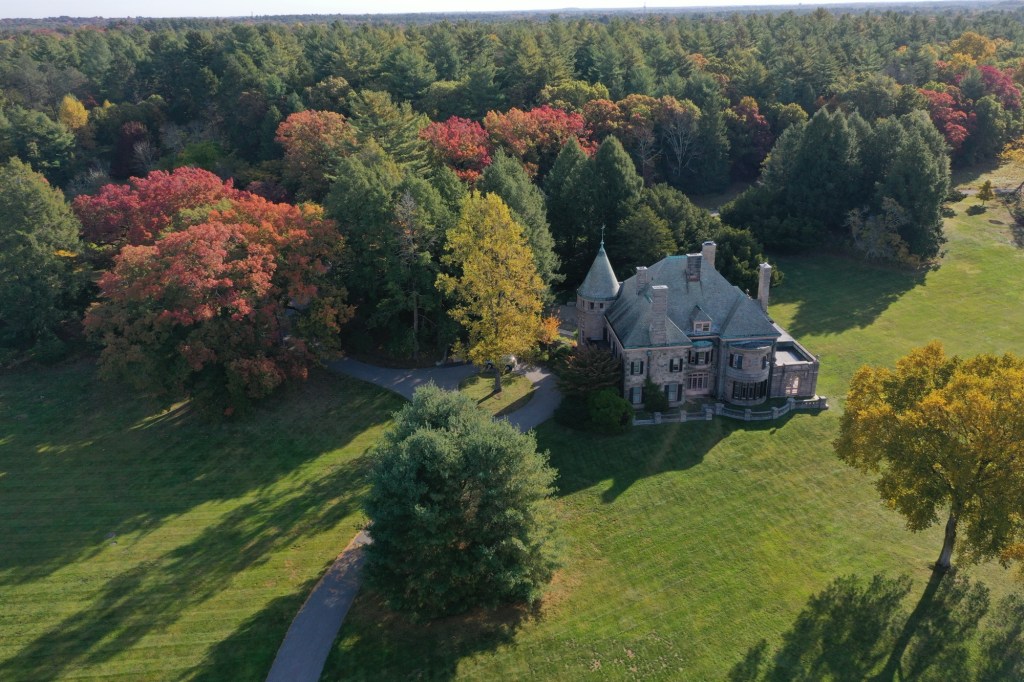
Langwater, the country estate of Frederick Lothrop Ames (1835-1893), sits in North Easton, Massachusetts, amongst some of the finest architectural landmarks in New England, all commissioned by members of the wealthy Ames family. Ames’s grandfather founded the Ames Shovel Works, his father, Oliver Jr. led the Union Pacific Railroad during construction of the transcontinental line. For Frederick’s country estate, he hired Boston architect, George Snell, to design the mansion, which began as a Second Empire style residence, that was later modified periodically throughout the remainder of the 19th century into the current Chateauesque style pile today. Before his death in 1893, Ames would also add the iconic Ames Gate Lodge and a Gardner’s Cottage, both by what became the family’s favorite architect, Henry Hobson Richardson. Set amid an Olmsted-designed landscape of curvilinear drives and paths, the Langwater Estate remains as one of the grand country estates built by the Ames Family, who helped transform this village into one of the architectural pilgrimage sites in the country. Langwater remains a private home.