Sunnyside // 1886

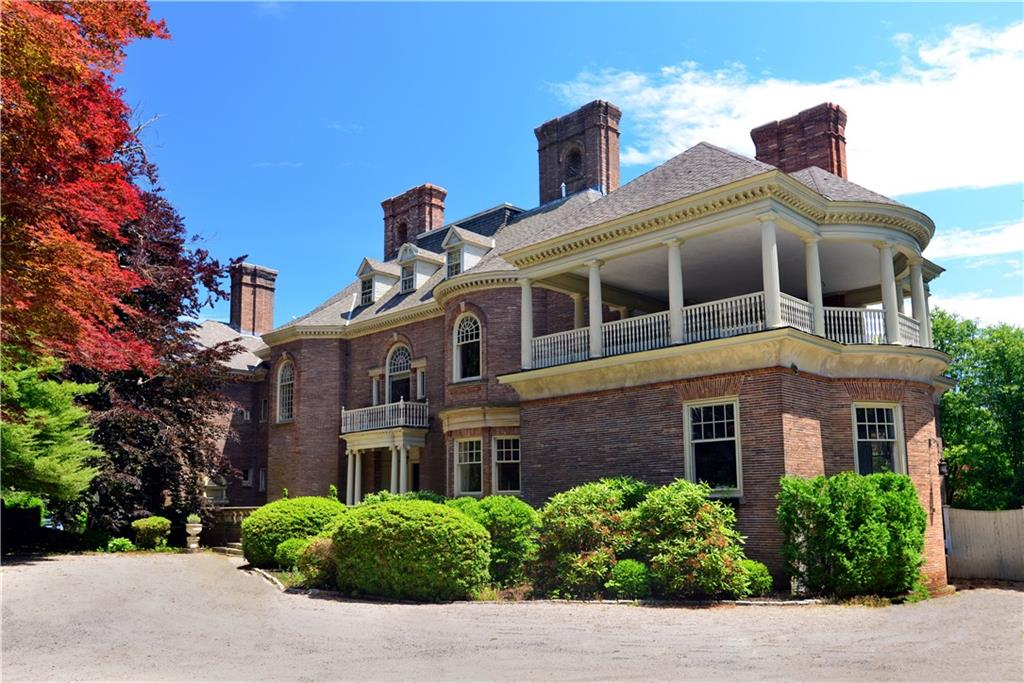
Photo from recent real estate listing

During the height of the Shingle and Queen Anne styles’ popularity, architect Stanford White of McKim, Mead & White completed plans for one of the earliest Colonial Revival style residences, “Sunnyside” in Newport, Rhode Island. The residence was built in 1886 for “Commodore” William Edgar (1810-1887) and his wife, Eliza Lucille Rhinelander (1832-1916). William was a co-founder of the New York Yacht Club in 1844 and heir to a New York fortune. Eliza was an aunt of Edith Wharton and a grand-daughter of William Rhinelander, co-founder of the Rhinelander Sugar Refinery. The property remained in the Edgar Family as Lucille Rhinelander Edgar (1858-1948), an unmarried daughter of the couple, would live here year-round with servants. The house is built of buff-Roman-brick with a large central block flanked by L-plan wings under a hipped roof punctuated by massive chimneys. Of special note on the facade are the rounded bays, entry portico with Palladian window above, and side porch.

Maynard Estate // 1901

One of the largest summer estates in Ridgefield is this Neoclassical residence on Peaceable Street, which was built in 1901 for Effingham Maynard and his wife Helen. Maynard was a partner in Clark & Maynard, a New York publishing house. Local lore states that the Maynard Family hired New York architect Stanford White, to design this property, but no definitive proof could be located to substantiate that rumor. The Olmsted Brothers landscape architecture firm designed the grounds which were elaborate with gardens and outbuildings. The two unmarried Maynard daughters, Mary and Helen spent their summers here every year until their deaths in the 1950s.

Berkeley House // 1885

In 1885, a 28-year-old Leroy King (1857-1895) and his wife Ethel Rhinelander King (1857-1925) hired one of the country’s most prominent architects, Stanford White, to design a Newport home for their family. Leroy was the son of Edward King, a prominent local merchant, and upon his fathers death in 1875, inherited some of the $100+million dollar fortune he had amassed in today’s dollars. The corner lot at Bellevue and Berkeley avenues was purchased and work was underway on the new mansion. The house is a really interesting take on the Shingle style, but instead of cedar shingle siding, employs fireproof construction. A central hall, large gabled masses, picturesque window arrangements, and a spectrum of surface textures (here conveyed largely in natural stone and brick with flourishes of shingle and pebble dash work), align this house with McKim, Mead & White’s earlier efforts in this style. The interior has been meticulously preserved and maintained by the owners.

Old Stone Studio // c.1820

Just a stone’s throw away from the Marion Town Hall and Elizabeth Taber Library (yes, pun intended), this beautiful 200 year old stone building oozes charm. The building was constructed around 1820 as a salt works storage facility, and is an extremely rare surviving storage facility associated with the early 19th century salt industry. While many storage facilities we know today are void of architecture and soul, this building looks like it was plucked from the French countryside. The salt industry in Massachusetts began on Cape Cod during the Revolution. Salt was a vital necessity for the preservation and curing of fish and meat for sale in this country and overseas. According to local lore, the Old Stone Studio was originally “a place for the conversion of sea water into salt.” Around the Civil War, the building was being used as a whale oil refinery, a fitting use for a fireproof structure. It had fallen into disrepair by the 1880s, until New York magazine editor Richard Watson Gilder bought and restored it as a studio for his wife, artist Helena de Kay Gilder. Gilder renovated the building in the early 1880s as the town of Marion was becoming a vibrant summer colony. He added a massive stone fireplace and new windows to flood the interior with natural light. The towering fireplace, with its 9-foot long mantle, was apparently designed by leading 19th-century American architect and Gilder’s friend Stanford White of McKim, Mead & White. The fireplace provided a stunning backdrop for guests, including President Grover Cleveland and First Lady Frances Folsom Cleveland, who summered in town. Ms. Gilder even painted the First Lady in the studio, and hosted her on occasions.

Stockbridge Casino // 1887

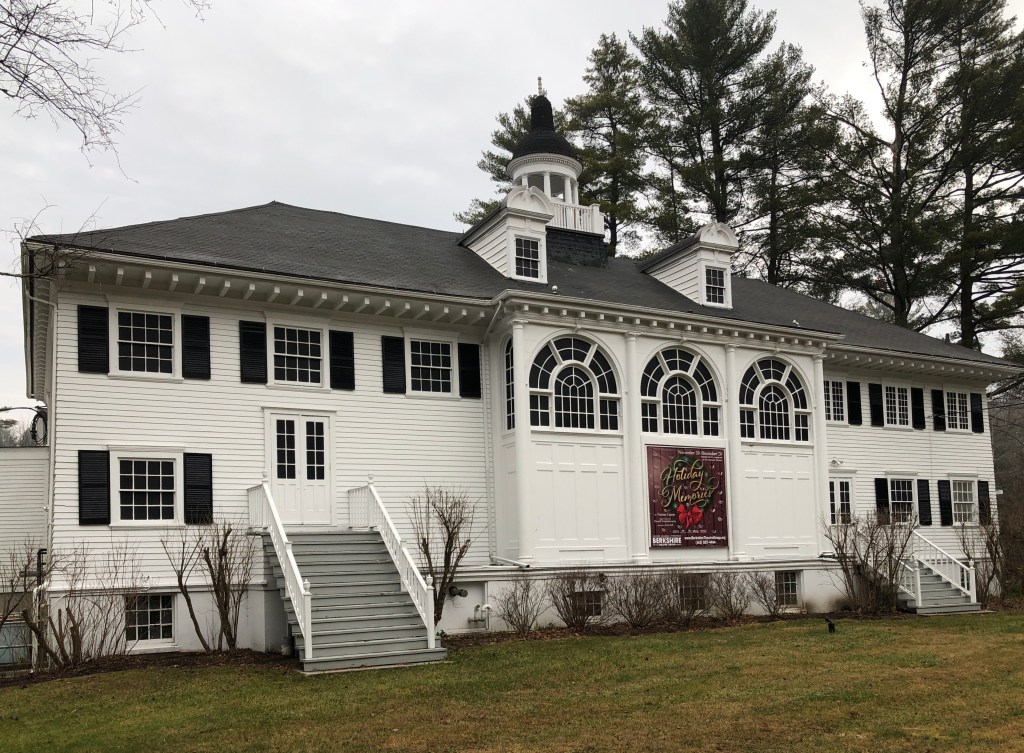
The Stockbridge Casino was built in 1887-1888 according to the design of Stanford White, a principal architect of the firm McKim, Mead & White. The building was not what we think of casinos today, it was a ‘casino’ in the older sense of the term, having been established as a place for a reading-room, library, and social meetings, for the richest in town to hang out. For forty years, it offered its members tennis, billiards, dances, theatricals, and lectures throughout the summer seasons. After a period of decline after WWI, the group sold the property to Mabel Choate, who wished to move the Mission House (home of the first missionary to the Stockbridge Indians) from up on Prospect Hill to Main Street. There was reluctance to see the casino torn down, so a group of local citizens — led by Walter Leighton Clark, President of the Grand Central Art Galleries of New York; Austen Fox Riggs, psychiatrist; and Daniel Chester French, sculptor — acquired land at the end of Main Street and moved the Casino to its present site, saving it from the wrecking ball. The building was renovated and reopened in 1928 as the Berkshire Playhouse, and was later renamed the Fitzpatrick Main Stage, a theater run by the Berkshire Theatre Group.