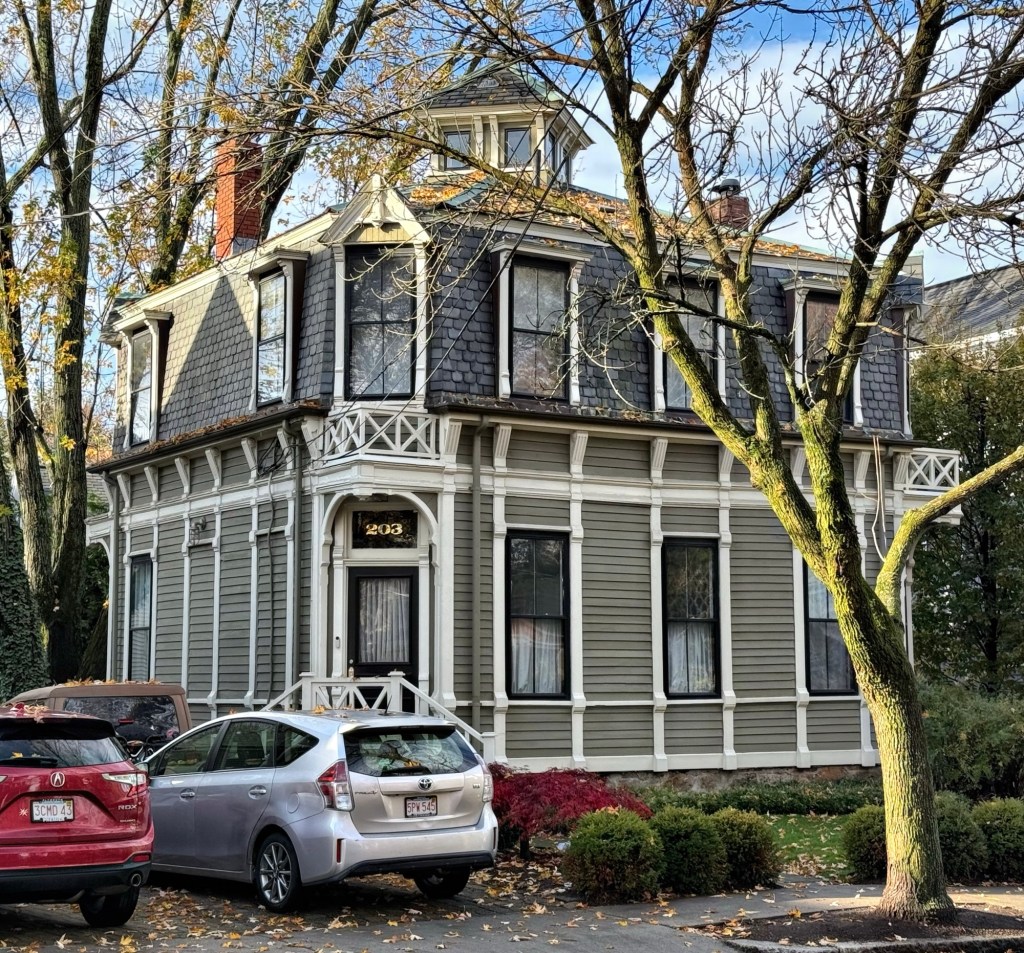
Toussaint House // 1879

In 1879, furniture-maker and amateur architect, Winand Toussaint (1826-1904), built this unique mansard roofed house at 203 Aspinwall Avenue in Brookline Village. Toussaint was born in Belgium, and immigrated to the United States about 1841, where he originally settled in Roxbury and operated a cabinetmaking business. Toussaint moved from Roxbury to Brookline about 1873, but lost his fortune in the Panic of 1874. After a few years, he found work and eventually purchased a house lot here, and designed and built this home in 1879. Winand was born into a family of architects and engineers in Europe with his grandfather being Jean Lambert Toussaint of Liege, an architect who reportedly built the first railway introduced in Belgium. He is said to have studied in France and Italy before working in furniture-making in the United States. He maintained a professional office from his Brookline house until his death in 1904. After his death, the family home was inherited by daughter, Emma Toussaint, who was unmarried and worked as a linguist and writer under the name “Portia”. The charming Toussaint House blends Second Empire and Stick styles with unique beveled corners, one of which contains the main entrance, and a belvedere at the crest of the mansard roof. Due to its unique architecture, the Toussaint House was individually listed in the National Register of Historic Places in 1985.

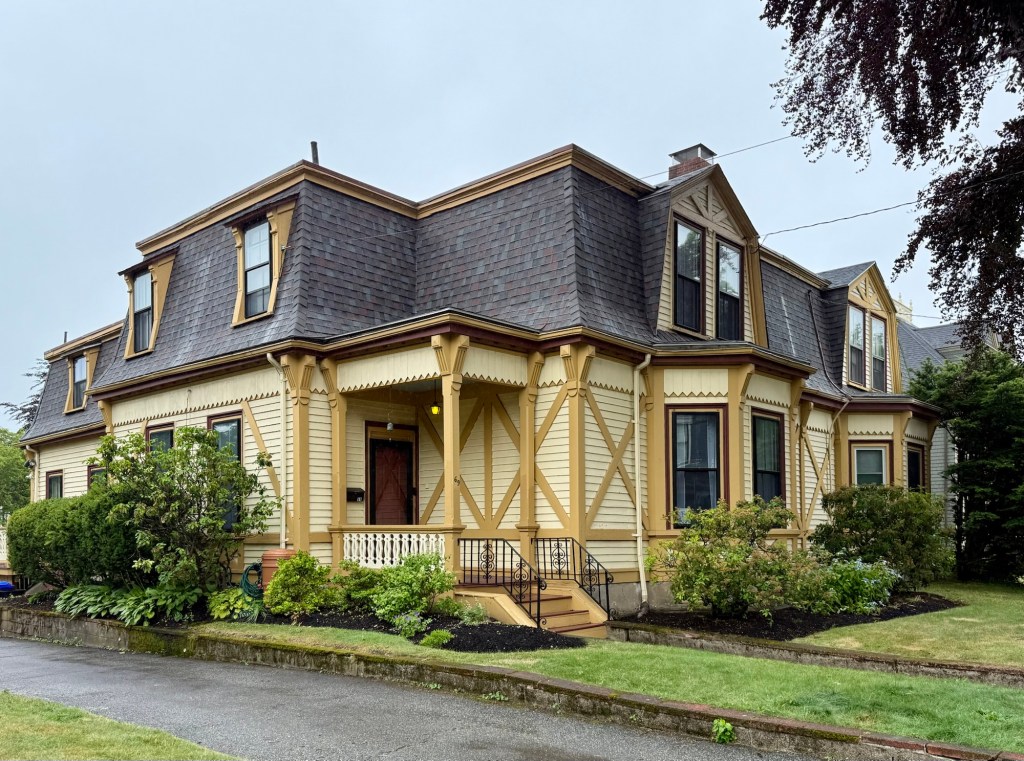
George Derby Welles Rental House // c.1872

From the 1780s until 1870, almost all of Ashmont Hill (west of the present train station) was a farm, with the large farmhouse dating to about 1720, located at the corner of Washington and Welles streets, now the home to the Codman Square Branch of the Boston Public Library system. The farm was owned for a time by General Henry Knox. Sometime before 1850, the estate and mansion came into the possession of the Honorable John Welles, who died in 1855. The property would eventually be deeded to John Welles’ grandson, George Derby Welles, who was then just 26 years old and living in Paris with his wife, Armandine V. Derby. Welles wasted no time in developing the property through his agent, Boston Attorney Edward Ingersoll Browne. Streets were laid out and house lots were platted and sold, with some early properties built with much of the neighborhood developing by the turn of the century. The old Knox-Welles farmhouse would be razed by 1889, but the remainder of the neighborhood has since become a landmark neighborhood of Victorian-era homes. This mansard double-house at 67-69 Ocean Street dates to around 1872 and is one of the earliest properties in the area. Blending the Second Empire and Stick architectural styles, the handsome double house is said to have been designed by architect Luther Briggs for George D. Welles and rented to tenants.