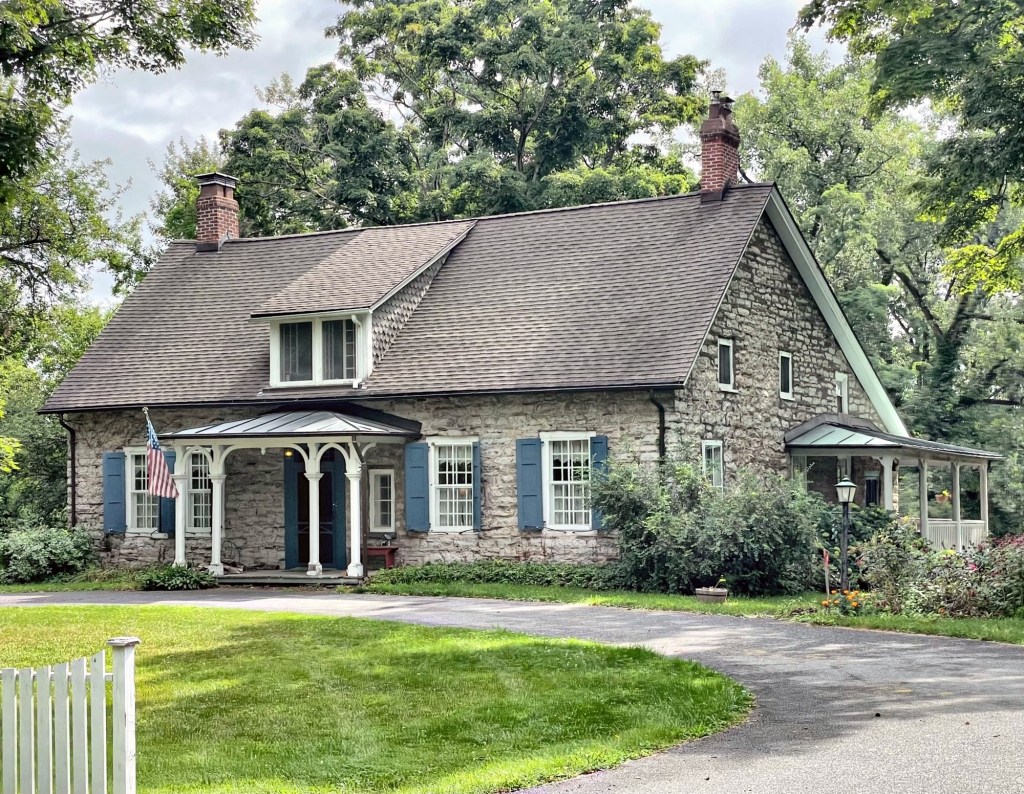
The Cornelius Person House is a pre-Revolution stone dwelling built in the Katsbaan village of Saugerties, New York. The residence was constructed around 1770 by Cornelius Person (1744-1827) a merchant who held a store just south of this home. The store was apparently used as a meeting place for Patriots during the Revolutionary War and Cornelius fought in the local militia at the time. After the war, John Jacob Astor was said to have traded with local fur trappers at the store. The Person Stone House was originally a smaller dwelling and was expanded multiple times to give it the center hall appearance and later saltbox rear. Later alterations include the porches, but the house retains so much of its original charm.
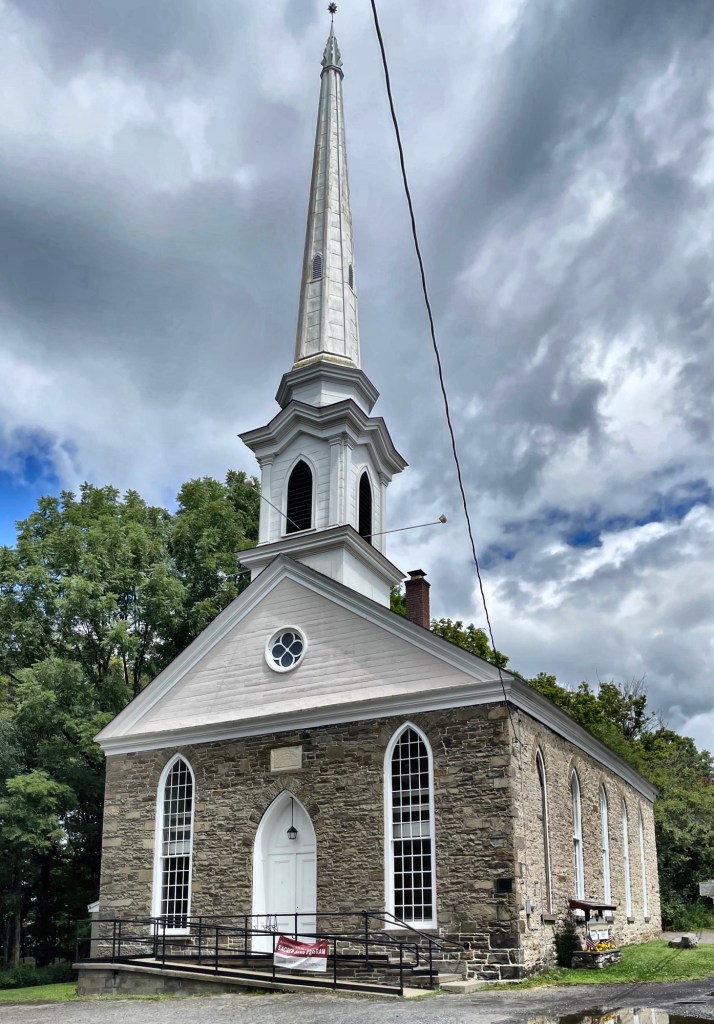
The first church on this site in Katsbaan, Saugerties, New York, was a 1732 simple stone church built by Dutch and German settlers. Church services were first held in the German language, and gradually came to be also held in Dutch and English, as the village and surrounding area developed. The original church was rebuilt in 1816 using the same stone base, but the entrance was shifted away from the street. Larger windows and the steeple were added at this time. In 1867, the steeple was heightened and the windows were enlarged with Gothic points, giving the building its present appearance. The Katsbaan Reformed Church remains an architectural and historical landmark noting the early history of Ulster County and its growth.
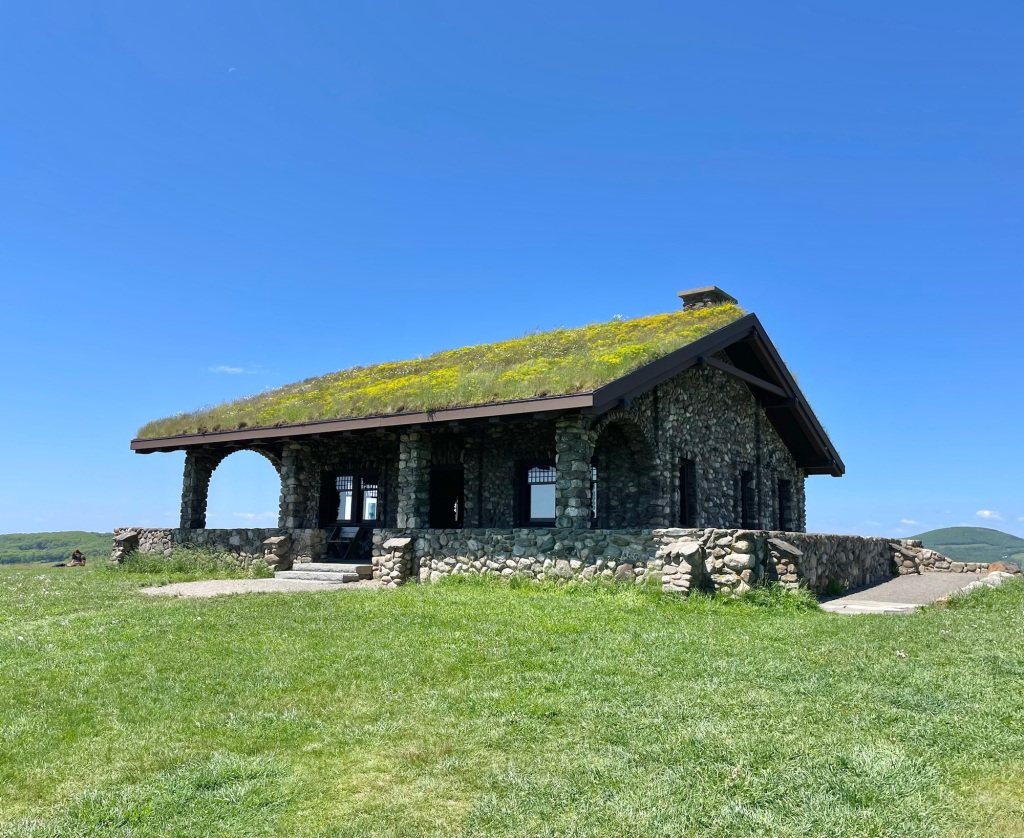
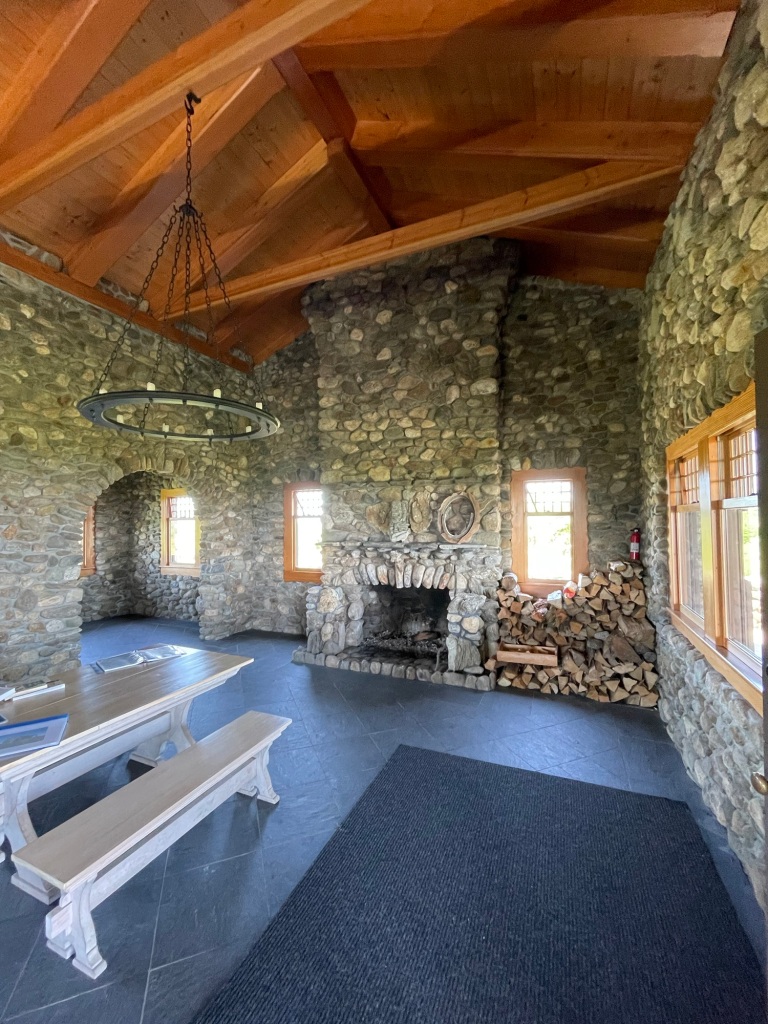
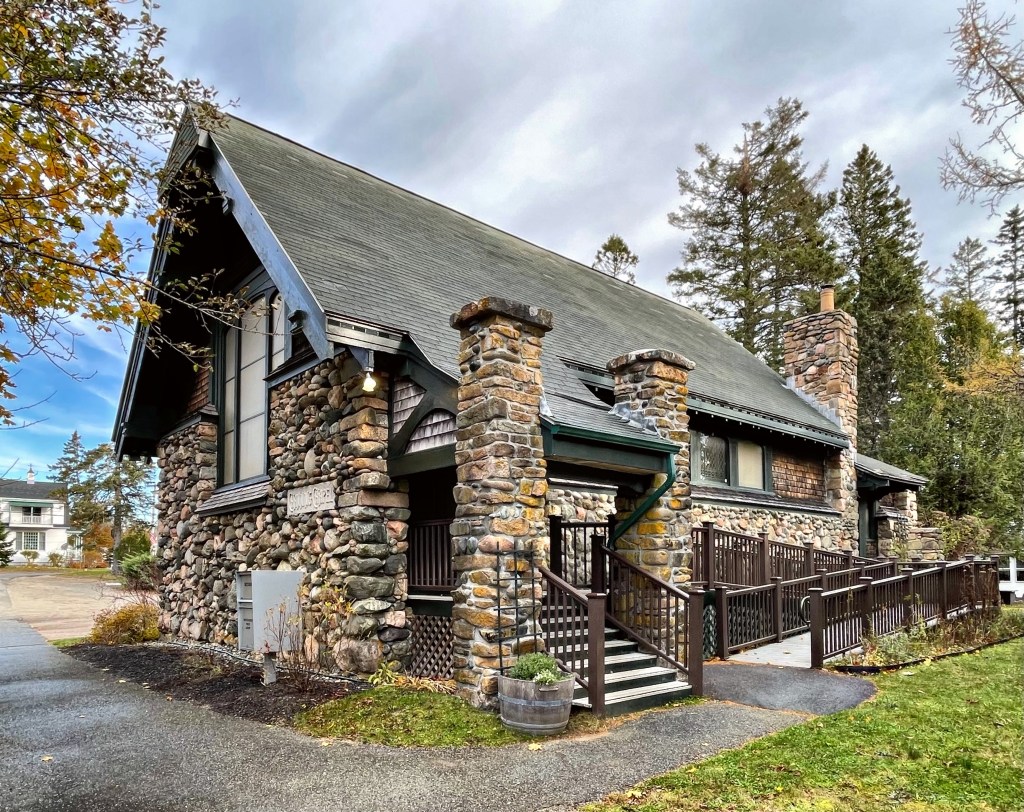
“Beech Nut” is a stone cottage built at the top of Beech Hill in Rockport in one of the best hiking areas of Mid-Coast Maine. The hut was built in 1913 for owner John Gribbel (1858-1936), a Philadelphia-based industrialist, who had a summer estate, “Weatherend” in Rockport. He hired a Norwegian immigrant named Hans Heisted, an employee of the Olmsted Brothers, to improve the grounds at Weatherend, which included meandering paths, stone walls, and stone structures. Meanwhile, the Gribbels had started acquiring land on Beech Hill in 1909, and eventually accumulated holdings of more than 300 acres. To keep the masons and landscapers busy during the winter, Gribbel and Heisted thought to build a small hut a few miles away on Beech Hill, which would serve as the family picnic and tea shelter. The stone building features a unique sod roof which was typical of Scandinavian houses up until the late 1800s. Once complete, family and friends would visit Beech Nut to enjoy the fresh air and views of the Atlantic from atop the hill for the day. After successive owners, the property began to deteriorate until the 1980s, when developers began to swarm the open space for redevelopment. In 1986, the land around Beech Nut was put under conservation easement and was acquired in 2003 by the Maine Coast Heritage Trust, which then transferred it in 2006 to the Coastal Mountains Land Trust. In 2007, the hut was completely restored and serves as a respite after the uphill climb for visitors.
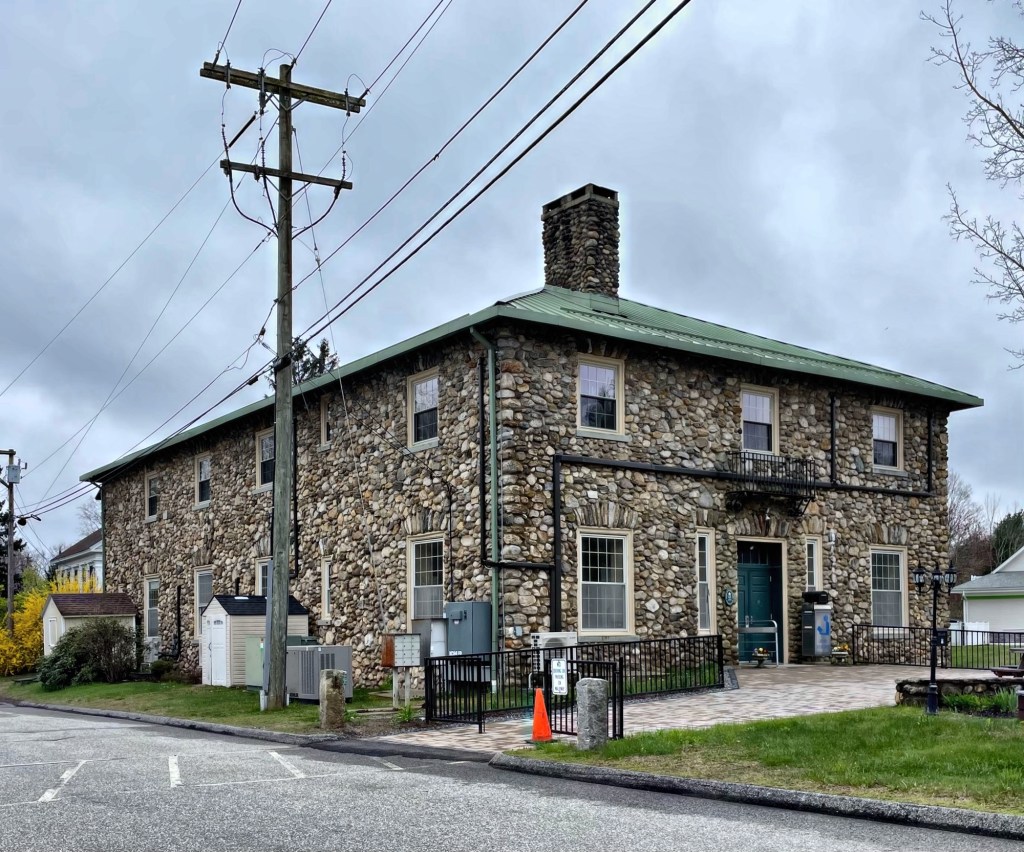
In the 1840s, Archibald Babcock (1780-1862) from Ashford, Connecticut, went west to engage in the California Gold Rush to seek his fortune. He did well and upon his return, moved to Charlestown, Massachusetts and began purchasing property for redevelopment. Upon his death in 1862, Mr. Babcock bequeathed $3,000 to the Town of Ashford start a “free” library there. For the next 60 years the library was located in a variety of private homes and country stores in town until the 1920s when this stone structure was built to house the town hall and library. Construction was made possible by a gift from Charles Knowlton, whose family had lived in the area since the 18th century. When built, it featured a number of modern innovations, including electrical service (generated on site), and steam heat. In addition to town offices and the library, the building also has an auditorium which is used for town meetings. Architect Herbert Loud furnished plans for the building which is rustic Arts and Crafts in style with randomly laid fieldstone walls with wide mortared joints. The roof eaves show exposed rafter tails below the shallow hipped roof.
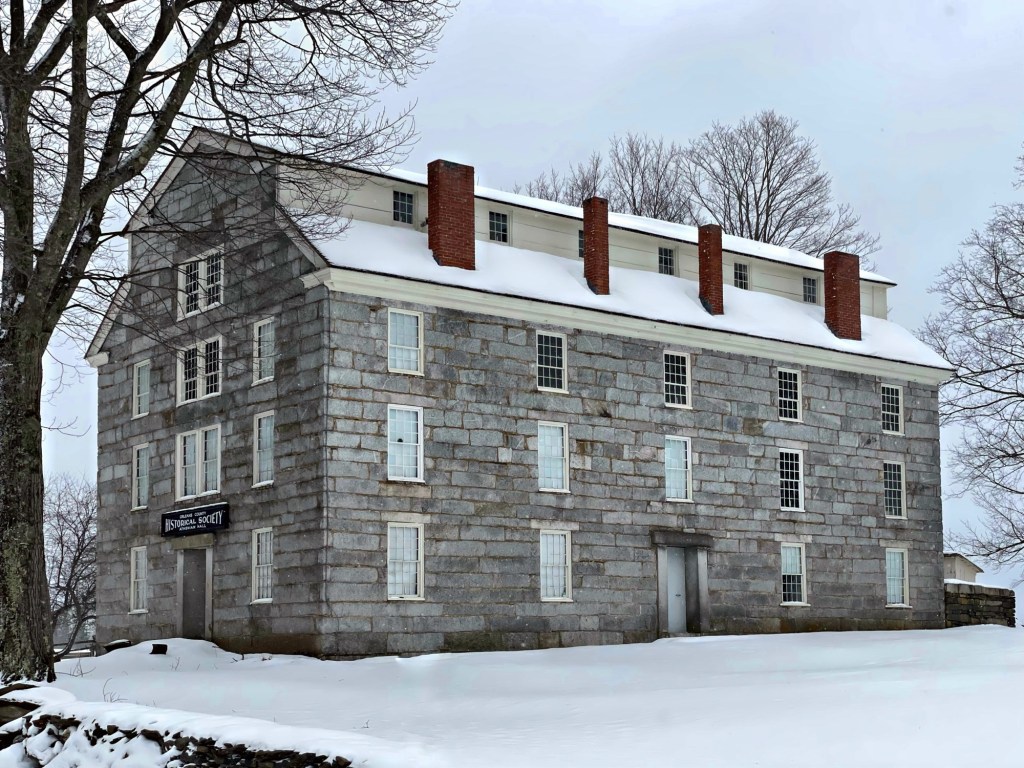
Across from the Alexander Twilight House (last post) in Brownington, Vermont this massive stone structure which is possibly the first granite public building constructed in the state. Alexander Twilight (1795-1857) is reputed to be the first African American in the United States to graduate from college, where he was likely inspired by the large granite dormitories there (a private institution). Twilight served as headmaster of the Orleans County Grammar School, which due to its rural location, required many students to travel long distances for their education. As a result, they boarded with families in town, including with Twilight. Athenian Hall was built to accommodate the larger number of students attending the Grammar School. The building closed in 1859, two years after the death of Alexander. The building sat vacant for much of the late 19th and early 20th centuries until 1918, when the Stone House was put up for auction. A representative of the railroad in the state of Vermont bid on the structure with the hopes of using the granite stones for bridge abutments. Luckily for us, The Orleans County Historical Society outbid the railroad and won the auction. The building was opened as a museum in 1925 and is today part of the Old Stone House Museum and Historic Village.
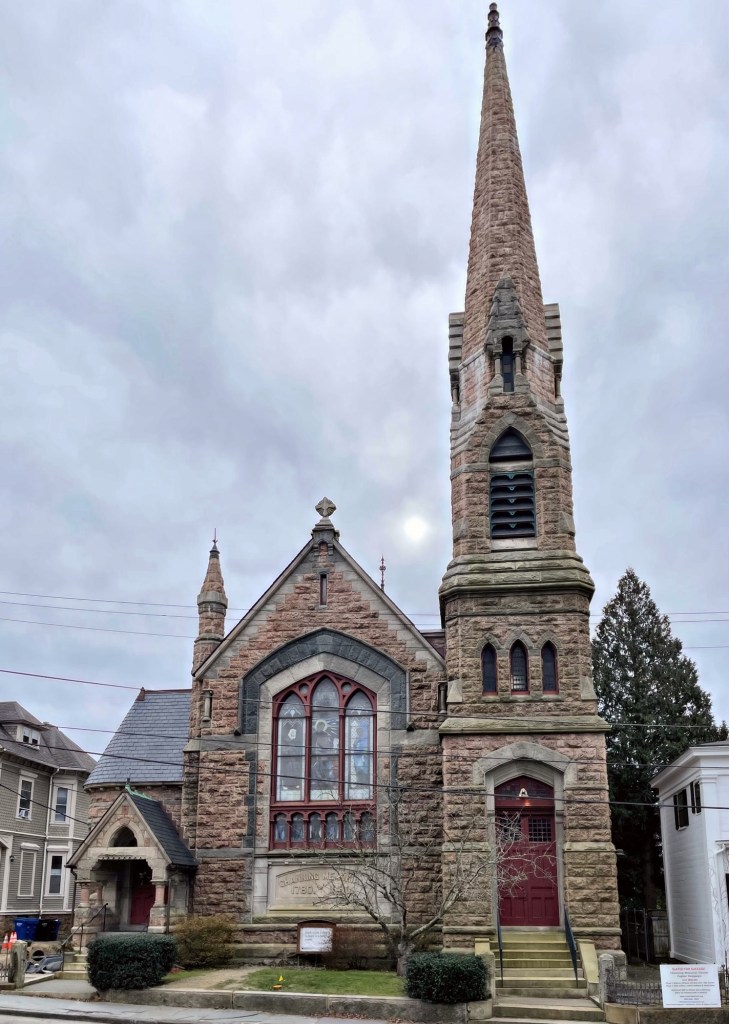
The Channing Memorial Church of Newport, Rhode Island was named in the memory of William Ellery Channing (1780-1842), an ardent abolitionist and founder of the Unitarian faith in America. In 1835, ten men formed the first Unitarian Society in Newport in October 1835 and met in the home of Channing’s grandfather, William Ellery, one of the 56 signers of the United States Declaration of Independence. In 1879, the congregation’s minister, Rev. M. K. Schermerhorn, conceived the idea of a memorial to William Emery Channing, whose centenary would be the following year. He decided upon the ambitious project of a new church building and planning began immediately. On Rev. Channing’s 100th birthday, the cornerstone laying ceremony occurred in 1880. The Victorian Gothic stone church designed by Elbridge Boyden took a year to be completed and was was built from granite, cut in Lyme, Connecticut. Inside, two stained glass windows, the first ecclesiastical commission of John LaFarge, flood the interior spaces with warm colored light. The church looks much as it did when completed almost 150 years ago, thanks to an active congregation preserving this great landmark.
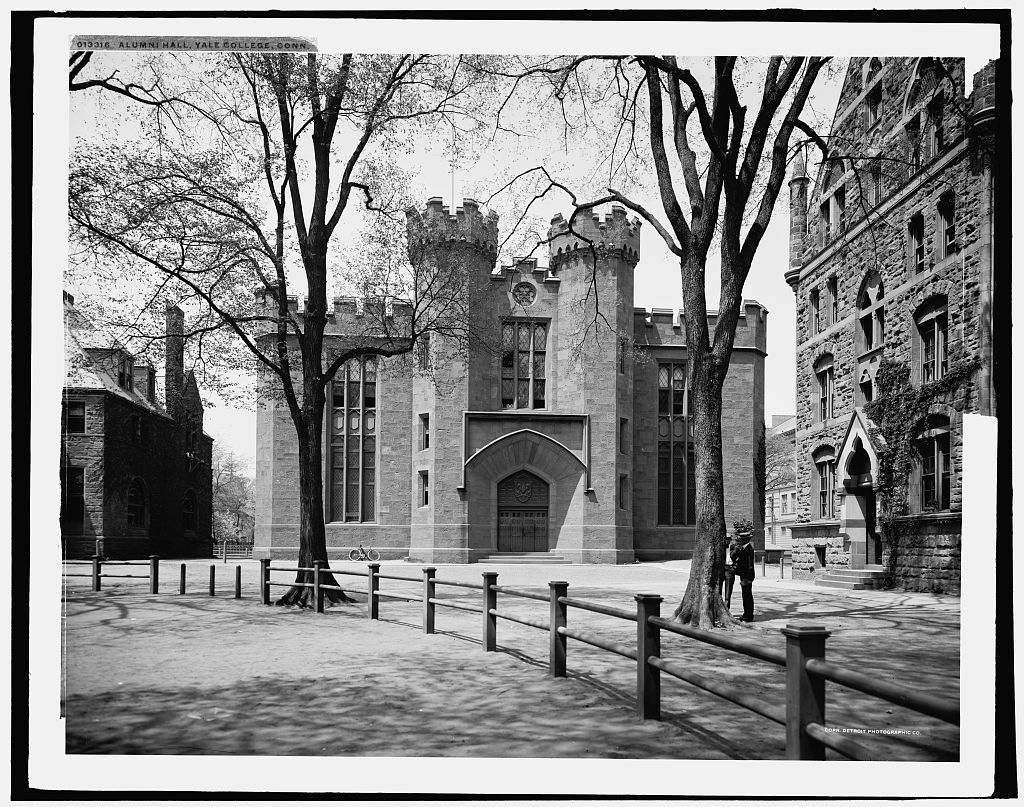
Alumni Hall at Yale was designed and built between 1851-1853, at the northwest corner of Yale’s Old Campus. Its was designed by Gothic specialist architect Alexander Jackson Davis, who completed Dwight Hall (the Old Library) a some years prior. The building had a large, open floorplan on the first floor for large gatherings as well as the entrance examinations, along with the biennial examinations that every student had to take at the end of his sophomore and senior years. As the building turned 50 years old, the campus around it was already looking very different. Shifting priorities for dormitory space in the yard necessitated its demolition for Wright Hall (next post). Alumni Hall was razed in 1911, but its two crenelated towers were salvaged when the building was demolished. They were incorporated into Weir Hall which has been incorporated into Jonathan Edwards College, one of Yale’s residential colleges.
At a time before women could vote or be admitted to the American Medical Association, Almena Guptill (1842-1914) left her small home on Harbor Road to graduate from Boston University of Medicine in 1876 and become a respected Boston physician. She married David Flint (1816-1903), a successful lumber dealer and philanthropist. Almena met David when treating his late wife in Boston. The two, both widowers, married in 1891. Being a staunch follower of William Ellery Channing and believing that there was sufficient interest in Unitarianism here, Flint felt that there was need for a meeting place in his summer town of Winter Harbor. He had this chapel built adjacent to his summer house in the winter of 1887-1888, having field stones brought to the site of the future chapel by people of the village sliding them over ice in the winter. I could not locate the name of the architect of the building. The chapel was deeded to the American Unitarian Association and was later gifted by the association to the Town of Winter Harbor in 1958, the town would sell the property that year. In 1993, a preservation group purchased the chapel and sold it in 1999 back to the town. It now houses the Winter Harbor Public Library. Talk about full-circle!
Formerly known as “Churaevka,” the community known today as Russian Village in Southbury, Connecticut, was established in 1925 as an artistic community for Russians who fled to America after the Russian Revolution of 1917. The village was created by two Russian writers, Count Ilya Tolstoy, the son of Leo Tolstoy (the author of War and Peace and Anna Karenina), and the famous Siberian novelist George Grebenstchikoff. Although Tolstoy was first to discover the area while visiting his translator in Southbury, it was Grebenstchikoff who dreamed of establishing a cultural center and planned to create a rural community of cottages where Russian writers, artists, musicians and scientists could live and flourish statestide. The village was named after a mythical Siberian village mentioned in the works of Grebenstchikoff and the centerpiece is this chapel, St. Sergius Chapel, which was built in 1932-33 from plans by Nicholas Roerich. The small square-plan chapel was likely built of stone gathered from the neighborhood.
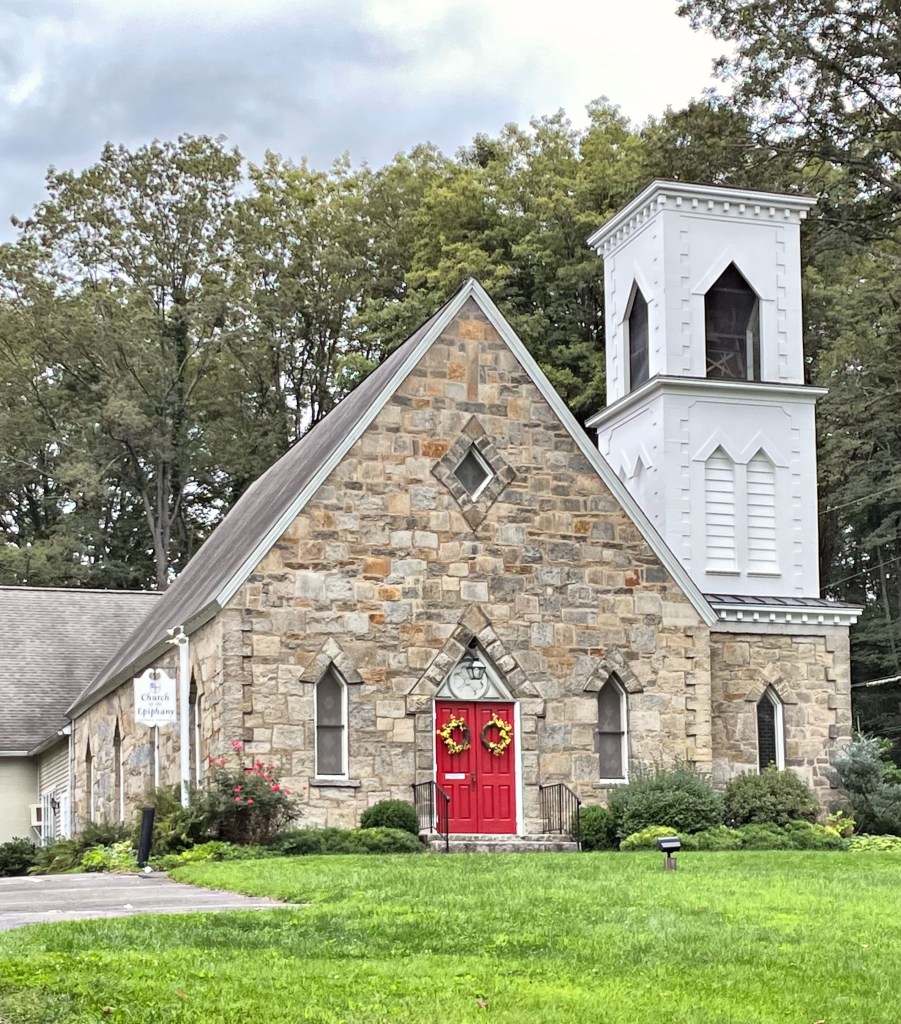
The stereotypical church in New England is the usual wooden structure with a central steeple and painted a bright white. Whenever I see an old church that breaks that oh-so-common mold, I have to snap a photo and learn more! This is the Church of the Epiphany, located on Main Street in Southbury, Connecticut. The church is an example of the Gothic style built in the Victorian period and is constructed of stone with a wooden corner belfry. Construction started in 1863, and the church was not completed until four years later in 1867. I could not locate who the architect was, but I am dying to know!

 Buildings of New England