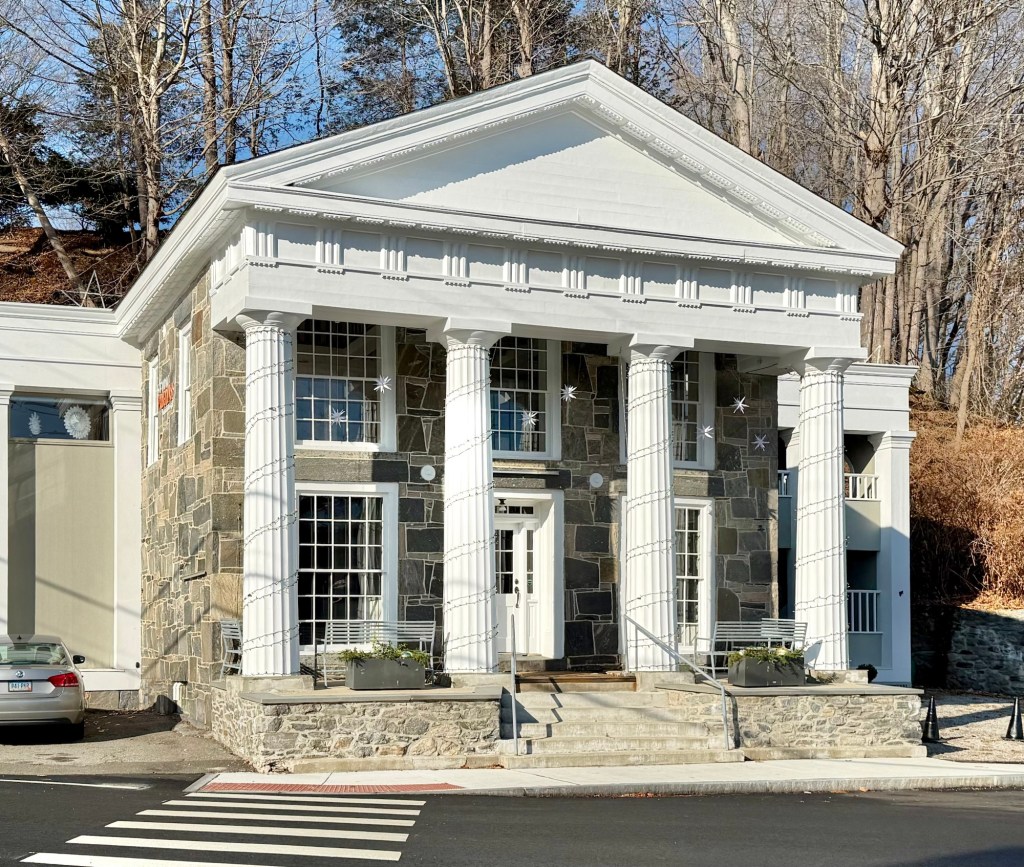
Colloquially known as the “Stone Store,” this handsome stone structure in Chester Village, Connecticut, was built by William Buck in 1809, a merchant involved in the West Indies trade. The stone for the building is believed to have come from the Chester quarry in town and was likely more vernacular without the columned portico. The four-columned Doric portico was likely added in the 1830s or 1840s as the Greek Revival style surged in popularity. The two side wings were added in the 20th century. The Old Stone Store has held various uses from a store, tavern, post office and liquor store, while the upper floor has served as a private school, the town’s library and an apartment. The Old Stone Store today acts as the western terminus of the town’s Main Street commercial district.
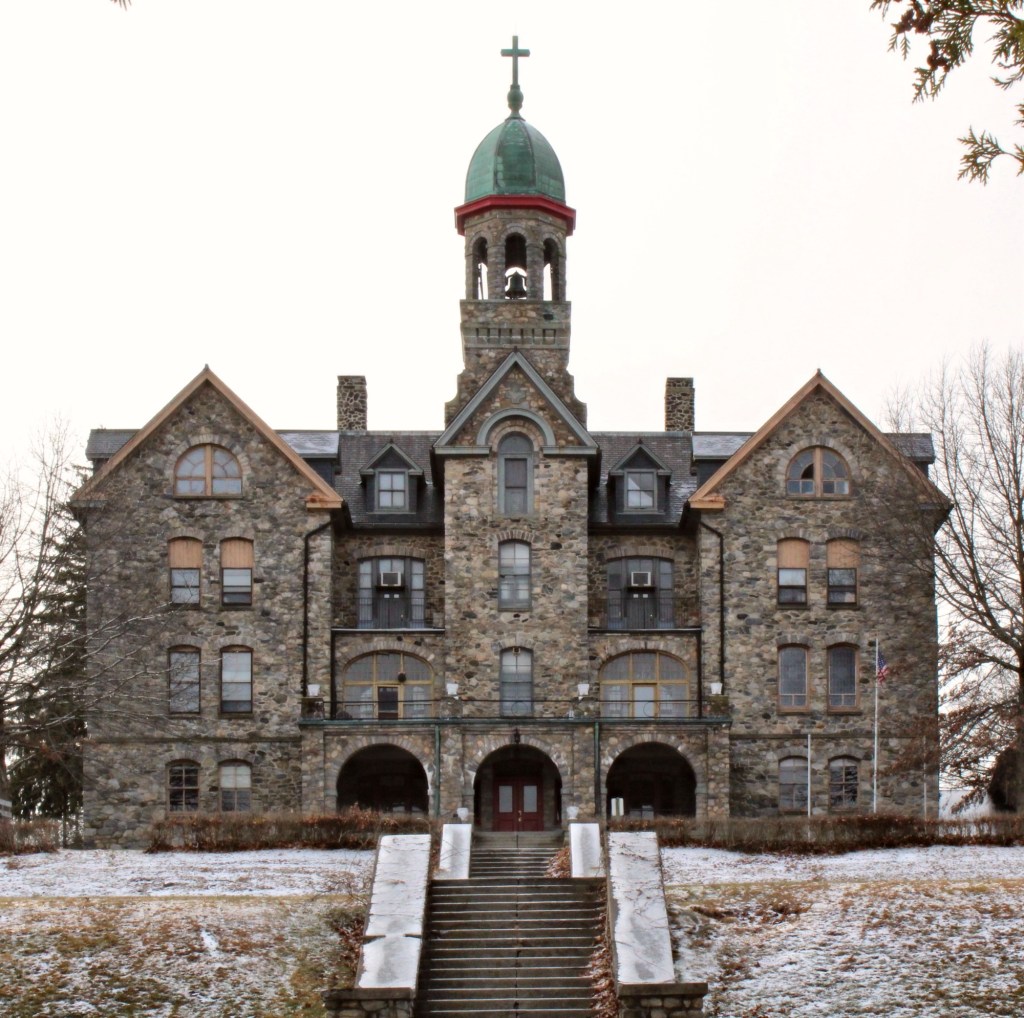
The former Mount Saint John School in Deep River, Connecticut, sits atop a hill on the western banks of the Connecticut River and is a visual landmark in every sense of the word. The school was founded by the Diocese of Hartford, who acquired the site in Deep River and began construction on the present building in 1907. Completed by 1908, the stone building (architect not known at this time), served as an industrial school for 100 boys in the Hartford region aged 8-16. The school, led by the Xaverian Brothers, was intended to educate troubled young men in the Catholic faith and learn working skills for a profession. The use changed numerous times throughout the 20th century, and ended up becoming the Mount Saint John School. Then under the Norwich Diocese, the school became known as the Mt. Saint John School. The school closed years ago and the historic building and surrounding campus’ future are uncertain.
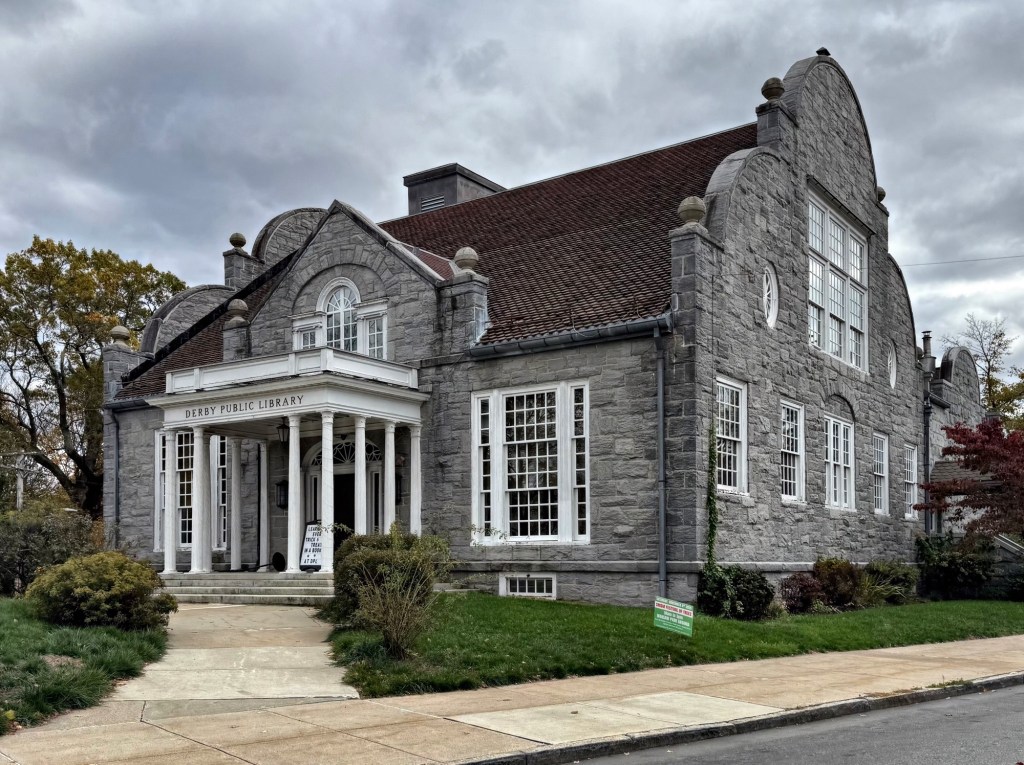
Derby’s main public library building, the Harcourt Wood Memorial Library, is located a few blocks from the city’s downtown on a unique triangular lot formed by Elizabeth and Caroline Streets. The one-story library is one of the finest of its period in all of New England and is built primarily out of Ansonia granite. The library was designed by architect Hartley Dennett and is notable for its Colonial Revival style porticoed entrance and distinctive rounded Flemish gables on the side walls. The interior is said to retain most of its original woodwork and many of its original furnishings. The building was constructed in 1902 following the donation of land and funds for its construction by Hamilton Holton Wood, a native of Montreal who made his fortune operating Derby’s streetcar railway system. The library is named in honor of Wood’s son Harcourt, who died at the age of 12 in 1897. The community does a great job at preserving the structure, which is one of the finest of its type in the region.
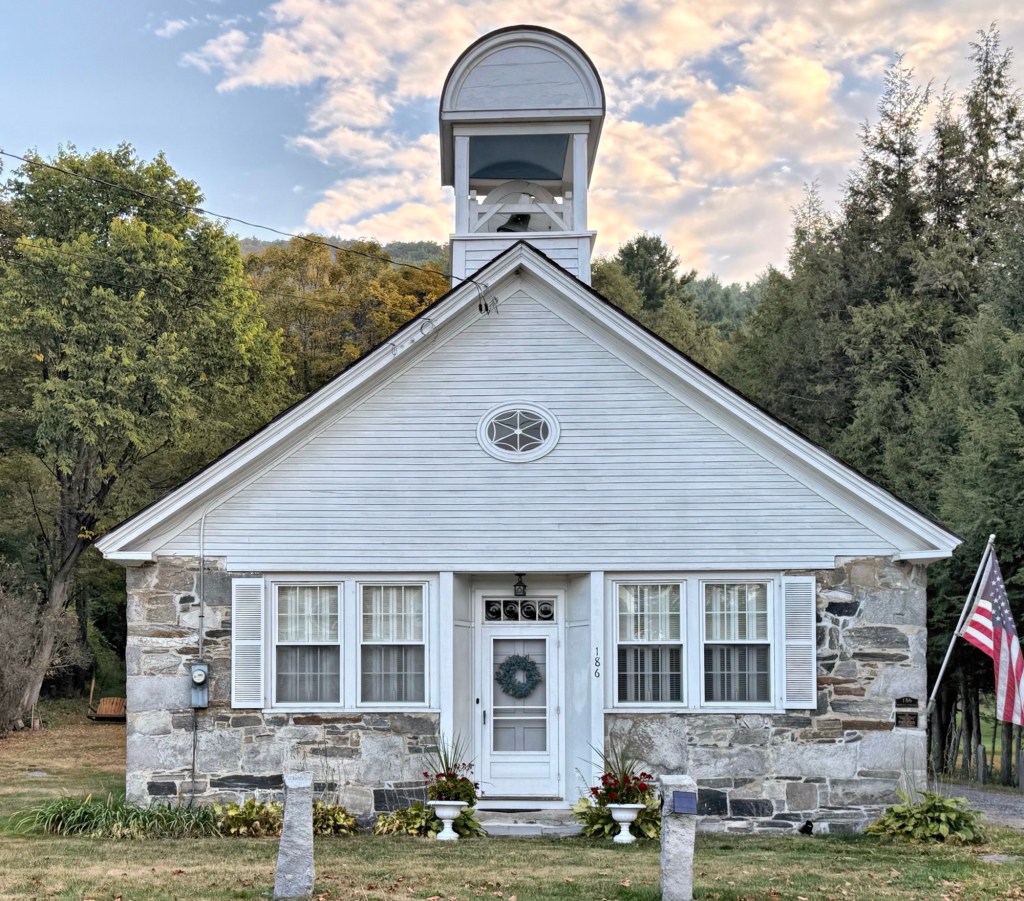
Across the street from the Gideon Lee House in the Stone Village of Chester, Vermont, this historic schoolhouse is one of the oldest in the state and one of the few extant schoolhouses built in stone in New England. The Stone Village Schoolhouse is a rare example of a snecked ashlar building, where the construction method is said to have been brought to the area by masons from Scotland and Ireland which is known there as ‘Celtic Bond’. Oral tradition state that Scottish masons from Canada introduced the technique to local masons while erecting a mill in nearby Cavendish in 1832. Local Chester resident, Dr. Ptolemy Edson became such a fan of the building that in 1834, he had his home, the first stone building in Chester, built in this method. He then would influence the rest of the North Village of Chester, where many of his neighbors, as well as the church and schoolhouse, built their structures in snecked ashlar. Completed in 1835, the schoolhouse is a single-story rectangular plan building with the end gables forming a high pitched roof with a bell cupola over the facade’s gable. The snecked ashlar siding appears only on the first floor with traditional wood clapboard siding in the gable above. Built as School No. 3 for Chester, the building converted to residential use in the 20th century, but still maintains its important materiality and the iconic school bell, allowing passersby to understand its original purpose.
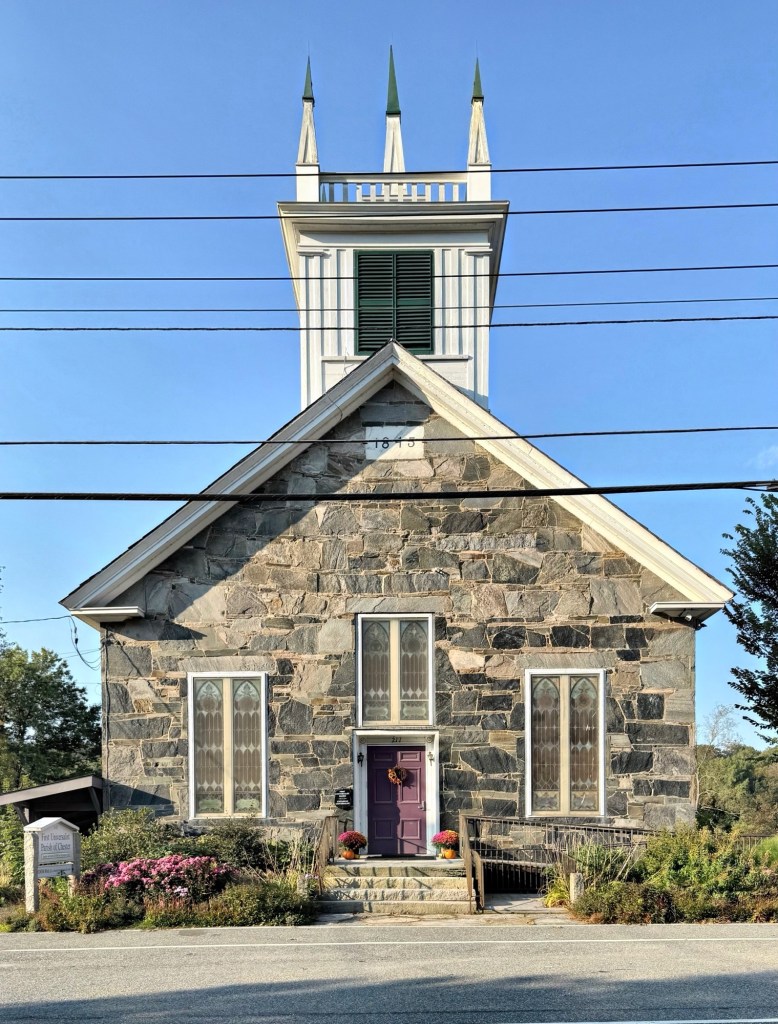
The Stone Village of Chester, Vermont, is said to be the largest collection of stone buildings in the state, and is anchored by its largest building, the Unitarian Church. Built in 1845, the Unitarian Universalist Church is one of a few dozen “snecked ashlar” buildings in the region, where rubblestone is laid up with mortar using small long stones called “snecks” to tie an outer and an inner wall together. The construction method is said to have been brought to the area by masons from Scotland and Ireland which is known there as ‘Celtic Bond’. Oral tradition state that Scottish masons from Canada introduced the technique to local masons while erecting a mill in nearby Cavendish in 1832. Local Chester resident, Dr. Ptolemy Edson became such a fan of the building that in 1834, he had his home, the first stone building in Chester, built in this method. Dr. Edson served on the building committee for the new village church, and likely pushed for a cohesive material and construction method for this church and other buildings soon after. The Stone Village Unitarian Church blends Greek Revival and Gothic Revival styles in a more vernacular way, typical in many rural Vermont communities. The building exhibits stained glass windows that were added sometime in the late 19th or early 20th century.
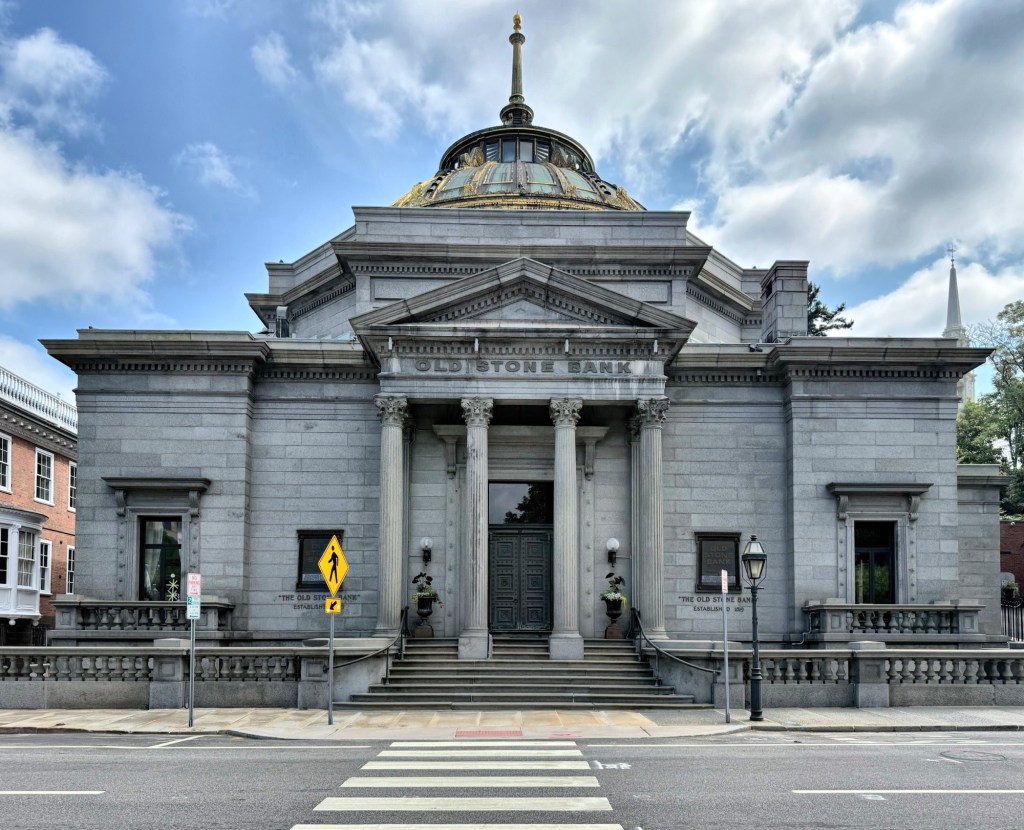
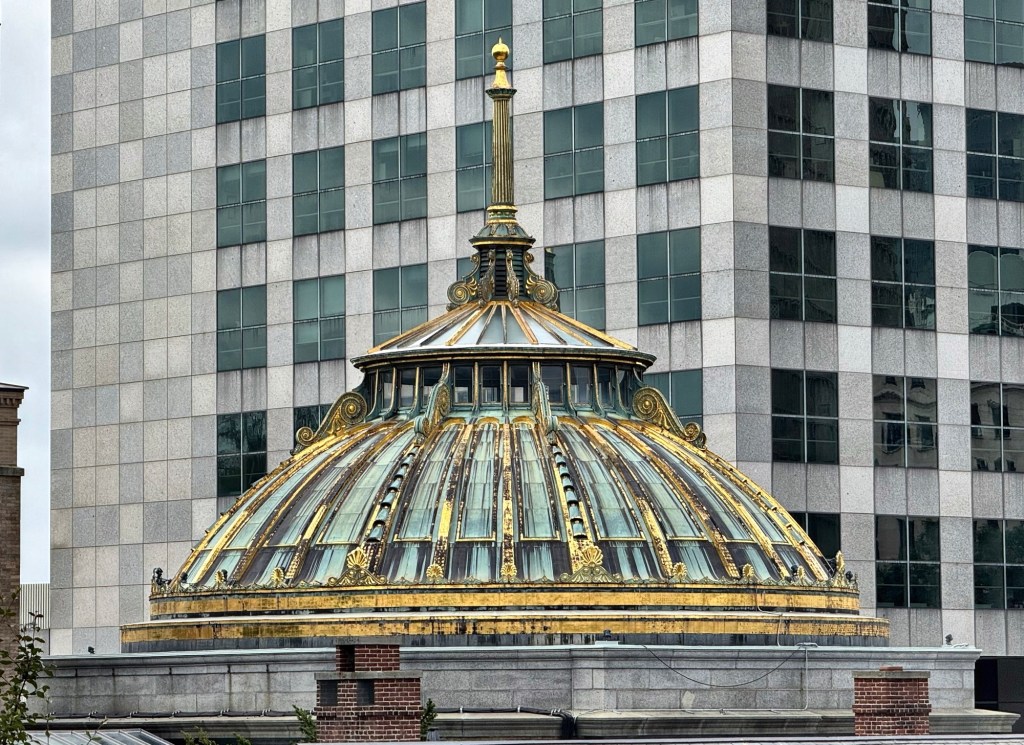
The Old Stone Bank was founded in 1819 as the first savings bank in Providence, Rhode Island, but originally under the name, Providence Institution for Savings. A constantly growing volume of business influenced the erection, in 1854, of a building for the exclusive purposes of the bank at 86 South Main Street, near College Hill. Designed by C.J. and R.J. Hall, the original stone bank stood one-story tall with a gable roof. Success and further expansion of the institution led to the erection, in 1896, of the present building, which served as the main office. Designed by the local architectural firm of Stone, Carpenter & Willson, the present domed banking structure is said to have incorporated parts of the 1854 building, and expanded the rest to the landmark we see today. The Beaux Arts/Neo-Classical banking structure is constructed of granite, with a Classical pedimented entry of monumental Corinthian columns atop the staircase, but the highlight of the building has to be the gold-leaf-and-copper domed roof which partially served as a skylight for the banking hall inside. Offices relocated to a new building in the late 1960s. The banking institution closed in the 1980s and following acquisitions and insolvency, the main bank was sold in 1995 to Brown University for $1.15 million to house the Haffenreffer Museum of Anthropology‘s collection of Native American artifacts. Years later, Brown decided it was unfeasible to house the collection in the building as the necessary alterations would have altered the historic character of the building, they then sold the building to an LLC in 2009. The Old Stone Bank is now a single-family home. Yes, you heard that right. The new owners have lovingly preserved this architectural marvel for all to enjoy as they stroll the city.
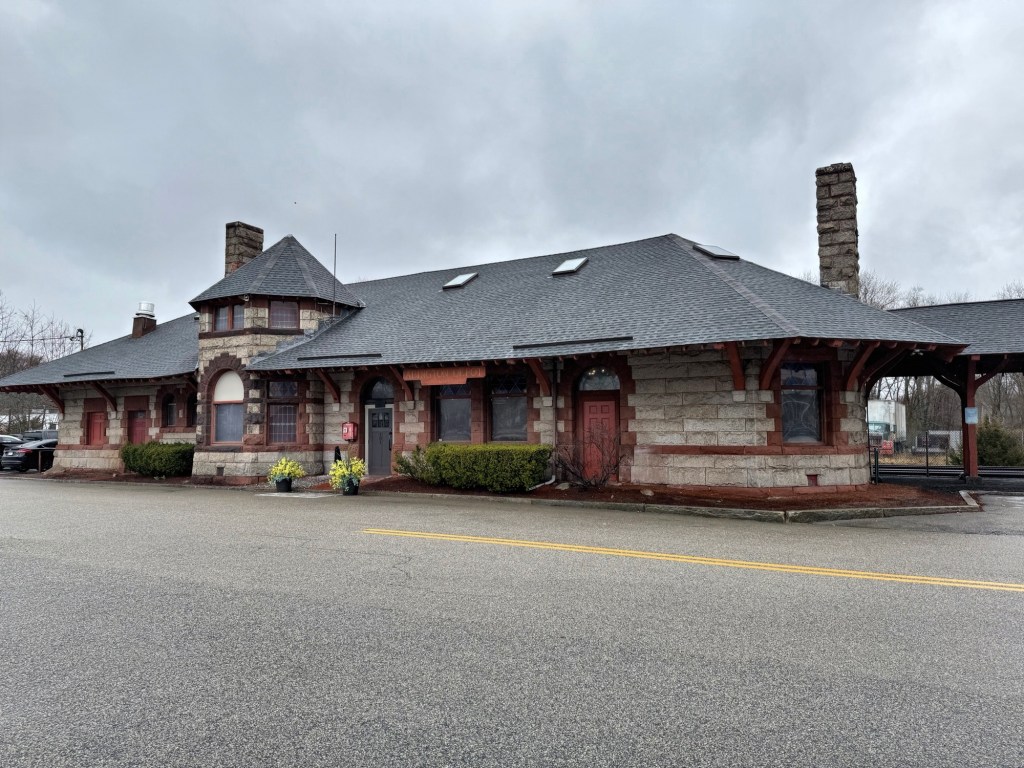
The North Abington Depot was built in 1894 from plans by notable architect Bradford Lee Gilbert in the Richardsonian Romanesque style, a design that typified many regional train stations following Henry Hobson Richardson’s commission by the Boston and Lowell Railroad. Construction on the depot began soon after the “North Abington Riot”, in which railroad laborers and local townspeople fought over the town’s right to allow a grade-level streetcar crossing over the train tracks. The railroad executives filed an injunction before the state supreme court, and Justice Marcus Perrin Knowlton, at a hearing, dismissed the bill, saying that since the Selectmen had acted within their right as representatives of the townspeople who owned the public highway, the Supreme Court had no reason to become involved. This decision was disputed by the railroad’s attorney, who advised them that this decision was not binding, which ultimately would be deemed incorrect. On August 15, 1893, fifteen local men (many of whom were sworn in as special police for the occasion) with the aid of fire hoses, withstood the onslaughts of more than 200 railroad laborers, armed wit h picks, shovels, and paving stones. After many were injured, the brawl ended. In the aftermath, the full bench of five Justices of the Massachusetts Supreme Court upheld the validity of the position taken by a single Justice, saying that any one member was in position to adequately interpret the law. This decision still stands and is quoted in similar cases in the field of jurisprudence. This depot was completed in 1894 by the New York, New Haven and Hartford Railroad as a peace offering following the North Abington train riot and a visual reminder that no corporation, no matter how powerful, is superior to the right of the people and the laws of the land.
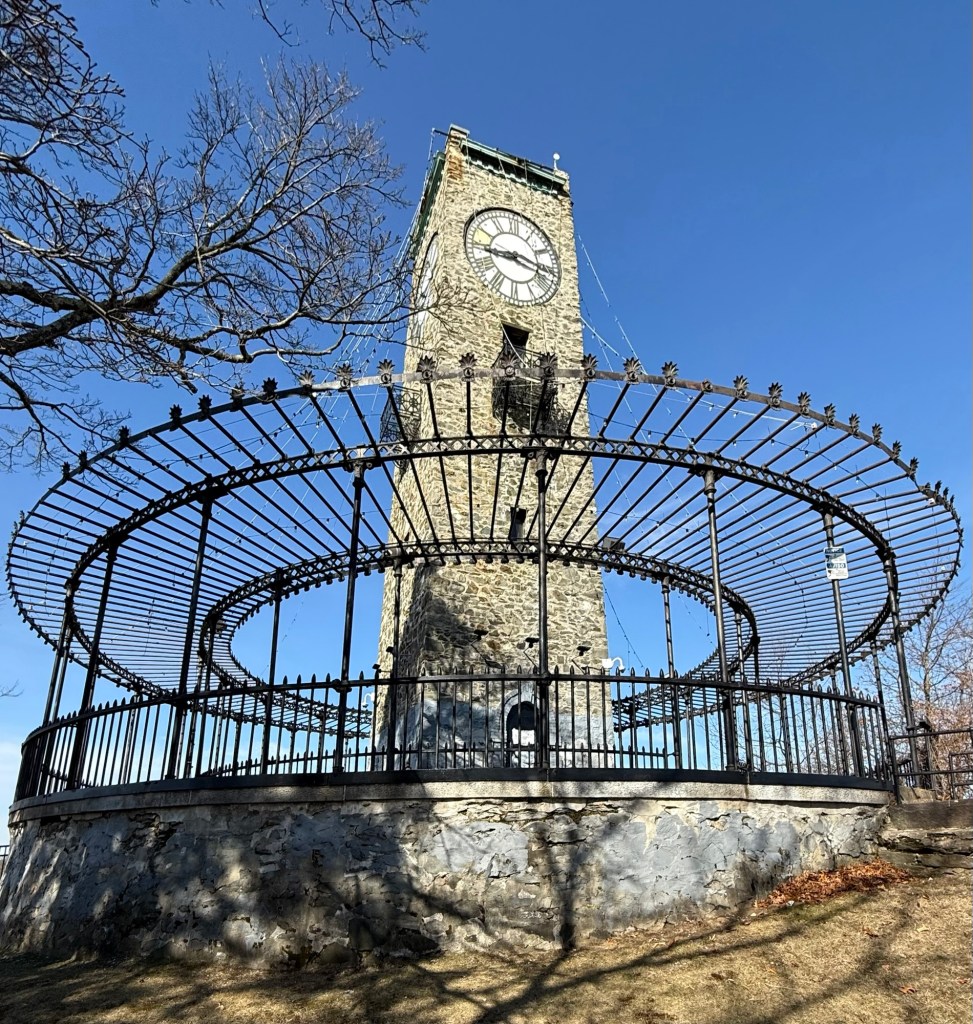
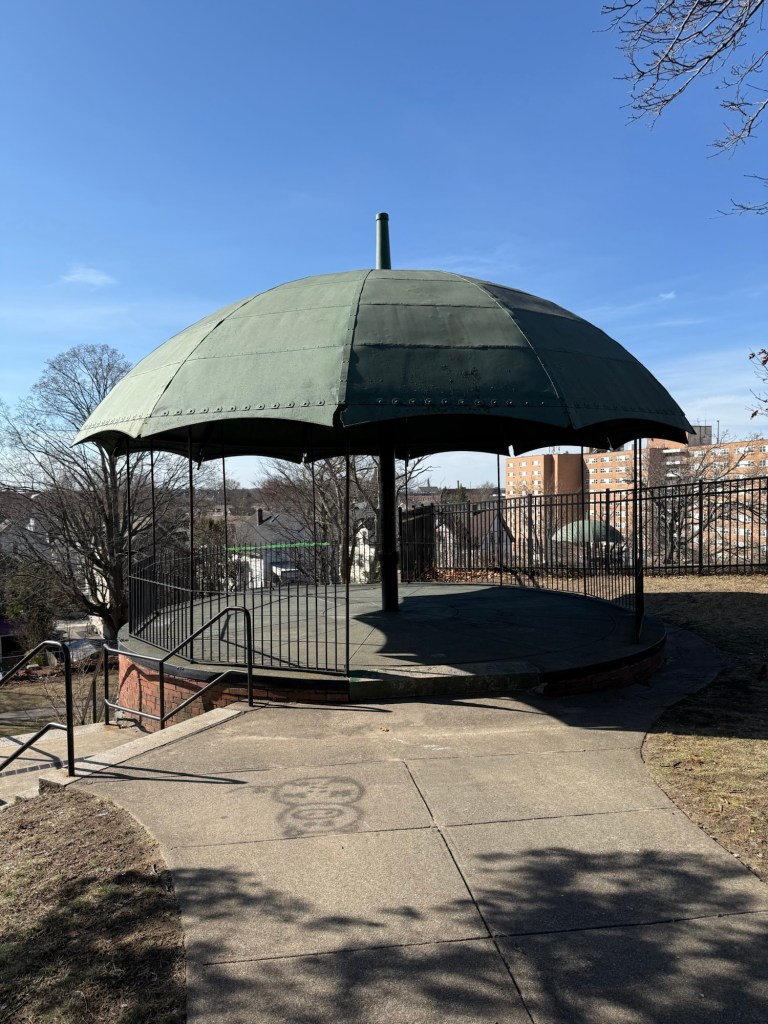
The crown jewel of the nearly one square mile city of Central Falls, Rhode Island, is Jenks Park, the only large park in one of the densest cities in America. The land was a gift of Alvin Jenks, a descendant of the family which had been among the town’s earliest settlers and one of its leading industrial families, and provided a much-needed recreational/open space for the dense industrial city. In 1890, planning began on the park with consists of hilly terrain cut through by paved paths, rocky outcroppings, and large metal gazebos which were fabricated at the nearby Fales and Jenks machinery works. At the crest of the park’s hill is Cogswell Tower, a clock and observation tower given by a former resident, Caroline E. Richards Cogswell. The stone tower was designed by architect Albert Humes, who ironically, was serving as mayor of Central Falls at the time, which may represent somewhat of a conflict of interest to gain the commission… The Cogswell Tower stands 70-feet-tall and is constructed of rough stone with a pyramidal roof that was once surmounted by an eagle. Its most remarkable aspect, a circular, iron structure which surrounds the base appearing from below as a sort of Hula-Hoop to the tower. Jenks Park and the iconic Cogswell Tower remain as a source of pride for the City of Central Falls.
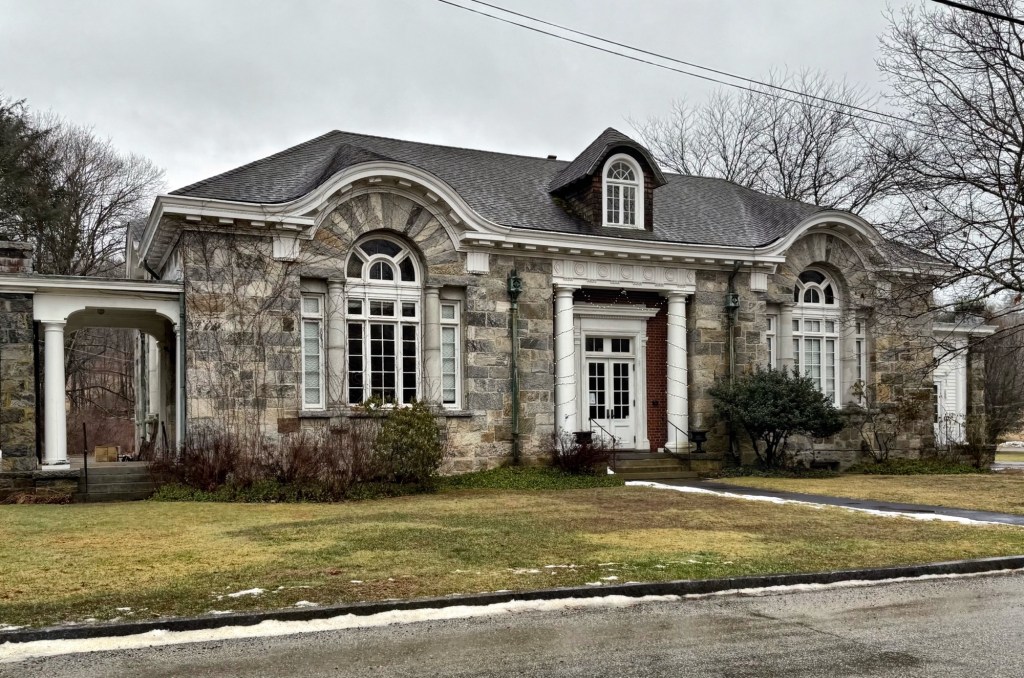
Constructed of random-coursed stone, this charming building in Cornwall, Connecticut, exhibits a prominent classical entry, Tuscan pilasters, and modillion eaves. This handsome structure was completed in late 1908 following a substantial donation to the town for it’s first purpose-built library by summer resident John E. Calhoun. Mr. Calhoun had cultivated an interest in architecture and is said to have designed the building, and later designed his own home in the village years later. The high-style architectural building documents the transformation of Cornwall from a sleepy agricultural town into a fashionable residential retreat in the late nineteenth and early twentieth centuries. The building operated as the town’s public library until 2002 when the contemporary library building was completed. This stone structure was converted to the town hall.
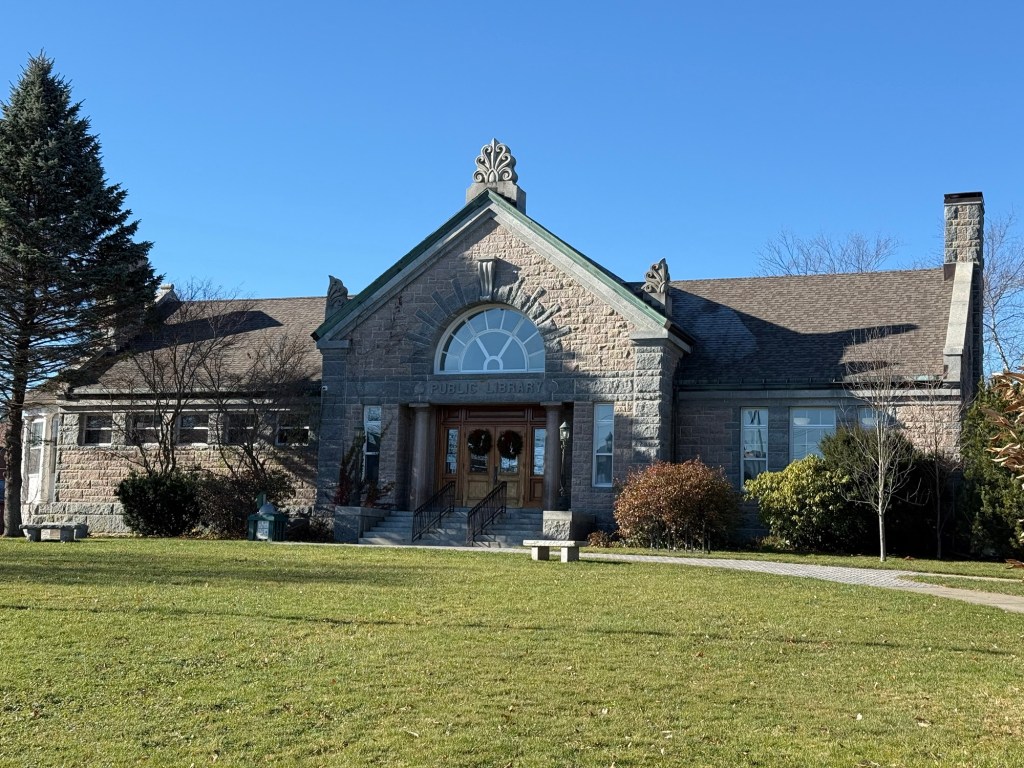
The Rockland Public Library in Rockland, Maine, is an architecturally significant civic building that showcases the coastal town’s prosperity at the turn of the 20th century. The library was built in 1903–04, and was funded in part by a $20,000 grant from Andrew Carnegie. It is the city’s only major example of Beaux Arts architecture, a style that is also uncommon in the state. The library was designed by Maine native George Clough, who used granite quarried from nearby Vinalhaven in its construction. The building was later expanded by an addition at the rear, but from the street, the handsome Beaux Arts library looks near-identical as to when it was built over 120 years ago!
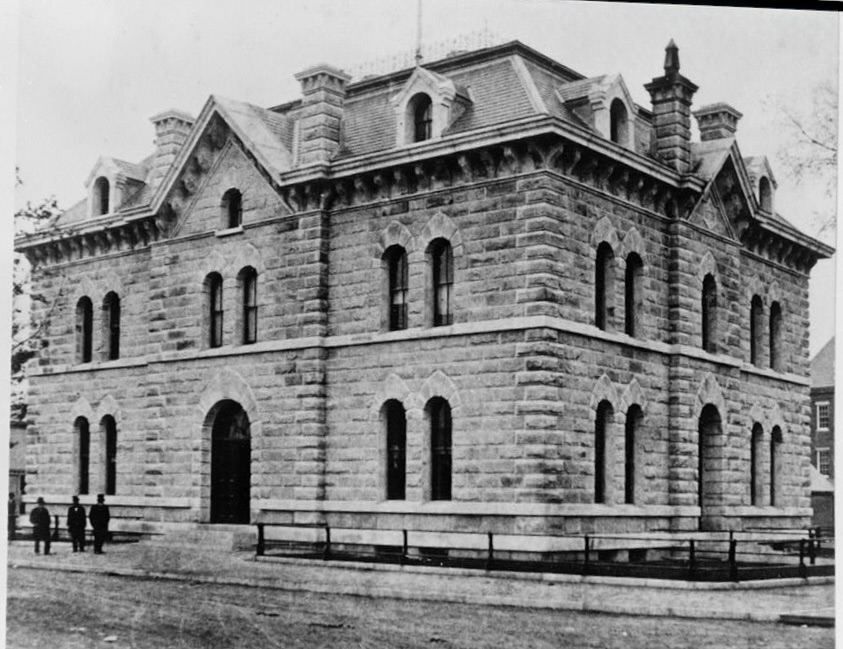
It saddens me to see photos and learn about some of the amazing buildings demolished in the name of “progress”; it is even more disappointing when said building is replaced by a surface parking lot (over 50 years later)! This great stone building was built in Rockland, Maine, in 1876 as the town’s post office and custom house by the Federal government. Relatively unknown architect Alfred B. Mullett is credited with the design as he served from 1866 to 1874 as Supervising Architect of the United States Treasury Department. The building can be classified as Italianate-Second Empire in style and is constructed of massive, rough-faced granite block walls with a shallow mansard roof above. The building was offered for sale by the U.S. Government in 1967, likely due to the upkeep costs and a shrinking local population with the dependency on maritime trade diminished. The building was ultimately razed in late 1969, with a new, uninspiring, post office built next door to this site.
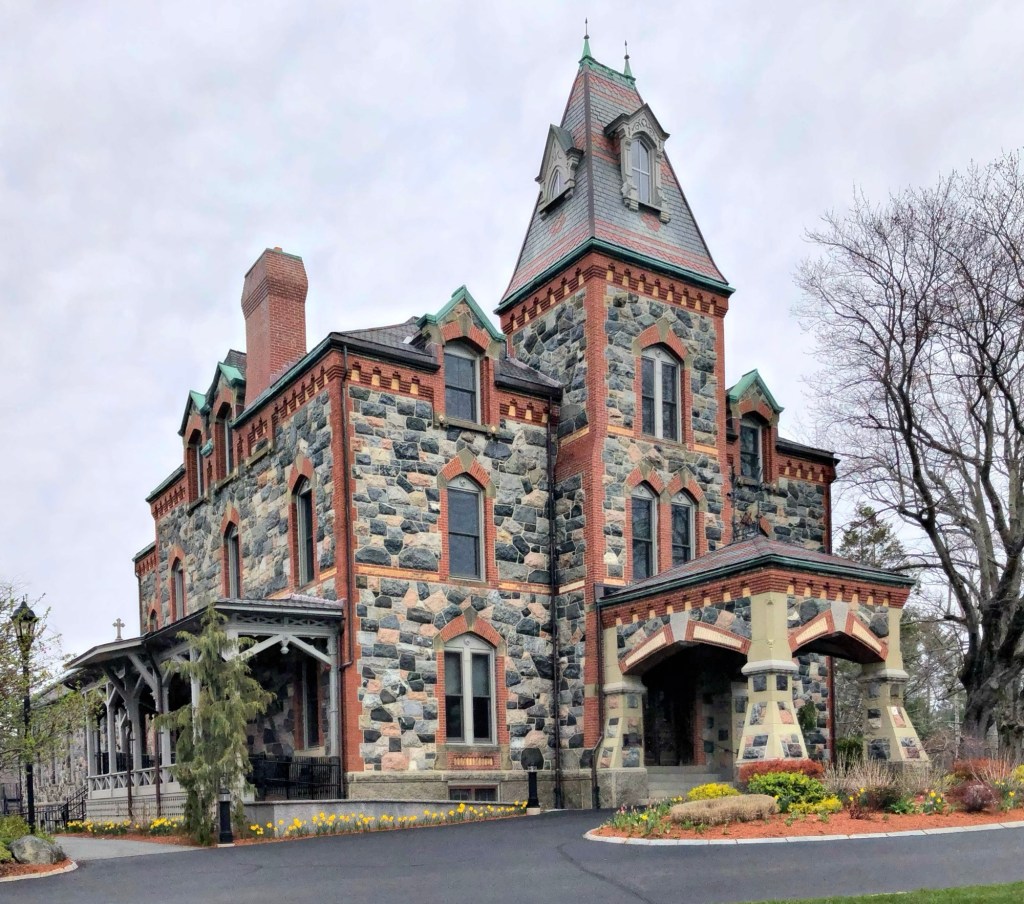
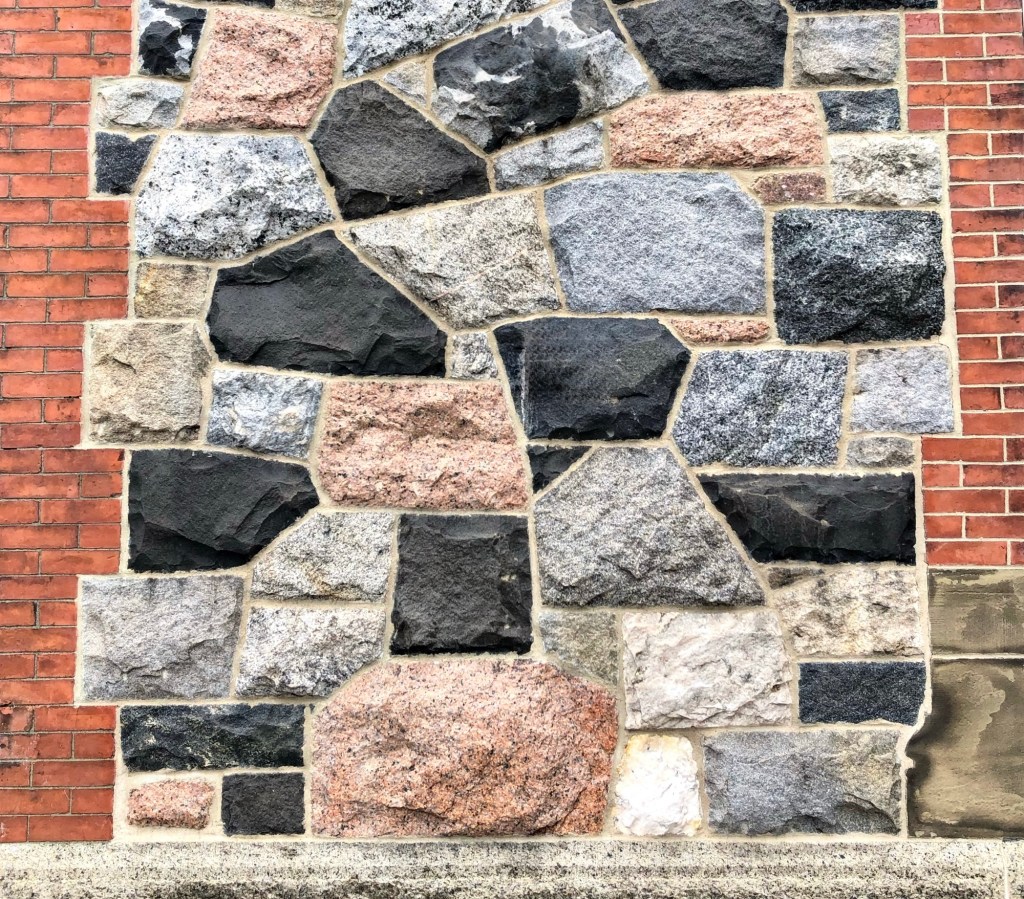
The Jacob E. Spring Mansion, also known as Porphyry Hall, is a high-style estate house located in Danvers, Massachusetts, that is one of the finest and most unique in the state! The house was built in 1880 for Jacob Evans Spring (1825-1905), who was born in Brownfield, Maine, and at the age of twenty, he went to Argentina and amassed a fortune in the wool business in Buenos Aires between 1845 and 1865, when he returned to the United States. Jacob and his wife, Sara Duffy, would purchase a large farm in Danvers and began planning for their family country home. Their residence was built on a high hill over two years and constructed of over 40 types of stones of irregular size and color with door and window sills of Nova Scotia freestone with arches of the doors and windows and corners of brick. The mansion was designed by architect George M. Harding of Boston, and built by several skilled masons over many months. Mr. Spring named his estate, “Porphyry Hall” with Porphyry meaning an igneous rock with large crystals in a fine-grained matrix; suitable for the walls of their mansion. The Spring’s lived lavishly at this home and spent nearly all of their fortune, selling the property after just ten years to the Xaverian Brothers, who opened it as Saint John’s Normal College. In 1907, the compound was re-organized as a Catholic boys prep school. In 1915, a chapel was added to the rear of the building, constructed from gray fieldstone to blend with the main house. Have you ever seen a building like this?
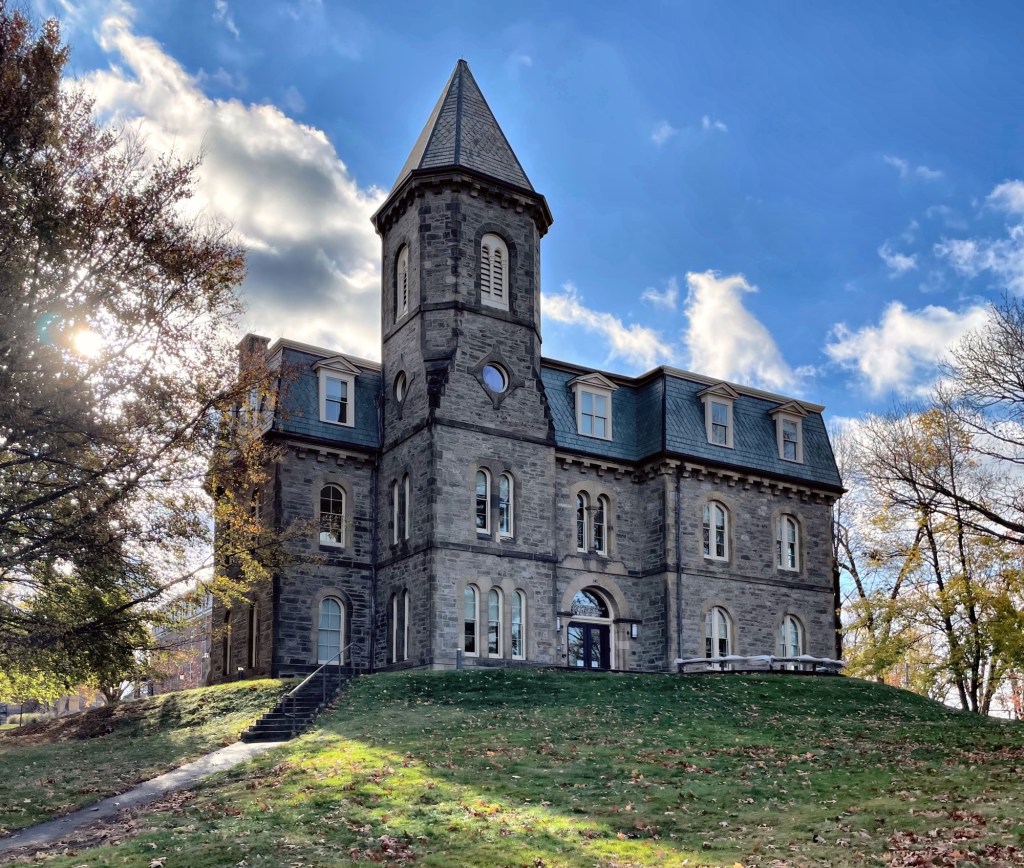
Colby Hall sits perched atop a hill overlooking Newton Centre, Newton, and is located in the Andover Newton Theological School campus. The building was constructed in 1886 for the Newton Theological Institution, which was founded on this site in 1825, and used for the a Baptist seminary, educating young students in theology. By the 1860s, the school had outgrown its space and following a donation from benefactor, Gardner Colby (1810–1879), who was treasurer of the school (and was also the benefactor and namesake of Colby College in Maine) plans were drawn up for the new lecture spaces and chapel building. The unique building was designed by Alexander Rice Esty, a prominent architect at the time, and it blends Second Empire and Romanesque Revival styles under one roof. The three-story structure is of a light buff, rough cut stone with sandstone trim and features an imposing four-story tower at the eastern end. In November 2015, the school announced that it would sell its campus and become part of Yale Divinity School in New Haven, Connecticut. The Newton campus was purchased by the Windsor Park School with Colby Hall now occupied by the Boston Psychoanalytic Society & Institute.
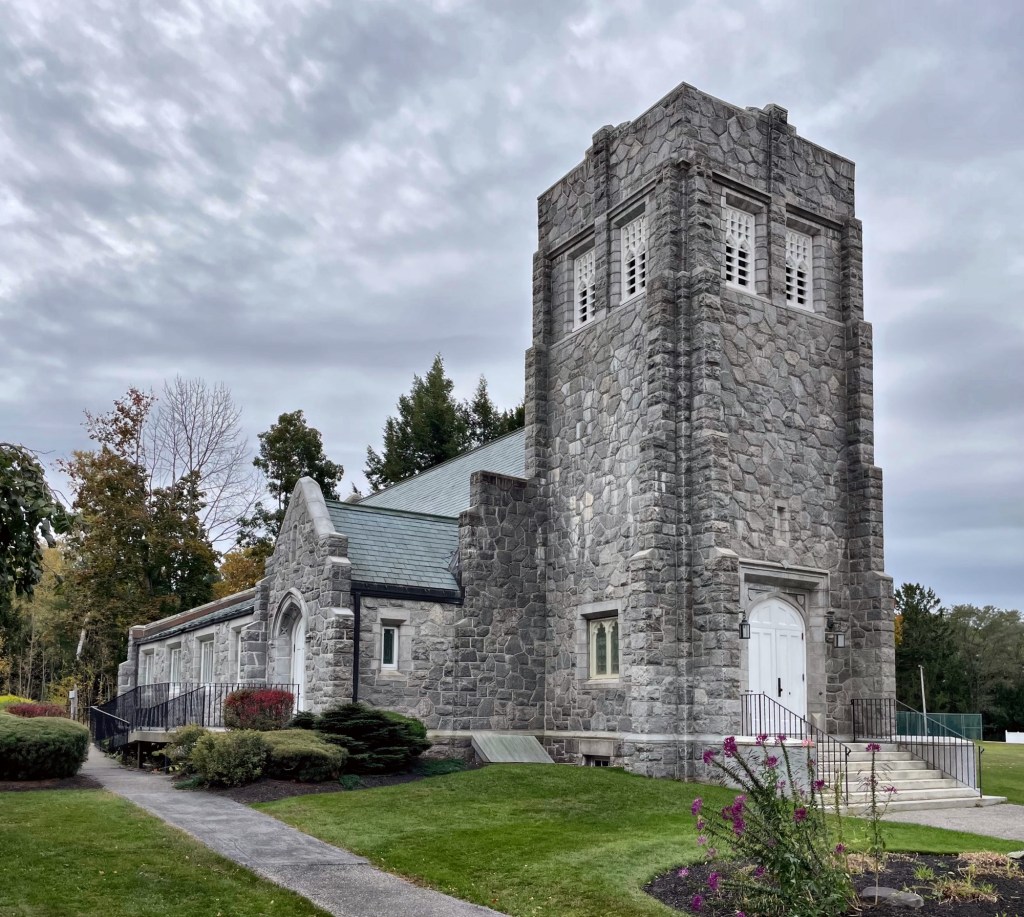
As part of the ever-growing Poland Springs Resort in Poland, Maine, the operators of the Poland Springs Hotel sought to erect a house of worship for guests and local community members. In 1909, fundraising had risen to total of $15,000 and that, along with a matching contribution by the Ricker Family, who owned the Poland Springs Resort, allowed for the hiring of an architect and the project to commence. Boston-area architect George Henri Desmond furnished the plans for the chapel, and were also hired by the Ricker family to complete plans for alterations to the Mt. Kineo House on Moosehead Lake during the same time period. All Souls Chapel is a Neo-Gothic Revival building constructed of irregular granite blocks with a gable roof covered with slate. It has a central tower with a flat parapet roof and a belfry with ornate louvered openings. The tower is square in plan and contains the principal entrance to the chapel. When the chapel was opened in 1912, it was opened as an interdenominational place of worship for use by Catholics and Protestants. Guests contributed much of the interior furnishings and all of the memorial hand-painted windows placed in the chapel were sponsored by guests or relatives of longtime guests. Today, the chapel hosts weddings, baptisms, and other similar events.
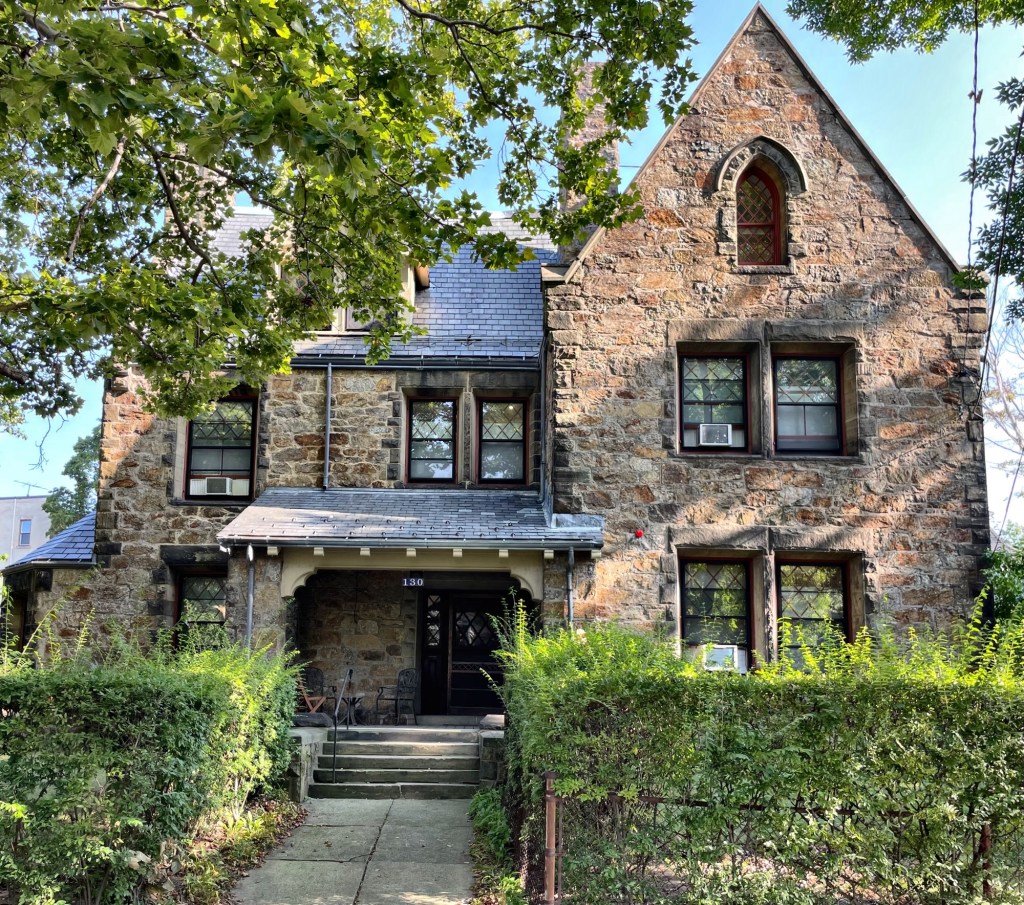
Located next door to the St. Paul’s Episcopal Church in Brookline, Massachusetts, the church’s rectory is equally stunning and compliments the 1850s Gothic church. The Rectory was built in 1886 from plans by Boston architects, Peabody & Stearns, in harmony with the architecture of the Church, with masonry walls of Brighton puddingstone with Nova Scotia freestone trimmings. The Rectory’s architectural style, is somewhat Jacobethan/Tudor due to the pitch of the roof, elbows on the parapet wall, diamond panes in the sashes of the windows, and projecting bay window on the second floor.